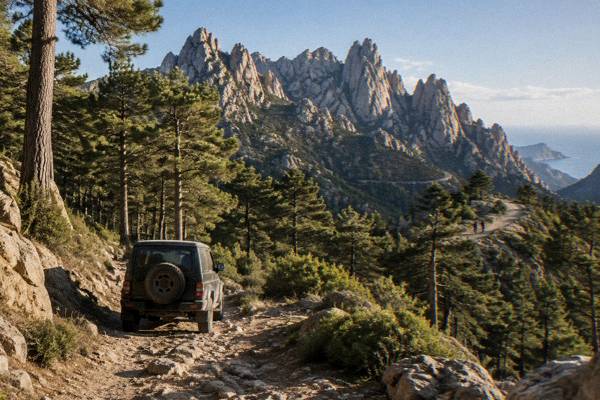
How Long Does The GR20 Take?
The GR20 across Corsica runs 180 km in about 15 stages of 4 to 8.5 hours each. Here is what sets the total time, refuge seasons and the shorter trail alternatives.
The GR20, or Fra li Monti, is the long-distance trail that runs the spine of Corsica, the mountainous French Mediterranean island, from Calenzana in the north to the far south. The Corsican Assembly's own description gives the route as 180 km north to south, covered in about fifteen stages of 4 to 8.5 hours each. That range of walking hours is the honest starting point for any timing plan, because the total depends on stage length, weather and how a walker splits the nights.
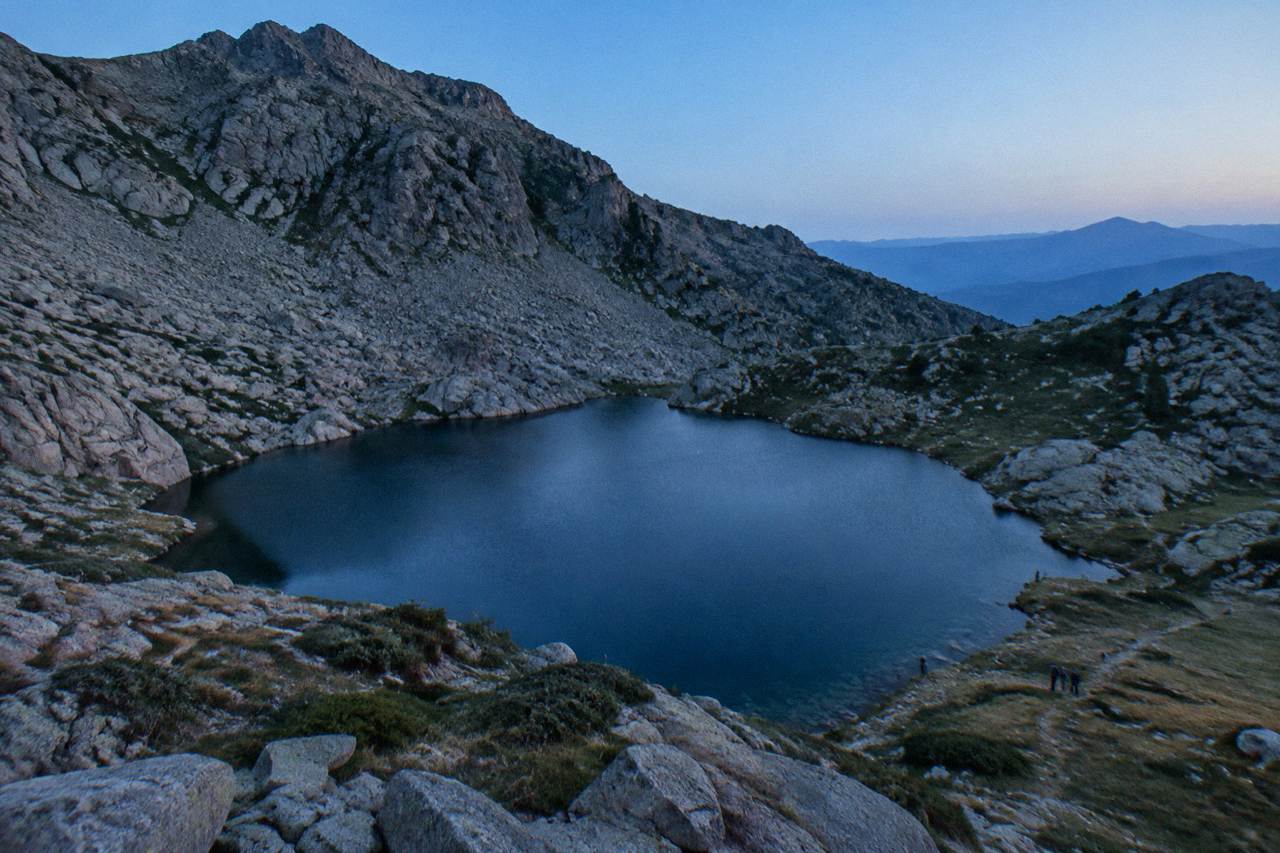
The GR20 takes about 15 stages to walk its full 180 km north-to-south length across Corsica, with each stage running between 4 and 8.5 hours of walking, according to the Corsican Assembly's own description of the trail. Counted as calendar days, that means roughly two weeks on the mountain, one stage per day, plus any rest days a walker chooses to add.
Those walking hours describe time on the path, not elapsed time from dawn to dusk. A stage of 8.5 hours leaves little slack for a slow start, and the PNRC page for the trail adds a specific local rule: no departures from Calenzana after 11:00, under a municipal order tied to fire risk. Stage 1, Calenzana to Ortu di u Piobbu, is given at about 6 h 30 out on the PNRC's own page, which shows how quickly a single day can absorb most of the daylight in the guarded season.
The two-week shape of the walk is fixed by the terrain rather than by choice. Monte Cinto, the island's high point at 2,706 m, sits inside the massif the trail crosses, and the interior it traverses is the island's inland part, a world away from the beaches and ports of the coast. Walkers comparing the commitment should also read how hard the GR20 actually is, because the daily hours only tell part of the story.
How Many Days Do You Need For Each Stage?
Each GR20 stage is a full day of walking, between 4 and 8.5 hours long, and the trail's about 15 stages set the arithmetic: four days only covers a section, a week covers roughly half, and the complete north-to-south route needs about two weeks of daily stages. There is no stage plan in the official description that compresses the full 180 km into fewer walking days.
Walkers who cannot free two weeks have real options short of the whole trail. The PNRC guards its refuges along the route, and a partial walk of the northern or southern half is a common way to sample the path. The booking system is the same whatever the length: nights in PNRC refuges must be reserved online, for bunks and bivouac pitches alike, and the reservation rules are covered in detail in the site's guide to whether you need to book GR20 refuges.
The refuges are guarded only from 16 May to 4 October in the 2026 season, per the PNRC page, and from 15 June to 30 September it is forbidden to light a fire or smoke in forests, maquis and massifs. The fire-risk map is updated at 18:00 for the next day, and from mid-June to mid-September access to some massifs can be restricted, which can reshape a stage plan overnight.
For travellers who want the Corsican interior without a two-week commitment, the picks above cover active days that fit a shorter stay: an e-bike ride from the Ajaccio side, a 4x4 day on the Cuscionu plateau in the Alta Rocca, and a small-group day trip through old hilltop villages.
What Does A Night On The GR20 Cost?
A night in a PNRC refuge bunk on the GR20 costs EUR 20 per person in the 2026 season, a bivouac pitch for your own tent costs EUR 12 per person, a rented tent for one person costs EUR 27, and a rented tent for two costs EUR 39, per person for the first two rates and per tent package for the others, all booked online. Meals are paid in cash or by cheque to the refuge guardian on site.
Every rental tent sleeps two and comes with a 3 cm mat per person; walkers bring their own sleeping bag. Dogs are not allowed inside the refuges or the rented tents. The full rate card from the PNRC:
| Option | 2026 PNRC rate |
|---|---|
| Refuge bunk (bat-flanc) | EUR 20 per person |
| Bivouac pitch, own tent | EUR 12 per person |
| Rented tent, 1 person | EUR 27 |
| Rented tent, 2 persons | EUR 39 |
Reservations are obligatory for all options and run exclusively through the PNRC's online platform with card payment. Changes are possible up to 48 hours before the stage, subject to availability, and the nature of the booked option cannot be changed. A full refund is possible up to two months before.
Wild camping is banned across Corsica, including on the GR20, and bivouacking is tolerated only in the designated areas near the PNRC refuges, with a per-person reservation. The old Cirque de la Solitude section has been off the trail since a fatal rockfall in 2015 and is replaced by a variant, a change any timing plan built on older guidebooks should absorb.
When Is The GR20 Open And Guarded?
The PNRC refuges on the GR20 are guarded from 16 May to 4 October inclusive in the 2026 season, and that window is effectively the walking season for anyone relying on refuge beds or bivouac pitches, since every night must be booked online anyway. Outside the guarded window the trail itself is not closed, but the serviced infrastructure is not there.
Within that window, the weather pattern of the island sets the rhythm. The Météo-France 1991-2020 station normals for Ajaccio show July averaging 8.6 mm of rain and August 15.8 mm, against 111.8 mm in November, so the summer months carry the least rain on the table. The same normals give August a mean daily high of 29.2 °C at Ajaccio, figures measured at the coast, with the high mountains taking snow outside summer and holding much cooler conditions than the station data. More of these guides are collected on Corsica Travel Guide.
The site's month-by-month breakdown of the best time to do the GR20 weighs these figures against the fire-risk access rules. Mountain rescue is reachable in an emergency on 112 or 17, with the PGHM base at Ajaccio on 04 95 24 24 00, and walkers going alone should read the site's answer on whether it is safe to hike the GR20 alone.
Can You Walk The GR20 Faster Or Slower?
Yes, within limits: the official description gives about 15 stages of 4 to 8.5 hours, and walkers stretch or compress the calendar by splitting stages at intermediate spots, adding rest days, or walking only a section, but every night still needs an online PNRC reservation and the guarded season, 16 May to 4 October, caps when any of it is practical. There is no official fast-pack timing.
Slower plans have a natural ceiling too: the season. A walker splitting every long stage adds days, and days at either end of the 16 May to 4 October window run into earlier snow on the high ground, where the mountains take snow outside summer. Faster plans run into the same booking quotas as everyone else, since reservations are per refuge per night and availability governs the pace as much as legs do.
Weather disruptions are part of the arithmetic. Météo-France publishes mountain forecasts and storm vigilance, and the standing advice is to avoid summits and ridges in storms. The fire-risk map, updated each evening, can close access to massifs entirely on the worst days in the mid-June to mid-September period, and an itinerary should hold slack for at least one such day.
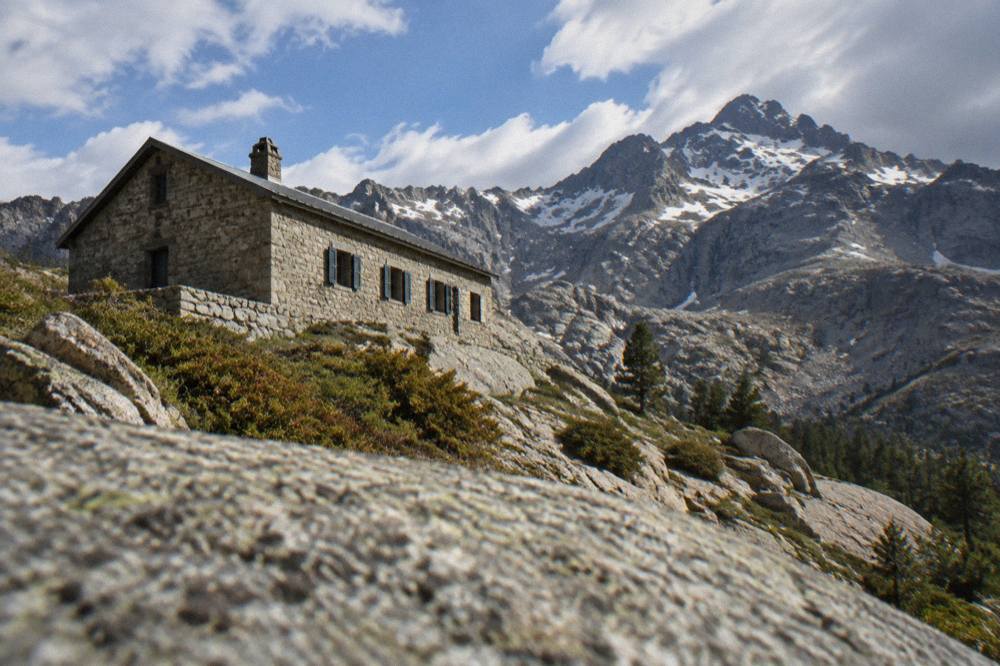
What Are The Shorter Long-Distance Trails In Corsica?
Corsica's other marked long trails all take less time than the GR20: the shortest, Mare e Monti Sud, is 66 km over 5 days, while Mare a Mare Sud is 73 km over 5 days and Mare a Mare Centre is 84 km over 7 days, per the PNRC brochure, so a week or less covers any of the three southerly routes against roughly two weeks for the GR20 itself.
The PNRC brochure gives lengths, day counts and total climbing for each route:
| Trail | Length | Days | Total climbing |
|---|---|---|---|
| GR20 (Fra li Monti) | 180 km | about 15 stages | not stated in the Assembly text |
| Mare e Monti Nord | 121 km | 10 | 6,100 m |
| Mare a Mare Nord | 139 km (161 km with variant) | 8 to 12 | 5,900 m |
| Mare a Mare Centre | 84 km | 7 (Ghisonaccia to Porticcio) | 3,900 m |
| Mare a Mare Sud | 73 km | 5 | 3,200 m |
| Mare e Monti Sud | 66 km | 5 | 2,700 m |
Mare e Monti Nord finishes at Cargèse on the west coast, and both southern routes end at Propriano, so each trail trades the high granite of the GR20 for a walk that finishes at the sea. A fuller comparison of routes, refuge logistics and day walks sits in the site's complete GR20 guide.
For context on the island these trails cross, Corsica covers 8,722 km2 with more than 1,000 km of coastline, and its population was 365,636 at 1 January 2026 in the provisional INSEE estimate. The interior the GR20 crosses is the island's thinly settled inland part; the towns, ports and beaches sit on the rim. The Corsica Travel Guide covers both worlds, from the trail to the boat trips out of every port.
Common Questions About GR20 Timing In Corsica
How Long Does The GR20 Take?
The GR20 runs 180 km north to south across Corsica in about 15 stages of 4 to 8.5 walking hours each, per the Corsican Assembly's description. As a calendar, plan on roughly two weeks of daily stages plus any rest days.
How Many Hours Is One GR20 Stage?
Each stage runs between 4 and 8.5 hours of walking. Stage 1, Calenzana to Ortu di u Piobbu, is given at about 6 h 30 on the PNRC page.
When Are The GR20 Refuges Guarded?
In the 2026 season the PNRC refuges are guarded from 16 May to 4 October inclusive. Every refuge night, bunk or bivouac, must be booked online in advance.
What Does A GR20 Refuge Night Cost?
A bunk costs EUR 20 per person, a bivouac pitch for your own tent EUR 12 per person, a rented tent for one EUR 27 and for two EUR 39, in the PNRC's 2026 rates.
Can You Camp Anywhere Along The GR20?
No. Wild camping is banned across Corsica including the GR20. Bivouacking is allowed only in the designated areas near PNRC refuges, with a per-person reservation.
What Shorter Trail Compares To The GR20?
Mare e Monti Sud is 66 km over 5 days and Mare a Mare Sud is 73 km over 5 days, both per the PNRC brochure, against 180 km and about 15 stages for the GR20.