Is The GR20 Hard?
Is the GR20 hard? A straight answer from the PNRC's own 2026 figures: stage lengths, refuge rules, rates and easier Corsican alternatives.
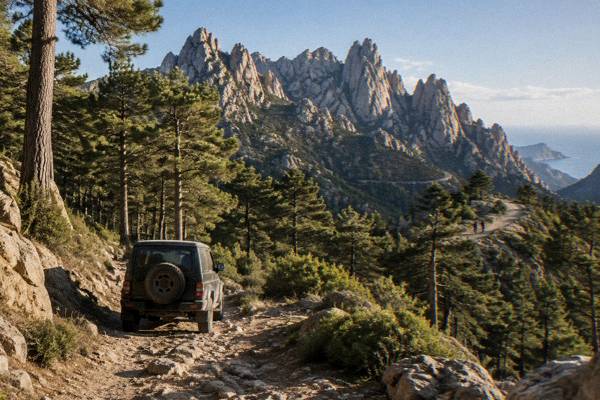
Corsica is a sea-surrounded French island with a mountainous interior that rises to Monte Cinto at 2,706 m, and the GR20 crosses that interior from north to south. The Parc naturel régional de Corse, which manages the trail and its refuges, gives the trail as 180 km in about 15 stages of 4 to 8.5 hours each. Those are the numbers that answer the difficulty question, and this page reports them alongside the park's 2026 booking rules and rates, so a reader can judge the demand against their own fitness.
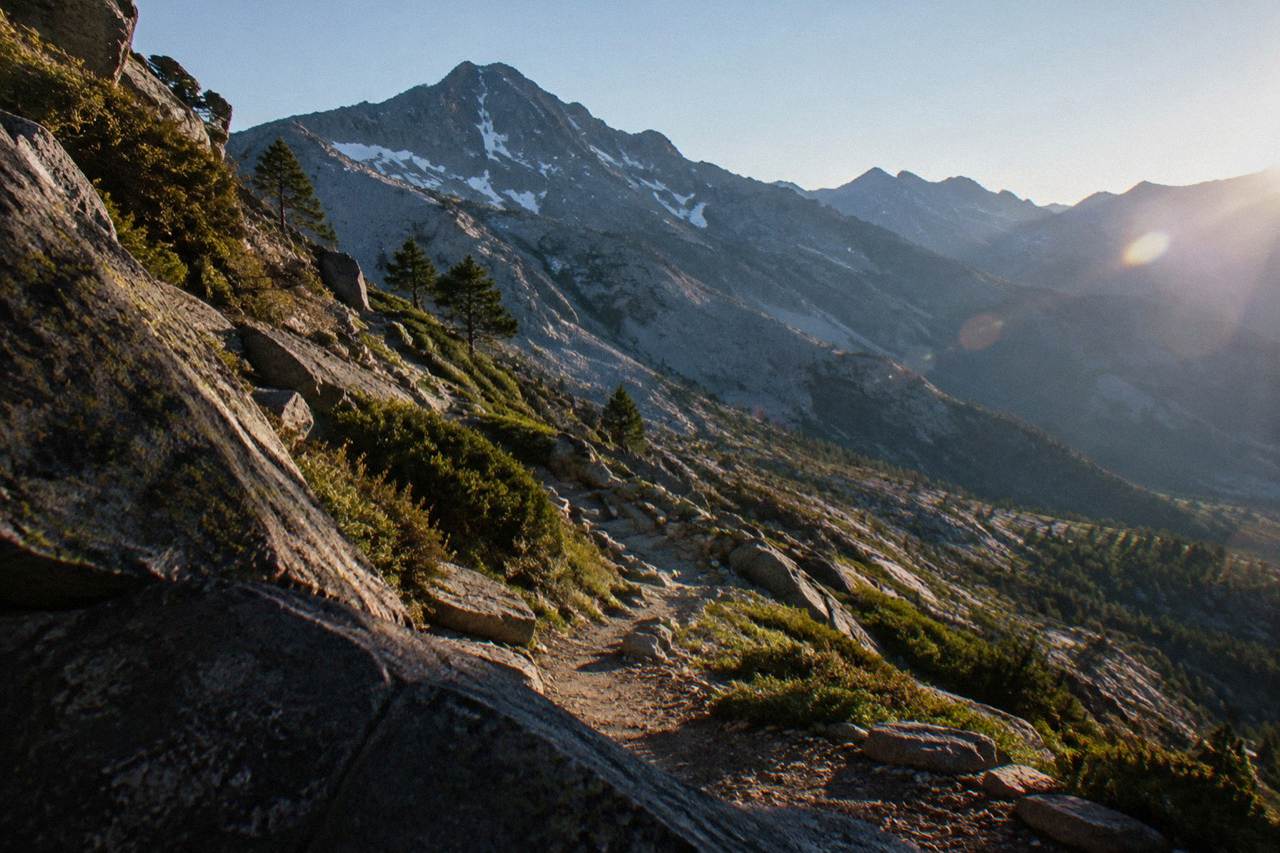
Yes, the GR20 in Corsica is a hard trail by the park authority's own figures: 180 km north to south in about 15 stages, each stage running 4 to 8.5 hours on mountain ground, with the first stage from Calenzana to Ortu di u Piobbu timed at about 6 hours 30. Nights in the PNRC refuges must be booked online in advance, and no departures from Calenzana are allowed after 11:00.
That description comes from the Corsican Assembly's own trail text and the PNRC's GR20 page, not from a guidebook's marketing. The hours are walking hours on the trail itself, excluding breaks, and the terrain is high mountain country: granite, altitude and exposed ridge ground rather than valley footpaths. The park's rules reinforce the point. Because of fire risk, a municipal order forbids starting from Calenzana after 11:00, and from 15 June to 30 September it is forbidden to light a fire or smoke in forests, maquis and massifs. None of that makes the trail impossible; it makes it a trail that rewards preparation.
For hikers weighing the decision, three companion pages on this site break the question into parts: how long the trail takes, whether the refuges need booking, when to hike it, and whether it is safe to hike alone.
How Hard Are The Stages Of The GR20 In Corsica?
Each of the about 15 GR20 stages in Corsica runs 4 to 8.5 hours of walking, per the Corsican Assembly's trail description, over 180 km of high mountain ground from Calenzana in the north to the far south. Stage 1 alone, Calenzana to Ortu di u Piobbu, is timed at about 6 hours 30, and the PNRC forbids starting that stage after 11:00 under a municipal fire-risk order.
The table below gathers the trail figures in one place, including the other long Corsican trails the PNRC brochure lists for comparison. A reader comparing the GR20 against, say, the Mare a Mare Sud can see the difference in length and daily commitment at a glance.
| Corsican long trail | Length | Days | Stages or hours | Total climbing |
|---|---|---|---|---|
| GR20 (Fra li Monti) | 180 km | about 15 stages | 4 to 8.5 hours per stage | not published by the PNRC |
| Mare e Monti Nord | 121 km | 10 days | to Cargèse | 6,100 m |
| Mare a Mare Nord | 139 km (161 km with variant) | 8 to 12 days | coast to coast | 5,900 m |
| Mare a Mare Centre | 84 km | 7 days (Ghisonaccia to Porticcio) | coast to coast | 3,900 m |
| Mare a Mare Sud | 73 km | 5 days | ends in Propriano | 3,200 m |
| Mare e Monti Sud | 66 km | 5 days | ends in Propriano | 2,700 m |
Two structural facts shape the difficulty. First, the trail is a mountain route: the island's interior tops out at Monte Cinto, 2,706 m, and the GR20 travels through that high country rather than around it. Second, the old Cirque de la Solitude section has been off the trail since a fatal rockfall in 2015, replaced by an official variant, so the route as walked today differs from older descriptions. Any guidebook predating that change describes a trail that no longer exists in that form.
The hours are the honest measure. An 8.5-hour stage on mountain ground, with a pack, at altitude, in summer heat, is a serious day; a 4-hour stage is a shorter one but still on the same terrain. Fitness, pack weight and weather decide how each stage feels, and the Météo-France climate normals for Ajaccio show why early summer and September interest hikers: July averages 8.6 mm of rain against November's 111.8 mm.
What Are The Rules That Make The GR20 Demanding?
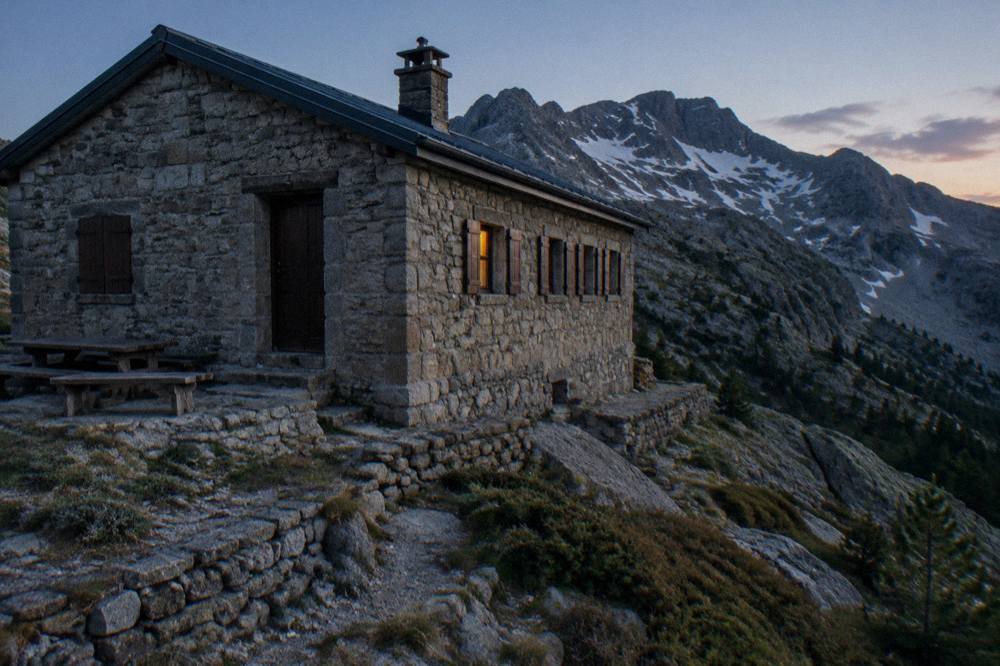
The GR20's 2026 season runs with PNRC refuges guarded from 16 May to 4 October inclusive, every refuge night must be booked online in advance, whether a bunk or a bivouac pitch, and wild camping is banned across Corsica including the GR20, with bivouacs allowed only in the marked areas at the refuges.
The booking rule changes the character of the walk. A hiker cannot simply arrive and sleep where the day ends; the PNRC's reservation platform assigns the nights, quotas apply per refuge, and the confirmation email serves as the receipt. Changes are possible up to 48 hours before a stage, subject to availability, and the nature of the booking cannot be changed. The practical consequence is that the itinerary is fixed before departure, and daily distances follow the refuge spacing rather than personal preference.
| PNRC refuge option, 2026 | Rate per person | Notes |
|---|---|---|
| Bunk (bat-flanc) in the refuge | EUR 20 | dormitory sleeping |
| Bivouac pitch, own tent | EUR 12 | only in marked areas at refuges |
| Rented tent for one (pitch and tent) | EUR 27 | sleeps two, 3 cm mat each |
| Rented tent for two (two pitches and tent) | EUR 39 | bring your own sleeping bag |
Meals at the refuges are paid on site in cash or cheque to the guardian, and dogs are not allowed inside the refuges or the rented tents. The fire rules add a layer of planning: from 15 June to 30 September no fires or smoking in forests, maquis and massifs, and the prefecture's massif access map is updated at 18:00 each day for the next day, with some massifs closed entirely on the highest-risk days. The UK FCDO notes a high wildfire risk in France from April to October, which is the same seasonal window.
Safety infrastructure exists and is specific. Mountain rescue in Corsica is reached through 112 in an emergency, and the PGHM base at Ajaccio answers on 04 95 24 24 00; at sea the dedicated number is 196. The US State Department lists France at Level 2, Exercise Increased Caution a nationwide advisory that covers Corsica.
Do You Need Mountain Experience For The GR20 In Corsica?
The GR20 in Corsica is a high mountain trail, not a coastal walk: 180 km across an interior that rises to 2,706 m at Monte Cinto, walked in stages of 4 to 8.5 hours with booked refuge nights. The park's rules, from the 11:00 Calenzana departure cut-off to the bivouac restrictions, assume hikers who can read terrain, manage a multi-day pack and respect daily access notices.
Experience on other long trails transfers; flat-valley mileage does not. The daily rhythm combines steep granite ground, exposure to weather and fixed overnight points, which means a bad weather day cannot simply be shortened. Hikers used to the site's other Corsican answers will recognise the pattern: the question of whether it is safe to hike the GR20 alone has its own page, as does how many days the trail takes.
Preparation that the sources support is concrete. Book the refuge nights through the PNRC platform when reservations open, carry a sleeping bag even with a rented tent, plan cash for refuge meals, and check the massif access map each evening during the fire season. Nothing in the park's rules requires a guide, but nothing in the stage hours suggests arriving untrained either.
What Are Easier Alternatives To The GR20 In Corsica?
The PNRC brochure lists five other long trails in Corsica that cross gentler country than the GR20: Mare a Mare Sud at 73 km over 5 days to Propriano, Mare e Monti Sud at 66 km over 5 days, and Mare a Mare Centre at 84 km over 7 days from Ghisonaccia to Porticcio, each with roughly half the GR20's daily commitment and far lower total climbing.
The comparison in the table above shows the gradient of difficulty across the network. Mare a Mare Sud climbs 3,200 m in total against a trail that runs about 15 mountain stages; Mare e Monti Sud, ending in Propriano as well, climbs 2,700 m. For walkers who want coastal and village country rather than the high granite, those routes fit a week without refuge-style logistics. Wild camping is banned on them as it is across the island, so accommodation still needs planning.
Not every mountain day in Corsica demands a multiday commitment either. The island's activity operators run single-day options that reach high ground without a pack and a week of stages, and this site's coverage of hiking in Corsica lays out the broader trail network. One example is a guided electric mountain bike ride on the Plateau du Coscione, a high southern plateau reached on an assisted bike rather than on foot; Check availability for the current season. Sea days make the other half of the island's character, and the GR20 refuge booking rules apply only to the mountain trail, not to the coastal alternatives.
For readers whose question is really whether Corsica justifies the trip at all, the site's answer on whether Corsica is worth visiting covers the island beyond the trail, and Corsica Travel Guide gathers the regions, beaches and boat trips in one place.
Can You Make The GR20 In Corsica Easier?
Parts of the difficulty are fixed, the 180 km route, the 4 to 8.5 hour stages, the booked refuge nights, and parts are choices: rented tents instead of carrying one, a start at the guarded season's opening on 16 May or its end near 4 October, and splitting the trail into northern and southern halves across separate trips.
The rented-tent option matters for pack weight. The PNRC rents tents that sleep two, with a 3 cm mat per person, at EUR 27 for one person or EUR 39 for two including the bivouac pitch, which removes tent and mat at the cost of a nightly fee. A sleeping bag still has to be carried. Booking early matters for the same reason: refuge quotas are fixed, and the popular stages fill first, which constrains late planners into whatever nights remain.
Timing is the other lever. The 2026 guarded season runs 16 May to 4 October inclusive, and the Météo-France normals for Ajaccio show the trade-off numerically: July averages a daily high of 28.6 °C with 8.6 mm of rain, while October averages 22.8 °C with 85.7 mm. Snow sits only on the high mountains, and the fire-access rules apply from mid-June to mid-September, so the shoulder weeks carry both cooler ground and calmer access rules. The dedicated page on the best time to do the GR20 works through the season in detail.
The honest summary: the GR20 is hard because the island's interior is high and the stages are long, and no gear choice changes the granite. What preparation changes is everything around it, the nights booked, the pack weight, the weather window and the exit plan if a stage goes wrong.
Common Questions About The GR20 In Corsica
Is The GR20 Hard?
Yes. The trail covers 180 km of Corsican high mountain country in about 15 stages of 4 to 8.5 walking hours each, with refuge nights that must be booked online in advance. The park's own rules, including the 11:00 departure cut-off at Calenzana, treat it as a demanding mountain route.
How Many Stages Does The GR20 Have?
About 15 stages, per the Corsican Assembly's trail text, each of 4 to 8.5 hours over the 180 km route. Stage 1, Calenzana to Ortu di u Piobbu, is timed at about 6 hours 30.
Do You Have To Book GR20 Refuges In Advance?
Yes. The PNRC requires online booking for every refuge night in the 2026 season, for bunks and bivouac pitches alike, with quotas per refuge. Changes are possible up to 48 hours before a stage, subject to availability.
Can You Wild Camp On The GR20?
No. Wild camping is banned across Corsica including the GR20. Bivouac is allowed only in the marked areas at the PNRC refuges, with a per-person pitch fee of EUR 12 in 2026.
Are There Easier Long Trails In Corsica?
Yes. The PNRC lists Mare a Mare Sud at 73 km over 5 days, Mare e Monti Sud at 66 km over 5 days, and Mare a Mare Centre at 84 km over 7 days, among others, all with lower total climbing than the GR20's high mountain route.
When Are The GR20 Refuges Guarded?
The PNRC guards the refuges from 16 May to 4 October inclusive in the 2026 season. Outside that window the booking system, guardian meals and rented tents do not operate on the same basis.