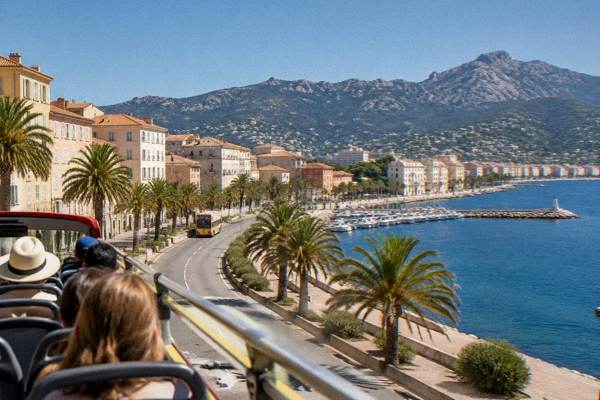
Ajaccio
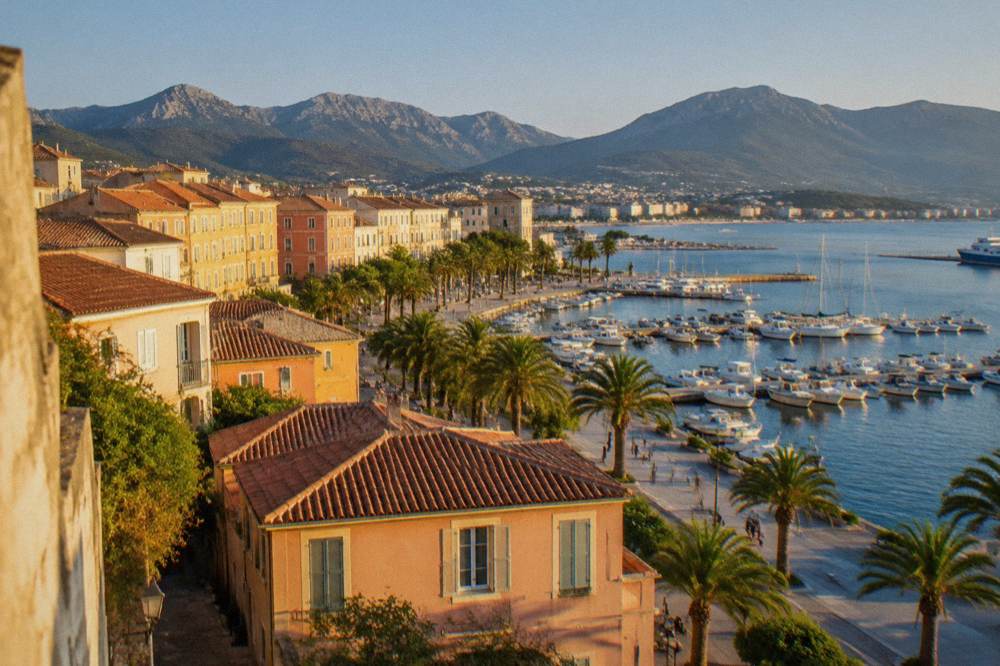
Ajaccio is the capital of Corsica, the French Mediterranean island of 8,722 km2 with more than 1,000 km of coastline. This guide sets out what the official sources say about the city's museums, boat trips, transport links, climate and day trips.
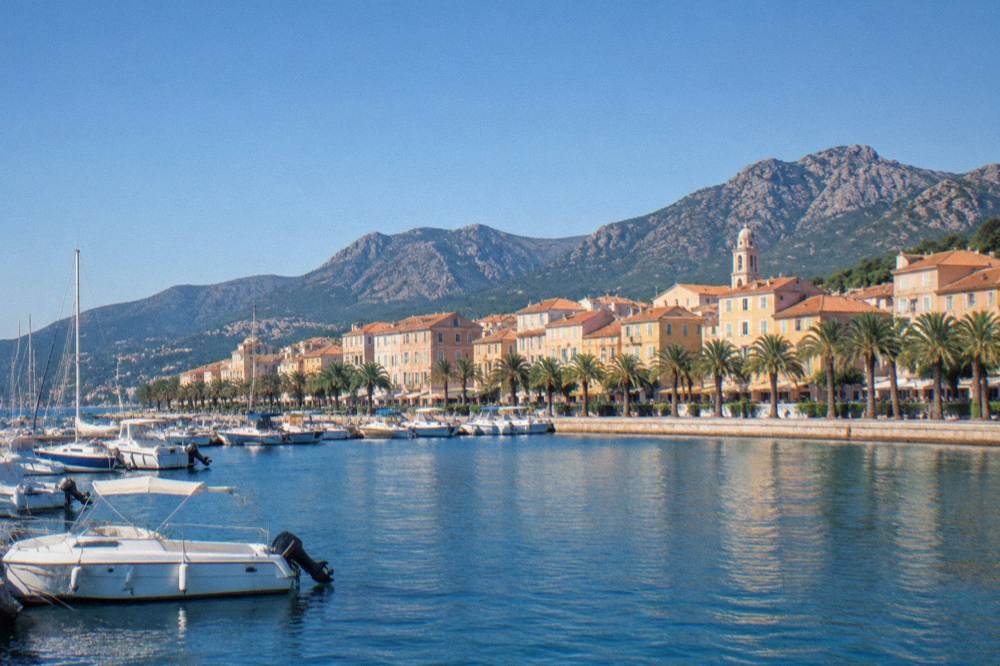
Ajaccio is Corsica's capital and largest town, with 76,320 residents, the island's main airport and ferry port, Maison Bonaparte and the Palais Fesch, and boat trips along the gulf to the Îles Sanguinaires.
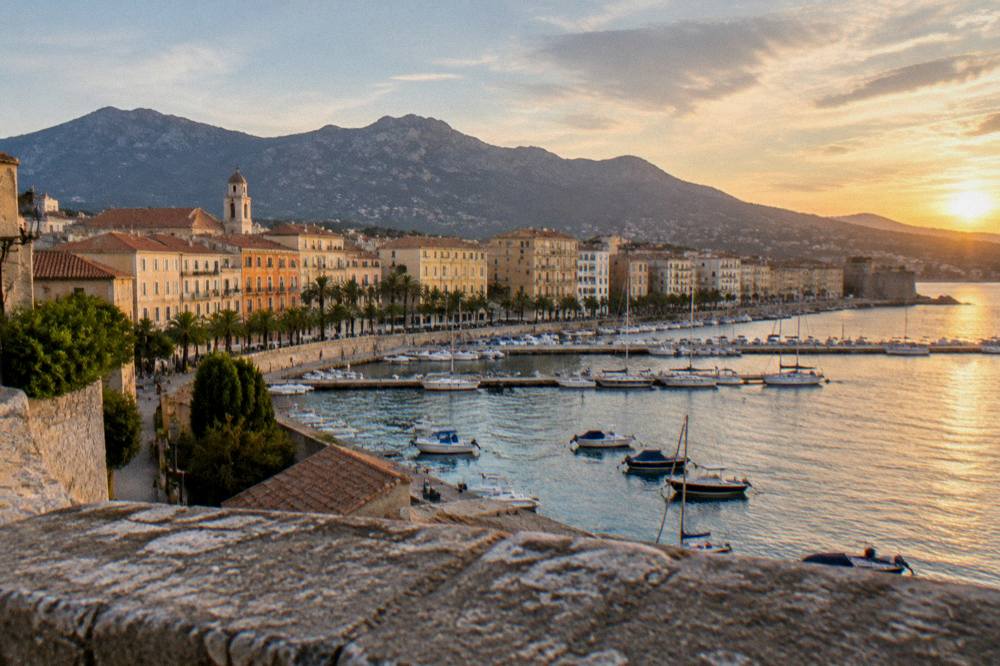
Ajaccio is the capital of Corsica, the French Mediterranean island of 8,722 km2 that counts more than 1,000 km of coastline and a mountainous interior rising to Monte Cinto at 2,706 m. The town sits on the west coast, on a bay that opens to the south, and it works as the island's administrative centre, the home of its busiest airport and one of its principal ferry ports. INSEE records give Ajaccio 76,320 residents, against 46,867 for Bastia, the second town. This page gathers what primary sources actually say about the city: museum hours and admission prices, the boat trips that leave from its port, how to reach it, its climate normals and where it fits in a wider island route.
Where Is Ajaccio And What Kind Of Town Is It?
Ajaccio is the capital and largest town of Corsica, a French island in the Mediterranean, standing on the island's west coast with its bay facing south, and it holds 76,320 residents according to INSEE's official reference population published in August 2026. It is the seat of the Collectivité de Corse, the single territorial authority in place since 1 January 2018.
Bastia, in the northeast, is the second town with 46,867 residents, and Corte, inland in the centre, is the old capital. Ajaccio is also Napoleon's birthplace, and the national museum in the house where he was born stands on Rue Saint-Charles, 200 m from the bus station and the ferry terminal, with bus 8 running from the airport. The town's museum quarter, its old streets and its seafront make it a base in their own right, not just an arrival point.
The wider setting matters as much as the town itself. The Parc naturel régional de Corse, created in 1972, covers 4,484 km2 of the island, and the Gulf of Ajaccio points straight at the Îles Sanguinaires, the granite islands that close the bay to the west. For a sense of how the town compares with the island's other bases, the Corsica regions overview sets out all of them, and is Ajaccio worth visiting? answers that question directly.
What Are The Best Things To Do In Ajaccio?
The core of a stay in Ajaccio is its two museums, Maison Bonaparte and the Palais Fesch, a boat trip on the gulf toward the Îles Sanguinaires, the seafront and old town on foot or by open-top bus, and day trips by sea to the Scandola Reserve, the Calanques de Piana and Bonifacio. The island's operators run tours in each of those categories from the town and its surroundings.
Maison Bonaparte, the national museum in Napoleon's birthplace, and the Palais Fesch, the Musée des Beaux-Arts, anchor the town itself, and both have confirmed 2026 hours and prices listed further down this page. The open-top bus tour with 360-degree views covers the town and the coast in one loop with an audio guide, which suits a first afternoon. On the water, gulf cruises run from Ajaccio and Porticcio to the Îles Sanguinaires, including aperitif and sunset sailings.
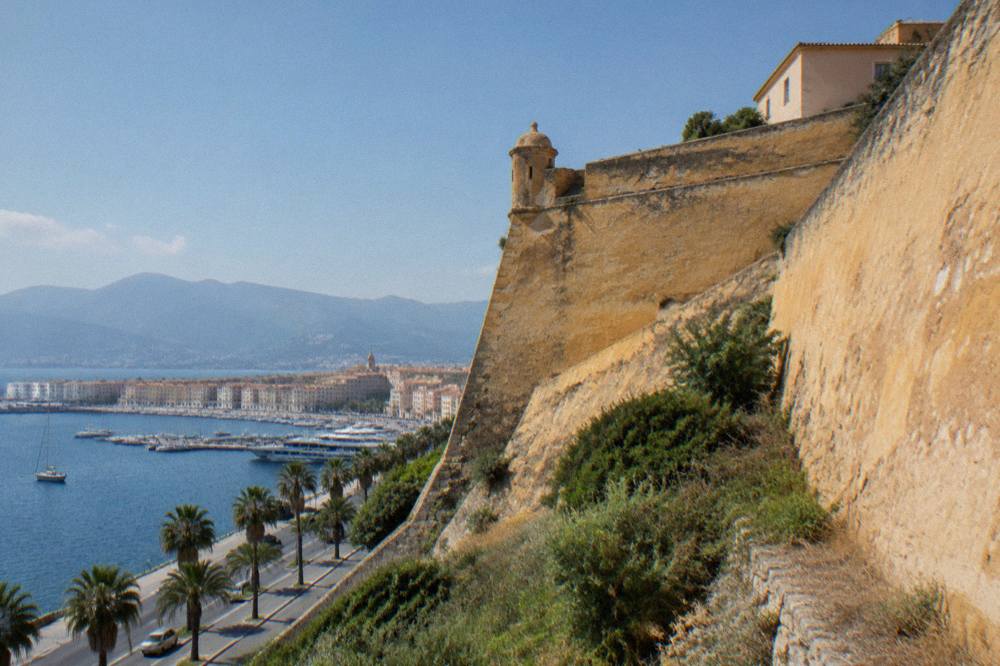
Beyond the bay, the long sea routes matter. A full-day guided cruise from Ajaccio or Porticcio reaches the Scandola Nature Reserve, and another full-day trip runs down the west coast to Bonifacio's cliffs. The island's food tours, with tastings, cover Corsican charcuterie, cheese and wine in the town centre. Active options include canyoning in the Richiusa canyon at Bocognano, about an hour into the mountains, and a self-guided e-bike ride toward Capo di Feno and the Sanguinaires coast. The Ajaccio city tour page collects the town-based options, and the island-wide things to do in Corsica page carries the full catalogue.
What Do Ajaccio's Museums Cost And When Are They Open?
Maison Bonaparte charges EUR 10 full price, EUR 8 for non-EU residents aged 18 to 25 and large families, and admits EU residents under 26 free; it opens every day except Monday. The Palais Fesch charges EUR 10 full, EUR 6 for over-65s and admits visitors up to 18 free, and the tourist-office listing gives daily opening from 09:00 to 17:00 across 2026.
Maison Bonaparte splits its hours by season. From 1 October to 31 March it opens 10:30 to 12:30 and 13:15 to 16:30; from 1 April to 30 June, 10:00 to 12:30 and 13:15 to 17:30; and from 1 July to 30 September, 10:00 to 17:30 continuous, with last entry 30 minutes before closing in every period. The museum's own practical-information page is the source for all of these figures. The Maison Bonaparte guide expands on the house and its collection.
| Museum | Full price | Reduced / free | Closed |
|---|---|---|---|
| Maison Bonaparte | EUR 10 | EUR 8 non-EU 18-25 and large families; free EU under 26 | Monday |
| Palais Fesch | EUR 10 | EUR 6 over 65; free up to 18 | Christmas Day, New Year's Day, 1 November |
The Palais Fesch, the fine-arts museum, keeps daily hours of 09:00 to 17:00 for the period 16 January to 31 December 2026, closing only on Christmas Day, New Year's Day and 1 November, per the Ajaccio tourist-office listing. Full details sit on the Palais Fesch page.
What Boat Trips Leave From Ajaccio?
Ajaccio's port runs gulf cruises to the Îles Sanguinaires, full-day guided cruises to the Scandola Nature Reserve, and a full-day sea escape to Bonifacio, plus sunset and aperitif sailings inside the gulf itself. The Îles Sanguinaires lie at the mouth of the Gulf of Ajaccio, and the Scandola Reserve, part of a UNESCO World Heritage property since 1983, is visited by boat only.
The short options stay inside the gulf. A gulf boat tour from Ajaccio or Porticcio rounds the Sanguinaires, a small-group trip adds an aperitif on board, and a dedicated sunset cruise leaves in the late afternoon. For a first taste of Corsica's sea, the Sanguinaires boat trip from Ajaccio day-trip guide compares them all.
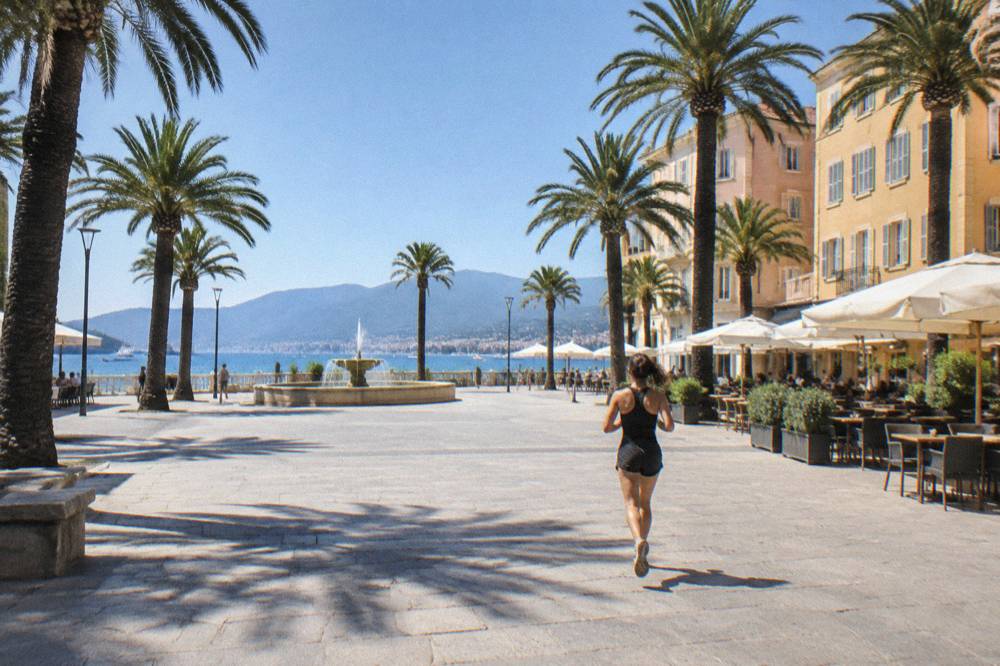
The long options go much further. A guided boat tour to the Scandola Nature Reserve, created by ministerial order on 9 December 1975 as the first nature reserve in Corsica, takes a full day from Ajaccio, and the UNESCO property it belongs to, "Gulf of Porto: Calanche of Piana, Gulf of Girolata, Scandola Reserve", was inscribed in 1983 covering 11,800 ha. The reserve's land area is closed to the public: visits are by boat only, with no landing in the integral reserve. The Scandola boat tour page covers those trips in depth.
Southward, a full-day escape by sea from Ajaccio or Porticcio reaches the limestone cliffs of Bonifacio, at the island's southern tip. And for travellers combining Corsica with Sardinia, a small-group boat trip runs from Bonifacio to the La Maddalena archipelago and the Îles Lavezzi, a cross-border day trip that departs from Bonifacio rather than from Ajaccio; Check availability if that pairing fits an itinerary. The Îles Lavezzi sit inside the Bouches de Bonifacio Nature Reserve, managed by the OEC.
How Do You Get To Ajaccio And Around The Town?
Ajaccio is reached by air through Ajaccio Napoléon Bonaparte airport (AJA), one of Corsica's four airports, or by ferry, with Corsica Linea and La Méridionale both serving the port from Marseille; bus 8 links the airport to the town centre, and Maison Bonaparte stands 200 m from the bus station and ferry terminal.
The island's four airports are Ajaccio Napoléon Bonaparte (AJA), Bastia Poretta (BIA), Figari Sud Corse (FSC) and Calvi Sainte-Catherine (CLY). The Ajaccio airport guide covers the first of them in detail, and flights to Corsica sits in the island-wide transport set. On the sea side, Corsica Linea sails Marseille to Ajaccio among its Corsican ports, and La Méridionale also runs Marseille to Ajaccio, with Corsica Ferries serving the port from Toulon and Nice, per the operator listings.
| Route to Corsica | Operator | Ports served |
|---|---|---|
| Marseille | Corsica Linea | L'Île-Rousse, Bastia, Propriano, Ajaccio |
| Marseille | La Méridionale | Ajaccio, Porto-Vecchio |
| Toulon and Nice | Corsica Ferries | Ajaccio, Bastia, L'Île-Rousse, Porto-Vecchio, Propriano |
| Livorno and Savona | Corsica Ferries | Bastia |
| Livorno and Genoa | Moby | Bastia |
| Santa Teresa Gallura | Moby and Ichnusa Lines | Bonifacio |
More than 8.5 million passengers, excluding cruise passengers, passed through Corsica's ports and airports in 2025, according to the ORTC and DREAL annual report published in May 2026. Within the island, the Chemins de fer de la Corse run the Ajaccio to Bastia line via Corte, together with the Ponte-Leccia to Calvi branch and the Balagne coastal line between Calvi and L'Île-Rousse. Inforoutes Corse publishes live road conditions and accessibility levels for the main mountain passes, which matters for any drive into the interior.
What Is The Weather Like In Ajaccio?
Ajaccio has a hot, dry summer and a mild, wet winter, per the Météo-France station normals for 1991 to 2020 measured at Campo dell'Oro: July averages 8.6 mm of rain and a 28.6 °C mean daily high, while November carries 111.8 mm of rain, and snow in Corsica falls only on the high mountains.
The station table gives the full picture. July's 8.6 mm of rain is the lowest monthly figure on the Ajaccio table, and November's 111.8 mm the highest, with October also above 85 mm. August has the highest mean daily high at 29.2 °C, and February the lowest mean daily low at 4.3 C. The annual rainfall total comes to 635.0 mm at the Ajaccio station.
| Month | High °C | Low °C | Rain mm | Sunshine h/day |
|---|---|---|---|---|
| Jan | 14.0 | 4.7 | 54.1 | 4.4 |
| Feb | 14.2 | 4.3 | 48.1 | 5.5 |
| Mar | 16.0 | 5.9 | 50.4 | 6.8 |
| Apr | 18.5 | 8.3 | 53.1 | 7.7 |
| May | 22.1 | 11.8 | 49.8 | 9.3 |
| Jun | 25.9 | 15.4 | 25.9 | 11.1 |
| Jul | 28.6 | 17.7 | 8.6 | 12.1 |
| Aug | 29.2 | 18.1 | 15.8 | 11.1 |
| Sep | 26.1 | 15.4 | 57.8 | 8.7 |
| Oct | 22.8 | 12.6 | 85.7 | 6.7 |
| Nov | 18.3 | 9.0 | 111.8 | 4.7 |
| Dec | 15.1 | 5.8 | 73.9 | 4.0 |
One fire rule follows from the dry summer and applies around Ajaccio as everywhere in Corsica: from 15 June to 30 September it is forbidden to light a fire or smoke in forests, maquis and massifs, and the daily fire-risk map is updated at 18:00 for the next day. The UK FCDO notes a high wildfire risk in France from April to October. Ajaccio's town beaches had seven lifeguard posts from 1 July to the end of August 2026, per the municipal site.
What Food And Wine Should You Look For In Ajaccio?
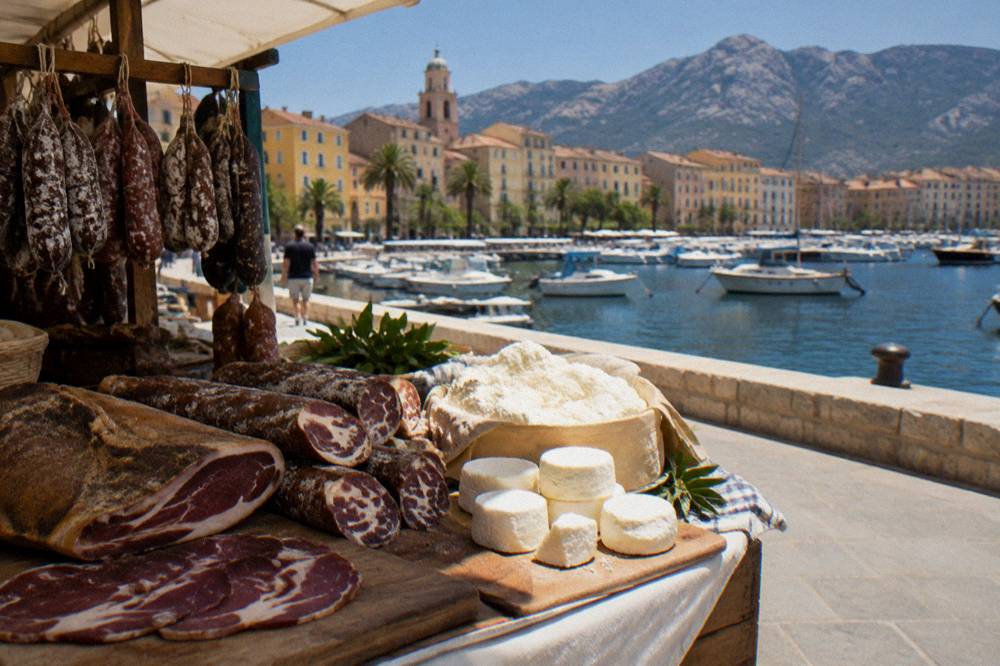
Corsican food has six protected products that appear on Ajaccio menus and shop shelves: brocciu cheese, whose appellation d'origine dates from 1983; prisuttu, lonzu and coppa charcuterie, AOC since 2012 and AOP since 2014; chestnut flour, olive oil and honey, all with their own AOP designations; and clémentine de Corse, an IGP since 2007.
Brocciu obtained its appellation d'origine in 1983 and its AOC in 1998. The three charcuterie cuts, prisuttu, lonzu and coppa, took AOC in April 2012 and AOP in 2014, with the Nustrale pig breed recognised in 2006. The chestnut-flour AOP "Farina castagnina corsa" was recognised in 2010, the olive-oil AOC "Oliu di Corsica" took effect in 2004, Corsican honey holds an AOP dating from 1998, and the clémentine de Corse gained its IGP in 2007. Fiadone and canistrelli are the classic sweet endings, and a food tour with tastings in central Ajaccio walks visitors through the charcuterie, cheese and wine counters. The full index of guides sits on Corsica Travel Guide.
| Product | Protection | Year |
|---|---|---|
| Brocciu | Appellation d'origine | 1983 |
| Prisuttu, lonzu, coppa | AOC / AOP | 2012 / 2014 |
| Chestnut flour (Farina castagnina corsa) | AOP | 2010 |
| Olive oil (Oliu di Corsica) | AOC | 2004 |
| Honey (Mele di Corsica) | AOC / AOP | 1998 |
| Clémentine de Corse | IGP | 2007 |
Corsican wine appellations include Patrimonio, Ajaccio and Vin de Corse, with named crus such as Calvi, Coteaux du Cap Corse, Figari, Porto-Vecchio and Sartène, plus Muscat du Cap Corse. The main grape varieties are Nielluccio and Sciaccarellu for reds and Vermentinu for whites. The Corsican wine and Corsican food pages in the island set expand on all of this, and vineyard tastings around the gulf are bookable as wine tours from the town.
What Are The Best Day Trips From Ajaccio?
The strongest day trips from Ajaccio are the Calanques de Piana and the Scandola Reserve by sea or by road to the north, the Filitosa prehistoric site and the beaches of the south toward Porto-Vecchio, and Corte and the interior, which stands 1 hour 30 by road from Ajaccio per the Musée de la Corse's own access table.
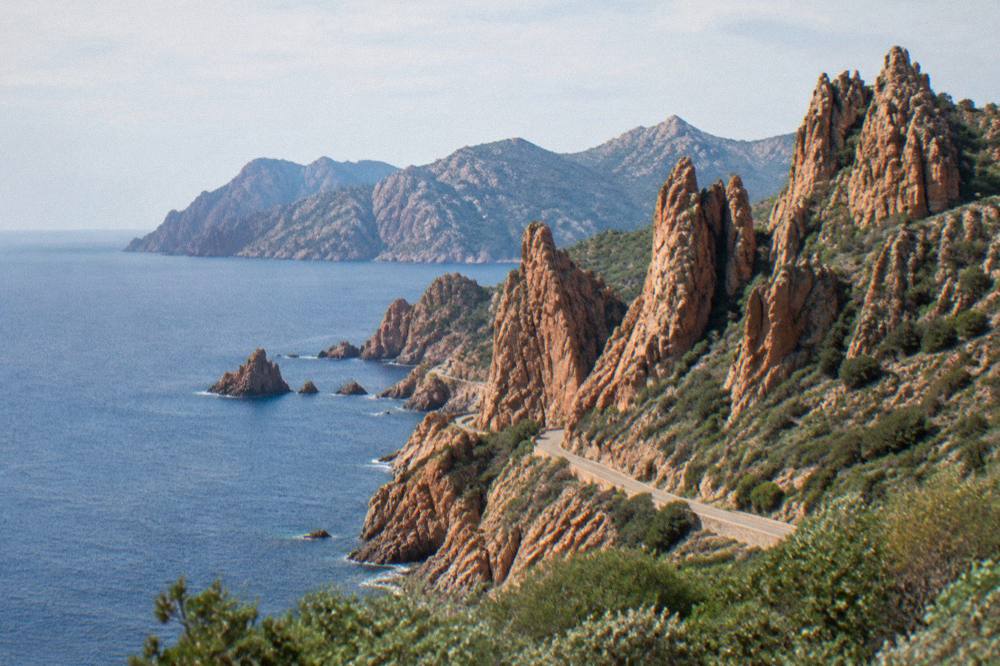
North of the gulf, the red granite of the Calanques de Piana forms part of the UNESCO property inscribed in 1983. Boat trips from Porto and from Ota reach both the calanques and Scandola in a half day, and the Calanques de Piana day trip guide covers the road and sea options; a semi-rigid day trip from Ajaccio itself also runs to Scandola and Piana. The Golfe de Porto and Piana area page gives the full picture of that coast.
| Destination | Direction from Ajaccio | Road time | What the sources say |
|---|---|---|---|
| Corte | Inland | 1 h 30 | Old capital; Musée de la Corse EUR 5.50, one ticket covers museum and citadel |
| Porto-Vecchio | Southeast | 2 h | Old town and beaches area |
| Bonifacio | South | 2 h 45 | Citadel, cliffs, Escalier du Roi d'Aragon (189 steps) |
| Propriano | South | 2 h 45 | Valinco gulf port |
| Calvi | Northwest | 1 h 30 | Citadel and Balagne coast |
| Bastia | Northeast | 1 h | Second town of Corsica, old port |
The road times above come from the Musée de la Corse's practical page in Corte, which publishes driving times to Corte from each of the island's main towns. South of Ajaccio, Filitosa, the prehistoric site near Sollacaro, opens 1 April to 2 November and charges EUR 9 for adults, EUR 7 reduced and EUR 28 for a family, free under 6. Further south still, Bonifacio's Escalier du Roi d'Aragon counts 189 steps cut into the cliff, and Porto-Vecchio carries the beaches of the southeast. Into the mountains, Corte and the interior is the inland counterweight to Ajaccio's coast, and the canyoning trips at Bocognano sit on that same road.
How Many Days Should You Spend In Ajaccio?
Two full days cover Ajaccio town itself: one for Maison Bonaparte, the Palais Fesch and the old streets, and one for a gulf or Sanguinaires cruise, with a third day for a long excursion to Scandola or Bonifacio. Beyond that, the town works better as a base with day trips than as a single destination, since its strongest sights, the museums, close on specific days and its best landscapes sit outside the town.
Maison Bonaparte closes on Mondays, which shapes the week: a Monday arrival points toward the Palais Fesch, open daily. Boat schedules matter too, since the long sea routes to Scandola and Bonifacio take a full day each. Travellers with a week can split the stay, pairing Ajaccio with Bastia or Calvi and the Balagne at the island's other end, or with Cap Corse and the Désert des Agriates peninsula in the far north, where the beaches of Saleccia and Lotu are reached by boat shuttle from Saint-Florent, by 4x4 track from Casta or on foot.
The island itinerary set breaks the timing down by length, from three days to two weeks, and the practical pages on ferries, car rental and driving fill in the transport. As a rule: the island is 8,722 km2 with 360 communes, small enough on paper for long day trips, but mountainous enough that road times, not straight-line distances, decide each day.
Is Ajaccio Worth Visiting As More Than An Arrival Port?
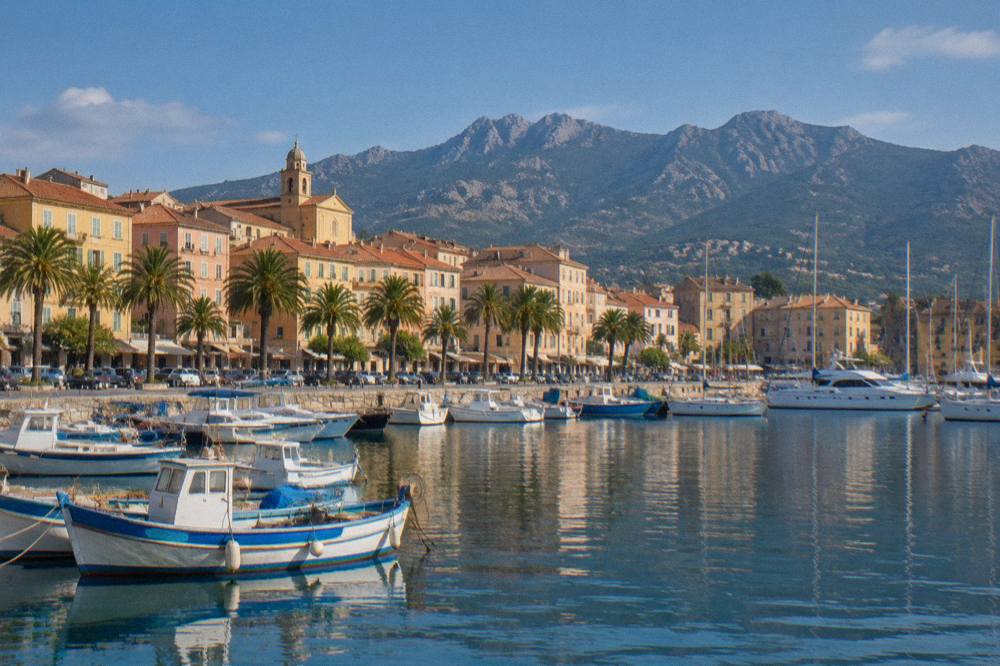
Ajaccio holds Corsica's two most-visited museums, Maison Bonaparte and the Palais Fesch, both with confirmed 2026 hours and prices, a gulf with regular boat service to the Îles Sanguinaires, and the island's main airport and ferry port, which together make it a working base for several days rather than a transit point. The town's museums alone justify a full day, and its sea trips a second.
What Is Ajaccio Famous For?
Ajaccio is famous as the birthplace of Napoleon, commemorated by the national museum Maison Bonaparte on Rue Saint-Charles, and as the capital of Corsica with 76,320 residents. The town is also the home port for trips to the Îles Sanguinaires and a departure point for sea excursions to the Scandola Nature Reserve, part of a UNESCO World Heritage property since 1983.
How Far Is Ajaccio Airport From The Town?
Ajaccio Napoléon Bonaparte airport (AJA) connects to the town by bus line 8, which the Maison Bonaparte museum's practical page names as the airport link, and the museum itself stands 200 m from the bus station and the ferry terminal, which places the transport hub within walking distance of the old centre.
Which Ajaccio Museums Are Open On Monday?
The Palais Fesch is the Monday option: the tourist-office listing for 2026 gives daily opening from 09:00 to 17:00, closed only on Christmas Day, New Year's Day and 1 November. Maison Bonaparte is closed every Monday, so a Monday in Ajaccio points to the fine-arts museum, at EUR 10 full price and EUR 6 for over-65s, free up to 18.
Can You Swim From Ajaccio?
Ajaccio's town beaches had seven lifeguard posts operating from 1 July to the end of August 2026, per the municipal website, and the Gulf of Ajaccio offers boat trips with swim stops. The supervised season is the marker to plan around: outside those summer weeks, swimming remains possible but unguarded, and the fire-risk period from 15 June to 30 September brings its own rules inland.
What Emergency Numbers Apply In Ajaccio?
The emergency numbers in Corsica are 112 for all EU emergencies, 15 for medical, 17 for police, 18 for fire, 114 by SMS or app, and 196 for sea rescue via VHF channel 16, with mountain rescue reachable through the PGHM Ajaccio on 04 95 24 24 00. Service is included in restaurant prices by law, so tipping stays optional.
Every figure on this page comes from a primary source: museum prices and hours from the museums' own practical pages and the Ajaccio tourist office, climate figures from the Météo-France 1991 to 2020 station normals, population from INSEE, and UNESCO details from the World Heritage listing. Confirm hours directly before a visit, since seasonal schedules in Corsica change several times a year, and check Inforoutes Corse before any mountain drive.