What Is The Best Time To Do The GR20?
The GR20 in Corsica runs on a guarded refuge season from mid-May to early October. This guide breaks down the official dates, the weather behind them and the rules that decide when to walk.
The GR20 is the long mountain route that crosses Corsica from north to south, 180 km in about 15 stages of 4 to 8.5 hours each, and it does not run to a walker's calendar. It runs to two clocks: the Parc naturel régional de Corse guards its refuges on fixed dates each season, and the Corsican summer brings fire rules that restrict access to the massifs, sometimes day by day. Get those two right and the rest of the planning follows. This page sets out what the official sources say about when to walk it, what the Météo-France station normals show for the months involved, and what the booking and refuge rules mean for choosing dates. The fuller route picture is in the Corsica GR20 guide.
When Are The GR20 Refuges Guarded In Corsica?
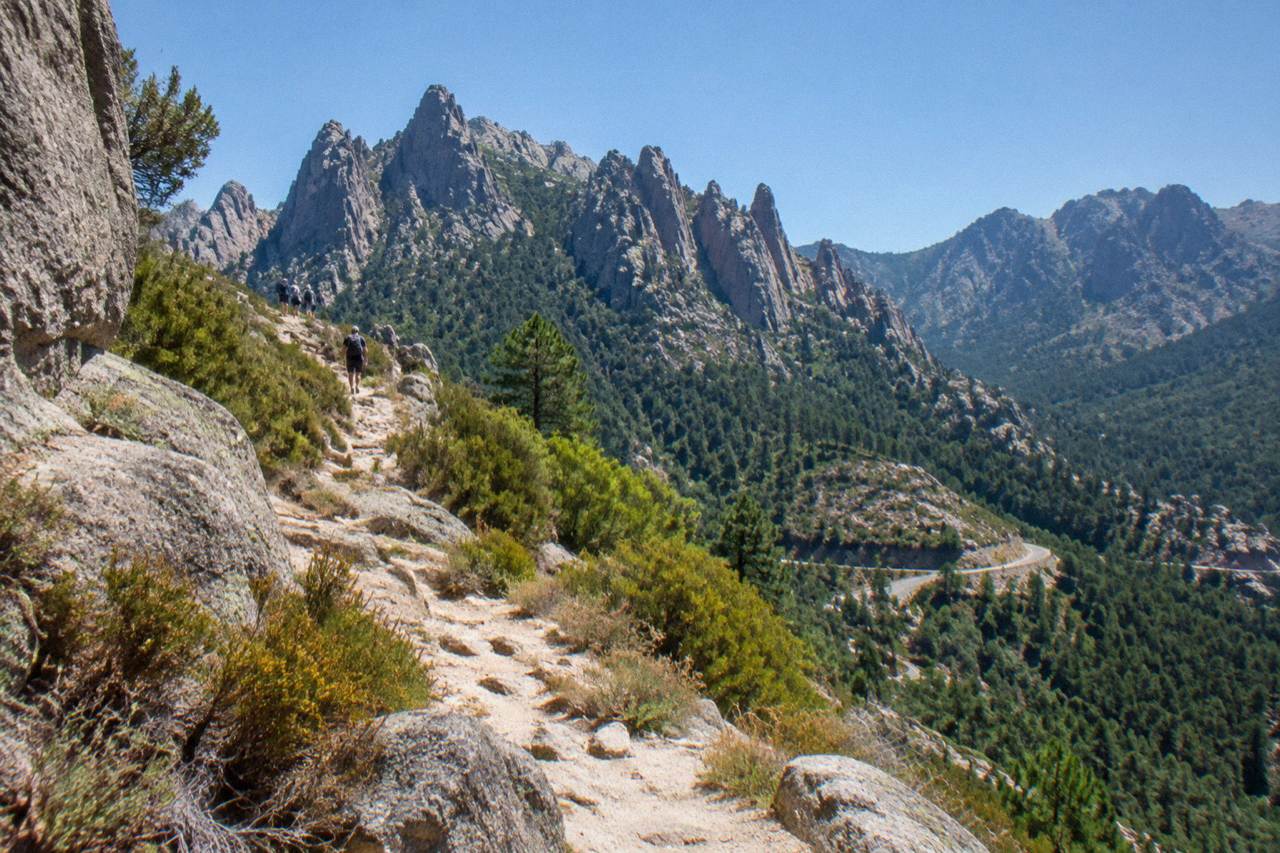
The Parc naturel régional de Corse guards the GR20 refuges from 16 May to 4 October inclusive for the 2026 season, and that guarded window is the practical walking season, because every night in a PNRC refuge or bivouac pitch must be booked online in advance. Outside the guarded season there are no wardens, meals are not available on site, and the mountain weather turns: snow falls on the high mountains of Corsica, not on the coast, and the route crosses terrain that holds it.
The PNRC page for the trail states the season dates plainly and adds the rules that shape them. Reservations are obligatory for every option, whether a bunk, a bivouac pitch with your own tent, or a rented tent, and they are made only through the online platform with card payment. Changes are possible up to 48 hours before a stage, subject to availability, and a full refund is available up to two months ahead. The FFRandonnée federation announced the opening of 2026 reservations, which points to the practical reality: the dates and the booking system work together, and late spring through early autumn is when the route exists as a supported trek. Questions such as is the GR20 hard and how long does the GR20 take both assume this window.
| Option at a PNRC refuge | 2026 rate |
|---|---|
| Bunk (bat-flanc) per person | EUR 20 |
| Bivouac pitch, own tent, per person | EUR 12 |
| Rented tent for one (pitch plus tent) | EUR 27 |
| Rented tent for two (two pitches plus tent) | EUR 39 |
Rental tents sleep two and come with a 3 cm mat per person, and the PNRC says to bring your own sleeping bag. Dogs are not allowed inside refuges or rented tents. Meals at the refuges are paid in cash or by cheque to the warden on site.
What Is The Best Time To Do The GR20?
The best time to do the GR20 is late May to mid-June or the second half of September, inside the guarded refuge season that runs 16 May to 4 October, because those windows sit between the highest summer temperatures and the first autumn storms while the refuges still have wardens and bookable bunks. July and August fall inside the season too, but the fire-access map governs the massifs then, and from 15 June to 30 September lighting fires and smoking in forests, maquis and massifs is banned.
That answer is a judgement drawn from the facts at hand, not an official verdict, and no available source names a best month. What the sources do give is precise. The Météo-France 1991-2020 station normals for Ajaccio show July averaging 8.6 mm of rain, the lowest figure on the table, and August the highest mean daily maximum at 29.2 C. September at Ajaccio averages 57.8 mm of rain and a mean maximum of 26.1 °C, against June's 25.9 mm and 25.9 C. October at Ajaccio carries 85.7 mm, and November 111.8 mm, so the refuge season closes on 4 October before the heaviest autumn rainfall arrives. Snow falls on the high mountains, which is why the season opens in mid-May rather than earlier.
The shape of the daylight also matters on a route with stages of 4 to 8.5 hours. Astronomical tables give Ajaccio about 15 h 11 min of daylight in June, 14.88 in July and 12.48 in September, against 11.07 in October. A September walker has fewer usable hours than a June walker, which is worth weighing against the cooler air.
How Does Corsica Weather Change Across The GR20 Season?
Corsica has a hot dry summer and a mild wet winter, and the GR20 season spans the transition between them: at Ajaccio the mean daily maximum climbs from 22.1 °C in May to 28.6 °C in July and 29.2 °C in August, then falls to 26.1 °C in September and 22.8 °C in October, while monthly rainfall runs lowest in July at 8.6 mm and highest in November at 111.8 mm, all from Météo-France station normals, 1991-2020.
The route itself climbs to Monte Cinto's massif, whose summit is 2,706 m, so the mountain temperatures sit below these coastal-station figures, and Météo-France publishes a dedicated mountain forecast for the Corsican ranges. The station normals below give the baseline for the season months. The wider set of guides lives on Corsica Travel Guide.
| Month | Ajaccio mean max C | Ajaccio mean min C | Rain mm | Sunshine h/day | Daylight h |
|---|---|---|---|---|---|
| May | 22.1 | 11.8 | 49.8 | 9.3 | 14.56 |
| Jun | 25.9 | 15.4 | 25.9 | 11.1 | 15.18 |
| Jul | 28.6 | 17.7 | 8.6 | 12.1 | 14.88 |
| Aug | 29.2 | 18.1 | 15.8 | 11.1 | 13.83 |
| Sep | 26.1 | 15.4 | 57.8 | 8.7 | 12.48 |
| Oct | 22.8 | 12.6 | 85.7 | 6.7 | 11.07 |
The UK Foreign Office travel advice for France notes a high risk of wildfires during the summer season, April to October, which is the same risk the Corsican access map manages. Météo-France also runs storm vigilance, and the standard protection advice is to avoid summits and ridges during storms and to seek shelter. On a high route like the GR20, that advice is not decorative: it is the difference between a long day and a rescue call.
Which Rules Fix Your GR20 Start Date?
Three dated rules narrow the choice: no GR20 departures from Calenzana after 11:00 under a municipal order tied to fire risk, the fire ban runs 15 June to 30 September with no fires or smoking in forests, maquis and massifs, and the fire-risk access map is updated at 18:00 each day for the next day, with some massifs closed entirely on the highest-risk days between mid-June and mid-September. Together they push early starts and they make July and August the most rule-bound months.
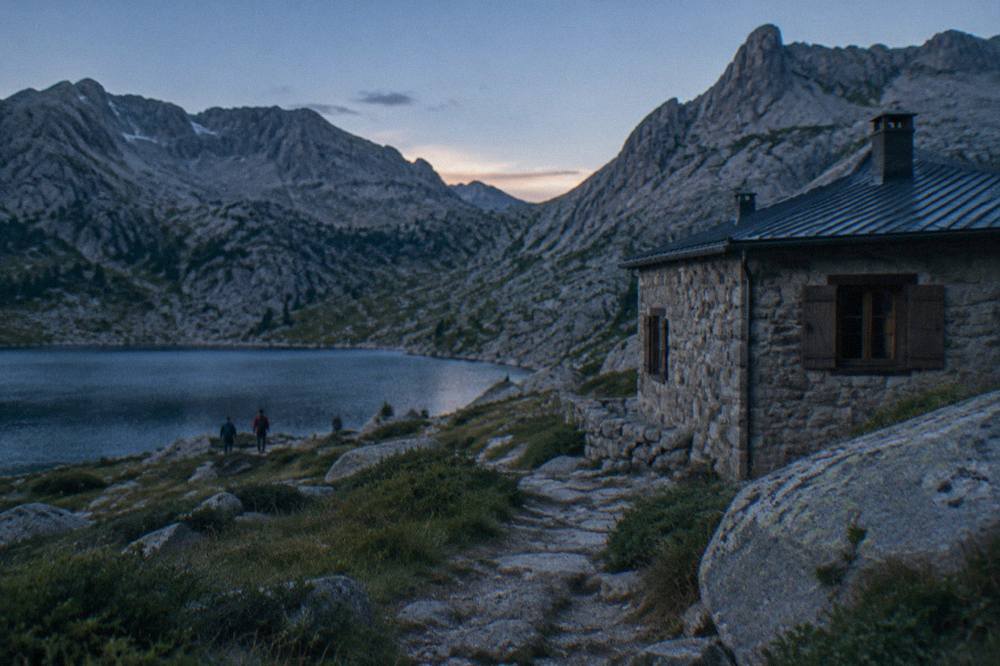
The PNRC lists all of these on the GR20 page. Stage 1, Calenzana to Ortu di u Piobbu, takes about 6 h 30 out, which is why the 11:00 cut-off at Calenzana, the northern start, exists at all: it is a fire-safety measure, not a suggestion. Wild camping is banned across Corsica including the GR20, with bivouac allowed only in the marked areas at the refuges and only with a reservation, so the nightly stopping points are fixed and the day's walking hours need to fit between them. Anyone weighing solo walking should read is it safe to hike the GR20 alone, and the booking mechanics are covered in do you need to book GR20 refuges.
If the full traverse feels pinned down by these rules, the same mountain country can be sampled in shorter pieces. The Richiusa canyon near Bocognano, close to the GR20's midpoint, runs guided canyoning trips, and there is a Check availability link for dates in the same season window.
What If The GR20 Dates Do Not Fit Your Trip?
If the guarded season or the booking system does not fit, the PNRC brochure lists five other long trails: Mare e Monti Nord at 121 km over 10 days to Cargèse, Mare a Mare Nord at 139 km over 8 to 12 days, Mare a Mare Centre at 84 km over 7 days from Ghisonaccia to Porticcio, Mare a Mare Sud at 73 km over 5 days to Propriano, and Mare e Monti Sud at 66 km over 5 days, also ending in Propriano.
| Trail | Length | Days | Total climbing | End point |
|---|---|---|---|---|
| Mare e Monti Nord | 121 km | 10 | 6,100 m | Cargèse |
| Mare a Mare Nord | 139 km (161 km with variant) | 8 to 12 | 5,900 m | Calvi direction |
| Mare a Mare Centre | 84 km | 7 | 3,900 m | Porticcio |
| Mare a Mare Sud | 73 km | 5 | 3,200 m | Propriano |
| Mare e Monti Sud | 66 km | 5 | 2,700 m | Propriano |
These trails cross lower and reach the sea, which changes the weather exposure: the fire rules still apply to forest massifs in the same 15 June to 30 September window, but the high-mountain snow question matters less. For a first trip built around dates rather than a single trail, the first time in Corsica itinerary and the best time to visit Corsica guide cover the island-wide picture. If the dates are fixed by school holidays or flights, the wider answer to how many days in Corsica is enough may settle whether the GR20 belongs on that trip at all.
Common Questions About The GR20 Season
What Is The Best Time To Do The GR20?
Late May to mid-June, or the second half of September, inside the guarded refuge season of 16 May to 4 October. The Météo-France normals show July averaging 8.6 mm of rain at Ajaccio and August a mean daily maximum of 29.2 °C, so the shoulder months trade the highest heat for cooler walking. No official source names a best month.
Are The GR20 Refuges Open All Year?
No. The PNRC guards the refuges for a fixed season, 16 May to 4 October in 2026. Outside it there are no wardens and meals are not served, and snow lies on the high mountains in the colder months.
Do I Have To Book GR20 Refuges In Advance?
Yes. The PNRC makes reservations obligatory for bunks, bivouac pitches and rented tents alike, online only with card payment. Changes are possible up to 48 hours before a stage, and a full refund is available up to two months before.
Why Can You Not Leave Calenzana After 11:00?
A municipal order tied to fire risk forbids GR20 departures from Calenzana after 11:00. Stage 1 to Ortu di u Piobbu takes about 6 h 30, and the rule is a fire-safety measure for the massif.
Is Wild Camping Allowed On The GR20?
No. Wild camping is banned across Corsica including the GR20. Bivouac is allowed only in the marked areas at PNRC refuges, with a per-person reservation: EUR 12 for a pitch with your own tent, EUR 27 for a rented tent for one, EUR 39 for two.
Can You Do The GR20 In October?
The refuge season closes on 4 October, and the Météo-France normals for Ajaccio show 85.7 mm of rain in October against 57.8 mm in September, with November higher still at 111.8 mm. Walking after the wardens leave means carrying full autonomy on a high route.
The window is the answer: the GR20 exists as a supported trek between 16 May and 4 October in 2026, and everything else, from the 11:00 Calenzana cut-off to the 18:00 fire map, slots inside it. Choose dates inside that frame, book the nights before flying, and check the access map the evening before each stage.