Is Corsica Worth Visiting?
Is Corsica worth visiting? A fact-based look at what the island offers: coastline, boat trips, hiking, food and costs, with practical figures from official sources.
Corsica is a French island in the Mediterranean with sea on every side, a mountainous interior topped by Monte Cinto at 2,706 m, and more than 1,000 km of coastline across its 8,722 km2. It holds a UNESCO World Heritage property, a national park, one of Europe's best-known long-distance hiking trails, and a food culture with several protected appellations. Whether Corsica is worth visiting is a question this page answers: what the island offers, what it costs, and who it suits.
Yes, Corsica is worth visiting if you want an island that combines sea and serious mountain in one place: more than 1,000 km of coastline, a 2,706 m summit, a UNESCO natural World Heritage property inscribed in 1983, and a 180 km mountain trail with guarded refuges. Few Mediterranean islands pack that range into 8,722 km2.
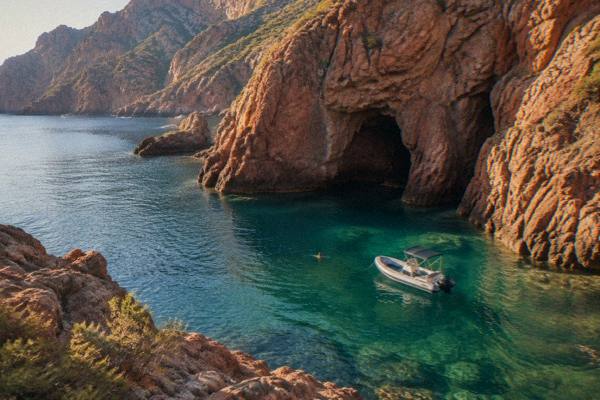
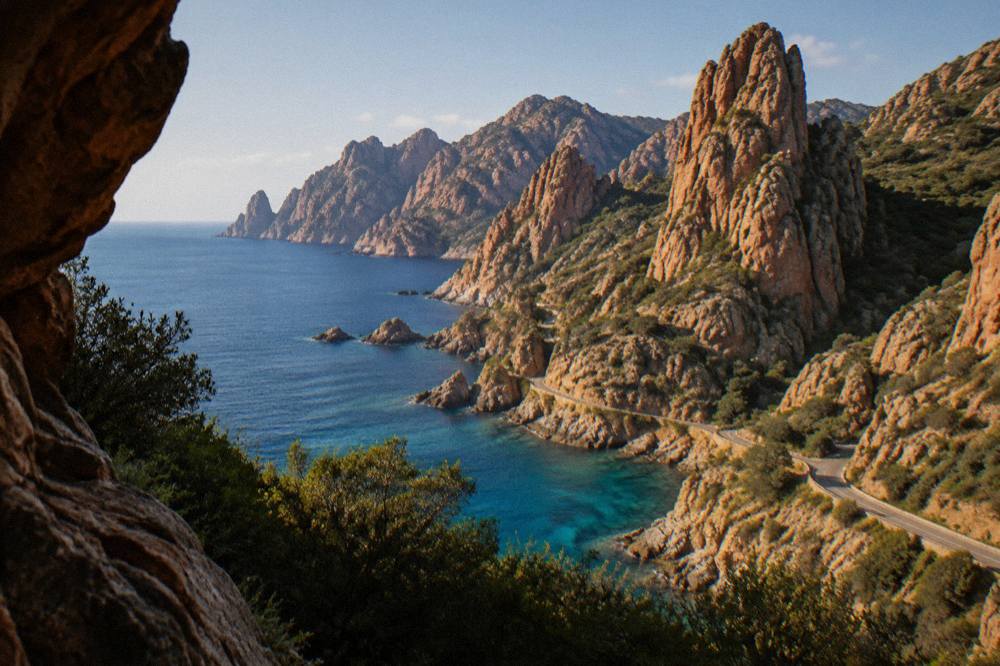
That is the short case. The longer case rests on three pillars the sources bear out. First, the sea: the island's western coast holds the "Gulf of Porto: Calanche of Piana, Gulf of Girolata, Scandola Reserve", UNESCO property 258, inscribed in 1983 under natural criteria, and Scandola itself is a nature reserve of 1,000 ha of sea and 919 ha of land managed by the Parc naturel régional de Corse. Second, the mountains: the GR20 runs 180 km north to south in about 15 stages of 4 to 8.5 hours each. Third, the food: brocciu, Corsican charcuterie, chestnut flour, olive oil, honey and clémentine de Corse all carry French or European protected designations. A fuller discussion of the island's reputation is in what Corsica is famous for.
What Makes Corsica Different From Other Mediterranean Islands?
Corsica is the fourth-largest Mediterranean island at 8,722 km2, and it pairs that size with unusual relief: a highest point of 2,706 m at Monte Cinto, only a short distance as the crow flies from the shore. The island also has 360 communes and a single territorial authority, the Collectivité de Corse, since 1 January 2018.
The relief is the differentiator. On the Météo-France 1991-2020 station normals, Ajaccio averages a July daily high of 28.6 °C with 8.6 mm of rain, while the high mountains take snow in winter, so beach weather and alpine conditions sit on the same small island. The Parc naturel régional de Corse, created in 1972, now covers 4,484 km2, more than half the island, including the Castagniccia and valleys that run down to the sea, and its western sea front runs 80 km from Capu Rossu to Capu Cavallu. Population figures underline how empty the interior remains: 365,636 residents in total as of 1 January 2026 per the provisional INSEE estimate, of whom 76,320 live in Ajaccio and 46,867 in Bastia. Where exactly the island sits is covered in where Corsica is located.
What Can You See And Do Across Corsica?
The island's sights split into four groups: UNESCO-listed coast and reserves reachable by boat, historic towns and museums with published entry prices, prehistoric sites, and long-distance trails. Maison Bonaparte in Ajaccio costs EUR 10 full price, the Musée de la Corse in Corte EUR 5.50, and Filitosa EUR 9, so a sightseeing day out is inexpensive by European standards.
The town and museum offer is real and cheap. Maison Bonaparte, on Rue Saint-Charles about 200 m from Ajaccio's bus station and ferry terminal, is open every day except Monday, with free entry for EU residents under 26. The Palais Fesch in the same city lists EUR 10 full price and EUR 6 for over-65s, free up to 18, open daily 09:00 to 17:00. In Corte, one EUR 5.50 ticket covers both the Musée de la Corse and the citadel, and the museum's own page gives road times of 1 hour from Bastia and 1 hour 30 from Ajaccio or Calvi. Filitosa, the prehistoric site, is open 1 April to 2 November, EUR 9 for adults with a EUR 28 family ticket. The full index of guides sits on Corsica Travel Guide.
Here is what the main paid sights cost, from their own published information:
| Sight | Town | Full price | Key condition |
|---|---|---|---|
| Maison Bonaparte | Ajaccio | EUR 10 | Closed Monday; free for EU residents under 26 |
| Palais Fesch | Ajaccio | EUR 10 | EUR 6 over 65; free up to 18; daily 09:00-17:00 |
| Musée de la Corse and citadel | Corte | EUR 5.50 | One ticket covers both; EUR 3 for over-65s |
| Filitosa prehistoric site | Sollacaro | EUR 9 | Open 1 April to 2 November; family EUR 28 |
| Escalier du Roi d'Aragon | Bonifacio | About EUR 5 | 189 steps; closed-toe shoes required |
For planning how long all this needs, how many days in Corsica is enough works through the trade-offs by region.
Is Corsica Good For Beaches And Boat Trips?
Yes, decisively: with more than 1,000 km of coastline and ferry ports at Ajaccio, Bastia, Bonifacio, L'Île-Rousse, Propriano and Porto-Vecchio, the sea is the island's core asset. Boat tours operate out of every major resort town, and the Scandola reserve, the Îles Lavezzi and the Îles Sanguinaires are all water-access experiences.
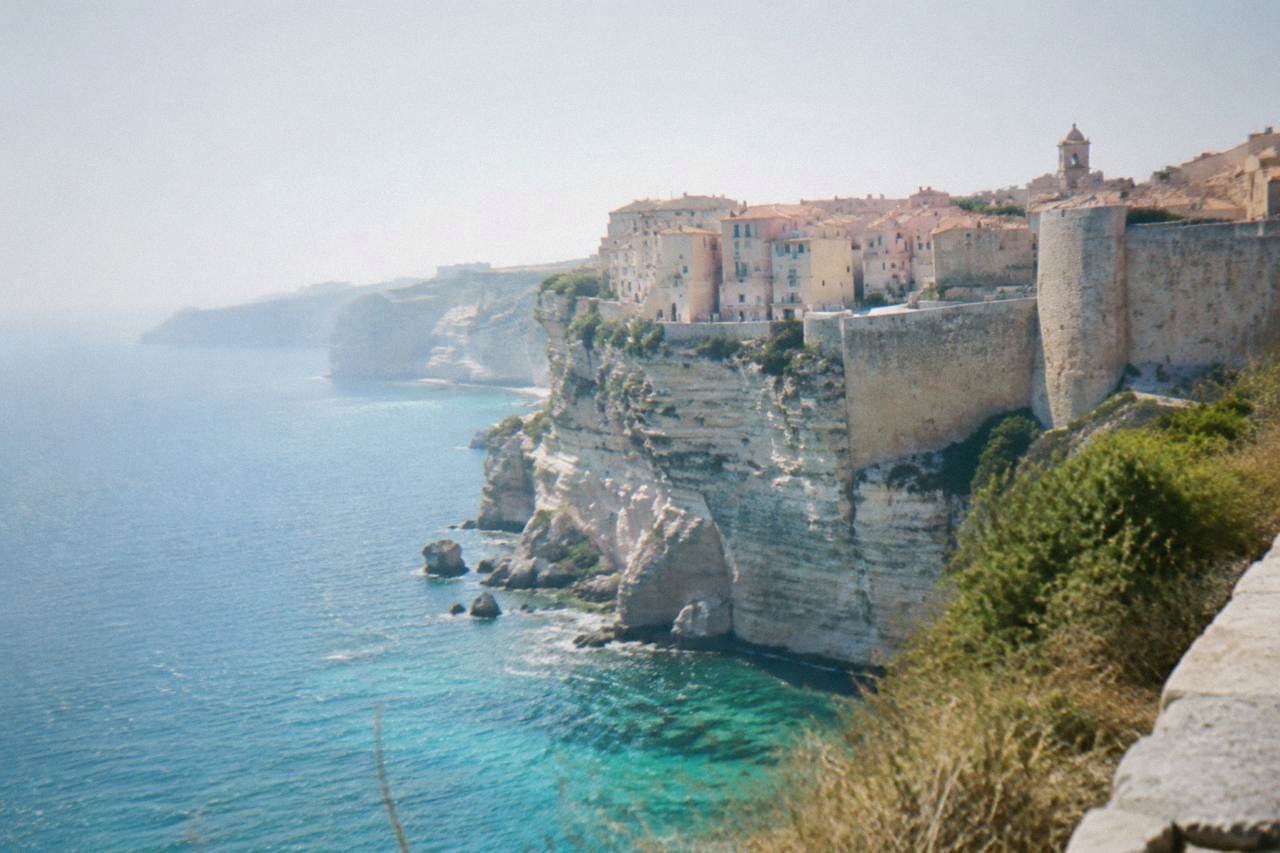
The rules around the protected areas explain why boat trips matter here. The Scandola reserve's land area is closed to the public and visits are by boat only, reported on the reserve's own rules page, with no landing in the 70 ha integral reserve and anchors up at sunset. The Îles Lavezzi sit inside the Bouches de Bonifacio Nature Reserve. Even the Désert des Agriates beaches, Saleccia and Lotu, are reported to be reached by boat shuttle from Saint-Florent roughly April to October, by 4x4 track from Casta, or on foot. One standout option from Bonifacio is the Bonifacio cliffs and Lavezzi cruise, a run along the cliffs and out to the islands; Check availability if that fits your dates. Swimming later in the year is its own question, handled in can you swim in Corsica in October.
Is Corsica Good For Hiking And Mountains?
Yes: the GR20 covers 180 km in about 15 stages of 4 to 8.5 hours, with PNRC refuges guarded from 16 May to 4 October 2026 and a bunk at EUR 20 per person, a bivouac pitch at EUR 12. Beyond it, the Mare a Mare and Mare e Monti trails add five more waymarked routes across the island.
The trail network is unusual for an island this size. According to the PNRC's own brochure, Mare a Mare Nord runs 139 km (161 km with the variant), Mare a Mare Centre 84 km from Ghisonaccia to Porticcio, Mare a Mare Sud 73 km ending in Propriano, Mare e Monti Sud 66 km, and Mare e Monti Nord 121 km over 10 days to Cargèse. Refuge booking is mandatory and online only, dogs are not allowed in refuges or rented tents, and there are no GR20 departures from Calenzana after 11:00 under a municipal fire-risk order. From 15 June to 30 September fires and smoking are forbidden in forests, maquis and massifs, and the fire-risk map updates at 18:00 for the next day. Whether the GR20 itself is for you is answered in is the GR20 hard.
| Trail | Length | Stages or days | Total climb | End point |
|---|---|---|---|---|
| GR20 (Fra li Monti) | 180 km | About 15 stages, 4 to 8.5 h | Not published by PNRC | Conca |
| Mare a Mare Nord | 139 km (161 km variant) | 8 to 12 days | 5,900 m | Central coast |
| Mare a Mare Centre | 84 km | 7 days | 3,900 m | Porticcio |
| Mare a Mare Sud | 73 km | 5 days | 3,200 m | Propriano |
| Mare e Monti Nord | 121 km | 10 days | 6,100 m | Cargèse |
| Mare e Monti Sud | 66 km | 5 days | 2,700 m | Propriano |
What Does Corsica Cost To Visit?
Local costs are moderate rather than cheap: sight entries run EUR 5.50 to EUR 10, a GR20 refuge bunk is EUR 20 and a bivouac pitch EUR 12 per person, and restaurant service is included in menu prices by French law. The real budget questions are the crossings and a hire car, since the island's mountain roads make one almost unavoidable for most itineraries.
On the ground, published figures are easy to plan against. The PNRC's 2026 tariff card prices a rented tent for one person at EUR 27 and for two at EUR 39, and meals at refuges are paid in cash to the guardian. Tipping in restaurants is optional: the DGCCRF, the French consumer authority, states that displayed prices must be service compris. More than 8.5 million passengers excluding cruise passengers passed through Corsica's ports and airports in 2025, per the ORTC and DREAL annual report, which tells you the summer infrastructure runs at full stretch even if it says nothing about crowds on any given day. The honest budget picture, including where the money goes, is in is Corsica expensive, and the car question in do you need a car in Corsica.
When Is A Good Time To Visit Corsica?
The Météo-France 1991-2020 normals show why summer dominates: Ajaccio averages 28.6 °C daily highs in July with 8.6 mm of rain and 12 h 6 min of sunshine a day, while November averages 111.8 mm of rain. Spring and autumn sit between those poles, with May at 22.1 °C and 49.8 mm and September at 26.1 °C and 57.8 mm at the same station.
Those are averages, not promises, and the pattern repeats at Bastia, where November carries 134.3 mm and July 13.8 mm. Refuges on the GR20 are guarded only from 16 May to 4 October, which effectively frames the mountain season. And from mid-June to mid-September, access to some massifs can be restricted by fire risk, with the daily map published at 18:00 for the next day; the UK FCDO also notes a high wildfire risk in France from April to October. The month-by-month detail, including the rainfall question, is in what is the best month to visit Corsica and does it rain a lot in Corsica.
Common Questions About Visiting Corsica
Is Corsica Worth Visiting?
Yes. The island combines more than 1,000 km of coastline with a 2,706 m highest summit, a UNESCO World Heritage property, a 180 km flagship hiking trail and a food culture carrying multiple protected designations, all within 8,722 km2.
Is Corsica Good For A First-Time Visitor To The Mediterranean?
It works well: Ajaccio and Bastia are ferry-and-airport towns, the sight entries are inexpensive, and the range from boat trips to mountain trails means a short trip can mix coast and interior. How to split the days is covered across the itinerary guides.
Do You Need To Be Fit To Enjoy Corsica?
No, the boat trips, beaches and town sights such as Maison Bonaparte, the Palais Fesch and Filitosa make no fitness demands. Fitness only becomes a factor for the GR20, whose stages run 4 to 8.5 hours each.
Is Corsica Safe?
The everyday safety picture is standard for France: emergency numbers are 112, 15, 17, 18 and 196 for sea rescue, and mountain rescue is reached through the PGHM in Ajaccio. The main seasonal risk is wildfire, with fires and smoking banned in forests and massifs from 15 June to 30 September.
Can You Combine Corsica With Sardinia?
Yes. Moby and Ichnusa Lines run the Santa Teresa Gallura to Bonifacio crossing, reported at about 50 to 60 minutes, and the route is authorized through the 2026-2027 season.
The verdict from the facts is straightforward: few islands of this size offer a UNESCO-listed coast, a 2,706 m mountain interior and a documented network of six long-distance trails in one package, and Corsica does.