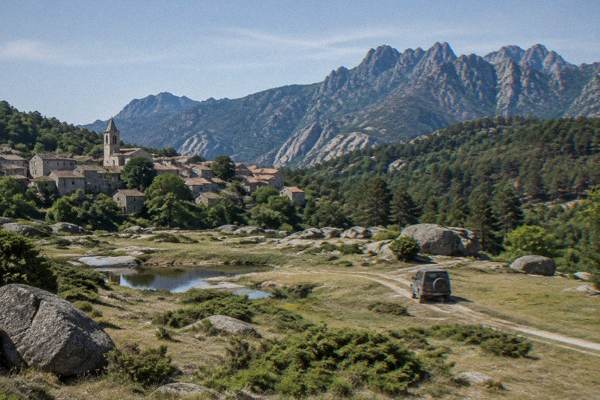
Can You Camp Wild In Corsica?
Wild camping is banned across Corsica, including the GR20, but bivouacking at PNRC refuges is possible with an online booking. Here is what the rules allow and what a night costs.
Corsica is a French Mediterranean island of 8,722 km2 with more than 1,000 km of coastline and a mountainous interior that rises to Monte Cinto at 2,706 m, and its mountains pull walkers and tent-pitchers inland every summer. The short answer to the camping question is restrictive: free-standing wild camping is banned across the island, while a tightly regulated bivouac system exists on the GR20, the 180 km high-level trail that crosses the interior from Calenzana in the north to Conca in the south. This page reports what the Parc naturel régional de Corse (PNRC) and the published trail documents actually say.
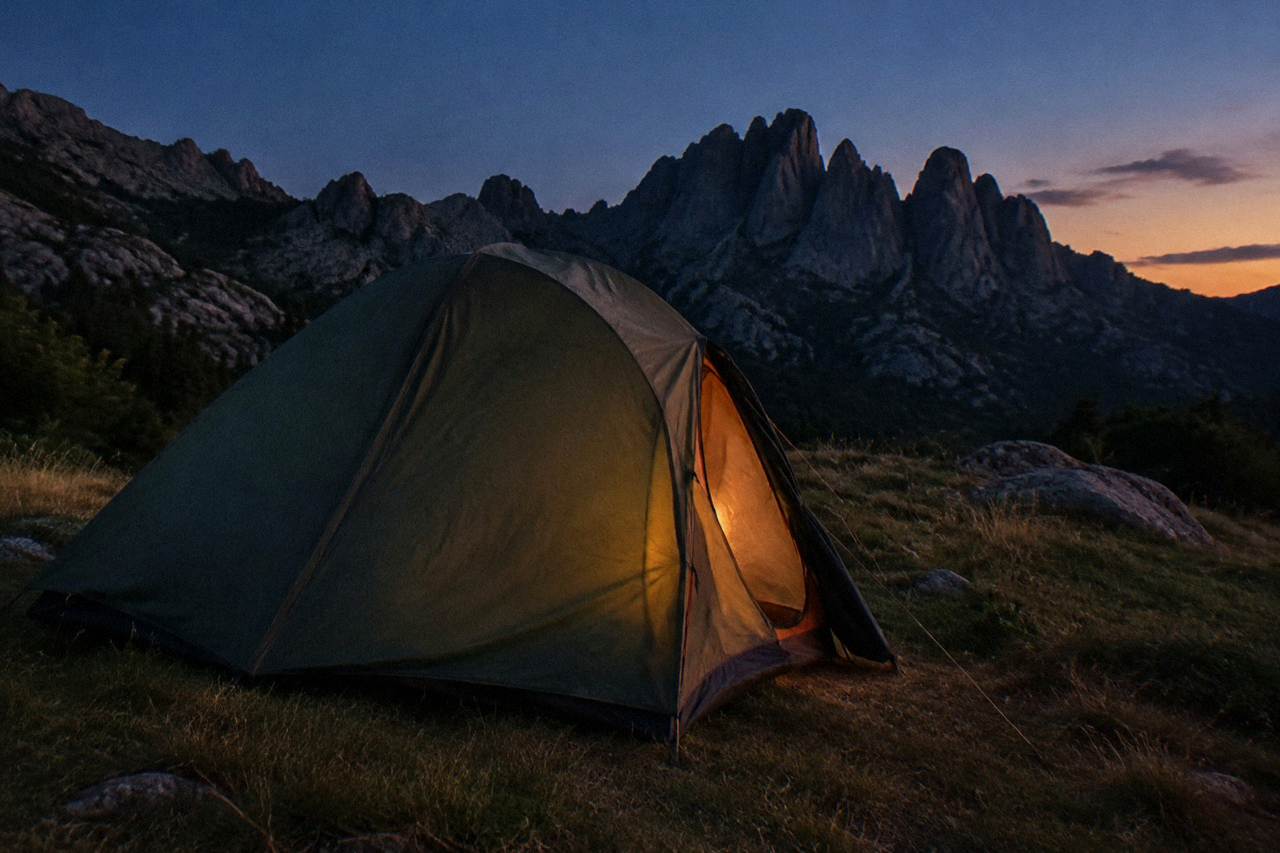
No, wild camping is banned across Corsica, including along the GR20, under municipal orders that apply to the whole island. The one legal exception is the bivouac system on the GR20 itself: the Parc naturel régional de Corse allows overnight stops only in the marked bivouac areas beside its guarded refuges, and every pitch, bunk or rented tent must be reserved and paid for online before the walk. Anywhere else on the island, a night under canvas requires a campsite.
The ban is not a grey area. The PNRC's own GR20 page states that reservations are obligatory for every overnight option, refuge bunk, bivouac pitch or rented tent, and that bookings are taken exclusively through its online platform with card payment. Bivouac sauvage, pitching a tent wherever the evening finds you, is prohibited on the trail and, under municipal arrêtés reported in Corsican hiking guides, across the rest of the island too.
The reasoning is practical as much as legal. Corsica's mountains carry a serious summer wildfire risk, and from 15 June to 30 September it is forbidden to light a fire or smoke in forests, maquis and massifs, a rule the PNRC publishes alongside its GR20 information. A scattering of unauthorized camps across dry scrub is exactly what the fire regulations are written to prevent. The island's fragility plays a part too: the interior sits inside the Parc naturel régional de Corse, created in 1972, which now covers 4,484 km2 including the Castagniccia and the big valleys that run down to the sea.
Walkers planning the full traverse should read the companion page on whether the GR20 is hard before committing, because the camping rules and the trail's difficulty are inseparable.
Where Bivouacking Is Actually Allowed In Corsica
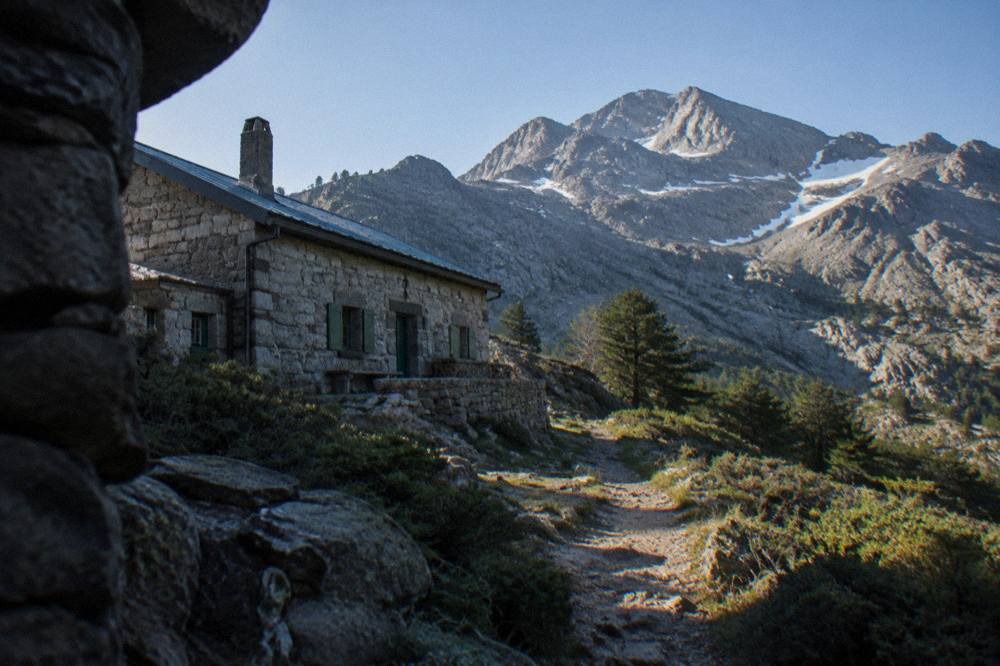
Bivouacking is legal only in the designated areas beside the PNRC's guarded refuges on the GR20, and only with a paid online reservation for each person. The refuges are guarded from 16 May to 4 October in the 2026 season, changes to a booking are possible up to 48 hours before the stage subject to availability, and a full refund is available up to two months ahead. Dogs are not allowed inside refuges or rented tents.
The system is designed to concentrate overnight walkers at known points rather than spread them across the massif. Each refuge has a quota, and the confirmation email sent after booking serves as the receipt a guardian may ask to see. The nature of the booked option cannot be changed after the fact, so a walker who books a bare bivouac pitch cannot convert it into a bunk on arrival.
A few mechanical rules matter to anyone walking the northern half. The PNRC states that there are no GR20 departures from Calenzana after 11:00, under a municipal order tied to fire risk, and stage 1 from Calenzana to Ortu di u Piobbu is listed at about 6 hours 30 out. Rented tents at the refuges sleep two and come with a 3 cm mattress per person; sleeping bags are not supplied, so walkers carry their own.
For walkers who want the mountains without a full traverse, the island's other waymarked trails run village to village through the same landscapes, with roofs at each night's end instead of refuge bunks. The question of hiking the GR20 alone safely covers the rescue picture, including the PGHM mountain rescue base at Ajaccio reachable on 04 95 24 24 00, with 112 for emergencies anywhere on the island.
What A GR20 Refuge Night Costs In 2026
A night on the GR20 in 2026 costs EUR 20 per person for a bunk in a refuge, EUR 12 per person for a bivouac pitch where you pitch your own tent, EUR 27 for a rented one-person tent and EUR 39 for a rented two-person tent covering two people, according to the PNRC's current tariff page. Meals at the refuges are paid in cash or by cheque to the guardian on site, not through the booking platform.
Those are the only official overnight rates on the trail, and they are per person for the first two in the case of the two-person tent. The bivouac option is the cheapest legal night in the Corsican mountains, but it is still a booked and paid service, not a free pitch. Here is the full rate card in one view. The wider set of guides lives on Corsica Travel Guide.
| Overnight option on the GR20 | 2026 PNRC rate | Notes |
|---|---|---|
| Refuge bunk (bat-flanc) | EUR 20 per person | Dormitory sleeping, booking mandatory |
| Bivouac pitch, own tent | EUR 12 per person | Only in marked areas beside refuges |
| Rented tent, 1 person | EUR 27 | Pitch plus tent, sleeps two, 3 cm mat each |
| Rented tent, 2 persons | EUR 39 | Two bivouac places plus the tent |
The Corsican Assembly's own description of the GR20 gives 180 km covered in about fifteen stages of 4 to 8.5 hours each, with refuges and gîtes along the way. Fifteen is the figure to plan around, not the sixteen that circulates in older secondary sources.
Fire Rules That Change Camping Plans In Corsica Summer
From 15 June to 30 September, lighting any fire or smoking is forbidden in Corsica's forests, maquis and massifs, and from mid-June to mid-September daily access to some massifs can be restricted or closed outright. The risk map is updated at 18:00 each evening for the next day, and on the GR20 no departures are allowed from Calenzana after 11:00. These rules apply to every walker and camper, booked bivouac or not.
The access map is published through prefecture-linked systems for both Corse-du-Sud and Haute-Corse, and some massifs can close entirely to the public on the highest-risk days under préfectoral orders, with access, circulation and parking regulated or banned on trails and tracks in the affected zones. A planned bivouac therefore depends on the previous evening's map, not just on the booking email.
| Fire-season rule in Corsica | Period or detail | What it means for camping |
|---|---|---|
| No fires, no smoking in forests, maquis, massifs | 15 June to 30 September | Includes stoves and cigarettes on trail |
| Massif access map updated daily | 18:00, for the next day | Check each evening before a stage |
| Some massifs can close fully | Mid-June to mid-September | Red or extreme days, by préfectoral order |
| GR20 departure cutoff at Calenzana | After 11:00 not allowed | Municipal order tied to fire risk |
The UK Foreign, Commonwealth and Development Office notes a high risk of wildfires in France from April to October, and the US State Department lists France at Level 2, Exercise Increased Caution, both of which frame the island's summer access rules rather than contradicting them. Snow in Corsica sits on the high mountains in winter, which is why the refuge-guarding season runs May to October and why the trail outside that window is a different proposition altogether.
Legal Ways To Sleep In The Corsican Mountains Without Wild Camping
The legal alternatives to wild camping in Corsica are the booked GR20 bivouac areas, the refuge bunks and rented tents on the same trail, and the network of gîtes and campsites at village level along the island's other waymarked trails, the Mare a Mare and Mare e Monti routes, which are designed to be walked with a roof at the end of each stage rather than a tent.
Those lower trails are the answer for walkers who want multi-day mountain routes without the refuge booking system. The PNRC's own brochure gives their full specifications, and the numbers below come straight from it.
| Waymarked trail in Corsica | Length | Stages or days | Total climb |
|---|---|---|---|
| GR20 (Fra li Monti) | 180 km | About 15 stages | Not stated |
| Mare e Monti Nord | 121 km | 10 days, to Cargèse | 6,100 m |
| Mare a Mare Nord | 139 km | 8 to 12 days | 5,900 m |
| Mare a Mare Centre | 84 km | 7 days, Ghisonaccia to Porticcio | 3,900 m |
| Mare a Mare Sud | 73 km | 5 days, ends in Propriano | 3,200 m |
| Mare e Monti Sud | 66 km | 5 days, ends in Propriano | 2,700 m |
One planning note that trips people up: Mare a Mare Centre is 84 km, Ghisonaccia to Porticcio, per the PNRC brochure. Getting the two confused changes the start point and the last day of the walk.
The mountains are only half of Corsica. The same island that bans free camping also has more than 1,000 km of coastline, and days afloat need no booking quota and no tent. A Cargèse boat tour to Scandola and Piana covers the UNESCO-listed Gulf of Porto coastline with a stop at Girolata, the hamlet reachable on foot or by sea, and pairs naturally with a mountain-to-coast week: Check availability.
The UNESCO property in question, Gulf of Porto: Calanche of Piana, Gulf of Girolata, Scandola Reserve, was inscribed in 1983 and covers 11,800 ha, with the Scandola reserve itself closed to landings and visited by boat only. After a fortnight of refuge bunks and bivouac mats, a day on the water is the conventional counterweight, and the operator's live listing carries the current departure details for Cargèse.
Common Questions About Camping Wild In Corsica
Can You Camp Wild In Corsica?
No. Wild camping is banned across Corsica under municipal orders, including along the GR20. The only legal tent night in the mountains is a booked bivouac in the marked areas beside the PNRC's guarded GR20 refuges.
Can You Pitch A Tent Anywhere On The GR20?
No. Bivouacking is allowed only in the designated areas at the PNRC refuges, with a mandatory online reservation. Wild camping outside those areas is prohibited on the trail and across the island.
What Does A GR20 Refuge Night Cost?
In the 2026 season the PNRC charges EUR 20 per person for a refuge bunk, EUR 12 for a bivouac pitch with your own tent, EUR 27 for a rented one-person tent and EUR 39 for a rented two-person tent. Meals are paid in cash or by cheque to the guardian.
Are GR20 Refuges Open All Year?
No. In 2026 the PNRC refuges are guarded from 16 May to 4 October inclusive. Outside that window the booking system, guardian services and the safe walking season all fall away.
Can You Have A Campfire Or Barbecue While Camping In Corsica?
Not in summer. From 15 June to 30 September it is forbidden to light a fire or smoke in forests, maquis and massifs, and on high-risk days some massifs close to access entirely under préfectoral orders.
Are There Alternatives To Camping For Multi-Day Walks In Corsica?
Yes. The Mare a Mare and Mare e Monti trails, from 66 km to 139 km, are village-to-village routes designed around gîtes and accommodation rather than tents, per the PNRC's trail brochure.