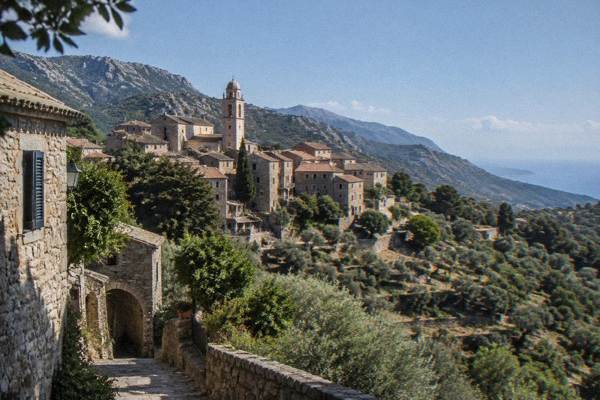
Castagniccia
The Castagniccia is the forested hill country of eastern Corsica, inside the Parc naturel régional de Corse, within reach of Bastia and Corte and tied to the island's chestnut, charcuterie and brocciu appellations.
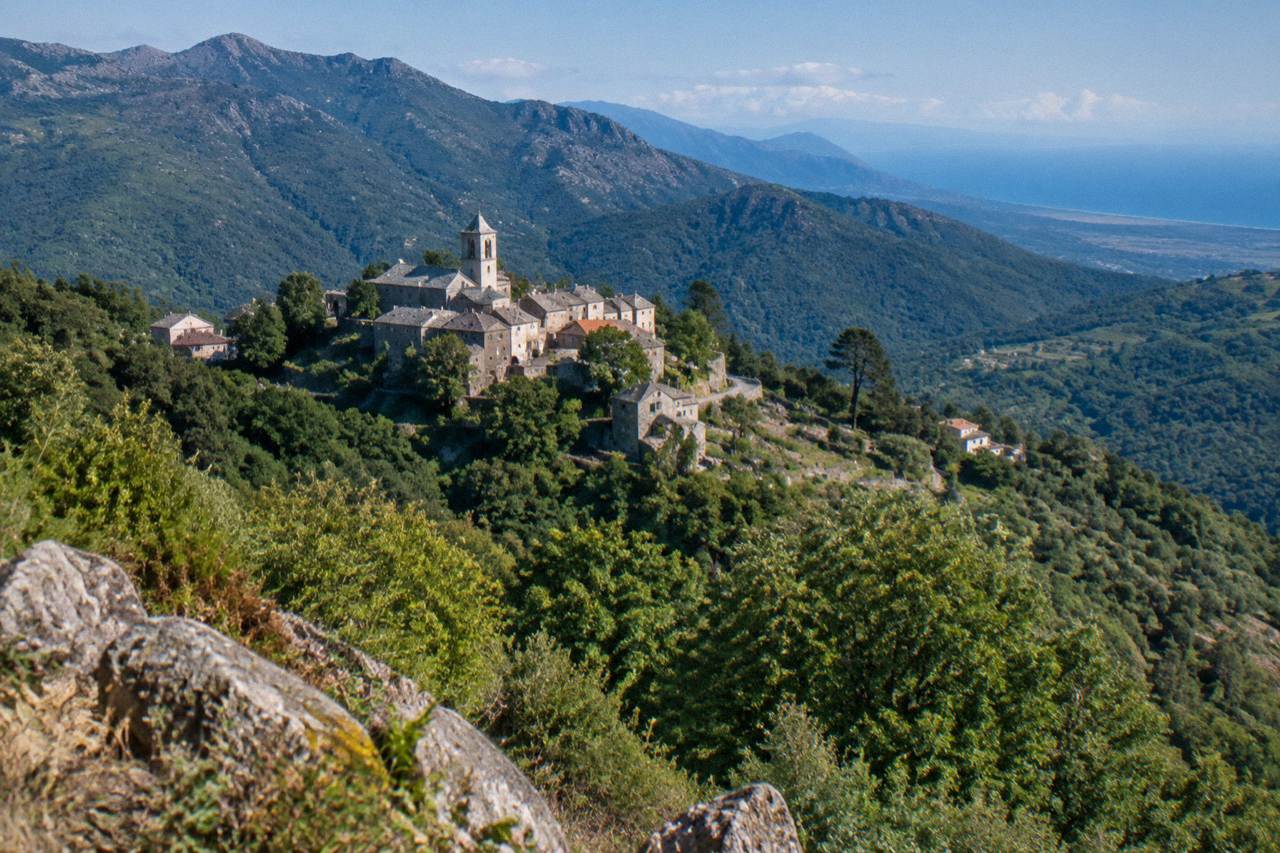
The Castagniccia is a region of eastern Corsica inside the Parc naturel régional de Corse, about an hour by road from Bastia via Corte-side routes, known for the island's chestnut flour AOP and its protected food produce.
The Castagniccia is the hill region on the eastern side of Corsica, the French Mediterranean island of 8,722 km2 with more than 1,000 km of coastline and an interior that climbs to Monte Cinto at 2,706 m. It sits inland of the eastern plain, and since the creation of the Parc naturel régional de Corse in 1972 it has fallen inside the park's 4,484 km2 territory, which the park's own documentation says now includes the Castagniccia and the big valleys running to the sea. Readers will find here the park framework that governs the region, the food appellations attached to its chestnut economy, the walking rules that apply, the Météo-France climate normals for the nearest stations, and the day trips that reach the coast from here. For the island-wide picture, start with the Corsica Travel Guide and the Corsica regions overview.
What Is The Castagniccia In Corsica?
The Castagniccia is a region of wooded hills in eastern Corsica, lying inland of the island's east coast and inside the boundaries of the Parc naturel régional de Corse, the regional park created in 1972 that covers 4,484 km2 of the island's interior and valleys. The park's own documentation lists the Castagniccia among the territories added to its perimeter, alongside the large valleys that run down to the sea, and its western sea front runs 80 km from Capu Rossu to Capu Cavallu.
Corsica is administered as the Collectivité de Corse, a single territorial authority with special status since 1 January 2018, covering the two departments of Corse-du-Sud and Haute-Corse. The island counts 360 communes and 365,636 residents as of the provisional INSEE estimate for 1 January 2026. The Castagniccia falls on the Haute-Corse side of the island, whose population INSEE put at about 190,500 in its 2026 estimates, against about 175,100 for Corse-du-Sud.
The region's identity is tied to the chestnut. Corsica holds an appellation d'origine protégée for chestnut flour, "Farine de châtaigne corse, Farina castagnina corsa", whose defence body was created in 2001 and which was recognised as an AOP in 2010. That appellation covers the whole island, but the chestnut groves of the eastern hills are the heartland of the crop the appellation protects. Around it sit the island's other protected produce: brocciu cheese, which obtained its appellation d'origine in 1983 and its AOC/AOP in 1998, and the three charcuterie cuts, prisuttu, lonzu and coppa, which took AOC in 2012 and AOP in 2014.
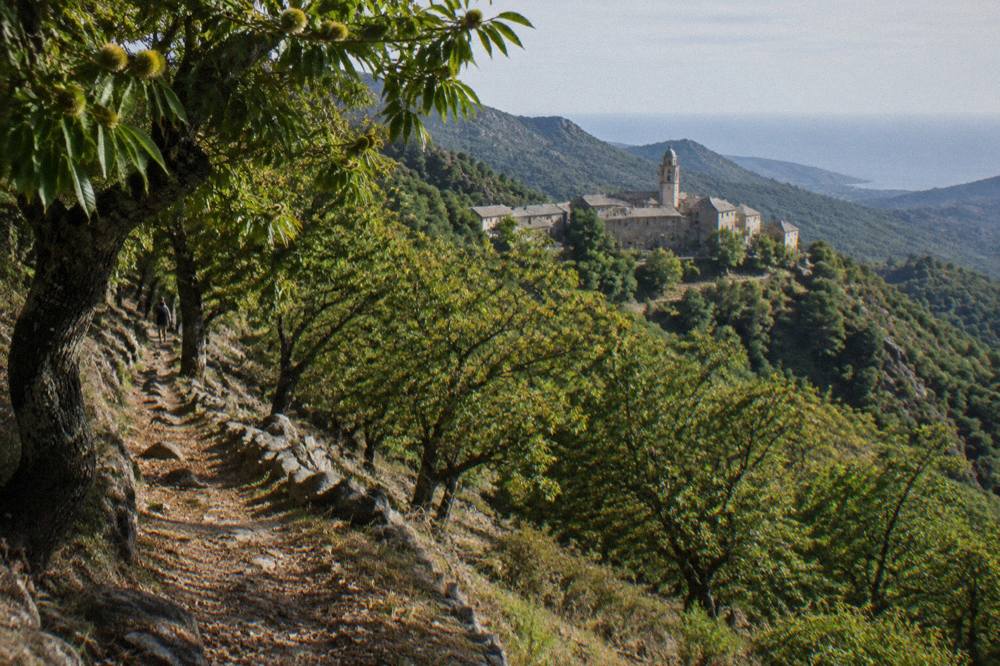
The nearest full town descriptions on this site cover Bastia, the island's second town with 46,867 residents, and Corte and the interior, the old capital that sits inland. Both are the practical gateways to the Castagniccia, and the Museu di a Corsica's own practical page gives road times from each.
What Are The Best Things To See In The Castagniccia Region Of Corsica?
The Castagniccia's sights are its landscapes and produce rather than ticketed monuments: the regional park that has covered the region since 1972, the chestnut country behind the AOP flour, and, within a morning's drive, Corte's citadel and museum at EUR 5.50 full price, where one ticket covers both the museum and the citadel. The Musee de la Corse in Corte is open 1 May to 31 October daily 10:00 to 19:00 except 1 May, and 1 November to 30 April daily 10:00 to 17:00 except Sundays, Mondays, public holidays and 24 December, closing annually from 31 December to 14 January.
Corte makes the natural anchor for a Castagniccia day. The museum's practical page gives the road times: one hour from Bastia, one and a half from Ajaccio, one and a half from Calvi, two from Porto-Vecchio, two and three quarters from Bonifacio and two and three quarters from Propriano. Reduced admission is EUR 4 without a temporary show and EUR 3 for over-65s and young people, and the citadel's last access is one hour before the museum closes.
The park itself is the reason the region looks the way it does. The Parc naturel régional de Corse, created in 1972, also manages the Scandola Nature Reserve on the west coast, the first nature reserve created in Corsica by ministerial order of 9 December 1975, with 1,000 ha of sea, 919 ha of land and a 70 ha integral reserve. Scandola is not in the Castagniccia, it is a boat-only site on the Golfe de Porto, but it is the same park authority, the PNRC, that runs both, and the Scandola boat tour is the standard way to see the reserve from the water.
Closer to hand, the coast north of the region opens onto the Cap Corse peninsula and the Désert des Agriates around Saint-Florent, where the beaches of Saleccia and Lotu are reached by boat shuttle from Saint-Florent, by 4x4 track from Casta, or on foot, per the visit-corsica.com page on the Agriates.
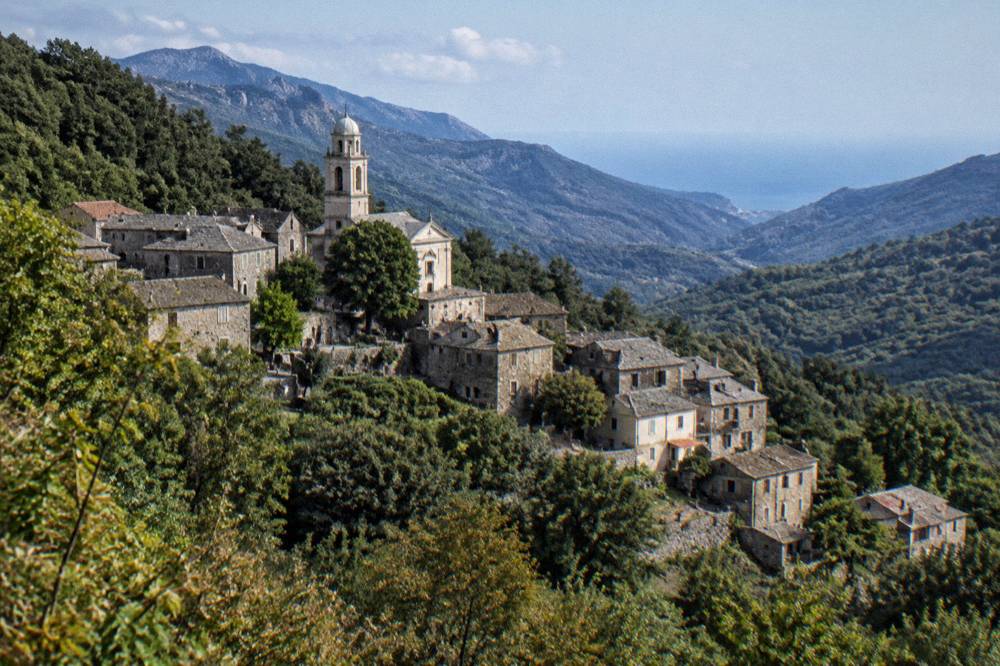
How Do You Get To The Castagniccia From Bastia, Corte Or The Airports?
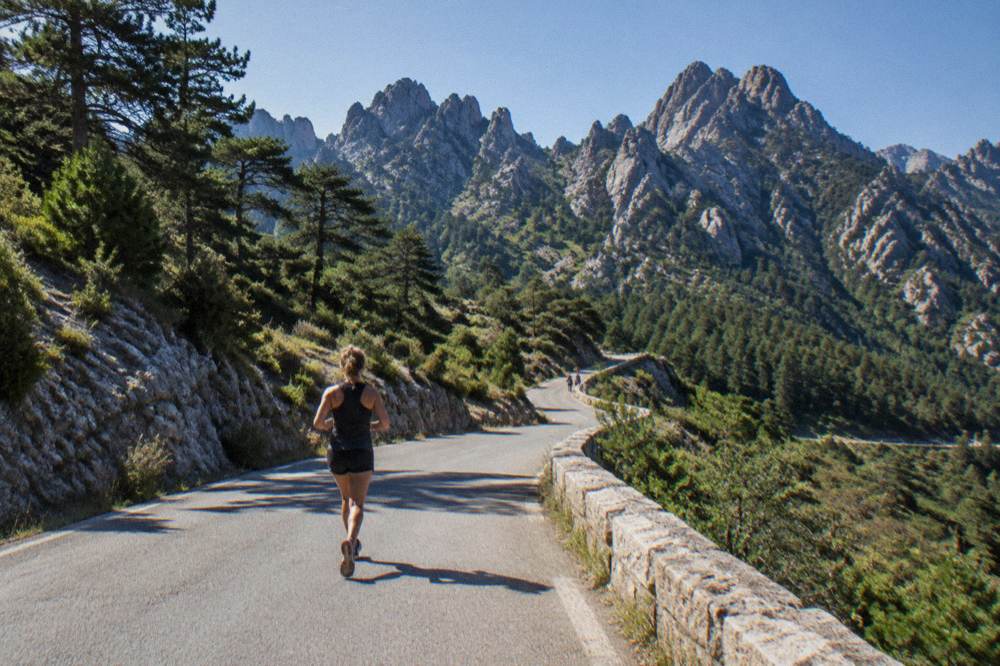
The Castagniccia is reached by road, most directly from Bastia, whose port and airport sit on the Haute-Corse side of the island: the Musee de la Corse page in Corte gives Bastia to Corte as one hour by road, and Corte itself lies one and a half hours from Ajaccio and Calvi, making Bastia the shortest gateway to the eastern hills. Bastia Poretta (BIA) is one of the island's four airports, alongside Ajaccio Napoléon Bonaparte (AJA), Figari Sud Corse (FSC) and Calvi Sainte-Catherine (CLY).
By sea, Bastia is the busiest approach from Italy. Moby sails Livorno to Bastia, Genoa to Bastia and Santa Teresa Gallura to Bonifacio; Corsica Ferries sails from Toulon and Nice to Ajaccio, Bastia, L'Île-Rousse, Porto-Vecchio and Propriano, and from Livorno and Savona to Bastia; Corsica Linea sails Marseille to L'Île-Rousse, Bastia, Propriano and Ajaccio; La Méridionale sails Marseille to Ajaccio and Marseille to Porto-Vecchio. Reported crossing times run about 50 to 60 minutes for Santa Teresa Gallura to Bonifacio, about 4 to 5 hours for Livorno to Bastia, about 6.5 hours for Savona to Bastia, about 7.5 to 10 hours for Nice to Bastia, about 10 to 13 hours from Toulon and about 12 to 13 hours from Marseille, mostly overnight.
| Route to Corsica | Operator(s) | Crossing time |
|---|---|---|
| Livorno to Bastia | Corsica Ferries, Moby | about 4 to 5 hours |
| Savona to Bastia | Corsica Ferries | about 6.5 hours |
| Nice to Bastia | Corsica Ferries | about 7.5 to 10 hours |
| Toulon to Corsican ports | Corsica Ferries | about 10 to 13 hours |
| Marseille to Corsican ports | Corsica Linea, La Méridionale | about 12 to 13 hours, mostly overnight |
| Santa Teresa Gallura to Bonifacio | Moby, Ichnusa Lines | about 50 to 60 minutes |
On the island, Inforoutes Corse publishes live road conditions and accessibility levels for the main mountain passes, and it is the standing reference before any mountain drive; storm and landslide closures are posted there. The Chemins de fer de la Corse run three lines, Ajaccio to Bastia via Corte, Ponte-Leccia to Calvi, and the Balagne coastal line from Calvi to L'Île-Rousse, and Corte's station sits on the Ajaccio to Bastia axis that skirts the region. More than 8.5 million passengers, excluding cruise passengers, passed through Corsica's ports and airports in 2025, per the ORTC and DREAL annual report published 30 May 2026.
What Food And Produce Is The Castagniccia In Corsica Known For?
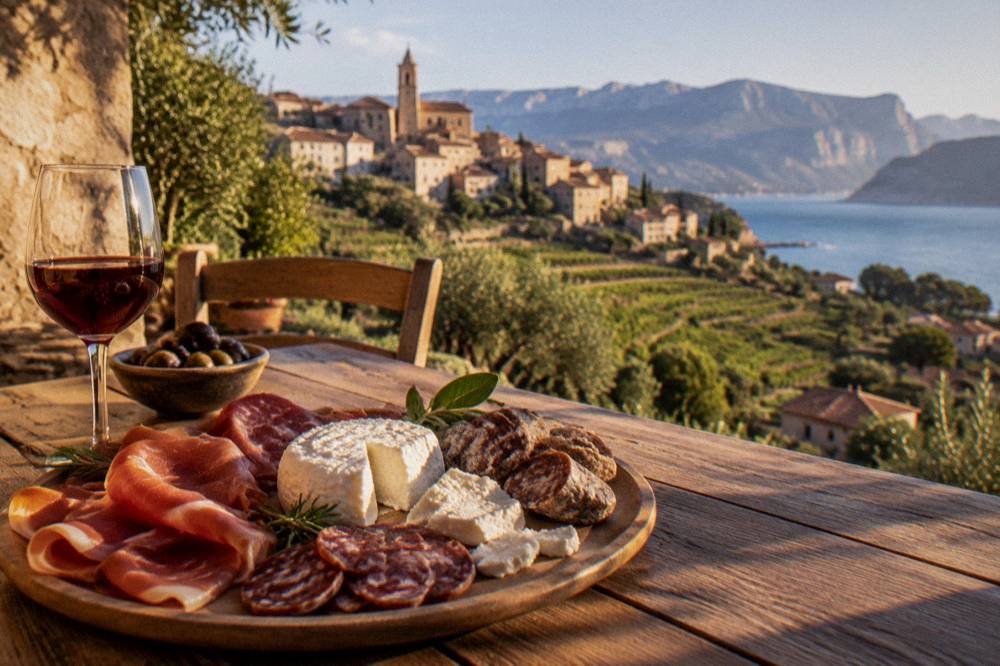
The Castagniccia's produce sits inside Corsica's family of protected foods: chestnut flour carries the AOP "Farine de chataigne corse, Farina castagnina corsa" recognised in 2010, brocciu took its appellation d'origine in 1983, the charcuterie cuts prisuttu, lonzu and coppa hold AOP since 2014, and Corsican honey and olive oil carry their own AOC and AOP, with the Clementine de Corse holding an IGP since 2007. The chestnut flour's defence body was created in 2001; the Nustrale pig breed behind the charcuterie was recognised in 2006; the olive oil AOC "Huile d'olive de Corse, Oliu di Corsica" took effect in 2004.
These are island-wide appellations, but the eastern hill country is the chestnut's home ground and the destination for anyone tracing the island's charcuterie and cheese. The wine appellations are elsewhere: Patrimonio, near Saint-Florent, Ajaccio, and Vin de Corse with its named crus Calvi, Coteaux du Cap Corse, Figari, Porto-Vecchio and Sartène, plus Muscat du Cap Corse. The main grape varieties reported are Nielluccio and Sciaccarellu for reds and Vermentinu for whites.
| Corsican produce | Protection | Year |
|---|---|---|
| Brocciu | Appellation d'origine, then AOC/AOP | 1983, then 1998 |
| Prisuttu, lonzu, coppa | AOC, then AOP | 2012, then 2014 |
| Chestnut flour (Farina castagnina corsa) | AOP recognised | 2010 |
| Olive oil (Oliu di Corsica) | AOC effective | 2004 |
| Corsican honey (Mele di Corsica) | AOC reported, AOP held | 1998 reported |
| Clementine de Corse | IGP, then Label Rouge | 2007, then 2014 |
In the capital, the Corsican food and wine tour pages on this site cover how to taste the island's produce on a guided walk, and the Ajaccio food tours run with tastings in small groups. Tipping follows French law: menus must state "prix service compris" with the service percentage, and any extra tip is optional, per the DGCCRF's own fiche.
Is Hiking In The Castagniccia And Eastern Corsica Regulated?
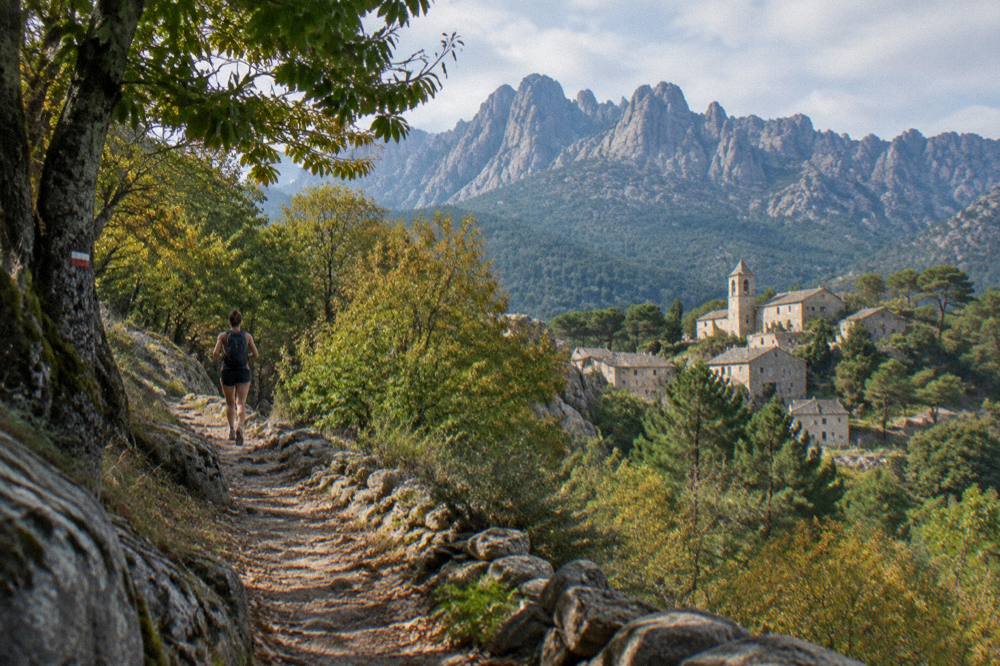
Yes: the whole island falls under fire-risk rules, from 15 June to 30 September it is forbidden to light a fire or smoke in forests, maquis and massifs, the daily fire-risk map is updated at 18:00 for the next day, and from mid-June to mid-September access to some massifs can be restricted, so walkers in the Castagniccia's woods must check the map before setting out. Wild camping is banned across Corsica, and bivouac is tolerated only in the marked areas at refuges.
The PNRC maintains the island's long-distance trail network, and its brochure gives the full lengths: Mare e Monti Nord at 121 km over 10 days to Cargèse with 6,100 m of climbing; Mare a Mare Nord at 139 km, or 161 km with the variant, over 8 to 12 days; Mare a Mare Centre at 84 km from Ghisonaccia to Porticcio over 7 days with 3,900 m of climbing; Mare a Mare Sud at 73 km over 5 days ending in Propriano; and Mare e Monti Sud at 66 km over 5 days, also ending in Propriano. The eastern itineraries out of Ghisonaccia are the ones that start from the plain below the Castagniccia.
| Trail | Length | Days | Total climb |
|---|---|---|---|
| Mare e Monti Nord | 121 km | 10 | 6,100 m |
| Mare a Mare Nord | 139 km (161 km with variant) | 8 to 12 | 5,900 m |
| Mare a Mare Centre | 84 km | 7 (or 6 to Tavera) | 3,900 m |
| Mare a Mare Sud | 73 km | 5 | 3,200 m |
| Mare e Monti Sud | 66 km | 5 | 2,700 m |
The GR20 is the island's headline walk, 180 km north to south in about fifteen stages of 4 to 8.5 hours, per the Corsican Assembly's own text. It is a mountain route away from the Castagniccia, but its booking system shows how the park runs its trails: refuge nights must be booked online, and the 2026 rates are EUR 20 per person for a bunk, EUR 12 for a bivouac pitch, EUR 27 for a rented tent for one and EUR 39 for two. The 2026 refuge guarding season ran 16 May to 4 October, and no departures are allowed from Calenzana after 11:00 under a municipal fire-risk order. The old Cirque de la Solitude section has been off the trail since a fatal rockfall in 2015, replaced by a variant.
| PNRC refuge option (GR20, 2026 rates) | Price per person |
|---|---|
| Bunk in refuge (bat-flanc) | EUR 20 |
| Bivouac pitch, own tent | EUR 12 |
| Rented tent, one person | EUR 27 |
| Rented tent, two persons | EUR 39 |
What Is The Weather Like In The Castagniccia Region Of Corsica?
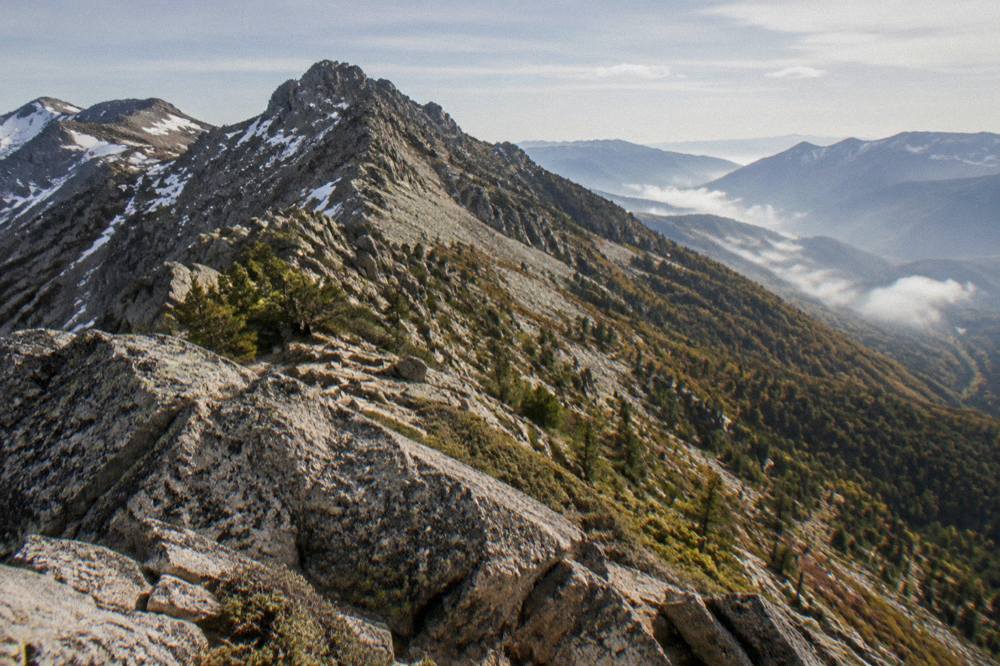
Corsica has a hot dry summer and a mild wet winter, and the Météo-France 1991-2020 station normals for Bastia, the station nearest the Castagniccia's side of the island, show July averaging 29.4 °C highs with 13.8 mm of rain and August 29.8 °C highs, while November carries 134.3 mm of rain and February averages 5.1 °C overnight lows, with snow confined to the high mountains. The Ajaccio station on the other coast shows the same shape: July averages 8.6 mm of rain and November 111.8 mm.
The eastern hills sit between those two stations, closer to Bastia's figures in winter, when Bastia records more rain than Ajaccio in October and November. Sunshine runs from about 4.5 hours a day in January to 11.2 hours a day in July at Bastia.
| Month | Bastia high °C | Bastia low °C | Bastia rain mm | Ajaccio rain mm |
|---|---|---|---|---|
| Jan | 13.8 | 5.4 | 67.3 | 54.1 |
| Feb | 13.9 | 5.1 | 63.5 | 48.1 |
| Mar | 15.8 | 6.8 | 63.7 | 50.4 |
| Apr | 18.3 | 9.1 | 71.6 | 53.1 |
| May | 22.4 | 12.6 | 53.7 | 49.8 |
| Jun | 26.4 | 16.5 | 38.8 | 25.9 |
| Jul | 29.4 | 19.4 | 13.8 | 8.6 |
| Aug | 29.8 | 19.8 | 21.1 | 15.8 |
| Sep | 26.0 | 16.7 | 74.5 | 57.8 |
| Oct | 22.0 | 13.4 | 126.5 | 85.7 |
| Nov | 17.7 | 9.5 | 134.3 | 111.8 |
| Dec | 14.8 | 6.4 | 88.1 | 73.9 |
Fire season shapes the summer calendar. The UK Foreign, Commonwealth and Development Office notes a high risk of wildfires in France from April to October, and the US State Department lists France at Level 2, Exercise Increased Caution. The island rule is the one that matters day to day: from 15 June to 30 September, no fires and no smoking in forests, maquis and massifs, and the access map is published each evening at 18:00 for the following day.
What Day Trips Can You Take From The Castagniccia In Corsica?
From the Castagniccia, the whole north and east of Corsica sits within a day's drive: Corte is one hour from Bastia, the beaches of the Désert des Agriates at Saleccia and Lotu are reached by boat shuttle from Saint-Florent about April to October weather permitting, Cap Corse stretches north from Saint-Florent, and Bastia's old port and museums sit at the end of the eastern road. The Musee de Bastia at the Palais des Gouverneurs keeps high-season hours of 10:00 to 18:30 and low-season hours of 09:00 to 12:00 and 14:00 to 17:00, closed Sundays and Mondays.
The Agriates beaches are the prize: visit-corsica.com describes boat shuttles from Saint-Florent port, a 4x4 track from Casta, and access on foot, so no single road serves Saleccia and Lotu.
West of the island, a longer day reaches the Golfe de Porto and Piana, where the UNESCO property "Gulf of Porto: Calanche of Piana, Gulf of Girolata, Scandola Reserve", inscribed in 1983, covers 11,800 ha. Scandola's land area is closed to the public and visits are by boat only, with no landing in the integral reserve, daytime anchoring allowed outside the integral reserve and the Gargalu channel, and anchors up at sunset. The Sagone and Cargèse cruises call at Girolata with swim stops.
| Day trip from the Castagniccia side | Distance or access | Highlight |
|---|---|---|
| Corte citadel and Musee de la Corse | 1 h by road from Bastia | EUR 5.50 ticket covering museum and citadel |
| Saleccia and Lotu beaches | boat shuttle from Saint-Florent, 4x4 from Casta, or on foot | Désert des Agriates coast |
| Cap Corse peninsula | road north from Saint-Florent | guided half-day trip with meal |
| Bastia old port and Musee de Bastia | eastern road to Bastia | Palais des Gouverneurs |
| Scandola and Girolata | boat from the Golfe de Porto side | UNESCO reserve, boat access only |
Is The Castagniccia In Corsica Safe For Visitors?
Corsica's safety picture is mainland France's: the emergency numbers are 112 for the EU-wide line, 15 for medical, 17 for police, 18 for fire, 114 by SMS or app and 196 for sea rescue on VHF channel 16, mountain rescue reaches the PGHM in Ajaccio on 04 95 24 24 00, and the US State Department lists France at Level 2, Exercise Increased Caution, while the UK FCDO flags a high wildfire risk from April to October. In an emergency in the hills, the standing advice is to call 112 or 17.
The wildfire rule is the one that touches the Castagniccia directly, since it is a wooded region. From 15 June to 30 September no fire may be lit and no smoking is allowed in forests, maquis and massifs, and the prefecture-linked daily map can close whole massifs to access on the highest-risk days. Météo-France publishes mountain forecasts and storm vigilance for the island, and the standing guidance for storms is to avoid summits and ridges and seek shelter.
At the coast, supervision follows the island pattern: Ajaccio ran seven lifeguard posts on its main beaches from 1 July to the end of August 2026, and Haute-Corse's supervised beaches are staffed by volunteer firefighters from about 1 July to 31 August. Service is included in restaurant bills by law, so tips are optional. The island's practicalities are covered in more depth on the Corsica travel tips pages of the regions guide.
Common Questions About Castagniccia
What Is The Castagniccia In Corsica?
The Castagniccia is a region of wooded hills in eastern Corsica, inside the Parc naturel régional de Corse since the park's creation in 1972, on the Haute-Corse side of the island and tied to the chestnut economy behind the island's chestnut flour AOP.
How Do You Get To The Castagniccia?
By road from Bastia, the nearest port and airport gateway: the Musee de la Corse's page gives Bastia to Corte as one hour by road. Corsica Linea, La Méridionale, Moby and Corsica Ferries all serve the island's ports, and four airports operate at Ajaccio, Bastia, Figari and Calvi.
What Food Is The Castagniccia Known For?
Chestnut produce, within the island's appellations: chestnut flour holds the AOP Farina castagnina corsa recognised in 2010, alongside brocciu, the charcuterie cuts prisuttu, lonzu and coppa, Corsican honey, olive oil and the Clementine de Corse IGP.
Can You Hike In The Castagniccia?
Yes, within the island's rules: wild camping is banned across Corsica, from 15 June to 30 September no fires or smoking are allowed in forests and massifs, the daily fire-risk access map is published at 18:00, and the PNRC's long-distance network includes the Mare a Mare Centre at 84 km from Ghisonaccia to Porticcio on the eastern side.
When Should You Visit The Castagniccia?
No single month is named as best on this site. The Météo-France 1991-2020 normals for Bastia show July averaging 29.4 °C highs with 13.8 mm of rain and November carrying 134.3 mm, with snow confined to the high mountains, so the choice depends on whether the aim is walking, chestnut season or the coast.
Is The Castagniccia Safe?
Yes, under mainland France's safety framework: 112 is the emergency number, mountain rescue reaches the PGHM in Ajaccio on 04 95 24 24 00, and the main seasonal constraint is the 15 June to 30 September fire and smoking ban in forests and massifs.