Getting Around Corsica
Corsica is a sea-surrounded island of 8,722 km2 with a mountainous interior, and every way of moving across it, ferry, plane, train, car or boat, is shaped by that geography. This guide sets out what the operators and official pages actually offer.
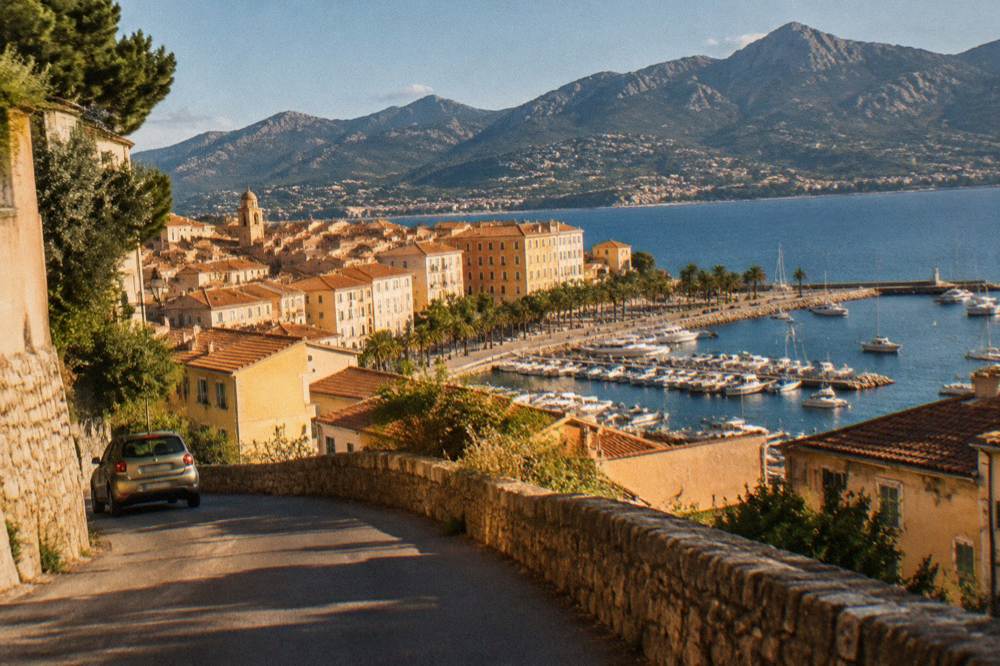
You reach Corsica by ferry from Marseille, Toulon, Nice, Livorno, Savona, Genoa or Santa Teresa Gallura, or by air into Ajaccio, Bastia, Figari or Calvi. On the island, the Chemins de fer de la Corse run three rail lines, a car covers the main towns, and many of the finest coves, from Scandola to the Îles Lavezzi, are reached by boat.
Corsica covers 8,722 km2, runs to more than 1,000 km of coastline and rises to Monte Cinto at 2,706 m, and that combination decides how you move around it. The sea handles the big arrivals: more than 8.5 million passengers, excluding cruise passengers, passed through Corsica's ports and airports in 2025, according to the ORTC and DREAL de Corse annual report published 30 May 2026. Once you are on the island, a thin rail network, mountain roads and a dense web of small boats take over, and the practical choices, ferry against plane, train against car, road against shuttle boat, are what this page works through. For the wider planning picture, the itineraries on Corsica in 5 Days and the Corsica Travel Guide homepage are the natural companions.
How Do You Get To Corsica In The First Place?
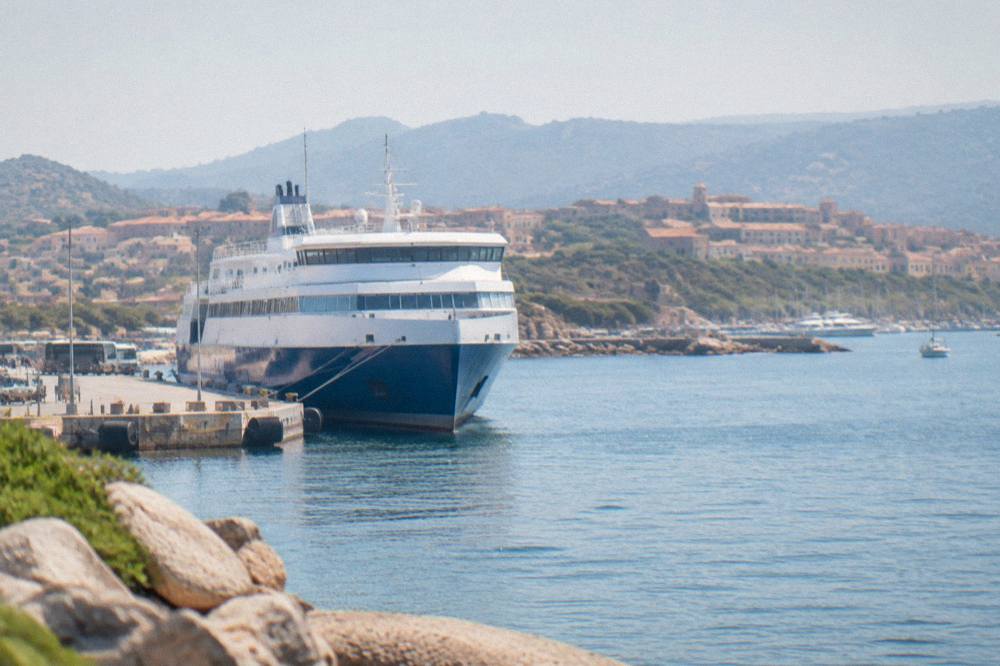
Corsica is reached by ferry from seven mainland ports, Marseille, Toulon, Nice, Livorno, Savona, Genoa and Santa Teresa Gallura in Sardinia, or by air into one of four airports: Ajaccio Napoléon Bonaparte (AJA), Bastia Poretta (BIA), Figari Sud Corse (FSC) and Calvi Sainte-Catherine (CLY). Corsica Linea and La Méridionale sail year-round from Marseille, Corsica Ferries from Toulon and Nice, and Moby from Italy.
The French side is the busiest. Corsica Linea, per its own route map, sails Marseille to L'Île-Rousse, Bastia, Propriano and Ajaccio, while La Méridionale runs Marseille to Ajaccio and Marseille to Porto-Vecchio. Corsica Ferries is reported to connect Toulon and Nice with Ajaccio, Bastia, L'Île-Rousse, Porto-Vecchio and Propriano, plus Livorno and Savona to Bastia. Moby sails Livorno to Bastia, Genoa to Bastia and the short Santa Teresa Gallura to Bonifacio hop, a route Moby and Ichnusa Lines keep after Sardinia found no rival operator, per a report of 9 October 2026.
Crossing times are ranges, not timetables, and the aggregator ferrygogo.fr is their source: Santa Teresa Gallura to Bonifacio runs about 50 to 60 minutes, Livorno to Bastia about 4 to 5 hours, Savona to Bastia about 6.5 hours, Nice to Bastia about 7.5 to 10 hours, Toulon routes about 10 to 13 hours and Marseille routes about 12 to 13 hours, often overnight.
| Route | Operator | Typical crossing |
|---|---|---|
| Marseille to Ajaccio | Corsica Linea, La Méridionale | about 12 to 13 hours |
| Marseille to Bastia | Corsica Linea | about 12 to 13 hours |
| Marseille to L'Île-Rousse | Corsica Linea | about 12 to 13 hours |
| Marseille to Propriano | Corsica Linea | about 12 to 13 hours |
| Marseille to Porto-Vecchio | La Méridionale | about 12 to 13 hours |
| Toulon to Ajaccio, Bastia | Corsica Ferries | about 10 to 13 hours |
| Nice to Bastia, Ajaccio | Corsica Ferries | about 7.5 to 10 hours |
| Livorno to Bastia | Corsica Ferries, Moby | about 4 to 5 hours |
| Savona to Bastia | Corsica Ferries | about 6.5 hours |
| Santa Teresa Gallura to Bonifacio | Moby, Ichnusa Lines | about 50 to 60 minutes |
For the sea approaches in detail, Ferry To Corsica, Nice To Corsica Ferry and Corsica Sardinia Ferry each take one route apart. Flying in is covered on Flights To Corsica and the airport pages for Ajaccio and Bastia.
Is There A Train In Corsica?
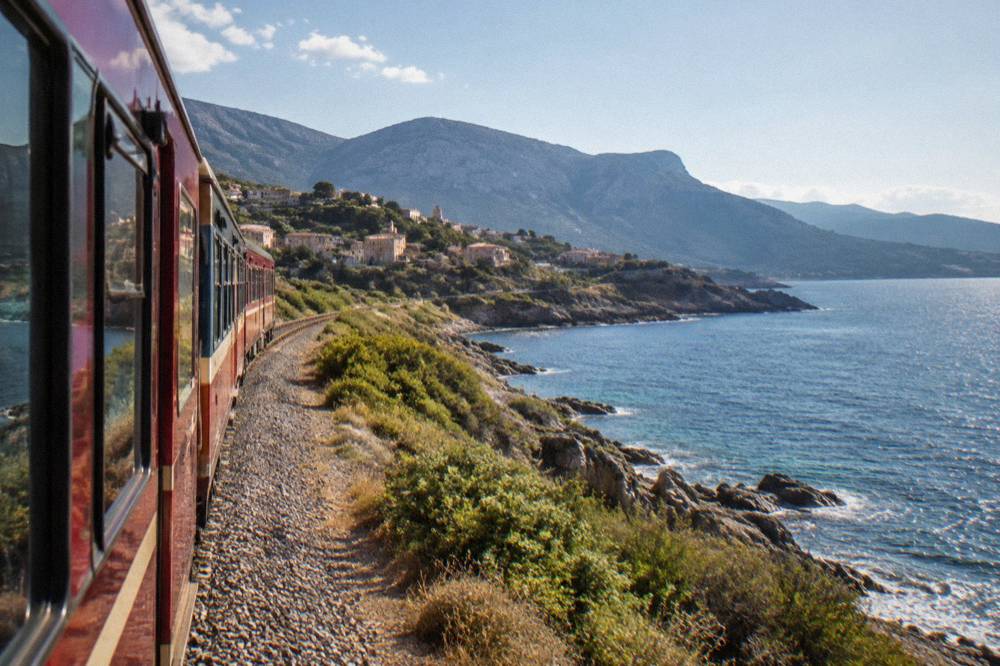
Yes, the Chemins de fer de la Corse (CFC) run three lines, reported as: Ajaccio to Bastia via Corte, Ponte-Leccia to Calvi, and the Balagne coastal line between Calvi and L'Île-Rousse. The network is narrow-gauge and small, roughly one spine plus a Balagne branch, so it links a handful of towns rather than covering the island. Timetables can be checked on the CFC site.
The Ajaccio to Bastia line is the useful one for visitors staying in Corte, the island's old capital inland, because it serves the middle of the island without any mountain driving. The Balagne coastal stretch between Calvi and L'Île-Rousse is the scenic section, threading the coastline of the Balagne region behind Calvi And The Balagne and L'Île-Rousse. The full route set is laid out on Tour Of The Corsican Train.
Two honest limits shape any train plan. What the sources do give is a caution from the road world that applies to rail too: Corsican transport runs on seasonal rhythms, and timetables shift between summer and autumn, so the CFC horaires page is the check to make before committing a day.
Do You Need A Car To Get Around Corsica?
For most of the island beyond the main towns, yes, a car is close to indispensable, because the train network covers only three corridors and many beaches, trailheads and villages have no other practical access. Ajaccio, Bastia, Corte, Calvi and Bonifacio can each be enjoyed on foot and by train or taxi-boat, but the Désert des Agriates, the Calanques de Piana loop, the Restonica valley and the Aiguilles de Bavella all assume wheels.
The arithmetic of the island explains it. Road times the sources do give all run to Corte, the hub of the interior: one hour from Bastia, one and a half from Ajaccio, one and a half from Calvi, two from Porto-Vecchio, two and three quarters from Bonifacio and two and three quarters from Propriano, per the Musée de la Corse practical page. Those figures make Corte an easy lunch stop from either coast.
Hire cars are covered in depth on Corsica Car Rental, and the driving itself, the passes, the drops, the livestock, is on Driving In Corsica. One rule of the road matters above all others here: Inforoutes Corse, publishes live road conditions and accessibility levels for the main mountain passes, and checking it before any mountain drive, especially after autumn storms, is standard practice on the island.
| From | To Corte by road | Time |
|---|---|---|
| Bastia | via the T20 corridor | 1 h |
| Ajaccio | via the interior road | 1 h 30 |
| Calvi | via the Balagne road | 1 h 30 |
| Porto-Vecchio | via the east coast road | 2 h |
| Bonifacio | via the south coast road | 2 h 45 |
| Propriano | via the Valinco road | 2 h 45 |
How Do The Four Airports Fit Into Getting Around?
Corsica's four airports, Ajaccio Napoléon Bonaparte (AJA), Bastia Poretta (BIA), Figari Sud Corse (FSC) and Calvi Sainte-Catherine (CLY), sit one to a region, so the airport you fly into should match the part of the island you are staying in: AJA for the west and Ajaccio, BIA for the north-east and Cap Corse, FSC for Bonifacio and Porto-Vecchio, CLY for the Balagne.
AJA and BIA carry the heaviest traffic, FSC serves the far south, and CLY is the small Balagne field close to Calvi. Operators reported on the routes include Air Corsica, Air France, easyJet and Volotea, with schedules swelling in summer and thinning off-season. Flying into one airport and out of another is a reasonable shape for a one-way island itinerary, and doing it by ferry in and plane out is another: Corsica Airports compares all four.
From each airport, onward movement follows the same pattern: a hire car, a taxi or, from Ajaccio, a city bus link. The museum's own page notes that Maison Bonaparte on Rue Saint-Charles sits 200 m from Ajaccio's bus station and ferry terminal with bus 8 from the airport, which tells you how compact the town transfer is. No airport transfer fare is carried.
Where Do Boats Replace Roads In Corsica?
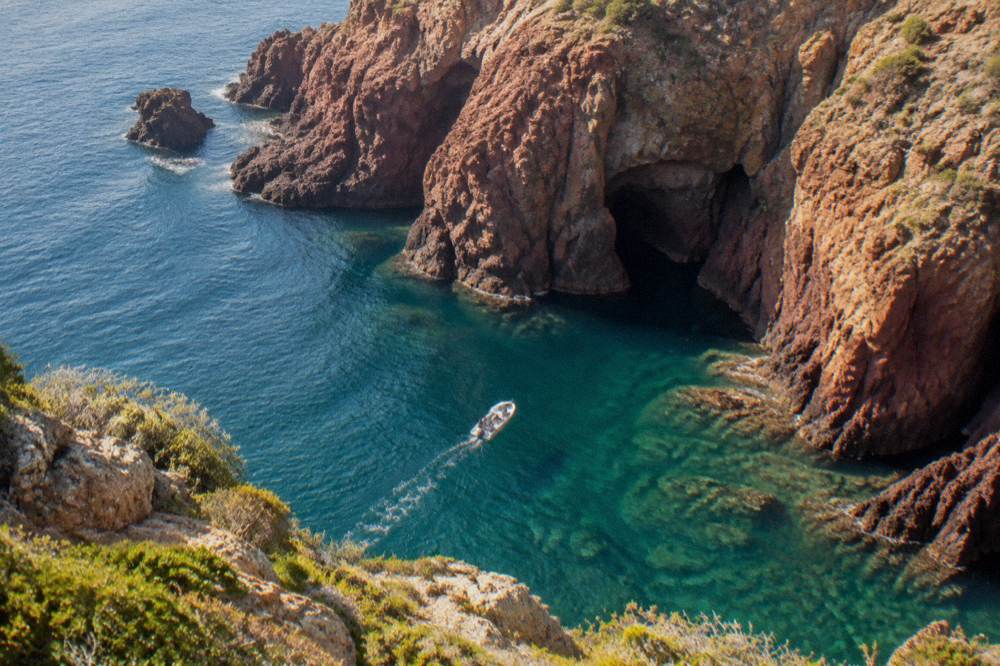
Several headline Corsican destinations are boat-only or boat-easiest: the Scandola Nature Reserve's land area is closed to the public and visited by boat only, Girolata is served by sea, and the Désert des Agriates beaches of Saleccia and Lotu are reached by boat shuttle from Saint-Florent, by 4x4 track from Casta, or on foot, per visit-corsica.com.
Scandola is the strict case. The reserve, created by ministerial order on 9 December 1975 as Corsica's first nature reserve, protects 1,000 ha of sea and 919 ha of land with a 70 ha integral reserve, and its terrestrial part is closed: no landing in the integral zone, daytime anchoring only outside it, anchors up at sunset, and no recreational line or spear fishing, per the OEC rules.
The Agriates is the practical case. Saleccia and Lotu, the two beaches inside the Désert des Agriates, sit behind a track that ordinary cars should not attempt, so the shuttle boats from Saint-Florent, typically running about April to October, weather permitting, carry the traffic, per visit-corsica.com. The same logic applies at the Îles Sanguinaires off Ajaccio and the Îles Lavezzi off Bonifacio: the water is the road. The Bouches de Bonifacio Nature Reserve, contains the Lavezzi islands, and day boats run from Bonifacio and Porto-Vecchio.
| Destination | Ordinary road access? | Standard approach |
|---|---|---|
| Scandola Nature Reserve | No, land area closed | Boat tour from Porto, Cargèse, Sagone, Ajaccio or Calvi |
| Girolata | Boat or footpath | Boat from Porto or Cargèse |
| Saleccia and Lotu | 4x4 track from Casta only | Shuttle boat from Saint-Florent |
| Îles Sanguinaires | No | Boat trip from Ajaccio |
| Îles Lavezzi | No | Boat or catamaran from Bonifacio or Porto-Vecchio |
One Bonifacio-based day trip, the La Maddalena and Lavezzi islands excursion, is the related pick for this page because it shows the island-hopping side of Corsican transport, crossing to Sardinian waters and back in a small group. Read more on Bonifacio And Lavezzi Day Trip, or see the boat options on Sanguinaires Boat Trip From Ajaccio and Porto Vecchio Boat Trips. For the full picture on the reserve itself, Scandola Nature Reserve is the deep page.
Can You Get Around Corsica On Foot?
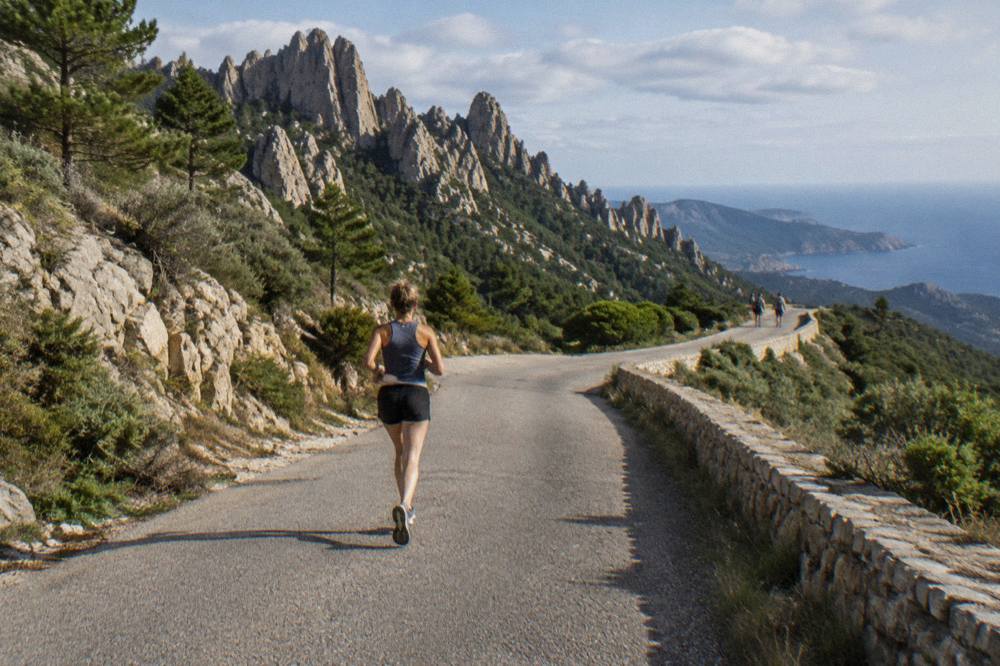
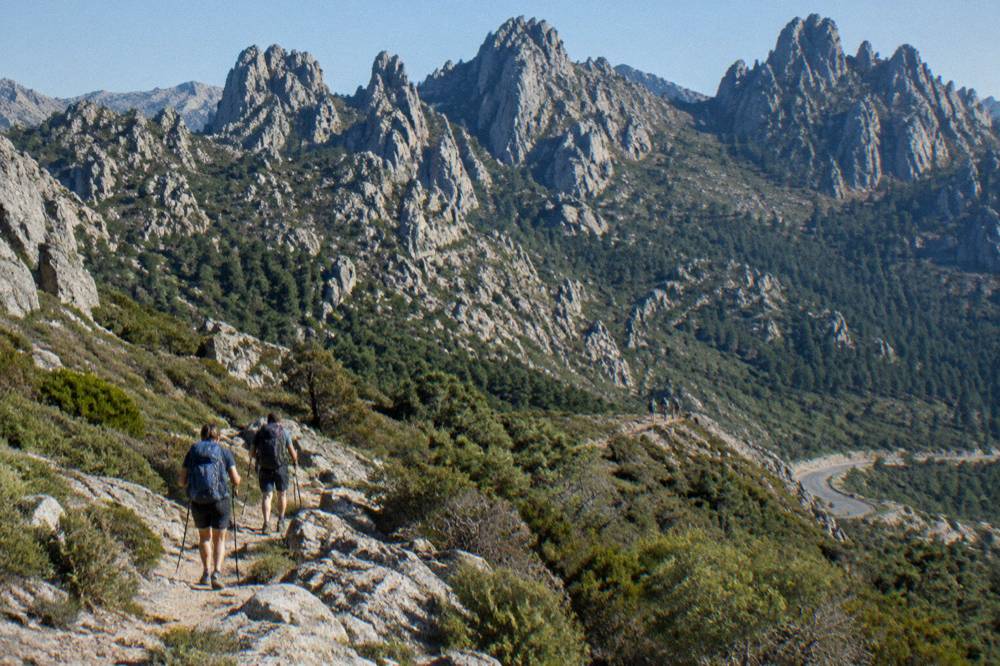
Yes, and on some routes walking is the designed transport: the GR20 runs 180 km north to south in about 15 stages of 4 to 8.5 hours, while the Mare a Mare trails cross the island east to west (Centre 84 km, Nord 139 km, Sud 73 km) and the Mare e Monti routes hug the coast (Nord 121 km, Sud 66 km).
The numbers come from the PNRC's own trail brochure, and they matter for planning because the crossing trails are genuine alternatives to driving for a week. Mare a Mare Centre runs Ghisonaccia to Porticcio over 7 days, or Ghisonaccia to Tavera over 6, with 3,900 m of climbing. Mare a Mare Nord is 139 km, or 161 km with the variant, over 8 to 12 days. Mare a Mare Sud covers 73 km in 5 days, ending in Propriano, and Mare e Monti Sud covers 66 km in 5 days, also ending in Propriano.
Two rules govern foot travel. Wild camping is banned across Corsica including the GR20, with bivouac allowed only in the marked areas at refuges, and refuge and bivouac nights on the GR20 must be booked online through the PNRC platform. And from 15 June to 30 September it is forbidden to light a fire or smoke in forests, maquis and massifs, with the fire-risk map updated at 18:00 for the next day. No GR20 departures are allowed from Calenzana after 11:00. The full trail breakdown is on GR20 And Hiking Tours and Hiking In Corsica.
| Trail | Length | Days | Total climb |
|---|---|---|---|
| GR20 (Fra li Monti) | 180 km | about 15 stages | not stated |
| Mare a Mare Nord | 139 km (161 km with variant) | 8 to 12 | 5,900 m |
| Mare a Mare Centre | 84 km | 6 to 7 | 3,900 m |
| Mare a Mare Sud | 73 km | 5 | 3,200 m |
| Mare e Monti Nord | 121 km | 10 | 6,100 m |
| Mare e Monti Sud | 66 km | 5 | 2,700 m |
What About Getting Around Town Without A Car?
Ajaccio and Bastia are both walkable port towns, and each has a small sight cluster you can cover on foot: Maison Bonaparte in Ajaccio sits 200 m from the bus station and ferry terminal on bus 8 from the airport, and Bastia's old harbour, the Vieux Port, sits beside the town centre. Bonifacio's lower town and citadel cliff path, Porto-Vecchio's old town and Calvi's seafront are similarly compact.
In Ajaccio the museums cluster tightly. Maison Bonaparte is closed Mondays, open 10:30 to 12:30 and 13:15 to 16:30 from 1 October to 31 March, 10:00 to 12:30 and 13:15 to 17:30 from 1 April to 30 June, and 10:00 to 17:30 from 1 July to 30 September, with EUR 10 full entry, EUR 8 for non-EU residents aged 18 to 25 and large families, and free entry for EU residents under 26. The Palais Fesch, per the Ajaccio tourist-office listing, is open daily 09:00 to 17:00 with EUR 10 full price, EUR 6 for over-65s and free entry up to 18. A walking tour of the town's history, one of this page's picks, covers the same ground with a guide.
Bastia works the same way on foot, with the Musée de Bastia at the Palais des Gouverneurs, reported open 10:00 to 18:30 in high season and 09:00 to 12:00 and 14:00 to 17:00 in low season, closed Sundays and Mondays. The town pages Ajaccio, Bastia and Bonifacio take each one apart.
How Do Weather And Season Change Getting Around Corsica?
Summer concentrates everything: the Météo-France 1991-2020 normals for Ajaccio show July averaging 8.6 mm of rain and 12 h 6 min of sunshine a day, while November averages 111.8 mm at Ajaccio and 134.3 mm at Bastia, and from 15 June to 30 September fire rules can restrict access to forest massifs, with the risk map updated at 18:00 daily for the next day.
The seasonal pattern is simple to state: hot dry summer, mild wet winter, snow only on the high mountains. October and November carry the heaviest rain at both stations, 85.7 then 111.8 mm at Ajaccio and 126.5 then 134.3 mm at Bastia, and those months are when mountain roads and boat shuttles become weather-dependent. The Agriates shuttle season, runs about April to October, weather permitting, and the same weather logic closes the higher trails early.
Fire rules are the summer constraint. From 15 June to 30 September no fires or smoking are allowed in forests, maquis and massifs, some massifs can close entirely on red or extreme days, and the GR20 Calenzana departure rule after 11:00 exists for exactly this reason. The month-by-month detail, including what each month does to ferries, beaches and trails, is on Corsica Weather By Month and Best Time To Visit Corsica.
| Month | Ajaccio rain mm | Bastia rain mm | Ajaccio sunshine h/day |
|---|---|---|---|
| May | 49.8 | 53.7 | 9.3 |
| June | 25.9 | 38.8 | 11.1 |
| July | 8.6 | 13.8 | 12.1 |
| August | 15.8 | 21.1 | 11.1 |
| September | 57.8 | 74.5 | 8.7 |
| October | 85.7 | 126.5 | 6.7 |
| November | 111.8 | 134.3 | 4.7 |
What Is The Smartest Way To Combine Transport On One Trip?
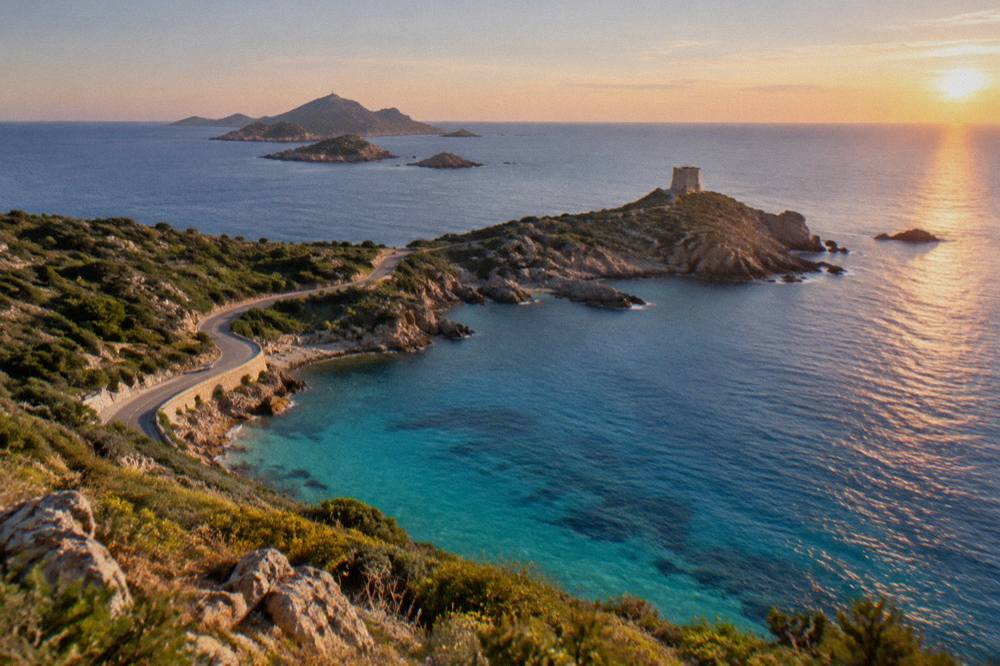
The combination that fits Corsica's geography is a ferry or flight in, a hire car for the coast and interior loops, the train for the Ajaccio-Corte-Bastia spine and the Balagne if you want a driving-free day, and booked boat trips for Scandola, the Agriates and the Îles Lavezzi, where no road runs. Trying to do the island on public transport alone means missing the boat-only places.
A one-week shape works like this: arrive at Ajaccio or Bastia, take the T20 corridor to Corte for the interior day, loop the west coast for the Calanques de Piana and a Scandola cruise out of Porto, then cross to Bonifacio for the southern cliffs and a Lavezzi boat, and finish along the east coast. The Corte road times above are the backbone of that loop. For longer versions, Corsica Road Trip, Corsica In One Week and Corsica In 10 Days lay out full sequences.
Budget and safety close the plan. Typical costs across transport, rooms and food are worked through on Corsica Cost And Budget, and the practical precautions, emergency numbers 112, 15, 17, 18 and 196 at sea, PGHM mountain rescue at 04 95 24 24 00, and the UK FCDO's noted high summer wildfire risk in France from April to October, sit on Corsica Safety and Corsica Travel Tips.
Common Questions About Getting Around Corsica
Is There A Train In Corsica?
Yes. The Chemins de fer de la Corse, run three lines: Ajaccio to Bastia via Corte, Ponte-Leccia to Calvi, and the Balagne coastal line between Calvi and L'Île-Rousse. The CFC site carries the timetables.
Do You Need A Car In Corsica?
Outside the main towns, yes. The rail network covers only three corridors, and beaches such as Saleccia and Lotu, the Restonica valley and the Aiguilles de Bavella all assume a car or an organised tour. Ajaccio, Bastia, Corte, Calvi and Bonifacio themselves are walkable.
How Long Is The Ferry To Corsica?
Reported ranges: Santa Teresa Gallura to Bonifacio about 50 to 60 minutes, Livorno to Bastia about 4 to 5 hours, Savona to Bastia about 6.5 hours, Nice to Bastia about 7.5 to 10 hours, Toulon routes about 10 to 13 hours and Marseille routes about 12 to 13 hours, often overnight.
Can You Visit Scandola By Land?
No. The Scandola reserve's terrestrial part is closed to the public and visits are by boat only, with no landing in the integral reserve and anchoring by day only outside it. Boats leave from Porto, Cargèse, Sagone, Ajaccio and Calvi.
How Do You Reach Saleccia And Lotu Beaches?
By boat shuttle from Saint-Florent, typically about April to October, weather permitting, by 4x4 track from Casta, or on foot, per visit-corsica.com.
Which Corsica Airport Should You Fly Into?
Match the airport to your base: Ajaccio Napoléon Bonaparte (AJA) for the west, Bastia Poretta (BIA) for the north-east and Cap Corse, Figari Sud Corse (FSC) for Bonifacio and Porto-Vecchio, and Calvi Sainte-Catherine (CLY) for the Balagne.
One final placement note that is also advice: the trips that need booking ahead are the boat-only ones, because seats are finite and the season is short. The La Maddalena and Lavezzi day trip from Bonifacio can be reserved with free cancellation through the link Check availability, and the same goes for the Scandola cruises out of Porto. Plan the roads around them, check Inforoutes Corse before any pass, and the island's transport falls neatly into place.