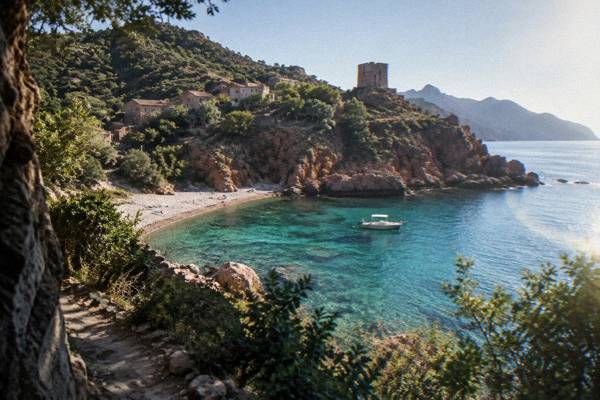
Girolata
Girolata sits inside the UNESCO Gulf of Porto on Corsica's west coast, reachable by sea, and every visit runs through the same protected waters as the Scandola Reserve and the Calanques de Piana.
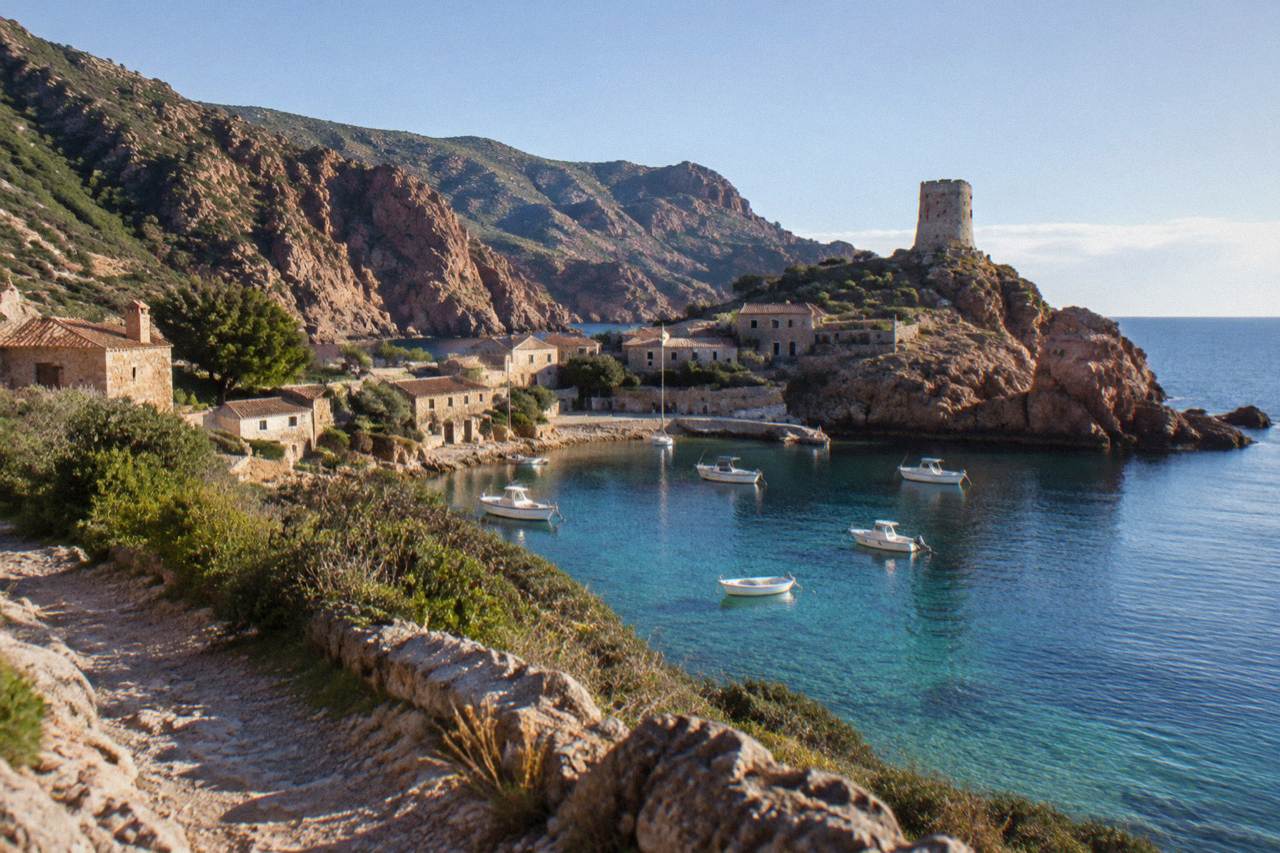
Girolata is a tiny gulf and hamlet on Corsica's west coast inside the UNESCO World Heritage site 'Gulf of Porto: Calanche of Piana, Gulf of Girolata, Scandola Reserve'. It is reached by boat from Porto, Cargèse, Sagone, Ajaccio or Calvi, and several cruises stop here.
Girolata is a gulf and hamlet on the west coast of Corsica, the French Mediterranean island, sitting inside the UNESCO World Heritage property inscribed in 1983 as "Gulf of Porto: Calanche of Piana, Gulf of Girolata, Scandola Reserve". The place has no road of its own worth relying on: the sea is the practical way in, and the boat trips that call here are among the most booked products on the whole island. This page from the Corsica Travel Guide sets out what the official records say about the gulf, how the reserve rules work, which cruises stop at Girolata, and what the Météo-France climate normals mean for planning a day on this coast.
What Is Girolata In Corsica?
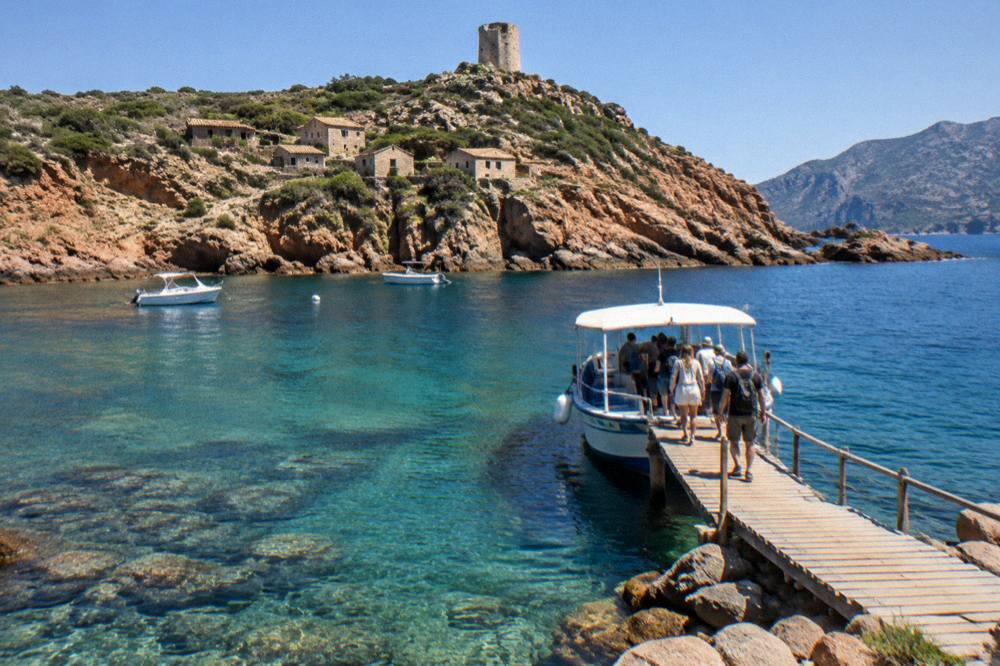
Girolata is a small gulf and seasonal hamlet on the west coast of Corsica, inside the commune of Osani, and it gives its name to one of the three parts of the UNESCO World Heritage property "Gulf of Porto: Calanche of Piana, Gulf of Girolata, Scandola Reserve", inscribed in 1983 under natural criteria (vii)(viii)(x) across 11,800 hectares. The gulf opens into the Golfe de Porto, next to the Scandola Nature Reserve, and the sea is the working way in and out.
The UNESCO listing is the anchor fact for this coast, and Girolata is named in the property's title itself, which tells you how central the gulf is to what was protected in 1983. The dossier number is 258, the inscription covers 11,800 hectares, and the natural criteria cite outstanding scenic and geological values alongside biodiversity. Neighbouring pages on this site cover the two other named parts of the property in detail: the Scandola Nature Reserve and the Calanques de Piana, and the wider Golfe de Porto area that ties them together.
Scandola itself is the first nature reserve created in Corsica, by ministerial order of 9 December 1975. The reserve's figures are exact: 1,000 hectares of sea, 919 hectares of land and 70 hectares of integral reserve, from 100 m depth to 540 m altitude, in the commune of Osani, managed by the Parc naturel régional de Corse. The reserve was key to saving the osprey in Corsica, a point the Office de l'Environnement de la Corse makes prominently on its Scandola fact sheet. Girolata sits at the southern edge of this protected stretch of coast, and everything a visitor can legally do here happens within rules written for that landscape.
How Do You Get To Girolata From Corsica's Main Towns?
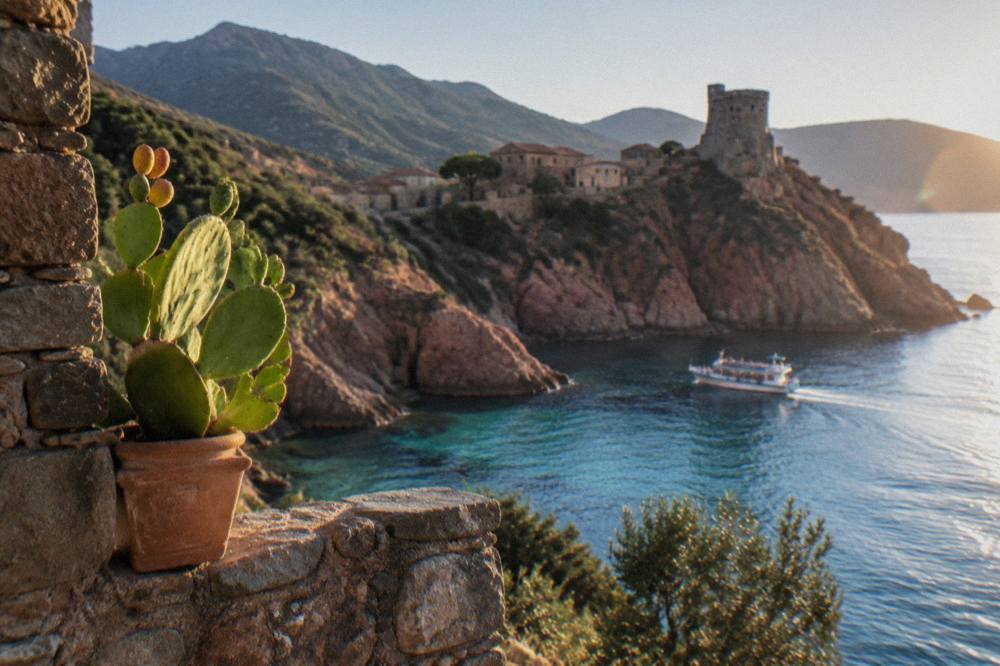
Girolata is reached by boat: the gulf is a regular stop on cruises departing from Porto, Cargèse and Sagone on the west coast, on full-day trips from Ajaccio and Porticcio, and on a longer crossing from Calvi, and the walking route in from the coast path is the only land alternative the published material describes.
From the Golfe de Porto itself, half-day and afternoon cruises leave Porto and call at Girolata, some with a stop ashore. From Cargèse, boat tours run a Scandola and Piana loop with a stop at Girolata. From Sagone, small-group trips cover Piana, Scandola and Girolata with swimming stops. From Ajaccio and Porticcio, full-day guided cruises reach the reserve, and one semi-rigid day trip covers Scandola and Piana in eight hours on the water. From Calvi, a dedicated crossing to Scandola runs as a day trip, covered separately in the Calvi to Girolata and Scandola day trip itinerary.
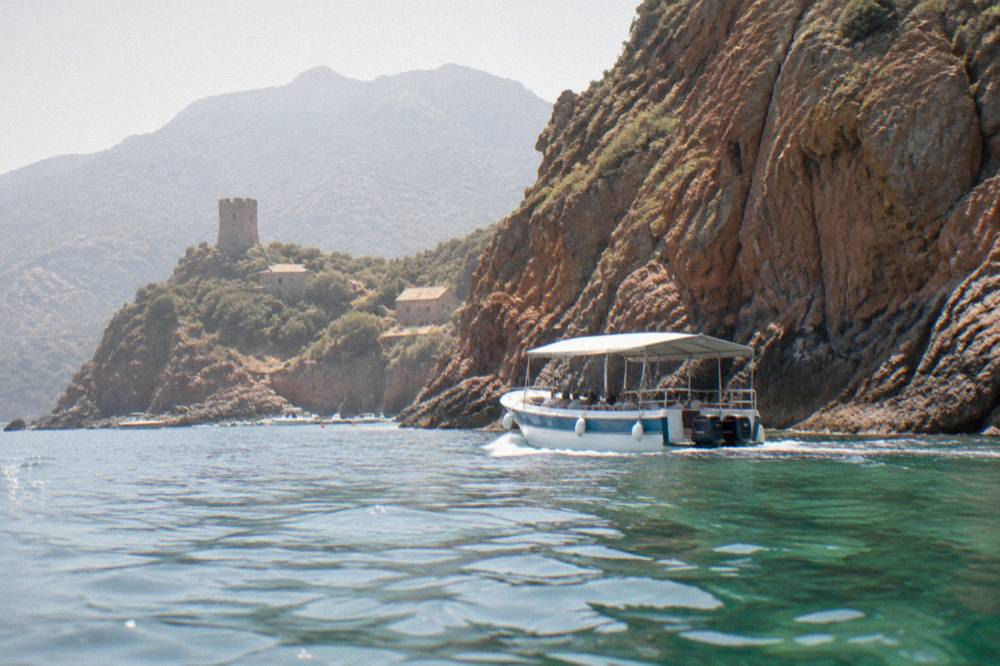
One point of honesty about access to the neighbouring reserve: Scandola's land area is closed to the public, visits are by boat only, and no landing is allowed in the integral reserve. That is a reported rule from the Office de l'Environnement de la Corse, and every operator on this coast works inside it. Girolata's own shore, by contrast, is a stopping point on several tours, which is what makes the gulf the practical halfway marker of a Golfe de Porto day on the water.
What Can You See On A Girolata Boat Trip In Corsica?
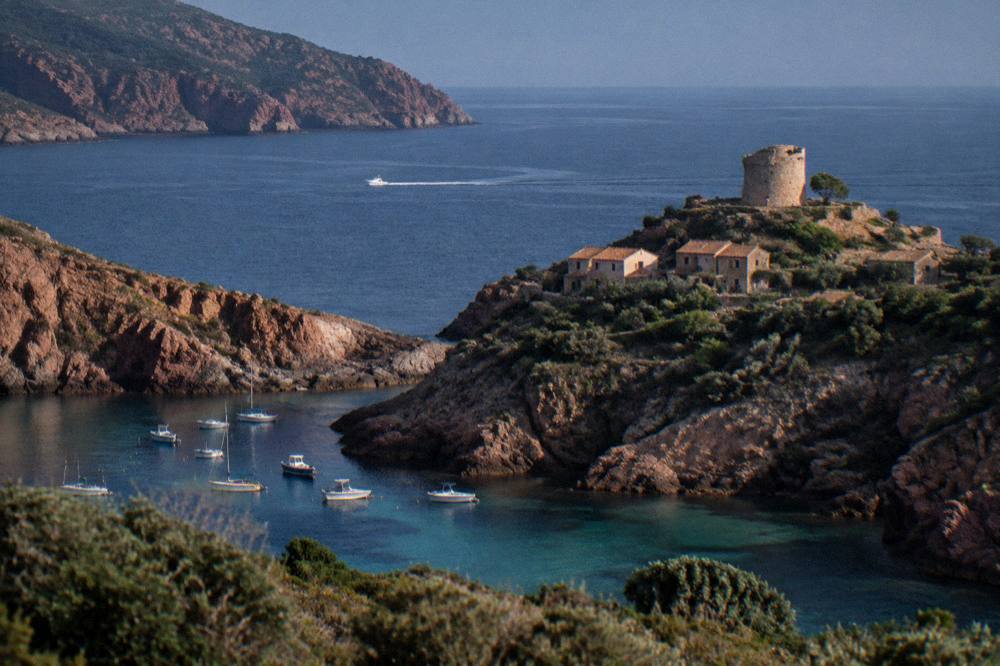
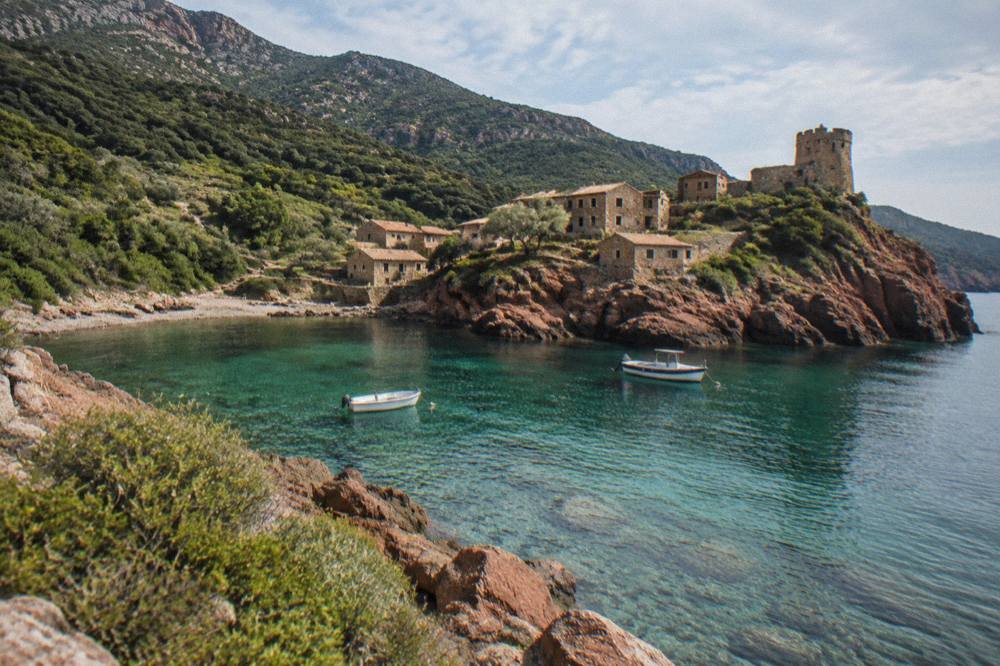
A Girolata boat trip combines three protected landscapes in one loop: the red rock of the Calanques de Piana, the sea cliffs and osprey territory of the Scandola Nature Reserve, and the anchored gulf of Girolata itself, where several tours stop for a pause or a meal ashore.
| Departure point | Coverage | Boat type and notes |
|---|---|---|
| Porto | Scandola, Girolata, Calanches de Piana loop | Small group, stop at Girolata |
| Porto | Scandola Reserve and Calanche de Piana | Audio guide on board |
| Porto | Scandola and Calanches with swimming | Swim stop included |
| Cargèse | Scandola, Piana, Girolata | Audio guide, stop at Girolata |
| Cargèse | Afternoon Scandola and Piana coves | Stop in Girolata |
| Sagone | Piana, Scandola, Girolata | Small group, swim stop, Girolata stop |
| Ajaccio / Porticcio | Scandola Reserve, full day | Guided cruise |
| Ajaccio / Porticcio | Scandola and Piana, full day | Semi-rigid boat |
| Calvi | Crossing to Scandola | Day trip by sea |
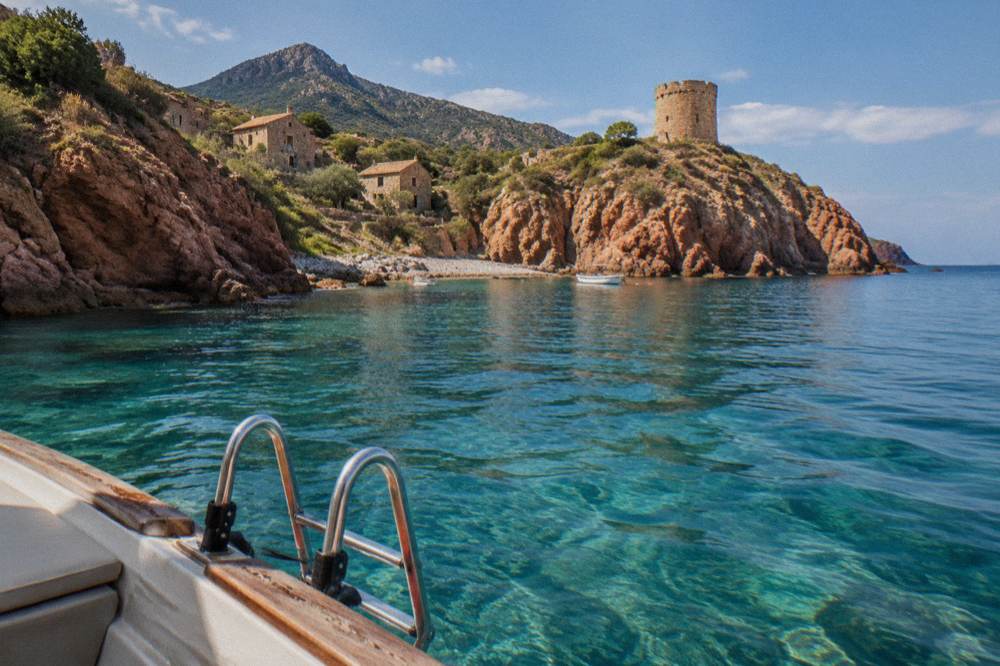
The natural-history side of the trip is not decoration. The reserve's role in bringing the osprey back in Corsica is documented by the OEC, and the renewed osprey quiet zones announced in the April 2026 State and OEC steering committee are part of the same protection effort. Boats behave accordingly in the sensitive zones, and the anchor rules matter too: reported rules for the reserve allow daytime anchoring outside the integral reserve and the Gargalu channel, with anchors lifted at sunset, and no recreational line or spear fishing.
Which Boat Tours Stop At Girolata In Corsica?
The Small-Group Scandola Cruise from the Golfe de Porto is the product built around a Girolata stop, running as a small-group sea trip with a pause in the gulf. Other tours reach the gulf as part of wider Scandola and Piana circuits, and the full list of bookable products across the island sits on the site's main things-to-do page.
For a different angle on the same coast, the Cargèse tour with its Girolata stop suits anyone staying further north, and the Porto half-day cruise with audio guide works for a shorter window. The wider island inventory lives on the things to do in Corsica page.
The picks above are deliberately spread: one Scandola and Girolata loop for this coast, one Lavezzi and La Maddalena day trip for the far south, and one snorkelling trip at the Revellata marine reserve off Calvi, so a reader planning a week can cover three different Corsican seascapes without repeating the same stretch of water.
How Does The UNESCO Listing Protect Girolata And Scandola In Corsica?
The UNESCO inscription of 1983 and the Scandola reserve order of 9 December 1975 together close the land side of the reserve to the public, restrict anchoring, fishing and landing, and, since a State and OEC steering committee of 28 April 2026, add voluntary labelling of boat operators, a QR-code tracking trial for pleasure boats, more controls at sea and renewed osprey quiet zones, with boat quotas and licences described only as being finalised in a regulatory framework.
That last clause matters for accuracy: the official release gives no year for the quotas and licences, so any page naming a year for them is guessing. What is certain is the committee itself, the renewed management agreement of 27 February 2026, and the four measures listed above. The figures behind the protection are exact and worth reading in one place. More of these guides are collected on Corsica Travel Guide.
| Protection layer | Figure or rule |
|---|---|
| UNESCO property | "Gulf of Porto: Calanche of Piana, Gulf of Girolata, Scandola Reserve", dossier 258, inscribed 1983 |
| Property area | 11,800 ha |
| Scandola creation | First nature reserve in Corsica, ministerial order 9 December 1975 |
| Scandola extent | 1,000 ha sea, 919 ha land, 70 ha integral reserve |
| Scandola terrain | 100 m depth to 540 m altitude, commune of Osani |
| Management | Parc naturel régional de Corse, created 1972 |
| Land access | Land area closed to the public, visits by boat only, no landing in the integral reserve |
| 2026 measures | Operator labelling, QR-code trial, more sea controls, osprey quiet zones |
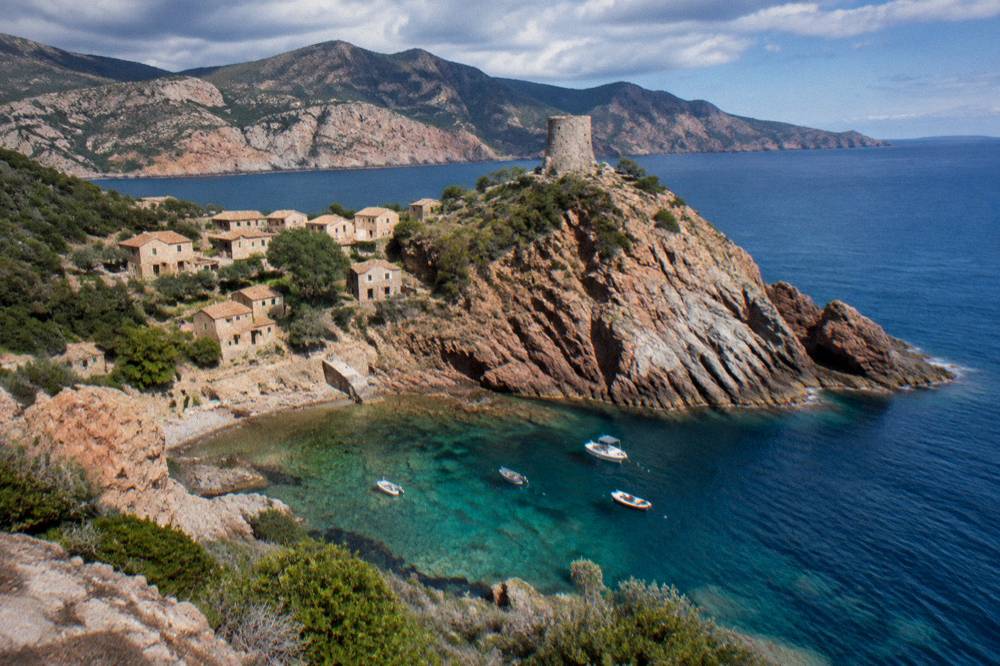
The park context is wider than the reserve. The Parc naturel régional de Corse dates from 1972 and now covers 4,484 km2, and its western sea front runs 80 km from Capu Rossu to Capu Cavallu, which places the whole Girolata stretch of coast inside a managed landscape rather than an isolated monument. The osprey programme is the emblematic result: the OEC credits Scandola with the species' survival in Corsica, and the quiet zones renewed in 2026 keep that work going.
What Weather Should You Plan For Around Girolata In Corsica?
Corsica's west coast has a hot, dry summer and a mild, wet winter according to the Météo-France station normals for 1991 to 2020, with July at Ajaccio averaging 8.6 mm of rain and August averaging a mean daily high of 29.2 °C, while October and November carry the heaviest rain of the year, so sea conditions and trip availability follow a clear seasonal rhythm even though no single month is named here as the best one.
The station behind these figures is Ajaccio Campo dell'Oro, the nearest long-record station on this coast's approach. The numbers are averages, and mountain weather on a west-facing coast can change faster than any table suggests, so the practical use of the table is choosing clothes and backup days, not promising sunshine.
| Month | Mean daily high °C | Mean daily low °C | Rain mm | Sunshine h/day |
|---|---|---|---|---|
| Jan | 14.0 | 4.7 | 54.1 | 4.4 |
| Feb | 14.2 | 4.3 | 48.1 | 5.5 |
| Mar | 16.0 | 5.9 | 50.4 | 6.8 |
| Apr | 18.5 | 8.3 | 53.1 | 7.7 |
| May | 22.1 | 11.8 | 49.8 | 9.3 |
| Jun | 25.9 | 15.4 | 25.9 | 11.1 |
| Jul | 28.6 | 17.7 | 8.6 | 12.1 |
| Aug | 29.2 | 18.1 | 15.8 | 11.1 |
| Sep | 26.1 | 15.4 | 57.8 | 8.7 |
| Oct | 22.8 | 12.6 | 85.7 | 6.7 |
| Nov | 18.3 | 9.0 | 111.8 | 4.7 |
| Dec | 15.1 | 5.8 | 73.9 | 4.0 |
One seasonal rule matters more than any temperature on this coast. From 15 June to 30 September it is forbidden to light a fire or smoke in forests, scrub and massifs across Corsica, and the fire-risk map for massif access is updated at 18:00 for the next day, with some massifs subject to restriction from mid-June to mid-September. UK foreign travel advice notes a high risk of wildfires in France from April to October. Anyone walking the coast path into Girolata in summer is planning around that rule, not around a forecast alone.
How Does Girolata Compare With Other Corsican Coastal Trips?
Girolata belongs to the red-rock, UNESCO-protected west coast, and its closest rivals on the island are different in kind: the Îles Lavezzi off Bonifacio in the far south, the granite and beach coast of Palombaggia and Santa Giulia near Porto-Vecchio, the Revellata marine reserve off Calvi, and the boat-shuttle beaches of the Désert des Agriates, each with its own protected status and its own boat products.
The comparison is worth making because many first-time visitors try to do all of it in one week. The Îles Lavezzi sit inside the Bouches de Bonifacio Nature Reserve and are reached from Bonifacio or Porto-Vecchio, with catamaran and snorkelling cruises among the options. Palombaggia beach and Santa Giulia beach are destination beaches in their own right rather than boat stops. The Revellata snorkelling trip out of Calvi covers a marine reserve on the northwest coast. Saleccia beach and its neighbour Lotu in the Désert des Agriates are reached by boat shuttle from Saint-Florent, by 4x4 track from Casta, or on foot, as the official tourism material reports.
| Coastal trip | Area of Corsica | Access | Protected status |
|---|---|---|---|
| Girolata and Scandola | Golfe de Porto, west coast | Boat from Porto, Cargèse, Sagone, Ajaccio, Calvi | UNESCO property 258, Scandola reserve |
| Îles Lavezzi | Bonifacio, far south | Boat from Bonifacio or Porto-Vecchio | Bouches de Bonifacio Nature Reserve |
| Revellata snorkelling | Calvi, northwest | Boat from Calvi | Marine reserve |
| Saleccia and Lotu | Désert des Agriates, north | Boat shuttle from Saint-Florent, 4x4 track from Casta, or on foot | Reported access rules, fire-risk massif rules |
| Calanques de Piana | South of Girolata | Boat or the coast road | UNESCO property 258 |
For readers whose trip is anchored on towns rather than coasts, the practical pairings are simple. A stay in Ajaccio pairs Napoleon-era sights such as the Maison Bonaparte with a full-day Scandola cruise. A stay in Calvi pairs the Citadelle de Calvi with the longer sea crossing to Scandola. A stay inland in Corte pairs the Citadelle de Corte with a drive west to the Golfe de Porto, using the published road times of one hour thirty from both Ajaccio and Calvi to Corte as the planning frame, though no equivalent driving time to Girolata itself is published because the sea is the way in.
What Should You Know Before A Girolata Day In Corsica?
A Girolata day runs on three practical rules: book the boat in advance because this is the island's most in-demand stretch of water, respect the reserve's closed land area and no-landing zones as reported by the OEC, and carry the emergency numbers that apply, 112 for general emergencies and 196 for sea rescue, with mountain rescue at PGHM Ajaccio on 04 95 24 24 00 for anyone walking the coast path.
The safety picture is concrete rather than advisory. Corsica's emergency numbers are 112, 15 for medical, 17 for police, 18 for fire, 114 by SMS or app, and 196 for sea rescue via VHF channel 16 at sea. US travel guidance lists France at Level 2, Exercise Increased Caution, a nationwide rating. On the water, the reserve rules do the rest: no landing in the integral reserve, daytime anchoring only outside the sensitive zones, anchors up at sunset, and no recreational line or spear fishing in the reserve.
| Practical point | Rule or figure |
|---|---|
| Sea rescue | 196, VHF channel 16 |
| General emergency | 112, plus 15, 17, 18, 114 |
| Mountain rescue | PGHM Ajaccio 04 95 24 24 00 |
| Fire and smoking ban | 15 June to 30 September, forests, scrub and massifs |
| Massif access map | Updated at 18:00 for the next day |
| Tipping | Service is included in menu prices by law; extra tips optional |
Money on this coast is simple. Corsica uses the euro, and local costs such as museum entries on this site are quoted in euros straight from the official listings: for the record, the Musée de la Corse in Corte charges EUR 5.50 full price with one ticket covering museum and citadel, and Filitosa charges EUR 9 for adults, both listed on this site's own attraction pages. Tipping follows French law, with service included in displayed prices and anything extra voluntary.
Common Questions About Girolata In Corsica
Can You Walk To Girolata Instead Of Taking A Boat?
Yes, the coast path is the land alternative, and it is the reason hikers appear in the gulf at all. Two safety rules frame it: the fire and smoking ban from 15 June to 30 September in forests, scrub and massifs, and the daily massif access map updated at 18:00 for the next day, which can restrict some massifs from mid-June to mid-September. Wild camping is banned across Corsica, reported as applying island-wide, with bivouac only tolerated in designated refuge areas on trails such as the GR20.
Is Girolata Inside The Scandola Nature Reserve?
The two are neighbours inside one UNESCO property. The property inscribed in 1983 is "Gulf of Porto: Calanche of Piana, Gulf of Girolata, Scandola Reserve", covering 11,800 ha. Scandola itself, created in 1975, covers 1,000 ha of sea and 919 ha of land with a 70 ha integral reserve in the commune of Osani, and its land area is closed to the public, with visits by boat only, as reported by the Office de l'Environnement de la Corse.
Which Port Is The Best Departure Point For A Girolata Boat Trip?
No single port is named here as the best, because the honest answer depends on where you are staying and how long you want on the water. Porto offers the shortest loops, Cargèse and Sagone run small-group circuits with Girolata stops, Ajaccio and Porticcio run full-day guided crossings, and Calvi runs a longer day trip to Scandola. The product table higher up this page lists what each departure covers.
Are There Visitor Caps For Girolata Or Scandola?
No visitor cap for this coast can be stated. Any page printing a cap or a year for Scandola is going beyond what the official record says.
What Happens If The Weather Turns On The Day Of The Trip?
Operators on this coast run at the sea's discretion, and the Météo-France normals show why autumn days carry more risk: October averages 85.7 mm of rain at Ajaccio and November 111.8 mm, against July's 8.6 mm. Cancellation terms and payment options display on each tour's own booking page before anything is confirmed, which is why every button on this site reads Check availability rather than promising a sailing.
A Girolata day is, in the end, the simplest kind of Corsican planning: pick a departure port, book the boat, respect a reserve that has been closed on its land side since 1975, and let the UNESCO-listed coast do the rest.