Is Scandola Worth It?
Is Scandola worth it? A clear answer on Corsica's UNESCO-listed reserve, how boat-only visits work, the rules inside the reserve and how to choose a cruise.
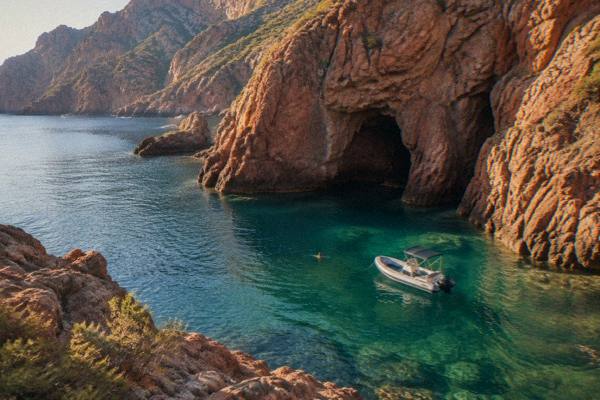
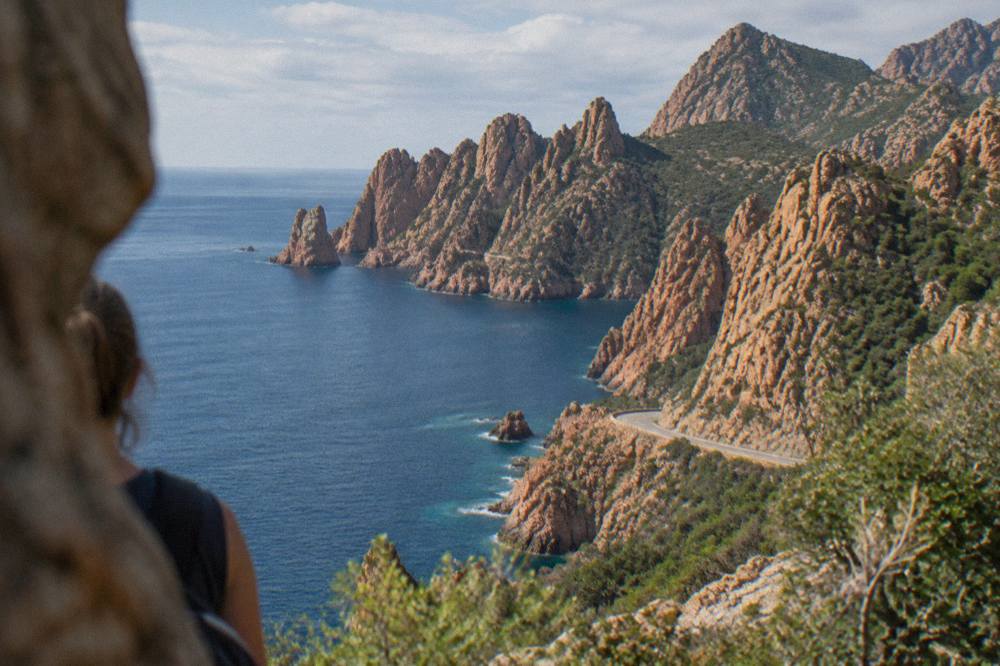
Scandola sits on Corsica's west coast, inside the Golfe de Porto, and it is the only major sight on the island with no road, no trail access and no landing: the reserve's land area is closed to the public, so the single way in is by boat. That fact alone shapes whether a visit is worth it. The reserve is part of the UNESCO World Heritage property "Gulf of Porto: Calanche of Piana, Gulf of Girolata, Scandola Reserve", inscribed in 1983, and it is managed by the Parc naturel régional de Corse as a strict nature reserve rather than a beach stop. This page sets out what the official record says about the site, what a boat trip actually covers, and how to weigh the cost.
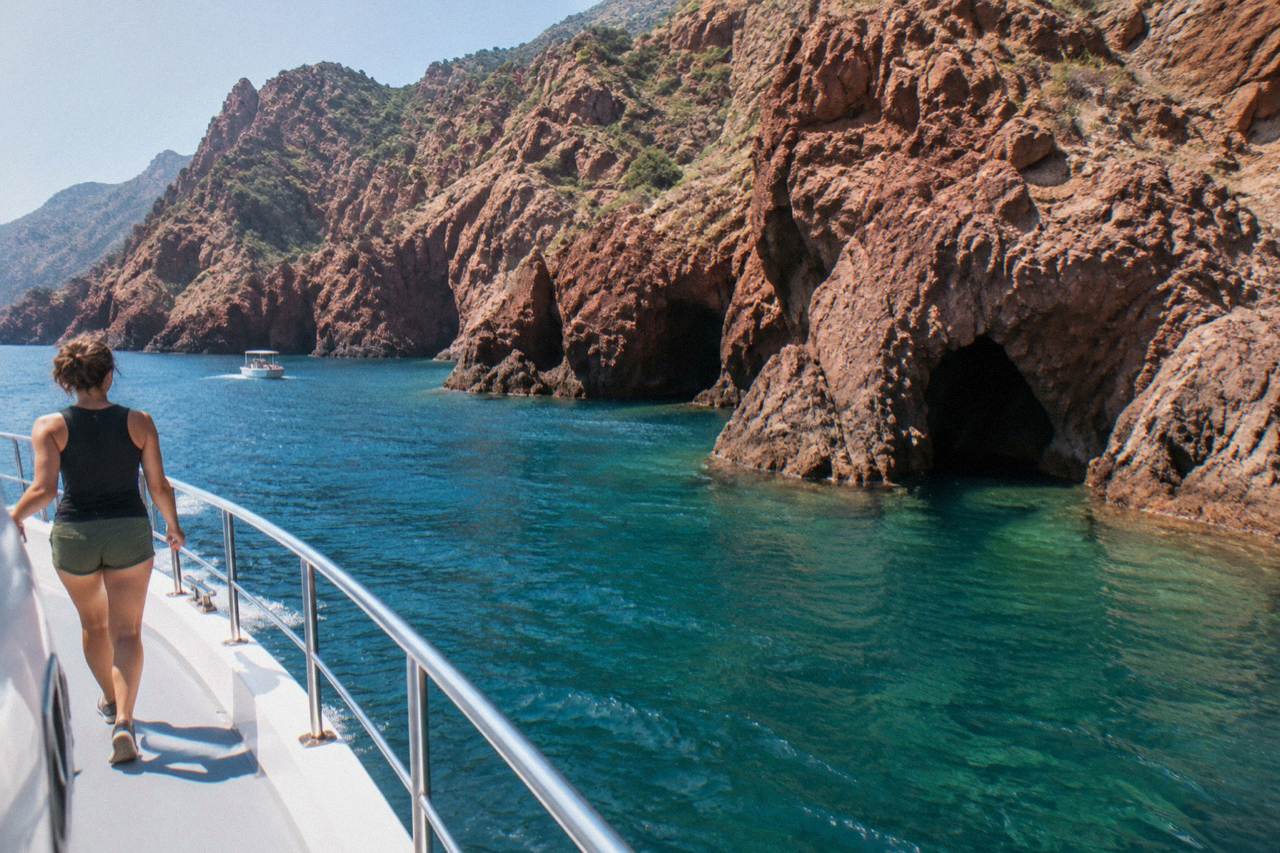
Yes, for a specific reason: Scandola is worth it if the point of the visit is a protected landscape you can only see from the water, because the reserve's land area is closed to the public and boat access is the only access there is. The UNESCO inscription, the strict reserve rules and the osprey conservation record all depend on that closure, so the trip is not a substitute for a beach day.
The reserve was the first nature reserve created in Corsica, by ministerial order of 9 December 1975, and it became part of the UNESCO property in 1983 on natural criteria (vii), (viii) and (x). The whole property covers 11,800 ha and takes in the Calanche of Piana and the Gulf of Girolata as well as Scandola itself. The Office de l'Environnement de la Corse fact sheet records that Scandola was key to saving the osprey in Corsica, a conservation outcome the reserve is still managed around.
The question of "worth" is therefore mostly a question of expectations. A Scandola cruise is a passage along a protected volcanic coast with a guide or audio commentary, often paired with the red cliffs of the Calanques de Piana and a stop at the hamlet of Girolata, which is itself reachable only by sea or on foot. It is not a place for swimming inside the reserve: reported rules for the reserve allow daytime anchoring outside the integral reserve and the Gargalu channel, with anchors lifted at sunset, and no landing in the integral reserve. Operators run swim stops outside the reserve boundary, in the Golfe de Porto or the creeks of Piana.
For a fuller picture of the protected area itself, see Scandola Nature Reserve in Corsica, and for the practical side of choosing a departure, Scandola boat tours from Corsican ports covers the options port by port.
| Scandola fact | Figure on record |
|---|---|
| UNESCO property | Gulf of Porto: Calanche of Piana, Gulf of Girolata, Scandola Reserve (dossier 258) |
| Inscription year | 1983, natural criteria (vii)(viii)(x) |
| Property area | 11,800 ha |
| Reserve creation | Ministerial order of 9 December 1975, first in Corsica |
| Sea area | 1,000 ha |
| Land area | 919 ha |
| Integral reserve | 70 ha, no landing |
| Commune | Osani |
| Manager | Parc naturel régional de Corse |
How Do You Visit The Scandola Nature Reserve In Corsica?
You visit Scandola by boat, and only by boat: the reserve's land area is closed to the public, and reported access rules state there is no landing in the integral reserve. Cruises leave from several Corsican ports, above all Porto and nearby Ota, with alternatives from Ajaccio, Cargèse, Sagone and Calvi.
The Golfe de Porto is the shortest route in, and it is where the concentration of operators is highest. A cruise from Porto typically combines the reserve with the Calanques de Piana, and several options include a stop at Girolata, the small hamlet inside the UNESCO property that has no road connection. From Ajaccio the trip is a full-day outing along the west coast; from Cargèse and Sagone the cruises run shorter loops with the same core itinerary.
The reserve's management is tightening. A steering committee of the State and the Office de l'Environnement de la Corse on 28 April 2026 confirmed a shared roadmap: voluntary labelling of boat operators, a QR-code tracking trial for pleasure boats, more controls at sea and renewed osprey quiet zones. Boat quotas and licences for the reserve are being finalised in a regulatory framework that carries no announced year, so the rules in force on any given departure are the ones the operator applies that season.
Among the Porto-based options, one cruise pairs the reserve and the Calanches de Piana with a swimming stop outside the protected zone, which suits visitors who want both the passage through Scandola and a dip in the Golfe de Porto. Details, ratings and the live price sit on the operator's page: Check availability.
A good way to frame the choice of port is by what else the day includes. A Porto departure puts the Calanques de Piana and Girolata within the same outing; an Ajaccio departure turns the day into a longer coastal passage; a Cargèse or Sagone departure suits a base on that stretch of coast. The Scandola and Girolata boat trip from Corsica's Golfe de Porto walks through the day-trip version in detail.
| Departure port | Area of Corsica | What the cruise typically covers |
|---|---|---|
| Porto / Ota | Golfe de Porto | Scandola reserve, Calanques de Piana, Girolata stop on some runs |
| Cargèse | West coast | Scandola, Piana, Girolata stop, afternoon or small-group formats |
| Sagone | West coast | Scandola, Girolata, swim stops on some runs |
| Ajaccio | Southwest coast | Full-day trip to Scandola, sometimes with Piana |
| Calvi | Balagne | Scandola with a long coastal transit each way |
What Are The Rules Inside The Scandola Reserve?
The reported rules are strict because Scandola is a nature reserve first and a sight second: no landing in the 70 ha integral reserve, no recreational line fishing or spearfishing, daytime anchoring only outside the integral reserve and the Gargalu channel, and anchors up at sunset. Speed limits and navigation rules apply to commercial and private boats alike.
Those rules come from the Office de l'Environnement de la Corse's published framework for the reserve, and they explain the shape of every commercial cruise. Boats pass along the coast, slow down in the sensitive zones and keep to the marine part, because the terrestrial part of the reserve is closed to the public outright. Free diving is allowed but regulated, and commercial free diving is prohibited. The quiet zones for the osprey are renewed under the 2026 roadmap, which means parts of the coast may be given a wider berth at certain times of year. Other pages covering the same trip are gathered on Corsica Travel Guide.
For visitors this translates into simple practicalities. Wear what you would wear on any small-boat day on the Mediterranean: sun protection, a layer against wind on the return leg, and shoes that grip. If the cruise includes a swim stop, it happens outside the reserve boundary. If it includes Girolata, the stop is in the hamlet's own little harbour, not on reserve land.
When Is The Best Time To Take A Scandola Boat Tour?
There is no single best time on the record, but the practical window is set by two things: the sea, because the Golfe de Porto is open to the west and crossings are cancelled or shortened when the swell rises, and the Météo-France station normals, which show July averaging 8.6 mm of rain at Ajaccio and October and November carrying the most rain of the year.
The summer months are when the full range of departures runs, from every port on the list above. The trade-off is that the weather window is widest exactly when demand is highest, so the practical advice is to book the boat day early in a stay rather than on the last day, leaving room to rebook if the sea forces a cancellation. In shoulder months the normals are still mild, with Ajaccio averaging a 22.8 °C mean daily high in October, but rain totals climb, with 85.7 mm at Ajaccio and 126.5 mm at Bastia that month against 8.6 mm and 13.8 mm in July.
Fire season matters less for a sea trip than for hiking, but it can affect the drive to the departure port. From 15 June to 30 September it is forbidden to light a fire or smoke in forests, maquis and massifs across Corsica, and access to some massifs can be restricted from mid-June to mid-September, with the daily risk map updated at 18:00 for the next day. Anyone combining a Scandola cruise with walking in the Calanques de Piana should check that map the evening before.
| Month | Ajaccio mean daily high | Ajaccio rain mm | Bastia rain mm |
|---|---|---|---|
| May | 22.1 °C | 49.8 | 53.7 |
| June | 25.9 °C | 25.9 | 38.8 |
| July | 28.6 °C | 8.6 | 13.8 |
| August | 29.2 °C | 15.8 | 21.1 |
| September | 26.1 °C | 57.8 | 74.5 |
| October | 22.8 °C | 85.7 | 126.5 |
Météo-France station data, 1991-2020 climate normals.
Is Scandola Worth It Compared With Other Corsica Boat Trips?
Scandola is worth it over other Corsica boat trips if the protected, no-landing coastline is the draw, because nothing else on the island offers the same combination of UNESCO status, strict reserve rules and boat-only access; if the goal is swimming, beaches or a relaxed afternoon, the Îles Sanguinaires, the Îles Lavezzi or an Agriates catamaran day fit that brief better.
The comparison is really between three kinds of day. A Scandola cruise is a landscape passage with commentary. The Sanguinaires trips out of Ajaccio are shorter gulf outings, some with an aperitif on board. The Lavezzi catamarans out of Bonifacio and Porto-Vecchio centre on swimming and snorkelling in clear water over sand and rock. The Agriates catamarans from L'Île-Rousse reach the Désert des Agriates coast and the beaches of Saleccia and Lotu from the sea. Each is a different product, and several are covered in the wider guide to Corsica pages on this site, including the piece on whether Corsica is worth visiting for a first trip.
One more consideration on the Scandola side of the ledger: the reserve is not static. The 2026 State and OEC roadmap points toward more controlled access over time, with quotas and licences in a framework being finalised. Nothing on the record says access will shrink on a given date, but the direction of travel is toward tighter management, which is a reason not to treat a Scandola crossing as a trip component that will look the same indefinitely.
Common Questions About Scandola
Is Scandola Worth It?
Yes, if the draw is a UNESCO-listed, boat-only coastline. Scandola's land area is closed to the public, the reserve is managed strictly around osprey protection, and the only access is by sea, so the visit is unlike any other boat trip in Corsica.
Can You Land In The Scandola Reserve?
No. The land area of the reserve is closed to the public, and reported rules state there is no landing in the 70 ha integral reserve. Cruises pass along the marine part only; stops happen outside the reserve, at Girolata or in the Golfe de Porto.
Can You Swim Inside Scandola?
Swimming inside the reserve is not what the cruises offer. Anchoring is reported as authorised in daytime outside the integral reserve and the Gargalu channel, and operators run swim stops outside the protected zone, typically in the Golfe de Porto or the creeks of Piana.
Where Do Scandola Boat Trips Leave From?
Mainly Porto and nearby Ota in the Golfe de Porto, with departures also running from Cargèse, Sagone, Ajaccio and, on longer itineraries, Calvi. The Porto base gives the shortest crossing and the commonest pairing with the Calanques de Piana and Girolata.
Is Scandola Part Of A UNESCO World Heritage Site?
Yes. The property "Gulf of Porto: Calanche of Piana, Gulf of Girolata, Scandola Reserve", dossier 258, was inscribed in 1983 on natural criteria (vii), (viii) and (x), covering 11,800 ha of coast and sea.
Are There Visitor Limits At Scandola?
Quotas and licences for boats are being finalised in a regulatory framework that has no announced year. The measures in force under the April 2026 State and OEC roadmap include voluntary operator labelling, a QR-code tracking trial for pleasure boats and more controls at sea.