What Is Corsica Famous For?
Corsica is famous for the GR20, the red Calanques de Piana, the UNESCO-listed Scandola reserve, Bonifacio's cliffs, brocciu and charcuterie, and Napoleon's birthplace, Ajaccio.
Corsica is famous first for its sheer vertical scale: a French Mediterranean island of 8,722 km2, the fourth-largest in the Mediterranean, with more than 1,000 km of coastline and an interior that climbs to Monte Cinto at 2,706 m. That combination produces everything the island is known for, from the GR20, one of the most demanding long-distance trails in Europe, to the red granite of the Calanques de Piana, the UNESCO-listed Scandola reserve, the limestone cliffs of Bonifacio, a charcuterie and brocciu tradition protected by French and EU appellations, and Ajaccio, the birthplace of Napoléon. The Collectivité de Corse counted 365,636 residents on 1 January 2026, spread across 360 communes.
Corsica is famous for a cluster of things found together nowhere else in the Mediterranean: the GR20 mountain trail of about 15 stages over 180 km, the UNESCO property Gulf of Porto with the Calanche of Piana, Girolata and the Scandola Reserve, the cliff-top town of Bonifacio and the Îles Lavezzi, protected foods such as brocciu AOP and prisuttu, lonzu and coppa, and Ajaccio as the birthplace of Napoléon, all on one island of 8,722 km2 with more than 1,000 km of coastline.
Each of those claims traces to a primary source. The Corsican Assembly's own hiking document gives the GR20 as 180 km in about fifteen stages; UNESCO's listing gives the Gulf of Porto property, inscribed in 1983; the appellation records for brocciu and charcuterie are held by the island's economic and social council. The Parc naturel régional de Corse, created in 1972, covers 4,484 km2 of that land, including the Castagniccia and the big valleys that run down to the sea, so a single protected landscape ties the coast to the summits.
The rest of this page takes each strand in turn, with the figures the official sources give and the sight prices that are actually published. For a broader planning view, the Corsica Travel Guide homepage collects the regions, and how many days in Corsica is enough covers the time question.
The GR20 And The Long Trails Of The Corsican Mountains
The GR20, known in Corsican as Fra li Monti, is the island's most famous single achievement: 180 km north to south in about 15 stages of 4 to 8.5 hours each, with guarded refuges from 16 May to 4 October in 2026, refuges that must be booked online, at EUR 20 a bunk or EUR 12 a bivouac pitch per person, according to the Parc naturel régional de Corse.
The northern start is Calenzana, and the park's own page notes that the first stage to Ortu di u Piobbu takes about 6 h 30 out. One standing rule surprises hikers who arrive late: no departures from Calenzana after 11:00, under a municipal order tied to fire risk. Wild camping is banned across the GR20, reported as a general island rule, with bivouac allowed only in the marked areas at the refuges. Dogs are not allowed inside refuges or rented tents, and all PNRC rental tents sleep two with a 3 cm mat per person, sleeping bag not included.
The park publishes a whole family of long trails besides the GR20, with lengths and climb totals in its own brochure:
| Trail | Length | Days | Total climb |
|---|---|---|---|
| GR20 (Fra li Monti) | 180 km | about 15 stages | not published by the park |
| Mare e Monti Nord | 121 km | 10 | 6,100 m |
| Mare a Mare Nord | 139 km (161 km with variant) | 8 to 12 | 5,900 m |
| Mare a Mare Centre | 84 km | 6 to 7 | 3,900 m |
| Mare a Mare Sud | 73 km | 5 | 3,200 m |
| Mare e Monti Sud | 66 km | 5 | 2,700 m |
Fire rules shape every summer walk. From 15 June to 30 September it is forbidden to light a fire or smoke in forests, maquis and massifs, and the fire-risk map is updated at 18:00 for the next day, with access to some massifs restricted from mid-June to mid-September. Is the GR20 hard? and is it safe to hike the GR20 alone answer the two questions walkers ask most.
Scandola, Piana And The UNESCO Gulf Of Porto
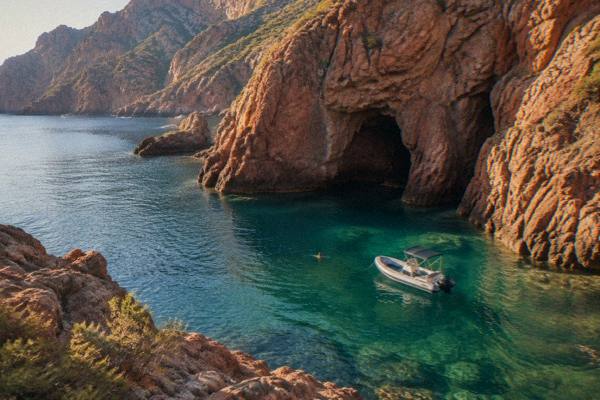
Corsica's most famous protected landscape is the UNESCO World Heritage property "Gulf of Porto: Calanche of Piana, Gulf of Girolata, Scandola Reserve", inscribed in 1983 on natural criteria (vii), (viii) and (x), covering 11,800 ha, and Scandola itself, created by ministerial order on 9 December 1975, is the first nature reserve in Corsica, with 1,000 ha of sea, 919 ha of land and a 70 ha integral reserve.
Scandola's land area is closed to the public: reported rules say visits are by boat only, with no landing in the integral reserve, daytime anchoring allowed outside the integral reserve and the Gargalu channel, anchors up at sunset, and no recreational line or spear fishing. The reserve is managed by the PNRC, and the Office de l'Environnement de la Corse credits it with a role in saving the osprey in Corsica. New measures from a 28 April 2026 steering committee include voluntary labelling of boat operators, a QR-code tracking trial for pleasure boats, more controls at sea and renewed osprey quiet zones, with quotas and licences to be consolidated in a regulatory framework being finalised.
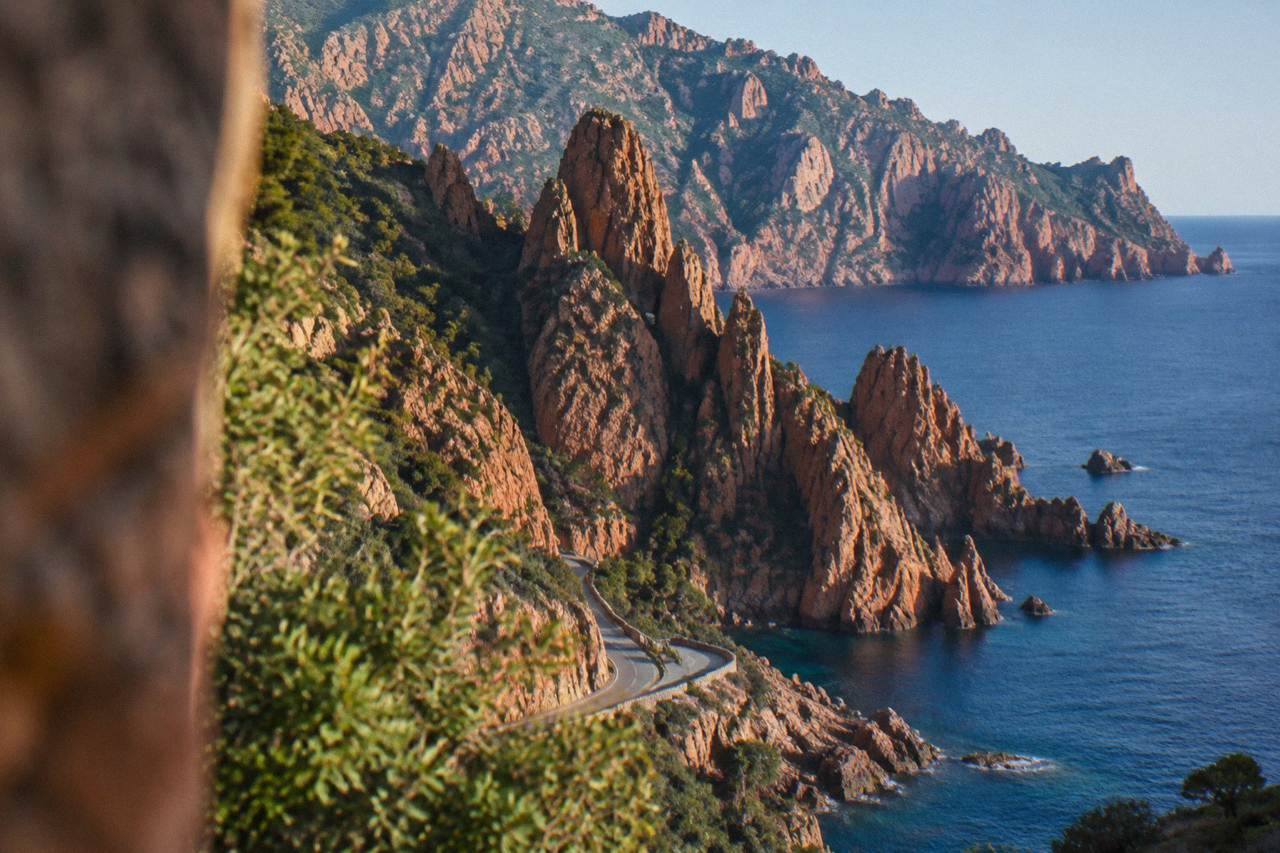
The red Calanques de Piana and the tiny port of Girolata complete the property, and the boat trips that visit them run from Porto, Cargèse, Sagone, Ajaccio and Calvi.
For depth on the reserve itself, see the Scandola nature reserve page, and for the rock formations, Calanques de Piana.
Bonifacio, The Cliffs And The Îles Lavezzi
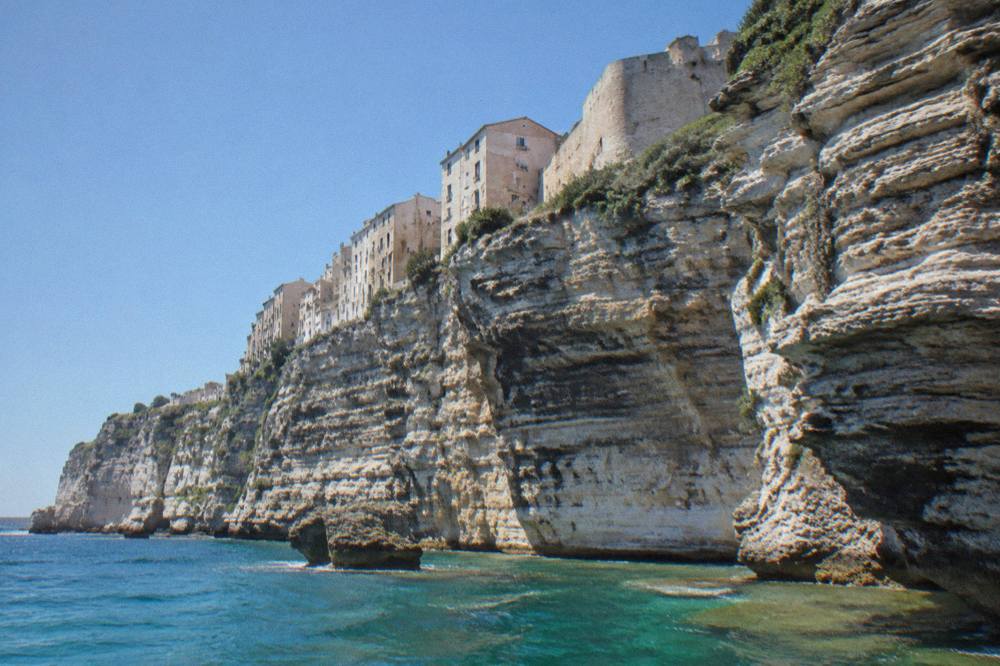
Bonifacio is famous for its citadel and cliffs at the island's southern tip, and for the Escalier du Roi d'Aragon, 189 steps cut down the cliff face with a 180-degree view over the water toward Sardinia, while the Îles Lavezzi, a short sail offshore, sit inside the Bouches de Bonifacio Nature Reserve, reported as managed by the Office de l'Environnement de la Corse.
The Escalier's fee is reported at about EUR 5 for an adult, with monthly opening hours and a flat, closed-toe shoe requirement, and the reservation page notes children receive a small diploma at the top. Bonifacio is also the port for the short Sardinia crossing: Moby and Ichnusa Lines hold the Santa Teresa Gallura to Bonifacio route, a crossing whose exact duration varies. The town's own citadel fees and hours go unprinted on this page.
The Lavezzi archipelago is the island's other marine headline. Shorter cliff-and-Lavezzi trips and guided snorkelling cruises also run from Bonifacio itself, and the Bonifacio boat tour guide lays out the choices.
Corsican Food, Charcuterie And Brocciu
Corsica is famous for protected foods: brocciu obtained its appellation d'origine in 1983 and its AOC/AOP in 1998; prisuttu, lonzu and coppa took AOC in 2012 and AOP in 2014; chestnut flour holds the AOP Farina castagnina corsa; olive oil carries the AOC Oliu di Corsica effective 2004; and Corsican honey has held AOP Mele di Corsica status since 1998, per the island's own appellation records.
The charcuterie cuts come from the Nustrale pig breed, recognised in 2006. Wine adds its own fame: the island's appellations include Patrimonio, Ajaccio, Vin de Corse with named crus such as Calvi, Coteaux du Cap Corse, Figari, Porto-Vecchio and Sartène, and Muscat du Cap Corse, and the main grapes reported across Corsican tourism sources are Nielluccio and Sciaccarellu for reds and Vermentinu for whites. One striking figure from the island's economic and social council: about 98% of metropolitan France's citrus area lies in Corsica, with the Clémentine de Corse holding IGP since 2007.
The food words stay lowercase in Corsican, and the plates to know are brocciu, figatellu, lonzu, coppa, prisuttu, fiadone and canistrelli. The pages on what is the famous food in Corsica and what is the famous drink of Corsica take each one in turn, and the Corsican wine guide covers the appellations.
Napoléon, Ajaccio And The Island's Museums
Ajaccio, the island's capital with 76,320 residents in the 2023 census published in August 2026, is famous as the birthplace of Napoléon, and Maison Bonaparte, the national museum on Rue Saint-Charles, is open every day except Monday at EUR 10 full price, free for EU residents under 26, according to the museum's own practical-information page.
The published sight prices across the island hold steady and are worth gathering in one place:
| Sight | Full price | Concessions | Closed |
|---|---|---|---|
| Maison Bonaparte, Ajaccio | EUR 10 | EUR 8 non-EU 18-25 and large families; free EU under 26 | Monday |
| Palais Fesch, Ajaccio | EUR 10 | EUR 6 over 65; free up to 18 | Christmas, New Year, 1 Nov |
| Musée de la Corse and citadel, Corte | EUR 5.50 | EUR 4 and EUR 3; one ticket covers museum and citadel | 31 Dec to 14 Jan |
| Filitosa prehistoric site | EUR 9 | EUR 7 reduced; family EUR 28; free under 6 | 3 Nov to 31 Mar |
Palais Fesch, listed by the Ajaccio tourist office for 2026, is open daily 09:00 to 17:00, and Filitosa runs 1 April to 2 November, 09:00 to sunset. Corte, the old capital, sits inland at the hub of the island: the museum's own page gives road times of 1 h from Bastia, 1 h 30 from Ajaccio and Calvi, 2 h from Porto-Vecchio, and 2 h 45 from Bonifacio and Propriano. The prehistoric standing stones of Filitosa and the citadels of Corte, Bastia, Calvi and Bonifacio are the other half of Corsica's fame, the human heritage against the natural one.
Beaches, Boat Trips And The Shape Of The Coast
Corsica is famous for beaches reached by water as often as by road: Palombaggia and Santa Giulia near Porto-Vecchio, Rondinara, Roccapina, Ostriconi, and, in the Désert des Agriates, Saleccia and Lotu, reported as reachable by boat shuttle from Saint-Florent about April to October, weather permitting, by 4x4 track from Casta, or on foot.
With more than 1,000 km of coastline on an island of 8,722 km2, the sea is never far, and the island's transport reflects it: four airports, Ajaccio Napoléon Bonaparte, Bastia Poretta, Figari Sud Corse and Calvi Sainte-Catherine, and ferry ports. More than 8.5 million passengers, excluding cruise passengers, passed through Corsica's ports and airports in 2025, per the ORTC and DREAL annual report published on 30 May 2026. The Corsica beaches guide maps the strands, and is Bonifacio worth visiting tackles the south's headline town.
Common Questions About What Corsica Is Famous For
What Is Corsica Famous For?
Corsica is famous for the GR20, the UNESCO Gulf of Porto with the Calanche of Piana, Girolata and Scandola, the cliffs and citadel of Bonifacio and the Îles Lavezzi, protected foods such as brocciu AOP and prisuttu, lonzu and coppa, and Ajaccio as Napoléon's birthplace, all on an island of 8,722 km2 with more than 1,000 km of coastline.
Why Is The GR20 So Well Known?
The GR20 crosses 180 km of high mountain terrain north to south in about 15 stages of 4 to 8.5 hours, with guarded PNRC refuges from mid-May to early October, and the Corsican Assembly's own hiking text describes it in exactly those terms.
What Food Is Corsica Famous For?
Brocciu, the sheep's or goat's milk cheese with an appellation d'origine since 1983, plus the charcuterie trio of prisuttu, lonzu and coppa, AOP since 2014, chestnut flour AOP, Corsican honey AOP, Corsican olive oil AOC and Clémentine de Corse IGP.
Is Corsica Famous For Napoléon?
Yes. Napoléon was born in Ajaccio, and Maison Bonaparte on Rue Saint-Charles is now a national museum, open every day except Monday, EUR 10 full price, free for EU residents under 26.
What Is The Most Famous Protected Area In Corsica?
The UNESCO World Heritage property "Gulf of Porto: Calanche of Piana, Gulf of Girolata, Scandola Reserve", inscribed in 1983, with Scandola itself the first nature reserve created in Corsica, on 9 December 1975.
The short answer stands: mountains, red rock, cliffs, cheese, charcuterie and one emperor, all on one island, and every figure above comes from the source that published it.