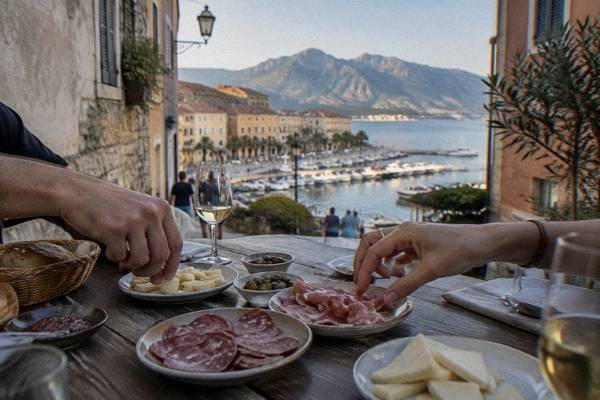
What Is The Famous Food In Corsica?
The famous food of Corsica: brocciu cheese, prisuttu, lonzu, coppa, chestnut flour, figatellu, fiadone and canistrelli, with the appellations behind each one.
Corsica answers the question of what it is famous for most clearly on the plate. This French Mediterranean island of 8,722 km2, with more than 1,000 km of coastline and a mountainous interior topped by Monte Cinto at 2,706 m, produces a food culture built on pork from the Nustrale pig, sheep and goat cheeses, chestnuts from the island's forests and citrus from its eastern plains. Many of these products carry French and European appellation labels, and those official recognitions, not marketing, are what anchor the island's reputation. The Corsica Travel Guide runs through the famous foods one by one, with the labels and dates the producers' own bodies publish.
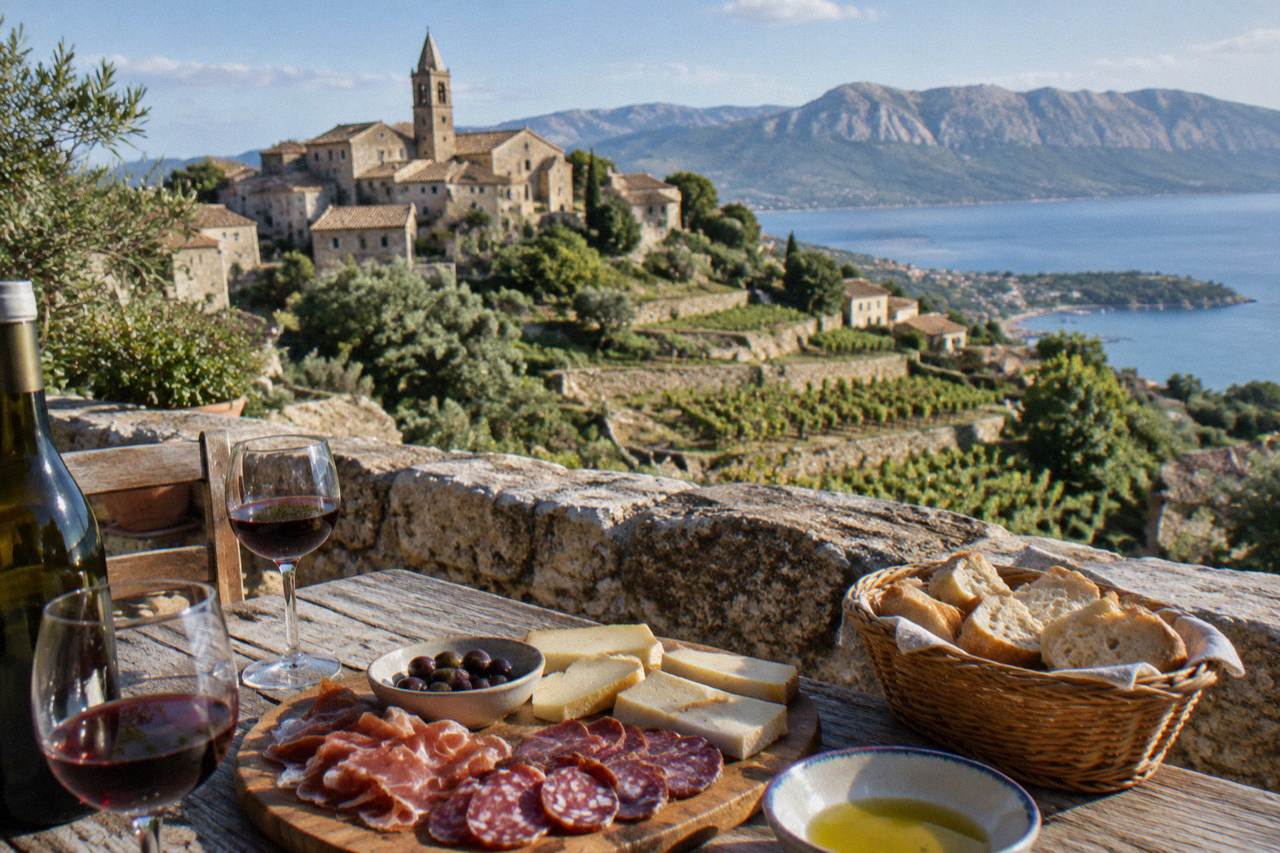
The famous food of Corsica is brocciu, a whey cheese from sheep or goat milk that obtained its appellation d'origine in 1983, alongside the charcuterie trio of prisuttu, lonzu and coppa, which together hold an AOC from 2012 and an AOP from 2014, and the sweets and dishes built on them, figatellu sausage, fiadone cheesecake and canistrelli biscuits. Chestnut flour, olive oil and honey carry their own protected names.
Brocciu sits at the centre of the list. The Collectivité de Corse's own economic and social council records that brocciu obtained its appellation d'origine in 1983, with the fuller AOC and AOP recognition reported in 1998 by the island's tourism body. It is the cheese that appears across Corsican cooking, in savoury dishes and in desserts, and Corsican food writers treat it as the island's signature product. The tourism board's pages on the cheese describe it as made from whey, the liquid left after making another cheese, which is why its season follows the lactation of the island's sheep and goats.
Around the brocciu sits a family of prepared dishes and small goods. Figatellu is a liver sausage, fiadone is a cheesecake made with brocciu and lemon, and canistrelli are hard biscuits. These names appear on menus across the island, from Ajaccio to Bastia, and the Corsican spellings, with their u endings, are the ones used in the appellation documents themselves.
Which Corsican Products Carry Protected Appellations?
Corsica holds protected appellations for brocciu cheese, the charcuterie cuts prisuttu, lonzu and coppa, chestnut flour, olive oil, honey and the clémentine de Corse, with recognition dates running from 1983 for brocciu to 2014 for the charcuterie's AOP and the clémentine's Label Rouge. The Nustrale pig breed behind the charcuterie was recognised in 2006.
These labels matter because they are the legal spine of Corsican food. The three charcuterie cuts, prisuttu the dry-cured ham, lonzu the loin and coppa the neck, received their AOC in April 2012 and their AOP in 2014, and the Nustrale pig breed that supplies them was recognised in 2006, all documented by the island's CESEC. Chestnut flour holds the AOP "Farine de châtaigne corse, Farina castagnina corsa", whose defence body was created in 2001, with the flour's own recognition reported in 2010. Olive oil's AOC "Huile d'olive de Corse, Oliu di Corsica" took effect in 2004.
The table below gathers the dates in one place, all from the CESEC attachment and the tourism board's published pages.
| Product | Label | Recognition |
|---|---|---|
| Brocciu | Appellation d'origine | 1983 |
| Prisuttu, lonzu, coppa | AOC, then AOP | 2012, then 2014 |
| Nustrale pig breed | Breed recognition | 2006 |
| Chestnut flour | AOP Farina castagnina corsa | Defence body 2001 |
| Olive oil | AOC Oliu di Corsica | Effective 2004 |
| Honey | AOP Mele di Corsica | AOC reported 1998 |
| Clémentine de Corse | IGP, then Label Rouge | 2007, then 2014 |
Honey deserves its own line. The AOP "Miel de Corse, Mele di Corsica" exists as a protected name, and the island's tourism body reports the AOC dating to 1998, describing it as the first honey to receive these designations. The clémentine de Corse carries an IGP from 2007 and a Label Rouge from 2014, per the same tourism pages. One figure to keep in proportion: the CESEC's record that about 98 percent of metropolitan France's citrus area is in Corsica dates from the 2014 era and should not be read as a current statistic.
Where Does Corsican Charcuterie And Brocciu Come From?
Corsican charcuterie comes from the Nustrale pig, a breed recognised in 2006, whose meat is cured into prisuttu ham, lonzu loin and coppa neck under an AOP held jointly since 2014, while brocciu is a whey cheese made from the milk of the island's sheep and goats, with its appellation dating to 1983. Both product families are tied to the island's interior landscape of chestnut forests and mountain pastures.
The interior of Corsica, the part of the island around Corte and the high massifs, is where this food culture is rooted. The pigs whose cured meat carries the AOP are raised in a landscape whose trees also give the chestnut flour its own protected name. The two products are linked in the island's ecology as well as on its platters. The Corsican language keeps the names, prisuttu rather than the French jambon sec, and the appellation documents use the Corsican forms themselves.
Brocciu's production cycle follows the animals rather than the calendar. Because it is made from whey, its making depends on milking seasons, and the tourism board's pages describe how the cheese moves through the island's kitchens in both sweet and savoury roles. Fiadone, the brocciu and lemon cheesecake, is the dessert most closely identified with it.
To taste the range in one structured walk, the Ajaccio food and tasting tour covers cheeses, charcuterie and sweets from producers in the island's capital. For a sit-down primer on the whole cuisine, the guide to Corsican food and what to eat breaks the island's plates down course by course, and for the drinks that sit beside them, the page on what is the famous drink of Corsica covers the island's beer, wine and aperitifs.
What Are The Famous Corsican Dishes To Order?
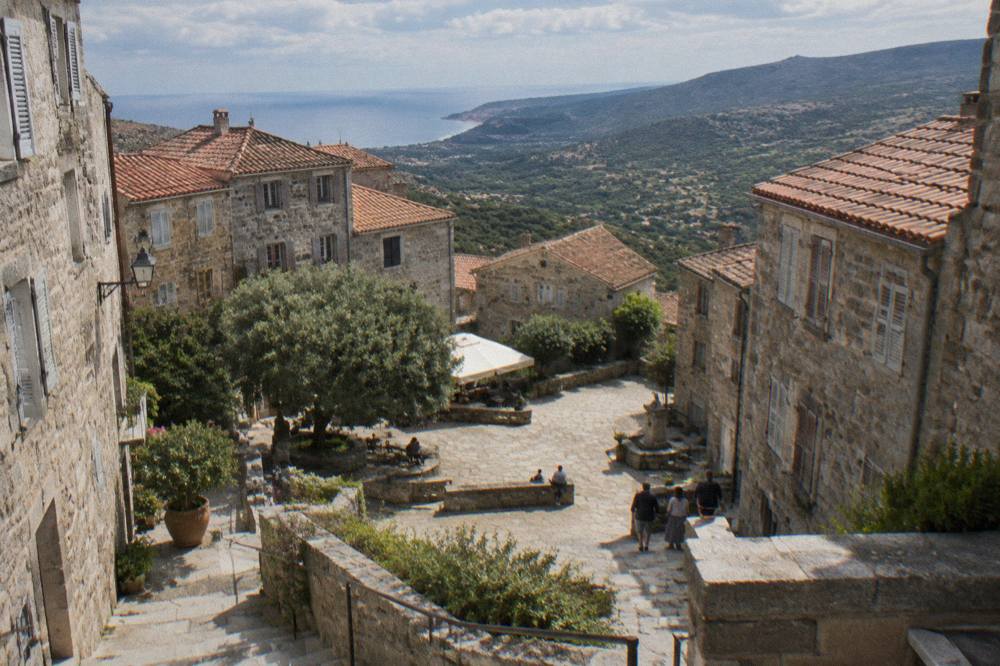
The famous Corsican dishes to order are brocciu in its fresh and cooked forms, figatellu liver sausage, the cured cuts prisuttu, lonzu and coppa, the brocciu and lemon cheesecake fiadone, canistrelli biscuits and pasta or polenta dishes made with the island's protected chestnut flour, foods that appear on menus from the coast at Ajaccio to the interior at Corte.
A Corsican menu usually opens with the charcuterie board. The three AOP cuts arrive sliced together, and because they share one label held since 2014, a board that names all three is a fair test of whether a kitchen is sourcing seriously. Brocciu follows in the main courses, and in fiadone at dessert. Canistrelli come with coffee. Chestnut flour, the AOP Farina castagnina corsa, turns into both sweet and savoury preparations, and the chestnut itself is the subject of an island autumn fair, though no 2026 dates for it have been announced.
Wine belongs on the same table. Corsican appellations include Patrimonio, Ajaccio, Muscat du Cap Corse and the Vin de Corse with its named crus such as Calvi, Figari, Porto-Vecchio and Sartène, per the island's tourism board, which also lists Nielluccio and Sciaccarellu as the red grapes and Vermentinu as the white. The counts and classifications of those appellations belong to their own page rather than this one.
Can You Taste Corsican Food On A Guided Tour?
Yes, Corsican food can be tasted on guided tours, including a small-group food tour with tastings in Ajaccio, a history and gastronomy walk through the same city, and a food and wine tour covering the island's appellations, with each option presenting brocciu, charcuterie and the other famous products in a structured setting.
The tasting walk in Ajaccio runs as a small-group format and covers the island's cheeses, charcuterie and sweets across stops in the capital. It suits a first or last day on the island, when a visitor wants a map of the cuisine before ordering independently. The same city also offers a history walk from Genoa to Napoleon that folds gastronomy into the route, and the Corsica food and wine tour is the fuller option covering both the plate and the glass. For the current price, times and availability of the Ajaccio tasting walk, Check availability.
Tours are one route in, but the products themselves are the point. A market or épicerie in any of the island's towns will stock the AOP cuts, the brocciu in season, chestnut flour in its paper sacks and jars of Mele di Corsica, and the labels printed on the packaging are the same ones the CESEC documents list.
Why Do Chestnuts Matter So Much To Corsican Cooking?
Chestnuts matter to Corsican cooking because the island's chestnut flour holds its own AOP, Farina castagnina corsa, with a defence body created in 2001, and the flour appears across both sweet and savoury dishes, while the pig regime that produces the AOP charcuterie is bound to the same chestnut landscape of the island's interior.
The chestnut is the interior's crop. Its flour carries a protected name of its own, distinct from the charcuterie and cheese labels, which means the tree stands behind two of the island's flagship foods at once. The tourism body reports the flour's AOP recognition in 2010, and the CESEC records the defence body's creation in 2001, which shows a producer structure that predates the recognition by nearly a decade.
In the kitchen the flour works into cakes, puddings and savoury dishes, and in autumn the island marks the harvest with the Foire de la Châtaigne at Bocognano, an event whose 2026 dates have not been announced. That fair sits alongside the Fiera di u Casgiu, the cheese fair at Venaco, as the calendar's two food landmarks, both unannounced for 2026.
Common Questions About Corsican Food
What Is The Famous Food In Corsica?
Brocciu cheese, the charcuterie cuts prisuttu, lonzu and coppa, figatellu sausage, fiadone cheesecake, canistrelli biscuits and dishes made with protected chestnut flour are the island's famous foods, and brocciu's appellation dates to 1983.
What Is Brocciu?
Brocciu is a Corsican whey cheese made from sheep or goat milk. It obtained its appellation d'origine in 1983, with AOC and AOP recognition reported in 1998, and it appears in both savoury dishes and desserts such as fiadone.
Which Corsican Charcuterie Is Protected?
Prisuttu, lonzu and coppa share an AOC from 2012 and an AOP from 2014, and the Nustrale pig breed behind them was recognised in 2006.
Is Corsican Chestnut Flour Protected?
Yes, as the AOP Farine de châtaigne corse, Farina castagnina corsa, whose defence body was created in 2001, with recognition of the flour reported in 2010.
What Is Fiadone?
Fiadone is a Corsican cheesecake made with brocciu and lemon, and it is the dessert most closely associated with the island's whey cheese.
Do Corsican Honey And Olive Oil Carry Labels?
Yes, honey holds the AOP Mele di Corsica, with its AOC reported in 1998, and olive oil holds the AOC Huile d'olive de Corse, Oliu di Corsica, effective from 2004.
The short version is that Corsica's famous food is a set of protected products rather than a single dish: brocciu from 1983, charcuterie from the Nustrale pig, chestnut flour from the interior's forests, plus the figatellu, fiadone and canistrelli built on them, and any table that puts them together is serving the island at its most authentic.