Porto Vecchio
Porto Vecchio sits on the southeast coast of Corsica, between long sandy beaches and the forested mountains of the interior. This guide covers what the town offers, the beaches and boat trips around it, and the day trips inland to Ospedale and the Aiguilles de Bavella.
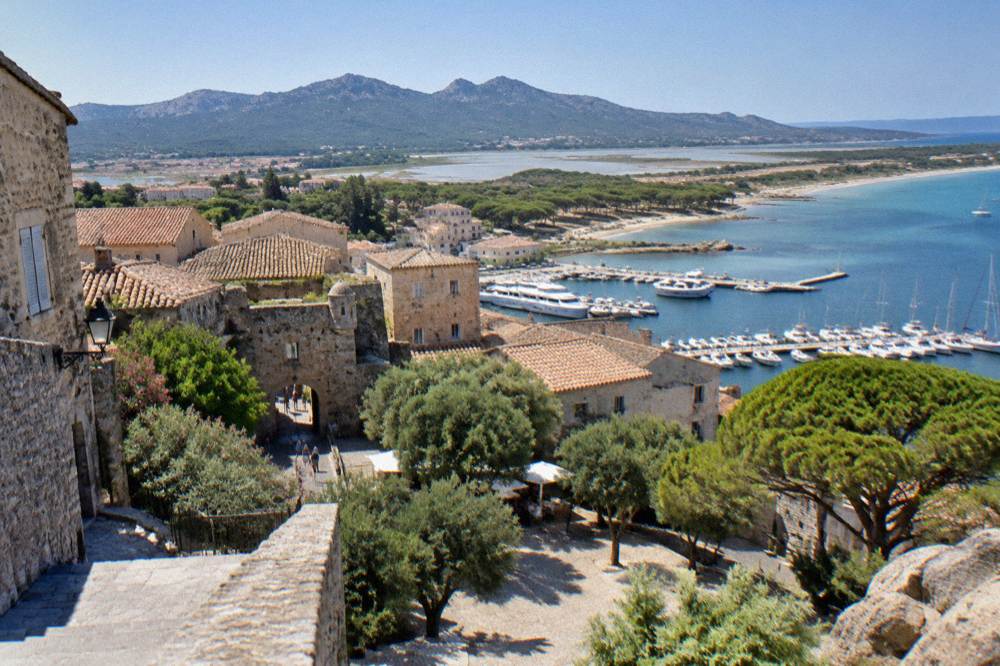
Porto Vecchio is a port town on the southeast coast of Corsica, in Corse-du-Sud, known for its beaches nearby, boat trips to the Îles Lavezzi, and access to the Ospedale forest and the Aiguilles de Bavella inland.
Porto Vecchio is a port town on the southeast coast of Corsica, the French Mediterranean island of mountains and more than 1,000 km of coastline. The town looks out over the sea towards Sardinia, while behind it the land climbs through the Ospedale forest to the granite peaks of the Aiguilles de Bavella. That combination, beaches in front and real mountains behind, is what sets the town apart from other Corsican bases, and this guide covers both sides of it, along with the boat trips, the food and the practical details of staying here.
Where Is Porto Vecchio In Corsica?
Porto Vecchio is a port town on the southeast coast of Corsica, in the Corse-du-Sud part of the island, about 25 km as the crow flies northeast of Bonifacio. It sits on the Golfe de Porto-Vecchio, a wide bay that opens onto the strait between Corsica and Sardinia, and it is one of the island's ferry ports, with La Méridionale sailing there from Marseille year-round, according to the operator's route list.
The town itself clusters around its old core on a low hill above the modern marina, with the residential outskirts spreading towards the beaches of the gulf. Inland, the terrain rises quickly. The Ospedale forest covers the slopes above the town, and beyond it the road climbs towards Zonza and the Aiguilles de Bavella, the saw-tooth granite ridge that belongs to the mountainous interior described in the Corsica regions overview. Ferries also call at the port: La Méridionale runs Marseille to Porto-Vecchio, and Corsica Ferries serves the port from Toulon and Nice on seasonal sailings.
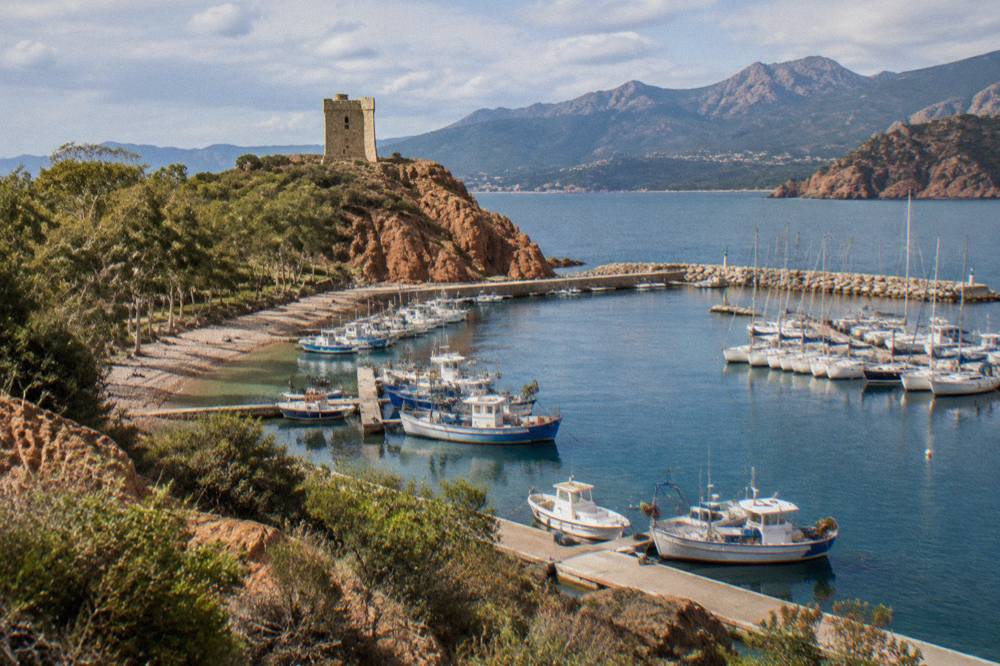
For orientation around the island, Ajaccio lies to the northwest, Bastia to the north, and Bonifacio at the island's southern tip. The drive from Corte to Bonifacio, the longest of the road times the Corte museum publishes, is 2 h 45, which gives a sense of the scale of the south.
What Are The Best Beaches Around Porto Vecchio?
The beaches closest to Porto Vecchio include Palombaggia and Santa Giulia south of the town, and Rondinara on the road towards Bonifacio; all three sit on the southeast coast of Corsica, and this site carries a full guide to each one. The town's own gulf shore runs along the bay, with the better-known sandy strands a short drive away rather than in the town centre.
Each of these beaches has its own character and its own guide on this site, covering access, swimming conditions and what lies nearby: Palombaggia, Santa Giulia and Rondinara. Beyond them, the south coast continues towards Bonifacio, where the plage de Roccapina sits in wilder country. Swimming is a summer activity: the fire-risk season from 15 June to 30 September brings rules about access to some massifs, and lifeguard cover is seasonal, with Ajaccio's municipal posts running from 1 July to the end of August 2026 and Haute-Corse beaches supervised by volunteer firefighters over roughly the same window.
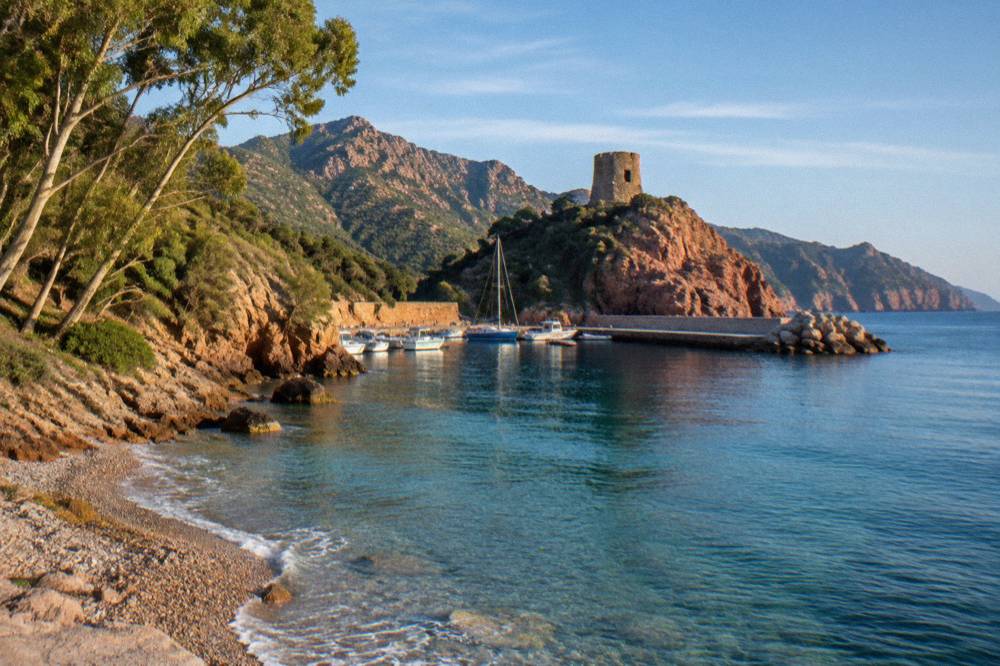
The beaches are also the departure logic for the town's boat trips. A day on the water from Porto Vecchio, whether a catamaran to the Lavezzi islands or a sunset cruise with a glass of Corsican rosé from the nearby Valinco coast, is covered in the dedicated Porto Vecchio boat trips guide.
What Boat Trips Run From Porto Vecchio?
Boat trips from Porto Vecchio centre on the Îles Lavezzi, the protected island group in the Bouches de Bonifacio Nature Reserve between Corsica and Sardinia; a full-day catamaran cruise to the islands runs from the town, and the reserve is managed by the Office de l'Environnement de la Corse, per the prefecture's documentation. Options range from catamaran days with snorkelling stops to shorter trips towards the Bonifacio cliffs.
The Lavezzi islands sit inside the Bouches de Bonifacio Nature Reserve, which the Corse-du-Sud prefecture's own documents place under the management of the Office de l'Environnement de la Corse. That status shapes what a visit looks like: the islands are a protected site, and the wildlife and habitat rules that apply there are the reason the trips are structured around swimming and snorkelling stops rather than open exploration. The reserve lies across the strait from Sardinia, and trips from Porto Vecchio reach it across the same waters as the Bonifacio boat tour circuit described elsewhere on this site.
For a fuller treatment of the crossing, the islands and what a day on the water involves, the Lavezzi islands guide covers the reserve, and the day trip to Bonifacio from Porto Vecchio covers the southern alternative by road.
What Is There To Do Inland: Ospedale Forest And The Aiguilles De Bavella?
The inland half of a Porto Vecchio stay runs from the Ospedale forest above the town to the Aiguilles de Bavella, the granite ridge above Zonza in Corsica's mountainous interior; a guided 4x4 day tour from Porto Vecchio covers both, and the standing advice from the regional natural park's GR20 page is to check the daily fire-risk map before any mountain outing between mid-June and mid-September.
The Ospedale forest and the Bavella massif belong to the interior of the island, the part of Corsica that the geography describes as mountainous, with Monte Cinto at 2,706 m the highest summit. The Parc naturel régional de Corse, created in 1972, covers 4,484 km2 of the island including the big valleys that run down to the sea. The park's own GR20 page sets the standing rules for the summer: from 15 June to 30 September it is forbidden to light a fire or smoke in forests, maquis and massifs, the fire-risk map updates at 18:00 for the next day, and some massifs can close entirely on the worst days. Inforoutes Corse publishes live road status for the mountain routes, worth a check before any drive inland.
A guided 4x4 day tour from Porto Vecchio takes the driving and the route-finding off your hands and pairs the forest with the Bavella needles; Check availability if that fits your dates. The same operator area has a second 4x4 itinerary to the Cuscionu plateau and the Alta Rocca, the southern hill country described in the Alta Rocca and Zonza area guide.
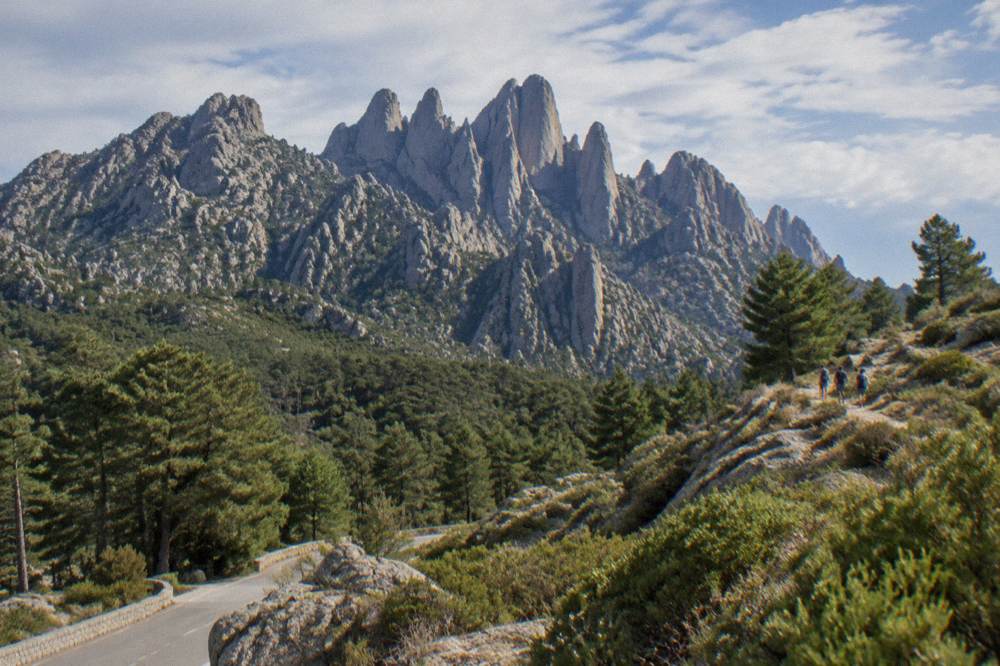
For walkers, the Restonica valley and the Gorges de Spelunca sit further west, both with their own guides, and the long-distance trails of the south are listed in the hiking section below. The Restonica valley runs out of Corte, which makes it a long day from Porto Vecchio, but the Bavella walks are close.
Where Can You Snorkel And Dive Near Porto Vecchio?
Snorkelling and beginner scuba diving around Porto Vecchio centre on the Cerbicale islands, the small protected group in the Bouches de Bonifacio south of the town; a beginner scuba diving session in the Cerbicale Islands Reserve runs with an instructor from Porto-Vecchio, and the Lavezzi catamaran cruises carry snorkelling stops in the same strait.
The Cerbicale islands and the Lavezzi islands both lie in the Bouches de Bonifacio Nature Reserve, the protected stretch of sea between Corsica and Sardinia managed by the Office de l'Environnement de la Corse. Underwater, that means the marine life and habitats of a reserve rather than open coast. The reserve's own rules, published by the prefecture, govern fishing and take in these waters. Snorkelling is also available from the boat trips: the catamaran cruises to the Lavezzi islands list snorkelling among their inclusions, and a dedicated guided snorkelling cruise runs from Bonifacio itself. The full index of guides sits on Corsica Travel Guide.
What Should You Eat In And Around Porto Vecchio?
The Corsican table around Porto Vecchio runs on brocciu, the sheep's-milk cheese that took its appellation d'origine in 1983, the charcuterie cuts prisuttu, lonzu and coppa, which hold AOP status since 2014, and chestnut flour under the Farina castagnina corsa AOP; the island's AOP and AOC food designations are documented by the Corsican assembly's economic and social council.
These designations are the island's own quality framework, and the CESEC documents behind them date each one: brocciu's appellation d'origine in 1983, the three charcuterie cuts' AOC in 2012 and AOP in 2014, olive oil under the Oliu di Corsica AOC effective 2004, honey under the Mele di Corsica AOP, and the Clémentine de Corse under an IGP obtained in 2007. Corsican wine appellations include Patrimonio, Ajaccio and the Vin de Corse family with its named crus, among them Porto-Vecchio itself, per the tourism board's produce pages. The main grape varieties listed are Nielluccio and Sciaccarellu for reds and Vermentinu for whites.
| Product | Designation | Year |
|---|---|---|
| Brocciu | Appellation d'origine | 1983 |
| Prisuttu, lonzu, coppa | AOC, then AOP | 2012, 2014 |
| Chestnut flour (Farina castagnina corsa) | AOP recognised | 2010 |
| Olive oil (Oliu di Corsica) | AOC effective | 2004 |
| Honey (Mele di Corsica) | AOC/AOP | 1998 |
| Clémentine de Corse | IGP, then Label Rouge | 2007, 2014 |
A food tour of Ajaccio runs on the west coast, which is a distance from Porto Vecchio, but the same products appear on menus across the south. The Corsican food guide covers the dishes and the drinks, including fiadone and canistrelli, and the Corsican wine guide covers the appellations in detail.
Is Porto Vecchio A Good Base For Day Trips In Southern Corsica?
Porto Vecchio works as a base for the whole southeast: Bonifacio lies close to the south, the beaches of the gulf surround it, and the interior of Ospedale and Bavella rises directly behind the town; the Corte museum's published road times give 2 h from Corte to Porto-Vecchio and 2 h 45 to Bonifacio, which frames the scale of the south.
The road times below come from the Musée de la Corse's own practical page, published for visitors to the Corte citadel, and they describe drives to Corte rather than from Porto Vecchio; read them as a measure of how the island's road network is strung together around the central town.
| Route | Published road time |
|---|---|
| Corte to Porto-Vecchio | 2 h |
| Corte to Bonifacio | 2 h 45 |
| Corte to Bastia | 1 h |
| Corte to Ajaccio | 1 h 30 |
| Corte to Calvi | 1 h 30 |
| Corte to Propriano | 2 h 45 |
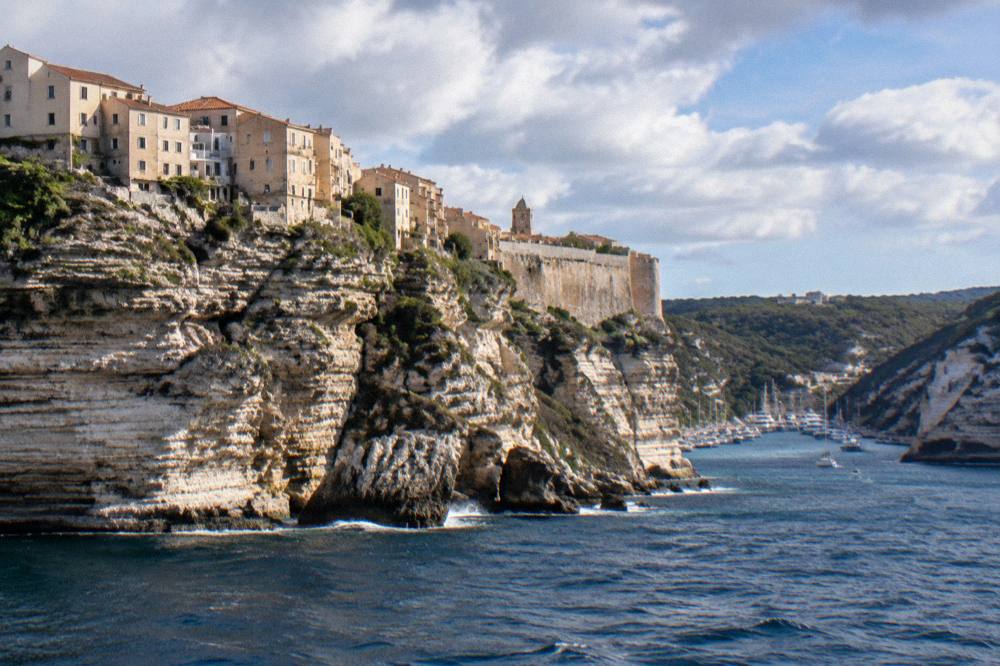
Day-trip options from the town fall into three groups. By sea, the Lavezzi and Cerbicale trips described above. By road south, Bonifacio, whose citadel, cliffs and the 189-step Escalier du Roi d'Aragon are covered in the Bonifacio citadel and cliffs and Escalier du Roi d'Aragon guides; the stair's fee is reported at about EUR 5 with closed shoes required. By road north, the east coast runs up towards Saint-Florent and Patrimonio and the Désert des Agriates, whose beaches of Saleccia and Lotu are reached by boat shuttle from Saint-Florent, by 4x4 track from Casta or on foot, per the tourism board's page.
| Day trip | Direction | Type |
|---|---|---|
| Îles Lavezzi catamaran | South, by sea | Reserve and islands |
| Bonifacio cliffs and citadel | South, by road | Town and monument |
| Ospedale forest and Bavella | Inland, by road | Forest and mountains |
| Palombaggia and Santa Giulia | Local | Beaches |
| Désert des Agriates | North, by road | Coast and beaches |
| Sartène and the Valinco | West, by road | Hill town and coast |
Can You Hike The Long Trails From Porto Vecchio?
Two of the regional park's long-distance trails finish at Propriano, west of Porto Vecchio: Mare a Mare Sud, 73 km over 5 days with 3,200 m of climbing, and Mare e Monti Sud, 66 km over 5 days with 2,700 m of climbing, per the park's own brochure; the GR20 itself runs much further north through the high spine, about 15 stages of 4 to 8.5 hours over 180 km.
The trail network is published by the Parc naturel régional de Corse in its hiking brochure, and the figures below are that document's own.
| Trail | Length | Days | Total climbing |
|---|---|---|---|
| Mare a Mare Nord | 139 km (161 km with variant) | 8 to 12 | 5,900 m |
| Mare a Mare Centre | 84 km | 6 to 7 | 3,900 m |
| Mare a Mare Sud | 73 km | 5 | 3,200 m |
| Mare e Monti Nord | 121 km | 10 | 6,100 m |
| Mare e Monti Sud | 66 km | 5 | 2,700 m |
The GR20, the island's famous high route, is a different proposition. The Corsican Assembly's own text describes it as 180 km with about fifteen stages of 4 to 8.5 hours, and the park's page sets the 2026 operating rules: refuges guarded from 16 May to 4 October, booking mandatory online for both bunks and bivouac pitches, no departures from Calenzana after 11:00 under the municipal fire-risk order, and no dogs inside refuges or rented tents. Wild camping is banned across the GR20 and the island; bivouac is allowed only in the marked areas at the refuges.
| GR20 option (2026, PNRC rates) | Price per person |
|---|---|
| Bunk in a guarded refuge | EUR 20 |
| Bivouac pitch, own tent | EUR 12 |
| Rented tent, one person | EUR 27 |
| Rented tent, two people | EUR 39 |
The full route guide, including the Cirque de la Solitude closure history and the booking system, sits on the GR20 guide page, and the wider walking options on hiking in Corsica.
What Is The Weather Like Around Porto Vecchio?
Corsica has a hot dry summer and a mild wet winter, with snow only on the high mountains, according to the Météo-France station normals for 1991-2020; July averages 8.6 mm of rain at the Ajaccio station, the lowest monthly figure on the table, and November carries 111.8 mm at the same station, so the dry season and the wet season are sharply distinct.
The closest official station normals the site holds are for Ajaccio and Bastia; the south coast's pattern follows the same island shape. The table below is the Ajaccio station data, and it shows the mechanism of a Mediterranean year: dry heat from June to August, rain building through autumn, and mild but wet winter months.
| Month | Mean high (°C) | Mean low (°C) | Rain (mm) | Sunshine (h/day) |
|---|---|---|---|---|
| Jan | 14.0 | 4.7 | 54.1 | 4.4 |
| Feb | 14.2 | 4.3 | 48.1 | 5.5 |
| Mar | 16.0 | 5.9 | 50.4 | 6.8 |
| Apr | 18.5 | 8.3 | 53.1 | 7.7 |
| May | 22.1 | 11.8 | 49.8 | 9.3 |
| Jun | 25.9 | 15.4 | 25.9 | 11.1 |
| Jul | 28.6 | 17.7 | 8.6 | 12.1 |
| Aug | 29.2 | 18.1 | 15.8 | 11.1 |
| Sep | 26.1 | 15.4 | 57.8 | 8.7 |
| Oct | 22.8 | 12.6 | 85.7 | 6.7 |
| Nov | 18.3 | 9.0 | 111.8 | 4.7 |
| Dec | 15.1 | 5.8 | 73.9 | 4.0 |
The month-by-month detail, including the Bastia station normals for the northeast, is on the Corsica weather by month page. The wildfire season matters for planning: the UK FCDO notes a high wildfire risk in France from April to October, and the island's fire-access rules apply from 15 June to 30 September.
What Practical Facts Should You Know Before Staying In Porto Vecchio?
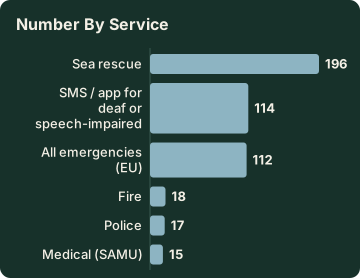
Corsica uses the euro, the emergency numbers are 112 for all services, 15 for medical, 17 for police, 18 for fire, 114 by SMS and 196 for sea rescue, and mountain rescue reaches the PGHM at Ajaccio on 04 95 24 24 00; restaurant menus must state that service is included in the printed price, so a tip is optional, per the French consumer authority's own guidance.
Those numbers and rules come from the French public-service pages, as recorded in the site's fact file. A few more practical points shape a stay in the town. Ferries arrive from Marseille with La Méridionale year-round, and the town is one of the island's ferry ports. More than 8.5 million passengers, cruise passengers excluded, passed through Corsica's ports and airports in 2025, per the ORTC and DREAL annual report published on 30 May 2026. The island's rail network, the Chemins de fer de la Corse, does not serve the town: its lines run Ajaccio to Bastia via Corte, Ponte-Leccia to Calvi, and the Balagne coastal line between Calvi and L'Île-Rousse, so the southeast is road and sea territory.
| Service | Number |
|---|---|
| All emergencies (EU) | 112 |
| Medical (SAMU) | 15 |
| Police | 17 |
| Fire | 18 |
| SMS / app for deaf or speech-impaired users | 114 |
| Sea rescue | 196 |
| PGHM mountain rescue, Ajaccio | 04 95 24 24 00 |
Whether the town itself rewards a stay is its own question, argued in the is Porto Vecchio worth visiting answer page, and the Porto Vecchio old town guide covers the streets and walls above the marina. For the wider island picture, the root things to do in Corsica page lists the attractions across all regions.
Common Questions About Porto Vecchio
Where Is Porto Vecchio?
Porto Vecchio is a port town on the southeast coast of Corsica, the French Mediterranean island, in Corse-du-Sud. It sits on the Golfe de Porto-Vecchio, roughly 25 km as the crow flies northeast of Bonifacio, with the Ospedale forest and the mountains of the interior rising behind it.
Can You Get To Porto Vecchio By Ferry?
Yes. La Méridionale sails Marseille to Porto-Vecchio year-round, per the operator's route list, and Corsica Ferries is reported to serve the port from Toulon and Nice on seasonal sailings. Fares should be checked directly with the operators.
What Are The Best Beaches Near Porto Vecchio?
Palombaggia and Santa Giulia lie south of the town, and Rondinara sits on the road towards Bonifacio. Each has its own guide on this site with access details. Swimming is a summer activity, and lifeguard cover on Corsican beaches runs roughly from the start of July to the end of August.
Can You Visit The Lavezzi Islands From Porto Vecchio?
Yes. A full-day catamaran cruise to the Lavezzi islands runs from Porto-Vecchio, and shorter Bonifacio-based trips also reach the islands. The islands sit inside the Bouches de Bonifacio Nature Reserve, managed by the Office de l'Environnement de la Corse, so the visits are structured around swimming and snorkelling stops.
What Can You Do Inland From Porto Vecchio?
The Ospedale forest climbs directly above the town, and the Aiguilles de Bavella rise beyond it above Zonza. A guided 4x4 day tour from Porto-Vecchio covers both. Between 15 June and 30 September, check the daily fire-risk map before any mountain outing, as the park restricts access to some massifs on high-risk days.
Is There A Train To Porto Vecchio?
No. The Chemins de fer de la Corse network runs Ajaccio to Bastia via Corte, Ponte-Leccia to Calvi, and the Balagne coastal line between Calvi and L'Île-Rousse. The southeast of the island is served by road and by sea, not by rail.