What Is The Famous Drink Of Corsica?
Corsica's famous drinks explained: AOC wines such as Muscat du Cap Corse and Patrimonio, the island's main grape varieties, and where to taste them around Calvi, L'Île-Rousse and Bastia.
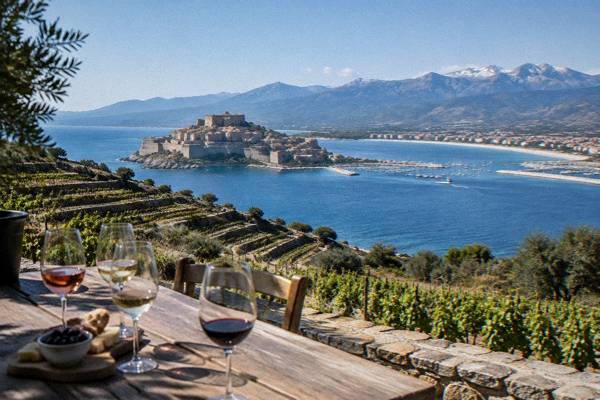
Corsica is a French Mediterranean island with vineyards running down to more than 1,000 km of coastline, and its drinking culture is built on that mix of mountain soil and sea air. The short answer to the question of one famous drink is that several drinks compete for the title, and the strongest claim belongs to the island's own appellation wines. The pages of this Corsica Travel Guide cover the subject from every angle, and this one concentrates on what you will actually be poured.
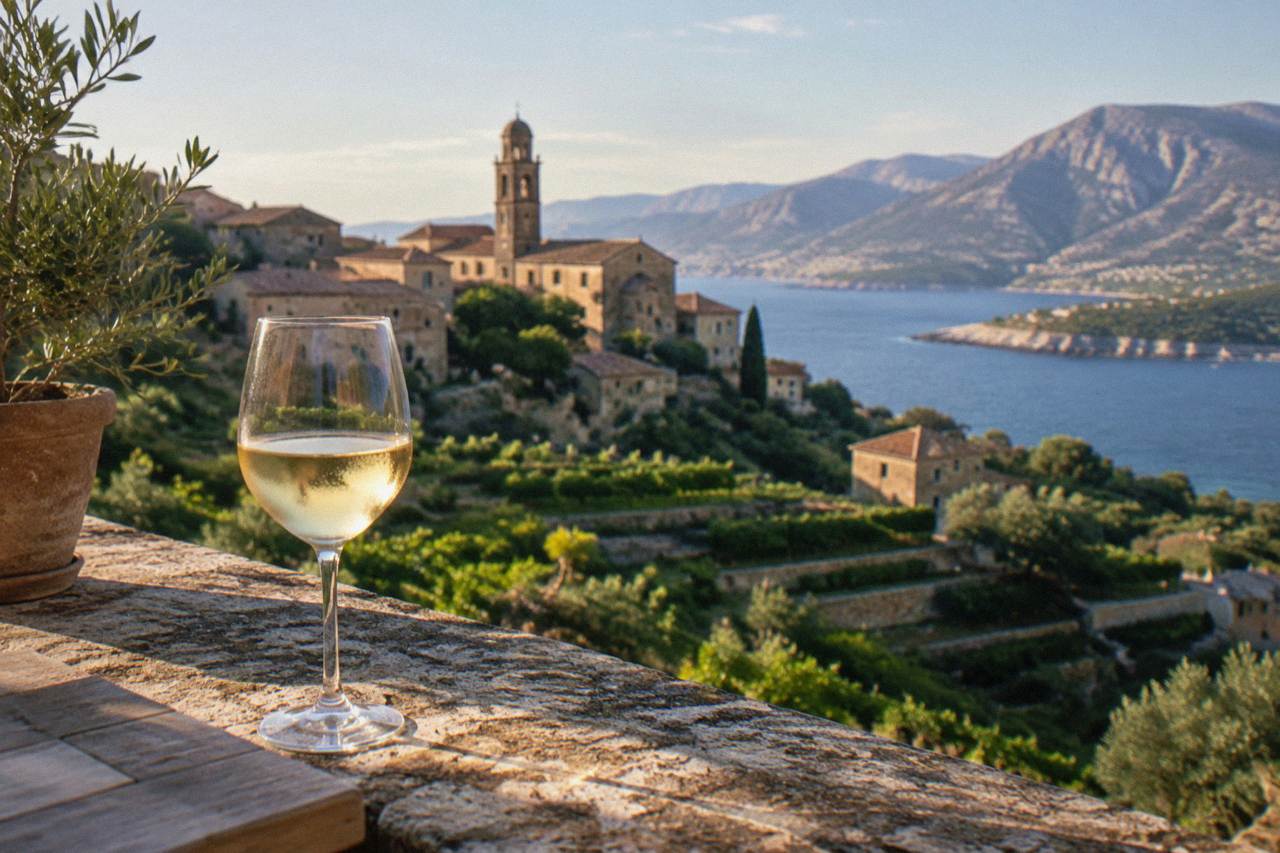
Corsica has no single official national drink, but the closest thing to a signature is its appellation wine, led by the sweet Muscat du Cap Corse and the reds and rosés of Patrimonio and the Vin de Corse appellations. The island's recognised wine names, its chestnut-tinged beer Pietra and the Cap Corse aperitif all appear in the island's drinking identity, and the wines carry the formal French and European recognition that makes them the anchor of the answer.
That answer is worth unpacking. Wine on Corsica is not a folk claim, it is a legal one: the island's appellations include Patrimonio, Ajaccio, Vin de Corse with its named crus such as Calvi, Coteaux du Cap Corse, Figari, Porto-Vecchio and Sartène, and the Muscat du Cap Corse, per the island's own tourism and assembly publications. Each of these names is protected, which means a bottle carrying them meets rules on grape, place and method. A visitor asking for "the local drink" in a restaurant in Ajaccio or Bastia will most often be steered toward one of these appellations, or toward a beer and an aperitif that this page covers further down.
The fuller picture stretches beyond wine. Corsica's food and drink identity is unusually rich in protected products for an island of 8,722 km2: brocciu cheese, charcuterie, honey, olive oil, chestnut flour and clémentines all carry AOC or AOP status alongside the vineyards. Readers planning a full tasting trip may want the companion page on what is the famous food in Corsica, since the cheese and charcuterie boards and the wine list on this island are designed for each other.
Which Corsican Wines Carry An Appellation?
The recognised Corsican wine appellations are Patrimonio, Ajaccio, the Vin de Corse family with its named crus Calvi, Coteaux du Cap Corse, Figari, Porto-Vecchio and Sartène, and the Muscat du Cap Corse, and these names are the reliable markers of local wine on any Corsican list. They stretch across the island, from the Cap Corse peninsula in the north to the granite slopes above Porto-Vecchio in the south, so nearly every base town sits beside at least one of them.
The appellations matter because they are the island's legal guarantee of origin. A wine labelled Vin de Corse Coteaux du Cap Corse comes from that named zone; a Muscat du Cap Corse is made in the style and place the name protects. Per the island's tourism publications, these are the names to look for, and the main grape varieties behind them are Nielluccio and Sciaccarellu for the reds and Vermentinu for the whites.
| Appellation | Type / character | Where it sits |
|---|---|---|
| Patrimonio | Red, white and rosé appellation | The north, near Saint-Florent |
| Ajaccio | Red, white and rosé appellation | The west coast around the capital |
| Vin de Corse (with crus Calvi, Coteaux du Cap Corse, Figari, Porto-Vecchio, Sartène) | Island-wide appellation with named zones | Across the island's wine country |
| Muscat du Cap Corse | Sweet muscat, its own appellation | The Cap Corse peninsula |
For travellers staying in the Balagne, the relevant crus are close at hand: Calvi and Île-Rousse sit inside or beside Vin de Corse Calvi country, and a tasting trip between the two towns is one of the easiest ways to try the local Vermentinu whites.
What Are Nielluccio, Sciaccarellu And Vermentinu?
Nielluccio and Sciaccarellu are the two main red grape varieties of Corsican wine, and Vermentinu is the main white, and these three names explain the character of nearly every appellation bottle on the island. Nielluccio anchors the structured reds, Sciaccarellu the finer, scented ones, and Vermentinu the saline whites that pair with the island's fish and brocciu dishes. Learn these three words and a Corsican wine list stops being a puzzle.
Per the island's tourism publications, this trio is the recognised backbone of Corsican viticulture. Sciaccarellu does particularly well on the granite soils of the south and west, which is why the Ajaccio and Sartène zones lean on it, while Nielluccio has its stronghold in the limestone north around Patrimonio. None of this requires expertise to enjoy: a white Vermentinu with seafood on the quay at Saint-Florent, or a Sciaccarellu red with grillades and lonzu inland, is the standard local pairing, and the appellations above are the shortcut to finding them by name on a label.
The island's drinking identity also runs through its protected larder, because what is poured alongside what is eaten is treated with the same formality. The table below sets out the protected products that most often share a table with Corsican wine.
| Protected product | Status and year | The drink pairing |
|---|---|---|
| Brocciu | Appellation d'origine 1983, AOC/AOP 1998 | White Vermentinu, Muscat with the fiadone dessert |
| Prisuttu, lonzu, coppa | AOC 2012, AOP 2014 | Red Patrimonio or Ajaccio |
| Miel de Corse | AOP, AOC 1998 | Muscat du Cap Corse |
| Huile d'olive de Corse | AOC effective 2004 | White Vin de Corse |
| Farine de châtaigne corse | AOP recognised 2010 | Beer or young red |
| Clémentine de Corse | IGP 2007 | Muscat du Cap Corse |
What About Pietra Beer And The Cap Corse Aperitif?
Beyond wine, the two names that complete the Corsican glass are Pietra, the island's chestnut-brewed beer, and Cap Corse, the quinine aperitif from the Cap Corse peninsula, and both belong on any honest answer to the famous-drink question. Pietra is the beer visitors encounter across the island, poured alongside charcuterie and cheese, while Cap Corse is the aperitif, mixed or neat, that opens a long Corsican lunch. Neither carries an appellation; both carry the island's name on the label.
The full story of these two, along with the island's eaux de vie and the myrtle liqueur family, is gathered on the companion page Corsican drinks: Cap Corse and Pietra, which goes glass by glass through what to order and where. What matters for a first trip is the pattern: aperitif before the meal, wine with it, and something local at every step rather than the mainland defaults. The beer pairs naturally with the chestnut-flour products on the table above, which is why it turns up so often beside a board of coppa and lonzu.
Where Can You Taste Corsican Drinks On The Island?
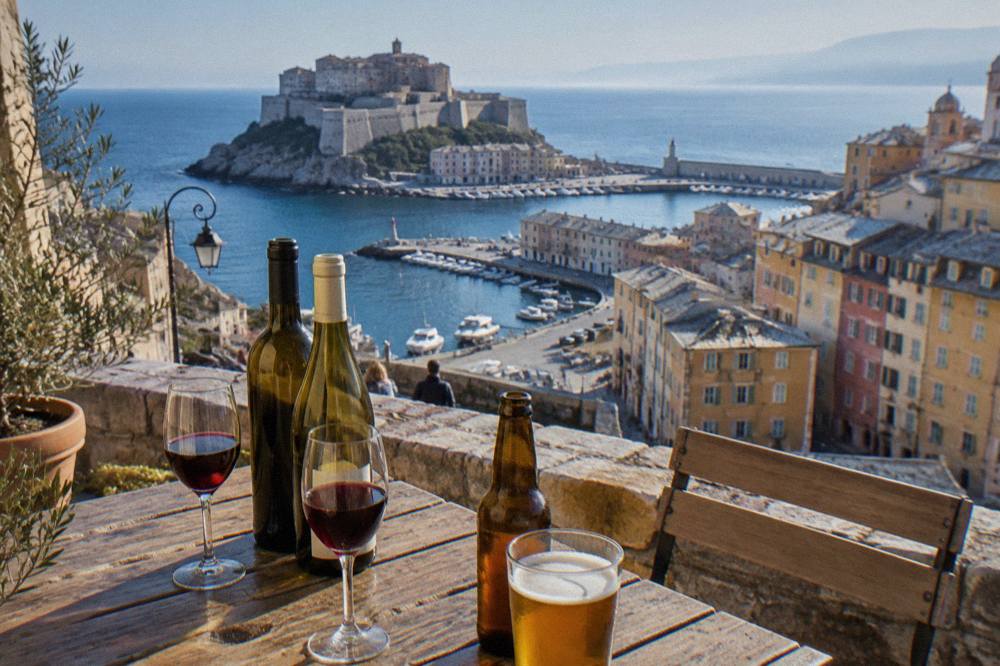
The easiest tasting grounds are the Balagne coast between Calvi and L'Île-Rousse for wine, Bastia and the Cap Corse peninsula for Muscat and aperitif culture, and the hilltop villages of the interior, where cellars and village bars pour the same appellations far from the coast. Each base town puts a different appellation within reach, so the drink itinerary and the lodging choice are really the same decision.
In the Balagne, the wine tastings around Calvi and Île-Rousse cover the local cru in a single half-day circuit from either town. Around Bastia, the old harbour and the town's small-group history walk place you inside the island's northern drinking culture, with the Cap Corse wine road a short drive north. Inland, a day trip through the old hilltop villages pairs the scenery of the Corsican interior with the same appellations, tasted where the grapes are grown. The following table matches each base to what its region pours.
| Base | Appellation or drink on the doorstep | Tasting angle |
|---|---|---|
| Calvi and L'Île-Rousse | Vin de Corse Calvi | Guided tastings along the Balagne coast |
| Bastia | Cap Corse names, Muscat du Cap Corse | Old-harbour bars, then the peninsula road |
| Ajaccio | Ajaccio AOC | City wine bars and nearby slopes |
| Porto-Vecchio | Vin de Corse Porto-Vecchio | Cellar visits close to the beaches |
| Saint-Florent | Patrimonio | The appellation's home ground |
How Do Corsican Drinks Fit Into A Trip?
Drinks are one of the most efficient ways to understand Corsica, because every appellation, from Muscat du Cap Corse to Patrimonio, encodes a piece of the island's geography, and a tasting stop slots naturally between the beaches, the boat trips and the mountain walks that fill a Corsican week. A single well-chosen tasting morning teaches the three grape names, the main appellations and the aperitif culture in one sitting. It is a half-day that pays for itself for the rest of the trip.
The practical framing helps too. Visitors weighing how many days in Corsica is enough should count a tasting half-day as a legitimate sightseeing block, not a detour, since the vineyards and village squares are among the island's scenery. And since the drinking culture is thoroughly local, questions like do they speak English in Corsica rarely complicate a tasting: the labels carry the appellation names, and pointing at a bottle works everywhere. Between the wine, the Pietra, the Cap Corse and the honeyed Muscat, the famous drink of Corsica turns out to be less one liquid than one idea, that an island of 8,722 km2 can fill a whole cellar with its own name on every bottle.
Common Questions About Drinks In Corsica
What Is The Famous Drink Of Corsica?
Corsica's closest thing to a famous drink is its appellation wine, led by Muscat du Cap Corse, Patrimonio and the Vin de Corse crus, with Pietra beer and the Cap Corse aperitif completing the island's drinking identity.
Can You Drink The Tap Water In Corsica?
Tap water is part of the practical side of any trip, and the site covers it in detail on the dedicated page about drinking water in Corsica, which answers the question directly for visitors.
Which Grape Should A Visitor Learn First?
Vermentinu for the whites and Sciaccarellu for the reds are the two names that unlock the most Corsican lists, with Nielluccio as the third, the structured red variety of the island's northern appellations.
Where Is The Best Region For Wine Tasting?
The Balagne coast around Calvi and L'Île-Rousse, the Patrimonio country near Saint-Florent and the Cap Corse peninsula are the island's most concentrated tasting regions, each within a short drive of its base town.
Do Corsican Drinks Carry Official Protection?
Yes. The island's wine appellations include Patrimonio, Ajaccio, the Vin de Corse family and Muscat du Cap Corse, and its protected foods, from brocciu to honey and olive oil, carry AOC and AOP status alongside them.