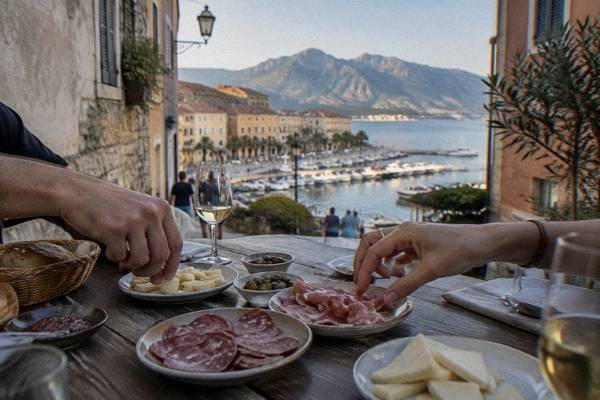
Corsican Food: What To Eat In Corsica, From Brocciu To Fiadone
Corsican food is built on protected mountain products: brocciu cheese, chestnut flour, cured pork from the Nustrale pig, olive oil, honey and clémentines, each carrying a French or European designation. This guide sets out what to eat in Corsica, where to taste it and what to carry home.
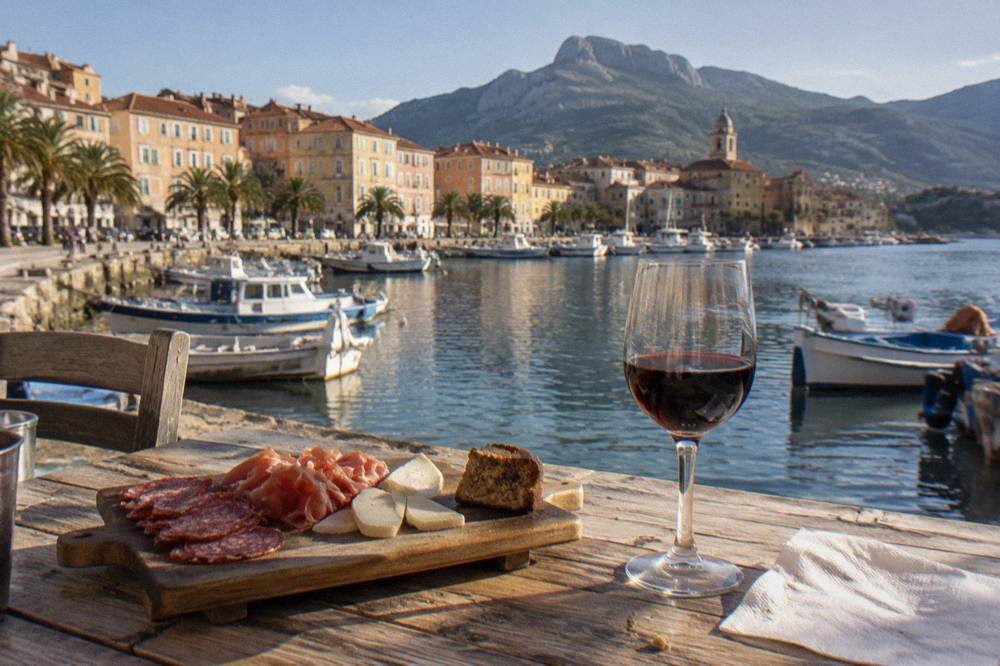
Eat brocciu, prisuttu, lonzu, coppa, figatellu, fiadone and canistrelli, look for the AOP and AOC labels on Corsican cheese, charcuterie, chestnut flour, olive oil, honey and clémentines, and drink the island's wines from Patrimonio, Ajaccio and the Vin de Corse appellations.
Corsica is a French Mediterranean island of 8,722 km2 with more than 1,000 km of coastline and a mountainous interior, and its food reflects that split: pork, chestnuts, cheese and honey come down from the mountains, while olive oil, wine and clémentines grow near the sea. The island's food is unusually well protected on paper, with a cluster of AOC and AOP designations that this Corsica Travel Guide page sets out product by product, using the dates each designation carries in the official record.
What Is Corsican Food And Why Is It Different?
Corsican food is a mountain and maquis cooking built on cured pork from the Nustrale pig, sheep and goat cheeses led by brocciu, chestnut flour, olive oil, honey and clémentines, all anchored by formal French and European designations, and it is eaten on an island where the sea supplies the wine country and the ports. The designations matter because they fix what each product is: the brocciu appellation dates from 1983, the three charcuterie cuts took AOC in 2012 and AOP in 2014, and the olive oil AOC took effect in 2004.
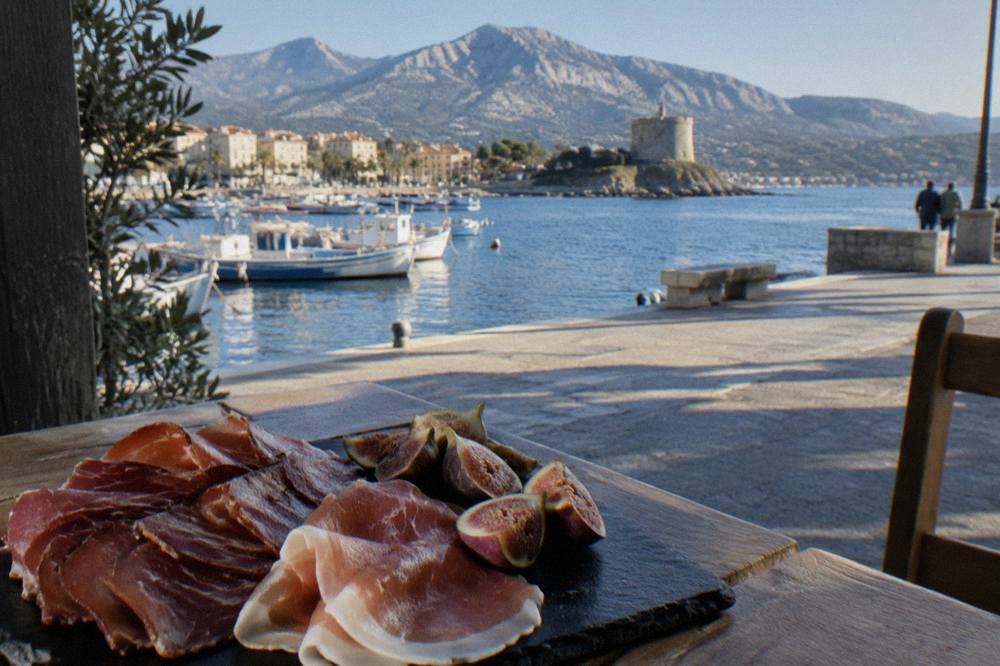
The cured-pork shelf explains the island better than any menu does. Prisuttu is the dry ham, lonzu the loin, coppa the shoulder cut, and all three hold an AOP as a family, earned in 2014 on top of the 2012 AOC, with the Nustrale pig breed itself recognised in 2006. Figatellu, the island's liver sausage, belongs to the same shelf but is named as a dish rather than a designation in the record this page reports.
Chestnuts run through the island's sweet and savoury cooking. The flour carries the AOP "Farine de châtaigne corse, Farina castagnina corsa", whose defence body was created in 2001, with the recognition date of 2010 reported rather than stated as settled fact. The flour appears in polenta-style dishes, in cakes and in the batter that turns brocciu into dessert territory.
The geography behind the plate is worth one paragraph of its own. The Parc naturel régional de Corse, created in 1972, now covers 4,484 km2 including the Castagniccia and the big valleys that run down to the sea, and its western sea front runs 80 km from Capu Rossu to Capu Cavallu. That single fact describes the island's food map: the chestnut country of the Castagniccia, the pig-raising interior and the coastal strip of olives, vines and citrus all sit inside or beside one regional park, which is why a short drive in almost any direction crosses from one food zone into another.
Which Corsican Products Carry An AOP Or AOC Label?
Corsica holds recognised designations for brocciu cheese, the charcuterie family of prisuttu, lonzu and coppa, chestnut flour, olive oil, honey and clémentines, with dates ranging from the 1983 brocciu appellation to the 2014 charcuterie AOP, and each label tells a buyer that the product was made on the island under fixed rules. The honey AOP "Miel de Corse, Mele di Corsica" exists in the official record, and the clémentine de Corse carries an IGP dated 2007 plus a Label Rouge from 2014.
Here is the designation record as the sources give it, with reported dates flagged as reported:
| Product | Designation | Year |
|---|---|---|
| Brocciu | Appellation d'origine | 1983 |
| Brocciu | AOC/AOP | 1998 |
| Prisuttu, lonzu, coppa | AOC | 2012 |
| Prisuttu, lonzu, coppa | AOP | 2014 |
| Nustrale pig breed | Breed recognition | 2006 |
| Chestnut flour | AOP Farina castagnina corsa | Recognition 2010, defence body 2001 |
| Olive oil | AOC Oliu di Corsica | Effective 2004 |
| Honey | AOP Mele di Corsica | AOC 1998 reported |
| Clémentine | IGP, Label Rouge | 2007, 2014 |
Two practical notes follow from the table. First, the charcuterie AOP covers three cuts together, so a packet labelled coppa di Corsica and one labelled prisuttu both sit under the same 2014 protection. Second, the honey designation is real and current, while its 1998 AOC year is a reported figure, so treat the label on the jar as the reliable marker rather than any date on a shop card.
One number deserves care: the claim that about 98 percent of metropolitan France's citrus area lies in Corsica comes from 2014-era CESEC data and is not a current statistic. The clémentine's own credentials, the 2007 IGP and the 2014 Label Rouge, are the facts to rely on when choosing fruit in season.
A note on how to read reported dates versus documented ones, because the distinction runs through this page. A documented date, such as brocciu's 1983 appellation, appears in an official document that is reported directly. A reported date, such as the 1998 brocciu AOC or the 2010 chestnut-flour recognition, comes from a tourism-authority page rather than a regulatory text, so it is presented with that hedge. Nothing in this guide depends on a reported date being exact: the labels themselves are the purchase signal, and the labels are all current.
Which Dishes Should You Try First In Corsica?
Order brocciu in both its savoury and sweet forms, the three AOP charcuterie cuts, figatellu, and the sweets fiadone and canistrelli, because that short list covers every protected product on the island in one or two sittings, and each name appears on Corsican menus island-wide without translation. Brocciu is the fresh sheep or goat whey cheese, prisuttu, lonzu and coppa are the cured pork, and figatellu is the island's smoked liver sausage.
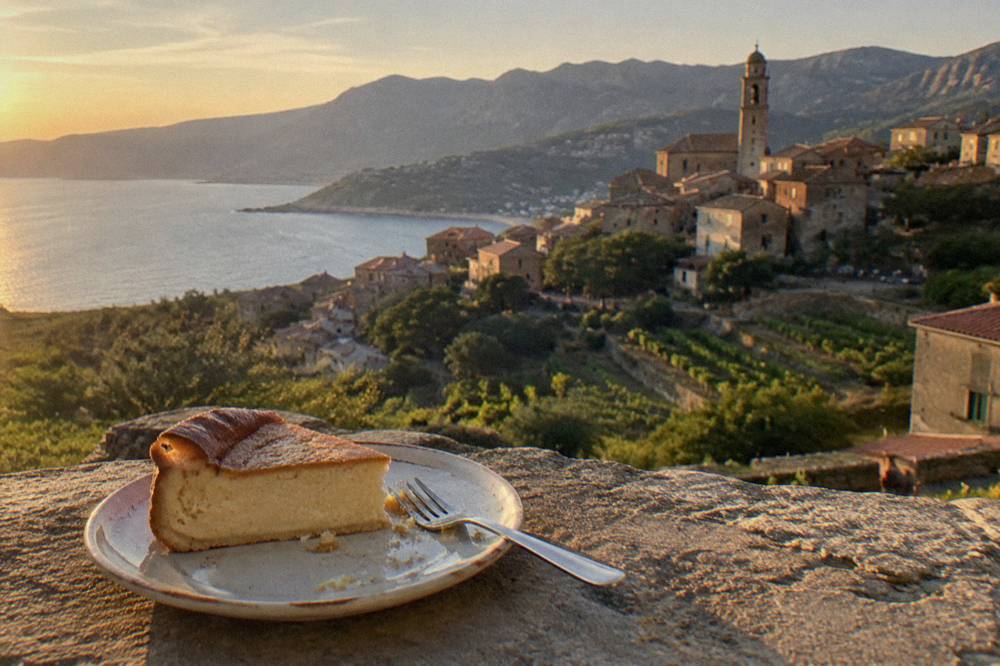
The dessert shelf is short and easy to learn. Fiadone is the brocciu cheesecake, and canistrelli are the dry biscuits that travel well, which is why both appear again in the gift section below. Chestnut flour, the AOP Farina castagnina corsa, supplies cakes and pulenta, and it is the product that most clearly separates island home cooking from the cooking of the nearby mainland.
A typical island table ties the pieces together. A first course of sliced prisuttu, lonzu and coppa, a wedge of fresh brocciu, a pulenta or a soup thickened with chestnut flour, then figatellu grilled, and fiadone with a coffee and a canistrellu to finish: that sequence uses seven words of Corsican vocabulary and every one of the island's protected families except oil, honey and clémentines, which arrive at breakfast or in the shop bag. Wine fills the glass from one of the appellations listed further down this page.
| Dish or product | What it is | Designation status |
|---|---|---|
| Brocciu | Fresh whey cheese from sheep or goat milk | Appellation 1983, AOC/AOP reported 1998 |
| Prisuttu | Dry-cured ham | AOC 2012, AOP 2014 |
| Lonzu | Cured pork loin | AOC 2012, AOP 2014 |
| Coppa | Cured pork shoulder cut | AOC 2012, AOP 2014 |
| Figatellu | Liver sausage, named as a dish | No designation stated |
| Fiadone | Brocciu cheesecake | No designation stated |
| Canistrelli | Dry biscuits | No designation stated |
| Pulenta di castagna | Chestnut flour polenta | Flour carries the AOP |
A short vocabulary list saves ordering time. The Corsican words stay lowercase in running text, brocciu, figatellu, lonzu, coppa, prisuttu, fiadone, canistrelli, and menus mix them freely with French, so a card with those seven words covers most of the island's food vocabulary. The Collectivité de Corse runs Corsican-language programmes including the Cartula di a lingua corsa and immersion schools, which is why the island's own food words survive on menus beside their French equivalents.
Where Can You Eat Corsican Food In Ajaccio?
Ajaccio, the island's capital with 76,320 residents, concentrates the tasting options in a walkable old-town grid, from charcutiers and cheese shops to the covered food retail around the market streets and guided food walks that stop at several producers in one afternoon, with the island's museums closed on Mondays and the food shops running their own schedules. The town is also the practical base for the tours in Ajaccio and around the gulf, including the gulf and Sanguinaires cruises that pair an evening boat trip with an aperitif.
A guided walk is the efficient first move for a visitor who wants the protected products explained rather than guessed at. The No Diet Club food tour in Ajaccio runs in English and French and stops at local producers around the town centre, and its rating, review count, price and duration all render on its own page. Check availability.
Between tastings, Ajaccio carries two sights that reward a food-motivated visitor. Maison Bonaparte, on Rue Saint-Charles 200 m from the bus station and ferry terminal, is open every day except Monday, with admission at EUR 10 full price, EUR 8 for non-EU residents aged 18 to 25 and large families, and free entry for EU residents under 26. The Palais Fesch charges EUR 10 full price, EUR 6 for over-65s and nothing up to 18, and is open daily from 09:00 to 17:00 under the 2026 listing, closed at Christmas, New Year and on 1 November.
Bus 8 runs from the airport into town, which makes a food day in Ajaccio workable even without a car on arrival day, and the ferry terminal's position 200 m from Maison Bonaparte means a foot-passenger arrival can walk straight into the old-town grid. The Ajaccio airport guide covers the flight options, and the wider Corsica airports guide lists all four fields, Ajaccio Napoléon Bonaparte, Bastia Poretta, Figari Sud Corse and Calvi Sainte-Catherine.
What Should You Know About Corsican Wine?
Corsica's wine appellations include Patrimonio, Ajaccio, Muscat du Cap Corse and the Vin de Corse appellation with its named crus such as Calvi, Coteaux du Cap Corse, Figari, Porto-Vecchio and Sartène, and the main grape varieties are Nielluccio and Sciaccarellu for reds and Vermentinu for whites. The island's vineyards sit mostly near the coast, from Cap Corse in the north to Figari and Porto-Vecchio in the south.
| Appellation or crus | Type |
|---|---|
| Patrimonio | Appellation |
| Ajaccio | Appellation |
| Vin de Corse | Regional appellation |
| Calvi | Named crus of Vin de Corse |
| Coteaux du Cap Corse | Named crus of Vin de Corse |
| Figari | Named crus of Vin de Corse |
| Porto-Vecchio | Named crus of Vin de Corse |
| Sartène | Named crus of Vin de Corse |
| Muscat du Cap Corse | Muscat appellation |
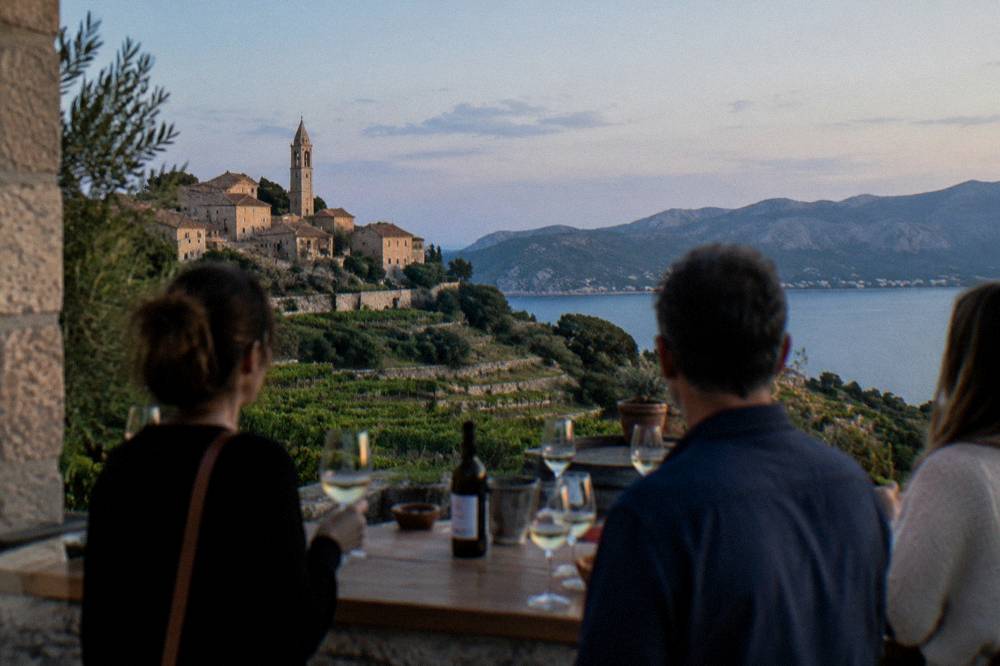
The grape names do real work on labels. A red built on Nielluccio and one built on Sciaccarellu taste distinctly different, and Vermentinu covers most of the whites, so the three variety names are worth memorising before a cellar visit. Wine tasting around Calvi and L'Île-Rousse is bookable as a guided outing, and the Balagne villages can be tied into a wider day of tastings in the Calvi region, with the practical planning notes on the Corsica travel tips page.
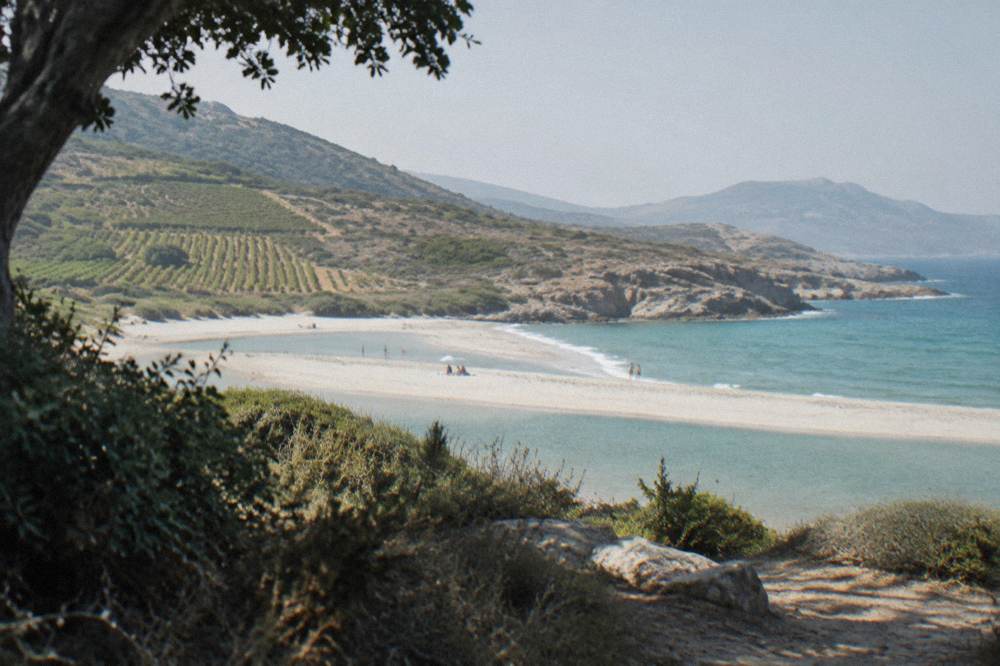
For travellers planning the timing of a wine-and-food trip, the weather by month and best time to visit guides carry the Météo-France station figures for Ajaccio and Bastia, and the cost and budget guide sets out what an island trip runs once food and wine are on the itinerary. The island's summer is hot and dry, July averages 8.6 mm of rain at Ajaccio against 111.8 mm in November, which is the pattern that ripens the coast's vines and fills the autumn table.
How Do Corsican Food And Meal Tours Actually Work?
Food tours in Corsica run as small-group walks with tastings, as meal-based visits built around a single site, or as tastings paired with boat trips, and every price, rating, review count and duration for these products is printed by the booking block rather than quoted here, so the comparison below describes what each product covers rather than what it costs. The three formats suit different travellers: a walk for coverage, a meal visit for depth, a boat-and-aperitif trip for the sea side of the island.
The meal format is distinctive. The Napoleon's Cave experience in Ajaccio pairs a visit with a Corsican meal, which makes it a tasting of the island's everyday table rather than a restaurant dinner, and the Napoleon's Cave product page carries its current rating and review count. On the coast, aperitif cruises to the Îles Sanguinaires from Ajaccio and the Lavezzi catamaran trips from Bonifacio add the island's second great ingredient, the sea, to the tasting list.
Around Calvi and L'Île-Rousse, wine tastings are the format of choice, running as guided visits to the Balagne's vineyards, and a private wine tour with picnic is also bookable. The inland alternative is a charcuterie-and-cheese trail through the hilltop villages of the Balagne, reached on a small-group day trip that the island's things to do in Corsica page places in context with the region's other options.
Where Should You Shop For Corsican Food To Take Home?
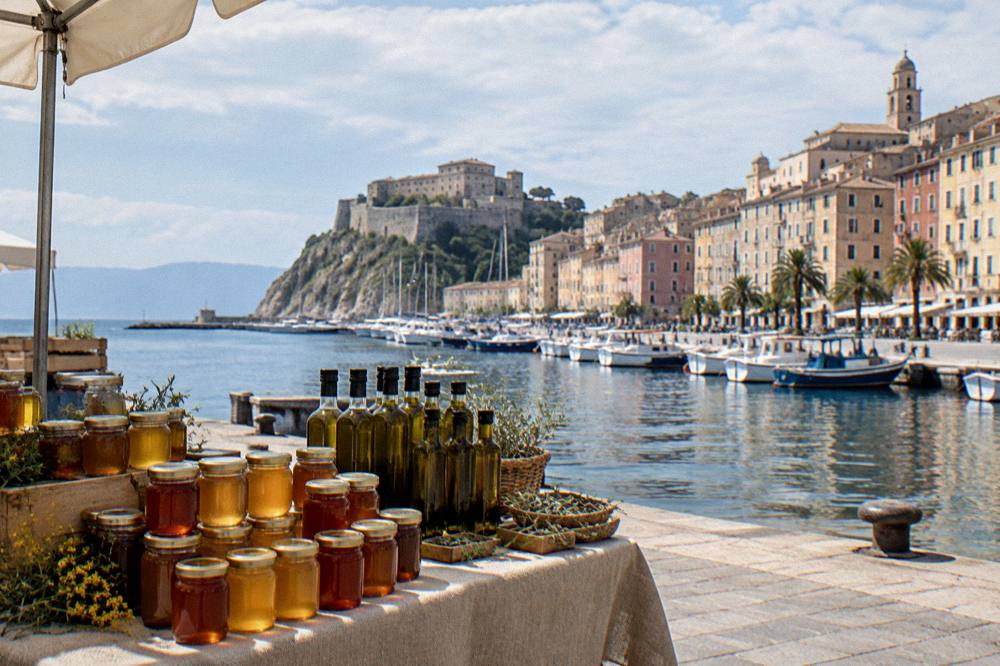
Shop for AOP-labelled brocciu only if you can refrigerate it, and concentrate the suitcase on prisuttu, lonzu, coppa, chestnut flour, olive oil, honey and canistrelli, because those seven carry their designation on the label, survive travel and reproduce the island's table at home. Vacuum packing is standard for the charcuterie, and the flour, oil and honey travel as they stand.
The label is the warranty. "Farina castagnina corsa" on a packet of chestnut flour, "Oliu di Corsica" on a bottle, "Mele di Corsica" on a jar and "Clémentine de Corse" on a fruit box each signal the designation system described above, and the same logic applies to a packet of coppa marked AOP. What the label does not tell you is provenance beyond the island, so a direct purchase from a producer or a specialist shop remains the surest channel.
| Gift | Why it travels | Label to look for |
|---|---|---|
| Prisuttu | Vacuum packed, keeps well | AOP charcuterie de Corse |
| Lonzu | Vacuum packed | AOP charcuterie de Corse |
| Coppa | Vacuum packed | AOP charcuterie de Corse |
| Chestnut flour | Dry, light | AOP Farina castagnina corsa |
| Olive oil | Sealed bottle | AOC Oliu di Corsica |
| Honey | Jar, stable | AOP Mele di Corsica |
| Canistrelli | Dry biscuits, light | No designation stated |
| Fiadone mix or fresh brocciu | Needs refrigeration | Brocciu appellation |
For European Union travellers the customs question barely arises, but travellers crossing outside the EU should check their own country's rules on meat and dairy before packing charcuterie or cheese, since the AOP label says nothing about import law. The Corsica travel tips page collects the other practical rules that trip up food shoppers, from the fire-season restrictions of 15 June to 30 September, when fires and smoking are banned in forests, maquis and massifs, to the tipping rule below.
Timing matters for one category in particular. Clémentines are a seasonal crop with an IGP that protects the Corsican fruit specifically, so a jar of honey or a packet of canistrelli is the year-round souvenir while the fruit itself depends on the season of the visit. The honey, by contrast, is an AOP with multiple island sources, so jars are on shelves whenever the shops are open.
How Does Corsican Food Fit Into A Wider Island Trip?
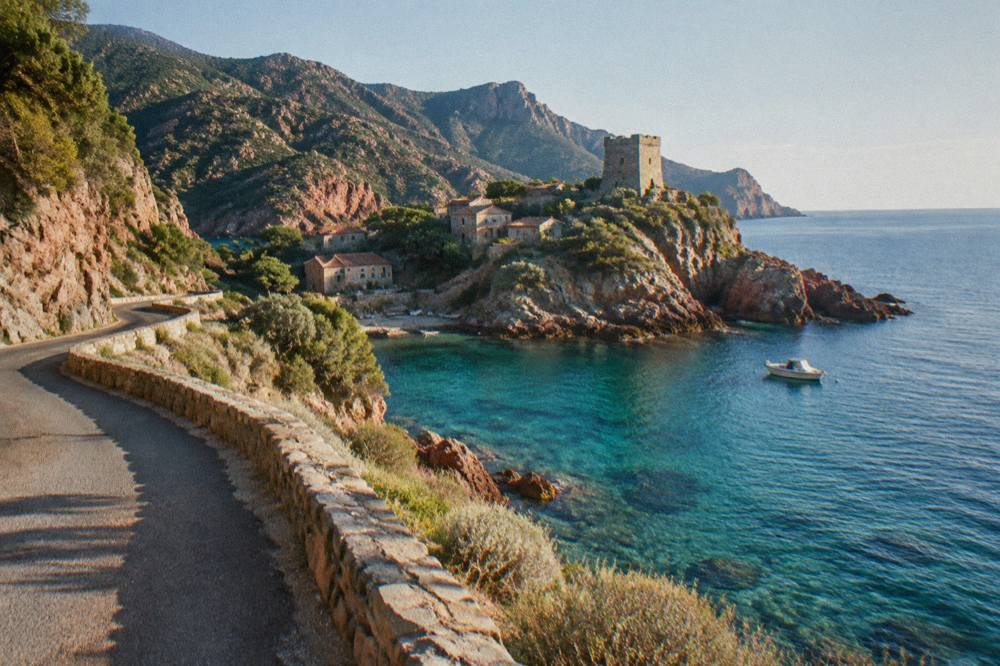
Corsican food sits inside a trip built around boats, mountains and ports, so the practical pattern is a food base in Ajaccio or Calvi, a Scandola or Lavezzi cruise for the sea days, and an inland excursion toward Corte or the Bavella massif where the chestnut, pork and cheese country begins, with ferries and four airports delivering the island's more than 8.5 million annual port and airport passengers. The ferry guide and the flights guide cover the arrival options.
A car is the usual tool for reaching producers, and the Corsica car rental and driving in Corsica pages explain the island's mountain-road realities, including the live road-status service that Inforoutes Corse publishes for the main passes. For a first visit that mixes beaches with tastings, the getting around Corsica logistics and the where to stay overview set out the base-town trade-offs.
The island's eating rules are simple. Service is included by law: menus must state "prix service compris" with the service percentage, and an extra tip is optional rather than expected. Tipping culture is therefore lighter than in some countries, and the same euro currency applies across the island, as the practical guides on this site set out.
Common Questions About Corsican Food
What Is The Famous Food In Corsica?
The protected products lead the list: brocciu, whose appellation dates from 1983, the charcuterie family of prisuttu, lonzu and coppa under their 2014 AOP, chestnut flour, olive oil, honey and clémentines. Dishes to order by name include figatellu, fiadone and canistrelli. The full answer sits on the what is the famous food in Corsica page.
What Cheese Is Corsica Known For?
Brocciu, the fresh whey cheese made from sheep or goat milk. It obtained its appellation d'origine in 1983, and the 1998 AOC/AOP date is reported by the tourism authority. It is eaten fresh, in savoury dishes and as the base of fiadone.
What Wine Should You Drink In Corsica?
Look for Patrimonio, Ajaccio, Muscat du Cap Corse and the Vin de Corse appellation with its named crus, including Calvi, Figari, Porto-Vecchio and Sartène. The main varieties are Nielluccio and Sciaccarellu for reds and Vermentinu for whites.
Is Tipping Expected In Corsica?
No. French law requires menus to state "prix service compris" with the service percentage, so service is included, and any further tip is optional.
Can You Bring Corsican Charcuterie And Cheese Home?
Within the European Union, generally yes, with the AOP label as your quality marker. Travellers heading outside the EU should check their destination's rules on meat and dairy products before packing.
Are There Food Tours In Corsica?
Yes, in several formats: tasting walks in Ajaccio, meal-based visits such as the Napoleon's Cave experience, wine tastings around Calvi and L'Île-Rousse, and aperitif cruises from the coastal ports. Prices, ratings and durations appear on each product's own page.
The short version of this whole page: learn seven words, brocciu, prisuttu, lonzu, coppa, figatellu, fiadone, canistrelli, buy by label rather than by promise, and let one guided tasting in Ajaccio or Calvi anchor the rest of the island's table.