Corsica Food Tour
Corsica's food culture is built on protected sheep cheese, mountain charcuterie, chestnut flour, olive oil, honey and island wine, and a guided food tour is the fastest way to taste all of them in one afternoon.
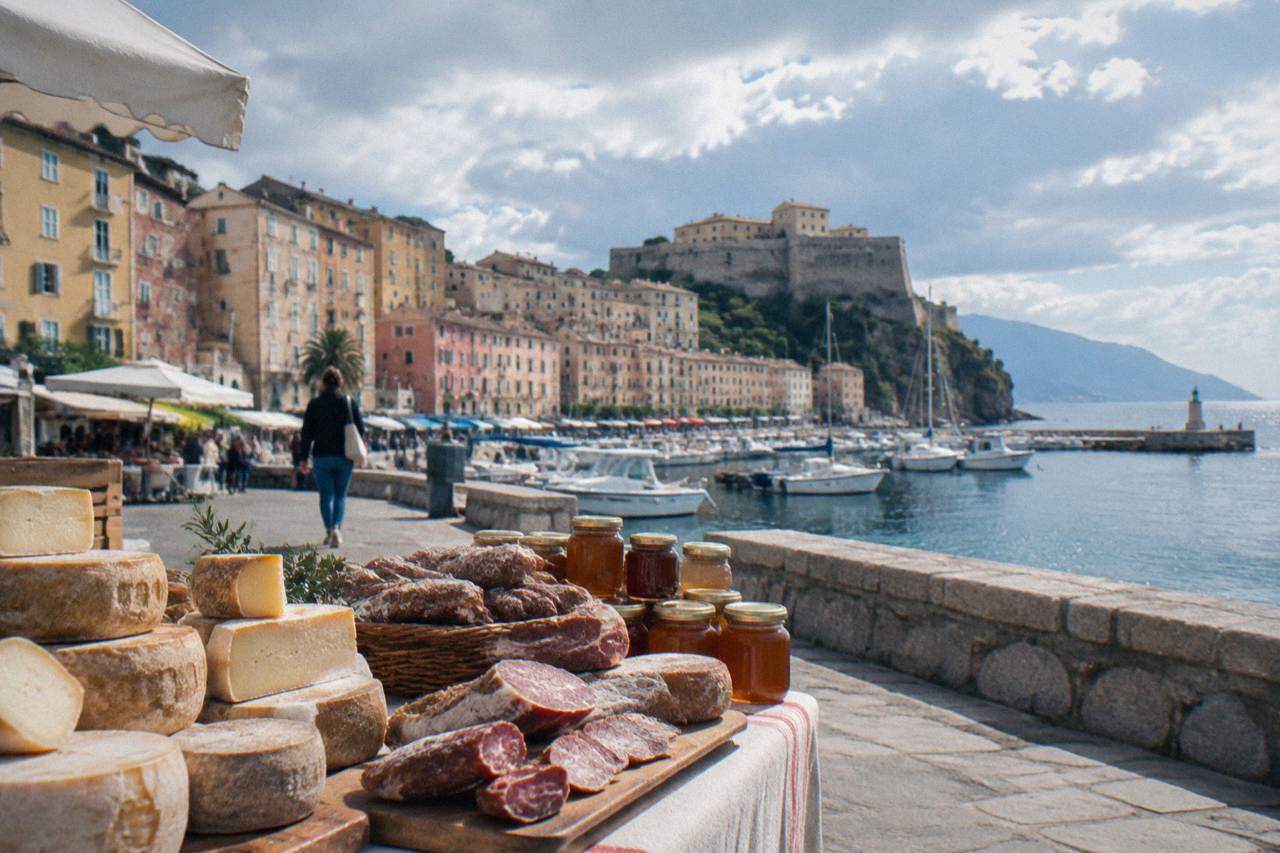
A Corsica food tour pairs tastings of brocciu cheese, prisuttu, lonzu and coppa charcuterie, chestnut and honey products and local wine, most often in Ajaccio, with guided walking tours built around market and shop stops.
Corsica feeds its visitors on sheep cheese, mountain-cured pork, chestnut flour, olive oil, honey and wine, and an unusual share of it carries a protected French or European label. A Corsica food tour is the organised way through that list: a guided walk, most often in Ajaccio, that moves between producers' shops and tasting counters and puts the island's flagship products in front of you with someone explaining what each one is. This page sets out what those products are, which labels protect them, what the island's wine appellations cover, and how to build a food-focused visit around them.
What Is A Corsica Food Tour?
A Corsica food tour is a guided tasting walk, usually based in Ajaccio, that stops at food shops and market stalls so you can sample the island's protected products, brocciu cheese, prisuttu, lonzu and coppa charcuterie, honey, chestnut-based goods and Corsican wine, with a guide explaining each one. It is a walking format built around eating in place, not a cooking class, and most versions run in the island's towns rather than in the mountains where the food is made.
The format matters because Corsican food is hard to assemble alone. Brocciu, the island's signature sheep's milk cheese, is a fresh product with an appellation d'origine dating from 1983, and the cured pork cuts are equally regulated. A guided walk puts each product in context: what the animal is, what the label on it means, and how the island's terrain shapes what grows. The deep background on the island's cuisine sits on our guide to Corsican food and what to eat, and the short answer to the single most asked question is on what the famous food in Corsica is.
What a tour adds over a self-guided graze is access and explanation. Shopkeepers hand out samples freely, but a guide sequences the stops, orders the tastings so the wine comes after the cheese, and translates the labels. For a first visit built around more than food, our overview of things to do in Corsica covers the boat trips, beaches and towns that fill the rest of a week.
There is also a language dimension. Product names on the island appear in both French and Corsican, so the same honey jar may carry both Mele di Corsica and Miel de Corse, and the chestnut flour label reads Farina castagnina corsa alongside the French name. A guide who works these counters daily closes that gap in a way a phrasebook cannot, and it is the reason walkers come away remembering what they tasted rather than just that they tasted.
Which Corsican Products Carry Protected Labels?
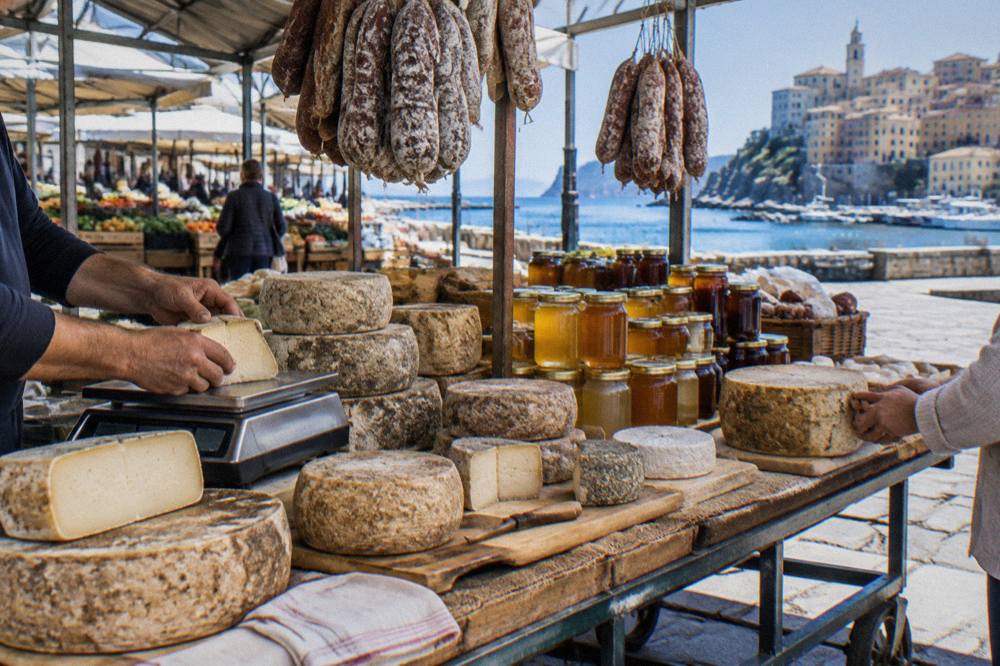
Corsica carries one of the densest sets of protected food labels of any French island: brocciu cheese obtained its appellation d'origine in 1983, the three charcuterie cuts prisuttu, lonzu and coppa took AOC in 2012 and AOP in 2014, olive oil has had its AOC since 2004, chestnut flour and honey both hold AOP status, and the clémentine de Corse holds an IGP. These labels are legal protections, not marketing badges, and each one ties a product to the island's territory and methods.
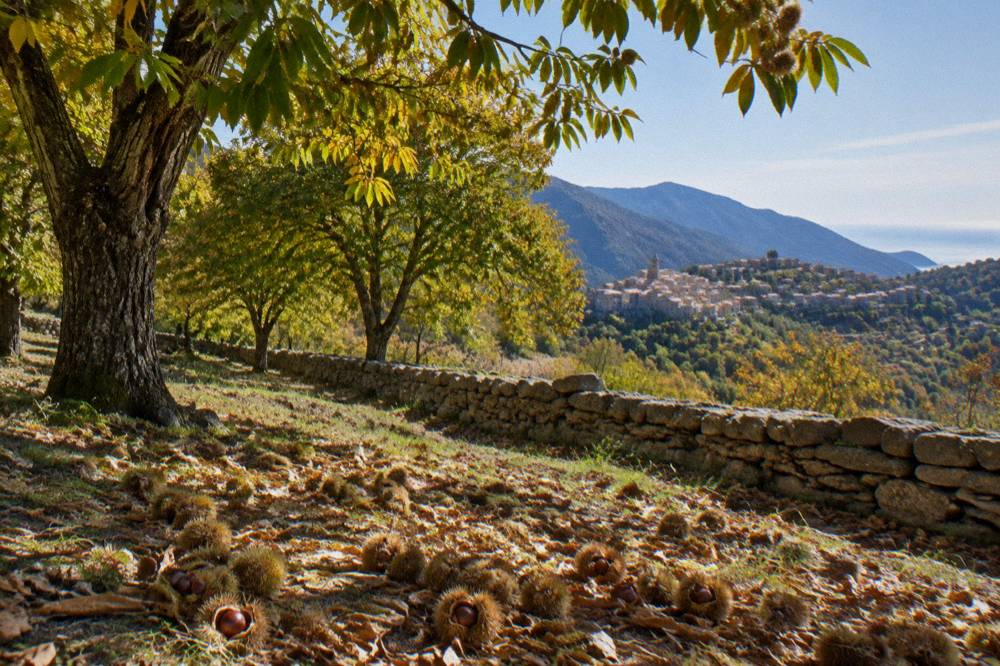
The pattern behind the labels is the island itself. Sheep and pigs have historically been raised in the mountainous interior, chestnut trees define the Castagniccia in the east, and olive groves and citrus sit nearer the coast. The labels reflect that split. The Nustrale pig breed, the basis of the charcuterie, was recognised in 2006, six years before the AOC on its cured products arrived.
| Product | Label | Year status was granted |
|---|---|---|
| Brocciu | Appellation d'origine | 1983 |
| Nustrale pig breed | Breed recognition | 2006 |
| Huile d'olive de Corse, Oliu di Corsica | AOC effective | 2004 |
| Prisuttu, lonzu, coppa | AOC | 2012 |
| Prisuttu, lonzu, coppa | AOP | 2014 |
| Farine de châtaigne corse, Farina castagnina corsa | AOP | Recognised (2010 reported) |
| Miel de Corse, Mele di Corsica | AOP | Held (AOC 1998 reported) |
| Clémentine de Corse | IGP, Label Rouge | 2007, 2014 |
Brocciu is the one to know cold. It is a whey cheese, eaten fresh, and it turns up inside other dishes rather than standing alone: in fiadone, the island's cheesecake, and stuffed into vegetables. It is a dish on a plate, not a museum piece, and a good tasting walk will show it both plain and cooked.
The honey deserves its own sentence. The AOP Miel de Corse, Mele di Corsica, covers honeys that vary with what the island's bees forage, from the maquis scrub to the chestnut groves, and the differences between jars from different seasons are real enough that a tasting counter will pour several side by side. It is the easiest product on the list to bring home, along with canistrelli and a bag of chestnut flour.
Which Corsican Wines And Grapes Should You Know?
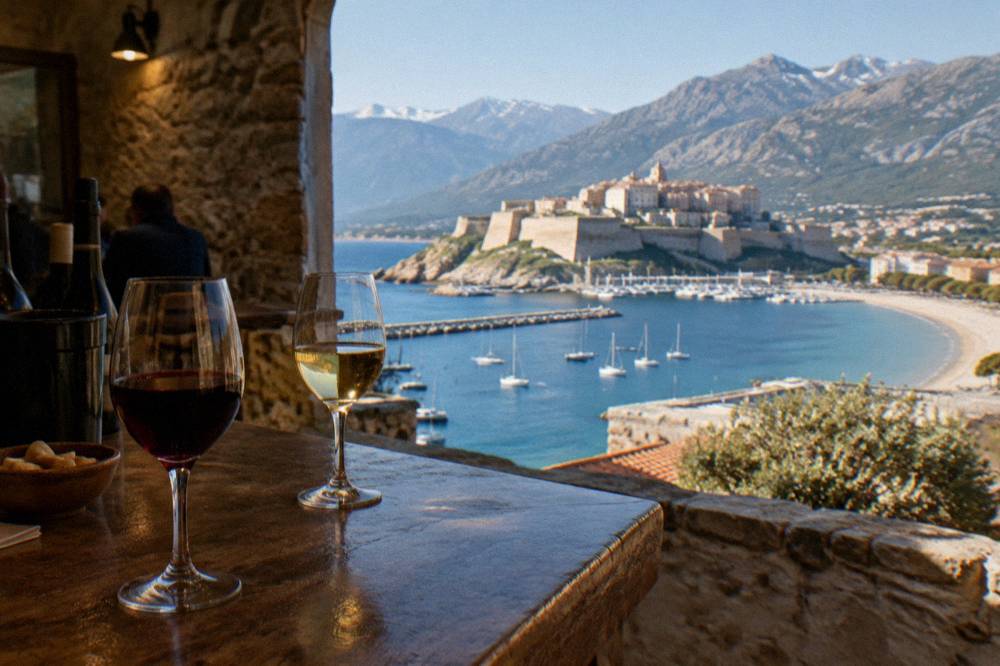
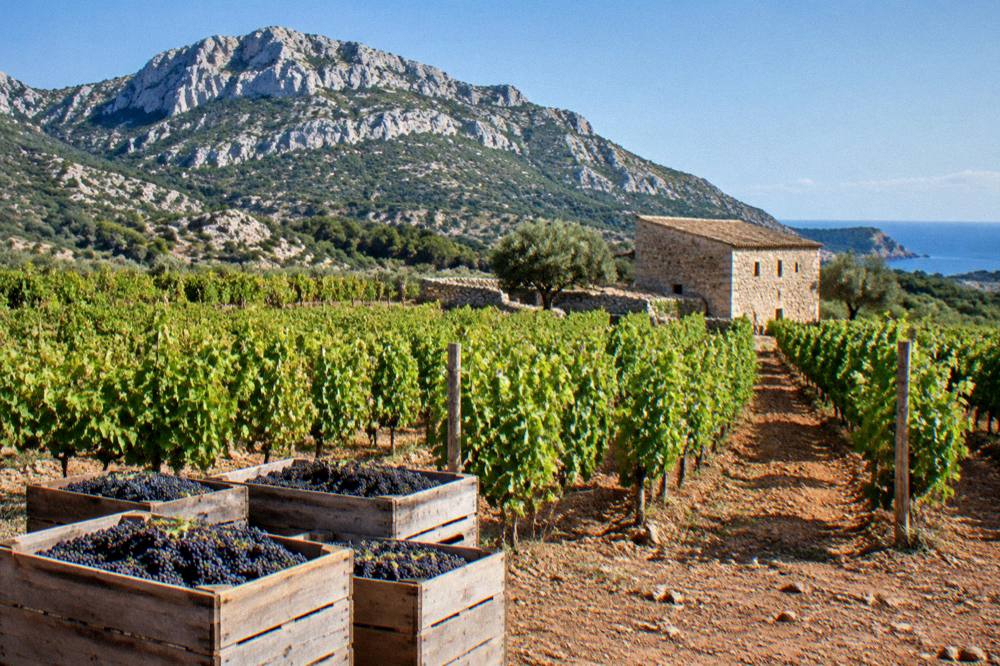
Corsican wine, per the island's tourist board, is organised around the appellations Patrimonio, Ajaccio, Vin de Corse with its named designations Calvi, Coteaux du Cap Corse, Figari, Porto-Vecchio and Sartène, and the sweet Muscat du Cap Corse, and the main grape varieties are Nielluccio and Sciaccarellu for reds and Vermentinu for whites. Knowing those three grape names and the Patrimonio and Ajaccio appellations covers nearly every label a tasting will put in front of you.
The grapes are the useful handle. Nielluccio and Sciaccarellu are the red workhorses, and Vermentinu is the white that appears across the island's coasts. Because the appellations are tied to named territories, a bottle labelled Ajaccio is not the same thing as one labelled Vin de Corse Porto-Vecchio, and a guide or cellarhand can explain the difference far faster than a shelf label can.
| Appellation or designation | Type | Main grapes associated |
|---|---|---|
| Patrimonio | Appellation | Nielluccio-led reds |
| Ajaccio | Appellation | Sciaccarellu-led reds |
| Vin de Corse (regional) | Appellation | Blends across the island |
| Vin de Corse Calvi | Named designation | Island varieties |
| Vin de Corse Coteaux du Cap Corse | Named designation | Island varieties |
| Vin de Corse Figari | Named designation | Island varieties |
| Vin de Corse Porto-Vecchio | Named designation | Island varieties |
| Vin de Corse Sartène | Named designation | Island varieties |
| Muscat du Cap Corse | Sweet appellation | Muscat |
Wine tourism on the island is mostly a Calvi and Balagne affair in the northwest and a Patrimonio affair in the north near Saint-Florent, with Ajaccio's own appellation ringing the town. Guided wine experiences exist around Calvi and L'Île-Rousse, and a tasting there can be combined with the region's beaches and villages for a full day. The Muscat du Cap Corse is the one to seek out as an aperitif or a companion to canistrelli, and it makes the northern detour worthwhile on its own for anyone with a sweet tooth and a free afternoon.
What Do You Taste On A Guided Corsica Food Tour?
A guided Corsican food tour built around Ajaccio typically tastes brocciu in its fresh and cooked forms, the three protected charcuterie cuts prisuttu, lonzu and coppa, chestnut-flour based cakes such as canistrelli, honey, olive oil, and Corsican red and white wine, ending with fiadone, the brocciu cheesecake, as the standard closing sweet. The exact order and stops vary with the guide, but those product families are the core of the island's table.
Figatellu is the one to ask about by name. It is a liver sausage, grilled in winter, and it belongs to the same cured-pork family as the three AOP cuts even though it does not carry the same label. Canistrelli, the hard almond biscuits, travel well and are the usual thing to carry home; fiadone does not, and is best eaten where it is made.
| Product or dish | What it is | How it usually appears on a tasting |
|---|---|---|
| Brocciu | Fresh whey cheese, appellation 1983 | Plain, or in cooked dishes |
| Prisuttu | Dry-cured ham, AOP 2014 | Thin sliced, alone or with bread |
| Lonzu | Cured pork loin, AOP 2014 | Thin sliced |
| Coppa | Cured pork shoulder, AOP 2014 | Thin sliced |
| Figatellu | Liver sausage | Grilled, seasonal |
| Fiadone | Brocciu cheesecake | Closing sweet |
| Canistrelli | Hard almond biscuits | With coffee, or to take away |
| Miel de Corse | Honey, AOP | By the spoon or in pastries |
The labels give the tasting its structure. When a guide hands you a slice of prisuttu, the point is not only the flavour but the fact that the AOP on it is a legal definition tied to the Nustrale pig and to Corsican territory. That is the difference between a food tour and a snack: each stop carries a document with it.
Olive oil is the quiet member of the line-up and often the most instructive. Its AOC, effective since 2004, ties the oil to the island's groves, and on a tasting it appears with bread rather than in a dish, which makes the comparison between a Corsican oil and whatever sits in your kitchen cupboard at home immediate and honest. Ask for it if the counter does not pour it unprompted.
Where In Corsica Are The Main Tasting Areas?
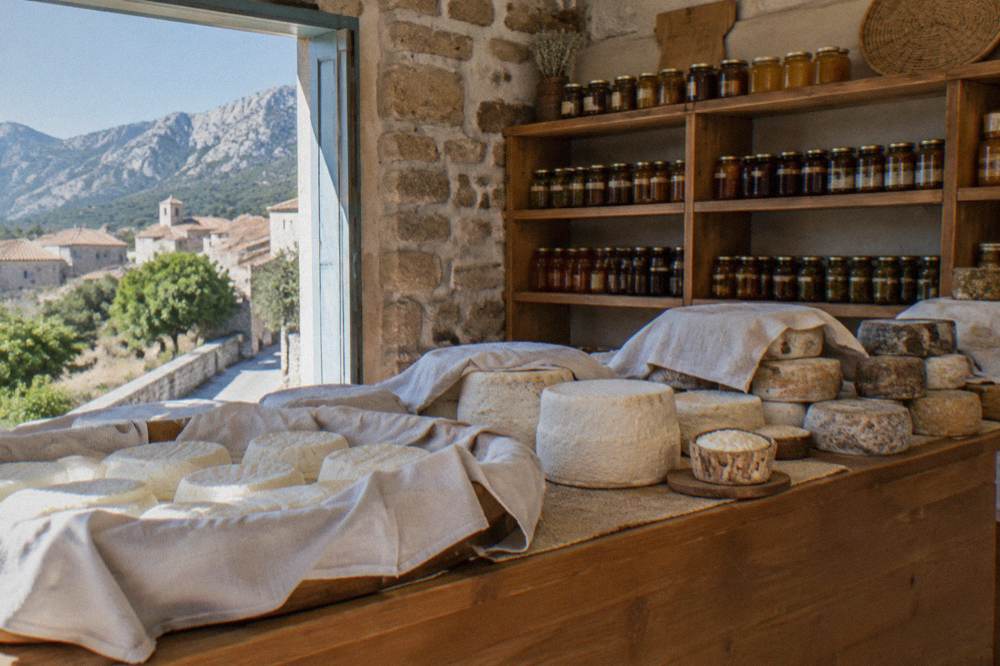
The main food and wine tasting areas in Corsica are Ajaccio, whose appellation surrounds the town and whose food tours are the most numerous on the island, Calvi and L'Île-Rousse in the Balagne with wine tasting experiences inland, the Patrimonio area near Saint-Florent in the north, and the Castagniccia in the east, the chestnut country behind the chestnut-flour AOP. Each area pairs a product with a landscape, and each is reachable by road.
Ajaccio is the practical base. It is the island's capital and largest town, the home of Maison Bonaparte and the Palais Fesch, and the departure point for the Sanguinaires and gulf boat trips that balance a food day with the sea. The town's own pages on Ajaccio and its area cover where it sits relative to the rest of the island.
| Area | Product identity | What to pair it with |
|---|---|---|
| Ajaccio | Town food tours, Ajaccio wine appellation | Gulf and Sanguinaires boat trips |
| Calvi and the Balagne | Wine tastings, olive groves | Balagne villages and beaches |
| Patrimonio, near Saint-Florent | Patrimonio appellation wine | Cap Corse drives |
| Castagniccia | Chestnut flour AOP country | Interior driving routes |
| Alta Rocca and the south | Charcuterie and brocciu country | Bavella and Filitosa visits |
The pairing logic saves a trip. A morning boat trip out of Ajaccio and an afternoon tasting walk fit one day; a Patrimonio tasting belongs to a Cap Corse or Saint-Florent day, not to a scramble back across the island. Mountain roads are narrow, and the distances that look short on a map take longer than the straight line suggests. The full index of guides sits on Corsica Travel Guide.
The south deserves its own note. The Alta Rocca, the hill country behind Porto-Vecchio, is charcuterie and brocciu territory, and it sits beside Filitosa, the prehistoric site open 1 April to 2 November at EUR 9 for adults, and the Aiguilles de Bavella. A southern day can therefore run food in the morning, prehistory at midday and mountains in the afternoon, all without crossing the island.
How Do You Plan A Food And Wine Day In Ajaccio?
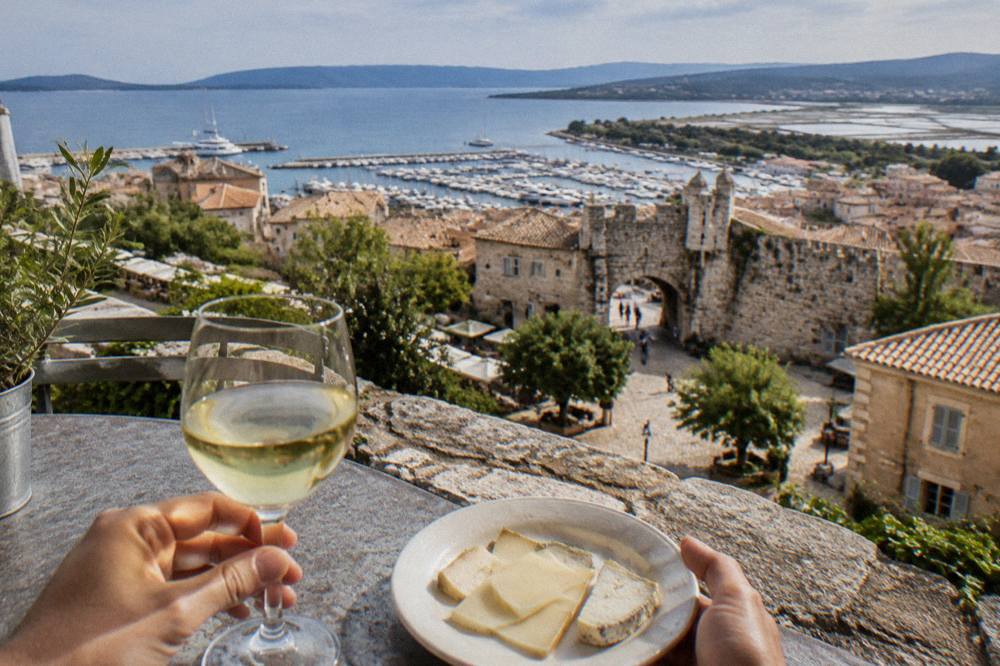
A realistic food and wine day in Ajaccio pairs a morning sightseeing loop, the open-top town and coast bus or a walk past Maison Bonaparte and the Palais Fesch, with an afternoon guided food tour through the town's shops, and finishes with a sunset cruise toward the Îles Sanguinaires, the island chain off the town's coast. The compactness is the point: the museum quarter, the tasting stops and the port sit close together, so nothing in the day needs a long transfer.
The two museums set the historical frame and both publish their terms. Maison Bonaparte, on Rue Saint-Charles, is closed Monday, charges EUR 10 full price, and is free for EU residents under 26. The Palais Fesch is listed at EUR 10 full, EUR 6 for over-65s and free up to 18, open daily 09:00 to 17:00 through 2026. A food tour slots naturally after either one.
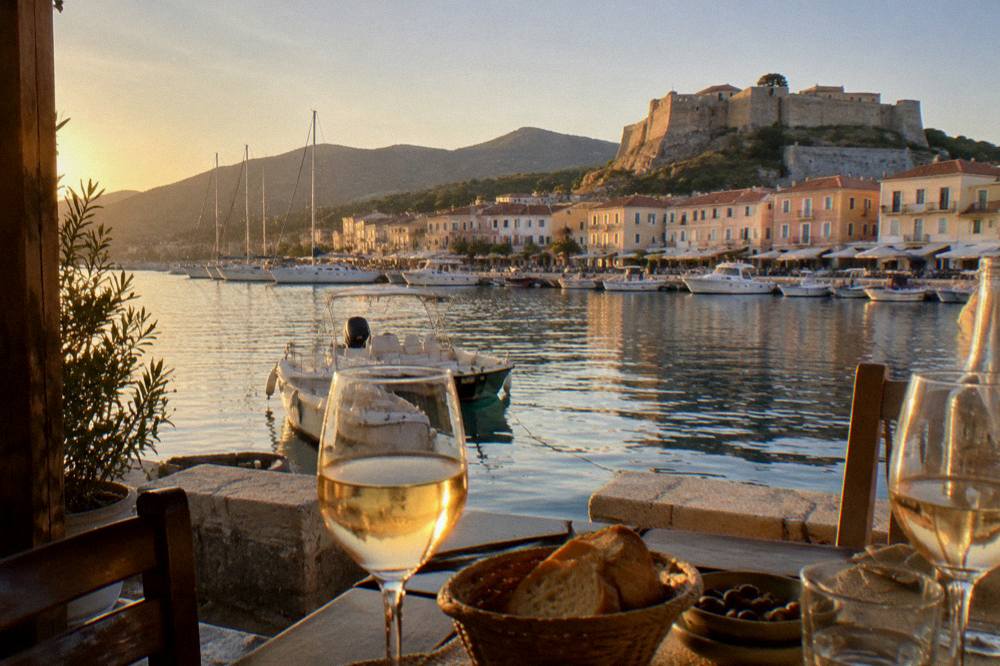
For the sea half of the day, the standard options are the short gulf and Sanguinaires boat trips that leave from the town's port, several of them timed to the late afternoon and some with an aperitif served on board.
If the day runs long, the town eats late by northern European habit and the port stays lively into the evening, so a tasting walk that ends at the fiadone course does not strand you anywhere. The practical rule is to book the food tour for the afternoon rather than the morning: the shops are stocked, the guide is not racing a first ferry, and the sunset sail that follows is the natural last act.
What Should You Know Before Booking A Corsica Food Tour?
Before booking a Corsica food tour, know three things: the tours are walking formats based in towns, above all Ajaccio, so they suit any fitness level but need comfortable shoes; the products you will taste are seasonal at the edges, with brocciu and figatellu tied to specific periods of the year; and every price, rating and duration for a bookable tour is printed by the live listing at the moment you book, so nothing quoted anywhere on this page is a promise of what you will pay.
Seasonality is the detail that surprises people. Brocciu is a fresh cheese tied to the milking calendar, and figatellu is a winter sausage. A summer tasting walk will still show you the protected charcuterie, honey, oil, wine and sweets, but a guide may flag which items are at their moment and which are stored goods. Asking is fair game and guides answer it directly.
Tipping follows French practice: restaurant and café prices are service compris, with the percentage printed on the menu, and any extra tip is optional.
One last practical point concerns dietary needs. A walk built around cured pork and whey cheese needs advance notice for vegetarian, halal or dairy-free requirements, and the same applies to anyone with nut allergies, since canistrelli and chestnut flour appear throughout. Operators handle these requests when they know about them ahead of time, so the booking note field is worth using.
Can You Combine A Food Tour With Boat Trips And Sightseeing?
Yes, and the combination is the standard way to visit Corsica: a food tour fills an afternoon in Ajaccio, Calvi or Bonifacio, while the island's headline experiences are on the water, the Scandola reserve cruises from Porto, the Lavezzi catamarans from Bonifacio and the Sanguinaires trips from Ajaccio, and on foot in the mountains, from the GR20 to the shorter Mare a Mare trails. Food is one strand of a week, not the whole of it.
The mix works because the island is compact but slow. The road times published by the Musée de la Corse in Corte give Corte itself as one hour from Bastia and one and a half from Ajaccio, which sets the rhythm for anything that crosses the interior. A food-and-wine plan that stays in one region, the Balagne or the Ajaccio gulf, wastes less of the day than one that chases tastings across the island.
| If your base is | Food plan | Non-food pairing |
|---|---|---|
| Ajaccio | Guided tasting walk, Sanguinaires aperitif cruise | Maison Bonaparte, Palais Fesch, gulf boat trips |
| Calvi or L'Île-Rousse | Wine tastings in the Balagne | Agriates catamarans, Revellata snorkelling |
| Bonifacio or Porto-Vecchio | Market-town eating, Corsican wine lists | Lavezzi cruises, Escalier du Roi d'Aragon |
| Bastia or Cap Corse | Patrimonio wine country, Muscat du Cap Corse | Cap Corse drives, Bastia old port |
| Corte | Charcuterie and cheese country in the interior | Restonica valley, citadel and Musée de la Corse |
The sea options in depth sit on our dedicated pages for the Scandola boat tour, the Bonifacio boat tour and the Calanques de Piana tour, and the long-distance walkers' menu is on the GR20 and hiking tours page. A food tour slots into any of those weeks without displacing the headline days.
The order matters less than the spacing. A week that alternates, one day on the water, one day of towns and tastings, one day in the mountains, keeps every appetite fresh and gives the weather a chance to cooperate with the boat days. Corsica's climate normals show hot dry summers, with July averaging 8.6 mm of rain at Ajaccio, and mild wet winters, so the food-first itinerary is the one to reach for when a sailing day gets rained off in the shoulder season.
Common Questions About Corsica Food Tours
What Is A Corsica Food Tour?
A guided tasting walk, usually in Ajaccio, that moves between shops and stalls sampling brocciu, the protected charcuterie cuts prisuttu, lonzu and coppa, honey, olive oil, chestnut goods and Corsican wine, with a guide explaining each product and its label.
What Food Is Corsica Famous For?
Corsica is known for brocciu, the fresh whey cheese with an appellation dating from 1983, the AOP charcuterie trio of prisuttu, lonzu and coppa, chestnut flour products, AOP honey, olive oil with an AOC effective since 2004, the clémentine de Corse, and wines from appellations including Patrimonio and Ajaccio.
Where Should I Take A Food Tour In Corsica?
Ajaccio has the widest choice of guided tasting walks and its own wine appellation around the town. Calvi and L'Île-Rousse in the Balagne are the base for wine tastings, and Patrimonio near Saint-Florent is the northern wine country.
Which Corsican Products Have Protected Labels?
Brocciu holds an appellation d'origine from 1983; prisuttu, lonzu and coppa hold AOC from 2012 and AOP from 2014; olive oil's AOC has been effective since 2004; chestnut flour and honey hold AOP status; and the clémentine de Corse holds an IGP from 2007.
What Wine Grapes Are Used In Corsica?
Per the island's tourist board, the main varieties are Nielluccio and Sciaccarellu for reds and Vermentinu for whites, across appellations that include Patrimonio, Ajaccio, Vin de Corse with its named designations, and Muscat du Cap Corse.
Do I Need To Book A Corsica Food Tour In Advance?
Tours run with limited group sizes and free cancellation on the operator's live listing in most cases, so booking ahead costs nothing if plans change, and it fixes your afternoon around the island's fixed sights rather than the reverse.
A Corsica food tour is the shortest route from curiosity to understanding: one afternoon, one guide, and the island's cheese, charcuterie, honey, oil and wine each explained at the counter where they are sold, with the labels and dates to back every slice.