Are There Snakes In Corsica?
Are there snakes in Corsica? A practical answer for hikers, swimmers and families, with emergency numbers, fire-season rules and what the island's trails and beaches are actually like.
Corsica is a French Mediterranean island of 8,722 km2 with more than 1,000 km of coastline and a mountainous interior that rises to Monte Cinto at 2,706 m, and like the rest of the Mediterranean basin it has snakes. They belong to the island's maquis, its rocky gorges and its sun-warmed stone walls, not to its beaches and ports, and for the overwhelming majority of visitors they never become more than a name in a guidebook. This page sets out what can responsibly be said on the subject, and it leans on what Corsica's own institutions publish about the landscapes, the trails and the emergency systems that actually shape a safe trip.
Yes, snakes are present in Corsica, as they are across the Mediterranean, and they live in the island's maquis, scrubland and rocky mountain areas rather than on its beaches or in its ports. Encounters with people are uncommon, snakes generally move away when they sense footfall, and the island's ordinary safety systems, from lifeguarded beaches to the 112 emergency number, cover every outdoor situation a visitor is realistically likely to face.
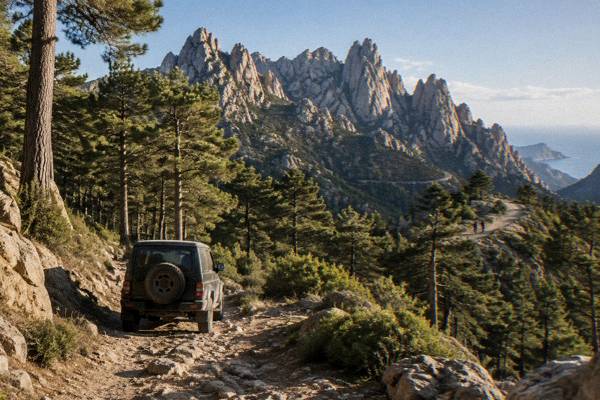
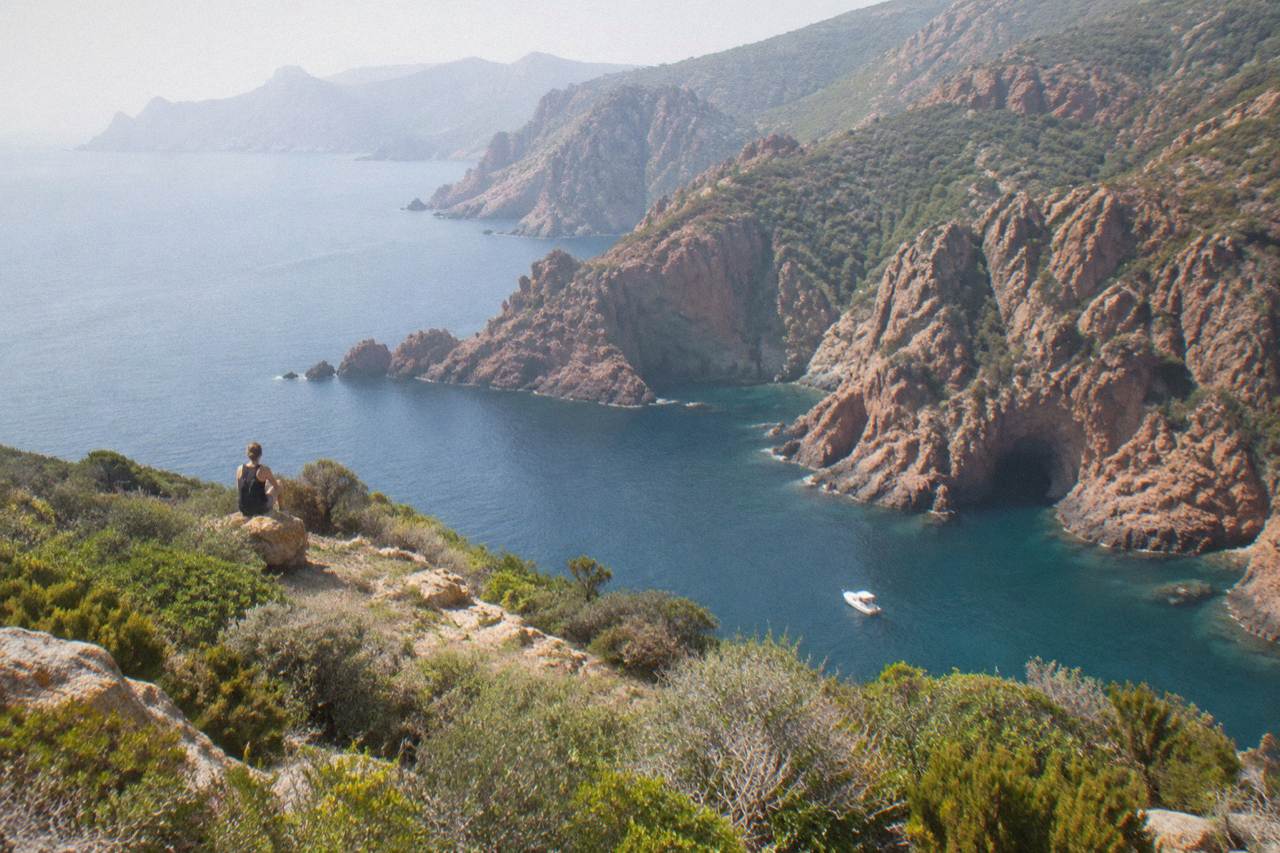
The practical picture is shaped by geography. Corsica's 360 communes stretch from the Désert des Agriates in the north to the Aiguilles de Bavella in the south, and the Parc naturel régional de Corse, created in 1972, now covers 4,484 km2 of that territory, including mountain zones where wildlife of every kind is part of the daily landscape. The park's western sea front runs 80 km from Capu Rossu to Capu Cavallu, and it is this stretch, taking in the Calanques de Piana and the Scandola Reserve, that draws the island's biggest share of boat traffic. Snakes belong to the land side of that divide, not the water side.
For a visitor the honest framing is this: the wildlife question in Corsica is mostly a hiking question, and hiking in Corsica is a governed, rule-bound activity. The PNRC, the regional park authority, publishes the rules for the GR20 and the long-distance Mare a Mare and Mare e Monti trails, sets the refuge seasons, and runs the online booking system for refuge nights. Anyone following those systems is already following the behaviour that keeps unwanted wildlife encounters to a minimum: marked routes, daytime walking and accommodation at guarded refuges.
Where Does Wildlife Actually Shape A Corsican Holiday?
Wildlife shapes a Corsican trip on the trails and in the reserves, not on the beaches or the boat decks. The GR20 runs 180 km north to south in about fifteen stages of 4 to 8.5 hours, the Mare a Mare Centre covers 84 km from Ghisonaccia to Porticcio, and these mountain routes are where the island's land animals, snakes included, live their lives undisturbed by the coastal crowds.
The contrast with the coast is stark and worth planning around. The UNESCO property "Gulf of Porto: Calanche of Piana, Gulf of Girolata, Scandola Reserve", inscribed in 1983, is visited by boat only: the Scandola reserve's land area, 919 ha of it, is closed to the public, and the OEC, which co-manages the site, reports that no landing is permitted in the 70 ha integral reserve. A visitor on one of the Porto-based cruises is looking at red rock, osprey territory and sea, not walking through snake habitat.
That is one reason boat trips dominate the Corsican holiday calendar. A half-day cruise from Porto through the Scandola Reserve and the Calanche de Piana, such as the Scandola and Calanche de Piana cruise, covers the island's most protected coastline in a single morning or afternoon, with a swim stop in season. Check availability if that style of day appeals, since departures fill the Porto quay through the summer.
On land, the A Cupulatta turtle park near Sagone is the island's dedicated reptile attraction, a place where families see shelled animals in a managed setting rather than guessing at what might be under the next rock. The Corsica Travel Guide covers the island region by region, and each base page says plainly which areas are mountain walking country and which are beach and harbour towns.
What Rules Apply On Corsica's Trails?
The PNRC's trail rules are the single best safety framework on the island, and they are stricter than anything a visitor would impose independently. From 15 June to 30 September it is forbidden to light a fire or smoke in forests, maquis and massifs, the fire-risk map is updated at 18:00 for the next day, and no GR20 departures are allowed from Calenzana after 11:00 under a municipal order tied to fire risk.
Those rules exist because of heat and fire, but they structure the day in ways that suit anyone cautious about wildlife too. Walking in the morning, on marked paths, off the steepest sun-baked slopes at midday, is exactly how the island's own authorities tell everyone to move through the mountains in summer. The GR20's 2026 season has PNRC refuges guarded from 16 May to 4 October inclusive, and booking a refuge night is mandatory and online-only, for both bunks and bivouac pitches.
| PNRC option (GR20 refuges, 2026 rates) | Price |
|---|---|
| Bunk (bat-flanc) in a guarded refuge | EUR 20 per person |
| Bivouac pitch, own tent | EUR 12 per person |
| Rented tent for 1 (pitch plus tent) | EUR 27 |
| Rented tent for 2 (two pitches plus tent) | EUR 39 |
Wild camping is banned across Corsica, including the GR20, and bivouacking is tolerated only in the marked areas at refuges, with a reservation. Rental tents sleep two and come with a 3 cm mat per person, and dogs are not allowed inside refuges or rented tents. For walkers weighing a long trek against a shorter one, the trail lengths below show the range the PNRC documents in its own brochure.
| Long-distance trail | Length | Days (per PNRC) |
|---|---|---|
| GR20 (Fra li Monti) | 180 km, about 15 stages of 4 to 8.5 h | 10 to 15 |
| Mare e Monti Nord | 121 km | 10 |
| Mare a Mare Nord | 139 km (161 km with variant) | 8 to 12 |
| Mare a Mare Centre | 84 km | 6 to 7 |
| Mare a Mare Sud | 73 km | 5 |
| Mare e Monti Sud | 66 km | 5 |
The deeper safety answer for the mountains is not about any single animal. The UK FCDO notes a high risk of wildfires in France from April to October, and the US State Department lists France at Level 2, Exercise Increased Caution. Both advisories are about the environment, not its snakes.
What Numbers Do You Call In An Emergency In Corsica?
The numbers to know are 112 for all emergencies, 15 for medical, 17 for police, 18 for fire, 114 by SMS or app for deaf and speech-impaired callers, and 196 for sea rescue, with mountain rescue reached through the PGHM in Ajaccio on 04 95 24 24 00. These cover every outdoor incident on the island, from a hiking injury to a swimming emergency, and the service-public directory lists them all.
At sea, rescue coordination runs on VHF channel 16, which is why the 196 number matters to anyone renting a boat or joining a cruise. On land, the PGHM, the high-mountain gendarmerie platoon based in Ajaccio, is the unit that answers for the GR20 and the interior, and its direct line sits in the public service directory alongside the standard numbers. Ajaccio's own beaches add a seasonal layer: the town ran 7 lifeguard posts from 1 July to the end of August 2026 on its main beaches, and in Haute-Corse supervised beaches are staffed by volunteer firefighters over roughly the same window.
For trip planning, the useful habit is to save 112 before a walk and to check the prefecture's daily massif access map in summer, which is updated at 18:00 for the following day. Between mid-June and mid-September some massifs can see access restricted when the fire risk level is high, and the map is the authoritative answer on whether a planned route is open.
Should Snakes Change Your Beach Or Boat Plans In Corsica?
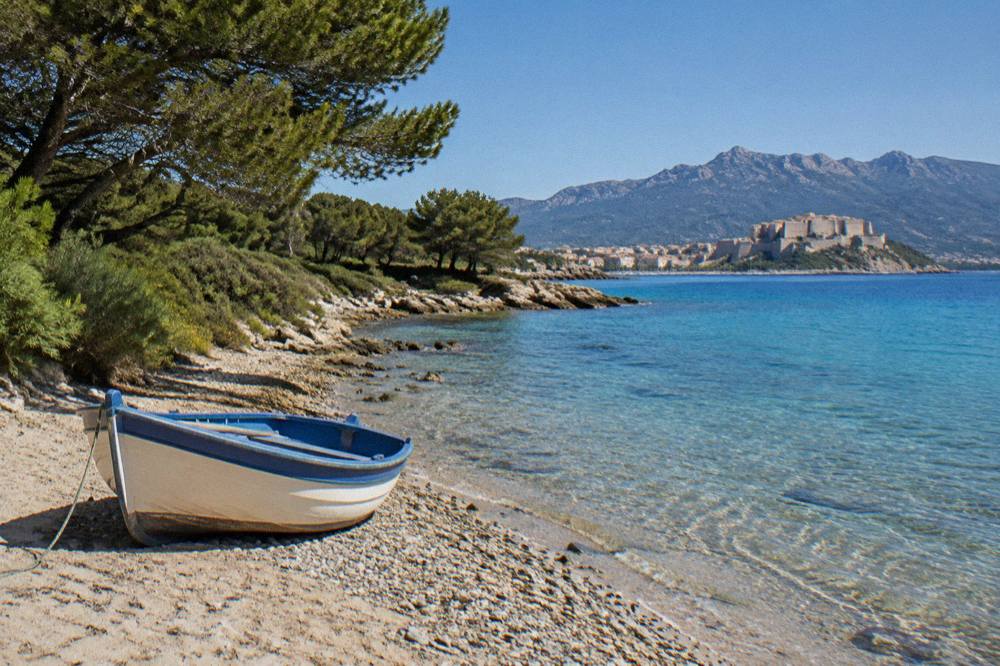
No. Snakes are land animals and Corsica's holiday headline acts are coastal: more than 1,000 km of shoreline, boat-only visits to Scandola, catamaran days in the Agriates and swim stops under the Calanche de Piana. Nothing about the island's sea life or its supervised beaches makes a snake encounter a realistic part of a beach day, and the beach safety system runs on flags and lifeguards, not wildlife.
The beaches tell their own story. Saleccia and Lotu, in the Désert des Agriates, are reached by boat shuttle from Saint-Florent roughly April to October, weather permitting, by 4x4 track from Casta, or on foot, per the island's tourist board. Palombaggia, Santa Giulia and Rondinara anchor the Porto-Vecchio southeast. None of these is snake country in any sense a visitor would notice, and questions like can you swim in Corsica in October are answered by weather and water conditions, not by wildlife.
Boat trips are where the island's protected nature is actually seen at close range. Scandola was the first nature reserve created in Corsica, by ministerial order of 9 December 1975, with 1,000 ha of sea and 919 ha of land, and the reserve played a key part in saving the Corsican osprey, as the OEC's fact sheet records. Anchoring is authorised by day outside the integral reserve and the Gargalu channel, with anchors lifted at sunset, and recreational line and spear fishing are prohibited. These are the rules that matter on the water.
Families weighing the whole question can read the island through its practical guides, from is Corsica safe for tourists to things to do across the island, and wildlife barely registers in either. The serious seasonal risks on this island are fire, sun and the sea, in that order, and every one of them has an official system attached to it.
Common Questions About Snakes In Corsica
Are There Snakes In Corsica?
Yes, snakes are present in Corsica, as across the Mediterranean, living in maquis, scrub and rocky mountain areas. They are a background part of the island's wildlife rather than a factor in beach or town holidays, and encounters are uncommon on marked routes.
Are There Snakes On Corsica's Beaches?
Beaches are not where the island's land wildlife lives, and Corsica's beach safety system is built around flags, lifeguard posts and sea conditions. Ajaccio ran 7 lifeguard posts from 1 July to the end of August 2026, and Haute-Corse beaches are supervised over a similar window.
What Should A Hiker In Corsica Do To Stay Safe?
Follow the PNRC's framework: walk marked routes, book refuge nights online in advance, keep to the 11:00 departure rule at Calenzana, check the daily fire-risk map published at 18:00, and never light fires or smoke in forests, maquis or massifs from 15 June to 30 September.
What Number Do You Call In An Emergency In Corsica?
Call 112 for any emergency, 15 for medical, 17 for police, 18 for fire, 114 by SMS or app, and 196 for sea rescue. The PGHM mountain rescue unit in Ajaccio can be reached on 04 95 24 24 00.
Does Wildlife Affect Boat Trips To Scandola?
No, and Scandola's wildlife is the attraction: the reserve helped save the Corsican osprey, its land area is closed to the public, and visits are by boat only, with no landing in the 70 ha integral reserve.
In short, snakes in Corsica are a fact of the island's wild interior, addressed the same way every other mountain risk is addressed: marked paths, daytime walking, the PNRC's booking and fire rules, and 112 saved in the phone. The beaches, ports and boat decks where visitors spend their days belong to a different world entirely, one of flags, lifeguards and swim stops under red granite.