Is Corsica Safe For Tourists?
Is Corsica safe for tourists? A source-based look at crime, fire rules, road and sea safety on the French Mediterranean island, with emergency numbers and seasonal advice.
Corsica is the French Mediterranean island, 8,722 km2 of mountainous interior framed by more than 1,000 km of coastline, and the question of tourist safety here has a clear shape: the sources that track risk on the island point far more to environment than to crime. The UK Foreign Office carries no Corsica-specific warning, only a France-wide note on a high risk of wildfires from April to October. The US State Department lists France at Level 2, "Exercise Increased Caution", reported as applying nationwide. The island's own rules, its lifeguard posts, its fire-season restrictions and its mountain rescue service, are where a visitor's real preparation lies, and this page sets out what each of those sources actually says.
Yes, Corsica is broadly safe for tourists, with no Corsica-specific warning in the main official travel advisories: the UK Foreign Office flags only a France-wide high wildfire risk from April to October, and the US State Department lists France at Level 2, Exercise Increased Caution, reported as a nationwide rating. The risks worth preparing for are environmental, fires, mountain terrain, narrow roads and the sea, and each has a documented rule set on the island.
That framing matters because it changes what you prepare for. A city-break safety checklist barely applies here. Instead, the practical questions are whether you can light a barbecue in July (you cannot, in forests and maquis), whether the trail you want is open tomorrow (a colour map answers that each evening at 18:00), and who to call if something goes wrong on a ridge or on the water. The Collectivité de Corse and the regional park publish all of this, and the sections below carry the specifics.
For a fuller rundown of hazards, numbers and seasonal rules, see the site's dedicated Corsica safety guide. If you are weighing the island against its neighbour first, the comparison in is Corsica better than Sardinia covers travel practicalities on both sides of the strait.
How Safe Are Corsican Roads And Driving?
Corsica's roads are generally safe but demanding: the terrain is mountainous, the routes are narrow and winding, and Inforoutes Corse, the official service, publishes live road conditions and accessibility levels for the main mountain passes so drivers can check before setting out. There is no published Corsica-specific speed-limit or vehicle-restriction rule beyond standard French limits in the sources.
The single most useful habit is checking Inforoutes before any mountain drive. Passes carry accessibility levels, with equipment requirements or restrictions for certain vehicles, and the service reflects closures and works in real time. A road that was clear yesterday can be affected by a landslide after a storm, so the live map outranks any guidebook paragraph, including this one.
A few behaviours serve drivers well. Build generous margins into driving times, since distances on the map rarely match time on a mountain road. Park only where the road allows, not on blind bends. And in summer, remember that fire rules reach the roadside: from 15 June to 30 September it is forbidden to light a fire or smoke in forests, maquis and massifs, which covers pulling off for a cigarette on a forest stretch.
Public transport removes some of the load. The island's rail network and the ferry ports connect the main towns, and a boat trip replaces some of the trickiest driving of all: the coastal and mountain roads to the good swimming spots. A guided cruise such as the Sanguinaires gulf boat tour from Ajaccio gets you onto the water with a licensed operator and no mountain pass in between, Check availability if that suits your dates.
Whether a car is even necessary depends on your itinerary, a question the site answers separately in do you need a car in Corsica.
Is It Safe To Swim And Boat In Corsica?
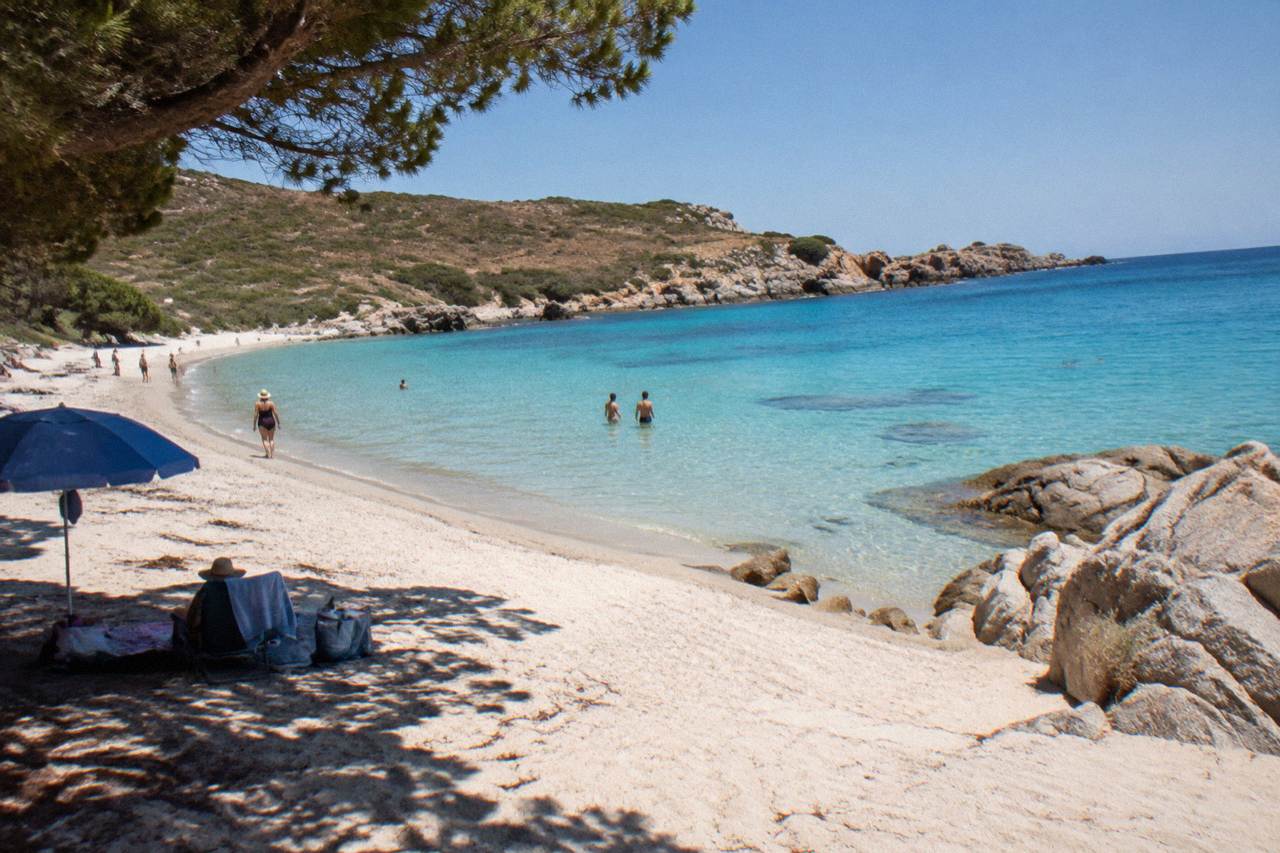
Swimming in Corsica is supervised in high season: Ajaccio operates 7 lifeguard posts from 1 July to the end of August on the town's main beaches, and Haute-Corse's supervised beaches are staffed by volunteer firefighters from about 1 July to 31 August, reported by local sources. Outside those windows there are no lifeguards, and at sea the rescue number is 196, monitored on VHF channel 16.
The supervision pattern tells you when the guarded swimming season actually runs, roughly the two months of July and August. In June or September the water can be warm and the beaches open, but the posts are closed, so swim with company, near others, and respect flagged or signed zones. Beach flags mark supervised areas, and authorities issue wave and drowning alerts when conditions demand.
For boating, the rules around the protected reserves are the ones to know. At Scandola, part of the UNESCO property inscribed in 1983, the land area is closed to the public and visits are by boat only, with no landing in the integral reserve, daytime anchoring permitted outside defined zones, and no recreational line or spear fishing. These are conservation rules, but they double as safety rules: they keep small boats out of the places they should not be.
Independent boaters should carry the sea rescue number. At sea, 196 works with VHF channel 16; on land, 112 is the European emergency number, 15 reaches medical services (SAMU), 17 the police, 18 the fire service, and 114 is the SMS number for deaf or speech-impaired callers. The full table sits further down this page.
Commercial trips carry their own layer of reassurance, since operators hold licences and passenger rules that private hires and rental boats do not. Guided options around Bonifacio, Porto and Calvi appear in the Bonifacio boat tour guide and the Scandola boat tour guide, and swimming later in the year is covered in can you swim in Corsica in October.
What About Fire Risk And Mountain Safety In Corsica?
Fire and mountain risk in Corsica is managed by published rules: from 15 June to 30 September no fires or smoking are allowed in forests, maquis and massifs, a fire-risk map is updated at 18:00 each day for the next day, and from mid-June to mid-September access to some massifs can be restricted outright. Mountain rescue is run by the PGHM, reachable in Ajaccio on 04 95 24 24 00, with 112 or 17 for emergencies.
The UK Foreign Office advice names the risk plainly: a high risk of wildfires in France during the summer season, April to October. The island's own restriction window, 15 June to 30 September, is when the ban on fires and smoking in forests and scrub applies. In practice that means no barbecues outside equipped sites, no campfires ever, since wild camping is banned across the island including the GR20, and no cigarette stops on forest roads.
The daily colour map is the tool hikers should actually use. Updated at 18:00 for the following day, it grades massif access, and on the most severe days certain massifs can close to the public entirely under prefectural orders. A trail that is fine on Tuesday can be shut on Wednesday, so the evening check is part of the plan, not an afterthought.
On the GR20, the rules tighten further. There are no departures from Calenzana after 11:00 under a municipal order tied to fire risk. Refuges must be booked online in advance, and in the 2026 season the PNRC's refuges were guarded from 16 May to 4 October. The trail runs 180 km with about 15 stages of 4 to 8.5 hours, which is a commitment that rewards honest self-assessment: the question of solo hiking has its own page in is it safe to hike the GR20 alone, and the trail's demands are covered in is the GR20 hard.
Storm safety on the ridges is the other mountain basic. Météo-France publishes mountain forecasts and storm vigilance, and the standard guidance is to avoid summits and ridges when storms are forecast and to seek shelter early. Weather in the high mountains changes faster than the coast, as the Corsica weather by month guide explains from station data.
Is Crime A Concern For Visitors In Corsica?
No official source flags Corsica as a crime risk for tourists: the US State Department's France advisory, at Level 2, Exercise Increased Caution, mentions pickpocketing and phone theft in tourist areas as a nationwide caution, reported with no Corsica-specific element, and the UK Foreign Office's France pages carry no island-specific warning at all. The practical precautions are the ordinary ones for any busy Mediterranean destination.
The advisory language is worth reading accurately rather than through headlines. Level 2 means exercise increased caution, a middle tier, and it applies to France as a whole. The specific behaviours it names are opportunistic theft in crowded places, which in a Corsican context means the busy summer ports, beaches and old towns rather than any pattern of violence against visitors.
Ordinary habits cover most of it. Keep phones and wallets out of back pockets in crowds, lock the rental car and keep bags out of sight in it, and use the room safe where one is provided. On the beach, take only what you plan to swim without. None of this is specific to the island, and none of it should shape an itinerary.
Two practical notes round out the picture. Tipping and restaurant pricing cause more confusion than crime: menus must state "prix service compris" with the service percentage included, so an extra tip is optional, a rule set nationally by the French consumer authority. And the island's health and emergency infrastructure is part of standard France: 112 connects to the full emergency system, 15 to medical services, and the currency, euro question and other basics are answered in what currency is used in Corsica.
The table below collects every emergency number a visitor might need on one line of sight.
| Service | Number | When To Use It |
|---|---|---|
| European emergency | 112 | Any emergency, anywhere on the island |
| Medical (SAMU) | 15 | Illness or injury needing an ambulance |
| Police | 17 | Crime, accident or public order |
| Fire service | 18 | Fire, including wildfire sightings |
| SMS for deaf or speech-impaired | 114 | Emergencies by text or app |
| Sea rescue | 196 | At sea, also VHF channel 16 |
| PGHM mountain rescue, Ajaccio | 04 95 24 24 00 | Mountain accidents, non-emergency contact |
What Practical Rules Should You Know Before Arriving In Corsica?
The rules worth knowing before arrival are few and concrete: the fire and smoking ban from 15 June to 30 September, the daily 18:00 fire-risk map if you plan to hike, the ban on wild camping across the island, online booking for GR20 refuges, and the supervised swimming season of roughly July and August. None of these restricts a normal holiday, and each is checked in minutes once you know it exists.
Wild camping deserves its own line because it surprises visitors who assume mountain islands work like wilderness areas. Camping outside designated sites is banned across Corsica, including along the GR20, where bivouac is allowed only in the marked areas at the refuges and must be reserved. The 2026 PNRC rates put a refuge bunk at EUR 20 per person and a bivouac pitch at EUR 12, with rented tents at EUR 27 for one and EUR 39 for two.
Bookable activities reduce the remaining planning load, since a licensed operator carries the local knowledge, the insurance and the safety brief. Beyond the gulf cruise and open-top bus options above, small-group days out such as a guided trip through the old hilltop villages put a professional driver on exactly the mountain roads that give visitors pause.
| Season | What Applies | What To Check |
|---|---|---|
| Mid-June to mid-September | Massif access can be restricted on high fire-risk days | The fire-risk map, updated 18:00 daily |
| 15 June to 30 September | No fires or smoking in forests, maquis and massifs | Local prefecture notices |
| 1 July to 31 August | Supervised beaches: 7 posts in Ajaccio, firefighter-staffed posts in Haute-Corse | Flag zones at your beach |
| 16 May to 4 October (2026 season) | GR20 refuges guarded, online booking only | The PNRC reservation platform |
Beyond safety, the island rewards the usual homework: how many days in Corsica is enough for pace, what is Corsica famous for for priorities, and the root page of things to do in Corsica for the full catalogue. This page sits within Corsica Travel Guide, whose coverage of the island runs from the Îles Sanguinaires to the Désert des Agriates.
Common Questions About Tourist Safety In Corsica
Is Corsica Safe For Tourists?
Yes. The main official advisories carry no Corsica-specific warning: the UK Foreign Office notes only a France-wide high wildfire risk from April to October, and the US State Department lists France at Level 2, Exercise Increased Caution, reported as applying nationwide. The risks to prepare for are environmental: fire-season rules, mountain weather, narrow roads and unsupervised swimming outside July and August.
Can You Smoke Or Light A Fire In Corsica In Summer?
No. From 15 June to 30 September it is forbidden to light a fire or smoke in forests, scrub (maquis) and massifs. The fire-risk map is updated at 18:00 each day for the next day, and from mid-June to mid-September access to some massifs can be restricted entirely on high-risk days.
What Is The Emergency Number In Corsica?
112 is the European emergency number and works across the island. Others: 15 for medical (SAMU), 17 for police, 18 for fire, 114 by SMS for deaf or speech-impaired callers, and 196 for sea rescue, also monitored on VHF channel 16. Mountain rescue (PGHM) in Ajaccio can be reached on 04 95 24 24 00, with 112 or 17 in an emergency.
Are Corsican Beaches Lifeguarded?
In high season, yes. Ajaccio operates 7 lifeguard posts from 1 July to the end of August on the town's main beaches, and Haute-Corse's supervised beaches are staffed by volunteer firefighters from about 1 July to 31 August. Outside that window, swim with company and respect flagged or signed zones.
Can You Camp Anywhere In Corsica?
No. Wild camping is banned across the island, including along the GR20, where bivouac is allowed only in the marked areas at the PNRC refuges and must be reserved online. In the 2026 season refuge bunks cost EUR 20 per person and bivouac pitches EUR 12.
Is Driving In Corsica Dangerous?
The roads are narrow, winding and mountainous rather than dangerous in any documented way. Inforoutes Corse publishes live road conditions and accessibility levels for the main passes, so check before a mountain drive, allow generous time, and never park on blind bends or in forest areas during the fire season.