Things To Do In Corsica
Corsica packs more than 1,000 km of coastline, a UNESCO-listed gulf, about 15 stages of high-mountain trail and four airports into 8,722 km2. Here is what to do on the island, section by section.
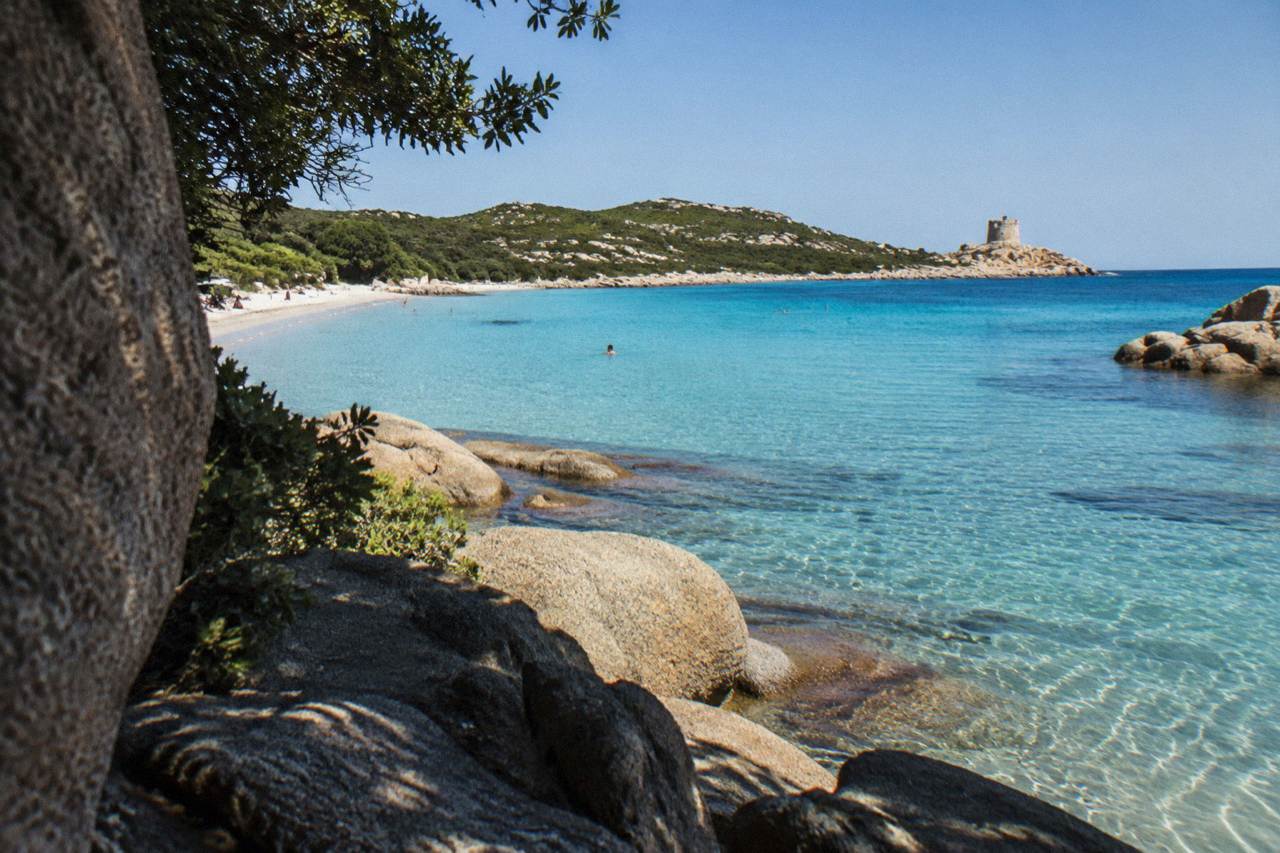
The core things to do in Corsica are boat trips to Scandola, the Calanques de Piana and the Lavezzi islands, beach days at Palombaggia, Santa Giulia, Saleccia and Lotu, town and museum visits in Ajaccio, Bastia and Corte, food and wine tastings, and hiking from the GR20 down to half-day gorges walks.
Corsica is a French Mediterranean island of 8,722 km2, the fourth-largest in the Mediterranean, with more than 1,000 km of coastline and an interior that climbs to Monte Cinto at 2,706 m. That combination sets the agenda: the sea on every side, boat trips into reserves and gulf cliffs, beaches in every corner, and a mountainous heart around Corte and the Niolu that belongs to hikers. The island holds one UNESCO natural World Heritage property, the Gulf of Porto: Calanche of Piana, Gulf of Girolata, Scandola Reserve, inscribed in 1983, and a regional natural park, the Parc naturel régional de Corse, created in 1972. This page sets out the things to do in Corsica by theme: first-visit priorities, beaches and boats, free sights, rainy-day museums, family activities, nightlife, day trips and getting around.
Things To Do In Corsica On A First Visit
A first visit to Corsica usually combines one town base, one boat trip into the Gulf of Porto, one southern beach day and one mountain drive: Ajaccio or Bastia for museums and food, a Scandola and Calanques de Piana cruise, Palombaggia or Santa Giulia near Porto-Vecchio, and the road up to Corte and the Gorges de la Restonica. Add Bonifacio's cliffs at the southern tip if the stay runs a week or more.
Ajaccio is the capital and the island's largest town, with 76,320 residents, and it holds two of the headline museums: Maison Bonaparte, the national museum on Rue Saint-Charles, 200 m from the bus station and ferry terminal, and the Palais Fesch musée des Beaux-Arts. Bastia, the second town at 46,867 residents, anchors the north-east with its old port. Corte, the old capital, sits inland at the junction of the island's road network; road times to Corte run 1 h from Bastia, 1 h 30 from Ajaccio and from Calvi, 2 h from Porto-Vecchio, and 2 h 45 from Bonifacio and Propriano.
The beach shortlist depends on the base. In the south, Palombaggia, Santa Giulia and Rondinara sit near Porto-Vecchio and Bonifacio. In the north-west, the Désert des Agriates holds Saleccia and Lotu, reached by boat shuttle from Saint-Florent (about April to October, weather permitting, as reported), by 4x4 track from Casta, or on foot. The Balagne coast runs from Calvi to L'Île-Rousse. Details by beach are collected in the Corsica beaches guide.
For walking, the GR20 runs 180 km north to south in about 15 stages of 4 to 8.5 hours, with PNRC refuges guarded from 16 May to 4 October. Shorter options include the Mare a Mare and Mare e Monti trails listed below. Planning help sits in the GR20 guide and the wider hiking in Corsica overview.
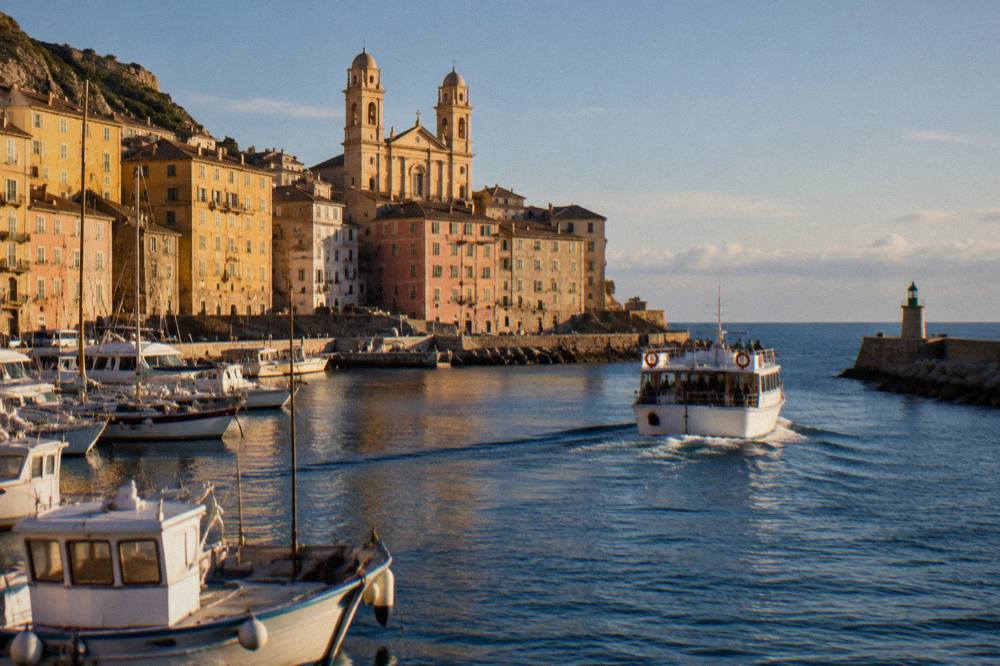
What Do Corsica Tours And Tickets Cost?
Sight admissions in Corsica are fixed euro prices published by each site: Maison Bonaparte EUR 10, Palais Fesch EUR 10, Musée de la Corse and the Corte citadel EUR 5.50 on one combined ticket, Filitosa EUR 9 adults.
The table below collects the admissions the sources state directly. The Escalier du Roi d'Aragon entry of about EUR 5, its monthly hours and its closed-shoes rule are reported, and the reservation page should be confirmed before a visit.
| Sight | Full price | Reduced / free | Hours as published |
|---|---|---|---|
| Maison Bonaparte, Ajaccio | EUR 10 | EUR 8 non-EU residents 18-25 and large families; free for EU residents under 26 | Closed Monday; 1 Jul to 30 Sep 10:00-17:30 |
| Palais Fesch, Ajaccio | EUR 10 | EUR 6 over 65; free up to 18 | Daily 09:00-17:00 (16 Jan to 31 Dec 2026) |
| Musée de la Corse and Citadelle de Corte | EUR 5.50 | EUR 4 (no temporary show), EUR 3 over-65s and young people | 1 May to 31 Oct daily 10:00-19:00, closed 1 May |
| Filitosa prehistoric site | EUR 9 | EUR 7 ages 6-17 and disabled; family EUR 28; free under 6 | 1 April to 2 November, 09:00 to sunset |
| Escalier du Roi d'Aragon, Bonifacio | About EUR 5 | Child 6-11 EUR 2 | Monthly hours; confirm before visiting |
For context on the wider trip budget, food and lodging, the Corsica cost and budget guide goes into detail. One rule that saves arguments at restaurant tables: French menus must state "prix service compris" with the service percentage, so a further tip is optional, per the DGCCRF.
Things To Do In Corsica: Beaches And Boat Trips
The sea is the island's main draw: boat trips run from Ajaccio to the Îles Sanguinaires, from Porto, Cargèse and Sagone into the Scandola reserve and the Calanques de Piana, from Calvi toward Scandola and the Revellata marine reserve, and from Bonifacio and Porto-Vecchio to the Lavezzi islands, while the beaches, from Palombaggia to Saleccia, line more than 1,000 km of coast.
Scandola is the flagship. It sits inside the UNESCO property inscribed in 1983, and visits are by boat only: the land area is closed to the public and there is no landing in the integral reserve, as the reserve rules state. A cruise out of Porto or Cargèse covers both the reserve and the red granite of the Calanques de Piana, often with a stop at Girolata. The April 2026 State and OEC measures added voluntary operator labelling, a QR-code tracking trial for pleasure boats, more controls at sea and renewed osprey quiet zones; boat quotas and licences are being finalised, with no year announced.
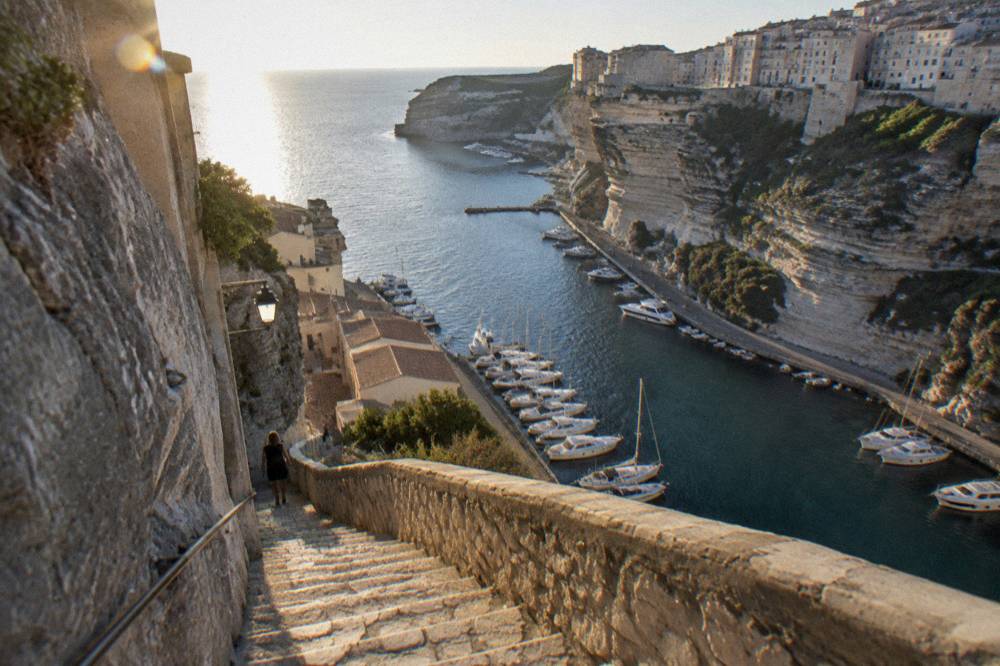
In the south, the Lavezzi islands sit inside the Bouches de Bonifacio nature reserve managed by the OEC, and cruises leave Bonifacio for the cliffs and the islands. The Escalier du Roi d'Aragon, 189 steps cut down the Bonifacio cliff with a 180-degree view over the strait to Sardinia, sits above the harbour; children get a "diploma" at the top.
Swimming safety follows a season: Ajaccio's main beaches have 7 lifeguard posts from 1 July to the end of August, and Haute-Corse supervised beaches are staffed by volunteer firefighters about 1 July to 31 August. Climate normals put Ajaccio's July mean maximum at 28.6 °C with 8.6 mm of rain, and August at 29.2 °C, per Météo-France station data 1991-2020; the month-by-month detail, including Bastia figures, is in Corsica weather by month and the best time to visit Corsica.
| Ajaccio climate normals (Météo-France, 1991-2020) | Jan | Apr | Jul | Oct | Nov |
|---|---|---|---|---|---|
| Mean daily high (°C) | 14.0 | 18.5 | 28.6 | 22.8 | 18.3 |
| Mean daily low (°C) | 4.7 | 8.3 | 17.7 | 12.6 | 9.0 |
| Rain (mm) | 54.1 | 53.1 | 8.6 | 85.7 | 111.8 |
| Sunshine (h/day) | 4.4 | 7.7 | 12.1 | 6.7 | 4.7 |
A short gulf cruise is the easiest first booking from Ajaccio: the Îles Sanguinaires trip covers the bay and the islands in one stretch. Check availability, with the full description on the gulf boat tour page.
Free Things To Do In Corsica
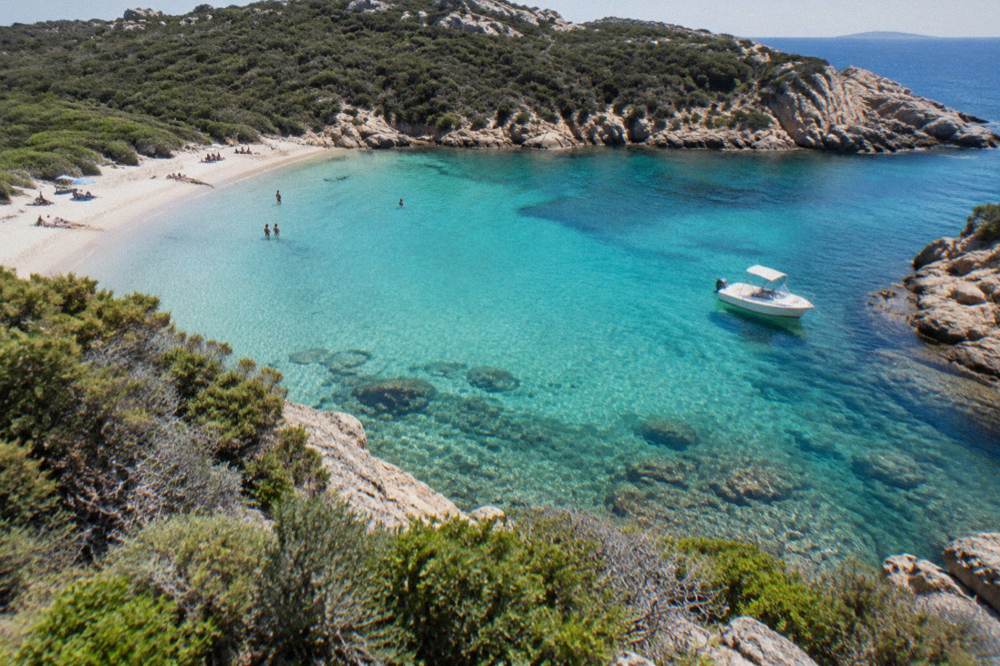
Free entry in Corsica is tied to age and residence rather than to free days: Maison Bonaparte is free for EU residents under 26, the Palais Fesch is free up to 18, Filitosa is free under 6, and beyond that the no-cost list is the landscape itself, beaches, cliff walks, village squares and the viewpoints along the coast road, all of which charge nothing.
The age-based admissions are worth planning around. A family with children under 18 pays nothing at the Palais Fesch, and an EU-resident student under 26 walks into Maison Bonaparte free. The Musée de la Corse in Corte is free for under-10s, Corsica residents under 25, and disabled visitors with a companion.
Everything else free is outdoors. The towns cost nothing to walk: Ajaccio's old streets around Rue Saint-Charles, Bastia's old port, the lanes of Porto-Vecchio's old town. The viewpoints on the D81 along the Calanques de Piana are roadside. The GR20's trailheads at Calenzana and Conca are open access, though refuge nights are paid and must be booked. Beach access carries no charge at the beaches named in the facts, subject to seasonal fire-risk restrictions on massif access between mid-June and mid-September, when some massifs can close by prefectural order on high-risk days. The free-things detail, including what is genuinely free versus what carries a fee, is expanded in the site's free activities pages, and general planning notes sit in Corsica travel tips.
Things To Do In Corsica When It Rains
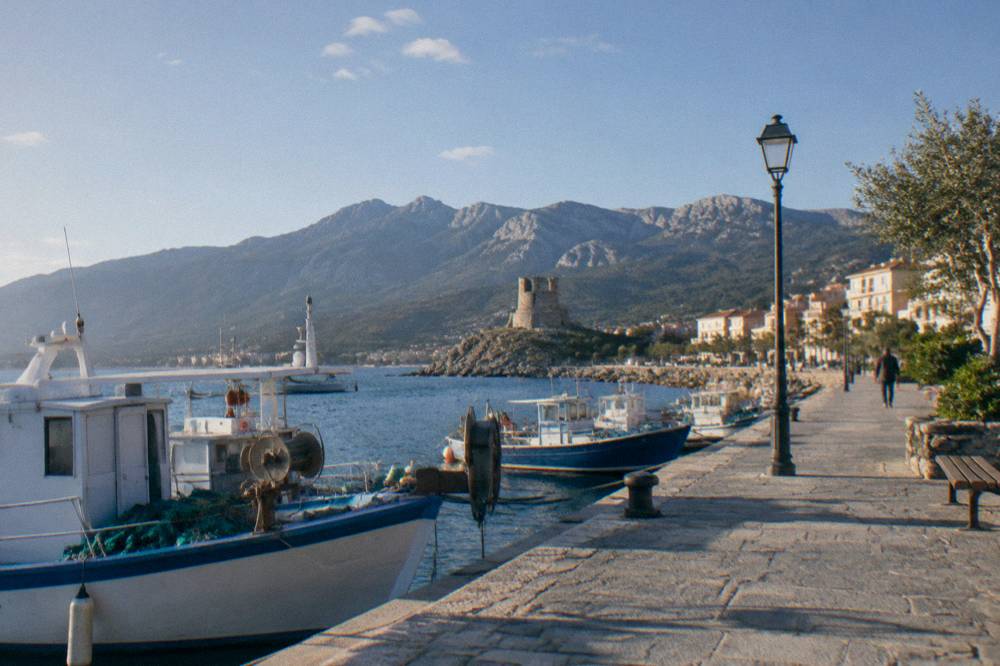
Rain in Corsica concentrates in October and November, when Ajaccio averages 85.7 and 111.8 mm and Bastia 126.5 and 134.3 mm per month, and the indoor programme is the museum set: Maison Bonaparte and the Palais Fesch in Ajaccio, the Musée de la Corse inside Corte's citadel, the Musée de Bastia at the Palais des Gouverneurs, and Filitosa's covered museum at the prehistoric site near Sollacaro.
Maison Bonaparte covers the Bonaparte family house in the centre of Ajaccio. The Palais Fesch holds the fine-arts collection a short walk away, open daily 09:00 to 17:00. In Corte, one EUR 5.50 ticket covers both the Musée de la Corse and the citadel, with last citadel access one hour before the museum closes. In Bastia, the Musée de Bastia at the Palais des Gouverneurs runs high-season hours 10:00 to 18:30 and low-season hours 09:00 to 12:00 and 14:00 to 17:00, closed Sunday and Monday. The wider set of guides lives on Corsica Travel Guide.
Rainy days also suit the food stops: brocciu, the sheep's-milk cheese that took its appellation d'origine in 1983, the charcuterie trio of prisuttu, lonzu and coppa (AOC 2012, AOP 2014), chestnut flour under the Farina castagnina corsa AOP, Corsican honey and olive oil AOCs, and the island's wines, whose appellations include Patrimonio, Ajaccio, Vin de Corse and Muscat du Cap Corse, from the Nielluccio and Sciaccarellu red grapes and Vermentinu white. Tastings are bookable, and the Corsica food and wine tour guide lists them.
One caution for wet weeks: rain and mountains do not mix on trail. Gorge walks and river swims are poor choices in and after heavy rain, and driving conditions on the mountain roads should be checked on Inforoutes Corse, which publishes live road status and pass accessibility levels.
Things To Do In Corsica With Children
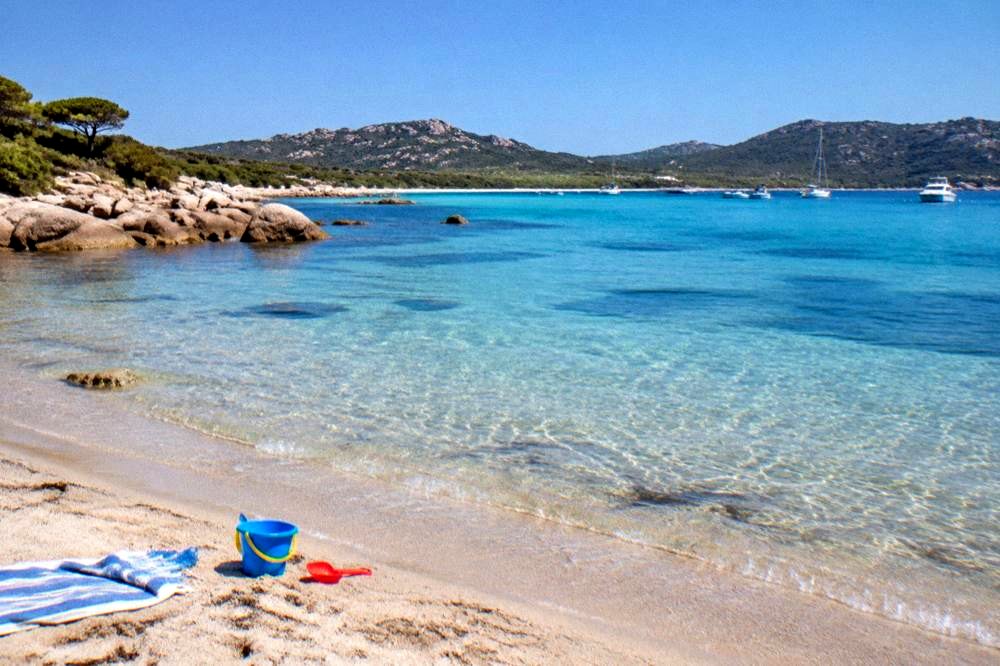
Corsica works for children around three anchors: beaches with lifeguards in July and August (7 posts on Ajaccio's main beaches, volunteer-firefighter supervision in Haute-Corse about 1 July to 31 August), easy water time such as gulf boat trips and the turtle park at A Cupulatta, and sights that hand children something concrete, like the "diploma" given at the top of the 189-step Escalier du Roi d'Aragon in Bonifacio.
Admissions lean family-friendly: Filitosa charges EUR 28 for a family ticket covering two adults and two children aged 6 to 17, with under-6s free; the Palais Fesch is free up to 18; Maison Bonaparte has a large-family rate of EUR 8. The A Cupulatta turtle park near Vero sells skip-the-line admission and runs a visit of one to two hours.
Boat trips suit families when they are short. The Sanguinaires gulf cruise from Ajaccio, the Calanche de Piana short cruise out of Porto and the Bonifacio cliffs and Lavezzi cruise are all half-day-or-less formats. For a beach base with shallow-water coves nearby, the where to stay in Corsica guide compares the family-friendly sectors.
Fire-season rules matter for summer family walks: from 15 June to 30 September it is forbidden to light a fire or smoke in forests, maquis and massifs, and massif access maps update daily at 18:00 for the next day.
Things To Do In Corsica At Night
Corsica after dark is a port-and-square scene rather than a club scene: aperitif and sunset cruises run from Ajaccio, Bonifacio, Calvi, Propriano and L'Île-Rousse, the old ports of Ajaccio, Bastia and Calvi hold the restaurant and bar trade, and dinner is late by northern European habit, with service included in the menu price by law and tipping optional.
Sunset trips are the signature evening product. From Ajaccio they run to the Îles Sanguinaires, several with an aperitif on board. From Bonifacio, a sunset aperitif dining boat covers the cliffs. From Calvi, a short sunset cruise heads for the Revellata peninsula, and from Propriano a two-hour sunset tour serves Corsican rosé. From L'Île-Rousse, a catamaran excursion combines the Agriates coast with an aperitif and sunset.
On land, the evening programme is dinner: grilled fish, the charcuterie board, brocciu in savoury and sweet dishes, and fiadone for dessert, with a glass of Muscat du Cap Corse or a local white. Restaurant menus state "prix service compris", so the bill is the bill. The Corsica nightlife and best restaurants pages take the evening further.
A safety note for coastal nights at sea or on rocks: the sea rescue number is 196, reachable by VHF channel 16 at sea, alongside 112 for general emergencies.
Things To Do In Corsica: Day Trips To Scandola, Bonifacio, Bavella And Sardinia
The four flagship day trips are the Scandola reserve and Calanques de Piana by boat from Porto, Cargèse, Sagone or Ajaccio; Bonifacio's citadel, cliffs and the Lavezzi islands at the southern tip; the Aiguilles de Bavella and the Ospedale forest above Porto-Vecchio by 4x4; and Sardinia, with the Moby and Ichnusa Lines ferry from Santa Teresa Gallura to Bonifacio taking about 50 to 60 minutes.
Scandola needs a boat, and the choice of port sets the day: short cruises from Porto, Girolata-stop trips from Cargèse, full-day trips from Ajaccio. The reserve's rules, boat access only, no landing in the integral reserve, anchors up at sunset, are enforced, and the osprey quiet zones were renewed in the April 2026 measures. Bonifacio combines the citadel town, the 189-step Escalier du Roi d'Aragon and the Lavezzi cruises from the harbour. Bavella and the Ospedale forest sit in the Alta Rocca above Porto-Vecchio, reached by 4x4 tours or by the winding mountain road, with the Bavella day trip guide covering the detail. The Sardinia crossing is the Corsica Sardinia ferry route, kept by Moby and Ichnusa Lines after Sardinia found no rival operator, per the report of 9 October 2026.
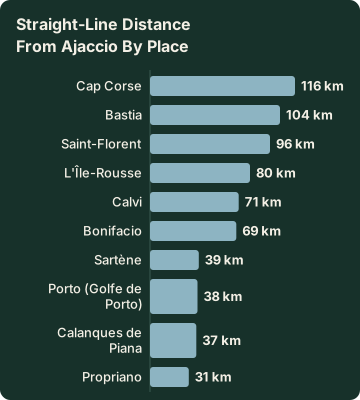
Distances help the planning, and they are straight-line figures from Ajaccio, not drive times: Corsican mountain roads are slow, and a straight-line kilometre is not an hour-free promise.
| Place | Straight-line distance from Ajaccio |
|---|---|
| Propriano | About 31 km |
| Sartène | About 39 km |
| Porto (Golfe de Porto) | About 38 km |
| Calanques de Piana | About 37 km |
| Bonifacio | About 69 km |
| Calvi | About 71 km |
| L'Île-Rousse | About 80 km |
| Bastia | About 104 km |
| Saint-Florent | About 96 km |
| Cap Corse | About 116 km |
Hiking-based day trips round out the list. The Restonica valley above Corte, the Gorges de Spelunca between Évisa and Porto, and the plateau walks of the Alta Rocca all work as single-day outings from a nearby base.
Getting Around Corsica By Car, Train And Ferry
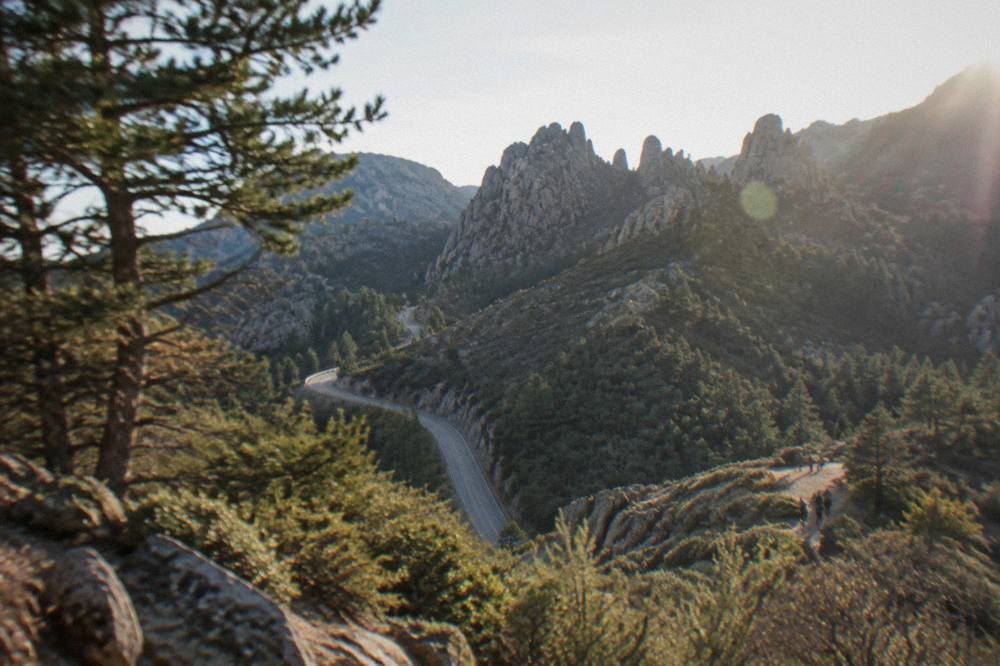
A car is the practical choice, because the island's bus network is thin and its mountain roads are the only way to reach the beaches and trailheads; the Chemins de fer de la Corse runs three lines (Ajaccio to Bastia via Corte, Ponte-Leccia to Calvi, and the Balagne coastal line Calvi to L'Île-Rousse), and ferries link the seven ports to Marseille, Toulon, Nice and Italy with Corsica Linea, La Méridionale, Moby and Corsica Ferries.
The ferry network is presented at the operator level. Corsica Linea sails Marseille to L'Île-Rousse, Bastia, Propriano and Ajaccio. La Méridionale sails Marseille to Ajaccio and Marseille to Porto-Vecchio. Moby sails Livorno to Bastia, Genoa to Bastia and Santa Teresa Gallura to Bonifacio. Corsica Ferries sails from Toulon and Nice to Ajaccio, Bastia, L'Île-Rousse, Porto-Vecchio and Propriano, and from Livorno and Savona to Bastia. Reported crossing times run about 50 to 60 minutes for Santa Teresa to Bonifacio, 4 to 5 hours Livorno to Bastia, about 6.5 hours Savona to Bastia, 7.5 to 10 hours Nice to Bastia, 10 to 13 hours from Toulon, and 12 to 13 hours from Marseille, mostly overnight.
Flying in, the four airports are listed in the Corsica airports guide. On the ground, the car rental guide, driving in Corsica and getting around Corsica pages carry the practical detail. Inforoutes Corse publishes live road conditions and pass accessibility levels, and it is the check to make before any mountain drive in winter or after storms.
| Operator | Routes (verified unless noted) |
|---|---|
| Corsica Linea | Marseille to L'Île-Rousse, Bastia, Propriano, Ajaccio |
| La Méridionale | Marseille to Ajaccio, Marseille to Porto-Vecchio |
| Moby | Livorno to Bastia, Genoa to Bastia, Santa Teresa Gallura to Bonifacio |
| Corsica Ferries | Toulon and Nice to Ajaccio, Bastia, L'Île-Rousse, Porto-Vecchio, Propriano; Livorno and Savona to Bastia |
Corsica Questions Answered
The long trails, for readers planning beyond day walks, sit in the PNRC's own figures:
| Trail | Length | Days | Total climb |
|---|---|---|---|
| GR20 (Fra li Monti) | 180 km | About 15 stages of 4 to 8.5 h | Not stated in the sources |
| Mare e Monti Nord | 121 km | 10 days | 6,100 m |
| Mare a Mare Nord | 139 km (161 km with variant) | 8 to 12 days | 5,900 m |
| Mare a Mare Centre | 84 km | 7 days (Ghisonaccia to Porticcio) | 3,900 m |
| Mare a Mare Sud | 73 km | 5 days, ends in Propriano | 3,200 m |
| Mare e Monti Sud | 66 km | 5 days, ends in Propriano | 2,700 m |
GR20 refuge nights, 2026 rates per person: bunk EUR 20, bivouac pitch EUR 12, rented tent for one EUR 27, rented tent for two EUR 39. Booking is mandatory and online only, refuges are guarded 16 May to 4 October, dogs are not allowed in refuges or rented tents, no departures from Calenzana after 11:00, and wild camping is banned, with bivouac only in the marked areas at refuges.
How Many Days Do You Need In Corsica?
A first visit covering one town, one boat trip and one beach region works in four to five days. A loop taking in Ajaccio, the Gulf of Porto, Corte, Calvi and Bonifacio needs a week to ten days, allowing for slow mountain roads.
Can You Visit Scandola Without A Boat?
No. Scandola's land area is closed to the public; visits are by boat only, with no landing in the integral reserve, per the reserve rules.
Is The GR20 Suitable For Beginners?
The GR20 runs 180 km in about 15 stages of 4 to 8.5 hours each through high mountain terrain, with refuge nights that must be booked online in advance. It is a committed trek rather than a beginner walk; the Mare a Mare trails are shorter alternatives.
What Is The Cheapest Way To Get To Corsica?
Ferries from Italy, Livorno to Bastia at a reported 4 to 5 hours, are the shortest crossings from the Italian mainland, and flights serve all four airports.
Do You Need To Book GR20 Refuges In Advance?
Yes. Reservations are obligatory for every option, bunk, bivouac pitch or rented tent, and are made online only through the PNRC platform with card payment. Changes are possible up to 48 hours before a stage, subject to availability.
Is Corsica Safe For Tourists?
The US State Department lists France at Level 2, Exercise Increased Caution. The island-specific risks are natural: a high wildfire risk April to October per the UK FCDO, with fires and smoking banned in forests, maquis and massifs from 15 June to 30 September. Emergency numbers are 112, 15, 17, 18, 114, and 196 for sea rescue; mountain rescue (PGHM Ajaccio) is 04 95 24 24 00.
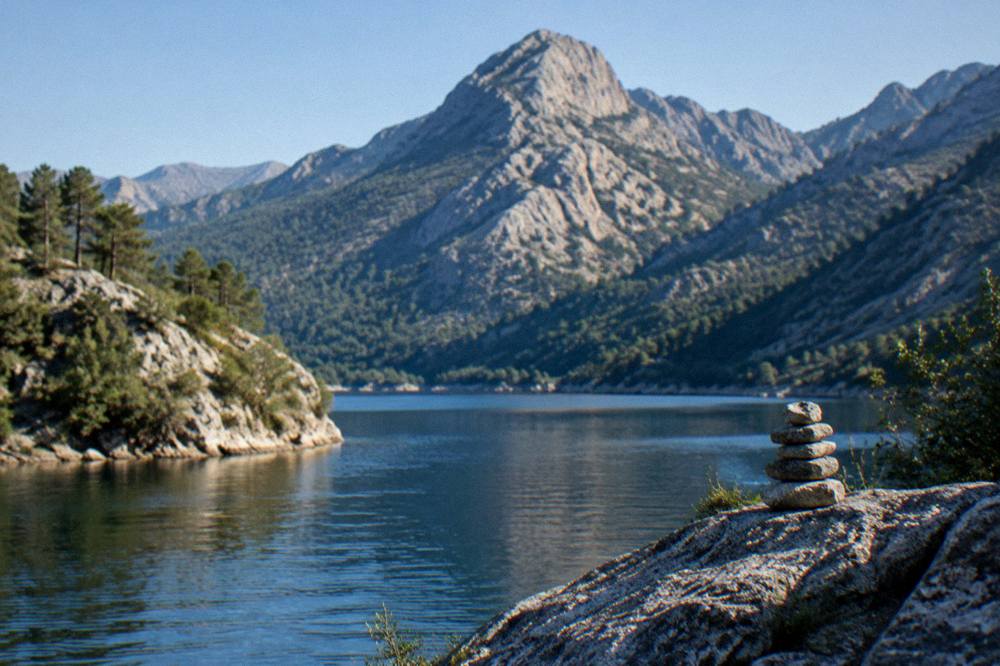
Whatever the mix of boat decks, museum halls and granite ridges, the island rewards a base-plus-day-trip structure over a single-town stay: the Corsica map and the safety and planning notes in Corsica safety close the loop for a trip built around these things to do in Corsica.