Is Ajaccio Worth Visiting?
Is Ajaccio worth visiting? A fact-based look at Corsica's capital: Napoleon's birthplace, its museums, the Îles Sanguinaires and what a stay there actually delivers.
Ajaccio is the capital of Corsica, a French island in the Mediterranean with more than 1,000 km of coastline, and it carries 76,320 residents per the INSEE census figure published in August 2026, making it the largest town on the island. It sits on the west coast, on a bay, with mountains behind it, and its ferry terminal and airport put it within easy reach of the mainland: Corsica Linea sails Marseille to Ajaccio, and the airport is served by bus line 8, which stops within reach of Maison Bonaparte. The question of whether the town deserves your days is really a question of what you want from a Corsican base, and the honest answer, drawn from what the museums, the operators and the climate data say, is that Ajaccio rewards two kinds of traveller especially well.
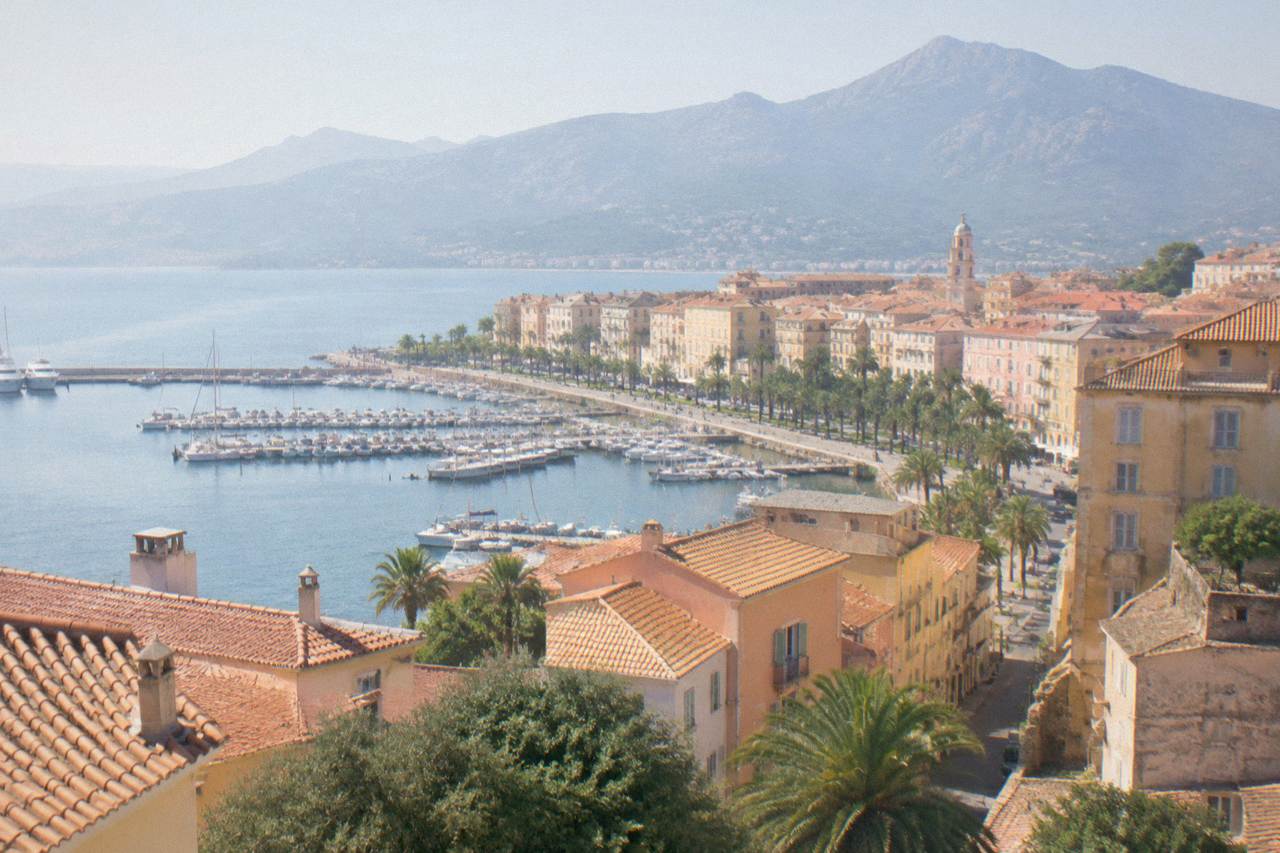
Yes, Ajaccio is worth visiting if you want a town base with real museums, a working port and sea trips on the doorstep, because it holds Maison Bonaparte and the Palais Fesch, it launches boats to the Îles Sanguinaires, and the Météo-France normals show a July average high of 28.6 °C with just 8.6 mm of rain. It is Corsica's capital and its largest town, and it pairs town pleasures with west-coast excursions.
That answer needs unpacking, because Ajaccio's strengths are specific. It is not a village of stone alleys, it is the island's administrative and commercial centre, and the appeal runs through culture rather than through remoteness. Maison Bonaparte, the national museum on Rue Saint-Charles, is the birthplace of Napoleon and sits 200 m from the bus station and ferry terminal, an unusual degree of convenience for a national museum. The Palais Fesch holds the fine-arts collection. Around the bay, boat operators run trips to the Îles Sanguinaires, and from the same port you can book full-day excursions along the coast. The Ajaccio area guide covers the town district by district.
Ajaccio is a working town with traffic and a commercial port, and anyone chasing theCalanch-scale drama of Bonifacio's cliffs or the empty sand of the Désert des Agriates will find those elsewhere on the island. What Ajaccio offers instead is density: two museums, a food scene built on Corsican charcuterie and brocciu, and the shortest possible distance between a ferry ramp and a national monument.
What Are The Best Things To Do In Ajaccio?
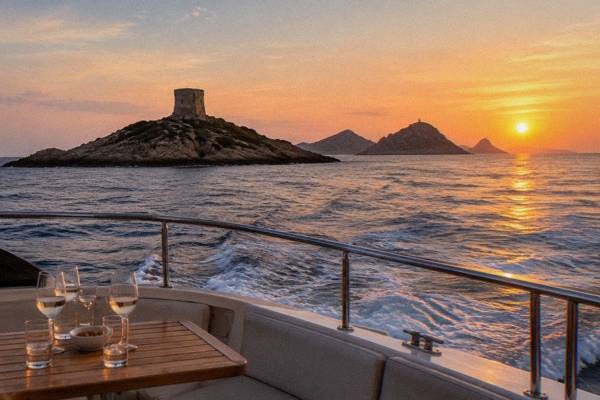
The core of an Ajaccio visit is Maison Bonaparte, the Palais Fesch, the Îles Sanguinaires by boat, and the local food, and each is documented by its own operator or institution: the national museum charges EUR 10 full price, the Palais Fesch EUR 10, and the Sanguinaires boat trips run from the gulf with aperitif and sunset options. Together they fill two full days without leaving the town's orbit.
Maison Bonaparte is open every day except Monday. Its hours shift by season: from 1 October to 31 March it opens 10:30 to 12:30 and 13:15 to 16:30, from 1 April to 30 June 10:00 to 12:30 and 13:15 to 17:30, and from 1 July to 30 September 10:00 to 17:30, with last entry 30 minutes before closing. Admission is EUR 10 full price, EUR 8 for non-EU residents aged 18 to 25 and for large families, and free for EU residents under 26. The Maison Bonaparte guide has the full detail.
The Palais Fesch, the Musée des Beaux-Arts, is listed by the Ajaccio tourist office at EUR 10 full price, EUR 6 for over-65s and free up to 18, open daily 09:00 to 17:00, and closed on Christmas Day, New Year's Day and 1 November. The Palais Fesch page carries the visiting notes.
On the water, the Îles Sanguinaires trips are the town's signature excursion. The Sanguinaires boat trip guide compares them.
Beyond the headline sights, the town supports a local food tour with tastings, an open-top bus tour of the town and coast with an audio guide, and a first scuba dive with an instructor for beginners. Napoleon's Cave, the Sanguinaires headland's famous grotto, is visited with a Corsican meal included, which makes an inexpensive hour of it for families.
Can You Visit Scandola And Piana From Ajaccio?
Yes, but it is a long day on the water. Ajaccio-based departures run the full length of the coast to reach the UNESCO-listed Scandola Reserve, which can be visited by boat only since its land area is closed to the public, with no landing in the integral reserve.
The UNESCO property is "Gulf of Porto: Calanche of Piana, Gulf of Girolata, Scandola Reserve", inscribed in 1983, and Scandola itself, created by ministerial order on 9 December 1975 as Corsica's first nature reserve, covers 1,000 ha of sea and 919 ha of land. Its land area is closed to the public, so visits are by boat only, with no landing in the integral reserve. The afternoon option with a stop in Girolata, departing from the Cargèse side, covers the reserve, the coves of Piana and the village reachable only by sea or on foot. Ajaccio-based departures run the full length of the coast to get there.
The practical alternative is to drive part of the way. Corte, in the interior, is 1 h 30 by road from Ajaccio, and the Calanques de Piana sit on the west coast road north of Ajaccio; the Calanques de Piana day trip guide lays out the options, and boat trips also leave from Porto, Cargèse and Sagone for those who would rather shorten the sailing.
If a Scandola day is on your list, booking ahead is the sensible pattern for the peak weeks, since boats fill and the reserve's protection framework is tightening: the State and the OEC confirmed a joint roadmap in 2026 that adds QR-code tracking for pleasure boats and more controls at sea. Free cancellation terms are shown on each operator's live listing before you commit.
How Many Days Should You Spend In Ajaccio?
Two days in Ajaccio itself covers the museums, the old town and one boat trip, and a third or fourth day turns the town into a base for Scandola, Piana or Cap Corse, which is how the island's own logistics read: Corte is 1 h 30 away by road, Bastia 2 h 45 from Corte, and the west-coast excursions run as full days. Fewer than two days and the museums get skipped.
A defensible split looks like this:
| Day | Base | What the day holds |
|---|---|---|
| 1 | Ajaccio | Maison Bonaparte, Palais Fesch, old town and market food |
| 2 | Ajaccio | Îles Sanguinaires boat trip, beach afternoon, sunset aperitif cruise |
| 3 | Ajaccio base | Full-day Scandola and Piana excursion by boat |
| 4 | Ajaccio base | Cap Corse and Désert des Agriates half-day trip, or Corte and the interior |
The wider question of how the town fits an island itinerary is covered in the how many days in Corsica answer, and the is Corsica worth visiting piece sets out the island-level case.
What Is The Weather Like In Ajaccio?
Ajaccio has a hot, dry summer and a mild, wet winter according to the Météo-France station normals for 1991 to 2020: July averages a high of 28.6 °C with 8.6 mm of rain and 12 h 6 min of sunshine a day, while November carries 111.8 mm of rain and the year totals 635 mm. August has the highest average daily high at 29.2 C.
The monthly detail matters for planning:
| Month | Average high °C | Average low °C | Rain mm | Sunshine h/day |
|---|---|---|---|---|
| Jan | 14.0 | 4.7 | 54.1 | 4.4 |
| Apr | 18.5 | 8.3 | 53.1 | 7.7 |
| Jul | 28.6 | 17.7 | 8.6 | 12.1 |
| Aug | 29.2 | 18.1 | 15.8 | 11.1 |
| Oct | 22.8 | 12.6 | 85.7 | 6.7 |
| Nov | 18.3 | 9.0 | 111.8 | 4.7 |
October and November carry the most rain, and summer is when the boat trips run at full frequency. The fire season rule applies from 15 June to 30 September, when fires and smoking are forbidden in forests, maquis and massifs, and the UK FCDO notes a high wildfire risk in France from April to October. For swimming late in the year, the can you swim in Corsica in October answer has the detail.
Is Ajaccio A Good Base For Getting Around Corsica?
Ajaccio works well as a first base because it has the island's leading airport, a ferry port with Marseille sailings from Corsica Linea and La Méridionale, and road times of 1 h 30 to Corte and about 2 h 45 onward to Bonifacio or Propriano from Corte, though a car is effectively required for the interior and the beaches. The Ajaccio airport guide covers arrivals.
More than 8.5 million passengers passed through Corsica's ports and airports in 2025 excluding cruise passengers, and Ajaccio's airport is the busiest on the island. Bus line 8 links the airport to town. The Chemins de fer de la Corse run the Ajaccio to Bastia line via Corte, and the Balagne coastal line runs Calvi to L'Île-Rousse. Whether you need a car at all is answered in do you need a car in Corsica, and the short version is that Ajaccio town itself is walkable but the island is not.
Common Questions About Ajaccio
Is Ajaccio Worth Visiting?
Yes. It is Corsica's capital and largest town, it holds two major museums in Maison Bonaparte and the Palais Fesch, and it launches boat trips to the Îles Sanguinaires and to Scandola. Two days in town plus excursion days is a workable pattern.
Is Ajaccio The Capital Of Corsica?
Yes. Ajaccio is the capital of the Collectivité de Corse and the island's largest town, with 76,320 residents per the INSEE census figure published in August 2026. Bastia is the second town.
How Much Do Ajaccio's Museums Cost?
Maison Bonaparte charges EUR 10 full price, EUR 8 for non-EU residents aged 18 to 25 and large families, and is free for EU residents under 26. The Palais Fesch is EUR 10 full price, EUR 6 for over-65s and free up to 18.
What Is Ajaccio Famous For?
Ajaccio is the birthplace of Napoleon, and Maison Bonaparte, the national museum on Rue Saint-Charles, preserves the house. The town is also the departure point for trips to the Îles Sanguinaires and the west-coast reserves.
Can You Get To Scandola From Ajaccio?
Yes. Boat excursions to the Scandola Nature Reserve depart from Ajaccio and Porticcio, including a guided full-day cruise and a semi-rigid boat day trip covering Scandola and Piana. Trips also leave from Porto, Cargèse and Sagone closer to the reserve.
When Is The Best Weather In Ajaccio?
The Météo-France normals for 1991 to 2020 show July averaging a high of 28.6 °C with 8.6 mm of rain and August a high of 29.2 °C, while October and November carry the most rain. Summer is the reliable season for boat trips.
The verdict from the facts: Ajaccio earns its place on a Corsican itinerary as the town where the island's history is concentrated, where the museums sit minutes from a working port, and where the west coast's boat trips begin. Give it two days for the town itself and let it launch a third towards Scandola, and the capital repays the stay, as this Corsica Travel Guide lays out across its town, beach and hiking pages.