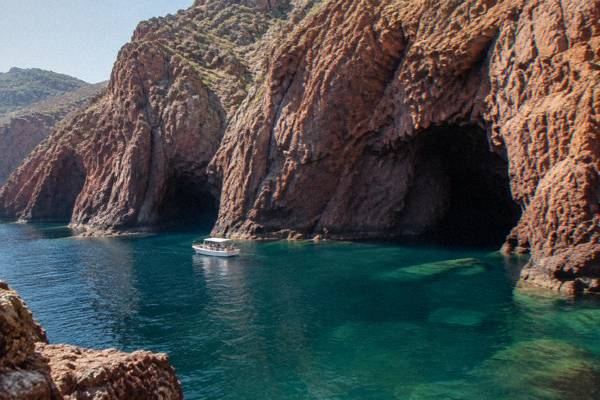
Calanques De Piana From Ajaccio
The Calanques de Piana sit on Corsica's west coast inside a UNESCO World Heritage property, and Ajaccio is the natural departure town for a day trip that pairs a mountain drive with a sea-level view of the red rock.
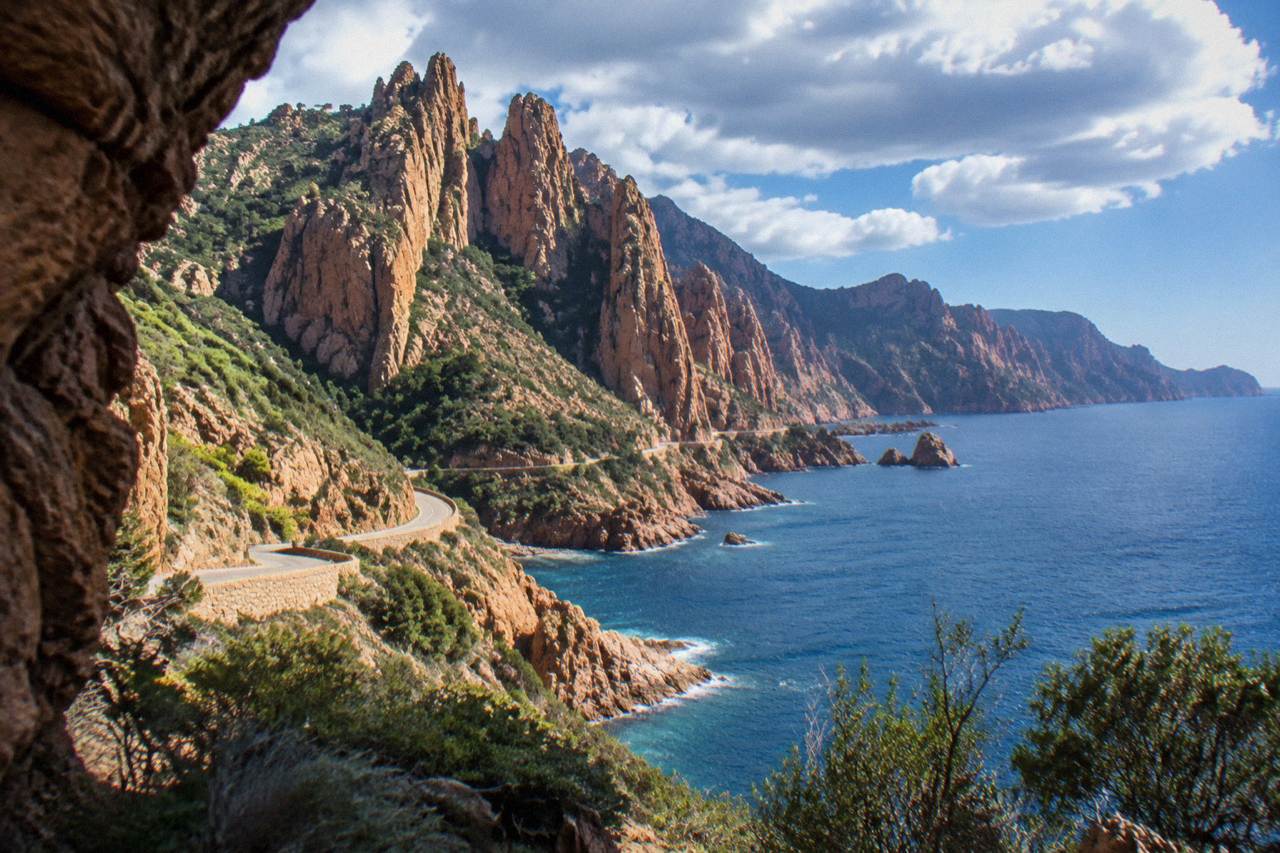
The Calanques de Piana lie on Corsica's west coast, inside the UNESCO property 'Gulf of Porto: Calanche of Piana, Gulf of Girolata, Scandola Reserve' inscribed in 1983. Ajaccio, the island's capital with 76,320 residents, is the usual base, and the day pairs the coastal road with a boat trip from Porto or Piana.
The red granite of the Calanques de Piana drops into the Mediterranean on the west coast of Corsica, the French island of 8,722 km2 with more than 1,000 km of coastline and an interior that climbs to Monte Cinto at 2,706 m. Ajaccio, the capital and the birthplace of Napoleon, is where a day trip to Piana usually begins, whether by road along the coast or by combining the drive with a boat out of the Golfe de Porto. This guide lays out what the UNESCO listing actually covers, how to structure the day, what the climate normals say about the weather you will meet, and what the sights and museums cost on the way out of town.
What Are The Calanques De Piana In Corsica?
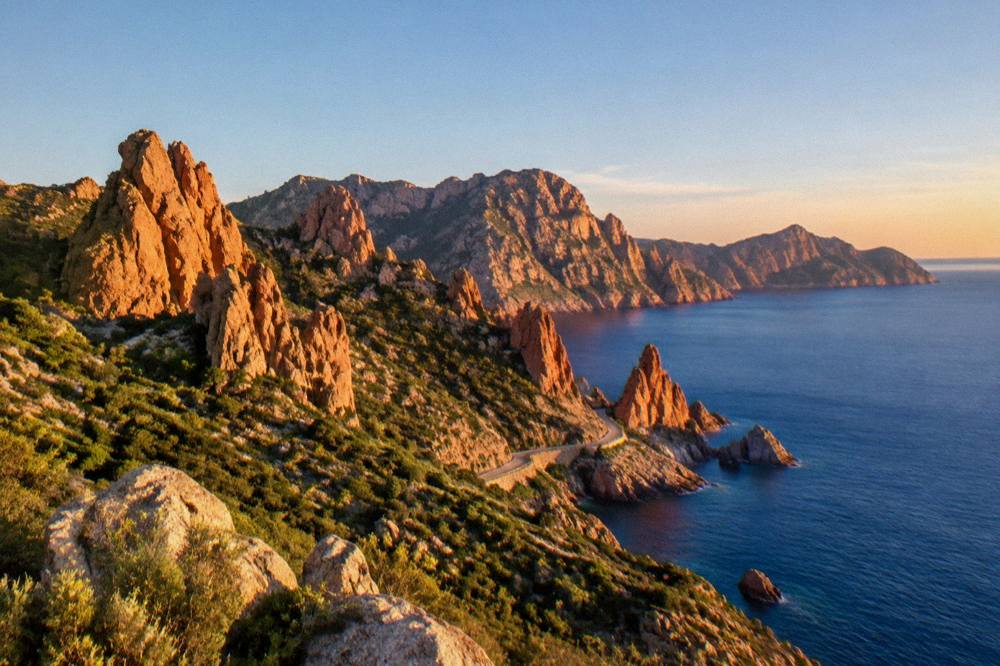
The Calanques de Piana are a stretch of red granite cliffs and coves on Corsica's west coast, and they form one third of the UNESCO World Heritage property "Gulf of Porto: Calanche of Piana, Gulf of Girolata, Scandola Reserve", inscribed in 1983 on natural criteria (vii)(viii)(x) over 11,800 hectares. The property is dossier 258 on the UNESCO list, and the PNRC, Corsica's regional nature park created in 1972, manages the protected reserve next door at Scandola.
The park itself now covers 4,484 km2, including the Castagniccia and the big valleys that run down to the sea, and its western sea front runs 80 km from Capu Rossu to Capu Cavallu. The Piana calanques are the part of the UNESCO property you can see from the road, from viewpoints above the water between the village of Piana and the Golfe de Porto. The granite formations give the stretch its name, the Calanche of Piana, in the UNESCO listing.
Neighbouring Scandola is a different kind of site. It was the first nature reserve created in Corsica, by ministerial order of 9 December 1975, with 1,000 ha of sea, 919 ha of land and a 70 ha integral reserve, in the commune of Osani. Scandola was key to saving the osprey in Corsica. The reserve's land area is closed to the public: visits are by boat only, with no landing in the integral reserve, as the Office de l'Environnement de la Corse rules state.
| Site | Figure |
|---|---|
| UNESCO property 258, Gulf of Porto | 11,800 ha, inscribed 1983 |
| Scandola reserve, sea | 1,000 ha |
| Scandola reserve, land | 919 ha |
| Scandola integral reserve | 70 ha |
| PNRC regional nature park | 4,484 km2, created 1972 |
How Do You Drive From Ajaccio To The Calanques De Piana?
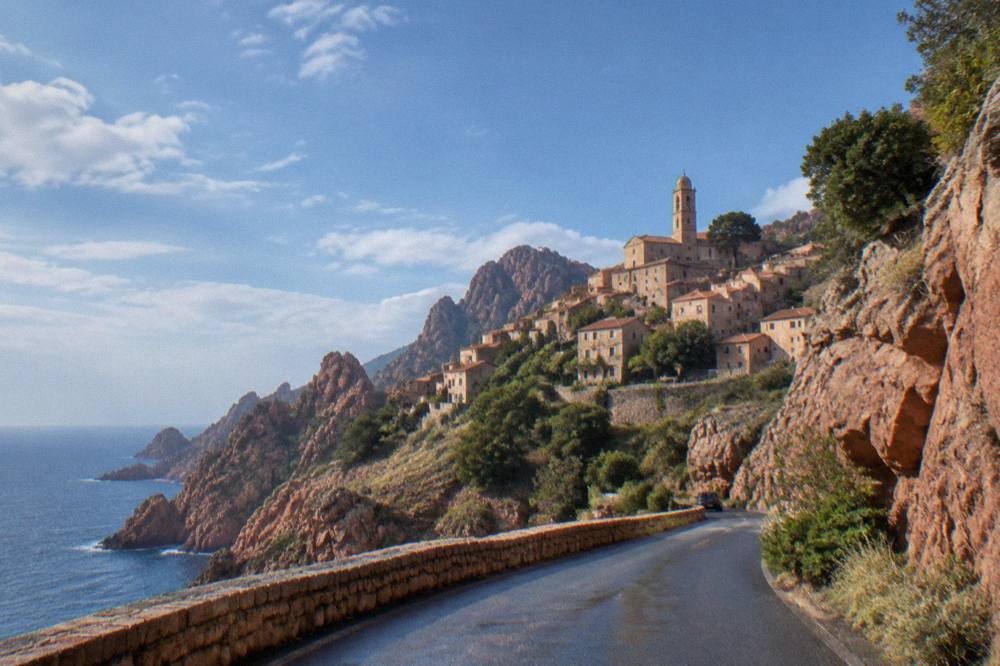
The drive from Ajaccio runs north and then up the west coast towards Piana and the Golfe de Porto, on narrow mountain roads that Inforoutes Corse, the island's live road-status service, monitors with published accessibility levels for the main passes. The island's interior roads are a recognised characteristic of the terrain, so the drive out is part of the day rather than a transfer, and checking the pass status before setting out is the standing advice for any mountain route in Corsica.
Inforoutes Corse publishes live road conditions and accessibility levels for the principal cols, colour-coded by whether the pass is open, restricted or requires particular equipment. Storm closures and rockfall works happen on these coastal and mountain sections from time to time, which is why the live service exists rather than a fixed statement about any one road being open year-round.
The day can be built in either direction. One shape is to leave Ajaccio early, drive the coast road through the Calanche with stops at the viewpoints above the water, then come down to Porto for a boat trip in the afternoon. The other is to book a morning boat out of Porto or Piana and drive back along the viewpoints later, with the light behind you rather than in your face. Either way, Ajaccio's museums and the old town sit at the start of the day, and the attractions of Ajaccio make a full morning possible if the boat is an afternoon one.
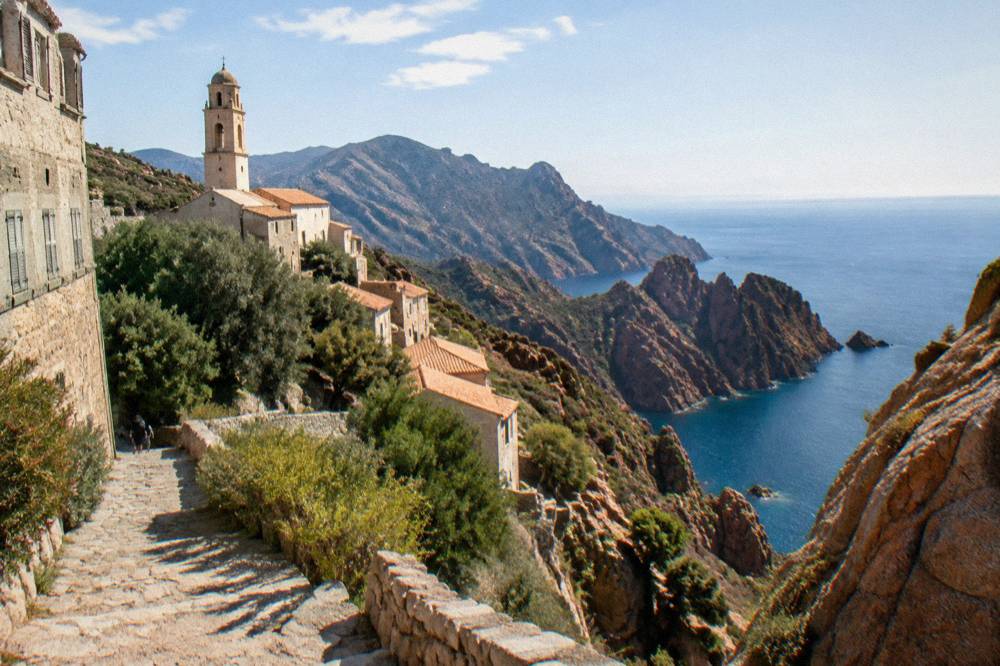
Two museums in town carry published hours and prices. Maison Bonaparte, the national museum on Rue Saint-Charles, 200 m from the bus station and ferry terminal and reachable on bus 8 from the airport, is open every day except Monday. Palais Fesch is listed daily 09:00 to 17:00 for the 16 January to 31 December 2026 period.
| Ajaccio sight | Hours | Prices |
|---|---|---|
| Maison Bonaparte, 1 July to 30 September | 10:00 to 17:30, last entry 17:00 | EUR 10 full, EUR 8 non-EU 18 to 25 and large families, free EU under 26 |
| Maison Bonaparte, 1 April to 30 June | 10:00 to 12:30 and 13:15 to 17:30 | Same rates, closed Mondays |
| Maison Bonaparte, 1 October to 31 March | 10:30 to 12:30 and 13:15 to 16:30 | Same rates, closed Mondays |
| Palais Fesch, 16 January to 31 December 2026 | Daily 09:00 to 17:00 | EUR 10 full, EUR 6 over 65s, free up to 18 |
More on the town itself is in the Ajaccio city guide, and the answer on whether Ajaccio is worth visiting covers how long to give the capital. Arriving by plane? The Ajaccio airport guide has the ground-transfer detail.
Can You See The Calanques De Piana From A Boat?
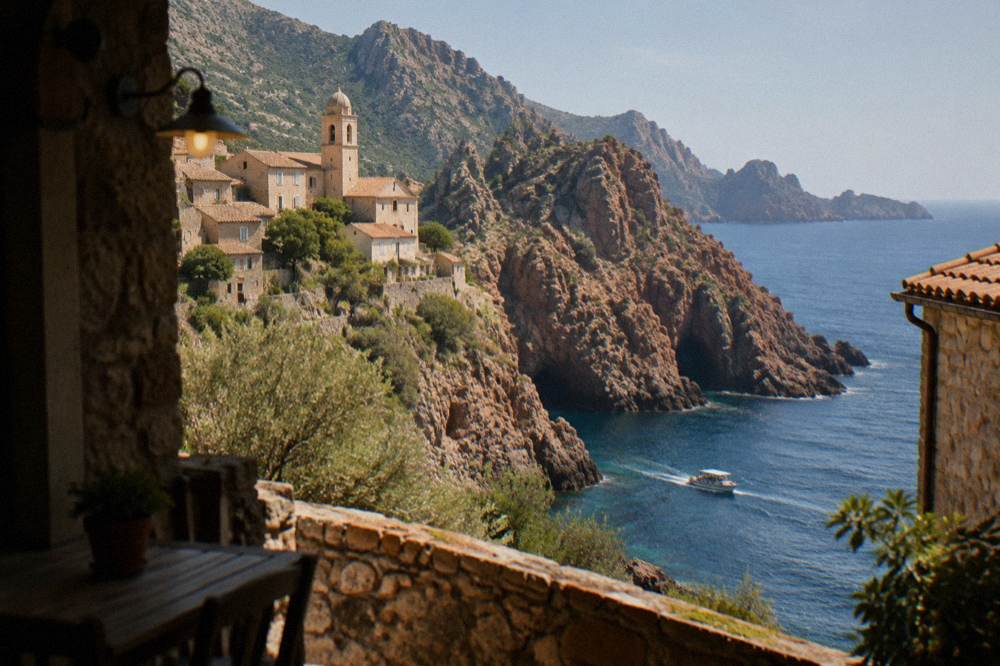
Yes, and the sea view is the only way to see the neighbouring Scandola reserve, whose land area is closed to the public, with visits by boat only and no landing in the integral reserve, per the OEC rules. Boats leave from Porto, Piana, Cargèse and Sagone for the Calanche and the reserve, and the Piana coastline itself can also be seen on shorter trips that stay inside the Gulf of Porto rather than rounding to Scandola.
The range of products on this coast runs from short Piana cruises to full-day loops that include a stop at Girolata, the hamlet in the Gulf of Girolata that completes the UNESCO property's name. The site's Calanques de Piana boat tour round-up compares them side by side, and the Scandola and Girolata boat trip day guide covers the full loop in depth.
One short trip stands out for a day built around the drive from Ajaccio, because it covers the calanques and the sea caves from a departure point on the Piana coast itself: the Piana Calanques and Caves by Boat cruise. Check availability for the date you have in mind, since summer seats on the small boats go first.
What Else Can You Combine With The Calanques De Piana In One Day?
The Golfe de Porto is the natural pairing, since it is the same UNESCO property and the usual boat departure point, and the Gorges de Spelunca walk from Porto towards Évisa is the inland half-day option on the same road. Further inland, Corte is the old capital of the island, about 1 hour by road from Bastia and 1 hour 30 from Ajaccio, and the Restonica valley runs up from the town into the high mountains.
The Restonica and Corte day trip covers that inland block in full. The Golfe de Porto guide covers the port itself, and the Gorges de Spelunca page covers the gorge that climbs inland from the coast. Both sit on the same day-trip arc from Ajaccio as Piana, so the decision is usually how much driving to trade against how much time on the water.
North of Piana, the coast road continues towards Cargèse, the town with its own boat departures for Scandola and Piana loops. South and east, other full-day arcs from Ajaccio and Porto-Vecchio fill the rest of a Corsica week: the Bonifacio and Lavezzi day trip, the Cap Corse day trip from the north, the Bavella day trip in the far south, and the Désert des Agriates day trip for the beaches of Saleccia and Lotu, reached by boat shuttle from Saint-Florent, by 4x4 track from Casta, or on foot.
For the Agriates end of the island, the site's Calvi to Girolata and Scandola day trip covers the northern approach to the same UNESCO water.
What Should You Know About Fire Rules And Access In Summer?
From 15 June to 30 September it is forbidden to light a fire or smoke in Corsica's forests, maquis and massifs, the fire-risk map of massif access is updated at 18:00 each day for the next day, and from mid-June to mid-September access to some massifs can be restricted outright. The UK FCDO notes a high risk of wildfires in France from April to October, and on the GR20 specifically no departures from Calenzana are allowed after 11:00 under a municipal order.
These rules matter for a Piana day trip in one specific way: the viewpoints and short walks above the coast sit inside the massif-access system, so on a red day a trailhead can be closed even when the road and the boats run. The prefecture-linked colour maps for Corse-du-Sud and Haute-Corse are the daily reference, and the PNRC publishes the fire-rule dates. Emergency numbers in France are 112 for all EU emergencies, 15 for medical, 17 for police, 18 for fire, 114 by SMS or app, and 196 for sea rescue, with the PGHM mountain rescue in Ajaccio on 04 95 24 24 00. The rest of the planning pages sit on Corsica Travel Guide.
| Rule or number | Detail |
|---|---|
| Fire and smoking ban | 15 June to 30 September, forests, maquis and massifs |
| Massif access map | Updated at 18:00 for the next day |
| Massif restrictions | Some massifs can close from mid-June to mid-September |
| UK FCDO | High wildfire risk in France, April to October |
| Sea rescue | 196, VHF channel 16 at sea |
| Mountain rescue, PGHM Ajaccio | 04 95 24 24 00, or 112 / 17 in an emergency |
What Does The Weather Do On The Ajaccio Coast?
The Météo-France climate normals for Ajaccio, station data for 1991 to 2020, show a hot dry summer and a mild wet winter, with July averaging 8.6 mm of rain and August averaging a mean daily high of 29.2 °C, while November carries 111.8 mm of rain, the figure at the top of the Ajaccio table. Snow in Corsica falls on the high mountains, not on the coast road to Piana, and October and November carry more rain than any summer month.
The table below is the station-normal set for Ajaccio, Campo dell'Oro. It is a coast-station record, and the mountains above Piana run their own weather, which is why the massif map exists.
| Month | High °C | Low °C | Rain mm | Sunshine h/day |
|---|---|---|---|---|
| Jan | 14.0 | 4.7 | 54.1 | 4.4 |
| Feb | 14.2 | 4.3 | 48.1 | 5.5 |
| Mar | 16.0 | 5.9 | 50.4 | 6.8 |
| Apr | 18.5 | 8.3 | 53.1 | 7.7 |
| May | 22.1 | 11.8 | 49.8 | 9.3 |
| Jun | 25.9 | 15.4 | 25.9 | 11.1 |
| Jul | 28.6 | 17.7 | 8.6 | 12.1 |
| Aug | 29.2 | 18.1 | 15.8 | 11.1 |
| Sep | 26.1 | 15.4 | 57.8 | 8.7 |
| Oct | 22.8 | 12.6 | 85.7 | 6.7 |
| Nov | 18.3 | 9.0 | 111.8 | 4.7 |
| Dec | 15.1 | 5.8 | 73.9 | 4.0 |
The month-by-month detail, for this coast and for Bastia's station, is in the Corsica weather by month guide.
What Should You Eat Around Piana In Corsica?
The food facts that can be stated with confidence are the island's protected designations: brocciu obtained its appellation d'origine in 1983, the charcuterie cuts prisuttu, lonzu and coppa took AOC in 2012 and AOP in 2014, Corsican olive oil's AOC took effect in 2004, chestnut flour's AOP was recognised in 2010, and Corsican honey and the Clémentine de Corse carry AOP and IGP status respectively. Those are the names to look for on menus and on shelves around the Golfe de Porto.
Brocciu, the sheep's-milk cheese, is the reference point: it took its appellation d'origine in 1983 and its AOC and AOP status in 1998. The charcuterie trio of prisuttu, lonzu and coppa comes from the Nustrale pig breed, recognised in 2006. Corsican wine appellations include Patrimonio, Ajaccio, Vin de Corse with its named crus such as Calvi, Coteaux du Cap Corse, Figari, Porto-Vecchio and Sartène, and Muscat du Cap Corse, with Nielluccio and Sciaccarellu as the red grapes and Vermentinu as the white.
| Corsican product | Protected status | Year |
|---|---|---|
| Brocciu | Appellation d'origine, then AOC/AOP | 1983, 1998 |
| Prisuttu, lonzu, coppa | AOC, then AOP | 2012, 2014 |
| Nustrale pig breed | Recognised | 2006 |
| Olive oil, Oliu di Corsica | AOC effective | 2004 |
| Chestnut flour, Farina castagnina corsa | AOP recognised | 2010 |
| Corsican honey, Mele di Corsica | AOC/AOP | 1998 |
| Clémentine de Corse | IGP, Label Rouge | 2007, 2014 |
The wider food picture, course by course, is in the Corsican food guide, and the wine appellations are covered in the Corsican wine guide.
How Much Does A Calanques De Piana Day Trip Cost?
The fixed costs on this day trip are the Ajaccio museums, EUR 10 full price at both Maison Bonaparte and Palais Fesch, with Maison Bonaparte free for EU residents under 26 and Palais Fesch free up to 18, and boat-trip prices that vary by product and departure port. Fuel, parking and food are the remaining variables, and restaurant menus in France must state "prix service compris", so an extra tip is optional.
A reasonable planning frame is to budget the museums as a known EUR 10 each, treat the boat as the day's main spend, and leave the rest flexible. Tipping is covered by French consumer rules: the service percentage must be printed on the menu, and anything beyond it is voluntary.
For context on the island as a whole, the Corsica cost and budget guide and the free things to do in Corsica guide set the wider frame, and the answer on whether Corsica is expensive tackles the headline question directly.
Is A Calanques De Piana Day Trip From Ajaccio Worth It?
The Calanques de Piana deliver two things in one day from Ajaccio that few Mediterranean islands can: a UNESCO World Heritage coastline inscribed in 1983 on natural criteria, and the choice between seeing it from the road, from a boat out of Porto, Piana or Cargèse, or both. The direct answer to the standing question rests on the same facts as this guide, and the site's dedicated answer page sets out the verdict in full.
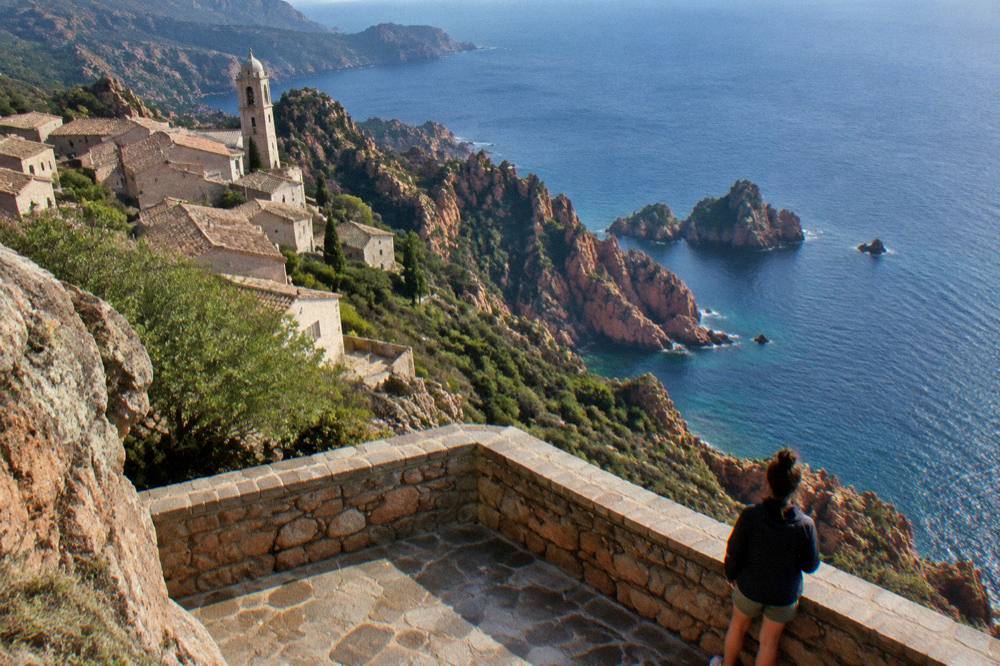
The strongest version of the day combines both angles. The viewpoints above the water show the scale of the Calanche from above, and the boats show the cliffs, caves and, on the longer loops, Girolata and Scandola from sea level, the only permitted way to see the reserve. Scandola's rules are firm and worth repeating for anyone planning their own boat: the land area is closed, there is no landing in the integral reserve, anchoring is daytime only outside the integral reserve and the Gargalu channel, and anchors must be up at sunset. The full verdict is on the page answering whether the Calanques de Piana are worth visiting.
Common Questions About A Calanques De Piana Day Trip From Ajaccio
Are The Calanques De Piana Worth Visiting?
The site's dedicated page answers this question directly, and the short version is yes: the Calanche of Piana is part of a UNESCO World Heritage property inscribed in 1983, and it can be seen both from the coast road and from boats out of Porto, Piana, Cargèse and Sagone. Read the full verdict on whether the Calanques de Piana are worth visiting.
Can You Visit Scandola From Piana?
Scandola is visited by boat only. The land area of the reserve is closed to the public, with no landing in the integral reserve, per the Office de l'Environnement de la Corse rules. Boats from Porto, Cargèse and Sagone run loops that include both the reserve and the Calanche of Piana.
How Long Do You Need At The Calanques De Piana?
A day trip from Ajaccio is the standard shape: the drive out along the coast road with viewpoint stops, then either a boat trip or a walk before returning. The Golfe de Porto, the Gorges de Spelunca and the village of Évisa all sit on the same arc and can extend the day.
What Does It Cost To Visit The Calanques De Piana?
The calanques themselves are seen from a public road and from the sea, and the fixed costs on a day trip from Ajaccio are the town's museums: EUR 10 full price at Maison Bonaparte and at Palais Fesch. Boat-trip prices vary by product and are rendered on this site from listing data only.
When Is The Best Month For A Piana Day Trip?
No month is named as the best, because that is a judgement rather than a fact. What the Météo-France 1991-2020 normals for Ajaccio show is a hot dry summer, with July averaging 8.6 mm of rain, and November carrying 111.8 mm, so the dry months are June through August and the rain builds from October.
Are There Rules About Fires And Smoking Near Piana?
Yes. From 15 June to 30 September it is forbidden to light a fire or smoke in forests, maquis and massifs across Corsica, and the daily massif-access map, updated at 18:00 for the next day, can restrict access to some massifs from mid-June to mid-September.
For everything bookable on this coast, the round-up of Calanques de Piana boat tours is the site's comparison page, and the wider list of things to do in Corsica places the Piana day trip among the island's other headline arcs. A day built on the red rock, the water and one EUR 10 museum in the capital is a day that covers the coast from every angle Corsica offers.