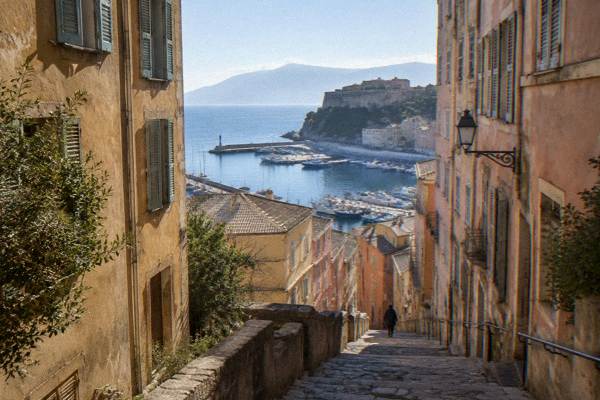
Bastia
Bastia is the second town of Corsica, the island's main ferry gateway and the working capital of Haute-Corse, with an old port, a Genoese-era citadel and direct access to Cap Corse and the Désert des Agriates.
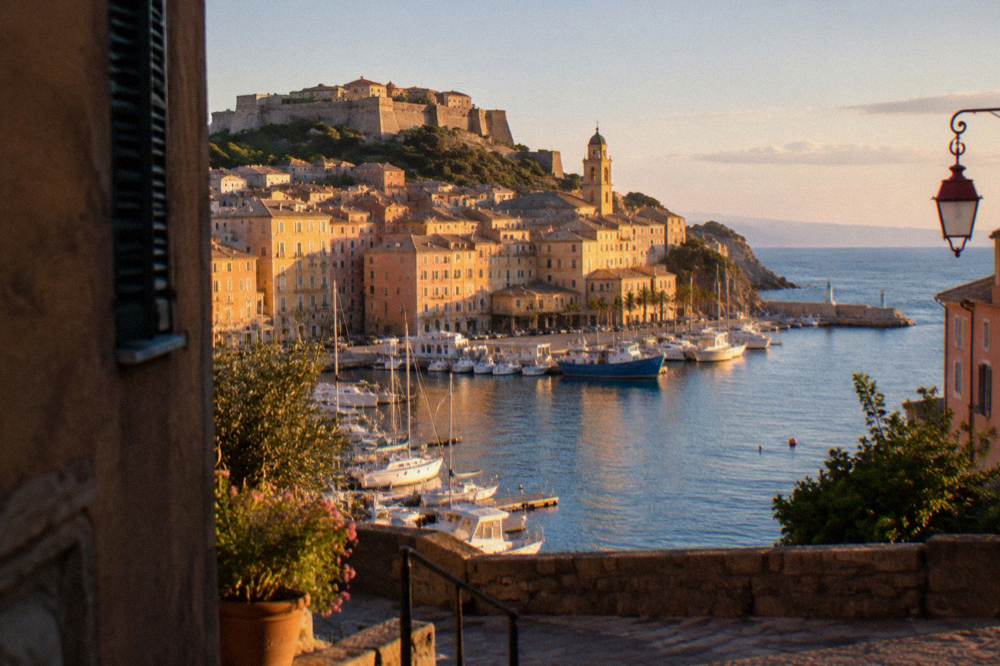
Bastia is Corsica's second-largest town with 46,867 residents and its busiest ferry port, best used as a base for the old port quarter, the citadel's Musée de Bastia, and day trips into Cap Corse, the Désert des Agriates and the interior at Corte.
Bastia sits on the northeastern coast of Corsica, the French Mediterranean island of mountains and more than 1,000 km of coastline, and it is the second town of the island after Ajaccio, with 46,867 residents recorded by INSEE and a density of 2,418 per km2. It is the capital of the Haute-Corse department, the island's busiest ferry gateway, and a working port town that many visitors meet first, whether they step off a ship from Livorno, Genoa, Savona, Toulon, Nice or Marseille or fly into Bastia Poretta airport inland to the south. This guide covers the town itself, its sights and museums, the ferries and trains that connect it, the climate the Météo-France station normals record, and the day trips that make it a base: Cap Corse, the Désert des Agriates, Saint-Florent, the Castagniccia and Corte.
What Is Bastia Known For?
Bastia is known as Corsica's second town and its main ferry port: more than 8.5 million passengers passed through the island's ports and airports in 2025, and Bastia is the northern hub where crossings arrive from Livorno, Genoa, Savona, Toulon, Nice and Marseille. Its identity is maritime and administrative at once: prefecture of Haute-Corse, an old port quarter below a fortified citadel, and the standard starting point for Cap Corse and the Désert des Agriates.
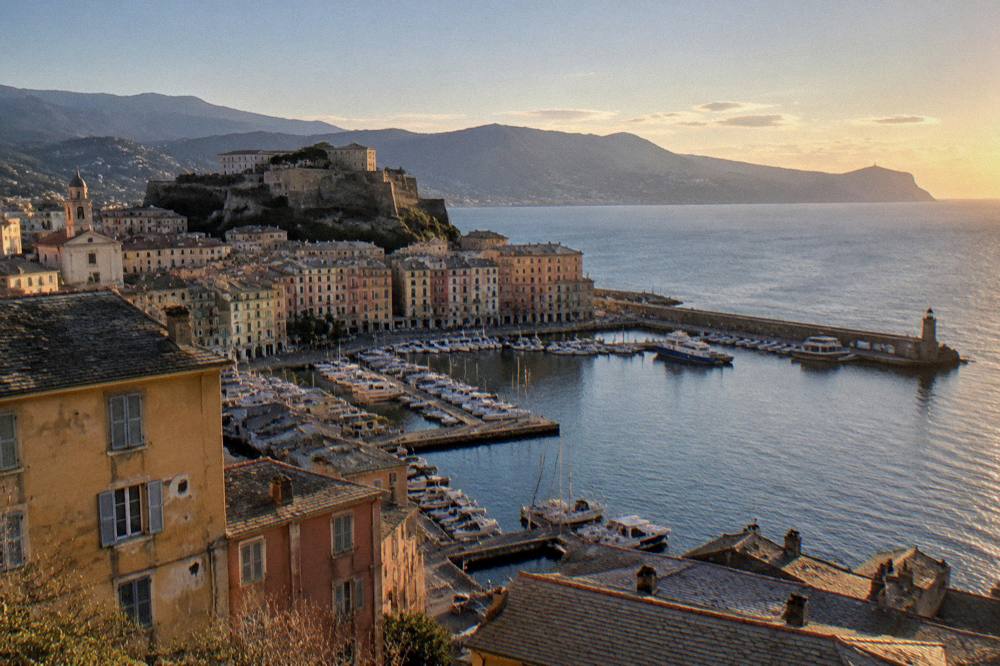
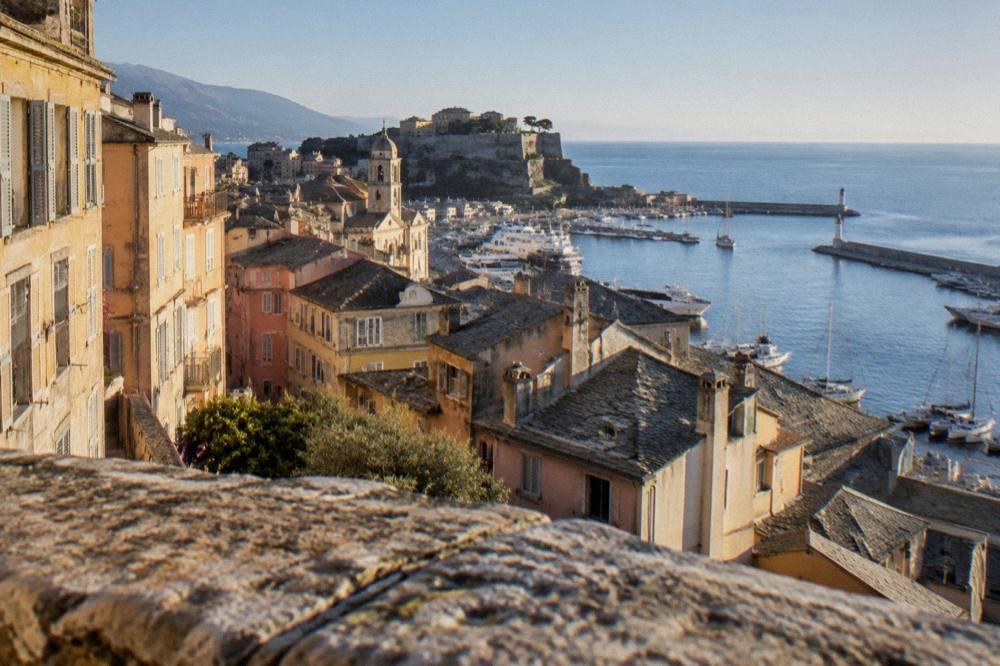
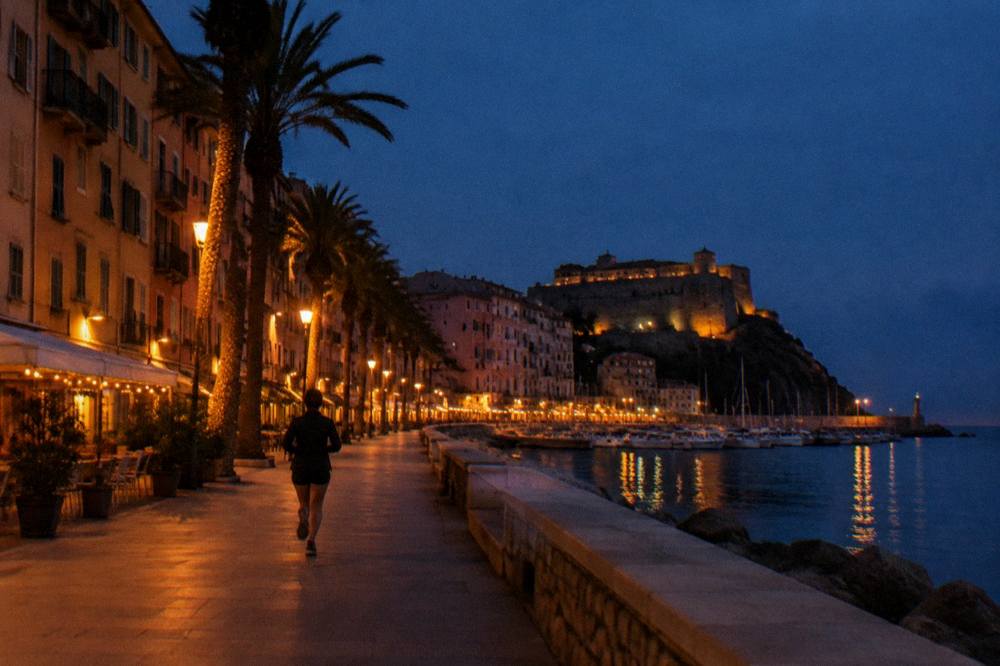
The town divides into a lower port area and the raised citadel quarter, the Terra Nova, with the older Terra Vecchia beside the Vieux-Port. The old port of Bastia is the historic heart, a small basin ringed by quays where the fishing and pleasure boats sit below tall shuttered houses, and it is the quarter the first-time visitor usually walks first. Above it the citadel of Bastia walls hold the Palais des Gouverneurs, home of the Musée de Bastia, and the standing pattern of its hours is that the museum runs a high-season and a low-season timetable, reported as 10:00 to 18:30 in the high season and 09:00 to 12:00 plus 14:00 to 17:00 in the low season, closed Sundays and Mondays, so confirm before you go.
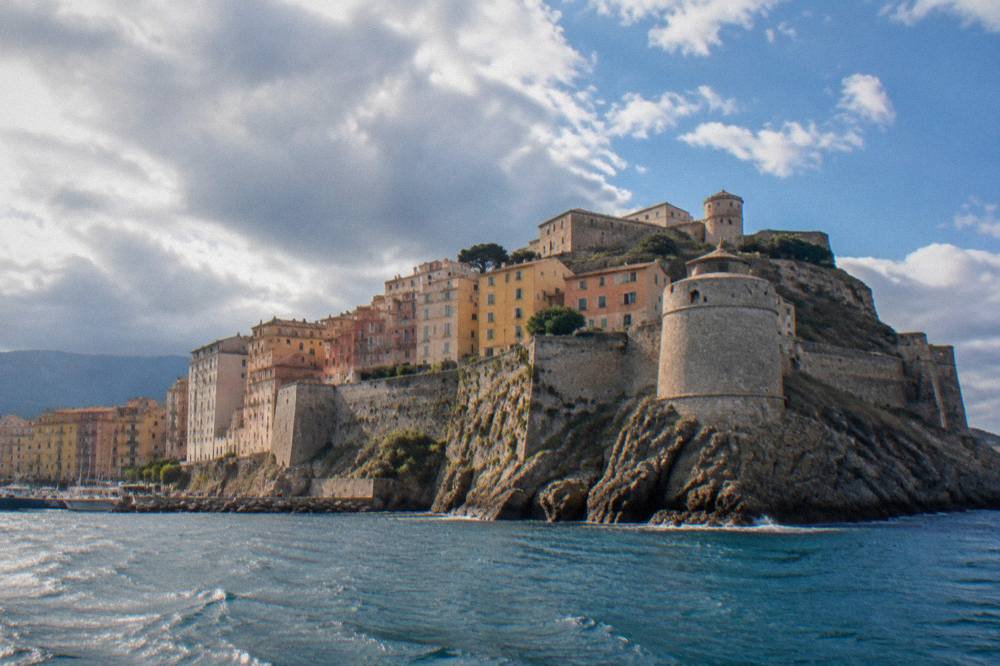
What the town gives a visitor in practice is a port rhythm rather than a museum circuit. Ferries come and go at the commercial docks, the Chemins de fer de la Corse station links the town to the interior, and the two Cap Corse and Agriate coastlines lie north and west within an easy half-day reach. The is Bastia worth visiting question gets a qualified yes: as a town to arrive in, sleep in and eat in, with the peninsula and the desert coast as the headline excursions, it works better than its modest billing suggests.
What Are The Top Sights In Bastia?
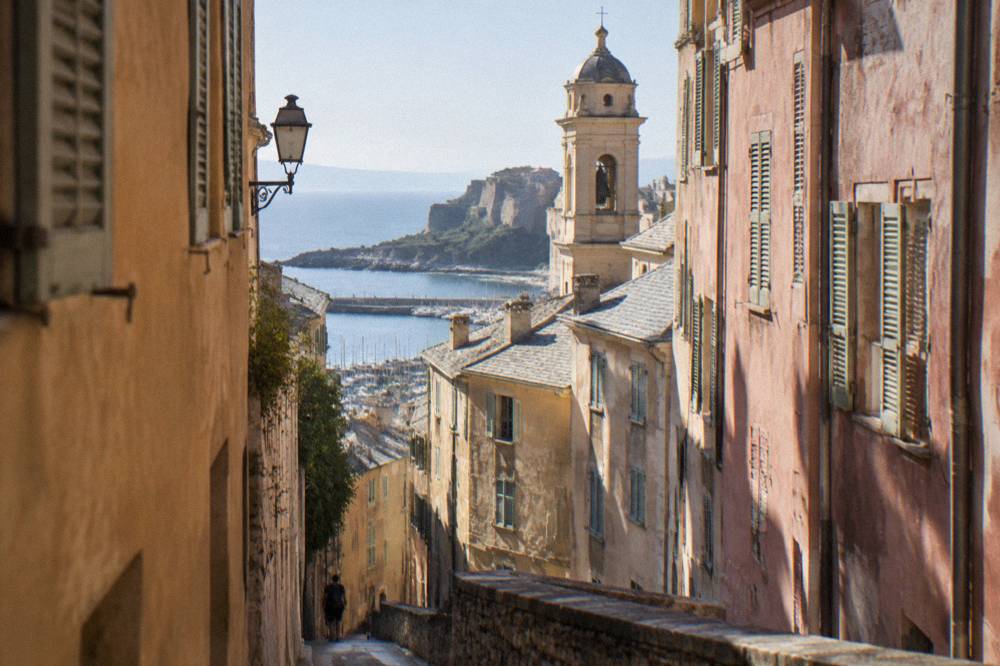
The top sights in Bastia are the Vieux-Port quarter, the citadel and its Musée de Bastia in the Palais des Gouverneurs, and the town's two churches and market-quarter streets around the Terra Vecchia. The museum's reported hours are 10:00 to 18:30 in high season and 09:00-12:00 with 14:00-17:00 in low season, closed Sunday and Monday; the port and citadel quarters themselves are open public streets you can walk at any hour.
The Vieux-Port is the atmospheric core, and the citadel above it is the formal one. The Musée de Bastia inside the Palais des Gouverneurs is the town's main enclosed sight, and because its timetable could not be stated with certainty, the practical advice is to confirm the day before a visit. Beyond those two quarters, Bastia's sights are streetscapes and sea views rather than ticketed monuments, which keeps a first day inexpensive.
| Sight | What It Is | Access Pattern |
|---|---|---|
| Vieux-Port de Bastia | The old harbour basin and quay quarter | Public streets, open access |
| Citadelle de Bastia | The fortified Terra Nova quarter above the port | Public streets, open access |
| Musée de Bastia (Palais des Gouverneurs) | The town museum inside the citadel | High season 10:00-18:30; low season 09:00-12:00 and 14:00-17:00; closed Sun and Mon |
| Terra Vecchia | The older lower town quarter around the port | Public streets, open access |
A short walk covers all of it. The quays of the old port, the climb into the citadel, and the streets behind the market area form a loop of an afternoon, and the town's scale means nothing needs a car until you leave for Cap Corse or the interior. For travellers who want a guide's framing rather than a map, the town has a small-group walking option, and the Bastia pick is an art-historian-led tour of the unusual corners of the town.
What Can You Do Around Bastia, Cap Corse And The Désert Des Agriates?
The best excursions from Bastia run north and west: a half-day guided trip into Cap Corse and the Désert des Agriates, a self-drive loop of the Cap Corse finger villages such as Erbalunga, Centuri and Nonza, and the boat shuttles to the Saleccia and Lotu beaches that run from Saint-Florent about April to October, weather permitting, reported by visit-corsica.com.
Cap Corse is the long peninsula directly north of the town, the Désert des Agriates is the protected coastal strip between Saint-Florent and the Balagne, and the two together are the reason to sleep in Bastia rather than just pass through. The same tour anchors the picks below alongside two very different experiences, an Ajaccio aperitif sunset cruise on the Îles Sanguinaires and Napoleon's cave experience with a Corsican meal in the capital.
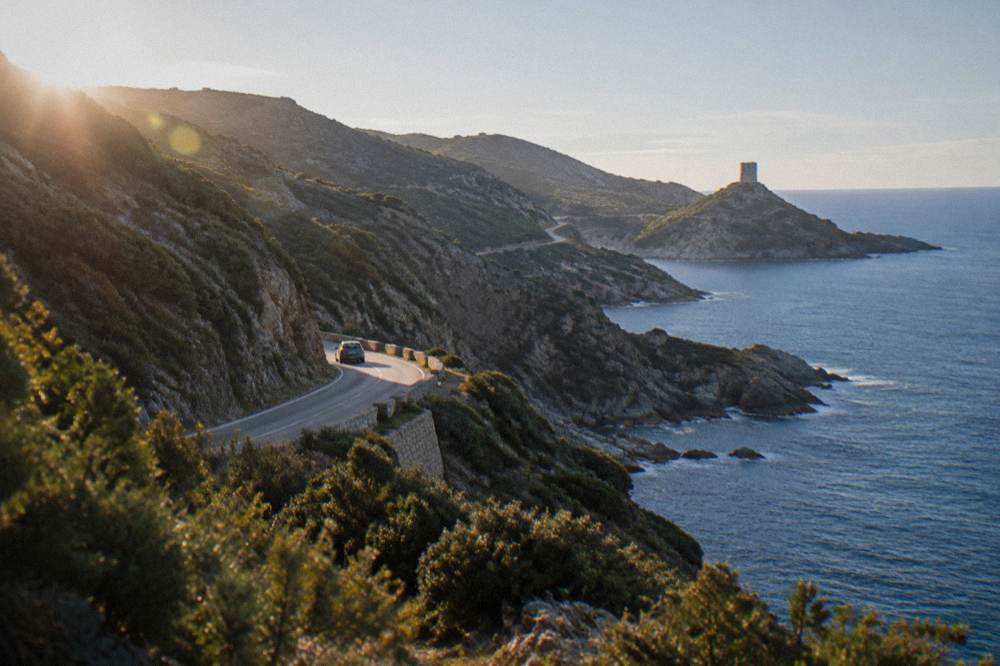
The Agriates deserve their own note. The beaches of Saleccia and Lotu, the two the Désert des Agriates is known for, are reached by boat shuttle from Saint-Florent, by 4x4 track from Casta, or on foot, per the visit-corsica.com listing, and the shuttles are reported to run about April to October, weather permitting. There is no published shuttle fare or timetable for this page, so book through a Saint-Florent operator on the ground. The Cap Corse villages, Erbalunga, Centuri and Nonza among them, are reached on the peninsula's own roads, and no road time for the peninsula is licensed here, so plan a full day and check Inforoutes Corse, which publishes live road conditions and accessibility levels for the main mountain passes, before any mountain drive.
| Excursion From Bastia | Direction | How It Works |
|---|---|---|
| Cap Corse and Désert des Agriates guided half-day | North | Guided trip, bookable tour |
| Cap Corse village loop (Erbalunga, Centuri, Nonza) | North | Self-drive on peninsula roads; check live road status |
| Saleccia and Lotu beaches | Northwest | Boat shuttle from Saint-Florent, about April to October, weather permitting |
| Saint-Florent and Patrimonio | Northwest | Coastal town and wine appellation at the base of Cap Corse |
| Corte and the interior | South | Town of the old capital, road time about 1 h from Bastia |
Patrimonio, at the base of Cap Corse, is one of the reported Corsican wine appellations, alongside Ajaccio, Vin de Corse with its named crus, and Muscat du Cap Corse, and the Saint-Florent and Patrimonio area guide covers the base-of-the-cap pairing of port town and vineyard country. South of Bastia, the Castagniccia chestnut country and Corte and the interior give the inland counterpoint, with Corte about 1 h by road from Bastia per the Musée de la Corse practical page.
How Do You Get To Bastia By Ferry, Plane Or Train?
Bastia is Corsica's main ferry port: Corsica Ferries is reported to sail from Toulon, Nice, Livorno and Savona, Moby sails Livorno, Genoa and Santa Teresa Gallura, and Corsica Linea and La Méridionale serve the Marseille routes, while Bastia Poretta (BIA) is one of the island's four airports alongside Ajaccio, Figari and Calvi, and the Chemins de fer de la Corse run from Bastia south to Ajaccio via Corte and west to Calvi and L'Île-Rousse.
The ferry port is the reason Bastia exists at its scale. More than 8.5 million passengers, excluding cruise passengers, passed through Corsica's ports and airports in 2025 per the ORTC and DREAL annual report, and the Bastia links to Italy are the densest on the island. Crossing times are reported as ranges by the aggregator ferrygogo.fr: Livorno to Bastia about 4 to 5 hours, Savona to Bastia about 6.5 hours, Genoa to Bastia about 5 to 5.5 hours seasonal, Nice to Bastia about 7.5 to 10 hours, and the Marseille crossings about 12 to 13 hours, mostly overnight. Treat every figure as a range to confirm with the operator when booking, since day and night schedules differ by sailing.
| Route To Bastia | Operator | Crossing Time |
|---|---|---|
| Livorno to Bastia | Corsica Ferries, Moby | About 4-5 h |
| Savona to Bastia | Corsica Ferries | About 6.5 h |
| Genoa to Bastia | Moby (seasonal) | About 5-5.5 h |
| Nice to Bastia | Corsica Ferries | About 7.5-10 h |
| Toulon to Bastia | Corsica Ferries | About 10-13 h |
| Marseille to Bastia | Corsica Linea | About 12-13 h, mostly overnight |
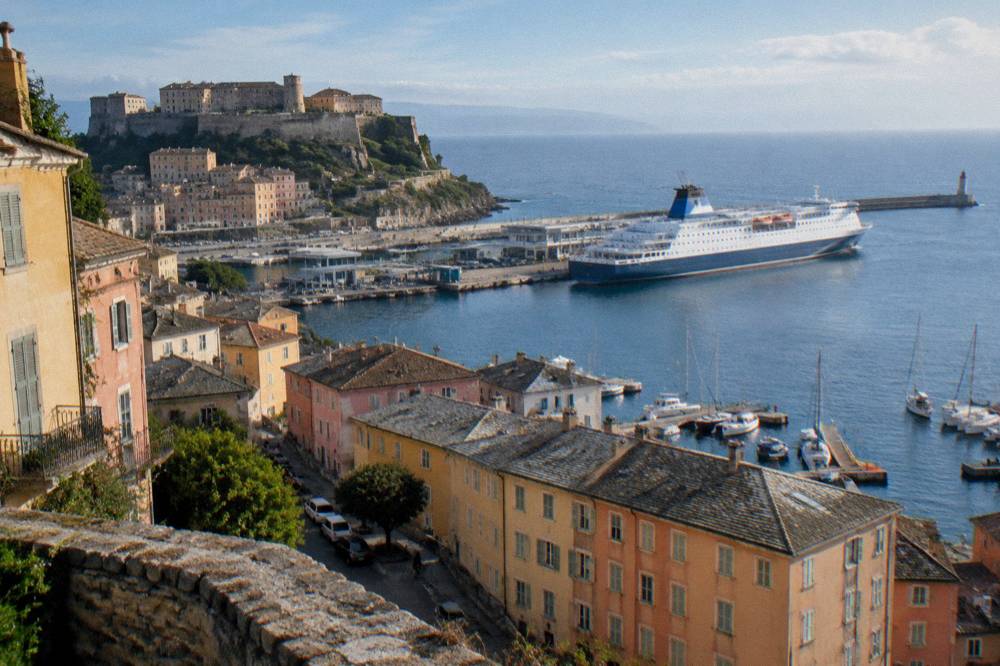
The Bastia airport guide covers the Poretta terminal, and the airport network as a whole, Ajaccio Napoléon Bonaparte (AJA), Bastia Poretta (BIA), Figari Sud Corse (FSC) and Calvi Sainte-Catherine (CLY), is described in the Corsica airports material. Once in town, the Chemins de fer de la Corse, reported by cf-corse.corsica, operate the Ajaccio to Bastia line via Corte, the Ponte-Leccia to Calvi line, and the Balagne coastal line from Calvi to L'Île-Rousse; current timetables live on the operator's site, and no journey time is licensed on this page.
What Is The Weather Like In Bastia?
Bastia has a hot dry summer and a mild wet winter on the Météo-France station normals for 1991-2020: August averages a 29.8 °C daily high and July carries only 13.8 mm of rain, while November carries 134.3 mm and October 126.5 mm, the two months with the highest rain totals on the table, and February records the lowest mean daily low at 5.1 C. Snow falls on the high mountains of the interior, not on the coast.
The Bastia station data sits alongside the Ajaccio normals in the site's climate material, and the two tell the same island story with the east-coast port a little wetter in the autumn months. The figures below are station means, and the annual rain total for Bastia works out to 816.9 mm against Ajaccio's 635.0 mm, which is the practical reason autumn walkers on this coast pack rain gear the summer crowd does not.
| Month | Daily High °C | Daily Low °C | Rain mm |
|---|---|---|---|
| Jan | 13.8 | 5.4 | 67.3 |
| Feb | 13.9 | 5.1 | 63.5 |
| Mar | 15.8 | 6.8 | 63.7 |
| Apr | 18.3 | 9.1 | 71.6 |
| May | 22.4 | 12.6 | 53.7 |
| Jun | 26.4 | 16.5 | 38.8 |
| Jul | 29.4 | 19.4 | 13.8 |
| Aug | 29.8 | 19.8 | 21.1 |
| Sep | 26.0 | 16.7 | 74.5 |
| Oct | 22.0 | 13.4 | 126.5 |
| Nov | 17.7 | 9.5 | 134.3 |
| Dec | 14.8 | 6.4 | 88.1 |
The planning read of the table is straightforward: July and August are the hot, dry, high-sun months, September still averages a 26.0 °C daily high with 74.5 mm of rain, and the October-to-December quarter carries the heaviest and most frequent rain. For month-by-month detail across the island, the Corsica weather by month guide carries the full tables.
Where Does Bastia Fit In A Corsica Trip?
Bastia works best as either the first or last stop of a Corsica trip: arrive by ferry from Italy or the French mainland, spend one or two days on the old port, citadel and Cap Corse or Agriates excursion, then move on, since the island's headline sights, Scandola, the Calanques de Piana, Bonifacio and the southern beaches, all sit closer to Ajaccio, Porto, Calvi or Porto-Vecchio as bases.
The geography decides it. Bastia is the northeast corner, and the road times on the Corte page, 1 h from Bastia to Corte, 1 h 30 from Ajaccio and Calvi, 2 h from Porto-Vecchio, 2 h 45 from Bonifacio and Propriano, show how the island opens out from the centre. A Bastia-first itinerary runs naturally south and west: Corte and the interior, then the Golfe de Porto and Piana with its UNESCO property, the "Gulf of Porto: Calanche of Piana, Gulf of Girolata, Scandola Reserve" inscribed in 1983, then Calvi and the Balagne or the south.
| Corsica Base | Pair With Bastia For | Where On The Island |
|---|---|---|
| Ajaccio | Napoleon sights, Îles Sanguinaires cruises | West coast, the capital |
| Bonifacio | Cliffs, citadel, Îles Lavezzi boats | Far south |
| Porto-Vecchio | Palombaggia, Santa Giulia, Rondinara beaches | Southeast |
| Calvi and the Balagne | Citadel, beaches, hilltop villages | Northwest |
| Corte and the interior | Restonica, Musée de la Corse, GR20 access | Centre, inland |
| Saint-Florent and Patrimonio | Agriates access, wine country | North coast |
The Corsica regions overview page lays out the whole map of bases, and the itinerary guides from Corsica in 3 days upward slot Bastia in as the arrival node in most northern-first routings. Travellers with only a week who fly into Poretta often skip the town for the coast, but the port's ferry convenience argues for at least a night. The Corsica Travel Guide hub pulls the planning pages together.
What Should You Know Before Arriving In Bastia?
Corsica uses the euro, the emergency numbers are 112 for all services, 15 medical, 17 police, 18 fire, 114 by SMS or app and 196 for sea rescue on VHF channel 16, restaurant menus must state that service is included by law so extra tips are optional, and from 15 June to 30 September fires and smoking are forbidden in forests, maquis and massifs, with the fire-risk access map updated at 18:00 daily for the next day.
The practical layer is standard France. Mountain rescue from the PGHM base in Ajaccio answers on 04 95 24 24 00, with 112 or 17 in an emergency, and on the GR20 no departures are allowed from Calenzana after 11:00 under a municipal fire-risk order. The UK FCDO notes a high wildfire risk in France from April to October, and the US State Department lists France at Level 2, Exercise Increased Caution. Supervised swimming on Haute-Corse beaches is reported to be staffed by volunteer firefighters from about 1 July to 31 August.
| Practical Item | The Rule Or Number |
|---|---|
| Currency | Euro |
| General emergency | 112 |
| Medical / Police / Fire | 15 / 17 / 18 |
| SMS or app emergency | 114 |
| Sea rescue | 196, VHF channel 16 at sea |
| Mountain rescue (PGHM Ajaccio) | 04 95 24 24 00 |
| Fire ban period | 15 June to 30 September, no fires or smoking in forests, maquis and massifs |
| Tipping | Service included in menu prices by law; extra tips optional |
For the sunset aperitif cruise pick off Ajaccio, the solo card below carries the live price, rating and review figures, and the same applies to the Napoleon's cave meal experience in the capital.
Common Questions About Bastia
Is Bastia Worth Visiting?
Yes, as a port town and base. Bastia has the second-largest population of any Corsican town at 46,867, an old port and citadel worth a day, and direct access to Cap Corse and the Désert des Agriates, and the site's full answer sits on the is Bastia worth visiting page.
How Many Days Do You Need In Bastia?
One or two days covers the Vieux-Port, the citadel and the Musée de Bastia, plus a third day if you add the Cap Corse and Agriates guided half-day trip or drive the Cap Corse peninsula yourself.
What Is The Musée De Bastia's Opening Pattern?
The museum inside the Palais des Gouverneurs is reported to open 10:00 to 18:30 in high season and 09:00 to 12:00 plus 14:00 to 17:00 in low season, closed Sundays and Mondays; confirm the hours before you go.
Which Ferries Go To Bastia?
Corsica Ferries is reported to sail from Toulon, Nice, Livorno and Savona, Moby sails Livorno, Genoa and Santa Teresa Gallura on its Sardinia route, and Corsica Linea serves Marseille. Crossings range from about 4 to 5 hours from Livorno to about 12 to 13 hours overnight from Marseille, reported as ranges.
Is There A Train From Bastia?
Yes. The Chemins de fer de la Corse are reported to run the Ajaccio to Bastia line via Corte, the Ponte-Leccia to Calvi line and the Balagne coastal line from Calvi to L'Île-Rousse, with current timetables on the operator's own site.
Can You Visit The Désert Des Agriates From Bastia?
Yes, on a guided half-day trip or via Saint-Florent, where boat shuttles to the Saleccia and Lotu beaches are reported to run about April to October, weather permitting, with 4x4 access from Casta and walking access also possible.
The Napoleon cave meal experience in Ajaccio rounds out the trio of bookable picks nearest to a Bastia-centred plan, and its live figures render in the card below.