Do You Need A Car In Corsica?
Whether you need a car in Corsica, where a car helps on the island, and how to cover the coast, beaches and mountains by train, ferry and guided tours instead.
Corsica is a French Mediterranean island of 8,722 km2 with more than 1,000 km of coastline and an interior that rises to Monte Cinto at 2,706 m, and that geography is the whole answer to the car question. The island rewards driving like few others, with mountain roads linking Bonifacio's cliffs to the Calanques de Piana, yet some of its headline sights, Scandola above all, cannot be reached by any road at all. This page sets out where a car earns its keep, where the train and the boats do the work instead, and how to decide before you book anything. Every recommendation on this page builds on what the island's own transport and park authorities publish.
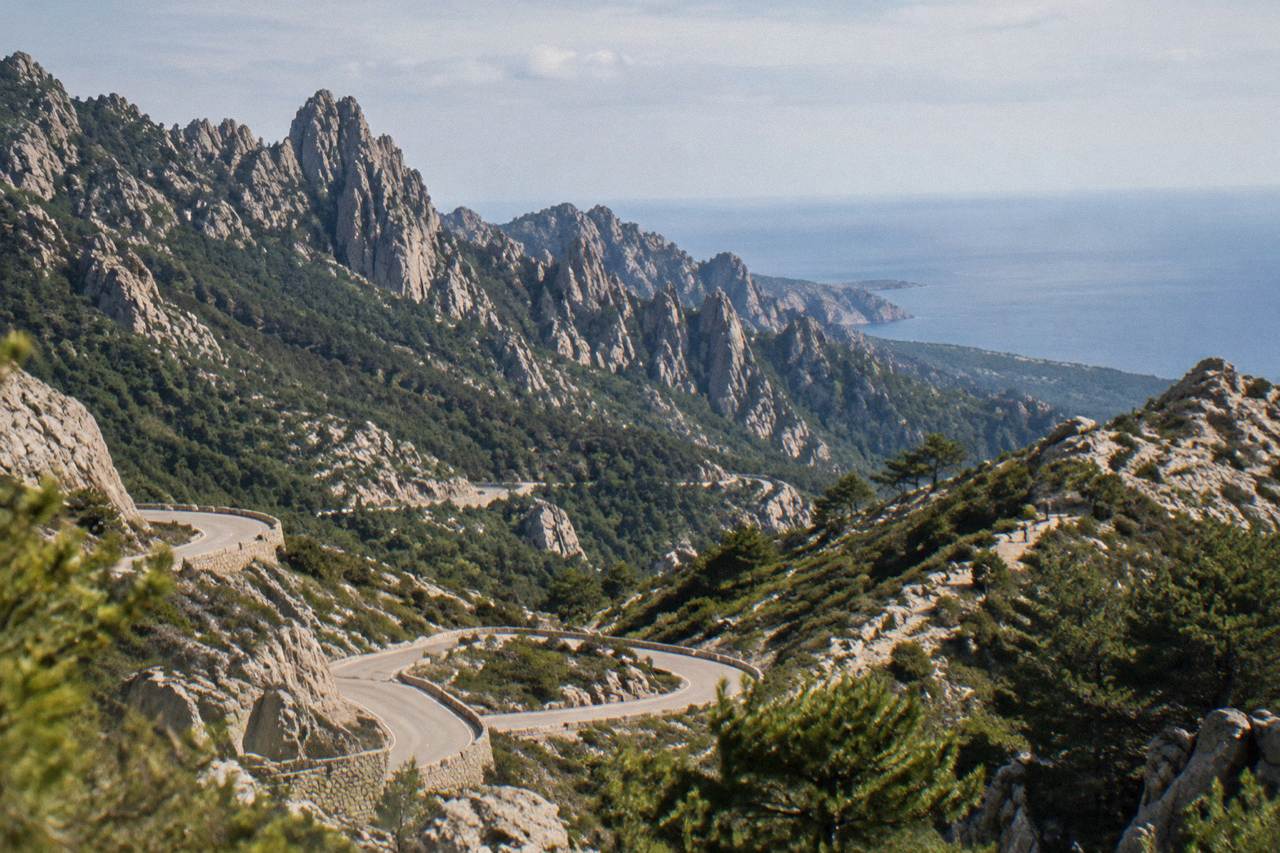
No, a car is not strictly necessary in Corsica, but it is the practical choice for a trip that spans several regions, because the island is 8,722 km2 of mountainous terrain and public transport is thin outside the main town-to-town axes. If you stay in one base such as Ajaccio, Bastia, Calvi or Bonifacio and take boat trips and guided day tours from there, you can see a great deal of the coast without driving at all.
A car matters mainly for reaching small beaches, hill villages and trailheads.
The honest framing is that Corsica splits into two islands of accessibility. The coastal ribbon, with its ports, its cruise departures and its walking cities, works well car-free. The interior and the scattered coves, from the Gorges de la Restonica to the Désert des Agriates, assume you have wheels or have booked someone else's. More than 8.5 million passengers, excluding cruise passengers, passed through Corsica's ports and airports in 2025 according to the ORTC and DREAL annual report, and a large share of them arrive without a vehicle and base themselves in one town.
Decide the question by trip shape, not by instinct. One base plus boats and tours, no car. Two or three bases strung along the coast, a car makes the moves easier and the days fuller. A hiking-focused trip on the GR20 or the Mare a Mare trails, and the car becomes a logistics tool for reaching trailheads such as Calenzana, the northern start of the GR20. The Corsica car rental guide covers the rental side in detail if that is the way you lean.
Where A Car Helps Most In Corsica
A car helps most in the Corsican interior, in the Désert des Agriates, around the hill villages of the Balagne and Alta Rocca, and for hopping between coves and trailheads, because these are exactly the places the train lines and boat shuttles do not serve. Corte, the old capital, sits inland, and the gorges, forests and high valleys around it are road country. The same goes for multi-beach days on the east and south coasts.
The train network, the Chemins de fer de la Corse, runs three lines: Ajaccio to Bastia via Corte, Ponte-Leccia to Calvi, and the Balagne coastal line between Calvi and L'Île-Rousse. That axis structure tells you what a car adds. The rails link the big towns well, but the moment your target is Filitosa, the Aiguilles de Bavella, Palombaggia or the Forêt d'Aïtone, you are on mountain roads, and Inforoutes Corse publishes live road conditions and pass accessibility levels precisely because those roads deserve checking before you drive them.
Road times to Corte, published by the Musée de la Corse, give a sense of the island's scale from the interior's hub: one hour from Bastia, one and a half from Ajaccio, one and a half from Calvi, two from Porto-Vecchio, two and three quarters from Bonifacio and the same from Propriano. Those are the figures for a single inland destination, so a day that chains several of them together is a day of real driving.
| Destination | Drive time from Corte | Car essential? |
|---|---|---|
| Bastia | 1 h | No, on the Ajaccio to Bastia train line |
| Ajaccio | 1 h 30 | No, on the train line |
| Calvi | 1 h 30 | Train via Ponte-Leccia |
| Porto-Vecchio | 2 h | Car or day tour |
| Bonifacio | 2 h 45 | Car, bus or day tour |
| Propriano | 2 h 45 | Car or day tour |
The counterweight is that Corsica's single most protected sight is closed to roads altogether. The Scandola Reserve's land area is closed to the public and visits are by boat only, which is why the small-group cruise from Cargèse through Scandola, Girolata and the Calanques de Piana, with a stop in Girolata, exists as a product at all: it covers in one seat on the water what no rental car could reach. Check availability if Scandola anchors your plans.
How To Get Around Corsica Without A Car
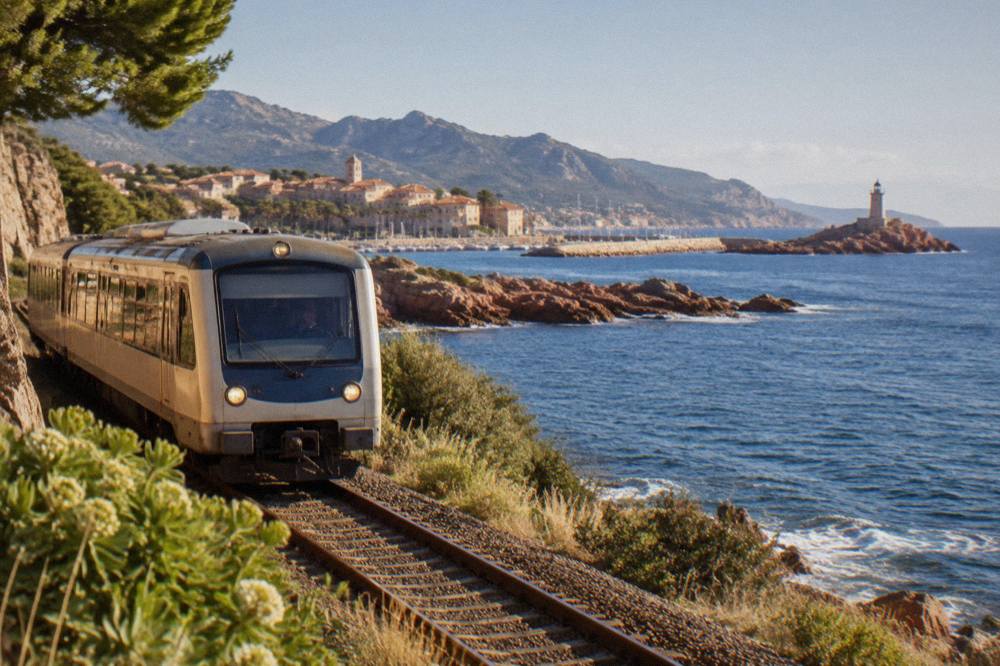
Corsica without a car runs on three systems: the Chemins de fer de la Corse train lines linking Ajaccio, Corte, Bastia, Calvi and L'Île-Rousse, the ferry and boat network serving the ports and the offshore reserves, and guided day trips that reach the interior by jeep or minibus. Together they cover the majority of the headline sights, from the Bonifacio cliffs to the Scandola Reserve and the Cap Corse peninsula.
The train is the spine for town-to-town movement, and the Balagne coastal stretch between Calvi and L'Île-Rousse doubles as scenery in its own right. The boats do the rest of the coastal work. Ferries connect the mainland ports to Ajaccio, Bastia, Bonifacio, L'Île-Rousse, Propriano and Porto-Vecchio, with Corsica Linea and La Méridionale sailing from Marseille, Corsica Ferries from Toulon, Nice, Livorno and Savona, and Moby plus Ichnusa Lines holding the short Santa Teresa Gallura to Bonifacio crossing from Sardinia, about 50 to 60 minutes. None of that requires you to bring a car aboard. The guide to how you get to Corsica covers the crossing options in full.
For the corners beyond rail and ferry, guided products fill the gap. A half-day trip over the Cap Corse peninsula and the Désert des Agriates from Saint-Florent covers ground that would otherwise demand a full day of driving, and jeep and 4x4 tours run from Calvi into the Agriate beaches and the Asco valley, and from Porto-Vecchio to the Ospedale forest and the Aiguilles de Bavella. In Ajaccio itself, a guided history walk from Genoa to Napoleon covers the old town on foot.
| Car-free option | What it covers in Corsica | Key limitation |
|---|---|---|
| Chemins de fer de la Corse | Ajaccio, Corte, Bastia, Ponte-Leccia, Calvi, L'Île-Rousse | Town-to-town axis only, no coves or trailheads |
| Boat trips and cruises | Scandola, Girolata, Calanques de Piana, Îles Lavezzi, Îles Sanguinaires | Depart from ports on fixed schedules |
| Saint-Florent boat shuttles | Saleccia and Lotu beaches in the Désert des Agriates | Roughly April to October, weather permitting |
| Guided day trips by jeep or minibus | Cap Corse, Agriates, Asco, Ospedale, Bavella, hill villages | Set itineraries, booked in advance |
Do You Need A Car For The Corsican Beaches?
You do not need a car for the famous Corsican beaches if you pick your base deliberately: boat shuttles from Saint-Florent reach Saleccia and Lotu in the Désert des Agriates roughly April to October, cruises and catamarans run to the Îles Lavezzi from Bonifacio and Porto-Vecchio, and the beaches within walking or shuttle range of Ajaccio, Calvi, L'Île-Rousse and Porto-Vecchio need no vehicle at all. A car widens the choice to every cove on the island, nothing more.
The Désert des Agriates illustrates the point. Its two headline beaches, Saleccia and Lotu, are reached by boat shuttle from Saint-Florent's port, by 4x4 track from Casta, or on foot, per the island's tourist board. So the same beach is car-free friendly if you arrive by sea and car-dependent if you insist on driving, and the boat is the simpler of the two. On the south coast, the Îles Lavezzi sit inside the Bouches de Bonifacio Nature Reserve and are a boat destination by definition, served by catamaran and cruise products from Bonifacio and Porto-Vecchio. The wider set of guides lives on Corsica Travel Guide.
What a car genuinely buys you is spontaneity beyond the served beaches: the coves of the Cap Corse, Palombaggia and Santa Giulia on your own clock, Rondinara, Roccapina and the strand at Ostriconi without checking a shuttle timetable. Whether that flexibility outweighs mountain roads, summer parking and fuel is a personal calculation. The round-up of Corsica's beaches helps you choose targets before you choose transport.
What Driving In Corsica Is Actually Like
Driving in Corsica means narrow mountain roads with hairpin climbs, passes whose accessibility changes with the season, and a live road-status service, Inforoutes Corse, that the island's own authorities tell you to check before setting out, especially for cols and cliff sections such as the Calanques de Piana road. It is rewarding and it is not a motorway experience, and from 15 June to 30 September fires and smoking are banned outright in forests, maquis and massifs.
Inforoutes Corse publishes real-time conditions and accessibility levels for the principal passes, which is the standing pattern to plan around: a col can be open, restricted or closed depending on weather and works, and the check takes a minute. Livestock and rockfall are normal hazards of island roads, and the fire rule matters to drivers as much as hikers, since a cigarette thrown from a window in August is not a small matter on this island. The driving in Corsica guide sibling page goes deeper on rules and road types.
Verdict: Car, Train Or Boat For Your Trip?
For a one-base trip to Ajaccio, Calvi, Bonifacio or Porto-Vecchio, skip the car and spend the budget on boats and guided day trips, because every headline sight from those towns runs on scheduled departures. For a two-week or multi-region trip, or a holiday built on coves, hill villages and trailheads, take the car and check Inforoutes Corse each morning. For a hiking trip on the GR20 or the Mare a Mare trails, the car is a trailhead tool and the refuges do the rest.
The decision matrix is simple enough to write down before booking. Count your must-see list, mark which items sit on the train axis, which sit on water, and which need a road, and the transport answer falls out of the arithmetic. Scandola, Girolata, the Calanques de Piana from the sea, the Îles Lavezzi and the Îles Sanguinaires are all boat items, and the overview of things to do in Corsica sorts them by region. Corte, the Restonica valley and the Aiguilles de Bavella are road items. Filitosa, open 1 April to 2 November at EUR 9 for adults, is a road item with an easy car park.
One last structural point in favour of going car-free: the sights with published admission prices cluster where the tours already run. Maison Bonaparte in Ajaccio is on Rue Saint-Charles, 200 m from the bus station and ferry terminal, with bus 8 from the airport, and entry is EUR 10 with free admission for EU residents under 26. The Palais Fesch, EUR 10 full and free up to 18, sits in the same town. In Bastia, the Musée de Bastia in the Palais des Gouverneurs keeps high-season hours of 10:00 to 18:30. A car adds nothing to any of those visits.
Common Questions About Cars And Travel In Corsica
Do You Need A Car In Corsica?
No, not if you base yourself in one town and use the trains, ferries, boat trips and guided day trips. A car becomes worthwhile for multi-region trips, scattered coves, hill villages and trailheads.
Is There A Train In Corsica?
Yes. The Chemins de fer de la Corse run Ajaccio to Bastia via Corte, Ponte-Leccia to Calvi, and the Balagne coastal line between Calvi and L'Île-Rousse.
Can You Reach Saleccia And Lotu Without A Car?
Yes. Boat shuttles run from Saint-Florent port to the Agriate beaches roughly April to October, weather permitting, and the beaches can also be reached by 4x4 track from Casta or on foot.
Can You Visit Scandola By Car?
No. The Scandola Reserve's land area is closed to the public and visits are by boat only, on cruises departing from ports such as Porto, Cargèse, Sagone, Calvi and Ajaccio.
What Should Drivers Check Before Setting Out In Corsica?
Inforoutes Corse publishes live road conditions and accessibility levels for the main passes, and from 15 June to 30 September fires and smoking are forbidden in forests, maquis and massifs.