Camping In Corsica
Camping in Corsica splits into two very different trips: regulated bivouac on the GR20 and the island's long trails, and lowland campsites near the beaches and gulfs. Here is what the official sources say about costs, seasons, rules and weather.
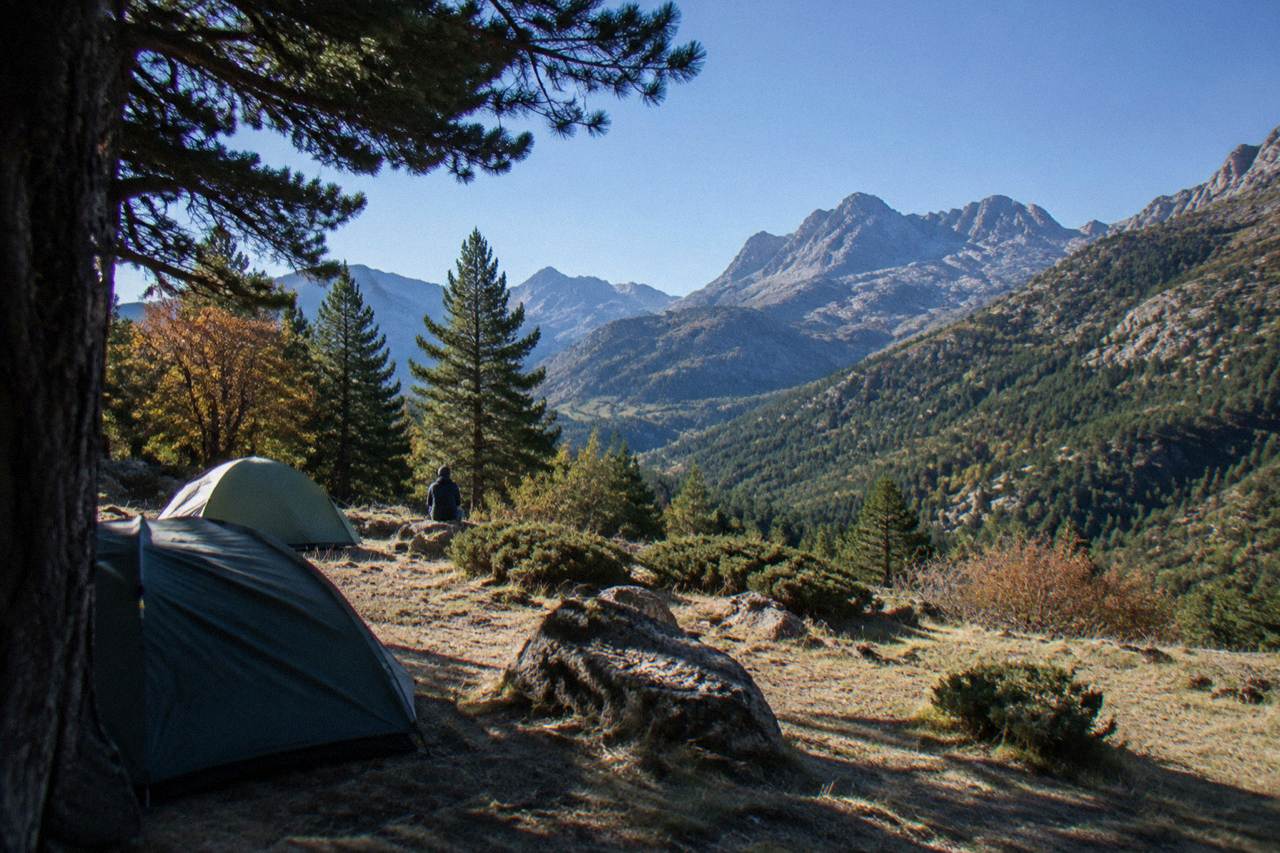
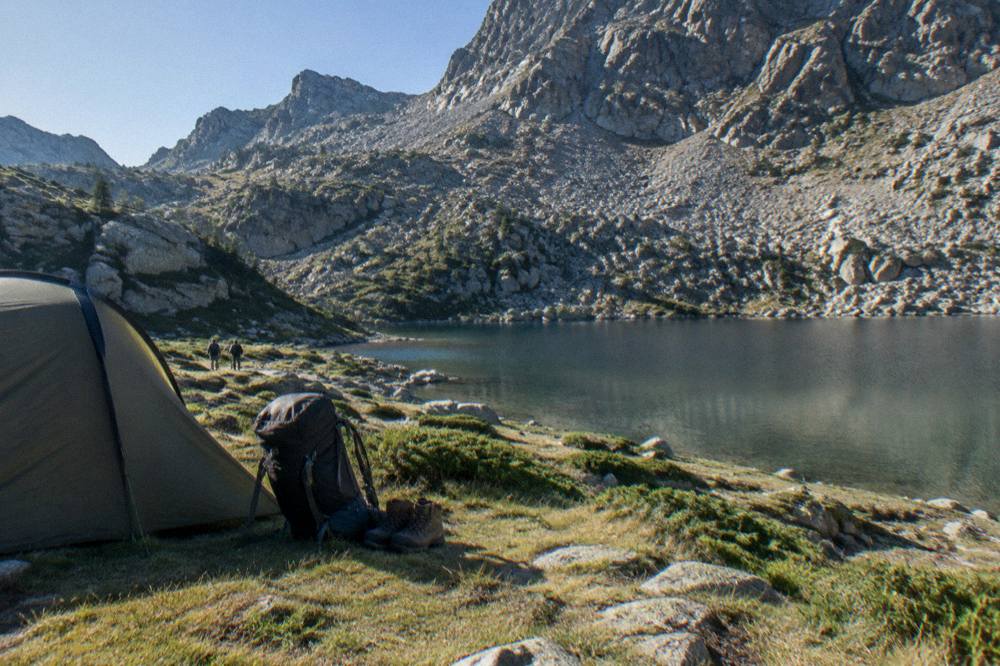
Wild camping is banned across Corsica, including the GR20; sleeping outdoors is legal only in the marked bivouac areas at PNRC refuges, booked online. A bunk costs EUR 20 per person in 2026, a bivouac pitch EUR 12, and refuges are guarded from 16 May to 4 October.
Camping in Corsica means one of two trips. The first is the mountain version: the GR20 and the island's other long trails, where sleeping outdoors is tightly regulated and every night under canvas is booked and paid through the Parc naturel régional de Corse. The second is the coastal version: pitches near the beaches of the Balagne, the Désert des Agriates and the gulfs of the south, on an island with more than 1,000 km of coastline and a mountainous interior that tops out at Monte Cinto, 2,706 m. This guide lays out what the official sources say about both, from refuge rates to fire law to weather. The full range of island activities is covered on the Corsica Travel Guide homepage, and this page is the practical companion to it for anyone travelling with a tent.
Is Wild Camping Legal In Corsica?
No. Wild camping is banned across Corsica, including along the GR20, by municipal order, and the only legal way to sleep outdoors on the long trails is a bivouac in the marked areas beside PNRC refuges, reserved in advance per person. Outside the park trails, overnight stays belong on campsites, and the ban covers tents pitched outside designated areas anywhere on the island.
The PNRC's own GR20 page states the rule plainly: bivouac is authorised only on the designated areas near the refuges, and every pitch, like every bunk, must be reserved on the park's online platform. That reservation system is card-only, changes are possible up to 48 hours before a stage subject to availability, and a full refund is available up to two months ahead. The confirmation email is the receipt guardians ask for on arrival.
The rule exists for good reason. Corsica's maquis burns, and the island's fire season is taken seriously by the prefectures: from 15 June to 30 September it is forbidden to light a fire or smoke in forests, maquis and massifs, and a colour-coded map of massif access is published each evening at 18:00 for the following day. On the highest-risk days some massifs close entirely by prefectoral order. A tent pitched outside a marked area is both illegal and, in August, a genuine hazard.
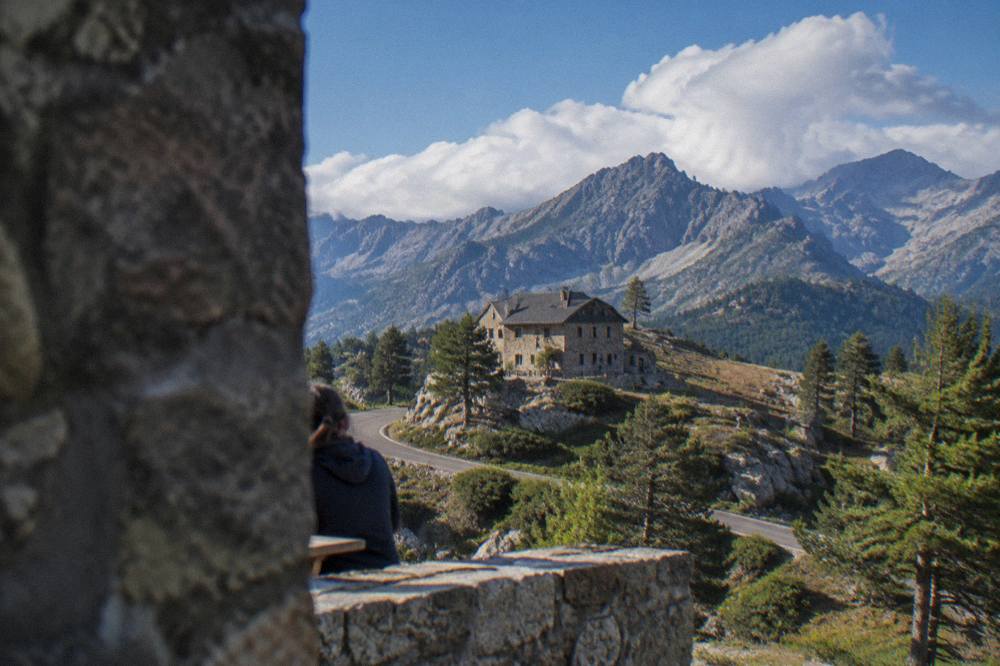
For walkers who want the trail experience without carrying a tent at all, the PNRC rents tents at its refuges, which removes most of the weight from the packing list. The same booking platform covers bunks, bare bivouac pitches and rented tents. Planning the walking side of the trip is covered in depth in the GR20 complete guide and the wider hiking in Corsica page.
What Does Camping On The GR20 Cost In 2026?
A bunk in a guarded PNRC refuge costs EUR 20 per person for the 2026 season, a bivouac pitch for your own tent costs EUR 12 per person, a rented tent for one person costs EUR 27, and a rented tent for two costs EUR 39 total, all booked online in advance under park quotas. Meals at the refuges are paid on site in cash or by cheque to the guardian.
Those figures come from the PNRC's 2026 tariff list. A few practical details sit around them. Every rental tent sleeps two and comes with a 3 cm mattress per person, so each walker brings a sleeping bag and nothing more for shelter. Dogs are not allowed inside refuges or rented tents. The 2026 guarding season runs from 16 May to 4 October inclusive, which in practice defines the booked-bivouac season on the trail.
| PNRC option, 2026 season | Price per person | Notes |
|---|---|---|
| Bunk in refuge (bat-flanc) | EUR 20 | Dormitory, booking mandatory |
| Bivouac pitch, own tent | EUR 12 | Marked areas near refuges only |
| Rented tent, 1 person | EUR 27 | Pitch plus tent, sleeps two |
| Rented tent, 2 persons | EUR 39 | Two bivouacs plus one tent |
The trail itself runs 180 km north to south in about 15 stages of 4 to 8.5 hours, per the Corsican Assembly's own description of the route. Stage 1 climbs from Calenzana to Ortu di u Piobbu in about 6 h 30, and a municipal order forbids GR20 departures from Calenzana after 11:00, a fire-risk measure that shapes the first morning of every northbound-to-southbound itinerary. The old Cirque de la Solitude section has been off the route since a fatal rockfall in 2015 and is replaced by an official variant.
Which Long Trails Suit A Camping Trip In Corsica?
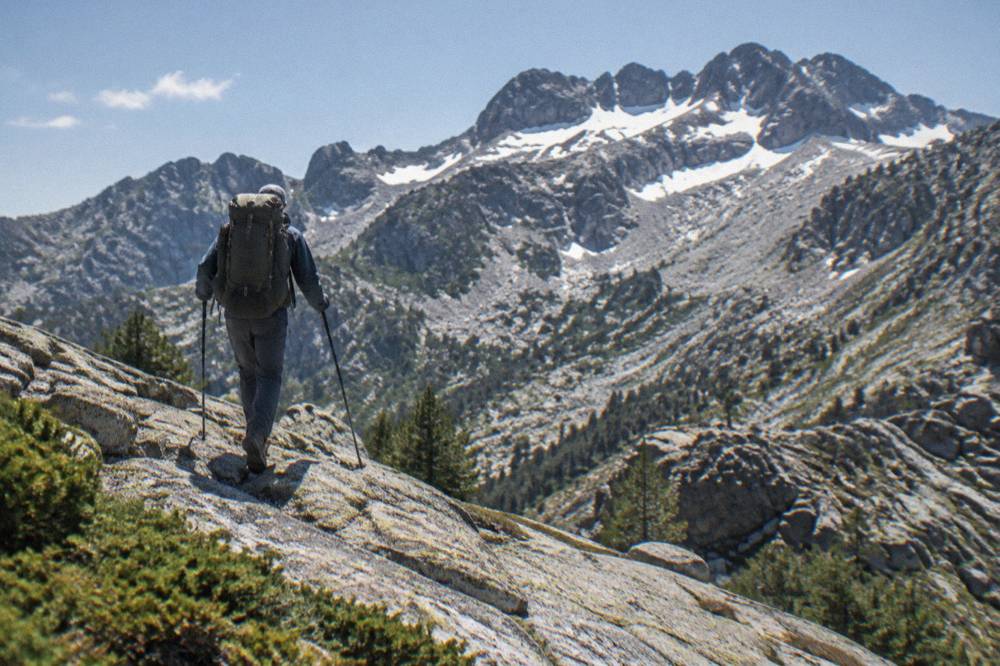
The GR20 is the famous one, but five other waymarked long trails cross the island and all of them use the same refuge and bivouac system: Mare e Monti Nord at 121 km over 10 days, Mare a Mare Nord at 139 km, Mare a Mare Centre at 84 km over 7 days, Mare a Mare Sud at 73 km over 5 days, and Mare e Monti Sud at 66 km over 5 days, per the PNRC's own trail brochure.
The brochure gives climbing totals too, which is the figure that really separates the routes. Mare e Monti Nord carries 6,100 m of climbing on its way to Cargèse, Mare a Mare Nord 5,900 m, Mare a Mare Centre 3,900 m between Ghisonaccia and Porticcio, Mare a Mare Sud 3,200 m ending in Propriano, and Mare e Monti Sud 2,700 m, also ending in Propriano.
| Trail | Length | Days | Total climbing | Finishes in |
|---|---|---|---|---|
| GR20 (Fra li Monti) | 180 km | about 15 stages | not stated | Conca direction |
| Mare e Monti Nord | 121 km | 10 | 6,100 m | Cargèse |
| Mare a Mare Nord | 139 km (161 km with variant) | 8 to 12 | 5,900 m | Calvi direction |
| Mare a Mare Centre | 84 km | 7 | 3,900 m | Porticcio |
| Mare a Mare Sud | 73 km | 5 | 3,200 m | Propriano |
| Mare e Monti Sud | 66 km | 5 | 2,700 m | Propriano |
A trail-based camping trip also needs a rest-day plan, and on an island this sea-focused that usually means a boat. From Calvi, a Check availability link sits beside the sunset cruise to the Revellata peninsula, a short evening sail that fits neatly between two walking days, and the same port runs the Calvi to Scandola boat tour.
When Is The Best Weather For Camping In Corsica?
The Météo-France 1991-2020 station normals show a hot, dry summer and a mild, wet winter: at Ajaccio, July averages 8.6 mm of rain and August an average daily high of 29.2 °C, while November averages 111.8 mm of rain and January an average daily high of 14.0 °C, with snow confined to the high mountains. No single month is officially the best one to camp.
The refuge season already encodes the practical answer: guarded refuges run 16 May to 4 October, and the park's fire rules run 15 June to 30 September, so the booked-bivouac window and the fire-restriction window overlap almost exactly. June offers long daylight and low rainfall at both stations; September keeps average daily highs of 26.1 °C at Ajaccio while roughly doubling July's rainfall. October and November carry the most rain of the year at both stations, with Bastia recording 126.5 mm in October and 134.3 mm in November.
| Month | Ajaccio high °C | Ajaccio rain mm | Bastia high °C | Bastia rain mm |
|---|---|---|---|---|
| Jan | 14.0 | 54.1 | 13.8 | 67.3 |
| Feb | 14.2 | 48.1 | 13.9 | 63.5 |
| Mar | 16.0 | 50.4 | 15.8 | 63.7 |
| Apr | 18.5 | 53.1 | 18.3 | 71.6 |
| May | 22.1 | 49.8 | 22.4 | 53.7 |
| Jun | 25.9 | 25.9 | 26.4 | 38.8 |
| Jul | 28.6 | 8.6 | 29.4 | 13.8 |
| Aug | 29.2 | 15.8 | 29.8 | 21.1 |
| Sep | 26.1 | 57.8 | 26.0 | 74.5 |
| Oct | 22.8 | 85.7 | 22.0 | 126.5 |
| Nov | 18.3 | 111.8 | 17.7 | 134.3 |
| Dec | 15.1 | 73.9 | 14.8 | 88.1 |
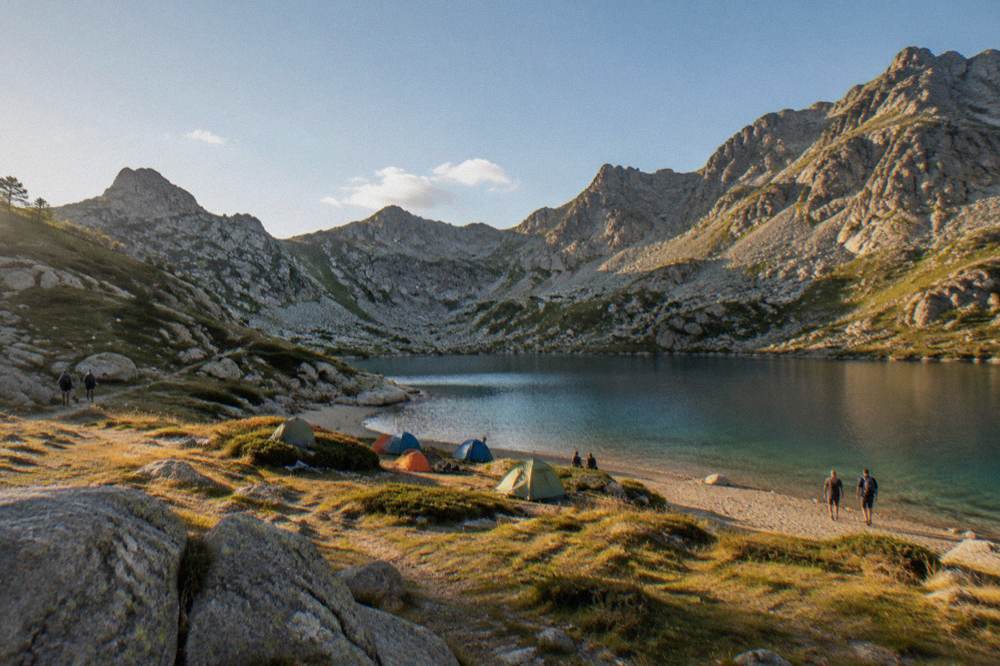
Sunshine hours follow the same arc: the Ajaccio normals give 12.1 hours per day in July against 4.0 in December, and Bastia 11.2 in July against 4.5 in December. The month-by-month detail, including what it means for swimming and walking, is on the Corsica weather by month page, and the broader trade-offs are weighed in the best time to visit Corsica.
How Do You Get To Corsica With Camping Gear?
Four airports serve the island, Ajaccio Napoléon Bonaparte (AJA), Bastia Poretta (BIA), Figari Sud Corse (FSC) and Calvi Sainte-Catherine (CLY), and ferry operators including Corsica Linea, La Méridionale, Moby and Corsica Ferries sail from Marseille, Toulon, Nice, Livorno, Genoa, Savona and Santa Teresa Gallura to Corsican ports, with vehicles carried on the ferries.
For campers, the ferry matters more than the flight, because a car or camper van crosses with you. Corsica Linea sails Marseille to L'Île-Rousse, Bastia, Propriano and Ajaccio; La Méridionale sails Marseille to Ajaccio and Marseille to Porto-Vecchio; Moby sails Livorno to Bastia, Genoa to Bastia and Santa Teresa Gallura to Bonifacio; Corsica Ferries serves Ajaccio, Bastia, L'Île-Rousse, Porto-Vecchio and Propriano from Toulon and Nice, and Bastia from Livorno and Savona. The short Sardinia link, Santa Teresa Gallura to Bonifacio, runs about 50 to 60 minutes and continues under its renewed public-service authorisation. Full route detail is on the ferry to Corsica page, with the mainland links in Nice to Corsica ferry and the Sardinia crossing in Corsica Sardinia ferry.
Once on the island, camping and driving go together, and the driving is not like mainland France. Corsica's mountain roads are narrow, Inforoutes Corse publishes live road conditions and access levels for the main passes, and any col can be affected in bad weather, so a morning check of the road map is part of trip planning on stormy days. Car hire options and pickup points are covered in Corsica car rental, the driving culture and road types in driving in Corsica, and the trains and buses that connect the main towns in getting around Corsica.
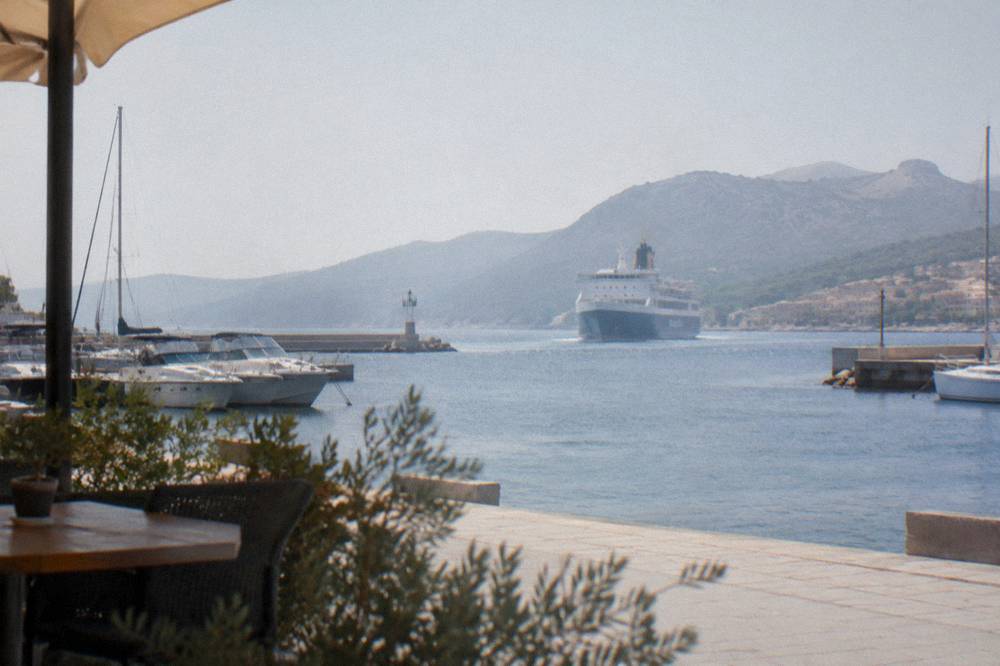
What Should You Know About Fire Safety While Camping In Corsica?
From 15 June to 30 September it is forbidden to light any fire or to smoke in forests, maquis and massifs, the fire-risk access map for the massifs is updated every evening at 18:00 for the next day, and on the most severe days some massifs close entirely to the public by prefectoral order, with access, circulation and parking banned on trails and tracks in the affected zones.
For a camper, three habits follow directly from that rule. The first is the evening map check during the restricted season, on the prefecture-linked departmental map, before committing to a stage or a beach walk in a listed massif. The second is strict stove and cigarette discipline anywhere outside a built-up area between 15 June and 30 September, since the ban covers the maquis that lines most Corsican trails. The third is the Calenzana rule on the GR20: no departure after 11:00, because walkers caught on exposed ground in the early afternoon heat are the specific risk the municipal order targets.
The UK Foreign Office notes a high wildfire risk in France from April to October, and the US State Department lists France at Level 2, Exercise Increased Caution. Neither is a reason to stay away; both are reasons to respect the daily map. Emergency numbers are standard French ones: 112 for all emergencies, 15 for medical, 17 for police, 18 for fire, 114 by SMS for deaf or speech-impaired callers, and 196 for sea rescue. Mountain rescue in the Ajaccio sector is the PGHM on 04 95 24 24 00, with 112 or 17 as the emergency entry points. The wider picture is on the Corsica safety page.
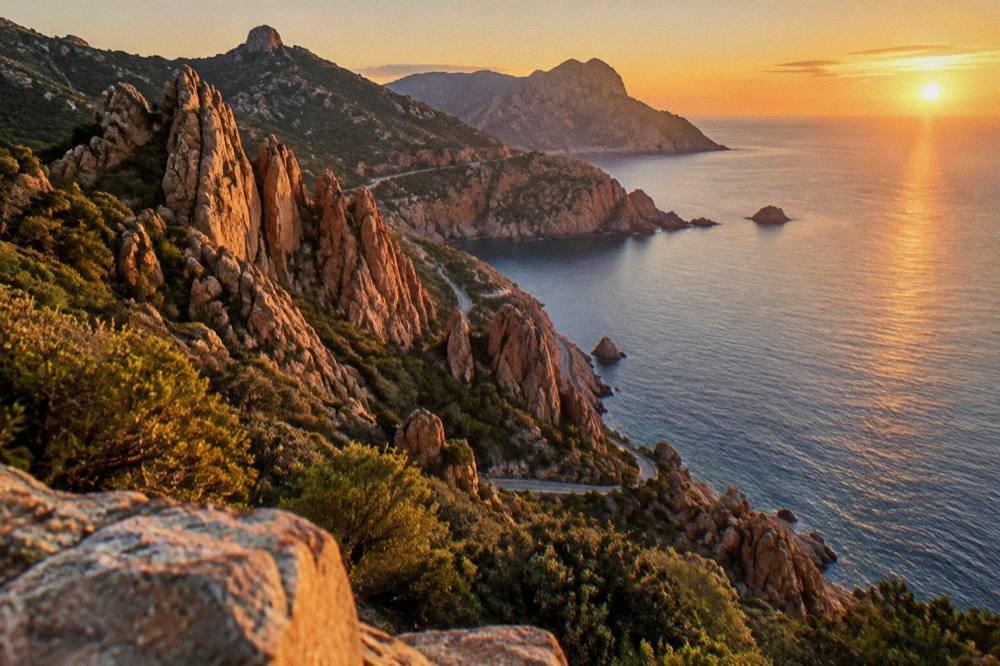
Which Corsican Regions Work Best For A Camping Holiday?
The coast and the interior split the island neatly: the Balagne, the Désert des Agriates and the gulfs of Porto-Vecchio and Propriano are the classic lowland camping bases near beaches, while Corte and the high valleys inland are the base for trail camping, and Corte sits 1 hour by road from Bastia and 1 h 30 from Ajaccio, per the Musée de la Corse's own travel notes.
Corte is the natural hub for the mountain half of the island. The museum's practical page gives road times from every direction: 1 hour from Bastia, 1 h 30 from Ajaccio, 1 h 30 from Calvi, 2 hours from Porto-Vecchio, 2 h 45 from Bonifacio and 2 h 45 from Propriano. Its citadel and the Musée de la Corse share one ticket at EUR 5.50 full price, open daily 10:00 to 19:00 from 1 May to 31 October, which covers a rainy day in the middle of a trail week.
| From | Road time to Corte |
|---|---|
| Bastia | 1 h |
| Ajaccio | 1 h 30 |
| Calvi | 1 h 30 |
| Porto-Vecchio | 2 h |
| Bonifacio | 2 h 45 |
| Propriano | 2 h 45 |
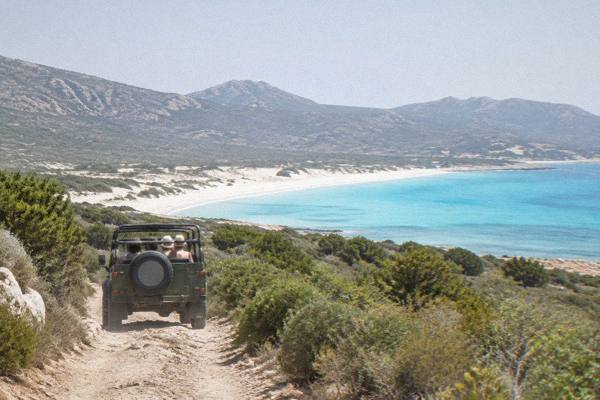
The coastal bases each have their own character and their own pages on this site: Calvi and the Balagne, L'Île-Rousse, Saint-Florent and Patrimonio, Porto-Vecchio, Bonifacio and Ajaccio. The Désert des Agriates, between Saint-Florent and the Balagne, holds the beaches of Saleccia and Lotu, reached by boat shuttle from Saint-Florent roughly April to October, weather permitting, by 4x4 track from Casta, or on foot, per the island's official tourism description. A guided alternative to the 4x4 track is the Agriate jeep tour to Lotu and Saleccia, and a broader way to see the peninsula is the Cap Corse and Agriates half-day trip.
Beach-hopping from a coastal pitch is the other half of the camping trip. The swimming and sand side of the island is mapped out in Corsica beaches, from Palombaggia and Santa Giulia in the south to the Agriate coves in the north. In the evening, ports up and down the west coast run sunset sailings, of which the Revellata cruise out of Calvi is one; for a town day instead, an unusual tour of Bastia with an art historian as guide fills a rest afternoon in the island's second town.
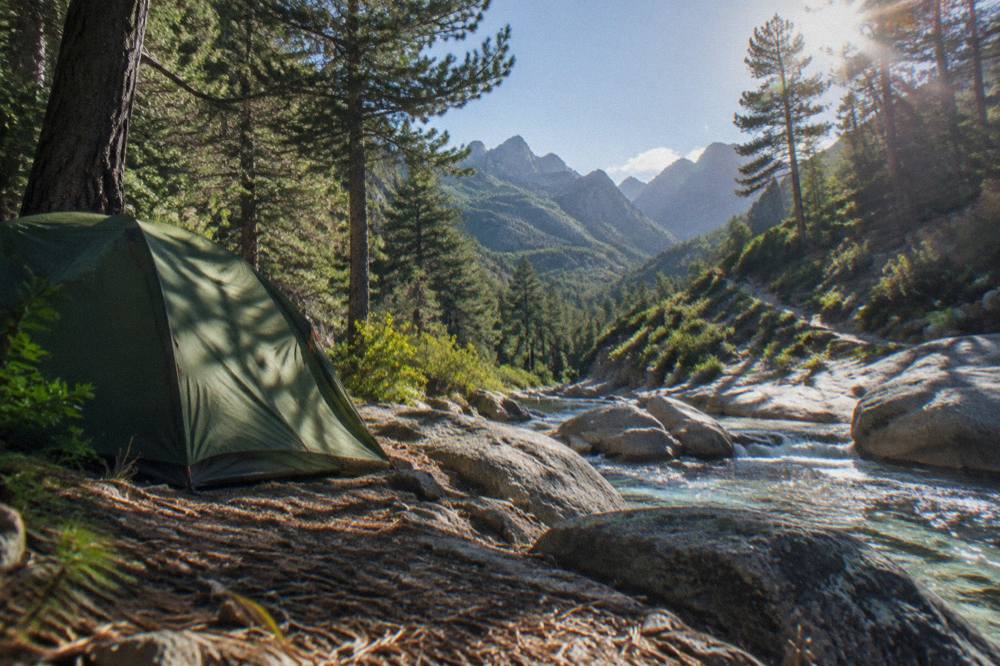
What Should You Pack For Camping In Corsica?
Pack around three constraints the sources set out: a sleeping bag is required because PNRC rental tents provide only the tent and a 3 cm mat per person, sturdy footwear is required on the Escalier du Roi d'Aragon where closed-toe flat shoes are a stated condition of entry, and from mid-June to mid-September a daily check of the massif access map should shape each day's route.
On the GR20 the park's own list does most of the work. Bring your own sleeping bag, whatever shelter option you book. Leave the dog at home if the plan includes refuge nights, since dogs are barred from refuges and rented tents. Carry cash or cheques for refuge meals, because cards are not taken on site for food. And plan stage starts early, both for the Calenzana 11:00 rule and for the heat the July and August normals imply, with average daily highs of 28.6 °C at Ajaccio and 29.4 °C at Bastia.
Off the trail, the packing list is an ordinary Mediterranean camping list with island adjustments. The fire rule means a stove plan for the summer months rather than a campfire plan, whatever the campsite allows. The euro is the currency throughout, tipping follows French law with service included in displayed menu prices, and tap water questions are handled separately on this site. For the budget picture around the trip, from campsite-adjacent costs to sight tickets, see Corsica cost and budget and the general advice in Corsica travel tips.
Common Questions About Camping In Corsica
Can You Camp Wild In Corsica?
No. Wild camping is banned across Corsica, including the GR20, by municipal order. The only legal outdoor overnight stay on the long trails is a bivouac in the marked areas beside PNRC refuges, reserved per person in advance.
How Much Does It Cost To Sleep On The GR20?
In the 2026 season a refuge bunk costs EUR 20 per person, a bivouac pitch for your own tent EUR 12, a rented tent for one EUR 27 and a rented tent for two EUR 39, per the PNRC tariff list. Meals are paid on site in cash or by cheque.
Do You Have To Book GR20 Refuges In Advance?
Yes. Booking is mandatory for every option, bunk, bare bivouac pitch or rented tent, and it is online only with card payment. Changes are possible up to 48 hours before a stage subject to availability, and a full refund is available up to two months ahead.
When Are The GR20 Refuges Guarded?
The 2026 guarding season runs from 16 May to 4 October inclusive, per the PNRC page for the route.
Can You Take A Dog On The GR20?
Dogs are not allowed inside PNRC refuges or in rented tents, so a dog cannot be accommodated on a refuge-based itinerary.
When Can Fires Not Be Lit In Corsica?
From 15 June to 30 September it is forbidden to light a fire or smoke in forests, maquis and massifs. The massif access map is updated each evening at 18:00 for the next day, and some massifs can close fully on the most severe days.
The second half of any Corsica camping trip is the sea, and the balance between the two is what makes the island unusual: 180 km of high granite trail in the interior and more than 1,000 km of coastline around it, with a refuge system that keeps the mountain half orderly and ports that keep the coastal half busy. Plan the trail season against the refuge calendar, respect the fire law, and the island does the rest.