Corsica First Time
Corsica is a French Mediterranean island of 8,722 km2 with more than 1,000 km of coastline and a mountainous interior that rises to Monte Cinto at 2,706 m, and a first visit has to balance sea, mountains and towns.
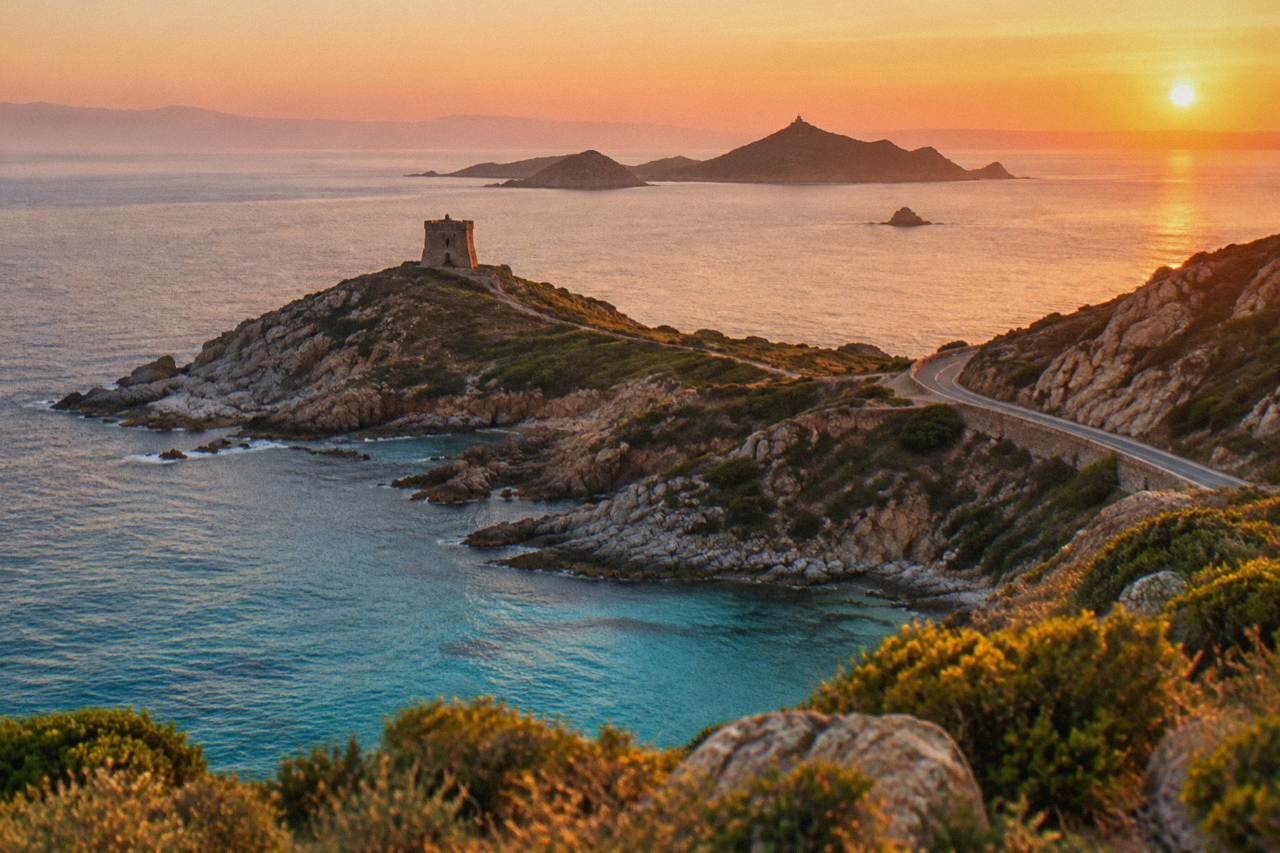
For a first trip, allow five to seven days, base yourself in two towns such as Ajaccio and Bonifacio or Calvi, see Scandola, the Calanques de Piana and Bonifacio by boat, and rent a car because public transport is thin.
Corsica is the French Mediterranean island of 8,722 km2, the fourth-largest in the Mediterranean, with more than 1,000 km of coastline and an interior that climbs to Monte Cinto at 2,706 m. The population, at the provisional INSEE estimate of 1 January 2026, is 365,636 people. Ajaccio, the capital and the birthplace of Napoleon, holds 76,320 residents, and Bastia, the second town on the northeast coast, holds 46,867. The Collectivité de Corse has governed the island as a single territorial authority since 1 January 2018. This guide lays out what a first visit needs: how long to stay, where to base, what to see, how to get around and what the weather does.
What Should First-Time Visitors To Corsica Know Before Arriving?
Corsica is a sea island with a mountain spine: more than 1,000 km of coastline surrounds an interior that tops out at Monte Cinto at 2,706 m, so any first itinerary mixes beaches and boat trips with mountain roads. The island has four airports and ferry ports including the currency is the euro, and the timezone is Europe/Paris. More than 8.5 million passengers passed through Corsica's ports and airports in 2025.
That last figure, from the ORTC and DREAL de Corse annual report published 30 May 2026, explains the one thing every newcomer should internalise: the island is small in area but heavily travelled in summer, and the road network, much of it narrow and mountainous, carries that traffic. The Parc naturel régional de Corse, created in 1972, now covers 4,484 km2, more than half the island, and its western sea front runs 80 km from Capu Rossu to Capu Cavallu.
Two administrative facts help with planning. The island is one territorial authority, the Collectivité de Corse, but for practical purposes, and on maps, it still divides into Corse-du-Sud (2A), with about 175,100 residents, and Haute-Corse (2B), with about 190,500. Emergency numbers are the standard French set: 112 for the EU-wide number, 15 medical, 17 police, 18 fire, 114 by SMS or app, and 196 for sea rescue on VHF channel 16. Mountain rescue is the PGHM in Ajaccio at 04 95 24 24 00.
A practical note on fire season: from 15 June to 30 September it is forbidden to light a fire or smoke in forests, maquis and massifs, and the daily fire-risk map is published at 18:00 for the next day, with some massifs closed entirely on the highest-risk days. The UK FCDO notes a high wildfire risk in France from April to October.
How Many Days Do You Need In Corsica For A First Trip?
Five days is the realistic minimum for a first trip that covers one coast plus a mountain day, and seven to ten days lets you link two bases, such as Ajaccio and Calvi or Porto-Vecchio and Bonifacio, without racing. With three days, pick one region, the Balagne or the far south, and stay in it, because crossing the island eats half a day each time.
The island's own road geometry drives this. The Musée de la Corse in Corte publishes driving times to the town that show the interior's pull: one hour from Bastia, one and a half from Ajaccio, one and a half from Calvi, two hours from Porto-Vecchio, two hours forty-five from Bonifacio and two hours forty-five from Propriano. Those are the calm figures; add time in July and August.
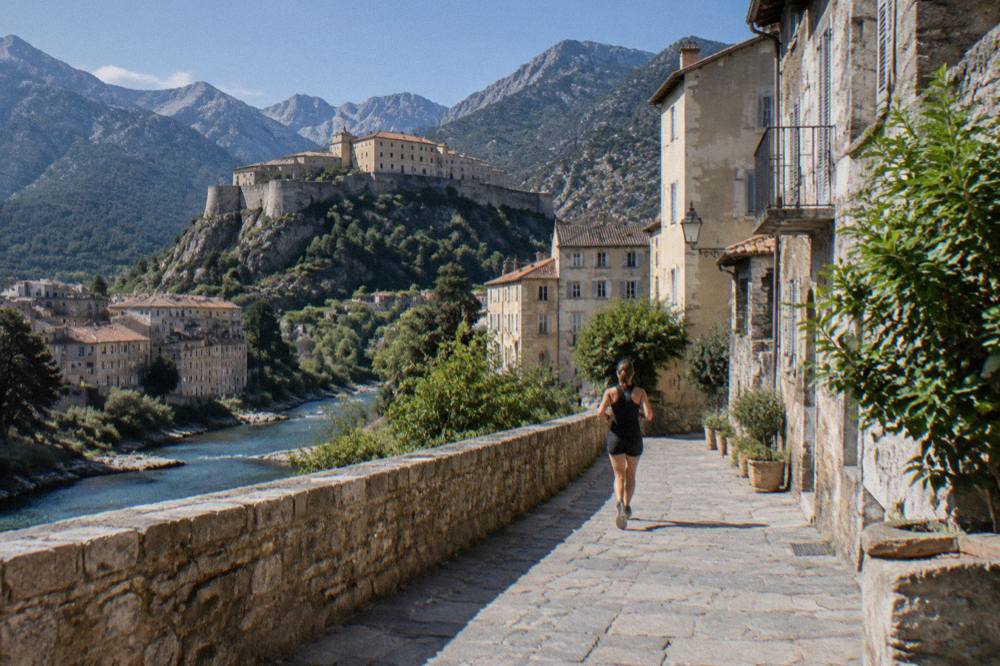
For day-count blueprints already written up on this site, see Corsica In 3 Days, Corsica In 5 Days and Corsica In One Week, with longer plans in Corsica In 10 Days and Corsica In 14 Days.
A first trip should not try to walk the GR20, the 180 km north-south traverse that the Corsican Assembly text describes as about fifteen stages of 4 to 8.5 hours each. But the shorter long-distance trails suit a first visit better: the Mare a Mare Sud at 73 km over five days, ending in Propriano, or the Mare e Monti Sud at 66 km, also five days and ending in Propriano.
| Trail | Length | Days | Total climb |
|---|---|---|---|
| GR20 (Fra li Monti) | 180 km | about 15 stages | not stated |
| Mare e Monti Nord | 121 km | 10 | 6,100 m |
| Mare a Mare Nord | 139 km (161 km with variant) | 8 to 12 | 5,900 m |
| Mare a Mare Centre | 84 km | 6 to 7 | 3,900 m |
| Mare a Mare Sud | 73 km | 5 | 3,200 m |
| Mare e Monti Sud | 66 km | 5 | 2,700 m |
Which Town Is The Best First Base In Corsica?
Ajaccio works as the single-base choice for a first trip: it is the capital with 76,320 residents, it has the island's leading airport, and it puts the Îles Sanguinaires, Scandola day trips and the interior within reach. For a two-base first trip, pair Bonifacio or Porto-Vecchio in the south with Calvi or L'Île-Rousse in the Balagne, and give Corte a night if mountains are the priority.
Ajaccio's museum pair alone justifies a stay. Maison Bonaparte, on Rue Saint-Charles 200 m from the bus station and ferry terminal, is open every day except Monday, with entry at EUR 10 full price, EUR 8 for non-EU residents aged 18 to 25 and large families, and free for EU residents under 26. The Palais Fesch, per the Ajaccio tourist office listing for 2026, charges EUR 10 full, EUR 6 for over-65s, free up to 18, and opens daily 09:00 to 17:00. Bus 8 runs from the airport.
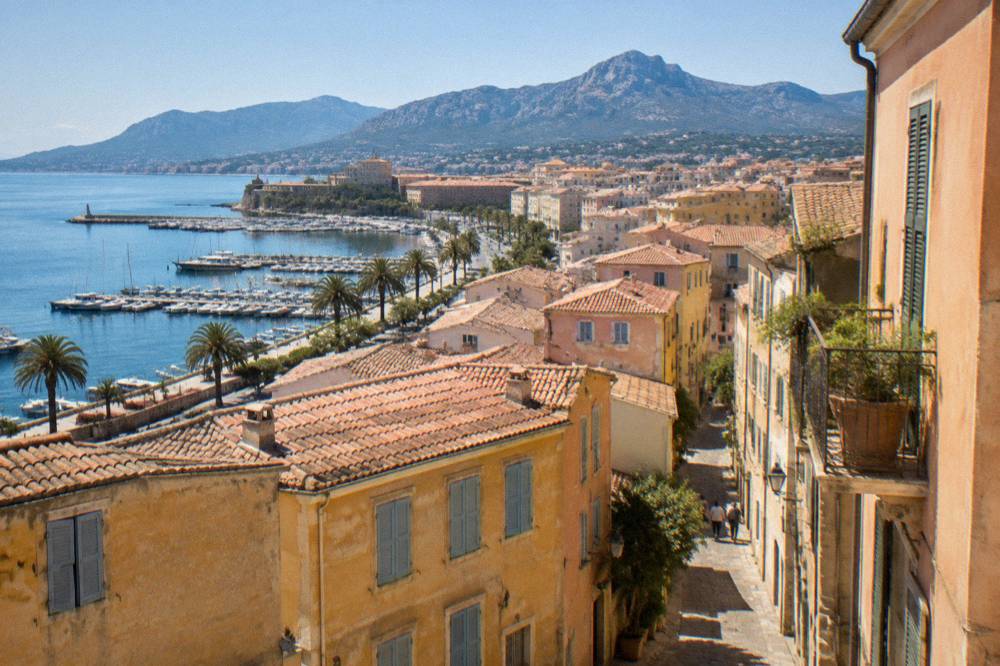
Bonifacio, perched above its cliffs in the far south, pairs with the Îles Lavezzi. Calvi and the Balagne give beach time plus hilltop villages. Bastia, on the northeast coast, is the ferry hub closest to Italy and the gateway to Cap Corse. Corte, the old capital, sits inland and central.
The guided Cap Corse and Désert des Agriates half-day trip is a natural first outing for anyone based in the Saint-Florent area or the north, and you can Check availability alongside the internal write-up of the Cap Corse and Agriates day trip.
What Are The Best Things To See In Corsica On A First Visit?
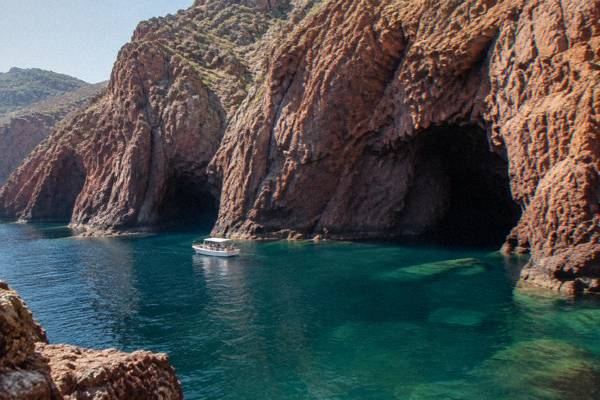
The four first-visit anchors are the Scandola Nature Reserve and the Calanques de Piana on the west coast, the Bonifacio citadel and cliffs in the far south, and the Îles Lavezzi, all reached or framed by boat, plus the prehistoric site of Filitosa inland of the south coast. Scandola is closed to walkers, so a boat is the only way in.
The UNESCO property, inscribed in 1983, is "Gulf of Porto: Calanche of Piana, Gulf of Girolata, Scandola Reserve", dossier 258, covering 11,800 ha. Scandola itself is the first nature reserve created in Corsica, by ministerial order of 9 December 1975, with 1,000 ha of sea, 919 ha of land and a 70 ha integral reserve, managed by the PNRC from the commune of Osani. The reserve was key to saving the osprey in Corsica. Per the OEC rules, the land area is closed to the public, visits are by boat only, anchoring is allowed by day outside the integral reserve and the Gargalu channel, and anchors must come up at sunset.
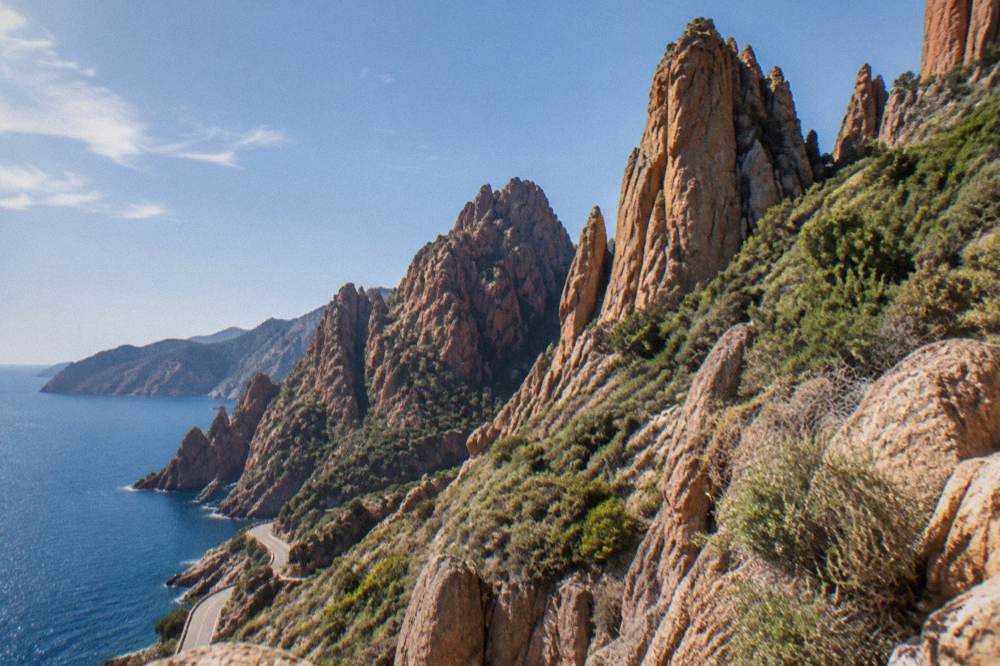
Deeper coverage of each anchor sits elsewhere on this site: Scandola Nature Reserve, Calanques de Piana and the Bonifacio citadel and cliffs, with booking guidance in the Scandola boat tour, Bonifacio boat tour and Calanques de Piana tour pages.
The priced sights a first visitor is likeliest to enter:
| Sight | Location | Full price | Key hours |
|---|---|---|---|
| Maison Bonaparte | Ajaccio | EUR 10 | Closed Monday; 1 Jul to 30 Sep 10:00-17:30 |
| Palais Fesch | Ajaccio | EUR 10 | Daily 09:00-17:00 (2026 listing) |
| Musée de la Corse and citadel | Corte | EUR 5.50 | 1 May to 31 Oct daily 10:00-19:00; closed 1 May |
| Filitosa | Sollacaro | EUR 9 | 1 Apr to 2 Nov, 09:00 to sunset |
| Escalier du Roi d'Aragon | Bonifacio | about EUR 5 | Monthly hours; closed shoes required |
Filitosa, open 1 April to 2 November with reduced entry at EUR 7 and a family ticket at EUR 28, suits a south-coast day. The Escalier du Roi d'Aragon in Bonifacio cuts 189 steps down the cliff and rewards the climb with a 180-degree view over the strait toward Sardinia. In Corte, one EUR 5.50 ticket covers both the Musée de la Corse and the citadel, with last citadel access one hour before the museum closes.
Should You Rent A Car For A First Trip To Corsica?
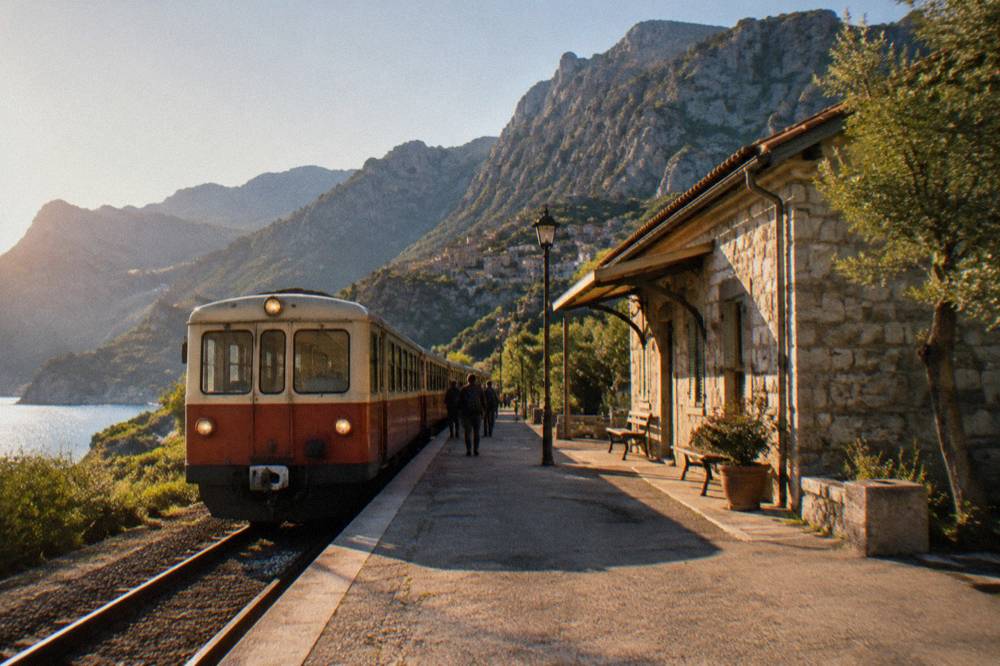
Rent a car for a first trip unless you are staying in one town and taking only boats and guided days: the island's rail network is limited to three lines, buses do not knit the coast together, and the sights that define Corsica, Scandola's departure ports, the Désert des Agriates, the Calanques de Piana road, sit at the end of mountain roads where a car is the practical answer.
The Chemins de fer de Corse run Ajaccio to Bastia via Corte, Ponte-Leccia to Calvi, and the Balagne coastal line between Calvi and L'Île-Rousse. That leaves the far south, Cap Corse and the west coast to road transport. Inforoutes Corse publishes live road conditions and accessibility levels for the main mountain passes, and checking it before any mountain drive is the standing advice, since sections do close for works and storms. More of these guides are collected on Corsica Travel Guide.
For the beaches of the Désert des Agriates, Saleccia and Lotu, access is by boat shuttle from Saint-Florent (roughly April to October, weather permitting), by 4x4 track from Casta, or on foot. That is the pattern across the island's wildest corners: drive most of the way, then walk or sail the last stretch. Driving advice, including the mountain-road basics, is collected in Driving In Corsica, and the road-trip framework in Corsica Road Trip, split further into the north itinerary and the south itinerary.
If you arrive without a car, the ferry-and-boat combination works better than the ferry-and-bus one. Santa Teresa Gallura to Bonifacio takes about 50 to 60 minutes and Livorno to Bastia about 4 to 5 hours, per aggregator crossing-time ranges, while the French mainland crossings run longer.
| Route | Typical crossing (reported range) |
|---|---|
| Santa Teresa Gallura to Bonifacio | about 50 to 60 minutes |
| Livorno to Bastia | about 4 to 5 hours |
| Savona to Bastia | about 6.5 hours |
| Nice to Bastia | about 7.5 to 10 hours |
| Toulon to Ajaccio or Bastia | about 10 to 13 hours |
| Marseille to Ajaccio or Bastia | about 12 to 13 hours, mostly overnight |
The operators are Corsica Linea, La Méridionale, Moby and Corsica Ferries; Corsica Linea sails Marseille to L'Île-Rousse, Bastia, Propriano and Ajaccio, La Méridionale sails Marseille to Ajaccio and Porto-Vecchio, and Moby sails Livorno, Genoa and Santa Teresa Gallura to Bastia and Bonifacio.
When Is The Best Time To Visit Corsica?
July and August are the summer peak, with Ajaccio averaging 28.6 °C and 29.2 °C daily highs and only 8.6 mm and 15.8 mm of rain, while October and November carry the most rain, 85.7 mm and 111.8 mm at Ajaccio, and the sea stays swimmable either side of summer; there is no single best month, only the month that matches your mix of beach, boat and mountain.
These are Météo-France station normals, 1991-2020, for Ajaccio (Campo dell'Oro) and Bastia. The island's climate is a hot dry summer, a mild wet winter, and snow only on the high mountains. Bastia, on the east of the spine, runs slightly wetter in autumn: 126.5 mm in October and 134.3 mm in November.
| Month | Ajaccio high | Ajaccio low | Ajaccio rain mm | Bastia high | Bastia rain mm |
|---|---|---|---|---|---|
| Jan | 14.0 | 4.7 | 54.1 | 13.8 | 67.3 |
| Mar | 16.0 | 5.9 | 50.4 | 15.8 | 63.7 |
| May | 22.1 | 11.8 | 49.8 | 22.4 | 53.7 |
| Jul | 28.6 | 17.7 | 8.6 | 29.4 | 13.8 |
| Sep | 26.1 | 15.4 | 57.8 | 26.0 | 74.5 |
| Nov | 18.3 | 9.0 | 111.8 | 17.7 | 134.3 |
The month-by-month detail, including the full year for both stations, is in Corsica Weather By Month, and the seasonal trade-offs in Best Time To Visit Corsica. Hikers eyeing the GR20 have a tighter window: PNRC refuges are guarded only from 16 May to 4 October, and the fire rules bite from mid-June to mid-September, a question examined in the best time to do the GR20.
What Should A First Corsica Budget Look Like?
Plan the sight budget in euros and treat everything else as ranges you confirm as you book: the priced sights above total under EUR 45 per adult for all five, GR20 refuge nights are EUR 20 per person with bivouac pitches at EUR 12, and restaurant menus are legally priced service compris, so tipping is optional rather than an added percentage.
The GR20 numbers, set by the PNRC for 2026, are exact: EUR 20 for a bunk, EUR 12 for a bivouac pitch with your own tent, EUR 27 for a one-person rented tent and EUR 39 for a two-person rented tent. All refuge nights must be booked online, rental tents sleep two with a 3 cm mat per person, bring your own sleeping bag, and dogs are not allowed in refuges or rented tents.
| GR20 refuge option (2026 PNRC rates) | Price per person |
|---|---|
| Bunk in refuge (bat-flanc) | EUR 20 |
| Bivouac pitch, own tent | EUR 12 |
| Rented tent, 1 person | EUR 27 |
| Rented tent, 2 persons | EUR 39 |
On tipping, the DGCCRF rule is that menus must state "prix service compris" with the service percentage included, and any extra pourboire is voluntary. The Corsica cost and budget guide carries the fuller breakdown.
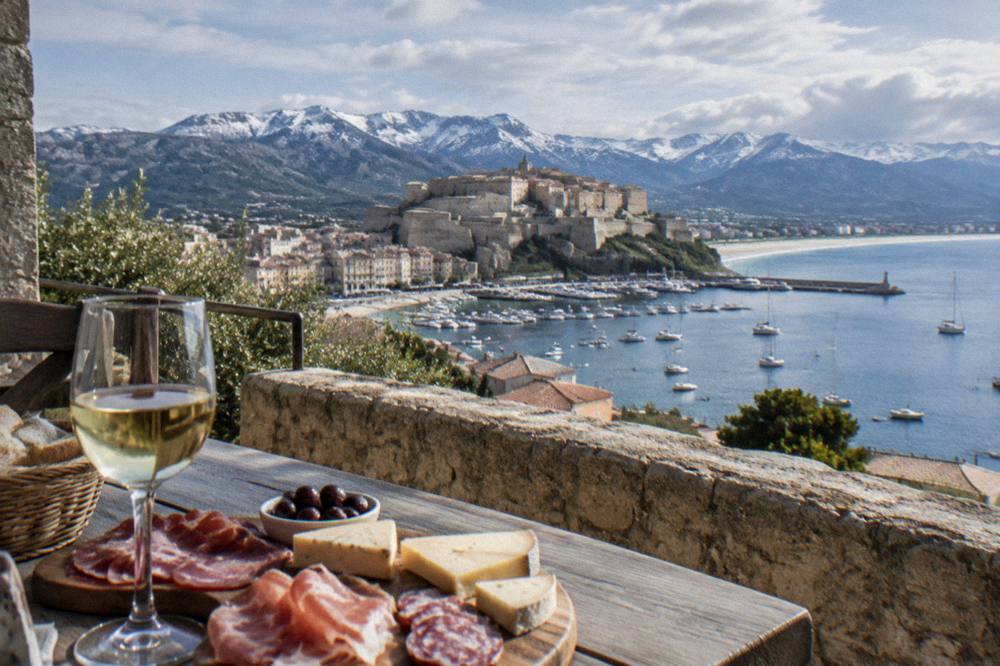
Food shopping rewards attention to the island's appellations. Brocciu obtained its appellation d'origine in 1983 and its AOC in 1998; the charcuterie trio of prisuttu, lonzu and coppa took AOC in 2012 and AOP in 2014; olive oil's AOC dates from 2004; chestnut flour's AOP from 2010; and the clémentine de Corse holds an IGP from 2007. The grapes to look for on wine labels are Nielluccio and Sciaccarellu for reds and Vermentinu for whites.
How Do You Get To Corsica In The First Place?
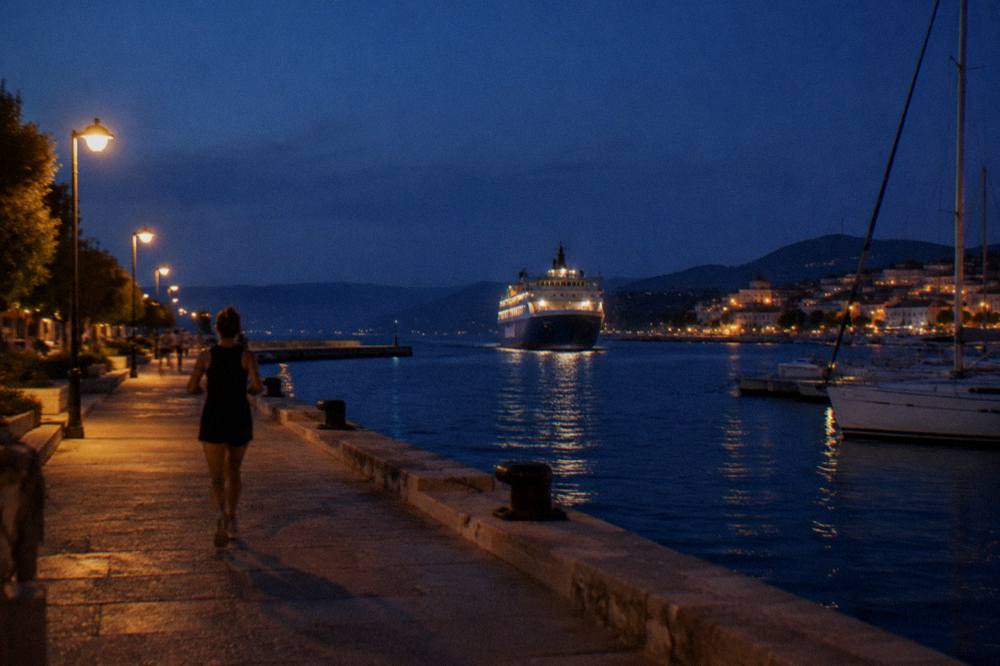
Fly into one of the four airports, Ajaccio Napoléon Bonaparte (AJA), Bastia Poretta (BIA), Figari Sud Corse (FSC) or Calvi Sainte-Catherine (CLY), or take a ferry from Marseille, Toulon, Nice, Livorno, Genoa, Savona or Santa Teresa Gallura in Sardinia; the Italian crossings are the shortest and the Marseille crossings the longest, mostly overnight.
The choice usually follows your base. Ajaccio serves the west and the capital; Bastia serves the northeast and Cap Corse; Figari sits closest to Bonifacio and Porto-Vecchio; Calvi serves the Balagne. Ferry ports are Ajaccio, Bastia, Bonifacio, L'Île-Rousse, Propriano and Porto-Vecchio, so a crossing can drop you near your first base rather than at the island's door. The ferry guide and the Nice to Corsica ferry and Corsica Sardinia ferry pages carry the route detail.
What Mistakes Do First-Time Visitors Make In Corsica?
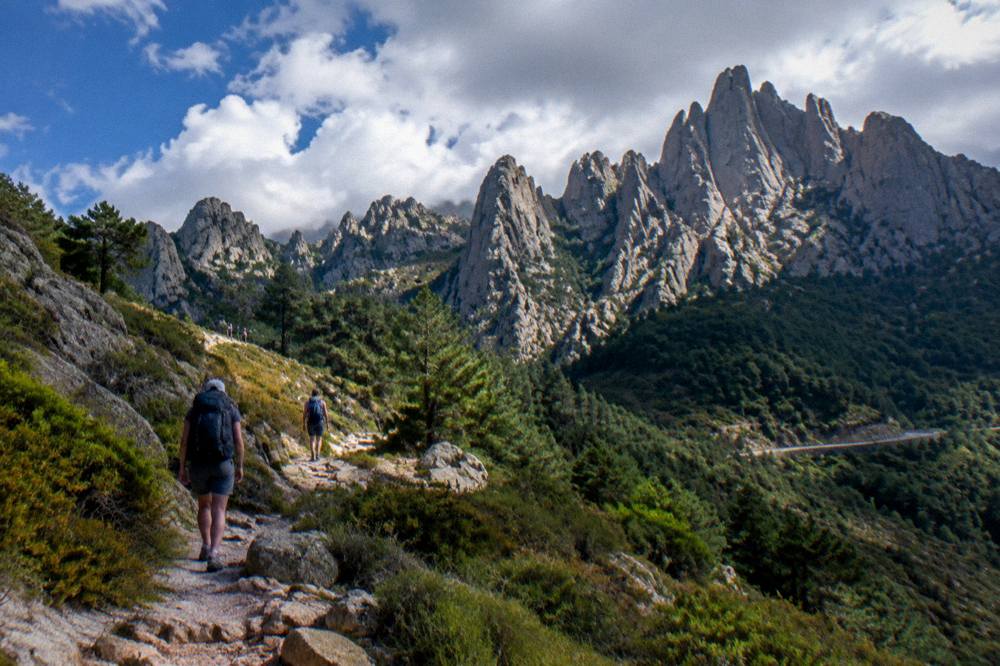
The three avoidable mistakes are basing too widely and driving three hours a day, underestimating that Scandola, Girolata and the Agriates beaches are boat territory rather than road territory, and skipping the interior, Corte and its citadel, the Restonica, the Aiguilles de Bavella, in a coast-only loop; each one trades a defining half of the island for motorway kilometres.
Book Scandola and Lavezzi boat days before you travel, since the reserve is boat-only by rule and the PNRC and OEC are tightening management: a State and OEC steering committee on 28 April 2026 renewed the management agreement, extended osprey quiet zones and trialled QR-code tracking for pleasure boats, with quotas and licences to be consolidated in a regulatory framework being finalised. That direction of travel does not change a first visit, but it argues against leaving the boat to chance.
For a first trip tailored to a household, Corsica With Kids, Corsica Solo and Corsica Honeymoon adapt the same skeleton, and Free Things To Do In Corsica plus Corsica Hidden Gems cover the low-cost and off-peak angles, with Corsica In The Rain for the wet months. The full activity index sits at things to do in Corsica, and more planning advice at Corsica Travel Guide.
Common Questions About A First Trip To Corsica
Is Corsica Good For A First Visit?
Corsica suits a first visit well: it combines more than 1,000 km of coastline with a 2,706 m mountain interior, has four airports and ferry ports including and its headline sights, Scandola, the Calanques de Piana, Bonifacio, the Îles Lavezzi, work as day trips from a small number of bases.
Do You Need A Car In Corsica The First Time?
For most first itineraries, yes. The rail network runs only Ajaccio to Bastia via Corte, Ponte-Leccia to Calvi and the Calvi to L'Île-Rousse coastal line, and the beaches of the Désert des Agriates are reached by boat shuttle, 4x4 track or on foot.
How Many Days Are Enough For Corsica?
Five days covers one coast plus a mountain day; seven to ten days allows two bases. Driving times to Corte, from the museum's own page, run from one hour from Bastia to two hours forty-five from Bonifacio, which sets the rhythm of any loop.
What Is The Number One Thing To See In Corsica?
The UNESCO property "Gulf of Porto: Calanche of Piana, Gulf of Girolata, Scandola Reserve", inscribed in 1983, is the island's single headline sight, and since Scandola's land area is closed to the public, it is seen from a boat.
Can You Do Corsica Without Hiking?
Yes. Boat cruises from Porto, Ajaccio, Calvi, Bonifacio, Propriano and L'Île-Rousse, the museums of Ajaccio and Corte, Filitosa and the Bonifacio citadel and cliffs build a full trip with no trail time.
Is Corsica Safe For Tourists?
Standard French safety advice applies: emergency numbers are 112, 15, 17, 18, 114 and 196 at sea, mountain rescue is the PGHM Ajaccio at 04 95 24 24 00, and from 15 June to 30 September fires and smoking are banned in forests, maquis and massifs.