Best Time To Visit Corsica
Corsica's climate splits into a hot dry summer and a mild wet winter, and the right time to go depends on whether the trip is built around beaches, boat trips or mountain trails.
Late May to June and September offer warm settled weather around Corsica's coast without the July and August peak, while the GR20 refuge season runs from 16 May to 4 October and the July rainfall figure at Ajaccio is just 8.6 mm.
Corsica sits in the western Mediterranean with sea on every side and a mountainous interior that rises to Monte Cinto at 2,706 m, so the timing question is really three questions rolled into one: when the coast is warm, when the mountains are open, and when the fire rules let you move freely between them. The Météo-France station normals for Ajaccio and Bastia give the pattern in plain figures. July averages 8.6 mm of rain at Ajaccio and August carries the highest mean daily maximum, 29.2 °C, while November averages 111.8 mm. Choosing between those two worlds, the quiet shoulder months and the guarded refuge season on the GR20, is what this Corsica Travel Guide page is for, alongside the practical calendar the island's own authorities publish each year.
What Is The Best Time To Visit Corsica?
There is no single official best month, and none is claimed here: the Météo-France 1991-2020 normals show July with 8.6 mm of rain and 12.05 sunshine hours a day at Ajaccio, while May combines 22.1 °C daytime highs with 9.3 sunshine hours, and September still reaches 26.1 °C with sea-warmed coasts. For hikers the window is set by the Parc naturel régional de Corse, whose refuges are guarded from 16 May to 4 October.
Late May, June and September fit the widest range of plans.
That answer comes with a catch the climate table cannot show. Summer is when the fire rules bite hardest: from 15 June to 30 September it is forbidden to light a fire or smoke in forests, maquis and massifs, and from mid-June to mid-September access to some massifs can be restricted when the daily risk map turns severe. The same weeks carry the fullest boat schedules, the guarded beaches and the longest daylight, 15 h 11 min a day at Ajaccio in June.
A workable frame is to match the month to the main activity. Beach and boat time leans on sea and sunshine figures, hiking leans on the refuge season and the fire map, and city sightseeing in Ajaccio, Bastia or Corte works in almost any month because the museums keep low-season hours. The sections below take each of those in turn, with the station data behind every figure.
For a first trip that mixes coast and mountains, the first-time visitor itinerary is built around the same shoulder-season logic, and the broader things to do in Corsica page lists what is on offer across all four seasons.
What Is The Weather Like In Corsica Month By Month?
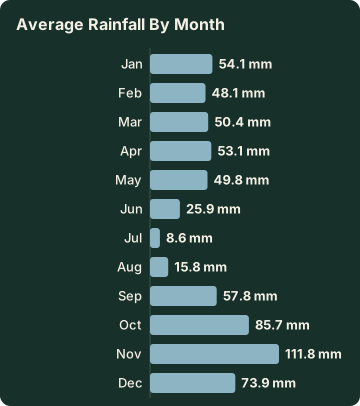
The Météo-France 1991-2020 station normals put Ajaccio's mean daily maximum at 14.0 °C in January, 22.1 °C in May, 29.2 °C in August and 18.3 °C in November, with monthly rainfall running from 8.6 mm in July to 111.8 mm in November. Bastia, on the east-facing coast, follows the same rhythm with slightly more rain, 134.3 mm in November against Ajaccio's 111.8 mm. October and November carry the most rain at both stations.
The table below is the Ajaccio (Campo dell'Oro) series in full. It is a station mean over thirty years, so a given week can sit above or below it, but the shape is reliable: a dry June-to-August block, a step down in September, and a wet late autumn.
| Month | Mean high °C | Mean low °C | Rain mm | Sunshine h/day |
|---|---|---|---|---|
| Jan | 14.0 | 4.7 | 54.1 | 4.4 |
| Feb | 14.2 | 4.3 | 48.1 | 5.5 |
| Mar | 16.0 | 5.9 | 50.4 | 6.8 |
| Apr | 18.5 | 8.3 | 53.1 | 7.7 |
| May | 22.1 | 11.8 | 49.8 | 9.3 |
| Jun | 25.9 | 15.4 | 25.9 | 11.1 |
| Jul | 28.6 | 17.7 | 8.6 | 12.1 |
| Aug | 29.2 | 18.1 | 15.8 | 11.1 |
| Sep | 26.1 | 15.4 | 57.8 | 8.7 |
| Oct | 22.8 | 12.6 | 85.7 | 6.7 |
| Nov | 18.3 | 9.0 | 111.8 | 4.7 |
| Dec | 15.1 | 5.8 | 73.9 | 4.0 |
Bastia tells a similar story with a wetter autumn. The full Corsica weather by month guide carries both stations in detail, including the daylight figures by month.
| Month | Bastia mean high °C | Bastia mean low °C | Rain mm |
|---|---|---|---|
| Jan | 13.8 | 5.4 | 67.3 |
| Feb | 13.9 | 5.1 | 63.5 |
| Mar | 15.8 | 6.8 | 63.7 |
| Apr | 18.3 | 9.1 | 71.6 |
| May | 22.4 | 12.6 | 53.7 |
| Jun | 26.4 | 16.5 | 38.8 |
| Jul | 29.4 | 19.4 | 13.8 |
| Aug | 29.8 | 19.8 | 21.1 |
| Sep | 26.0 | 16.7 | 74.5 |
| Oct | 22.0 | 13.4 | 126.5 |
| Nov | 17.7 | 9.5 | 134.3 |
| Dec | 14.8 | 6.4 | 88.1 |
Two readings matter beyond the averages. First, snow falls on the high mountains, not on the coast: the same island that averages 29.2 °C August days at Ajaccio holds 2,706 m summits that keep snow well into the hiking year. Second, the rainfall total, 635.0 mm a year at Ajaccio and 816.9 mm at Bastia, arrives mostly in a narrow late-autumn block, which is why October and November are the months the coast turns green again.
When Is The Best Time For Beaches And Boat Trips In Corsica?
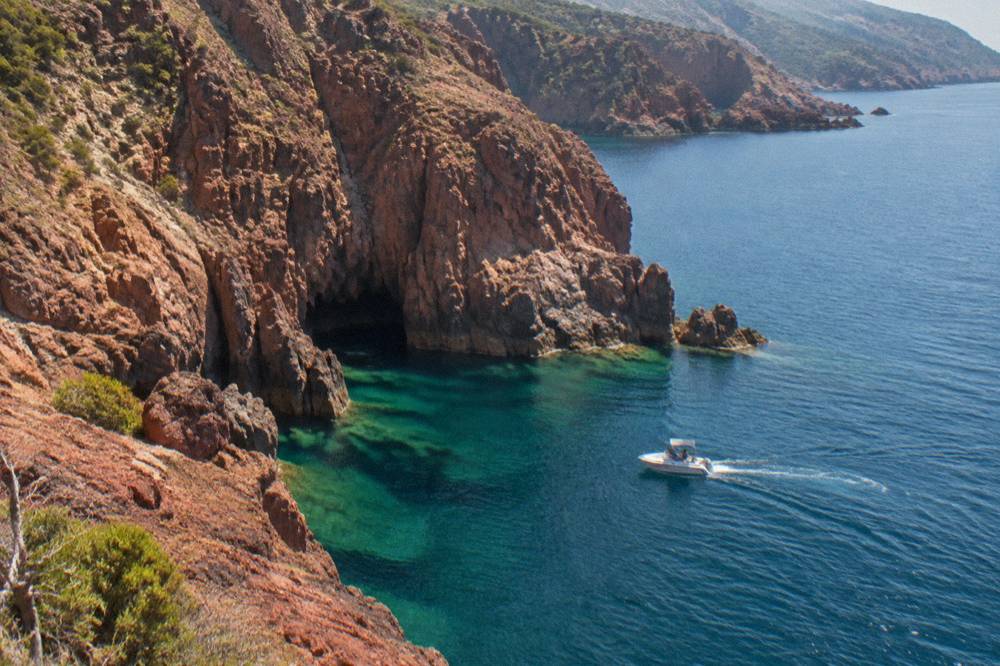
For swimming and boat days the practical season runs from about June to September, when Ajaccio's mean daily highs sit between 25.9 °C and 29.2 °C and sunshine runs above 8.5 hours a day, with September still averaging 26.1 °C. July's 8.6 mm of rain at Ajaccio is the lowest figure on the monthly table, and June gives the longest daylight of the year at 15 h 11 min a day.
The shoulder edges of that window each have a case. June pairs 25.9 °C days with 25.9 mm of rain, and the sea has had spring to warm. September keeps 26.1 °C days on 8.7 sunshine hours while daylight is still 12 h 29 min, and the water holds the summer's heat. August is the month with the highest mean maximum at both stations, 29.2 °C at Ajaccio and 29.8 °C at Bastia, on 11.08 sunshine hours a day.
Boat schedules follow the same calendar. Cruises to the Scandola reserve, the Calanques de Piana and the Îles Lavezzi run through the warm months, and the Sanguinaires trips from Ajaccio are the easiest to fit into any stay on the west coast. The Sanguinaires boat trip from Ajaccio guide covers the route options, and the Scandola boat tour and Bonifacio boat tour pages do the same for the other two coasts.
Check availability if an aperitif sunset fits the itinerary.
Two practical notes shape summer swimming. Ajaccio staffed seven lifeguard posts on the town's main beaches from 1 July to the end of August 2026, and in Haute-Corse supervised beaches are covered by volunteer firefighters over roughly the same July-to-August block. And at sea the emergency number is 196, reached by VHF channel 16.
When Should You Hike The GR20 In Corsica?
The GR20 season is defined by the Parc naturel régional de Corse: its refuges are guarded from 16 May to 4 October, and every refuge night, whether a bunk or a bivouac pitch, must be booked online in advance. The trail runs 180 km north to south in about 15 stages of 4 to 8.5 hours, and no departures are allowed from Calenzana after 11:00 under a municipal fire-risk order.
The booking rule is the one that catches people out. Reservations for a bunk at EUR 20 a person, a bivouac pitch at EUR 12, or a rented tent at EUR 27 for one or EUR 39 for two are made exclusively through the PNRC's online platform, with changes possible up to 48 hours before a stage. Wild camping is banned across the island, including on the GR20, and bivouacking is allowed only in the marked areas at the refuges.
| PNRC refuge option (2026 rates) | Price per person |
|---|---|
| Bunk in a refuge dormitory | EUR 20 |
| Bivouac pitch, own tent | EUR 12 |
| Rented tent for one (pitch and tent) | EUR 27 |
| Rented tent for two (two pitches and tent) | EUR 39 |
Inside that window, the climate figures argue for June or September on the high sections. June averages 25.9 °C at Ajaccio on the coast, cooler at altitude, with 25.9 mm of rain; September averages 26.1 °C with 57.8 mm. July and August carry the lowest rainfall figures but also the fire-access restrictions, and the massif risk map is updated at 18:00 each day for the next day. The full planning detail, including the answer to when to walk the GR20, sits in the Corsica GR20 guide, with the wider trail network covered under hiking in Corsica.
The long-distance alternatives run on roughly the same calendar and need no refuge bookings at this scale. Their lengths, from the PNRC's own brochure, are:
| Trail | Length | Stages or days |
|---|---|---|
| GR20 (Fra li Monti) | 180 km | about 15 stages |
| Mare e Monti Nord | 121 km | 10 days |
| Mare a Mare Nord | 139 km (161 km with variant) | 8 to 12 days |
| Mare a Mare Centre | 84 km | 6 to 7 days |
| Mare a Mare Sud | 73 km | 5 days |
| Mare e Monti Sud | 66 km | 5 days |
What Are Spring And Autumn Like In Corsica?
Spring moves fast: Ajaccio's mean daily maximum climbs from 16.0 °C in March to 18.5 °C in April and 22.1 °C in May, on sunshine that rises from 6.8 to 9.3 hours a day, while rainfall barely changes, 50.4 mm in March against 49.8 mm in May. Autumn runs the sequence in reverse, 26.1 °C in September, 22.8 °C in October, 18.3 °C in November, but with far more rain, 57.8 mm rising to 111.8 mm.
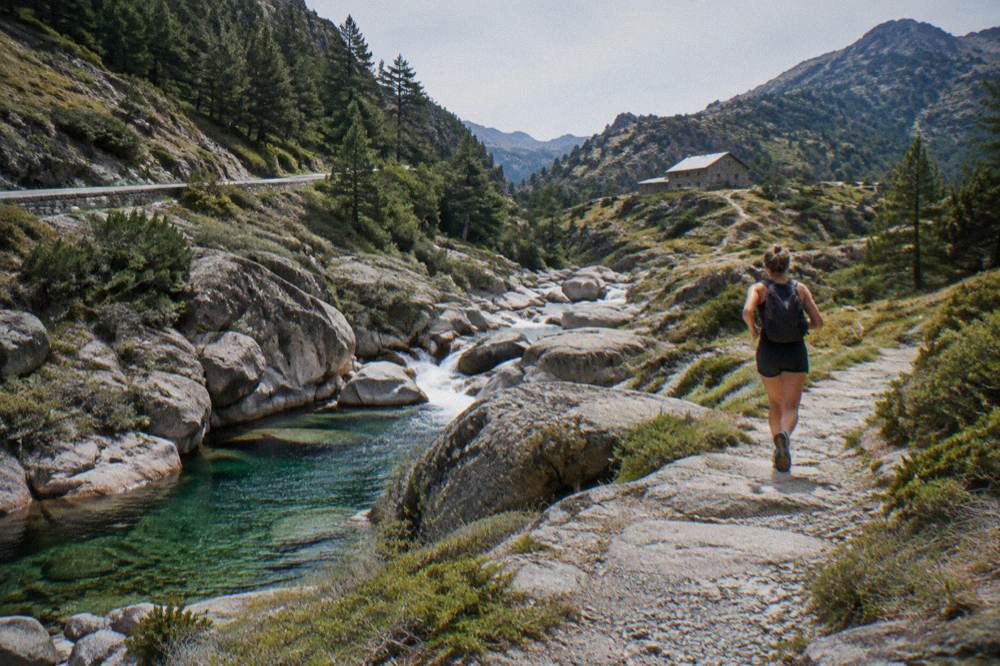
May is the month the whole island opens. The refuge season starts on 16 May, the Restonica valley and Aiguilles de Bavella are walkable before the fire restrictions begin in mid-June, and the coast is warm enough for boat trips without the July heat. April sits earlier: 18.5 °C days at Ajaccio, and inland trails at lower altitude are the reliable choice while the highest paths hold snow.
Autumn splits at October. Early October still averages 22.8 °C at Ajaccio and the refuges stay guarded to 4 October, so the first week of the month is one of the strongest hiking windows of the year. Late October and November are a different proposition: 85.7 mm and then 111.8 mm of rain at Ajaccio, and 126.5 mm and 134.3 mm at Bastia. That is museum weather, and Ajaccio's Palais Fesch, open daily 09:00 to 17:00, and Maison Bonaparte, closed Monday, keep full hours through the winter.
| Sight | Season pattern | Hours to plan around |
|---|---|---|
| Palais Fesch, Ajaccio | daily all year | 09:00 to 17:00 |
| Maison Bonaparte, Ajaccio | closed Monday | 10:00 to 17:30 in summer |
| Musée de la Corse, Corte | daily May to October | 10:00 to 19:00 |
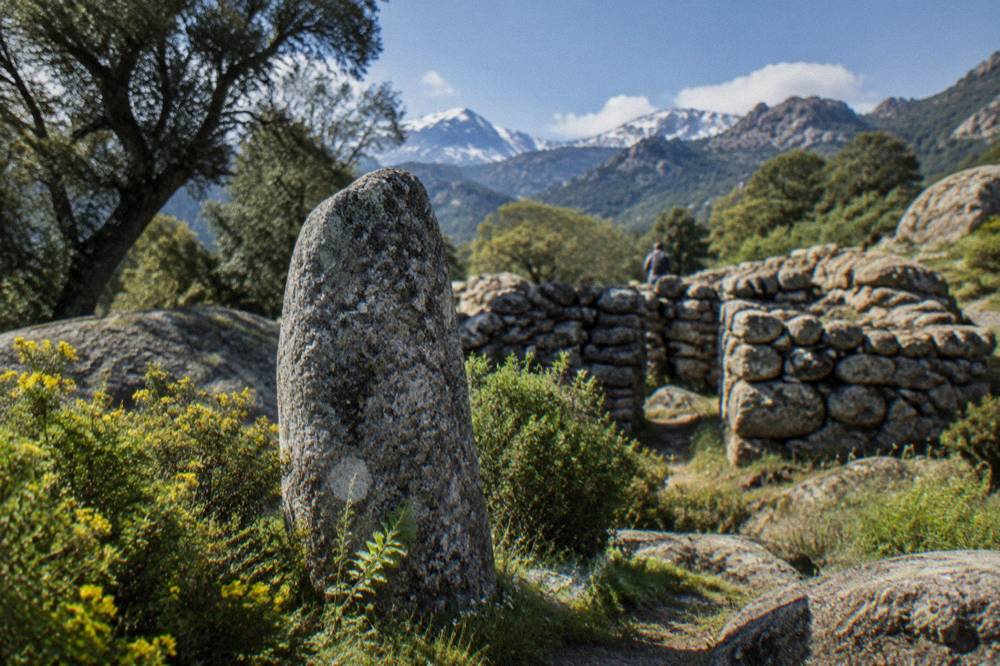
| Filitosa | 1 April to 2 November | 09:00 to sunset |
Is Winter A Good Time To Visit Corsica?
Winter in Corsica is mild on the coast and snowy on the high mountains: Ajaccio averages 14.0 °C daytime highs in January and Bastia 13.8 °C, with 54.1 mm and 67.3 mm of rain respectively, and sunshine of about 4.4 hours a day. It is a season for towns, museums and low valleys rather than beaches or high trails, and the January mean low of 4.7 °C at Ajaccio makes evenings genuinely cold inland.
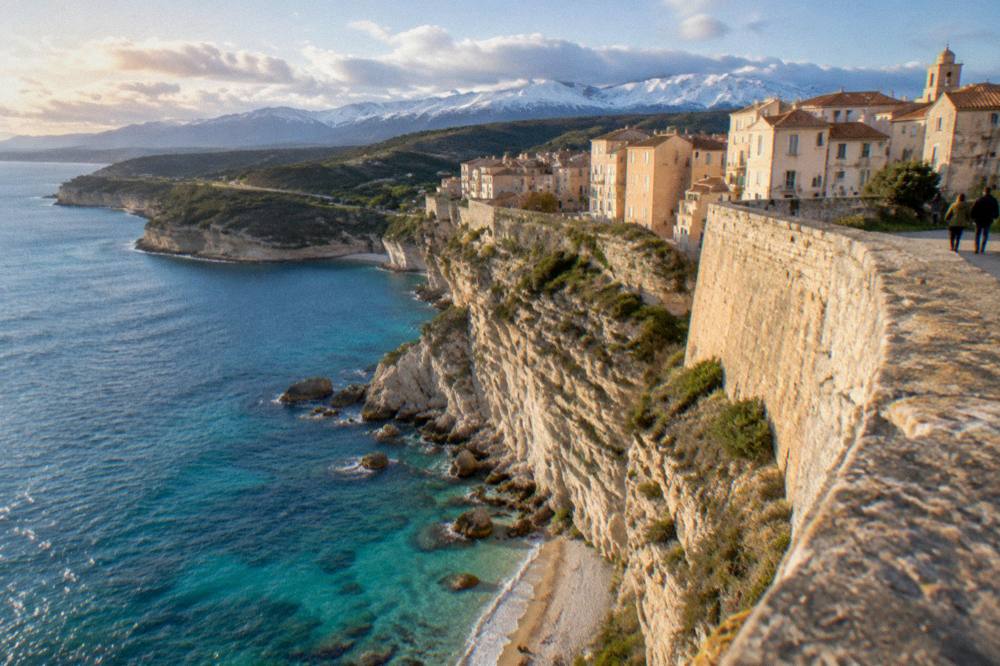
The case for a winter trip is a different island from the summer one. Bastia's old port and citadel, Corte's citadel museum, and the food and charcuterie of the interior all run through the winter, and the Corsica in the rain and free things to do in Corsica pages collect the options that do not depend on sun. The Musée de la Corse in Corte keeps low-season hours, daily 10:00 to 17:00 except Sundays, Mondays, holidays and 24 December, and closes annually from 31 December to 14 January.
What winter does not offer is the mountain network. The refuges are unguarded outside the 16 May to 4 October window, the high routes hold snow, and the Calanques de Piana and Scandola boat season pauses with the weather. Daylight shortens to 9 h 31 min a day at Ajaccio in January and 9.19 in December, which clips any long walking plans.
What Fire Rules Affect A Summer Trip To Corsica?
From 15 June to 30 September it is forbidden to light a fire or smoke in Corsica's forests, maquis and massifs, and from mid-June to mid-September access to some massifs can be restricted by prefectural order when the daily fire-risk level is high. The risk map is updated at 18:00 each day for the next day, and the UK FCDO notes a high wildfire risk in France from April to October.
For travellers the rules translate into three habits. Check the daily massif access map before any mountain day in summer, because the most exposed zones can close entirely on the most severe days. Respect the no-smoking rule on trails, in the maquis and at rest stops, not only at campsites. And on the GR20 specifically, the municipal order at Calenzana bars departures after 11:00 during the high-risk period, which makes an early start a rule rather than a preference.
The rules also explain why the shoulder months suit mixed itineraries. A late-May or mid-September plan gets the trails without the closure risk, the boat season is running, and the Corsica safety page carries the emergency numbers, including 112, the mountain rescue line PGHM Ajaccio on 04 95 24 24 00, and 196 for rescues at sea, that belong in any phone before a mountain or coastal day.
How Do You Get To Corsica In Each Season?
Corsica is served by four airports, Ajaccio Napoléon Bonaparte, Bastia Poretta, Figari Sud Corse and Calvi Sainte-Catherine, and by ferries from Marseille, Toulon, Nice, Livorno, Savona, Genoa and Santa Teresa Gallura in Sardinia, with more than 8.5 million passengers passing through the island's ports and airports in 2025. The shortest crossings are Livorno to Bastia at about 4 to 5 hours and Santa Teresa Gallura to Bonifacio at about 50 to 60 minutes.
Season matters more on the sea than in the air. The year-round DSP ferry lines from Marseille, run by Corsica Linea and La Méridionale, hold the winter connections, and Moby and Ichnusa Lines keep the short Santa Teresa Gallura to Bonifacio link under a continuing public-service obligation. The Italian and Nice routes run fullest in summer. The ferry to Corsica guide covers the ports, the Nice to Corsica ferry page that specific route, and the Corsica Sardinia ferry page the short southern hop.
On the air side, the flights to Corsica page explains the seasonal pattern, and the individual airport guides, Ajaccio airport, Bastia airport and the Corsica airports overview, list the carriers. Once on the island, the Corsica car rental, driving in Corsica and getting around Corsica pages cover the rest.
Where Should You Stay In Corsica By Season?
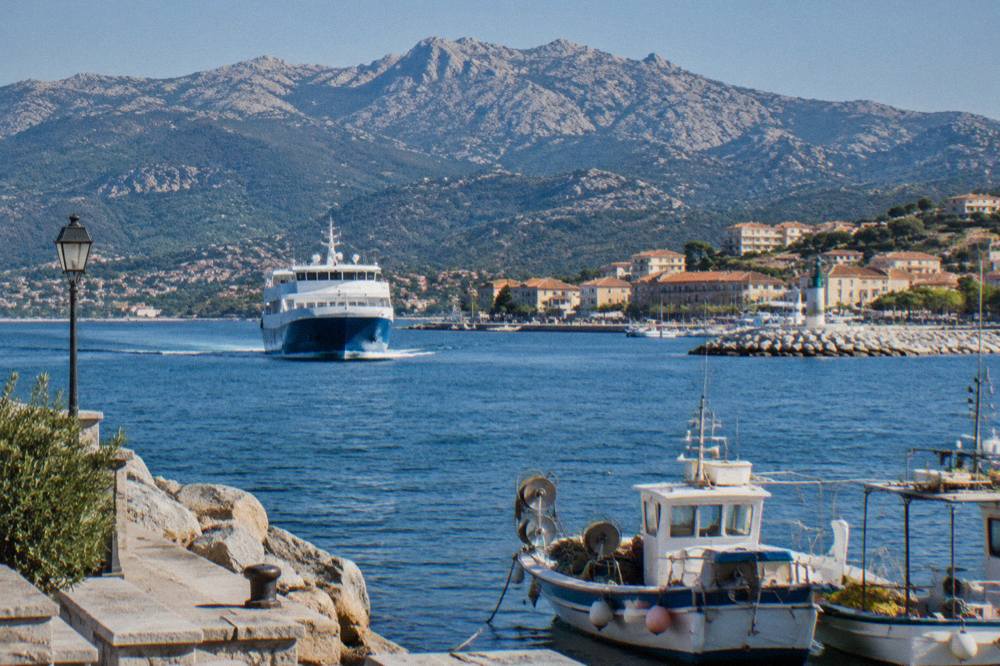
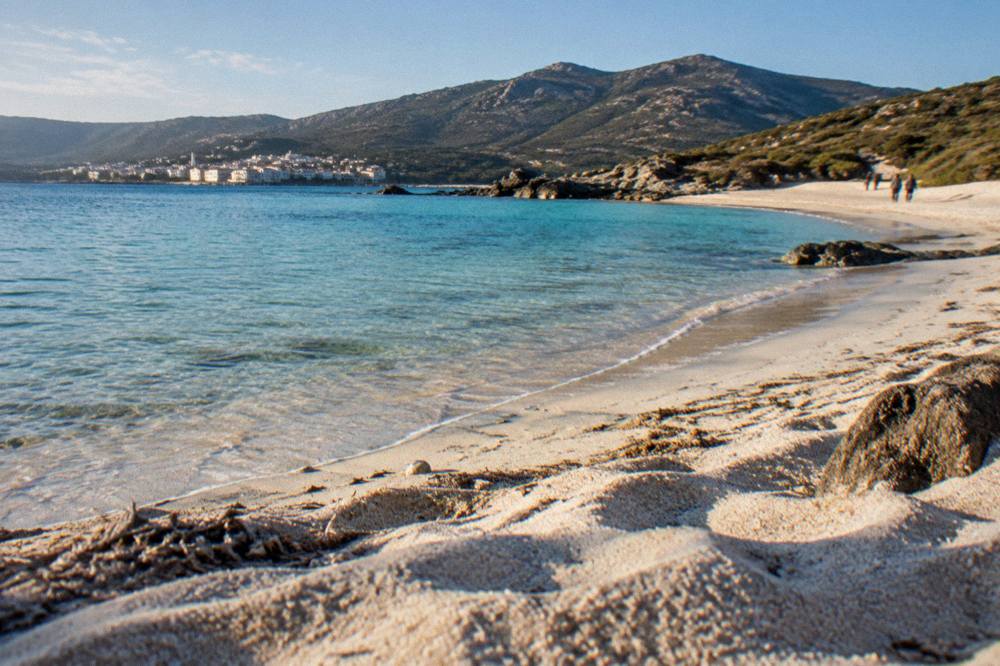
Coastal bases such as Porto-Vecchio, Bonifacio, Calvi and L'Île-Rousse suit the June-to-September beach and boat season, while Ajaccio, Bastia and inland Corte work across the year because their museums, restaurants and transport links do not depend on summer weather. Spring and autumn trips can base anywhere, since the island's roads are open year-round and Inforoutes Corse publishes live conditions for the main mountain passes.
The standard split holds. In high summer, staying near the beach you actually want, whether Palombaggia, Santa Giulia or Rondinara on the south-east coast, saves the coastal road queues that summer traffic brings. For hikers, a base in Calvi, Calenzana or Corte positions the trailheads. The full breakdown, from where to stay in Corsica through luxury hotels in Corsica, Corsica villas and vacation rentals and Corsica camping, covers the budget range, and the Corsica cost and budget page sets the money expectations.
Common Questions About The Best Time To Visit Corsica
What Is The Best Time To Visit Corsica?
No single month is named here as a fact, but the figures point the way: May averages 22.1 °C at Ajaccio with 9.3 sunshine hours a day, September averages 26.1 °C, and the GR20 refuges are guarded from 16 May to 4 October, so late May, June and September fit the widest range of plans.
Does It Rain A Lot In Corsica?
Rainfall is concentrated in late autumn. Ajaccio averages 111.8 mm in November and 85.7 mm in October, against 8.6 mm in July and 15.8 mm in August, for an annual total of 635.0 mm. Bastia records 816.9 mm a year, with 134.3 mm in November.
When Is The GR20 Season In Corsica?
The Parc naturel régional de Corse guards the refuges from 16 May to 4 October, and booking is mandatory online for both bunks, at EUR 20 a person, and bivouac pitches, at EUR 12. The trail covers 180 km in about 15 stages.
Can You Swim In Corsica Outside Summer?
Ajaccio's mean daily maximum is 22.1 °C in May and 26.1 °C in September, and lifeguard posts on the town's main beaches run from 1 July to the end of August.
Is Corsica Too Hot In August?
August carries the highest mean daily maximum on the station table, 29.2 °C at Ajaccio and 29.8 °C at Bastia, on 11.08 and 10.1 sunshine hours a day respectively. It is a hot month by any measure, with fire-access restrictions in the massifs from mid-June to mid-September.
What Is The Fire Season In Corsica?
From 15 June to 30 September no fires or smoking are allowed in forests, maquis and massifs, and access to some massifs can be restricted from mid-June to mid-September when the daily risk level is high. The risk map updates at 18:00 each day for the following day.
Timing a Corsica trip comes down to matching the calendar to the plan: the June-to-September block for beaches and boats, the 16 May to 4 October window for the GR20, the shoulder months for mixed itineraries that avoid the fire restrictions, and the mild coastal winter for the island's towns and museums.