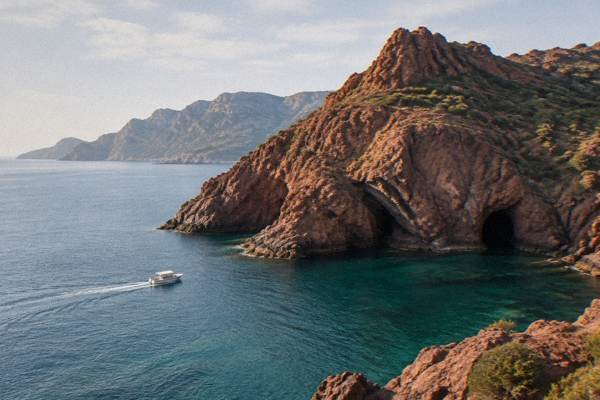
Corsica 5 Days
Five days is enough for one coast of Corsica plus a taste of the mountains: this itinerary strings Ajaccio, the Îles Sanguinaires, the Gulf of Porto, Bonifacio and the Désert des Agriates into one loop, with current prices and hours for every stop.
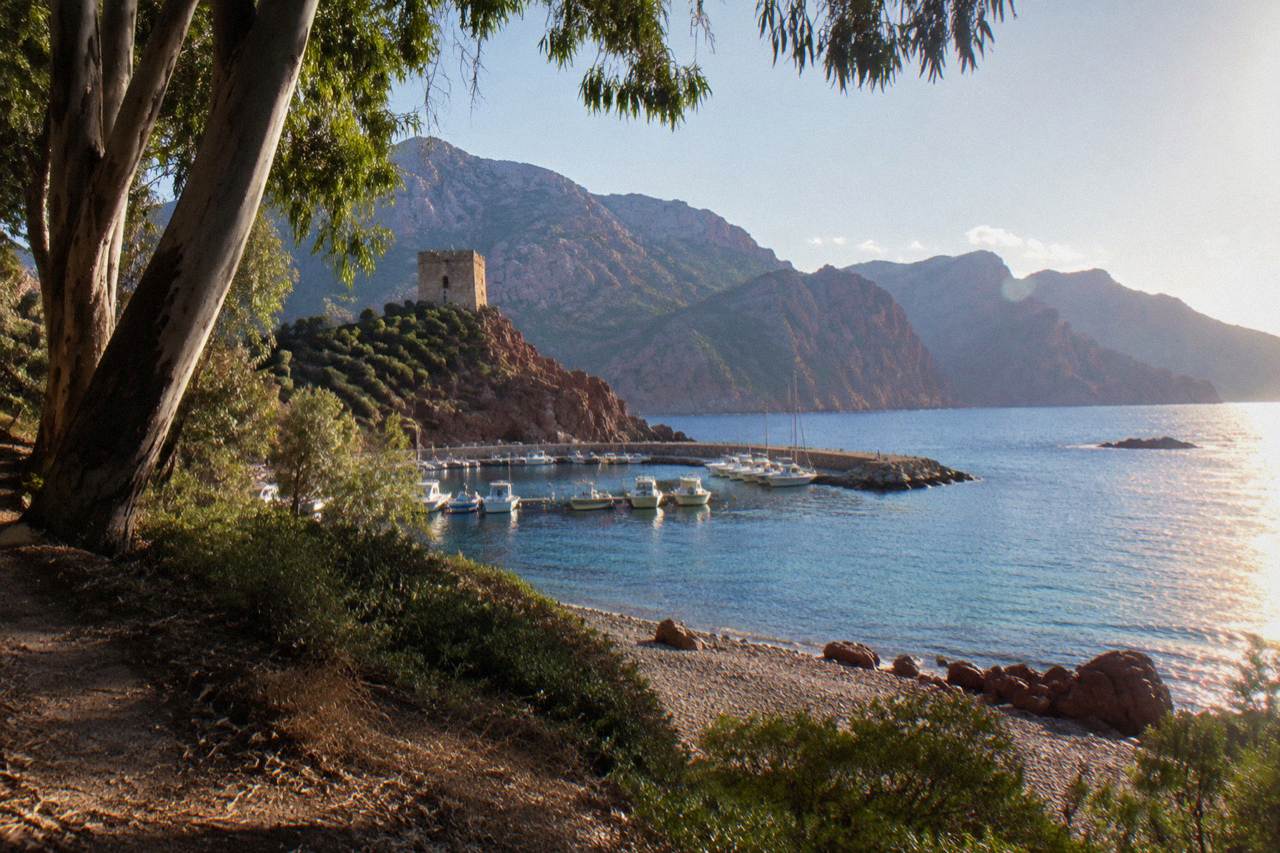
Five days in Corsica works as a west-and-south loop: Ajaccio and the Îles Sanguinaires, the Calanques de Piana and a Scandola boat trip, the Aiguilles de Bavella and Bonifacio, the Désert des Agriates from Saint-Florent or Calvi, and a final day in Bastia or Corte.
Corsica packs 8,722 km2, more than 1,000 km of coastline and a mountainous interior that tops out at Monte Cinto (2,706 m) into an island you can cross in a few hours by road, which is why a Corsica 5 Days plan can reasonably cover one coast, a mountain detour and two or three of the island's headline sights without racing. The route below loops the west and south: Ajaccio, the Gulf of Porto with the Calanques de Piana and Scandola, Bonifacio, then back up through the Désert des Agriates and Bastia. Every price and hour comes from the official pages of the sights, museums and the Parc naturel régional de Corse (PNRC). For a shorter or longer stay, the Corsica in 3 days and Corsica in one week plans stretch the same skeleton.
What Does A Corsica 5 Days Trip Realistically Cover?
Five days covers Ajaccio, the Gulf of Porto with the Calanques de Piana and a Scandola boat trip, Bonifacio and its cliffs, the Désert des Agriates beaches, and a final day in Bastia or inland at Corte, with real but manageable driving each day. The island is 8,722 km2 with a mountainous interior, so the trick is to pick one coast and resist crossing the island daily. This plan runs anticlockwise from Ajaccio and finishes in Bastia, which suits both the ferry ports and the four airports at Ajaccio, Bastia, Figari and Calvi. It is a first-visit route rather than an exhaustive one: the GR20, the Cap Corse peninsula and the Castagniccia each need their own trip, and the Corsica in 10 days plan is where those fit.
The shape of the week matters more than the individual stops. Corsica's roads are mountain roads: Inforoutes Corse publishes live road conditions and accessibility levels for the main passes, and any itinerary that promises two headline sights a day in July is writing fiction. This route keeps each day to one anchor sight plus one short add-on, with the driving front-loaded on two days only.
Day by day:
| Day | Base | Anchor sight | Driving context |
|---|---|---|---|
| 1 | Ajaccio | Maison Bonaparte, Palais Fesch, town and gulf | No driving needed in town |
| 2 | Ajaccio or Porticcio | Îles Sanguinaires boat trip | Short hop to the departure port |
| 3 | Porto or Piana | Scandola boat trip and the Calanques de Piana | The D81 coastal road day |
| 4 | Bonifacio | Bonifacio citadel, cliffs and Escalier du Roi d'Aragon | The longest drive of the trip |
| 5 | Bastia | Désert des Agriates or Cap Corse, then Bastia old harbour | Return day toward the port |
Sight prices on this route are published and stable, which helps budgeting:
| Sight | Full price | Reduced or free | Hours note |
|---|---|---|---|
| Maison Bonaparte, Ajaccio | EUR 10 | EUR 8 non-EU 18 to 25 and large families; free EU under 26 | Closed Mondays |
| Palais Fesch, Ajaccio | EUR 10 | EUR 6 over 65; free up to 18 | Daily 09:00 to 17:00 |
| Musée de la Corse and citadel, Corte | EUR 5.50 | EUR 4 and EUR 3 categories | One ticket covers both |
| Filitosa | EUR 9 | EUR 7 aged 6 to 17; family EUR 28 | 1 April to 2 November |
| Escalier du Roi d'Aragon, Bonifacio | About EUR 5 | Child rate EUR 2 | 189 steps, monthly hours |
Where Should You Base For Five Days In Corsica?
Two bases beat five hotel changes on this route: Ajaccio for nights one and two, then Bonifacio or Porto-Vecchio for nights three and four, with a final night in Bastia if you fly or sail from there. Ajaccio is the island's capital with 76,320 residents and the biggest flight and ferry choice, while a single southern base puts the citadel towns and the Bavella needles within an hour's drive. Splitting the stay this way leaves one long transfer day, day four, which you can break at Filitosa or Sartène. Travellers who prefer one base only should read the where to stay in Corsica thinking in the first-time guide, since a single-base Corsica trip works best from Ajaccio or Bastia with day trips.
Ajaccio deserves its two nights. The town holds both the Maison Bonaparte, the national museum in Napoleon's birth house on Rue Saint-Confession-free Rue Saint-Charles, 200 m from the bus station and ferry terminal, and the Palais Fesch fine-arts museum. The Maison Bonaparte page gives the summer hours, 1 July to 30 September 10:00 to 17:30, and the winter split mornings, 1 October to 31 March 10:30 to 12:30 and 13:15 to 16:30. The Palais Fesch charges EUR 10 full, EUR 6 for over-65s and nothing up to 18, daily 09:00 to 17:00, per the Ajaccio tourist-office listing.
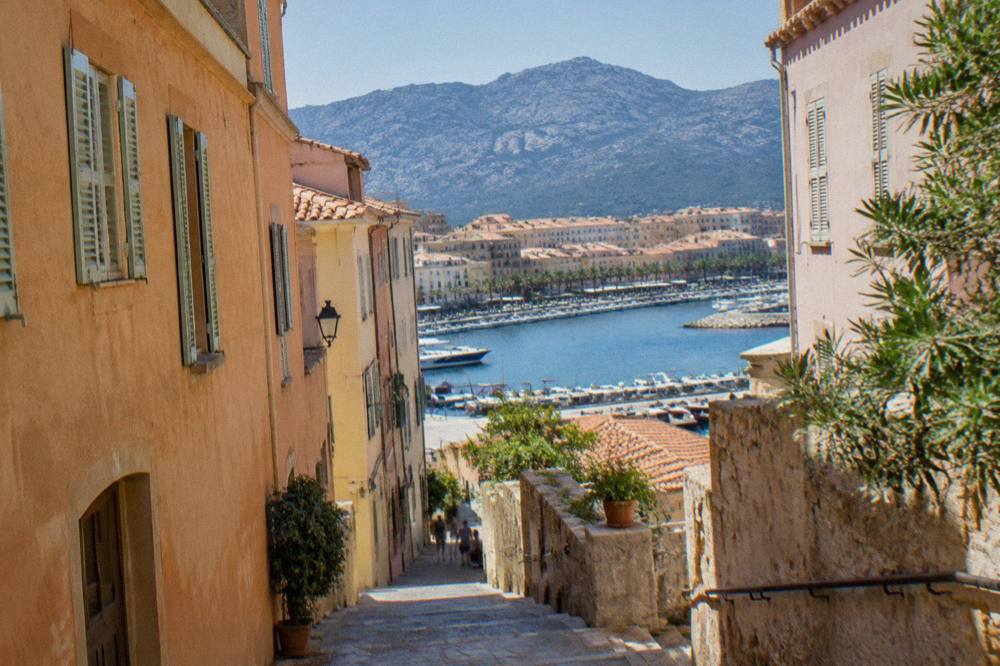
The south works as a hub because its anchor sights cluster tightly. Bonifacio's citadel and cliffs sit at the island's southern tip, Porto-Vecchio's old town is under an hour north of it, and the Aiguilles de Bavella rise about an hour west on the mountain road. The detailed options are laid out in the Corsica south itinerary, which pairs this same coast with beach days at Palombaggia and Santa Giulia.
Bastia, with 46,867 residents the island's second town, makes a calm final night. The old harbour, the Terra Nova district and the Musée de Bastia fill an afternoon, and the port and Poretta airport are both close. The Corsica north itinerary extends the idea if your five days stretch to six or seven.
How Do You Spend Day 1 And Day 2 In Ajaccio?
Day 1 belongs to Ajaccio itself: the Maison Bonaparte in the morning while legs are fresh, the Palais Fesch after lunch, then the town and the gulf on foot, with the market district and the citadel walk filling the gaps. Day 2 goes to sea: a boat trip to the Îles Sanguinaires, which sit at the mouth of the Gulf of Ajaccio, with the afternoon free for the beaches south of town. Both museums are an easy walk apart, and the Maison Bonaparte's own practical-information page puts it 200 m from the bus station and ferry terminal, served by bus 8 from the airport, so a car sits idle for both days.
The Sanguinaires trip is the island's easiest headline boat ride, short enough to leave an afternoon intact. Several operators run it, and the choices below show the range, from a plain gulf circuit to an aperitif sunset run.
The Îles Sanguinaires themselves are protected, with free public access maintained and motorised vehicles and structures restricted, per the Corse-du-Sud prefecture's published acts. The full rundown of the islands and their lighthouse is in the Îles Sanguinaires guide.
Day 2's spare afternoon can go south to Porticcio's beaches, or west on foot toward the headlands, or simply to the town's own seafront. Ajaccio runs seven lifeguard posts from 1 July to the end of August on its main beaches, per the town's published surveillance plan, so midsummer swims have supervised zones.
What Makes Day 3 The Gulf Of Porto, Piana And Scandola?
Day 3 is the scenic core of any five-day Corsica trip: the D81 road from Piana along the Calanques de Piana, then a boat trip into the Scandola Nature Reserve, a UNESCO World Heritage property shared with the Gulf of Girolata and the Calanche of Piana, inscribed in 1983. Scandola's land area is closed to the public and visits are by boat only, so the boat is not an upgrade, it is the only way in. The reserve, created by ministerial order on 9 December 1975 as Corsica's first, covers 1,000 ha of sea and 919 ha of land with a 70 ha integral reserve, managed by the PNRC. The UNESCO dossier number is 258.
Boat trips leave from Porto, Ota, Cargèse, Sagone and even Ajaccio, so the choice is really about how much sea you want. The dedicated rundown is in the Scandola boat tour guide and the Scandola Nature Reserve page, which explain the anchoring and fishing rules that apply inside the reserve.
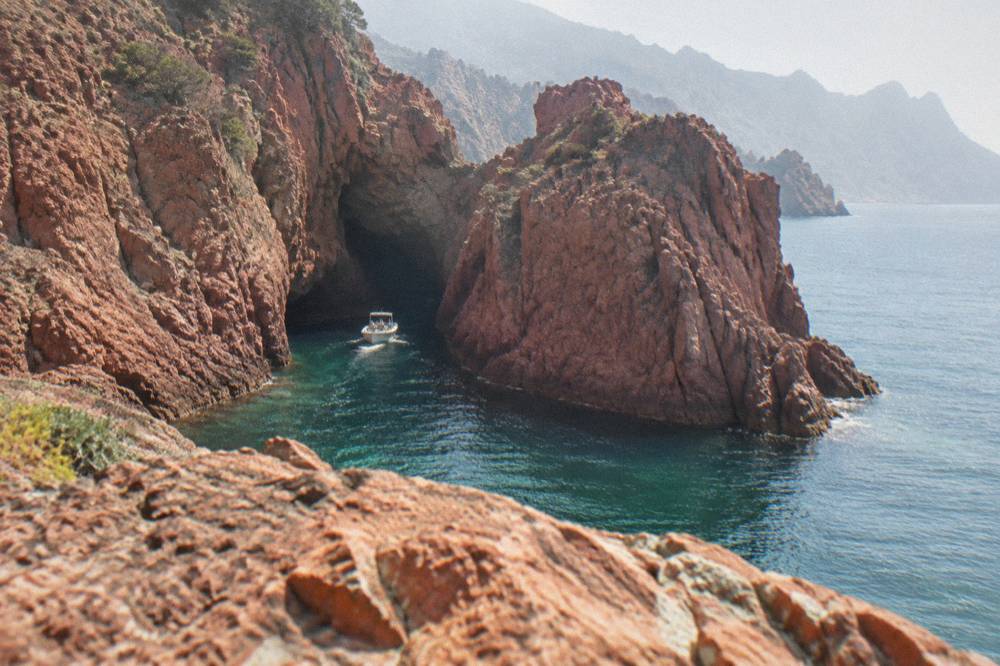
The Calanques de Piana, the red granite formations on the road itself, deserve the drive with or without a boat. The Calanques de Piana guide covers the viewpoints and short walks; the Calanques de Piana tour page lists the sea options from Porto. If you would rather not drive this coast at all, a day trip from Ajaccio that combines Scandola and Piana by semi-rigid boat is one's options, covered in the Scandola and Girolata boat trip plan.
One planning note that first pages rarely carry: the State and the Office de l'Environnement de la Corse confirmed a shared roadmap on 28 April 2026 for the UNESCO property, including voluntary labelling of boat operators, a QR-code tracking trial for pleasure boats, more controls at sea and renewed osprey quiet zones, with quotas and licences to be consolidated in a regulatory framework being finalised. None of that changes a booked excursion, but it explains why operator information carries weight here. The full index of guides sits on Corsica Travel Guide.
How Do You Fit Bonifacio And The South Into Day 4?
Day 4 is the transfer day with the payoff: drive south in the morning, stop at Filitosa for its standing menhirs, then give Bonifacio's citadel, cliffs and the 189 steps of the Escalier du Roi d'Aragon the afternoon, with an option to swap in the Aiguilles de Bavella if you prefer mountains to citadels. Filitosa opens 1 April to 2 November, 09:00 to sunset with about 1 hour 30 to allow, at EUR 9 adults, EUR 7 reduced and EUR 28 for a family. The Escalier du Roi d'Aragon charges about EUR 5 with a EUR 2 child rate, monthly hours and a closed-shoe rule, per the Bonifacio reservation site, and the stairway ends in a 180-degree view over the cliffs toward Sardinia, with a diploma for children who complete it.
The Bonifacio half of the day runs better on foot than by car. The citadel, the old town's lanes and the cliff-top path need two or three unhurried hours, and the Bonifacio citadel and cliffs guide maps them. Out at sea, the cliffs and the Îles Lavezzi draw the boats: the Bonifacio boat tour page lists the Lavezzi and cliff cruises, and the Bonifacio and Lavezzi day trip plan builds a fuller southern day. If five days is all you have, the how many days do you need in Bonifacio answer settles the overnight question.
The Bavella alternative turns day 4 into a mountain day instead.
Can You Do The Désert Des Agriates On Day 5 And Still Reach Bastia?
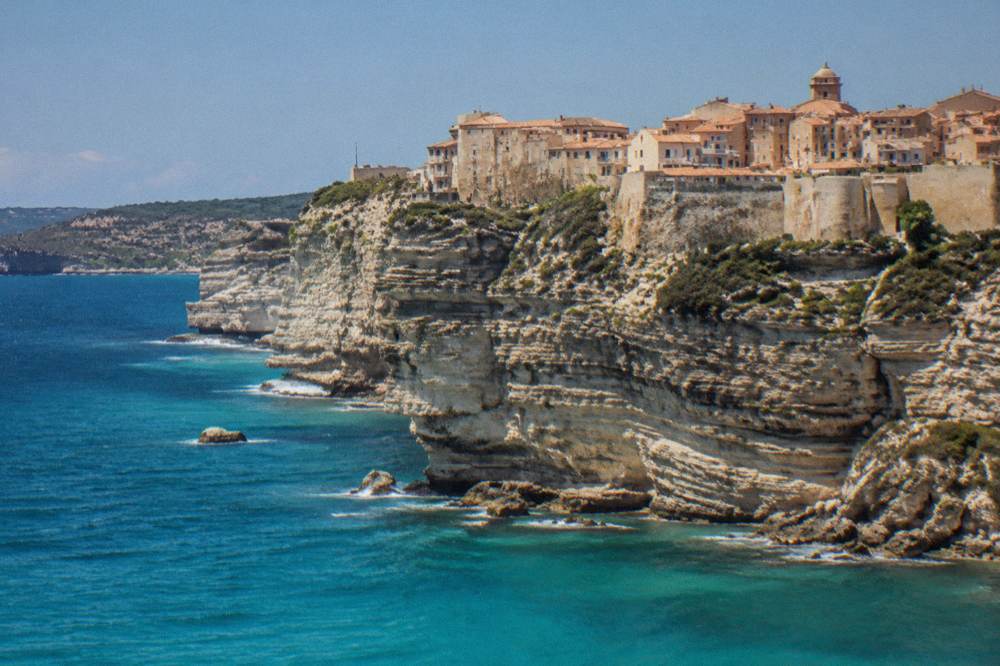
Yes, day 5 can pair the Désert des Agriates in the morning with Bastia in the afternoon, because the beaches of Saleccia and Lotu are reached by boat shuttle from Saint-Florent, by 4x4 track from Casta, or on foot, and the shuttle crossing runs about 15 to 20 minutes, from roughly April to October, weather permitting. From Saint-Florent the drive east to Bastia is the easiest motorway stretch of the whole trip, so a midday departure still leaves the old harbour, the Musée de Bastia and the Terra Nova citadel before dinner. The full detail is in the Désert des Agriates guide and the Désert des Agriates day trip plan.
The guided option saves the track and the parking question at a stroke.
Bastia rewards the hours you give it. The Musée de Bastia in the Palais des Gouverneurs keeps high-season hours of 10:00 to 18:30 and low-season hours of 09:00 to 12:00 and 14:00 to 17:00, closed Sundays and Mondays in the low season, per the museum's information page. The old harbour itself is the town's open-air sight, and the Vieux-Port de Bastia guide walks it. Families extending the trip should read the Corsica with kids plan, which leans on this same northeast coast.
Do You Need A Car For Five Days In Corsica?
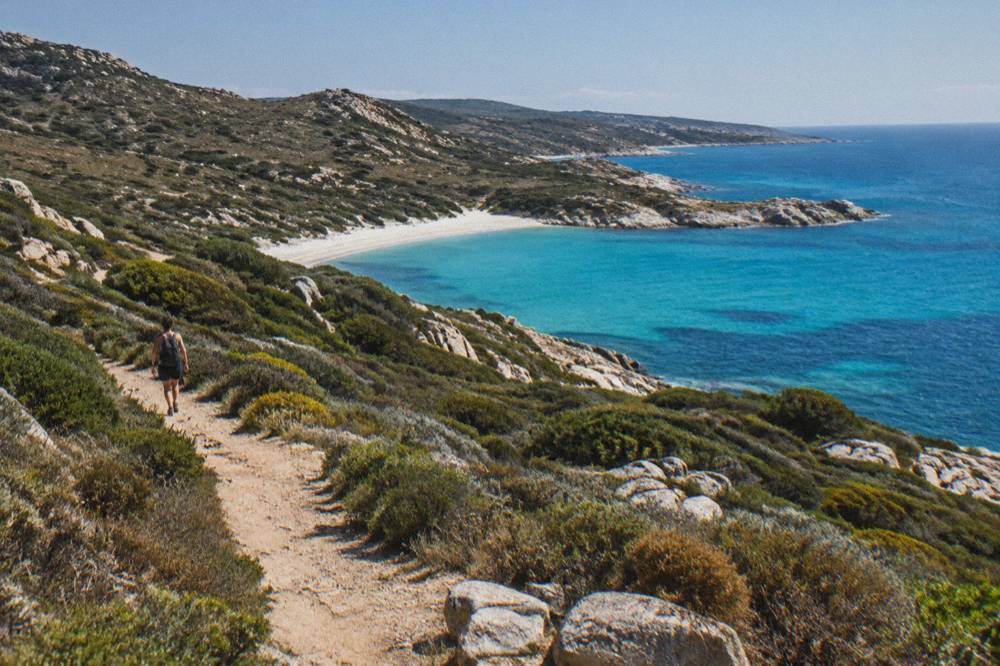
A car is the practical choice for this five-day route, because the Gulf of Porto, Bonifacio and the Agriates all sit on mountain roads with no rail branch, but a car-free version is possible using Ajaccio as a base for boat trips and the train for Bastia, accepting that Scandola, Bavella and Saleccia would each need an excursion instead of a drive. The Chemins de fer de la Corse run an Ajaccio to Bastia line via Corte, plus the Ponte-Leccia to Calvi branch and the Balagne coastal line between Calvi and L'Île-Rousse, so the rail network covers exactly the two spine corridors and none of the headline coasts. The trade-offs are laid out in the do you need a car in Corsica answer and the getting around Corsica guide.
Corte makes a strong compromise stop either way. The road times published by the Musée de la Corse are, from Bastia 1 h, Ajaccio 1 h 30, Calvi 1 h 30, Porto-Vecchio 2 h, Bonifacio 2 h 45 and Propriano 2 h 45, which makes the old capital the island's genuine crossroads. The citadel museum, EUR 5.50 with one ticket covering both museum and citadel, is worth the stop, and the Corte and the interior guide covers the Restonica valley beside it.
| Journey on this route | Road time (published figure) |
|---|---|
| Bastia to Corte | 1 h |
| Ajaccio to Corte | 1 h 30 |
| Calvi to Corte | 1 h 30 |
| Porto-Vecchio to Corte | 2 h |
| Bonifacio to Corte | 2 h 45 |
| Propriano to Corte | 2 h 45 |
When Should You Schedule This Five-Day Corsica Route?
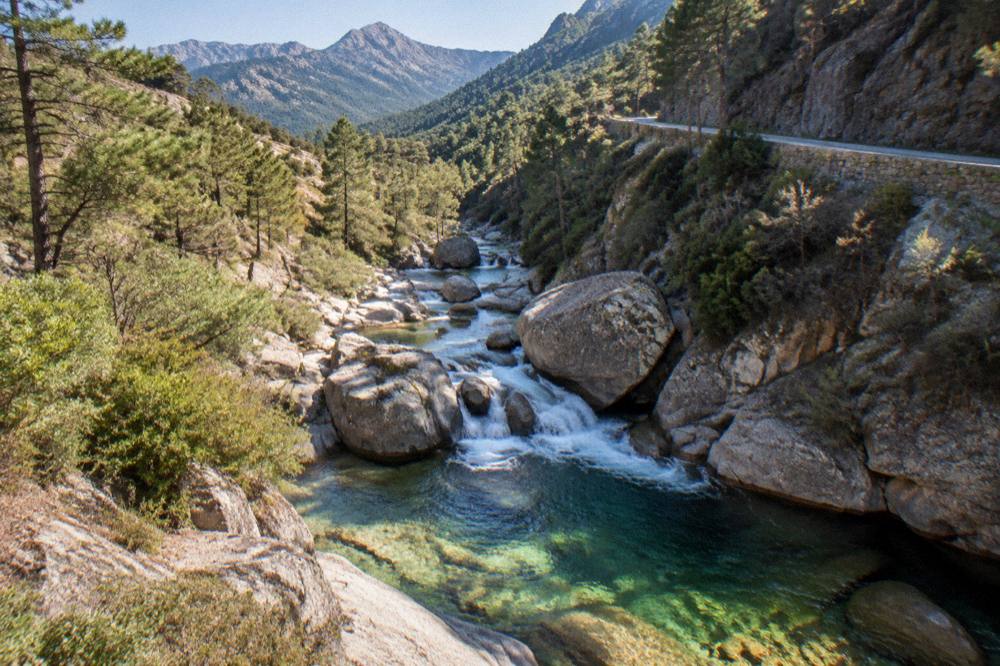
The route runs at its simplest from late May to early October, when the Filitosa site (1 April to 2 November) and the Saint-Florent beach shuttles (roughly April to October) are both open, though the Météo-France station normals for Ajaccio show July averaging just 8.6 mm of rain and August a mean daily high of 29.2 °C, with October and November carrying the heaviest rain at 85.7 mm and 111.8 mm. Those figures are the 1991-2020 climate normals for the Ajaccio station at Campo dell'Oro, and they shape the calendar more than any promotional season does. October can still work, and the can you swim in Corsica in October answer covers it, but the November rain figure of 111.8 mm explains why late autumn suits towns and museums better than beaches and boat trips.
| Month | Ajaccio mean high | Ajaccio mean low | Rain mm | Sunshine h/day |
|---|---|---|---|---|
| May | 22.1 °C | 11.8 °C | 49.8 | 9.3 |
| June | 25.9 °C | 15.4 °C | 25.9 | 11.1 |
| July | 28.6 °C | 17.7 °C | 8.6 | 12.1 |
| August | 29.2 °C | 18.1 °C | 15.8 | 11.1 |
| September | 26.1 °C | 15.4 °C | 57.8 | 8.7 |
| October | 22.8 °C | 12.6 °C | 85.7 | 6.7 |
One rule applies whatever the month: from 15 June to 30 September it is forbidden to light a fire or smoke in forests, maquis and massifs, the fire-risk map is updated at 18:00 for the next day, and from mid-June to mid-September access to some massifs can be restricted or closed on high-risk days. The UK FCDO notes a high wildfire risk in France from April to October. Hikers should check the prefecture map the evening before any mountain day, and the Corsica safety guide collects the emergency numbers, including 112 and the PGHM mountain rescue at 04 95 24 24 00.
Can You Hike Any Of The GR20 In A Five-Day Trip?
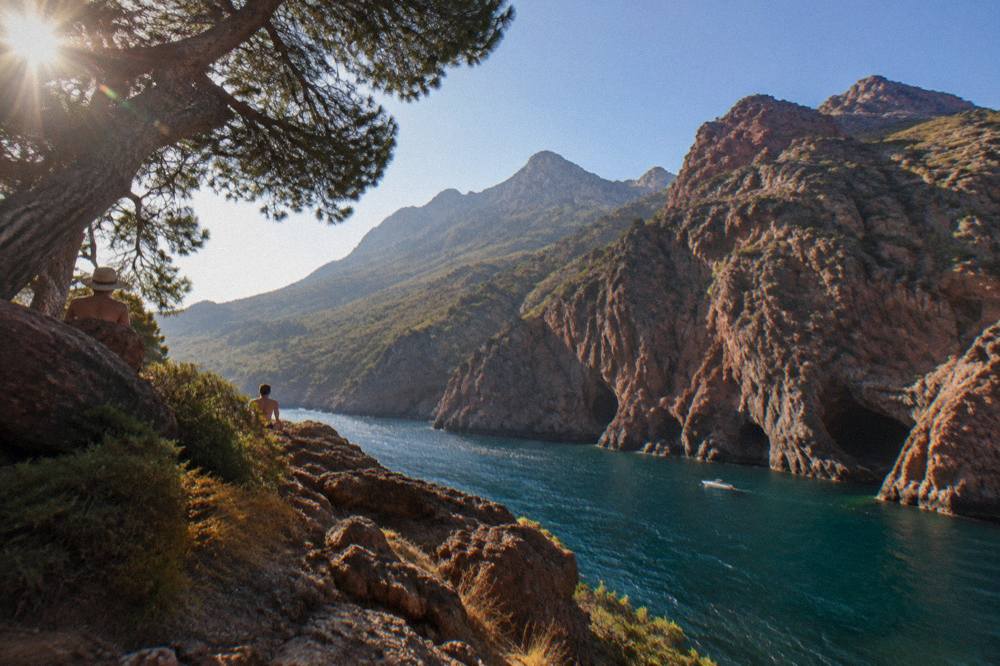
Not the whole trail: the GR20 runs 180 km north to south in about 15 stages of 4 to 8.5 hours each, and even a single stage such as the first, Calenzana to Ortu di u Piobbu, is listed at about 6 h 30 out, so five days fits day walks and at most a two-stage taste, not the crossing. The PNRC guards its refuges from 16 May to 4 October, booking is mandatory for both bunks and bivouac pitches, online only, and the 2026 rates are EUR 20 for a refuge bunk, EUR 12 for a bivouac pitch with your own tent, EUR 27 for a one-person rented tent and EUR 39 for a two-person rented tent. The full mechanics are in the how long does the GR20 take and do you need to book GR20 refuges answers and the Corsica GR20 guide.
For this itinerary, the realistic hiking menu is the shorter long-distance paths, which the PNRC's own brochure measures precisely:
| Trail | Length | Days | Climb |
|---|---|---|---|
| Mare e Monti Nord | 121 km | 10 | 6,100 m |
| Mare a Mare Nord | 139 km (161 km with variant) | 8 to 12 | 5,900 m |
| Mare a Mare Centre | 84 km | 6 to 7 | 3,900 m |
| Mare a Mare Sud | 73 km | 5 | 3,200 m |
| Mare e Monti Sud | 66 km | 5 | 2,700 m |
None of those fits five days whole either, but their day sections do, and the hiking in Corsica guide picks them apart. Two GR20 rules travel to any day walk: no departures from Calenzana after 11:00 under the municipal fire-risk order, and wild camping is banned across the island, with bivouac only in the marked areas at refuges. The Cirque de la Solitude section has been off the trail since a fatal rockfall in 2015, replaced by a variant.
Common Questions About Corsica In 5 Days
Is 5 Days In Corsica Enough?
Five days is enough for one coast plus a mountain taste: Ajaccio, the Gulf of Porto with Piana and Scandola, Bonifacio and the Désert des Agriates fit comfortably, while the GR20, Cap Corse and the Castagniccia each need a separate trip.
Can You Do Both Scandola And Bonifacio In A 5-Day Trip?
Yes. Scandola sits on day 3 from Porto or Piana and Bonifacio on day 4, which makes the transfer day between the two the longest drive of the itinerary. Break it at Filitosa or Sartène.
What Is The Best Month For A 5-Day Corsica Itinerary?
No month is a fact: the Météo-France 1991-2020 normals for Ajaccio show July averaging 8.6 mm of rain and August a mean daily high of 29.2 °C, while October carries 85.7 mm. The route's seasons are set by Filitosa (1 April to 2 November) and the Saint-Florent beach shuttles (roughly April to October), so late May to early October is the practical window.
Do You Need A Car For 5 Days In Corsica?
For this loop, yes in practice. The train covers Ajaccio to Bastia via Corte and the Calvi and Balagne branches, but the Gulf of Porto, Bonifacio's hinterland and the Agriates tracks have no rail, so a car-free trip trades drives for booked excursions.
How Much Does A 5-Day Corsica Trip Cost In Entry Fees?
The published sight prices on this route add up: Maison Bonaparte EUR 10, Palais Fesch EUR 10, Musée de la Corse EUR 5.50, Filitosa EUR 9 and the Escalier du Roi d'Aragon about EUR 5, so roughly EUR 40 per adult covers every museum and sight on the itinerary, before boats, food and lodging.
Can You Hike Part Of The GR20 During A 5-Day Stay?
You can taste one or two stages. The GR20 is 180 km in about 15 stages of 4 to 8.5 hours, refuges are guarded 16 May to 4 October, booking is online and mandatory, and a bunk costs EUR 20 with a bivouac pitch at EUR 12.
Five days will not empty Corsica, and that is the point of the plan: one coast done properly, two boat trips, a mountain pass and a citadel town at each end, with the Corsica in 14 days plan waiting when the island pulls you back.