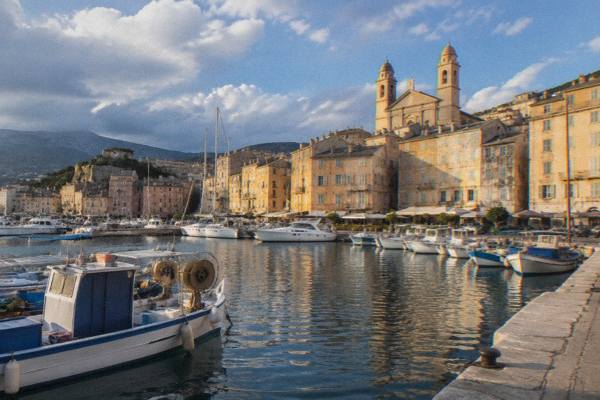
Northern Corsica Itinerary
A Northern Corsica itinerary runs from the port of Bastia out along Cap Corse, across the Désert des Agriates to Saint-Florent and the beaches of Saleccia and Lotu, west to Calvi, L'Île-Rousse and the Balagne villages, and inland to Corte, the old capital in the mountains.
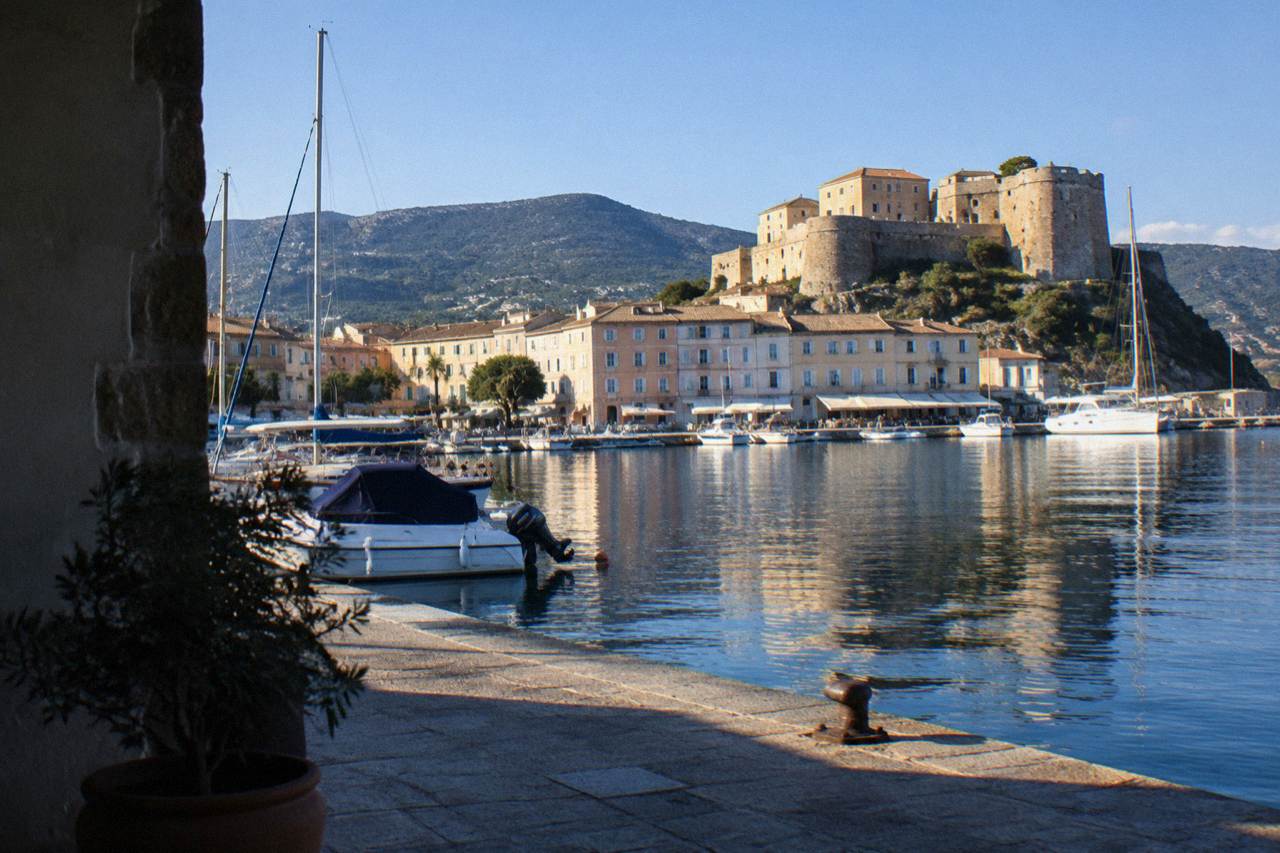
Plan five to seven days for Northern Corsica: two around Bastia and Cap Corse, one for Saint-Florent and the Agriates beaches, two for Calvi and the Balagne, and one for Corte and the Restonica valley, using the road times, refuge rates and sight prices in this guide.
Northern Corsica holds the island's second town, its most northerly peninsula, a wild coastal desert, a string of beach resorts and the old capital in the mountains, all within a loop you can drive in a week. Bastia, with 46,867 residents at the last census, anchors the east of the loop, Saint-Florent and the Désert des Agriates sit at its neck, Calvi and L'Île-Rousse face west, and Corte stands inland where the roads meet. This itinerary lays out the route day by day, with the road times the Musée de la Corse publishes for Corte, the trail lengths from the Parc naturel régional de Corse, and the sight prices and hours each operator or museum states itself.
For the overall shape of an island trip, see things to do in Corsica, and pair this page with the Southern Corsica itinerary if the full island is on the list.
What Does A Northern Corsica Itinerary Cover?
A Northern Corsica itinerary covers Bastia and the Cap Corse peninsula, the port town of Saint-Florent, the Désert des Agriates with the beaches of Saleccia and Lotu, the west-coast resorts of Calvi and L'Île-Rousse, the Balagne hill villages behind them, and the inland town of Corte in its citadel-crowned setting. The region sits inside Haute-Corse, the northern department, which INSEE estimated at about 190,500 residents in 2026.
The loop works because the geography cooperates. Bastia is the ferry gateway on the east coast, and Corte, the crossroads of the island, is one hour's drive from Bastia, one and a half hours from Calvi and one and a half hours from Ajaccio, per the road times the Musée de la Corse prints on its practical-information page. That makes a circuit of Bastia, Cap Corse, Saint-Florent, Calvi and Corte realistic without ever backtracking far.
Two of the island's four airports sit in the north: Bastia Poretta (BIA) and Calvi Sainte-Catherine (CLY). Figari Sud Corse and Ajaccio Napoléon Bonaparte serve the south and west, so a fly-in, fly-out northern loop is straightforward. The Chemins de fer de la Corse also serve the region, reported to run the Ajaccio to Bastia line via Corte, the Ponte-Leccia to Calvi line, and the Balagne coastal stretch between Calvi and L'Île-Rousse.
How Many Days Do You Need For Northern Corsica?
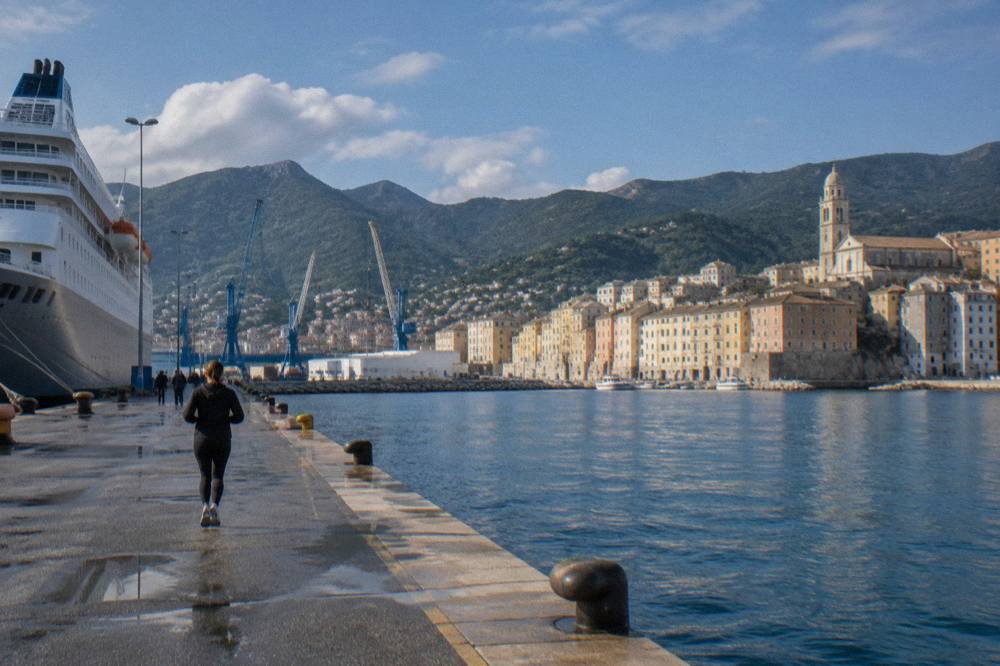
Five days is the working minimum for a Northern Corsica itinerary, and seven lets the loop breathe: one day for Bastia, one for Cap Corse, one for Saint-Florent and the Agriates beaches, two for Calvi, L'Île-Rousse and the Balagne, and one for Corte and its citadel museum. Fewer than five days forces a choice between Cap Corse and the Balagne, the two halves that each reward a full day.
The day-by-day shape below is a template rather than a timetable. Boat shuttles to the Agriates beaches run about April to October, weather permitting, per the visit-corsica.com page on the Désert des Agriates, so the beach day belongs to the warm months. The Corsica in 5 days itinerary and the longer Corsica in 10 days itinerary show how the north splits or merges with the south when time is tight.
| Day | Base | Focus of the day |
|---|---|---|
| 1 | Bastia | Old port, Terra Nova citadel quarter, Musée de Bastia |
| 2 | Bastia or Macinaggio | Cap Corse peninsula drive, Centuri and Erbalunga |
| 3 | Saint-Florent | Boat shuttle to Saleccia or Lotu in the Désert des Agriates |
| 4 | Calvi | Citadel, beach and a boat trip along the coast |
| 5 | L'Île-Rousse or Calvi | Balagne villages and the coastal train between the two towns |
| 6 | Corte | Citadelle de Corte, Musée de la Corse, Restonica valley |
| 7 | Corte or Bastia | GR20 start at Calenzana viewpoint day or return to Bastia |
A guided option compresses day two and day three: the half-day Cap Corse and Agriates trip runs from Saint-Florent, and it suits a plan that wants the peninsula and the desert without two separate driving days.
Where Should You Base Yourself In Northern Corsica?
Bastia and Calvi are the two natural bases for a Northern Corsica itinerary: Bastia for Cap Corse, Saint-Florent and Corte, Calvi for the Balagne, L'Île-Rousse and boat trips along the north-west coast. Corte works as a one- or two-night inland base, and Saint-Florent suits a beach-focused stay built around the Agriates shuttle boats.
Bastia's case is practical. It is the second town of Corsica, a density of 2,418 residents per km2 at the last census, and the ferry port where many travellers arrive from Livorno, Savona, Genoa, Toulon, Nice or Marseille. Reported crossing ranges give Livorno to Bastia at about 4 to 5 hours, Savona to Bastia at about 6.5 hours and Nice to Bastia at about 7.5 to 10 hours, all as ranges to confirm with the operator. From Bastia, Corte is one hour by road and Saint-Florent under an hour along the Désert des Agriates coast.
Calvi's case is the setting and the trips. Boat tours leave for Scandola from Calvi, the Balagne villages sit behind the town, and the coastal train, reported by cf-corse.corsica, links Calvi with L'Île-Rousse. The Calvi and the Balagne area guide is not on this site's list, so use the Calvi citadel guide for the town itself. Splitting the week between Bastia and Calvi, with a night in Corte, keeps every drive short.
| Base | Drive to Corte | Best for |
|---|---|---|
| Bastia | 1 h | Cap Corse, ferries, city sights |
| Calvi | 1 h 30 | Balagne, boat trips, beaches |
| Ajaccio (south-west start) | 1 h 30 | pairing with a southern loop |
| Porto-Vecchio (south-east) | 2 h | combining north and east |
| Saint-Florent | about 1 h 30 via Bastia | Agriates shuttle beaches |
The Corte drive times in the table come from the Musée de la Corse practical page; the Saint-Florent line is an estimate, not a published figure, so treat it as a planning sketch rather than a schedule.
What Are The Best Day Trips From Bastia And Saint-Florent?
The strongest day trips from Bastia and Saint-Florent are the Cap Corse peninsula loop through Centuri and Erbalunga, the Désert des Agriates with its boat-shuttle beaches of Saleccia and Lotu, and the inland run to Corte for the citadel and the Restonica valley. From Saint-Florent specifically, the shuttle boats to Saleccia and Lotu are the signature trip, running about April to October, weather permitting.
Cap Corse is the long finger at the top of the island, with Centuri and Erbalunga among its named villages. The Cap Corse guide and the Cap Corse day trip itinerary cover the peninsula in detail; the Centuri and Erbalunga pages take the two villages separately. The Musée de Bastia, reported by its own information page, keeps high-season hours of 10:00 to 18:30, so a museum morning pairs with an afternoon on the peninsula road.
The related half-day trip covers both Cap Corse and the Agriates with a Corsican meal; if the plan is self-drive instead, book nothing and read the access rules in the next section. For a taste of Bastia itself in company, an art-historian-led town walk is the other guided option.
How Do You Reach The Désert Des Agriates Beaches?
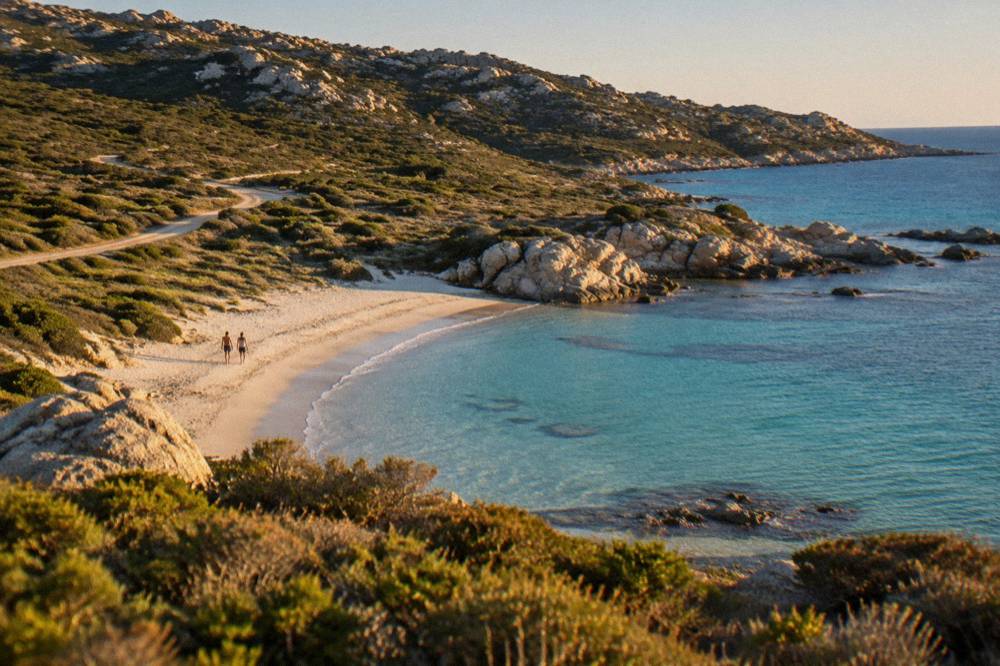
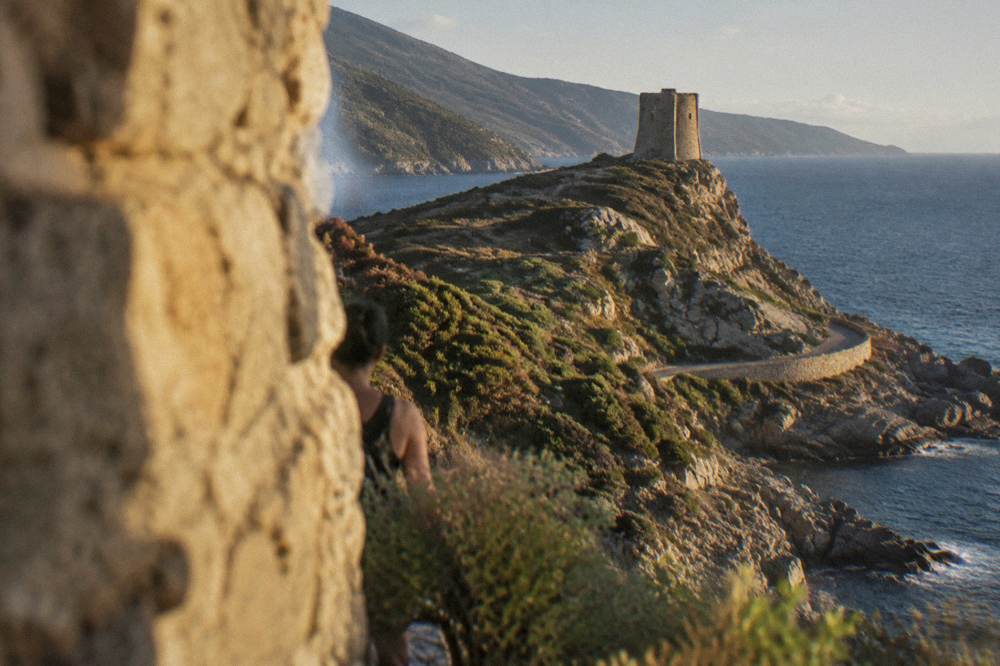
The Désert des Agriates beaches of Saleccia and Lotu are reached three ways: by boat shuttle or taxi-boat from Saint-Florent port, about April to October and weather permitting, by 4x4 track from Casta, or on foot. The visit-corsica.com page for the Désert des Agriates lists all three access routes, and there is no ordinary paved road to the beaches themselves.
That last point shapes the day. The shuttle crossing from Saint-Florent is the way most itineraries handle it, and private providers run the boats. In the fire season the rules tighten: from 15 June to 30 September it is forbidden to light a fire or smoke in forests, maquis and massifs, and the daily massif-access map is updated at 18:00 for the next day, so a hot-summer hike into the Agriates needs a check of the prefecture-linked map the evening before. The wider set of guides lives on Corsica Travel Guide.
The Désert des Agriates guide, the Saleccia beach guide and the Lotu beach guide carry the detail, and the Agriates day trip itinerary turns the logistics into a plan. A guided alternative from Calvi reaches Lotu and Saleccia by jeep, which sidesteps the track-and-shuttle question entirely.
What Can You Hike In Northern Corsica Without Doing The GR20?
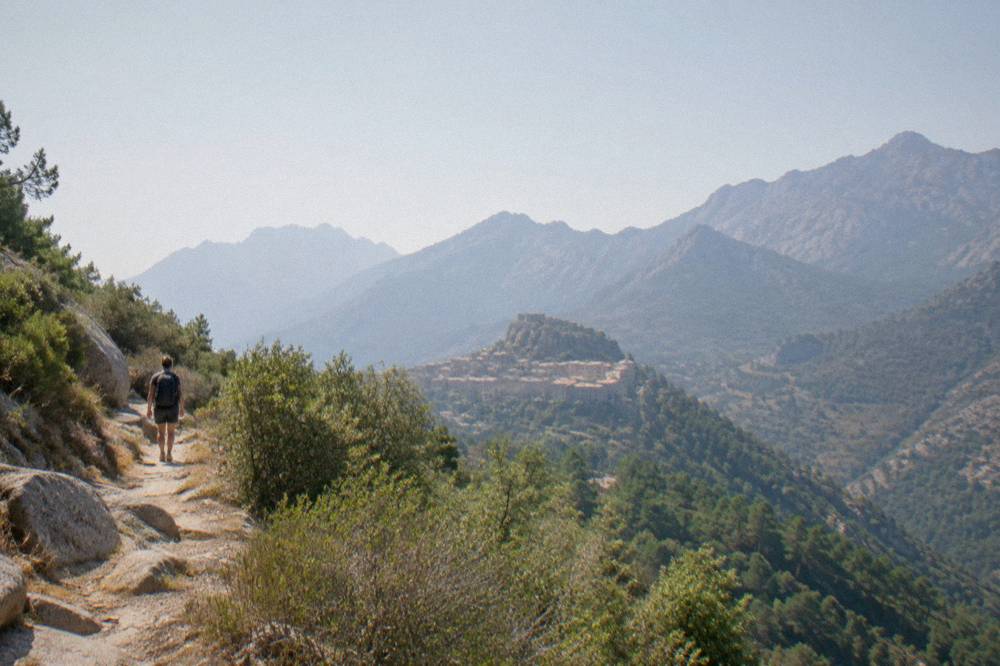
Northern Corsica offers three signed long trails besides the GR20: the Mare e Monti Nord at 121 km over about 10 days to Cargèse with 6,100 m of climbing, the Mare a Mare Nord at 139 km, or 161 km with the variant, over 8 to 12 days with 5,900 m of climbing, and shorter day walks in the Restonica valley and around Calenzana, where the GR20 itself begins. The PNRC brochure publishes all three figures.
The GR20's northern start is Calenzana, and the PNRC page gives the first stage, Calenzana to Ortu di u Piobbu, at about 6 h 30 out. A municipal order bans GR20 departures from Calenzana after 11:00, a fire-risk rule worth knowing even for a day section. The full trail runs 180 km with about 15 stages of 4 to 8.5 hours, per the Corsican Assembly's own text, and the 2026 refuge season runs 16 May to 4 October inclusive.
| Trail | Length | Days | Total climbing |
|---|---|---|---|
| Mare e Monti Nord | 121 km | 10 | 6,100 m |
| Mare a Mare Nord | 139 km (161 km with variant) | 8 to 12 | 5,900 m |
| Mare a Mare Centre | 84 km | 6 to 7 | 3,900 m |
| GR20 (whole trail) | 180 km | about 15 stages | not published |
Booking rules apply on the GR20 even to the northern stages: refuge and bivouac nights must be reserved online, and the PNRC 2026 rates are EUR 20 per person for a refuge bunk, EUR 12 for a bivouac pitch with your own tent, EUR 27 for a one-person rented tent and EUR 39 for a two-person rented tent. Dogs are not allowed inside refuges or rented tents, wild camping is banned across Corsica, and bivouac is allowed only in the marked areas at the refuges. The GR20 guide and the wider hiking in Corsica guide hold the full picture.
| Refuge option (PNRC 2026) | Rate per stay |
|---|---|
| Bunk in refuge (bat-flanc) | EUR 20 per person |
| Bivouac pitch, own tent | EUR 12 per person |
| Rented tent, 1 person | EUR 27 |
| Rented tent, 2 persons | EUR 39 |
| Guarded refuge season | 16 May to 4 October 2026 |
Which Museums And Sights Have Confirmed Hours And Prices?
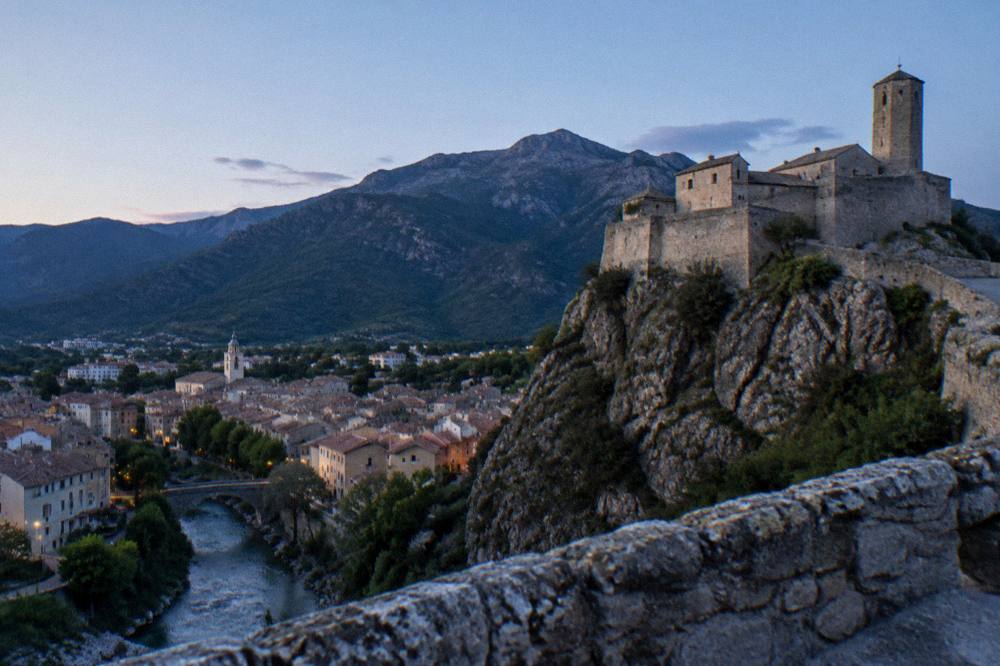
In Northern Corsica the museums with confirmed figures are the Musée de la Corse in Corte, where one ticket at EUR 5.50 full covers both museum and citadel, and the Musée de Bastia, reported at high-season hours of 10:00 to 18:30. The Calvi citadel has no published fee or hours to quote, and the Maison Bonaparte and Palais Fesch sit south of the loop in Ajaccio at EUR 10 full price each.
The Corte ticket is the value of the set: EUR 5.50 full, EUR 4 reduced without a temporary show, EUR 3 for over-65s and young people, free for under-10s, Corsican residents under 25 and disabled visitors with a companion, with the citadel's last access one hour before the museum closes. High season runs 1 May to 31 October, daily 10:00 to 19:00 except 1 May; low season, 1 November to 30 April, runs 10:00 to 17:00 except Sundays, Mondays, holidays and 24 December, with an annual closure from 31 December to 14 January.
| Sight | Full price | Hours as stated | Closed |
|---|---|---|---|
| Musée de la Corse and Citadelle, Corte | EUR 5.50 | 10:00-19:00 (1 May-31 Oct) | 1 May; Sun and Mon in low season |
| Musée de Bastia | not stated on its pages | 10:00-18:30 high season | Sun and Mon in low season |
| Maison Bonaparte, Ajaccio | EUR 10 | 10:00-17:30 in July-September | Monday |
| Palais Fesch, Ajaccio | EUR 10 | 09:00-17:00 daily | 25 Dec, 1 Jan, 1 Nov |
The Citadelle de Corte guide, the Vieux-Port de Bastia guide and the Citadelle de Bastia guide expand each site, and the Ajaccio pair belongs to a southern add-on rather than this loop. On tipping and small costs: menus in France must state "prix service compris", so a gratuity is optional, and the euro is the currency throughout.
How Does The Weather Shape A Northern Corsica Itinerary?
The Météo-France 1991-2020 station normals for Bastia show a hot, dry summer and a mild, wet winter: July averages a 29.4 °C daily high with 13.8 mm of rain, August a 29.8 °C high with 21.1 mm, while October carries 126.5 mm of rain and November 134.3 mm. A northern loop built around beaches and shuttle boats fits June to September; a hiking-first loop stretches comfortably into spring and autumn.
The numbers argue for matching the plan to the month. June at Bastia averages a 26.4 °C high with 38.8 mm of rain and 10 h 12 min of sunshine a day; September still averages a 26.0 °C high but carries 74.5 mm of rain. November is the month the table says to avoid for a beach-and-boat plan, and February has the lowest mean daily low at 5.1 C. Snow falls on the high mountains, so Corte and the high valleys are a different proposition from the coast in winter.
| Month (Bastia normals) | Daily high | Daily low | Rain | Sunshine h/day |
|---|---|---|---|---|
| Jun | 26.4 °C | 16.5 °C | 38.8 mm | 10.2 |
| Jul | 29.4 °C | 19.4 °C | 13.8 mm | 11.2 |
| Aug | 29.8 °C | 19.8 °C | 21.1 mm | 10.1 |
| Sep | 26.0 °C | 16.7 °C | 74.5 mm | 7.9 |
| Oct | 22.0 °C | 13.4 °C | 126.5 mm | 5.9 |
Safety notes slot into the same frame. The UK FCDO notes a high wildfire risk in France from April to October, and the US State Department lists France at Level 2, Exercise Increased Caution. Emergency numbers are 112, 15 for medical, 17 for police, 18 for fire, 114 by SMS and 196 for sea rescue, with the PGHM mountain-rescue base at Ajaccio on 04 95 24 24 00. From 1 July to the end of August 2026 Ajaccio ran seven lifeguard posts on its main beaches, and Haute-Corse's supervised beaches are reported to be staffed by volunteer firefighters from about 1 July to 31 August, a pattern that frames the swimming season.
What Should You Know Before Driving The Northern Loop?
Before driving the Northern Corsica loop, know four things: mountain roads are narrow and Inforoutes Corse publishes live road conditions and pass accessibility levels, the 15 June to 30 September fire rules ban fires and smoking in forests and massifs, refuges and bivouacs on the GR20 must be booked online in season, and the massif-access map updates at 18:00 daily for the next day. None of these blocks the trip; all of them reward a check the evening before.
Inforoutes Corse is the standing reference for road status, including accessibility levels for the main cols, and it is the place to look before any crossing of the interior. The Chemins de fer de la Corse offer an alternative on two legs of the loop, with the Ajaccio to Bastia line via Corte and the Balagne coastal line between Calvi and L'Île-Rousse, per the reported network description. The driving in Corsica guide, the Corsica car rental guide and the getting around Corsica guide cover the mechanics.
For travellers combining regions, the Corsica road trip guide frames the full-island drive and the first time in Corsica guide covers the basics, from the euro to the Europe/Paris timezone. Families can adapt this loop using the Corsica with kids itinerary, and off-season travellers will find alternatives in the Corsica in the rain itinerary.
Which Boat Trips Fit A Northern Corsica Route?
The boat trips that fit a northern route are the Agriates catamaran excursions from L'Île-Rousse, the sea trip from Bastia's old harbour along the north-east coast, the Calvi snorkelling and sunset trips, and the long day run from Calvi to Scandola, the UNESCO-listed reserve reachable only by boat.
Scandola deserves its line even on a northern page. The reserve, created by ministerial order on 9 December 1975, was the first in Corsica, with 1,000 ha of sea and 919 ha of land, and it sits inside the UNESCO property "Gulf of Porto: Calanche of Piana, Gulf of Girolata, Scandola Reserve", inscribed in 1983. The land part is closed to the public and visits are by boat only, per the OEC rules, so the Calvi departure is the northern way in. The Scandola boat tour guide and the Scandola nature reserve guide carry the detail.
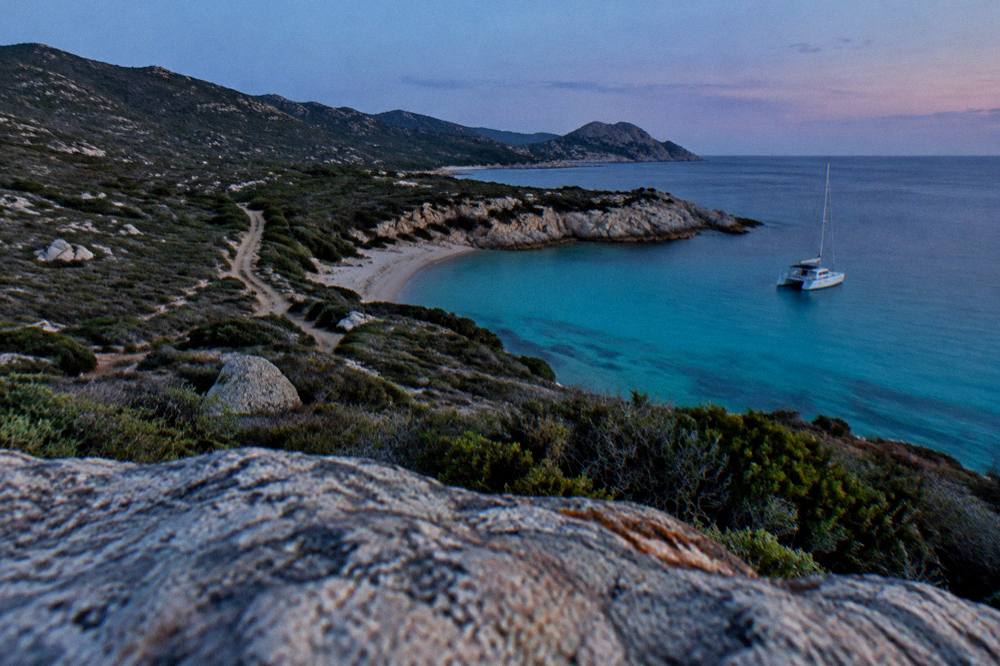
Bonifacio's cliff-and-Lavezzi cruise, the third pick in the bands above, belongs to a southern extension, but it pairs with this loop if the ferry from Bastia continues south. For the affiliate-linked Agriates half-day, check dates against the shuttle season and book directly: Check availability.
Common Questions About A Northern Corsica Itinerary
How Many Days Do You Need For Northern Corsica?
Five days is the practical minimum and seven is comfortable: Bastia, Cap Corse, Saint-Florent and the Agriates, Calvi and the Balagne, and Corte each take a day, with the extra days absorbing boat trips and village stops.
Do You Need A Car For A Northern Corsica Itinerary?
A car is the flexible choice for Cap Corse, the Balagne villages and Corte. The train, reported to link Ajaccio to Bastia via Corte and Calvi to L'Île-Rousse on the Balagne coastal line, covers two legs of the loop, but the Agriates track and the hill villages need wheels or a guided trip.
How Do You Get To Saleccia And Lotu Beaches?
By boat shuttle or taxi-boat from Saint-Florent, about April to October and weather permitting, by 4x4 track from Casta, or on foot, per the visit-corsica.com page for the Désert des Agriates. There is no ordinary paved road to the beaches.
Is Corte Worth A Day On A Northern Loop?
Yes. One ticket at EUR 5.50 covers the Musée de la Corse and the citadel, the museum runs 10:00 to 19:00 daily in high season, and Corte is one hour by road from Bastia and one and a half from Calvi, per the drive times the museum publishes.
Can You Do The GR20 From The North In A Day?
The northern start is Calenzana, and the PNRC gives stage one to Ortu di u Piobbu at about 6 h 30 out. Departures from Calenzana are banned after 11:00 under a municipal fire-risk order, and refuge or bivouac nights must be reserved online in the guarded season from 16 May to 4 October.
What Is The Rainiest Part Of The Year In Northern Corsica?
The Météo-France 1991-2020 normals for Bastia show October at 126.5 mm of rain and November at 134.3 mm, against 13.8 mm in July, so autumn carries the rain and midsummer stays dry.