Ajaccio Tour
What an Ajaccio tour covers, what the museums cost, which boats leave from the harbour and how to build the days around Ajaccio, Corsica's capital on the west coast.
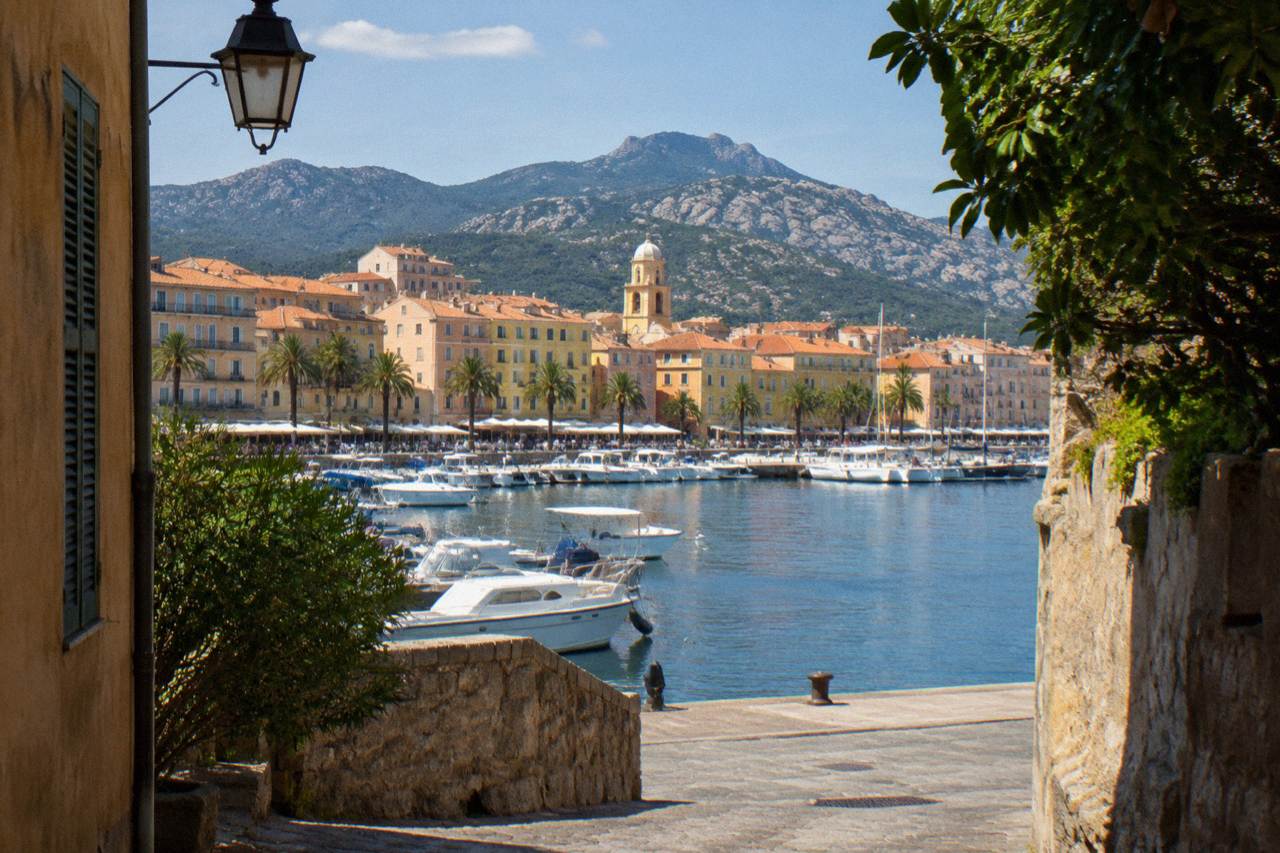
An Ajaccio tour pairs the Maison Bonaparte and Palais Fesch museums with boat trips to the Îles Sanguinaires, an open-top bus circuit of the town and coast, and day trips to Cap Corse or the Désert des Agriates, all reachable from a compact harbour town of 76,320 residents.
Ajaccio is the capital of Corsica, the French Mediterranean island of 8,722 km2 with more than 1,000 km of coastline and a mountainous interior that rises to Monte Cinto at 2,706 m. The town holds 76,320 residents on its Gulf of Ajaccio, and an Ajaccio tour works because almost everything sits within a short walk or a short sail: the Maison Bonaparte and Palais Fesch museums, the old streets around Rue Saint-Charles, the harbour quays where boats leave for the Îles Sanguinaires, and day trips that reach Cap Corse or the Désert des Agriates. This page sets out what each piece costs, what the boats cover, and how the pieces fit together, using only figures the museums, the tourist office and the regional park publish.
What Does An Ajaccio Tour Of Corsica Actually Include?
An Ajaccio tour covers four layers: the two big museums in the town centre, boat trips from the harbour to the Îles Sanguinaires and the wider gulf, guided circuits of the town and coast by bus or on foot, and day trips out to Cap Corse, the Désert des Agriates or the Scandola Nature Reserve. The town is the island's capital and its second-largest settlement after Bastia's metropolitan area figures are counted differently, but Ajaccio at 76,320 residents is the administrative heart, and its position on the west coast puts both the Sanguinaires islands and the Gulf of Porto within boat range. A first day normally goes to the museums and the harbour, a second to the water, and a third to the interior or the far north.
The town layer is compact. Maison Bonaparte stands on Rue Saint-Charles, 200 m from the bus station and the ferry terminal, which the museum's own practical-information page states plainly, and bus 8 runs from the airport. Palais Fesch, the Musée des Beaux-Arts, is a short walk from there, and the Ajaccio tourist office lists it as open daily from 09:00 to 17:00 for 16 January to 31 December 2026. That walkability is the reason a tour of the town does not need a car until the day trips begin.
The water layer is the part that makes Ajaccio distinct from inland bases such as Corte. Boats leave from the harbour for the Îles Sanguinaires, for sunset circuits of the gulf, and for full-day runs up the coast toward Scandola and the Calanques de Piana. The Corsica Travel Guide covers each of those runs in detail, from the Sanguinaires boat trip from Ajaccio to the longer Scandola boat tour.
What Do The Ajaccio Museums Cost And When Are They Open?
Maison Bonaparte charges EUR 10 full price, EUR 8 for non-EU residents aged 18 to 25 and for large families, and admits EU residents under 26 free, while Palais Fesch charges EUR 10 full price, EUR 6 for visitors over 65 and admits everyone up to 18 free, according to the museum's page and the Ajaccio tourist office listing for 2026. Maison Bonaparte closes on Mondays year-round, and Palais Fesch closes only on Christmas Day, New Year's Day and 1 November. Between them, the two museums are the indoor core of any Ajaccio tour.
| Museum | Full price | Reduced and free | Closed |
|---|---|---|---|
| Maison Bonaparte | EUR 10 | EUR 8 non-EU 18 to 25 and large families; free EU under 26 | Monday |
| Palais Fesch | EUR 10 | EUR 6 over 65; free up to 18 | 25 Dec, 1 Jan, 1 Nov |
| Musée de la Corse, Corte | EUR 5.50 | EUR 4 reduced, EUR 3 over 65s and young people; one ticket covers museum and citadel | Sun and Mon in low season |
Maison Bonaparte's hours shift by season, and the museum's own page gives all three blocks. From 1 October to 31 March it opens 10:30 to 12:30 and 13:15 to 16:30. From 1 April to 30 June it opens 10:00 to 12:30 and 13:15 to 17:30. From 1 July to 30 September it runs straight through, 10:00 to 17:30, with last entry 30 minutes before closing in every period. Planning around the Monday closure matters more than the hours: a Monday arrival pushes the museums to another day.
Palais Fesch, by contrast, keeps a single daily schedule of 09:00 to 17:00 across the whole 2026 listing period, which makes it the fallback option on any weekday. The full story of each collection sits on the site's own pages for Maison Bonaparte and the Palais Fesch, including what each ticket covers.
What Does The Open-Top Bus Ajaccio Tour Cover?
The open-top bus tour of Ajaccio runs a fixed circuit of the town and the coast with an audio guide on board, giving 360-degree views over the Gulf of Ajaccio from the upper deck, and it is the one tour product that needs no booking decision beyond a time slot. The circuit format suits a first afternoon: it passes the harbour, the town centre and the coastal road in one loop, and the audio guide carries the history in several languages. For travellers who land without a plan, it is the quickest orientation the town offers.
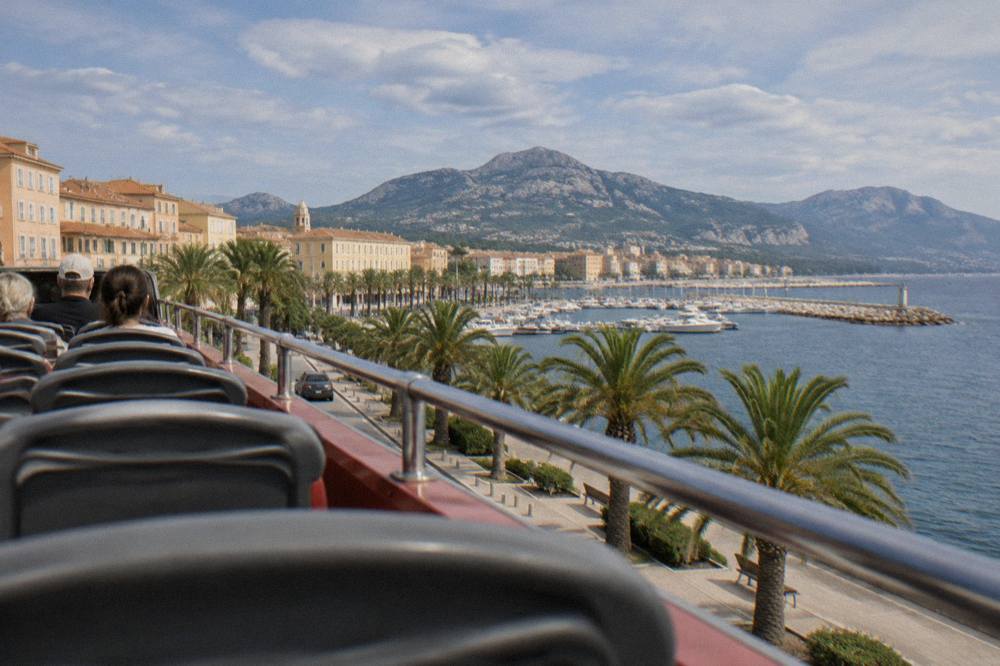
The alternative is a guided walk. A walk and the bus circuit overlap on the old-town streets, so most itineraries pick one or the other rather than both.
Whichever way the town itself is covered, the bus and the walks share one limit: they stay on land. The next section is where an Ajaccio tour changes character entirely.
Which Boat Tours Leave From Ajaccio Harbour?
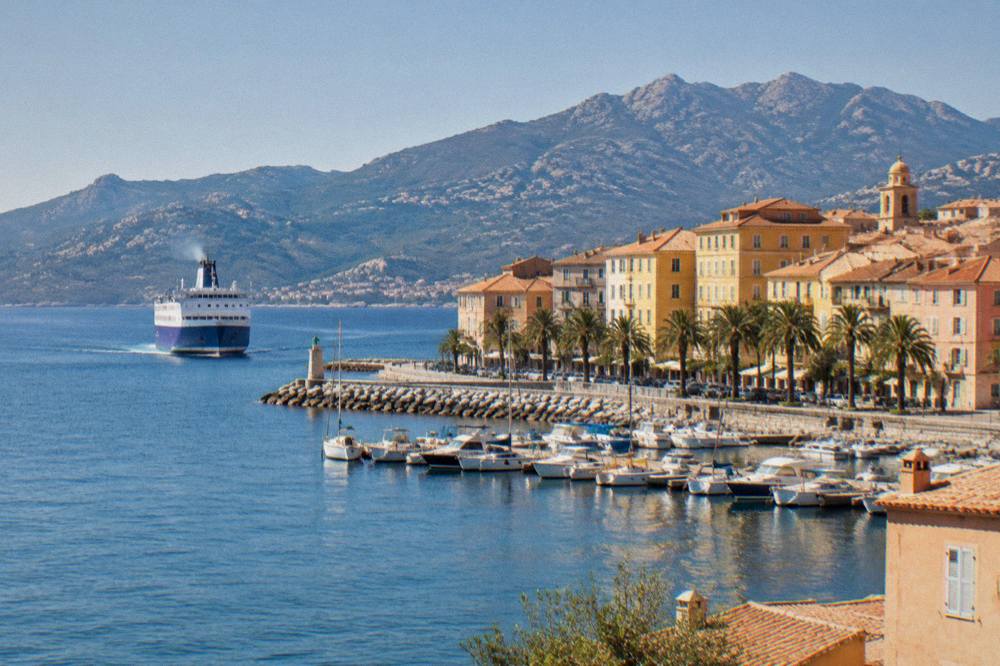
Ajaccio harbour runs three families of boat trips: short gulf circuits that reach the Îles Sanguinaires, aperitif and sunset cruises in the same waters, and full-day cruises north to the Scandola Nature Reserve or east to Bonifacio, with the Sanguinaires gulf tour as the standard first choice. The gulf tour is the direct one: it leaves from Ajaccio or Porticcio and puts the islands, the gulf and the coastline in a single half-day window. Full-day runs trade that convenience for distance, reaching the UNESCO-listed Gulf of Porto by sea.
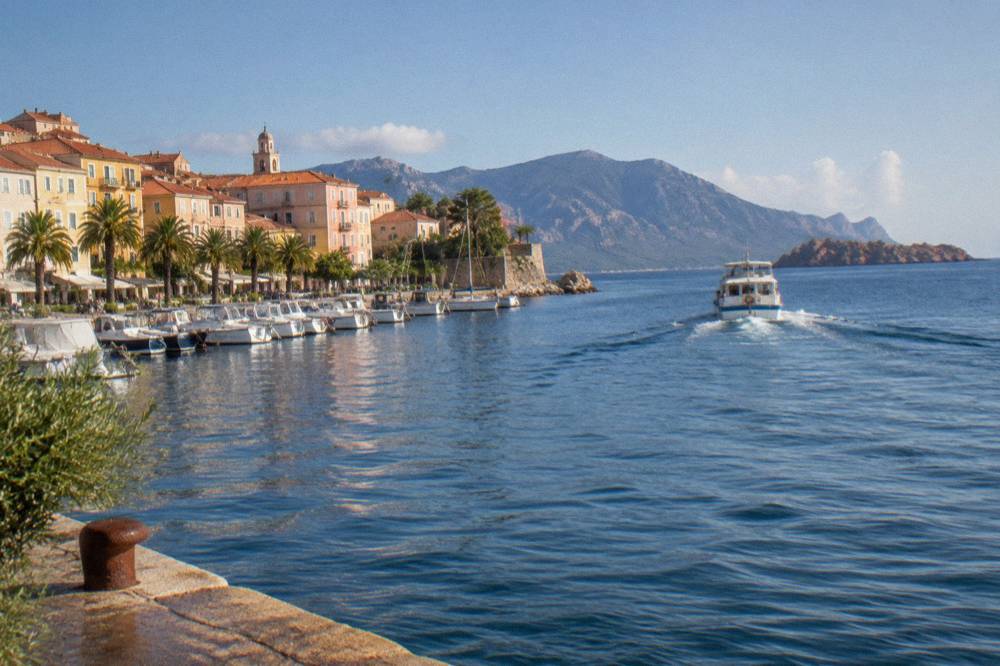
The Sanguinaires run deserves its place at the head of the list. The four islands sit at the mouth of the gulf, and the Îles Sanguinaires page covers what the crossing passes on the way.
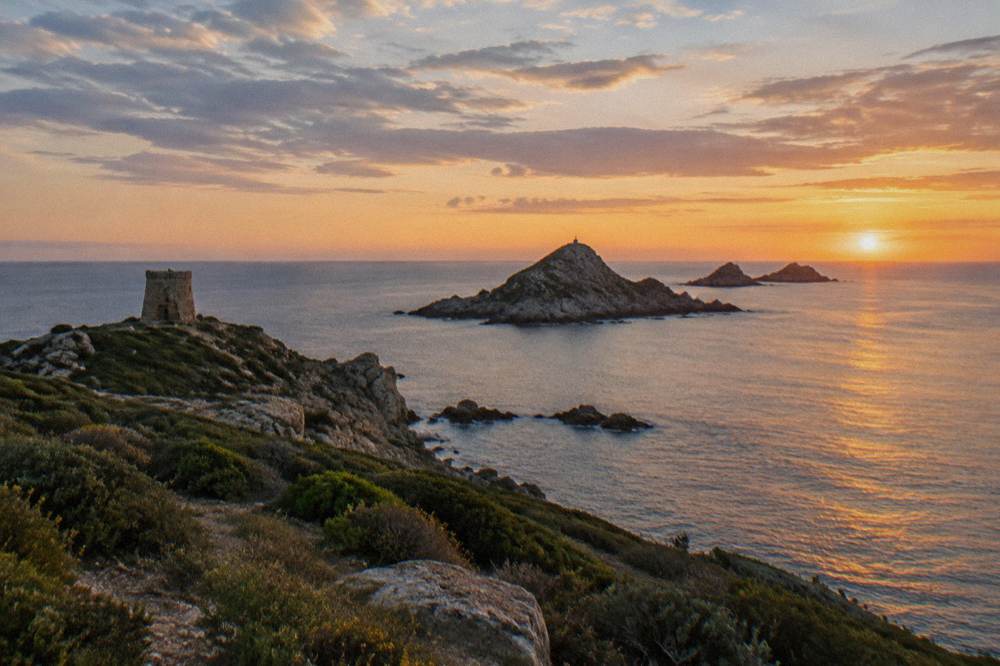
The long day trips split into two directions. North and west, the Scandola Reserve is reached by boat only: the reserve's land area is closed to the public, and visits run on the water from ports around the Gulf of Porto, as the Scandola Nature Reserve page explains. East and south, a full-day sea trip from Ajaccio reaches the Bonifacio cliffs, covered on the Bonifacio boat tour page. Both are long days from Ajaccio, so many travellers base themselves in the south for those instead.
Is A Cap Corse And Agriates Day Trip From Ajaccio Worth It?
A half-day trip to Cap Corse and the Désert des Agriates is the most efficient inland-and-coast excursion from the Ajaccio area. The guided format carries the driving, since the distances from Ajaccio are real and the track through the Agriates is not a normal rental-car road, pairing the peninsula's villages and tower-studded headlands with beaches such as Saleccia in a single outing. A guided trip solves the access question in one move, since the track is not a normal rental-car road.
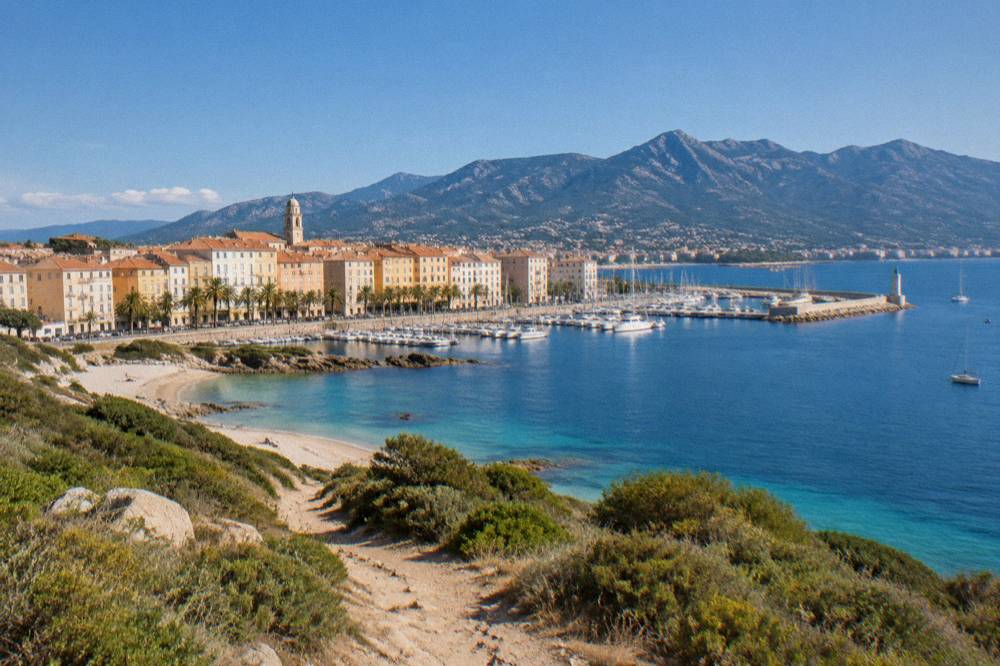
The beaches themselves have their own pages, including Saleccia beach and the wider Désert des Agriates, if the day trip needs to become an overnight. Cap Corse, the peninsula at the island's northern tip, adds fishing villages and tower-studded headlands; the site's Cap Corse coverage lists what each stop adds. From Ajaccio the distances are real, so the guided format carries the driving.
Travellers who prefer mountains to peninsulas can point the day inland instead. The Restonica valley and the Aiguilles de Bavella sit in the island's high interior, and both are covered in the site's hiking pages, including the full GR20 and hiking tours guide. Those are ambitious as day trips from Ajaccio; Cap Corse and the Agriates are the comfortable fit.
How Does Ajaccio Compare With Bastia As A Tour Base?
Ajaccio holds 76,320 residents to Bastia's 46,867, sits on the west coast facing the Îles Sanguinaires and the Gulf of Porto, and carries the island's Bonaparte museums, while Bastia faces Italy across the Tyrrhenian with faster ferry links from Livorno, Genoa and Savona and the island's second-town character. Ajaccio is the capital; Bastia is the port town that handles the largest share of the continent's ferry traffic. For a tour built around museums, gulf cruises and west-coast day trips, Ajaccio is the stronger base.
| Ajaccio | Bastia | |
|---|---|---|
| Population | 76,320 | 46,867 |
| Coast | Gulf of Ajaccio, west coast | Tyrrhenian, northeast coast |
| Signature museums | Maison Bonaparte, Palais Fesch | Palais des Gouverneurs, Vieux-Port quarter |
| Nearest headline islands | Îles Sanguinaires | Cap Corse, Désert des Agriates |
| Ferry links | Marseille, Toulon, Nice | Marseille, Toulon, Nice, Livorno, Savona, Genoa |
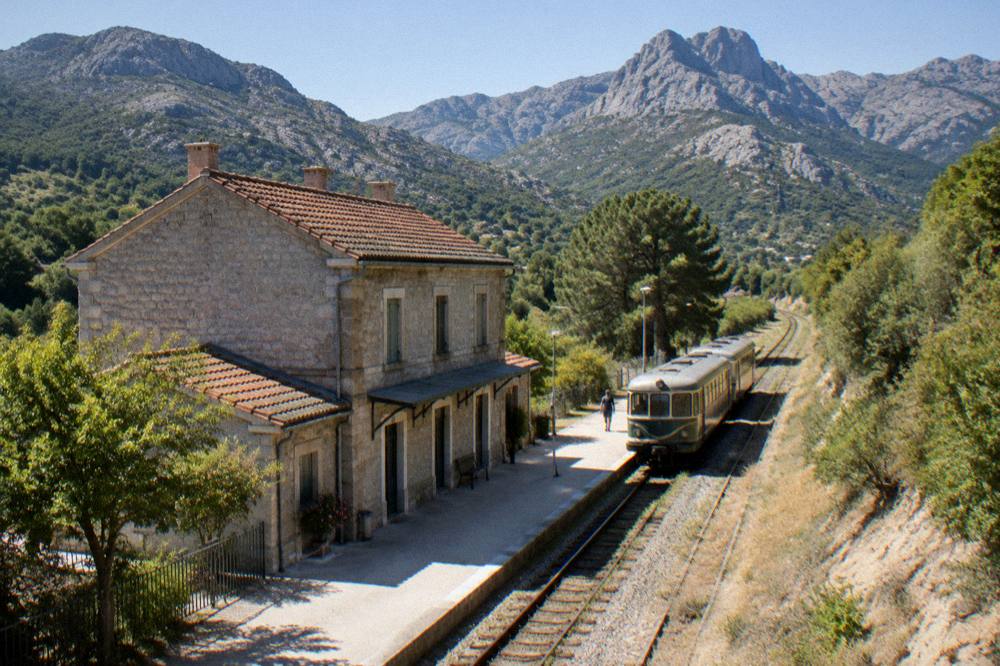
The two towns are linked by the island's rail spine. The Chemins de fer de la Corse run an Ajaccio to Bastia line via Corte, with connecting branches toward the Balagne coast, and the island's trains are narrow-gauge and mountain-running rather than high-speed. More on moving between the towns, the ports and the airports sits in the getting around Corsica guide.
What Weather Should You Expect On An Ajaccio Tour?
The Météo-France 1991-2020 station normals for Ajaccio show a hot, dry summer and a mild, wet winter: July averages 8.6 mm of rain and a 28.6 °C mean daily high, August averages 29.2 °C, and November carries 111.8 mm of rain with October at 85.7 mm. June through August is the dry window; October and November carry the heaviest rain figures of the year at the Ajaccio station. Snow, in the island's climate as a whole, falls on the high mountains rather than the coast.
| Month | Mean high °C | Mean low °C | Rain mm |
|---|---|---|---|
| Jan | 14.0 | 4.7 | 54.1 |
| Feb | 14.2 | 4.3 | 48.1 |
| Mar | 16.0 | 5.9 | 50.4 |
| Apr | 18.5 | 8.3 | 53.1 |
| May | 22.1 | 11.8 | 49.8 |
| Jun | 25.9 | 15.4 | 25.9 |
| Jul | 28.6 | 17.7 | 8.6 |
| Aug | 29.2 | 18.1 | 15.8 |
| Sep | 26.1 | 15.4 | 57.8 |
| Oct | 22.8 | 12.6 | 85.7 |
| Nov | 18.3 | 9.0 | 111.8 |
| Dec | 15.1 | 5.8 | 73.9 |
These are station normals, not forecasts: the Météo-France Ajaccio series is measured at Campo dell'Oro and covers 1991 to 2020. The month-by-month breakdown, including the Bastia comparison, sits in the site's Corsica weather by month guide.
One seasonal rule matters for any summer tour that leaves the coast. From 15 June to 30 September, fires and smoking are forbidden in forests, maquis and massifs across the island, and the daily fire-risk map is updated at 18:00 for the next day, with some massifs closed entirely on the severest days. Hikers on the GR20 cannot leave Calenzana after 11:00 under the municipal order. The Corsica safety page carries the emergency numbers, including 112 and mountain rescue at PGHM Ajaccio on 04 95 24 24 00.
How Do You Arrive In Ajaccio Without A Car?
Ajaccio is reached by air through Ajaccio Napoléon Bonaparte airport, one of the island's four airports alongside Bastia Poretta, Figari Sud Corse and Calvi Sainte-Catherine, by ferry from Marseille with Corsica Linea and La Méridionale, and by train via the Ajaccio to Bastia line through Corte, while bus 8 connects the airport with the town centre. The airport guide on the site's Ajaccio airport page covers the airlines and transfer options in detail.
| Port pair | Distance as the crow flies |
|---|---|
| Ajaccio to Calvi | about 80 km |
| Ajaccio to Corte | about 60 km |
| Ajaccio to Propriano | about 45 km |
| Ajaccio to Îles Sanguinaires | about 12 km |
The distances above are straight-line figures, as the crow flies, and never translate into mountain-road driving times. Once in town, the car-free core around Rue Saint-Charles, the ferry terminal and the harbour makes the first day or two simple on foot.
What Should You Eat On An Ajaccio Tour?
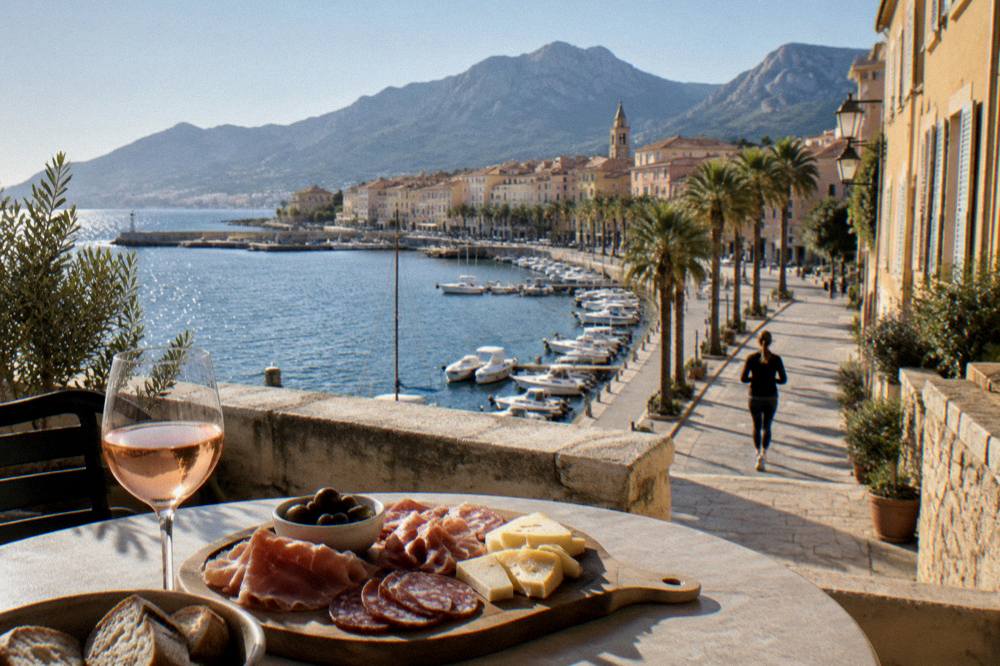
The Corsican plate to look for around Ajaccio is built on brocciu, the cheese that took its appellation d'origine in 1983 and its AOC in 1998, the charcuterie trio of prisuttu, lonzu and coppa, which gained AOC in 2012 and AOP in 2014, and chestnut flour, olive oil and honey, each carrying its own island protection. The food tour product pairs these with tastings across the town in a small-group walk, and the Corsican food guide unpacks every dish.
| Product | Protection status as recorded |
|---|---|
| Brocciu | Appellation d'origine 1983, AOC 1998 |
| Prisuttu, lonzu, coppa | AOC 2012, AOP 2014 |
| Oliu di Corsica, olive oil | AOC 2004 |
| Mele di Corsica, honey | AOC 1998 |
Wine follows the same pattern of named island products. The wine-tasting products around Calvi and Île-Rousse extend the same idea up the coast, and the island's vineyard areas are covered on the food and wine pages of this site.
How Many Days Should An Ajaccio Tour Take?
Two days cover the town itself well, with day one on the museums and harbour and day two on the water among the Îles Sanguinaires, while three to four days add a Cap Corse or Agriates day trip and one long cruise toward Scandola, matching the pacing of the site's Corsica in 3 days and Corsica in 5 days itineraries. A single day forces a choice between the museums and a boat; two days let both happen without rushing.
The itineraries on the site scale the same logic. Corsica in 3 days treats Ajaccio as one anchor; Corsica in one week lets the town open and close the trip; and the first time in Corsica guide sets out the wider sequencing. The is Ajaccio worth visiting answer page tackles the question directly for anyone still weighing the stop.
Booking order matters more than day count. The long cruises and the Cap Corse trips run on fixed schedules, the museums close on set days, and the fire-risk map can close massifs in high summer. Locking the boat day and the day trip first, then fitting the museums around the Monday closure, leaves the flexible hours for the old town and the food stops.
Common Questions About Ajaccio Tours
How Much Does An Ajaccio Tour Cost?
Museum entry is priced in euros and printed on this page from the museums' own listings: Maison Bonaparte at EUR 10 full price and Palais Fesch at EUR 10 full price, EUR 6 over 65.
Is Maison Bonaparte Open Every Day?
No. The national museum is open every day except Monday, with seasonal hour blocks: 10:30 to 12:30 and 13:15 to 16:30 from October to March, 10:00 to 12:30 and 13:15 to 17:30 from April to June, and 10:00 to 17:30 straight through from July to September, last entry 30 minutes before closing.
Can You See The Îles Sanguinaires From Ajaccio Without A Boat?
The islands sit at the mouth of the Gulf of Ajaccio and the standard way to see them is from the water, on the gulf boat tour, an aperitif trip or a sunset cruise from Ajaccio or Porticcio. The crossing is short enough to fit a half-day.
Do You Need A Car For An Ajaccio Tour?
Not for the town itself. Maison Bonaparte stands 200 m from the bus station and ferry terminal, bus 8 runs from the airport, and Palais Fesch is within walking distance. A car or a guided day trip becomes useful for Cap Corse, the Agriates beaches or the interior.
Which Day Trip From Ajaccio Is Easiest?
The Cap Corse and Désert des Agriates half-day trip is the packaged option from the Ajaccio area. The Scandola cruises from Ajaccio or Porticcio run as full-day products, and the Piana circuits are covered on the dedicated Calanques de Piana tour page.
What Should You Eat Around Ajaccio?
The island plate runs on brocciu, the charcuterie trio of prisuttu, lonzu and coppa, chestnut flour, olive oil and honey, each with its own protected status recorded on this page. The Corsican food guide lists the dishes in full.