How Do You Get To Corsica?
How to reach Corsica by ferry or plane: the four airports, the ferry operators and mainland ports, and how the island's train and roads connect once you arrive.
Corsica sits in the Mediterranean, a French island of 8,722 km2 with more than 1,000 km of coastline and a mountainous interior that rises to Monte Cinto at 2,706 m. Because it is an island, every single arrival is by sea or by air. There is no bridge and no tunnel: four airports and its ferry ports do all the work, and more than 8.5 million passengers, excluding cruise passengers, passed through Corsica's ports and airports in 2025 according to the ORTC and DREAL annual report. This page on Corsica Travel Guide sets out the ferry routes, the airports and the connections once you land, so the planning side is in one place. Where the island sits exactly is covered in Where Is Corsica Located.
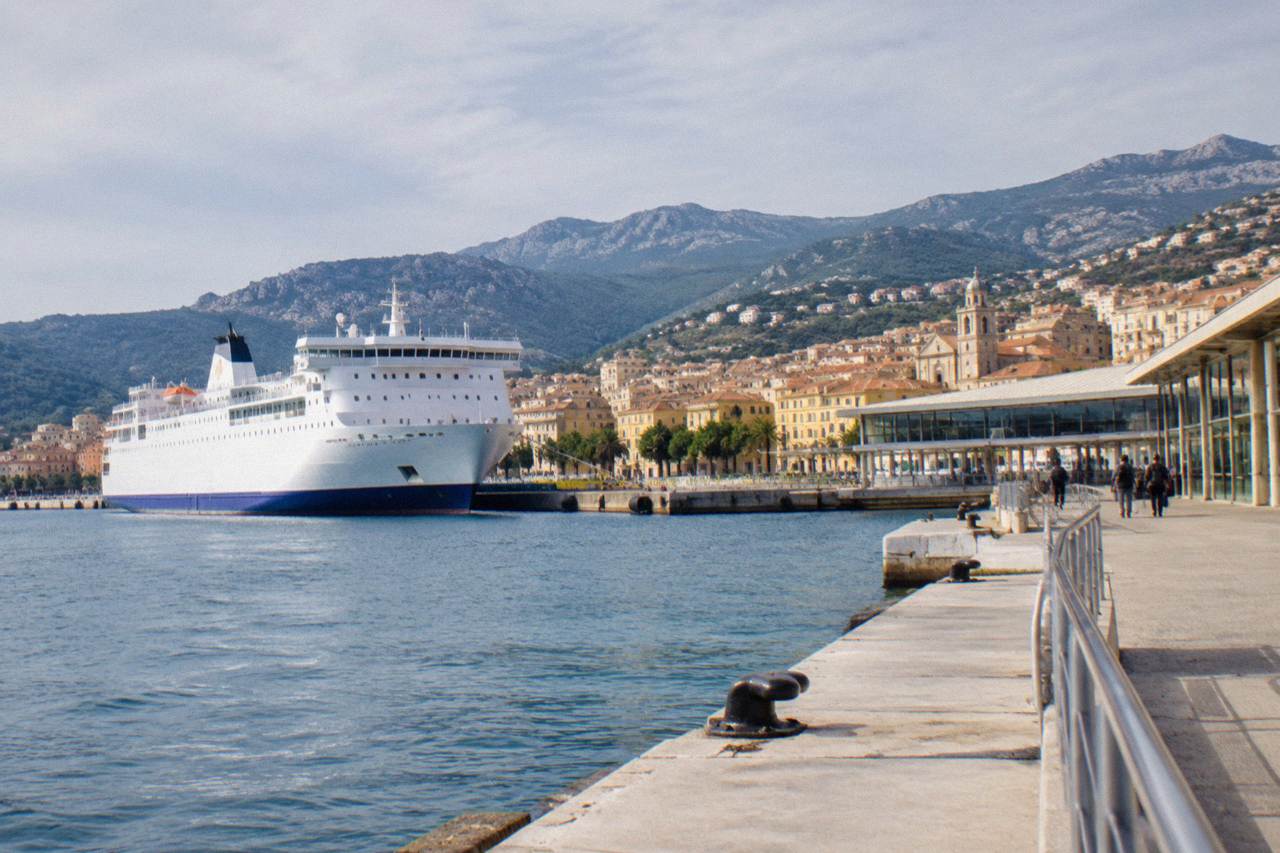
You get to Corsica either by ferry or by plane. Ferries run from Marseille, Toulon, Nice and several Italian ports to Ajaccio, Bastia, Bonifacio, L'Île-Rousse, Propriano and Porto-Vecchio, operated by Corsica Linea, La Méridionale, Corsica Ferries, Moby and Ichnusa Lines. Flights land at four airports options: Ajaccio Napoléon Bonaparte, Bastia Poretta, Figari Sud Corse and Calvi Sainte-Catherine.
That is the whole picture in one paragraph. The choice between boat and plane usually comes down to where you start, whether you want a car with you on the island, and how much travel time you can give to the crossing. A ferry lets you bring your own vehicle, which matters on an island whose mountain roads and scattered beaches reward driving, a question examined in Do You Need A Car In Corsica. A flight is faster and lands you in the middle of the island's main towns within an hour of touchdown.
The port and airport geography also shapes the trip. Bastia and Ajaccio are the two big gateways in the north-east and the west, Bonifacio and Porto-Vecchio serve the south, and Calvi and L'Île-Rousse sit at the western end of the Balagne coast. Picking the entry point that matches your base avoids a long transfer across the mountains on day one.
Which Ferries Sail To Corsica, And From Where?
Five operators serve Corsica: Corsica Linea and La Méridionale from Marseille, Corsica Ferries from Toulon, Nice and the Italian ports, Moby from Livorno, Genoa and Santa Teresa Gallura in Sardinia, and Ichnusa Lines on the short Sardinia link. Routes reach Ajaccio, Bastia, Propriano, L'Île-Rousse, Porto-Vecchio and Bonifacio. The Santa Teresa Gallura to Bonifacio crossing takes about 50 to 60 minutes.
Corsica Linea sails Marseille to L'Île-Rousse, Bastia, Propriano and Ajaccio, and La Méridionale runs Marseille to Ajaccio and Marseille to Porto-Vecchio, both on the year-round public-service lines. Corsica Ferries is reported to connect Toulon and Nice with Ajaccio, Bastia, L'Île-Rousse, Porto-Vecchio and Propriano, and Livorno and Savona with Bastia. Moby links Livorno to Bastia, Genoa to Bastia and Santa Teresa Gallura to Bonifacio, a route Moby and Ichnusa Lines kept after Sardinia found no rival operator, per a report of October 2026. That short Sardinia hop makes a two-island trip realistic, a comparison explored in Is Corsica Better Than Sardinia.
Crossing lengths vary a great deal. Reported ranges put Livorno to Bastia at about 4 to 5 hours, Savona to Bastia at about 6.5 hours, Nice to Bastia at about 7.5 to 10 hours, Toulon routes at about 10 to 13 hours, and Marseille routes at about 12 to 13 hours, mostly overnight. Confirm exact sailing times with the operator when booking, since schedules shift with the season and the vessel.
| Mainland or island port | Corsican port | Operator | Crossing time |
|---|---|---|---|
| Marseille | Ajaccio, Bastia, Propriano, L'Île-Rousse | Corsica Linea, La Méridionale | about 12 to 13 hours, mostly overnight |
| Toulon | Ajaccio, Bastia, L'Île-Rousse, Porto-Vecchio, Propriano | Corsica Ferries | about 10 to 13 hours |
| Nice | Bastia, Ajaccio, Porto-Vecchio, L'Île-Rousse | Corsica Ferries | about 7.5 to 10 hours |
| Livorno | Bastia | Corsica Ferries, Moby | about 4 to 5 hours |
| Savona | Bastia | Corsica Ferries | about 6.5 hours |
| Genoa | Bastia | Moby | seasonal |
| Santa Teresa Gallura | Bonifacio | Moby, Ichnusa Lines | about 50 to 60 minutes |
What the crossing buys you, besides the car, is a first view of the island's cliffs and gulfs from the water, which is also the perspective the island's boat tours trade on.
Which Airport Should You Fly Into?
Corsica has four airports: Ajaccio Napoléon Bonaparte (AJA), Bastia Poretta (BIA), Figari Sud Corse (FSC) and Calvi Sainte-Catherine (CLY). Ajaccio serves the capital and the west coast, Bastia the north-east, Figari the south near Bonifacio and Porto-Vecchio, and Calvi the Balagne. Choose the airport closest to your base rather than the cheapest fare.
The reasoning is simple: the island's interior is mountainous, and a cheap flight into Bastia followed by a transfer to Bonifacio can eat most of a day. Ajaccio is the capital, with 76,320 residents in the 2023 census, and Bastia is the second town at 46,867, so both sit at the centre of the island's road network. Figari is the gateway for the southern beaches, and Calvi for the Balagne resorts and villages.
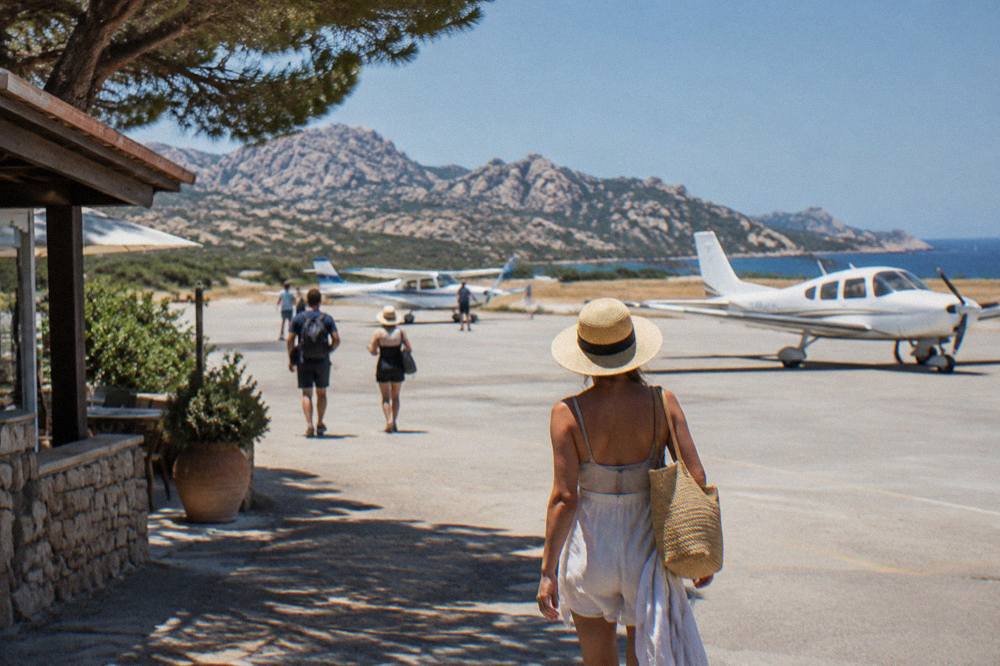
Airlines serving the island include Air Corsica, Air France, easyJet and Volotea, with the widest choice of routes in summer. The four airports are small by mainland standards, which cuts walking and waiting time, but seasonal capacity tightens in July and August, when the island's population of 365,636 (provisional INSEE estimate, 1 January 2026) is joined by the summer influx.
After a day of airports and transfers, a first evening on the water is one way to arrive properly. An aperitif sunset cruise from Ajaccio is a gentle option for the opening night, and Check availability before you travel, since sunset trips are small-scale by nature.
Is There A Train Once You Are In Corsica?
Yes, Corsica has a railway, the Chemins de fer de la Corse, reported to run three lines: Ajaccio to Bastia via Corte, Ponte-Leccia to Calvi, and the Balagne coastal line between Calvi and L'Île-Rousse. It is a narrow-gauge network that serves the interior and the Balagne coast, not a full island circuit, and it does not reach the far south.
The Ajaccio to Bastia line is the backbone, crossing the mountains through Corte, the old capital, which sits inland. The Balagne coastal section between Calvi and L'Île-Rousse is the stretch that runs closest to the beaches and is the one day-trippers ride for the scenery. Timetables are published by the operator and change with the seasons, so check current schedules before planning a rail day.
For everywhere else, the island runs on its roads. Inforoutes Corse is reported to publish live road conditions and accessibility levels for the main mountain passes, which matters in winter when cols can close and in summer when fire-risk days restrict access to some massifs. Between the train, the coastal roads and the boat shuttles, a car-free trip is possible but needs a base chosen with care, as discussed in How Many Days In Corsica Is Enough.
| Way in | Gateway | Good for | Drawback |
|---|---|---|---|
| Ferry from Marseille | Ajaccio, Bastia, Propriano, L'Île-Rousse | bringing your own car, overnight cabin | about 12 to 13 hours reported |
| Ferry from Italy | Bastia, Bonifacio | combining Corsica with Italy or Sardinia | seasonal variation in sailings |
| Flight to AJA | Ajaccio | the capital and the west coast | summer capacity tightens |
| Flight to BIA | Bastia | the north-east and Cap Corse | transfer time to the south |
| Flight to FSC | Figari | Bonifacio, Porto-Vecchio, the southern beaches | fewer routes than AJA or BIA |
| Flight to CLY | Calvi | the Balagne | seasonal, small airport |
What Documents Do You Need To Enter Corsica?
Corsica is part of France, so the entry rules are France's rules: it lies inside the Schengen Area, and travellers from other EU countries can enter with a national identity card or passport, while visitors from outside the EU need a passport and, where required, a visa. No separate Corsican document or permit exists, and the currency is the euro.
Because the island is French territory, there is no border between arriving from Paris, Marseille or Nice and arriving anywhere else in France. The details, including what the Schengen rules mean in practice, are set out in Is Corsica In The Schengen Area and What Currency Is Used In Corsica. The island's political status and its ties to both France and Italy are covered in Is Corsica Part Of France Or Italy.
The US State Department lists France at Level 2, Exercise Increased Caution, and the UK FCDO notes a high wildfire risk in France from April to October, both of which apply to Corsica as part of France. Neither changes how you get there, but the fire note matters for summer hikers: from 15 June to 30 September it is forbidden to light a fire or smoke in forests, maquis and massifs.
What Is The Best Way To Arrive, Ferry Or Plane?
There is no single best way: the ferry wins if you want your own car on an island built for driving, and the plane wins if travel time matters more than wheels. The ferry crossings from Marseille run about 12 to 13 hours reported, mostly overnight, while the Santa Teresa Gallura to Bonifacio hop takes under an hour and the four airports put you on the island the same day.
Budget is the third variable, and it swings with the season, the cabin class and how early you book, which is why this page prints no fare: ticket prices move too much to be useful as fixed figures. The broader cost picture, once you are on the island, is covered in Is Corsica Expensive.
One pattern holds across both arrival modes: match the gateway to the base. The island is 8,722 km2 with a mountainous spine, and the same distance that takes an hour on a coastal road can take three across the interior. Arriving at Figari for a Bonifacio stay, or Bastia for Cap Corse, turns travel day into a short hop and leaves more of the trip for the coast and the trails, a question of trip length picked up in Is Corsica Worth Visiting.
Common Questions About Getting To Corsica
How Do You Get To Corsica?
By ferry or by plane. Ferries from Marseille, Toulon, Nice, Livorno, Savona, Genoa and Santa Teresa Gallura serve seven Corsican ports, and flights land at four airports: Ajaccio Napoléon Bonaparte, Bastia Poretta, Figari Sud Corse and Calvi Sainte-Catherine.
Can You Get To Corsica By Car?
Yes, with your car on a ferry. Corsica Linea, La Méridionale, Corsica Ferries and Moby all carry vehicles, and having your own car suits an island whose beaches, villages and trailheads are spread along more than 1,000 km of coastline and through a mountainous interior.
How Long Is The Ferry From Marseille To Corsica?
Reported ranges put Marseille crossings at about 12 to 13 hours, mostly overnight, serving Ajaccio, Bastia, Propriano and L'Île-Rousse depending on the operator. Confirm the sailing time with the operator when booking.
Which Corsican Airport Is Closest To Bonifacio?
Figari Sud Corse (FSC) is the southern airport and the one that serves Bonifacio and Porto-Vecchio. Ajaccio and Bastia are larger gateways but lie at the other end of the island.
Can You Arrive In Corsica From Sardinia?
Yes. Moby and Ichnusa Lines run the short Santa Teresa Gallura to Bonifacio crossing, reported at about 50 to 60 minutes, and the route was retained after Sardinia found no rival operator, per a report of October 2026.
Do You Need A Passport For Corsica?
Corsica is part of France and inside the Schengen Area, so EU nationals can enter with a national identity card or passport, and non-EU visitors follow French visa rules. The currency is the euro.