Is The Restonica Valley Worth Visiting?
A clear answer on whether the Restonica valley near Corte is worth your time in Corsica, with road times, Musée de la Corse hours and prices, and what the valley offers.
Corsica is a sea-surrounded French island with more than 1,000 km of coastline, and the Restonica valley belongs to its other face: the mountainous interior that peaks at Monte Cinto, 2,706 m. The valley starts at Corte, the island's old capital and the main town of the interior, and runs up into the high granite country. This page answers the question directly, with road times, museum hours and prices, and the standing rules that shape a visit. The full sight page carries more detail at Restonica valley, inland from Corte, and our overview of Corsica Travel Guide covers the rest of the island.
Where Is The Restonica Valley In Corsica?
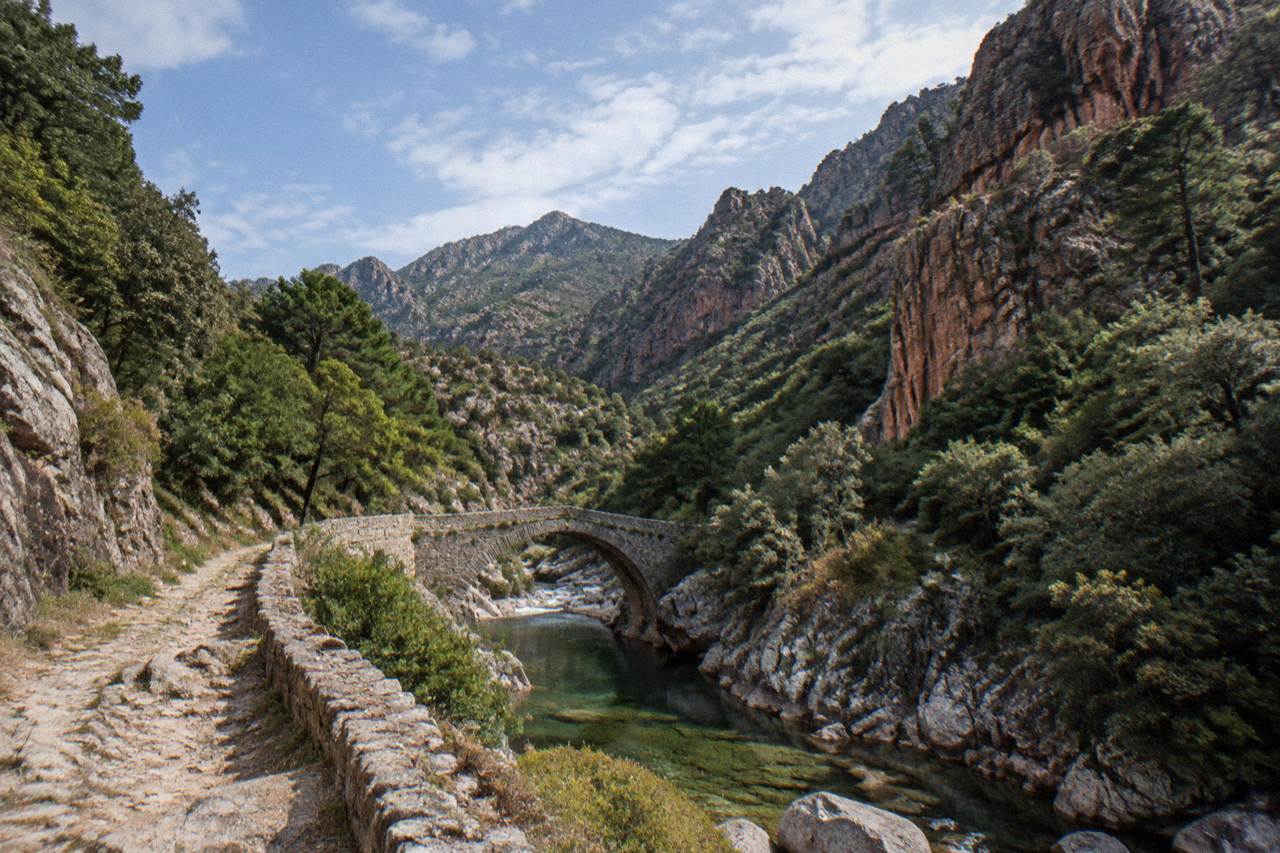
The Restonica valley lies inland from Corte, the old capital of Corsica, in the mountainous middle of the island. Corte sits roughly 1 hour by road from Bastia, 1 hour 30 from Ajaccio and 1 hour 30 from Calvi, which makes it the natural base for the interior. The valley climbs from the town into high granite country below the island's tallest summits, including Monte Cinto at 2,706 m.
Corte is the only sizeable town of the Corsican interior. The Collectivité de Corse, the island's single territorial authority since 1 January 2018, counts 360 communes across the island, and Corte is where the interior's road and rail lines meet: the Chemins de fer de la Corse run their Ajaccio to Bastia line through the town via Corte, alongside the Ponte-Leccia to Calvi line and the Balagne coastal line between Calvi and L'Île-Rousse. The Restonica gorge is the mountain valley that leaves town upstream, one of the two famous gorge roads of the centre together with the Gorges de Spelunca on the west side.
The Parc naturel régional de Corse, created in 1972, now covers 4,484 km2 including the Castagniccia and the big valleys running down to the sea. The high country above Corte falls inside the park, which is why the standing rules on fire, camping and mountain access apply here in summer. Corte's own merits are covered in our longer pieces, including how many days in Corsica are enough and the sister answer on whether you need a car in Corsica.
| From | Road time to Corte |
|---|---|
| Bastia | 1 h |
| Ajaccio | 1 h 30 |
| Calvi | 1 h 30 |
| Porto-Vecchio | 2 h |
| Bonifacio | 2 h 45 |
| Propriano | 2 h 45 |
Is The Restonica Valley Worth Visiting?
Yes, the Restonica valley is worth visiting for anyone based in or passing through Corte, and the honest qualifier is that it is a mountain half-day rather than a full rival to the coast. Its appeal is granite scenery, river pools and access to high trailheads within 30 minutes of a real town with a citadel museum, which nothing else in the Corsican interior combines. Beach coves it is not, and it does not pretend to be.
The case for the valley rests on what the sources actually say. The Restonica shuttle, the navette C13, exists and serves the valley from Corte, which puts the upper gorge within reach of visitors without a car for at least part of the season. Inforoutes Corse publishes live road conditions and accessibility levels for the main mountain passes, which matters on a narrow gorge road where the standing pattern is closures for rock work and storms rather than any permanent rule. In summer the fire framework applies: from 15 June to 30 September it is forbidden to light a fire or smoke in forests, maquis and massifs, and the fire-risk map is updated at 18:00 for the next day, with access to some massifs restricted from mid-June to mid-September.
The case against is equally plain. If a Corsica trip is short and beach-focused, the valley is a detour inland: Bonifacio and the Îles Lavezzi, the Scandola reserve by boat, and the Calanques de Piana all sit on the coast, and the answers index on what Corsica is famous for gives the fuller picture. But for a two-centre trip, a hiking trip or any stay in Corte, the valley plus the town makes one of the strongest inland days on the island. Wild camping is banned across Corsica, bivouac is tolerated only in the marked areas at refuges, so the valley is a day trip, not a camping trip.
What Can You Do In The Restonica Valley Near Corte?
A Restonica day divides into three parts: the gorge drive or shuttle ride upstream, the walking and river time in the upper valley, and Corte itself, where one EUR 5.50 ticket covers both the Musée de la Corse and the citadel.
Corte rewards more time than the valley alone. The Musée de la Corse and the Citadelle de Corte run one combined ticket, full price EUR 5.50, EUR 4 reduced with no temporary show, and EUR 3 for over-65s and young people, with citadel last access one hour before the museum closes. Around the town, the interior's other sights, from the Aiguilles de Bavella in the south to the Forêt d'Aïtone near Evisa, sit a drive away, and our pieces on the Gorges de Spelunca region of the west coast cover those.
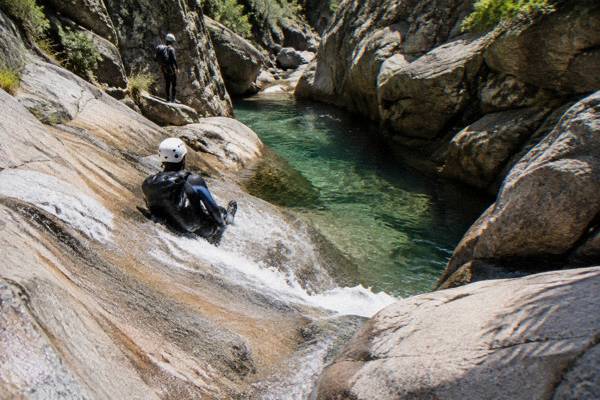
For visitors who want a guided mountain day, the products on this site that fit the interior include a canyoning descent of the Richiusa canyon at Bocognano, an Asco valley 4x4 day tour from Calvi, and a small-group tour of old hilltop villages. The Richiusa canyon trip suits the Restonica plan best: Bocognano sits on the Ajaccio side of the mountains on the same road corridor, so a morning canyoning and an afternoon in the Restonica gorge is a realistic pairing, and our answer on the best month to visit Corsica covers when the water levels work.
For a canyoning day on the Corsican interior, one option is Check availability on the Richiusa canyon tour before locking the Corte schedule, since small-group water trips fill differently from museum visits.
How Do You Get To The Restonica Valley And Corte?
Corte is reached by road in 1 hour from Bastia, 1 hour 30 from Ajaccio, 1 hour 30 from Calvi, 2 hours from Porto-Vecchio and 2 hours 45 from Bonifacio or Propriano, figures published by the Corte museum's own practical page. The Restonica shuttle, the navette C13, then runs from the town up the valley. Train lines also serve Corte on the Ajaccio to Bastia route.
A car is the flexible choice, and our guide to driving and car rental in Corsica weighs it against the alternatives. Two standing cautions apply to the gorge road itself. First, Inforoutes Corse publishes live road status and pass accessibility levels, and our advice is to check it the same day, since works and storm closures on mountain roads are the normal pattern rather than the exception. Second, the fire season rules can restrict access to massifs from mid-June to mid-September, with the daily map updated at 18:00 for the following day; the same framework closes some massifs entirely on the highest-risk days.
The train is a real alternative for reaching Corte itself. The Chemins de fer de la Corse network runs three lines: Ajaccio to Bastia via Corte, Ponte-Leccia to Calvi, and the Balagne coastal line between Calvi and L'Île-Rousse.
What Do The Musée De La Corse And Citadelle De Corte Cost?
The combined ticket for the Musée de la Corse and the Citadelle de Corte is EUR 5.50 full price, EUR 4 reduced with no temporary show and EUR 3 for over-65s and young people, with free entry for under-10s, Corsican resident under-25s and disabled visitors with a companion. One ticket covers both museum and citadel. Citadel last access is one hour before museum closing.
The museum's own practical page gives the season split. From 1 May to 31 October the site opens daily 10:00 to 19:00, except it is closed on 1 May. From 1 November to 30 April it opens 10:00 to 17:00 but closes on Sundays, Mondays, public holidays and 24 December, and the whole site closes annually from 31 December to 14 January. A Restonica visit combined with the citadel therefore needs a day between Tuesday and Saturday outside that window if you travel in the cooler half of the year.
| Period | Hours | Days closed |
|---|---|---|
| 1 May to 31 Oct | 10:00 to 19:00 | 1 May |
| 1 Nov to 30 Apr | 10:00 to 17:00 | Sun, Mon, public holidays, 24 Dec |
| 31 Dec to 14 Jan | Closed | Whole period |
| Ticket | Price |
|---|---|
| Full | EUR 5.50 |
| Reduced (no temporary show) | EUR 4 |
| Over-65s and young people | EUR 3 |
| Museum plus citadel | One ticket |
What Is The Best Time Of Year For The Restonica Valley In Corsica?
The Météo-France station normals for Ajaccio, 1991-2020, show the shape of the year: July averages a 28.6 °C daily high with 8.6 mm of rain and 12 h 6 min of sunshine a day, while November averages 18.3 °C and 111.8 mm of rain. The Restonica valley is a summer-and-shoulder destination on those figures, with the standing fire rules of 15 June to 30 September shaping access.
June averages 25.9 °C by day with 25.9 mm of rain at Ajaccio; September 26.1 °C with 57.8 mm; October 22.8 °C with 85.7 mm. The mountain valley sits higher and cooler than the coastal station, and snow lies on the high mountains in winter, which is why the valley's season follows the mountain calendar rather than the beach calendar. Emergency preparedness matters year round: 112 is the European emergency number, 15 medical, 17 police, 18 fire, 114 by SMS and 196 for sea rescue, and mountain rescue is reached through PGHM Ajaccio on 04 95 24 24 00.
Hikers planning more than the valley itself should know the long-trail picture from the PNRC's own figures: the GR20 runs 180 km with about 15 stages of 4 to 8.5 hours, Mare a Mare Centre is 84 km from Ghisonaccia to Porticcio, Mare a Mare Sud is 73 km, and Mare e Monti Sud is 66 km, with PNRC refuge bunks at EUR 20 per person and bivouac pitches at EUR 12, booked online only. Those trails cross the same interior the Restonica belongs to.
How Does The Restonica Valley Compare With Corsica's Coastal Days?
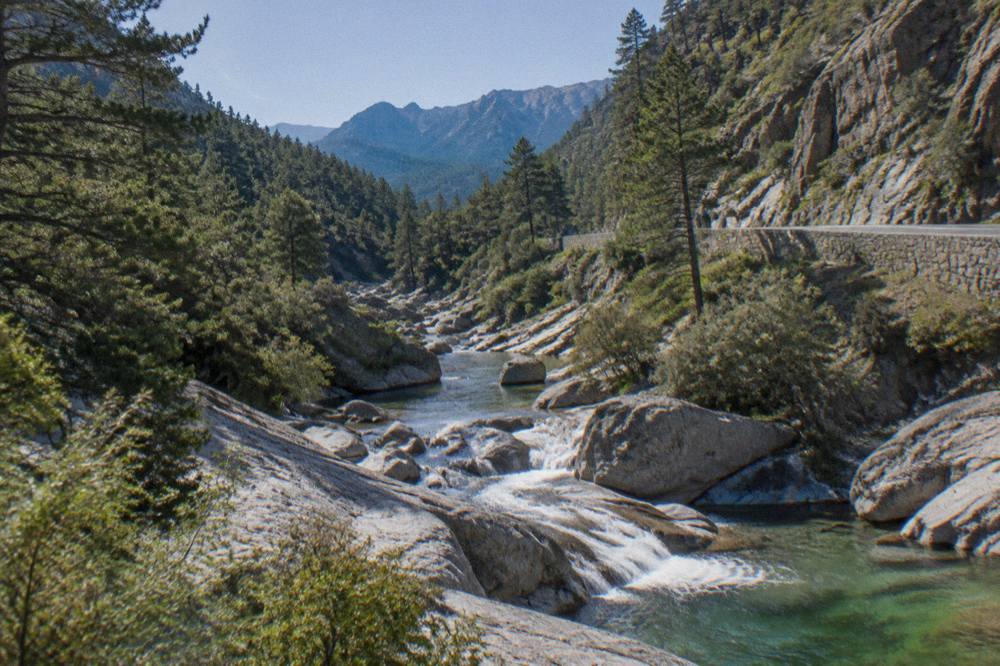
The Restonica valley competes with the coast on scenery and beats it on inland access from Corte, but it cannot match the sea: Corsica has more than 1,000 km of coastline and the headline coastal days, Scandola by boat, the Calanques de Piana, the cliffs of Bonifacio, are water-based. The fair comparison is with the island's other inland valleys and gorge roads, where Restonica's advantage is its shuttle link and its town.
Our comparison pages cover the trade-offs in depth, including whether Corsica is worth visiting overall and the question of whether you need a car in Corsica, which is the single biggest planning decision for an interior day.
Common Questions About The Restonica Valley In Corsica
Is The Restonica Valley Worth Visiting?
Yes, for anyone staying in or near Corte or touring the Corsican interior. The valley gives granite gorge scenery and high trailheads within a short shuttle ride of the island's old capital, and a combined museum and citadel ticket in Corte costs EUR 5.50. It is a mountain half-day, not a substitute for the coast.
How Do I Get To The Restonica Valley Without A Car?
The Restonica shuttle, the navette C13, runs from Corte up the valley, which puts the gorge within reach without a car for at least part of the season. Corte itself is served by the Chemins de fer de la Corse on the Ajaccio to Bastia line, and road times from the main towns are 1 hour from Bastia and 1 hour 30 from Ajaccio or Calvi.
What Does The Musée De La Corse In Corte Cost?
The combined Musée de la Corse and Citadelle de Corte ticket is EUR 5.50 full price, EUR 4 reduced with no temporary show and EUR 3 for over-65s and young people, and one ticket covers both museum and citadel. From 1 May to 31 October it opens daily 10:00 to 19:00 except 1 May; in winter it opens 10:00 to 17:00 except Sundays, Mondays, public holidays and 24 December, closing fully from 31 December to 14 January.
Can You Camp In The Restonica Valley?
No. Wild camping is banned across Corsica, and bivouac is tolerated only in the marked areas at refuges on trails such as the GR20, where it must be reserved. The Restonica valley is a day trip from Corte or the coast, not an overnight camp.
Are There Mountain Access Restrictions In Summer?
Yes. From 15 June to 30 September it is forbidden to light a fire or smoke in forests, maquis and massifs, and from mid-June to mid-September access to some massifs can be restricted, with the daily fire-risk map updated at 18:00 for the next day. Check the prefecture-linked map and Inforoutes Corse for road status on the day.
The Restonica valley earns its place on a Corsica itinerary when the plan already includes Corte and the interior: a gorge morning, a citadel afternoon at EUR 5.50, and a canyon or 4x4 day booked around it, all within 90 minutes of road from Ajaccio, Bastia or Calvi.