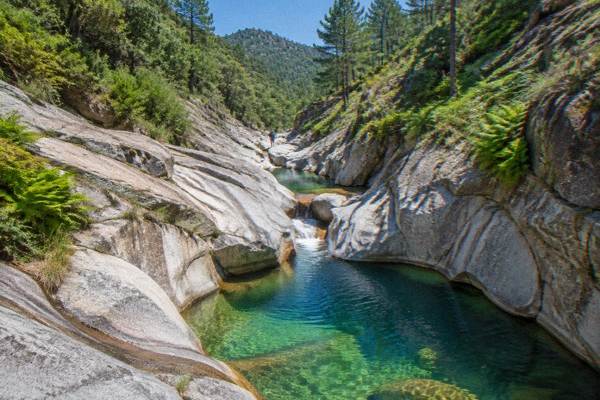
Gorges De Spelunca
This guide sets out what is known about the gorge, its neighbours, the walking trails of the island and the practical costs of a trip around it.
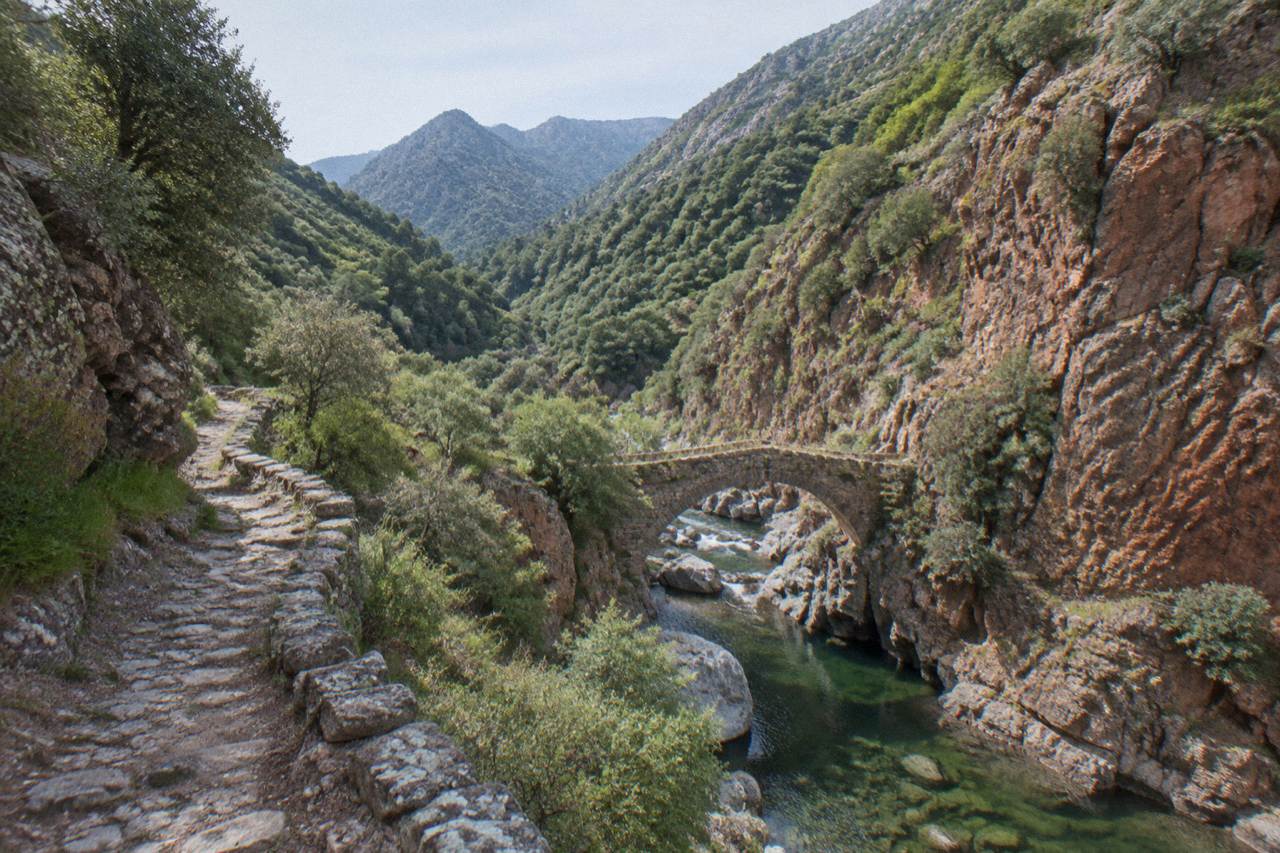
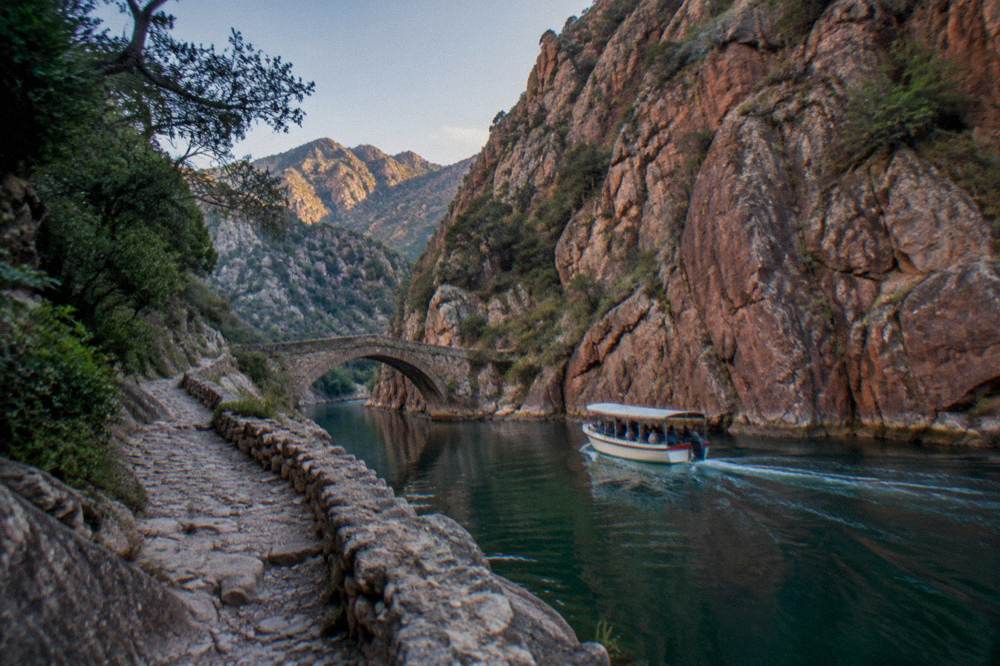
The Gorges de Spelunca are one of the named gorges of Corsica, listed among the island's sights alongside the Restonica gorges. They belong to the wild interior behind the Golfe de Porto, about 38 km as the crow flies from Ajaccio, and combine naturally with the Calanques de Piana, Scandola and Girolata on the same stretch of western coast.
Corsica is a French Mediterranean island of 8,722 km2 with more than 1,000 km of coastline and a mountainous interior that rises to Monte Cinto at 2,706 m. The Gorges de Spelunca belong to that interior: the island's sight lists pair the Spelunca gorges with the Restonica gorges as the two named gorge systems of the Corsican mountains, and both belong to the inland part of the island rather than its coast. This page gathers what the available sources say about the gorge, the country around it and the practical business of visiting: distances, nearby sights, walking trails, opening hours and costs.
The reason the Spelunca gorges sit on so many itineraries is geography. They lie behind the Golfe de Porto, the stretch of western coast that carries the UNESCO property "Gulf of Porto: Calanche of Piana, Gulf of Girolata, Scandola Reserve", inscribed in 1983. A traveller who bases around Porto or Piana can pair a gorge walk in the mountains with a boat day on the water, and coverage of the Golfe de Porto and the Calanques de Piana covers those halves separately. What follows is the planning layer that ties them together.
What Are The Gorges De Spelunca In Corsica?
The Gorges de Spelunca are one of the two named gorge systems of Corsica, listed among the island's sights together with the Gorges de la Restonica near Corte. They cut through the mountainous interior behind the Golfe de Porto, in the part of the island that runs from the high granite country down towards the sea at Porto, and they stand as the inland counterpart to the red cliffs and boat-only coves of the coast a short way west.
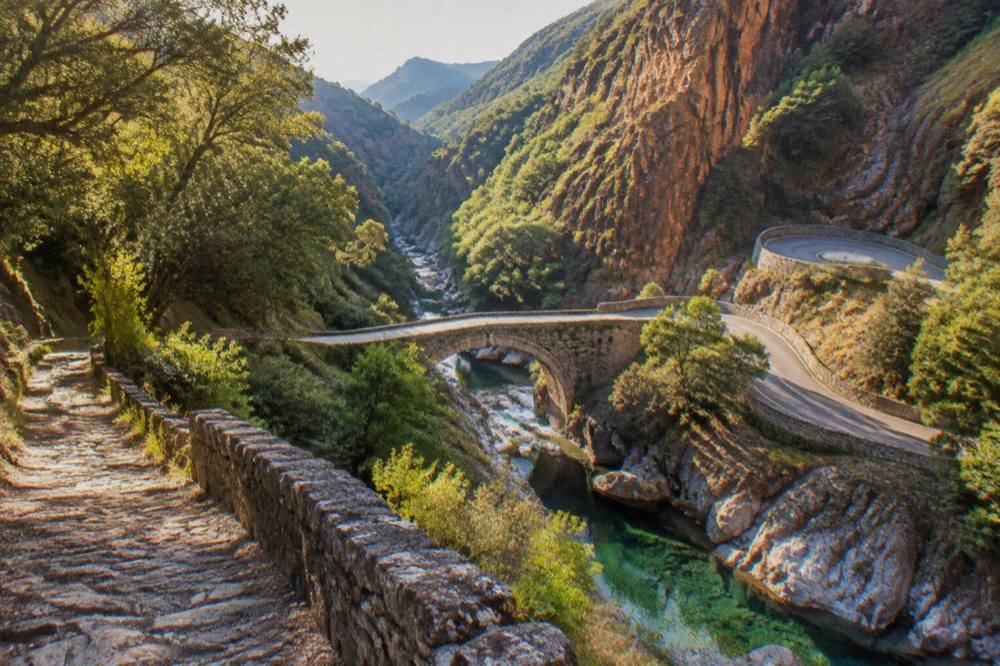
The Corsican interior is genuinely mountainous, and the sources are plain about it: the island's highest summit, Monte Cinto, stands at 2,706 m, and the Parc naturel régional de Corse, created in 1972, today covers 4,484 km2 including the Castagniccia and the big valleys that run down to the sea. The Spelunca gorges sit inside this mountain-and-valley world, which is why the island's own tourism material groups them with Restonica rather than with the beaches.
That grouping matters for planning. The Restonica valley above Corte is the other named gorge system, and the road times published for Corte give a sense of scale for any mountain day in Corsica: Corte is 1 hour from Bastia, 1 hour 30 from Ajaccio and from Calvi, 2 hours from Porto-Vecchio, 2 hours 45 from Bonifacio and 2 hours 45 from Propriano. Those are the only published road times on the island, and they tell you that crossing Corsica's mountains takes real time, whatever the map distance suggests.
The gorge also belongs to the same western quarter as the Aiguilles de Bavella, the granite peaks of the far south that stand about 43 km as the crow flies from Ajaccio. Two gorge systems, one granite spine: the island's mountain heart is the thread that runs through all of them.
Where Are The Gorges De Spelunca And How Do You Reach Them In Corsica?
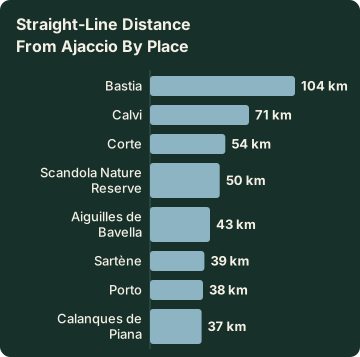
The Gorges de Spelunca lie inland of Porto on Corsica's west coast, about 38 km from Ajaccio as the crow flies, with the Calanques de Piana about 37 km and the Scandola Nature Reserve about 50 km from the capital on the same straight-line measure. Ajaccio is the island's capital with 76,320 residents, and the gorge country sits between it and the coast road that threads the Golfe de Porto.
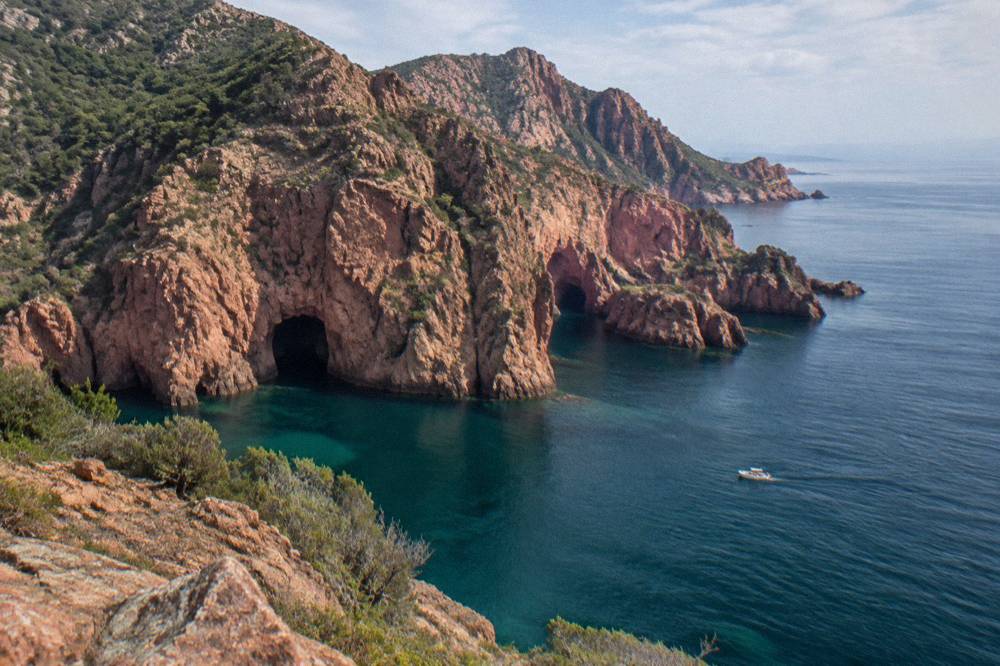
Distances in Corsican mountains deserve care. The figures in the table below are straight-line distances from Ajaccio, computed from mapped coordinates, and a straight-line kilometre in this terrain is not a flat kilometre of road. Corsican mountain roads are slow and narrow, Inforoutes Corse publishes live road conditions and accessibility levels for the main passes, and the standing advice is to check the live status before any mountain drive rather than to trust a printed estimate.
| Place | Straight-line distance from Ajaccio | As the crow flies? |
|---|---|---|
| Porto | about 38 km | yes |
| Calanques de Piana | about 37 km | yes |
| Scandola Nature Reserve | about 50 km | yes |
| Corte | about 54 km | yes |
| Sartène | about 39 km | yes |
| Aiguilles de Bavella | about 43 km | yes |
| Bastia | about 104 km | yes |
| Calvi | about 71 km | yes |
For orientation, the useful anchors are these. Ajaccio, the capital and the birthplace of Napoleon, holds 76,320 residents; Bastia, the second town, holds 46,867; Corte, the old capital, sits inland and about 54 km from Ajaccio as the crow flies. The whole island counted 365,636 residents on 1 January 2026 in the provisional INSEE estimate, spread across 360 communes, which is a reminder of how much of Corsica is small mountain settlements rather than towns.
Which Sights Around The Gorges De Spelunca Pair With The UNESCO Golfe De Porto?
The neighbours that pair with the Gorges de Spelunca are the UNESCO trio of the Calanche of Piana, the Gulf of Girolata and the Scandola Reserve, inscribed together in 1983 as World Heritage property 258 across 11,800 ha, plus the village of Girolata and the beaches of the Gulf of Porto. Scandola itself can only be visited by boat, its land area is closed to the public, and the reserve was the first nature reserve created in Corsica, by ministerial order of 9 December 1975.
The Scandola numbers come from the reserve's own fact sheet: 1,000 ha of sea, 919 ha of land and 70 ha of integral reserve, running from 100 m depth to 540 m altitude, on the commune of Osani and managed by the PNRC. The reserve is also credited with saving the osprey in Corsica. Rules on the water are strict and worth knowing before you book any cruise: visits are by boat only, no landing is permitted in the integral reserve, anchoring is allowed in daytime outside the integral reserve and the Gargalu channel with anchors lifted at sunset, and recreational line fishing and spearfishing are prohibited. A full framework of quotas and licences for boat traffic is being finalised, and no year has been given for it, so treat any cruise you book as operating under the current transitional measures.
The village of Girolata, reachable by sea inside the Gulf of Girolata, and the red granites of Piana are the two land-side anchors, covered in detail on their own pages, including our Calanques de Piana tour guide and the question of whether the Calanques de Piana are worth visiting. The Scandola Nature Reserve page carries the reserve's rules in full.
Museums make a useful wet-day pairing if you are basing in one of the towns, and the current hours and prices are worth carrying in a table before you go.
| Sight | Season or dates | Hours | Full price |
|---|---|---|---|
| Maison Bonaparte, Ajaccio | 1 Jul to 30 Sep | 10:00 to 17:30, closed Monday | EUR 10 |
| Maison Bonaparte, Ajaccio | 1 Oct to 31 Mar | 10:30 to 12:30 and 13:15 to 16:30, closed Monday | EUR 10 |
| Palais Fesch, Ajaccio | 16 Jan to 31 Dec 2026 | daily 09:00 to 17:00 | EUR 10 |
| Musée de la Corse, Corte | 1 May to 31 Oct | daily 10:00 to 19:00, closed 1 May | EUR 5.50 |
| Filitosa, Sollacaro | 1 Apr to 2 Nov | 09:00 to sunset | EUR 9 |
Reductions exist at each site: Maison Bonaparte charges EUR 8 for non-EU residents aged 18 to 25 and large families and is free for EU residents under 26; Palais Fesch charges EUR 6 for over-65s and is free up to 18; one Corte ticket covers both the museum and the citadel; Filitosa charges EUR 7 reduced and EUR 28 for a family of two adults and two children aged 6 to 17, free under 6.
Are The Gorges De Spelunca Part Of Corsica's Long-Distance Walking Network?
Corsica's long-distance network is the context for any walk around the Gorges de Spelunca, and it is a big one: the GR20 runs 180 km north to south in about 15 stages of 4 to 8.5 hours, the Mare e Monti Nord covers 121 km in 10 days, and the Mare a Mare crossings run 139 km north, 84 km centre and 73 km south, all figures from the PNRC's own trail documents.
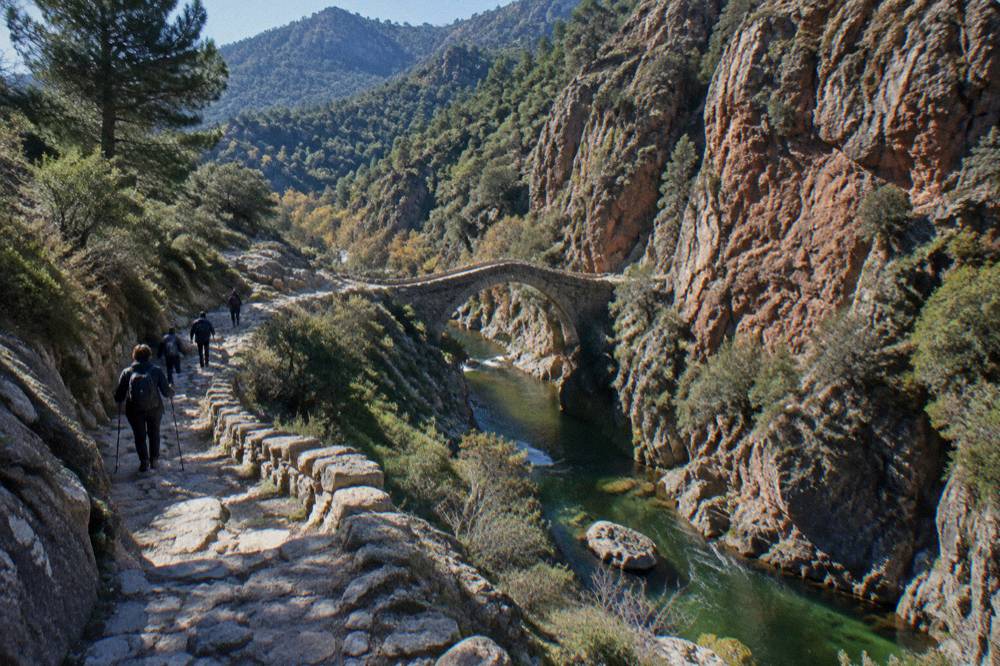
The PNRC brochure gives the full set of long trails, and the numbers below are its own.
| Trail | Length | Days | Total climbing |
|---|---|---|---|
| GR20 (Fra li Monti) | 180 km | about 15 stages | not stated in the sources |
| Mare e Monti Nord | 121 km | 10 | 6,100 m |
| Mare a Mare Nord | 139 km (161 km with variant) | 8 to 12 | 5,900 m |
| Mare a Mare Centre | 84 km | 6 to 7 | 3,900 m |
| Mare a Mare Sud | 73 km | 5 | 3,200 m |
| Mare e Monti Sud | 66 km | 5 | 2,700 m |
If the GR20 itself is on your list rather than a gorge walk, the 2026 rules are firm. PNRC refuges are guarded from 16 May to 4 October inclusive. Booking is mandatory for every option, bunk or bivouac, online only through the PNRC platform. A bunk costs EUR 20 per person, a bivouac pitch with your own tent EUR 12, a rented tent for one EUR 27 and for two EUR 39. All rental tents sleep two and come with a 3 cm mat per person; bring your own sleeping bag. Dogs are not allowed inside refuges or rented tents, there are no departures from Calenzana after 11:00 under a municipal fire-risk order, and wild camping is banned across the island, with bivouacs only in the marked areas at refuges. Meals are paid in cash or by cheque to the guardian on site.
Fire rules apply to every walker between 15 June and 30 September: no fires and no smoking in forests, maquis and massifs. The fire-risk map is updated at 18:00 for the next day, and from mid-June to mid-September access to some massifs can be restricted altogether. The UK FCDO notes a high wildfire risk in France from April to October; check the daily map before any summer mountain day.
What Does A Trip Around The Gorges De Spelunca In Corsica Cost?
The gorge country itself is mountain terrain with no entry gate, so the costs that matter are the sights, the refuges and the boat trips around it: museum entries run EUR 5.50 to EUR 10, Filitosa charges EUR 9, GR20 refuge nights cost EUR 20 for a bunk or EUR 12 for a bivouac pitch, and bookable tours and cruises carry their own live prices that change with the season.
If the Coscione ride is the one that fits your dates, Check availability before the calendar fills.
Local costs beyond that are straightforward. Tipping follows French law: menus must state "prix service compris" with the service percentage included, and any extra tip is optional. The currency is the euro. Emergency numbers, should a mountain day go wrong, are 112 for the EU-wide line, 15 for medical, 17 for police, 18 for fire, 114 by SMS or app, and 196 for sea rescue; the PGHM mountain rescue base at Ajaccio can be reached on 04 95 24 24 00, with 17 or 112 in an emergency.
Getting to the region in the first place usually means one of the four airports, Ajaccio Napoléon Bonaparte, Bastia Poretta, Figari Sud Corse or Calvi Sainte-Catherine, or one of the ferry ports including Ajaccio, Bastia, Bonifacio, L'Île-Rousse, Propriano and Porto-Vecchio. More than 8.5 million passengers, excluding cruise passengers, passed through Corsica's ports and airports in 2025.
When Is The Best Weather For The Gorges De Spelunca In Corsica?
Corsica has a hot dry summer and a mild wet winter with snow only on the high mountains, and the Météo-France 1991-2020 station normals for Ajaccio, the nearest published series to the gorge country, show July averaging 8.6 mm of rain, August a mean daily high of 29.2 °C and November 111.8 mm of rain, figures that frame any walking season around the Gorges de Spelunca.
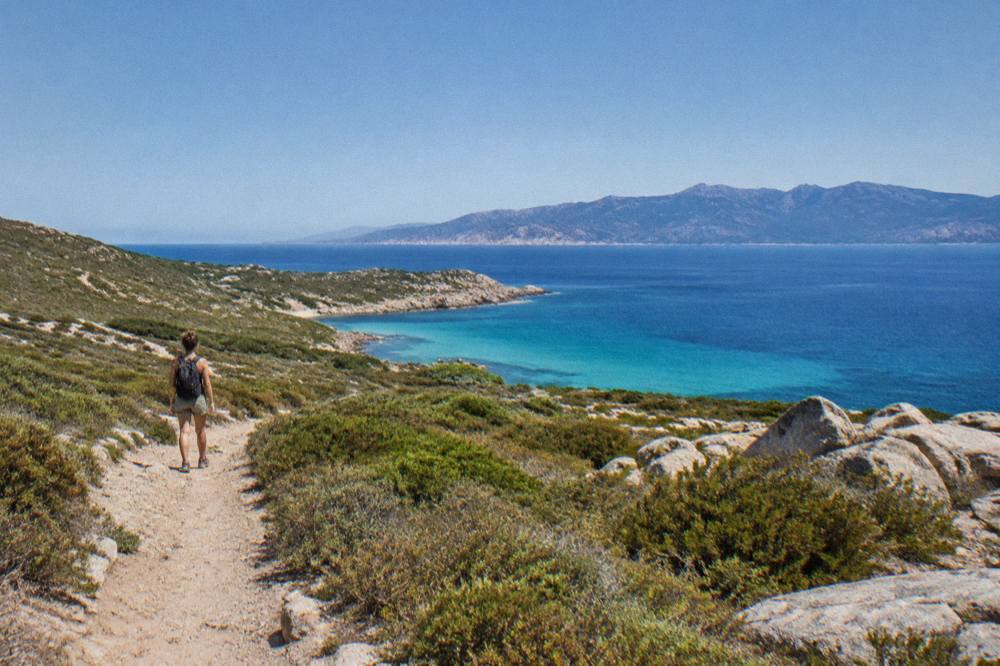
The full station series for Ajaccio, with the Bastia series beside it for comparison, is the honest planning table. October and November carry the most rain at both stations, and the fire-access restrictions of mid-June to mid-September can close massifs on red days, so shoulder months carry trade-offs in both directions rather than a single right answer.
| Month | Ajaccio high °C | Ajaccio low °C | Ajaccio rain mm | Bastia high °C | Bastia rain mm |
|---|---|---|---|---|---|
| Jan | 14.0 | 4.7 | 54.1 | 13.8 | 67.3 |
| Feb | 14.2 | 4.3 | 48.1 | 13.9 | 63.5 |
| Mar | 16.0 | 5.9 | 50.4 | 15.8 | 63.7 |
| Apr | 18.5 | 8.3 | 53.1 | 18.3 | 71.6 |
| May | 22.1 | 11.8 | 49.8 | 22.4 | 53.7 |
| Jun | 25.9 | 15.4 | 25.9 | 26.4 | 38.8 |
| Jul | 28.6 | 17.7 | 8.6 | 29.4 | 13.8 |
| Aug | 29.2 | 18.1 | 15.8 | 29.8 | 21.1 |
| Sep | 26.1 | 15.4 | 57.8 | 26.0 | 74.5 |
| Oct | 22.8 | 12.6 | 85.7 | 22.0 | 126.5 |
| Nov | 18.3 | 9.0 | 111.8 | 17.7 | 134.3 |
| Dec | 15.1 | 5.8 | 73.9 | 14.8 | 88.1 |
Two practical notes follow from the table. First, Ajaccio's annual rain total in the series is 635.0 mm and Bastia's is 816.9 mm: the east coast around Bastia takes more rain than the west, month after month. Second, the guarded refuge season on the GR20, 16 May to 4 October, sits almost exactly inside the drier half of the year, which is no accident and worth copying for any self-arranged mountain walk, gorge country included.
What Else Combines With The Gorges De Spelunca On A Corsica Itinerary?
A Gorges de Spelunca day sits naturally inside a west-coast itinerary that runs from Ajaccio through the Calanques de Piana and the Golfe de Porto to Scandola by boat, with Corte and the island's other gorge country, the Restonica, reachable on road times of 1 hour 30 from Ajaccio and 1 hour from Bastia, and the whole set of itineraries on this site, from three days to two weeks, built on those same anchors.
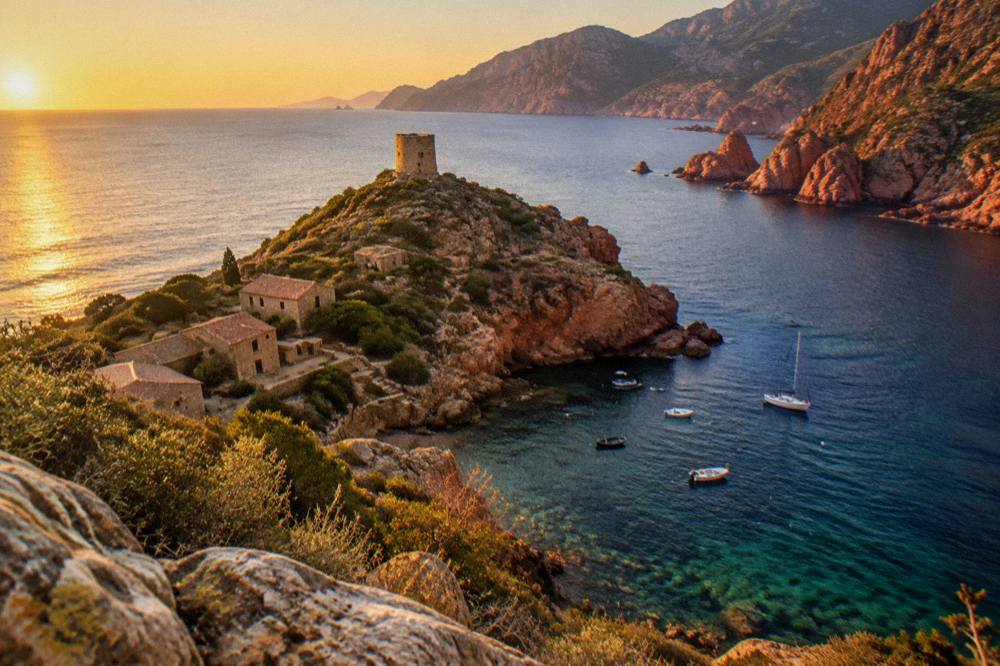
Our broader coverage is the place to assemble the rest: the citadelle de Corte for the interior's history, Filitosa for the island's prehistory in the south, the things to do in Corsica index for the full range, and the Corsica Travel Guide home page for everything from the Saleccia beach in the Désert des Agriates to the Lavezzi islands off Bonifacio. On the southern side, the beaches of Palombaggia, Santa Giulia and Rondinara hold the coast-and-mountain balance the other way round, with Lotu and its shuttle access from Saint-Florent in the far north.
A word on safety framing, because the island's terrain earns it. The US State Department lists France at Level 2, Exercise Increased Caution, and the UK FCDO's standing advice for France notes the summer wildfire risk; neither is Corsica-specific, but both belong in a mountain holiday's homework. The rest is ordinary alpine common sense: check Inforoutes Corse before mountain drives, check the daily fire map in summer, swim at supervised beaches where they exist, Ajaccio ran seven lifeguard posts from 1 July to the end of August 2026, and save 112 into your phone before you leave.
Common Questions About The Gorges De Spelunca In Corsica
Where Are The Gorges De Spelunca?
They are one of the named gorge systems of Corsica, in the mountainous interior inland of the Golfe de Porto on the island's west coast, about 38 km from Ajaccio as the crow flies.
How Far Are The Gorges De Spelunca From Ajaccio?
Porto, the coastal anchor of the region, lies about 38 km from Ajaccio as the crow flies, and the Calanques de Piana about 37 km, straight-line measures that are not road distances; Corsican mountain roads are slow and live status is published by Inforoutes Corse.
Can You Walk The Gorges De Spelunca As Part Of A Long Trail?
Corsica's long-distance network is extensive: the GR20 runs 180 km in about 15 stages, and the Mare a Mare and Mare e Monti trails run from 66 km to 161 km depending on the route, all per the PNRC documents; booking is mandatory for PNRC refuge nights, EUR 20 for a bunk and EUR 12 for a bivouac pitch in 2026.
What Sights Pair With The Gorges De Spelunca?
The UNESCO property "Gulf of Porto: Calanche of Piana, Gulf of Girolata, Scandola Reserve", inscribed in 1983, is the immediate neighbour, with Scandola itself visitable by boat only, plus the Restonica gorges near Corte on the island's other flank.
When Should You Visit The Gorges De Spelunca?
The Météo-France 1991-2020 normals for Ajaccio show a hot dry summer, July averaging 8.6 mm of rain, and a mild wet winter, November averaging 111.8 mm, with snow only on the high mountains; note also that from 15 June to 30 September fires and smoking are banned in forests, maquis and massifs, and some massifs can close on high fire-risk days.
What Does It Cost To Visit The Sights Around The Gorges De Spelunca?
Maison Bonaparte and the Palais Fesch each charge EUR 10 full price, the Musée de la Corse in Corte charges EUR 5.50 with one ticket covering museum and citadel, and Filitosa charges EUR 9 for adults; boat trips and guided days carry live prices that should be checked with operators.