What Is The Best Month To Visit Corsica?
Month-by-month Corsica weather from Météo-France station data, GR20 refuge season dates, and how to pick the right month for beaches, boats and hiking on the island.
Corsica squeezes a mountain range and more than 1,000 km of coastline into 8,722 km2, so the answer to the month question depends almost entirely on what you came for. The coast around Ajaccio and Bonifacio runs on a Mediterranean rhythm of hot dry summers and mild wet winters, while the high interior around Corte and the GR20 ridgeline keeps its own colder calendar. The Météo-France climate normals for the Ajaccio and Bastia stations, covering 1991 to 2020, give the honest numbers behind every recommendation on this page, and the Parc naturel régional de Corse publishes the dates that matter for hiking. This guide from Corsica Travel Guide lays out the figures month by month, then matches them to beaches, boat trips and trails.
No single month is the best month for Corsica: the Météo-France 1991-2020 normals show July with 8.6 mm of rain and 12.05 sunshine hours per day at Ajaccio, but the GR20 refuge season runs only from 16 May to 4 October, and the sea-facing sights keep different hours again. June and September sit inside every open season at once, with 25.9 °C and 26.1 °C mean daily highs at Ajaccio.
The honest framing is that each month trades something for something else. July and August deliver the highest mean daily highs on the Ajaccio table, 28.6 °C and 29.2 °C, and the lowest rainfall figures of the year, but they are also the two months when the fire-risk rules bite hardest: from 15 June to 30 September it is forbidden to light a fire or smoke in forests, maquis and massifs, and access to some massifs can be restricted from mid-June to mid-September. May and October flank the summer with milder air, 22.1 °C and 22.8 °C mean highs, and higher rainfall, 49.8 mm and 85.7 mm.
The winter months are a different trip entirely. November carries 111.8 mm of rain at Ajaccio and 134.3 mm at Bastia, daylight at Ajaccio falls to 9 h 50 min per day, and the guarded refuges on the GR20 close until the following May. What stays true all year is that Corsica is a sea-surrounded island: the ports, the coastal towns and the boat trips are the backbone of a visit at any point on the calendar, as the Corsica overview guide explains region by region.
How Does The Weather In Corsica Change Month By Month?
The Météo-France 1991-2020 station normals for Ajaccio run from a January mean high of 14.0 °C to an August mean high of 29.2 °C, with rainfall ranging from 8.6 mm in July to 111.8 mm in November, and the Bastia station shows the same shape with more rain, 134.3 mm in its November. Summer is hot and dry, winter is mild and wet, and snow falls on the high mountains rather than the coast.
The table below holds the Ajaccio station figures, the ones most guides paraphrase without saying where the numbers come from. Read the rainfall column against the sunshine column and the trade-offs by month become obvious: the months with the longest days are also the months with the least rain.
| Month | Mean high °C | Mean low °C | Rain mm | Sunshine h/day |
|---|---|---|---|---|
| Jan | 14.0 | 4.7 | 54.1 | 4.4 |
| Feb | 14.2 | 4.3 | 48.1 | 5.5 |
| Mar | 16.0 | 5.9 | 50.4 | 6.8 |
| Apr | 18.5 | 8.3 | 53.1 | 7.7 |
| May | 22.1 | 11.8 | 49.8 | 9.3 |
| Jun | 25.9 | 15.4 | 25.9 | 11.1 |
| Jul | 28.6 | 17.7 | 8.6 | 12.1 |
| Aug | 29.2 | 18.1 | 15.8 | 11.1 |
| Sep | 26.1 | 15.4 | 57.8 | 8.7 |
| Oct | 22.8 | 12.6 | 85.7 | 6.7 |
| Nov | 18.3 | 9.0 | 111.8 | 4.7 |
| Dec | 15.1 | 5.8 | 73.9 | 4.0 |
Two details in that table do more work than they first appear to. October and November carry the heaviest rainfall of the year at both stations, which is why autumn hiking plans on the island need more margin than spring ones. And the sunshine column moves from 4.0 hours per day in December to 12.05 in July, a near tripling that shapes everything from beach days to how long a walk feels.
Daylight matters as much as temperature for fitting Corsica's sights into a day. Ajaccio averages 9 h 31 min of daylight in January, 13.36 in April, 15.18 in June and 11.07 in October. A September itinerary still has 12 h 29 min to work with, while a February one works with 10.59, which is one reason the winter months suit town-based trips such as Ajaccio and Bastia rather than long days out.
When Can You Hike The GR20 And The Island's Trails In Corsica?
The GR20 season is fixed by the Parc naturel régional de Corse: refuges are guarded from 16 May to 4 October, refuge and bivouac nights must be booked online in advance, and no departures are allowed from Calenzana after 11:00 under a municipal fire-risk order, so the hiking window is effectively late May to early October.
The GR20 itself runs 180 km north to south in about fifteen stages of 4 to 8.5 hours each, and the park's 2026 rates put a refuge bunk at EUR 20 per person, a bivouac pitch at EUR 12, and a rented tent at EUR 27 for one person or EUR 39 for two. The long-distance alternatives keep similar calendars. Mare a Mare Centre covers 84 km from Ghisonaccia to Porticcio in about 7 days, Mare a Mare Sud runs 73 km to Propriano in 5 days, and Mare e Monti Sud covers 66 km, also ending in Propriano. The Corsica GR20 guide carries the full stage and booking detail.
Spring and autumn sit at the two edges of that window with very different characters. Late May and June give long daylight, 14.56 and 15 h 11 min at Ajaccio, with mean highs of 22.1 °C and 25.9 °C before the July heat. September drops to 26.1 °C with 8.7 sunshine hours per day. The fire rules frame the middle of the season: the risk map is updated at 18:00 each day for the next day, and from mid-June to mid-September whole massifs can close on high-risk days. Wild camping is banned across the island including the GR20; bivouac is allowed only in the marked areas at refuges.
The interior hikes around Corte and the Restonica valley run on the same seasons, with the Musée de la Corse and the citadel keeping daily 10:00 to 19:00 hours from 1 May to 31 October and shorter winter hours outside that. If a month choice is being built around walking rather than swimming, the shoulders of the refuge season, June and September, carry the best balance of open huts, workable temperatures and full daylight.
Which Months Suit Boats And Beaches In Corsica?
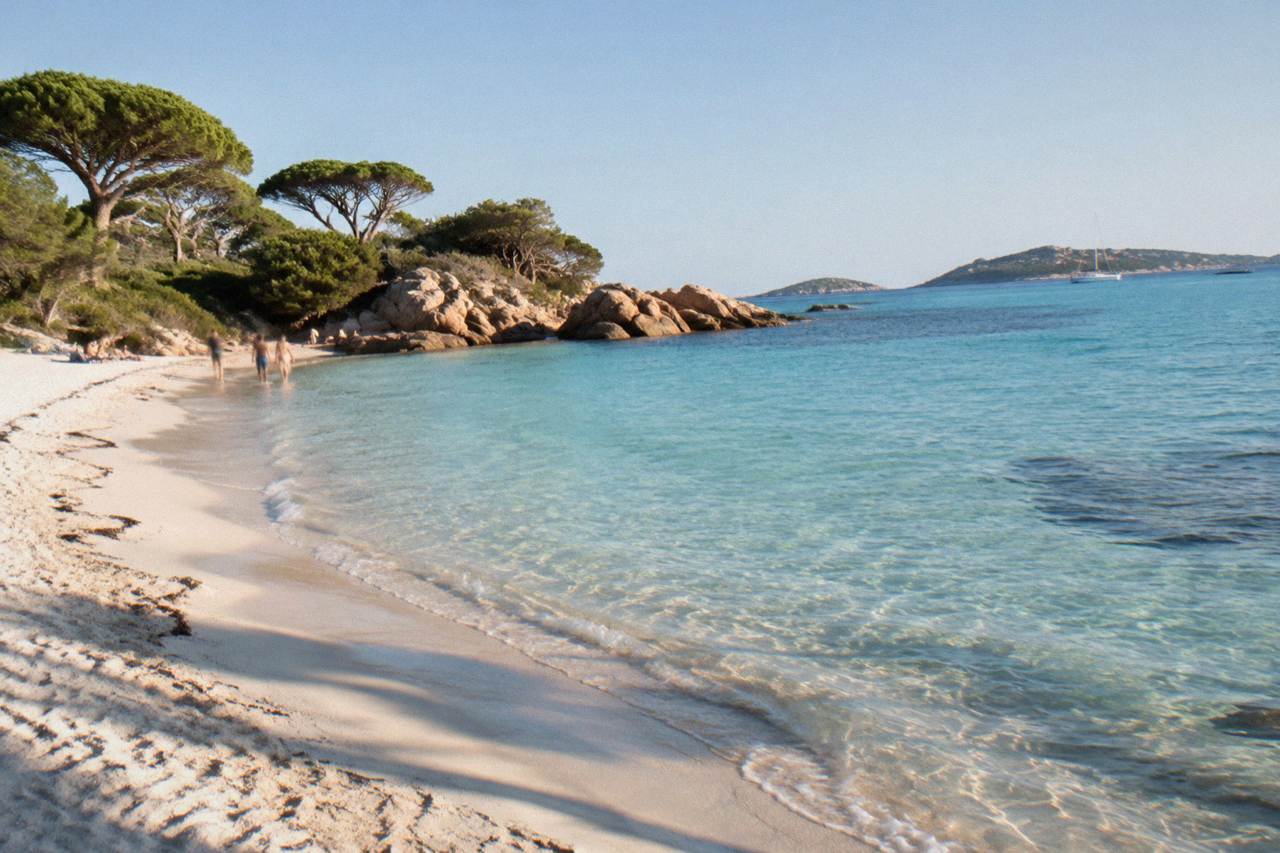
The sea-facing half of Corsica runs longest: boat trips to the Scandola Nature Reserve, the Calanques de Piana, the Îles Lavezzi and the Îles Sanguinaires operate through the warm months, the Désert des Agriates boat shuttles to Saleccia and Lotu run about April to October weather permitting, and Ajaccio staffs seven lifeguard posts on its main beaches from 1 July to the end of August.
Scandola deserves its place at the centre of any month plan. The reserve, created by ministerial order on 9 December 1975 as the first nature reserve in Corsica, sits inside the UNESCO property "Gulf of Porto: Calanche of Piana, Gulf of Girolata, Scandola Reserve" inscribed in 1983, and its land area is closed to the public: visits are by boat only. The reserve covers 919 ha of land and 1,000 ha of sea, managed by the PNRC. A guided cruise such as the Check availability link for the Scandola Nature Reserve guided boat tour from Ajaccio or Porticcio is the practical way in, and the months when the sea is calm enough for those crossings are the months when the whole Golfe de Porto works.
The beach calendar follows the same curve as the climate table. June, July, August and September hold the four highest mean daily highs at Ajaccio, 25.9 °C to 29.2 °C, with rainfall between 8.6 mm and 57.8 mm. October keeps a 22.8 °C mean high but takes on 85.7 mm of rain, which is why the question of swimming in Corsica in October needs its own answer rather than a rule of thumb. For the beaches of the far south and the east, Palombaggia, Santa Giulia and Rondinara, the summer months are the reliable ones, while the beaches guide maps which coves need boat access and which need a car.
What Do May, June And September Offer In Corsica?
May, June and September are the months that sit inside every open season at once: the GR20 refuges are guarded, the Agriates shuttles and Scandola boats run, Ajaccio averages 22.1 °C, 25.9 °C and 26.1 °C mean highs, and rainfall stays between 25.9 mm and 57.8 mm, lower than any month from October to April.
May opens the refuge season on 16 May and the Musée de la Corse summer hours on 1 May, with 14 h 34 min of daylight at Ajaccio and a 22.1 °C mean high against 49.8 mm of rain. June adds warmth, 25.9 °C, cuts rainfall to 25.9 mm, and gives the island its longest days, 15 h 11 min of daylight, though the fire restrictions begin on 15 June. September closes the set with 26.1 °C, 57.8 mm of rain and 8.7 sunshine hours per day, and the refuge season runs to 4 October.
The trade-offs are worth naming plainly rather than glossing. May seawater and May boat schedules are less settled than the high summer's, and the lifeguard posts at Ajaccio only operate from 1 July. September sits inside the fire-rule window to 30 September, so massif access on any given day depends on the 18:00 risk map. Neither point is a reason to avoid the months, only a reason to plan around the standing rules rather than around assumptions.
October deserves a half-answer here because it half-belongs to the shoulder. The GR20 refuges close on 4 October, the museum hours drop to the winter schedule on 1 November, and Ajaccio's October figure of 85.7 mm of rain is more than double September's. Town sightseeing carries on regardless: Maison Bonaparte in Ajaccio keeps hours every day except Monday, EUR 10 full price, free for EU residents under 26, and the Palais Fesch lists EUR 10 full, EUR 6 for over-65s, free up to 18, daily 09:00 to 17:00, year-round entries that do not move with the season.
The winter months, November to March, reframe the island around its towns, museums and food rather than its beaches. Ajaccio's November mean high of 18.3 °C is mild by northern European standards, but 111.8 mm of rain and 4.67 sunshine hours per day move the plan indoors, and Bastia's November rain of 134.3 mm underlines that the eastern side of the island takes the heavier autumn weather. It is the season for the Corsican food guide, brocciu and the charcuterie cuts, prisuttu, lonzu and coppa, and for asking how many days in Corsica is enough with a shorter, town-based answer.
Common Questions About The Best Month To Visit Corsica
What Is The Best Month To Visit Corsica?
There is no single best month. The Météo-France 1991-2020 normals for Ajaccio show July with 8.6 mm of rain and 12.05 sunshine hours per day, while the GR20 refuge season runs 16 May to 4 October and the lifeguarded beaches operate from 1 July to the end of August. June and September fall inside every open season at once, with mean highs of 25.9 °C and 26.1 C.
Is Summer The Best Time To Visit Corsica?
July and August have the highest mean daily highs at Ajaccio, 28.6 °C and 29.2 °C, and the lowest rainfall, 8.6 mm and 15.8 mm. The same months sit fully inside the fire-risk period: from 15 June to 30 September no fires or smoking are allowed in forests, maquis and massifs, and some massifs can close on high-risk days.
When Does It Rain Most In Corsica?
October and November carry the highest monthly rainfall figures at both Météo-France stations: 85.7 mm and 111.8 mm at Ajaccio, and 126.5 mm and 134.3 mm at Bastia. July has the lowest figure, 8.6 mm at Ajaccio and 13.8 mm at Bastia.
Can You Hike The GR20 Outside The Summer?
The Parc naturel régional de Corse guards the refuges from 16 May to 4 October, and refuge and bivouac nights must be booked online in advance. No GR20 departures are allowed from Calenzana after 11:00. Outside the guarded season the route is unstaffed and the high sections hold snow into spring.
Is Corsica Warm In Winter?
The coast is mild: Ajaccio averages a 14.0 °C mean high in January and 15.1 °C in December, with lows of 4.7 °C and 5.8 C. Sunshine drops to 4.4 hours per day in January and 4.0 in December, and snow falls on the high mountains rather than the coast.
Which Month Has The Most Daylight In Corsica?
June, with 15 h 11 min of daylight at Ajaccio on average, ahead of July at 14 h 53 min and May at 14 h 34 min. December has the least, 9 h 11 min, and January 9 h 31 min.
The month question resolves into three calendars rather than one verdict: the climate table, the 16 May to 4 October refuge season, and the boat and beach season that opens around April and runs into October. Match the month to whichever of those three the trip is built around, and the rest of Corsica, from the Bonifacio cliffs to the Corte citadel, falls into place around it.