Palombaggia Beach
Palombaggia Beach sits on Corsica's southeast coast near Porto-Vecchio, close to Santa Giulia and Rondinara and within reach of the Cerbicale Islands reserve. This guide covers what to do on and around the beach, water activities, day trips, weather and safety.
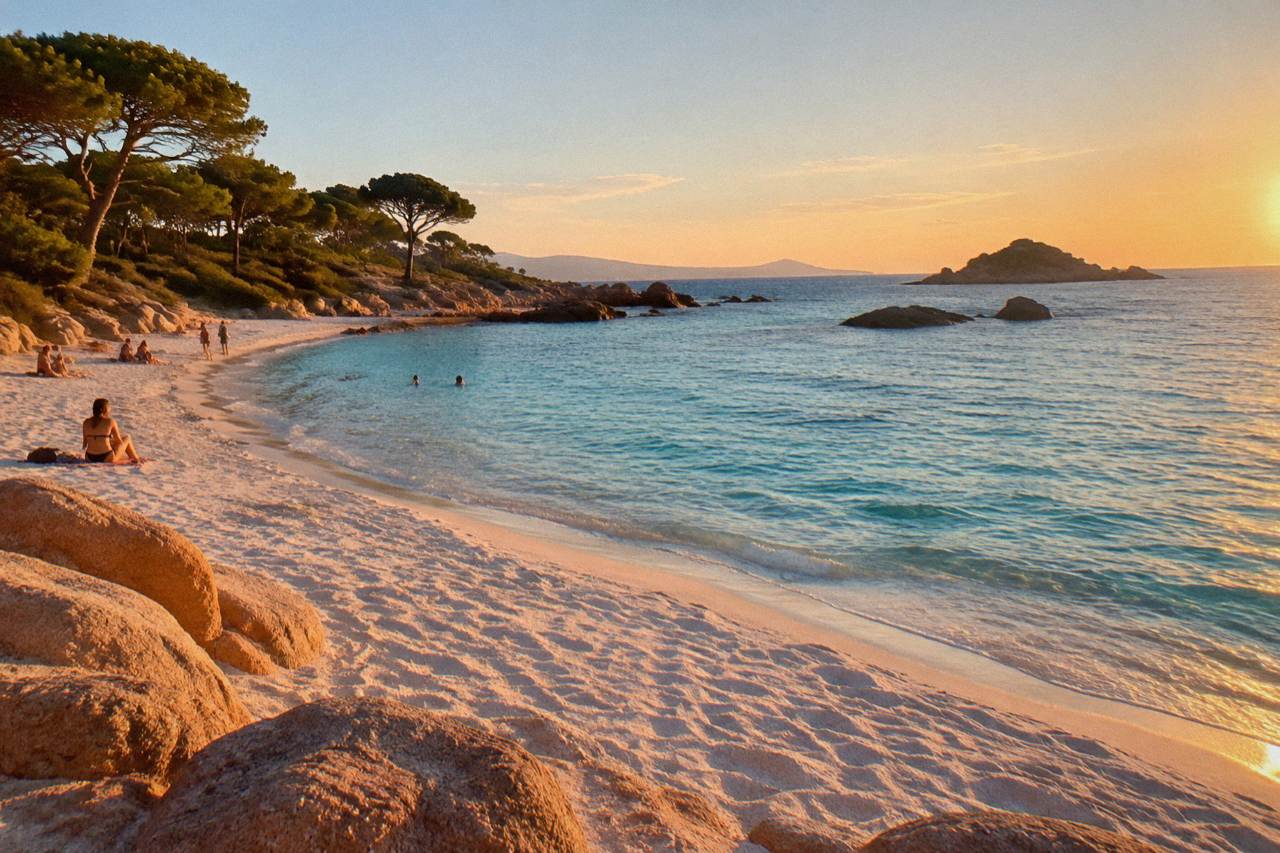
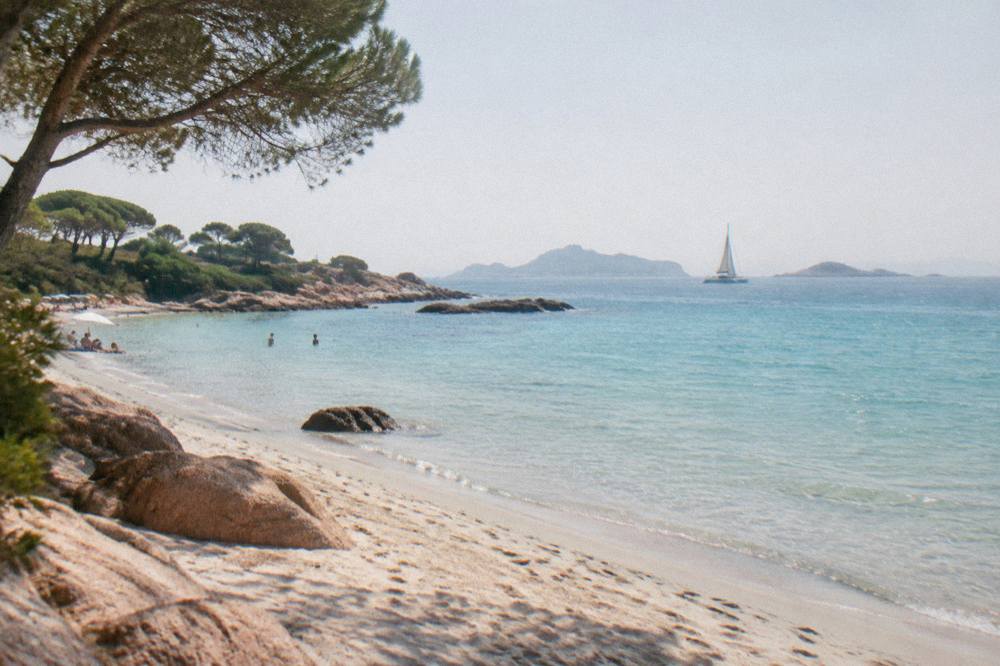
Palombaggia Beach is a beach on the southeast coast of Corsica, near the town of Porto-Vecchio in Corse-du-Sud, within reach of the Cerbicale Islands and the Ospedale forest and Bavella massif inland.
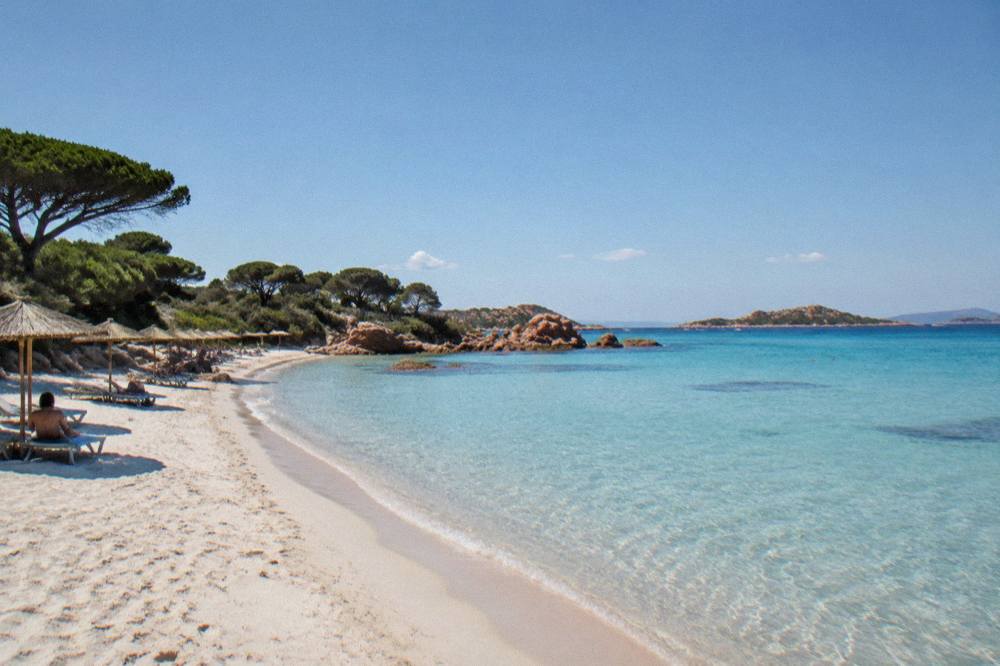
Palombaggia Beach is a beach on the southeast coast of Corsica, the French Mediterranean island with more than 1,000 km of coastline and a mountainous interior that rises to Monte Cinto at 2,706 m. The beach belongs to the Porto-Vecchio area of Corse-du-Sud, the island's southern department, and it sits in a stretch of coast that also holds Santa Giulia and Rondinara, two other named beaches of the same southeast corner. Offshore, the Cerbicale Islands form a protected reserve, and inland the road climbs toward the Ospedale forest and the Aiguilles de Bavella, so the beach works as a base for far more than a day on the sand. This page from the Corsica Travel Guide sets out what is known about the beach and its surroundings, what you can book on the water, and how the practical details of a southeast Corsica stay fit together.
Where Is Palombaggia Beach In Corsica?
Palombaggia Beach lies on the southeast coast of Corsica, near Porto-Vecchio in the Corse-du-Sud department, roughly between the named beaches of Santa Giulia and Rondinara on the same stretch of shoreline. Corsica itself is a French Mediterranean island of 8,722 km2 with more than 1,000 km of coastline, and its southern department holds about 175,100 residents according to INSEE's 2026 estimate.
Porto-Vecchio is the local town and the practical hub for the beach: it is one of Corsica's ferry ports, it gives its name to a wine territory within the Vin de Corse appellation, and it sits on the east coast road that runs north toward Bastia, the island's second town with 46,867 residents in the 2023 census published in 2026. Ajaccio, the capital and the island's largest town with 76,320 residents, lies on the west coast. The whole island counted 365,636 residents on 1 January 2026 in INSEE's provisional estimate, and it is divided between Corse-du-Sud and Haute-Corse under the Collectivité de Corse, the single territorial authority in place since 1 January 2018.
The southeast corner where Palombaggia sits is one of the island's most beach-dense areas. Santa Giulia Beach and Rondinara Beach are the closest named neighbours, Plage de Roccapina lies further south toward Bonifacio, and the islands visible offshore are the Cerbicale Islands, a nature reserve managed with the same protective logic as the island's other marine areas. The question what is the best beach in Corsica has no single answer on this site, but the southeast cluster around Palombaggia is the block of shoreline most often discussed together with Bonifacio's cliffs and the Lavezzi Islands at the island's southern tip.
What Can You Do At And Near Palombaggia Beach In Corsica?
A stay at Palombaggia splits naturally into three layers: time on the beach and in the water, boat trips along the southeast coast toward the Cerbicale Islands and Bonifacio, and inland day trips to the Ospedale forest, the Cuscionu plateau and the Aiguilles de Bavella. All three are bookable through the island's tour operators, and the beach's position near Porto-Vecchio puts a ferry port, a wine territory and the Alta Rocca hills within one holiday.
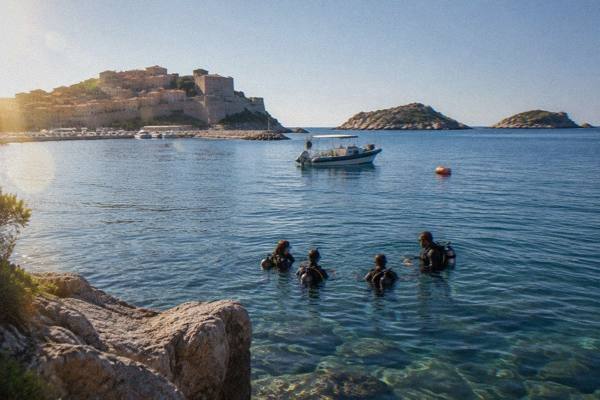
On and beside the water, the options include snorkelling, catamaran cruises and beginner scuba diving. The Cerbicale Islands reserve offshore is the destination for most of the water activity booked from Porto-Vecchio: a beginner scuba programme runs there with an instructor, a full-day catamaran cruise sails to the Lavezzi Islands, and guided snorkelling trips operate out of Bonifacio further south. On land, the Porto-Vecchio old town is the nearest sight, and the inland roads lead to the Ospedale forest and the Bavella needles, where 4x4 day tours operate.
The table below sets out the kinds of activity that operate from the Porto-Vecchio area, using what the operator listings state about each product.
| Activity | Departure Area | What The Product Covers |
|---|---|---|
| Beginner scuba diving | Porto-Vecchio | Instructor-led first dive in the Cerbicale Islands reserve |
| Catamaran cruise to the Lavezzi Islands | Porto-Vecchio | Full-day sail with catamaran to the islands off Bonifacio |
| Ospedale forest and Bavella 4x4 tour | Porto-Vecchio | Day tour to the forest and the Aiguilles de Bavella |
| Cuscionu plateau and Alta Rocca 4x4 tour | Porto-Vecchio | Day tour onto the southern plateau by 4x4 |
| Guided e-mountain bike ride, Plateau du Coscione | Porto-Vecchio | Guided electric mountain bike ride on the plateau |
For the full island picture of what can be booked, the site's root page on things to do in Corsica collects every bookable product by kind, and the deeper question of whether the beach deserves its reputation is treated on its own answers page about Palombaggia.
Which Boat Trips And Diving Trips Run From Porto-Vecchio In Corsica?
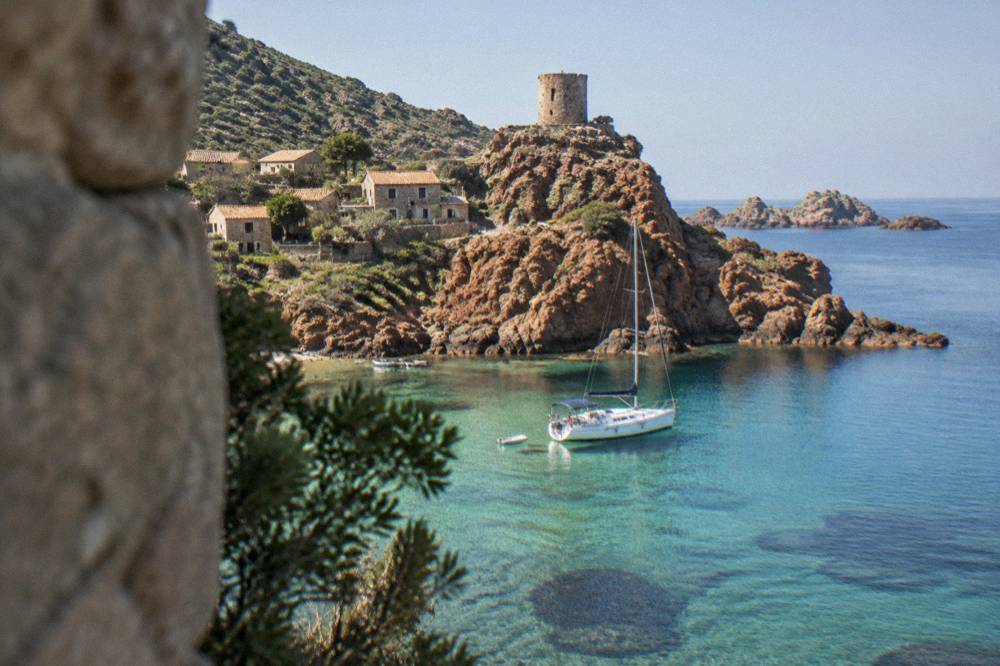
**The Porto-Vecchio area runs three main kinds of water product: a beginner scuba dive with an instructor in the Cerbicale Islands reserve, a full-day catamaran cruise to the Lavezzi Islands, and, from Bonifacio further south, snorkelling cruises and cliff cruises in the Bouches de Bonifacio. **
Diving is the product most directly tied to Palombaggia's stretch of water. The Cerbicale Islands sit offshore from the beach and hold protected marine habitat, and the beginner programme from Porto-Vecchio pairs a first-time diver with an experienced instructor. The site's page on that first dive, beginner scuba diving in the Cerbicale Islands reserve, describes what the product covers, and live dates and prices come from Check availability.
For sailing rather than diving, the full-day catamaran cruise from Porto-Vecchio heads for the Lavezzi Islands, the protected archipelago inside the Bouches de Bonifacio Nature Reserve at Corsica's southern tip. From Bonifacio itself, the short crossing from Santa Teresa Gallura in Sardinia arrives into the same waters, and the local operators run cliff cruises, snorkelling cruises and a catamaran with snorkelling among the Lavezzi Islands. The site's guides to the Lavezzi Islands and Bonifacio's citadel and cliffs cover the destination end of those trips.
Which Day Trips From Palombaggia Are Worth Booking In Corsica?
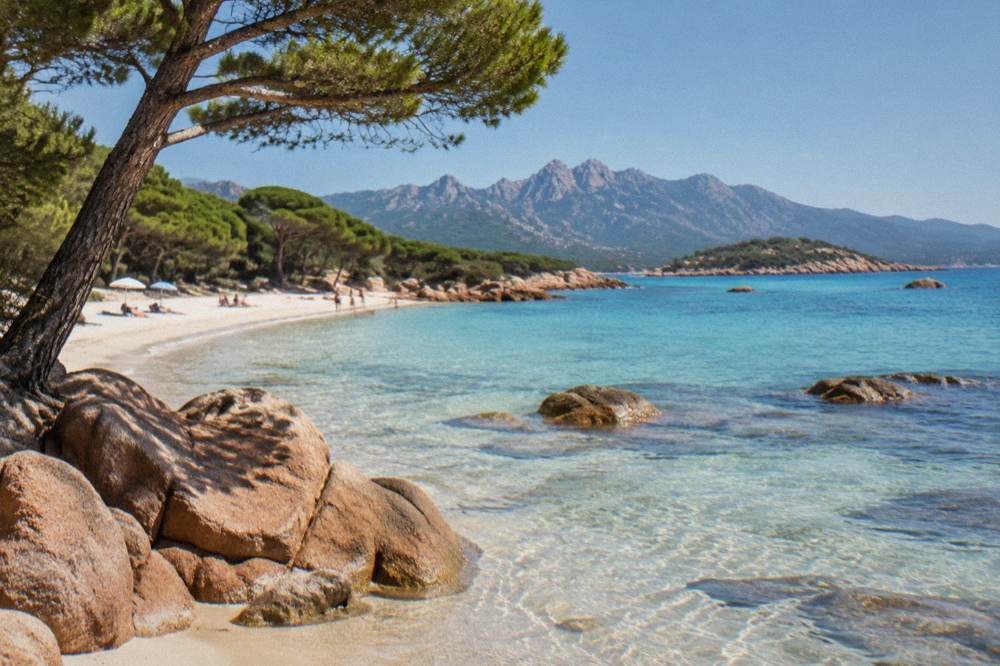
The strongest day trips from the Palombaggia area are the 4x4 tours into the Ospedale forest and the Aiguilles de Bavella, the Cuscionu plateau tour across the Alta Rocca, the prehistoric site of Filitosa to the southwest, and the boat trips to the Lavezzi Islands from Porto-Vecchio or Bonifacio. Inland southeast Corsica is the inland part of the island, with the Bavella massif among the fire-regulated forest areas in summer.
The Ospedale forest and Bavella 4x4 tour and the Cuscionu plateau and Alta Rocca 4x4 tour both depart from Porto-Vecchio and cover full days in the hills behind the coast. The Aiguilles de Bavella are the best-known landmark of that interior, and the site's Aiguilles de Bavella guide describes them. A guided electric mountain bike ride on the Plateau du Coscione gives a slower version of the same landscape. West and south, the prehistoric site of Filitosa is open 1 April to 2 November with adult entry at EUR 9, reduced EUR 7 and a family ticket at EUR 28, figures from the site's own timetable and rates page.
Southward along the coast, Bonifacio holds the Escalier du Roi d'Aragon, 189 steps cut down the cliff with a reported fee of about EUR 5 and a requirement for closed, flat shoes. The table below gathers the entrance figures collected for sights within day-trip range of the southeast coast.
| Sight | Distance Context | Entry (EUR) | Detail |
|---|---|---|---|
| Filitosa prehistoric site | Southwest Corsica, Sollacaro | 9 adults, 7 reduced, 28 family | Open 1 April to 2 November |
| Escalier du Roi d'Aragon, Bonifacio | South tip of the island | about 5 | 189 steps, closed shoes required |
| Musée de la Corse, Corte | Interior, road time 2 h from Porto-Vecchio | 5.50 full, 4 reduced, 3 over-65s | One ticket covers museum and citadel |
The road times to Corte in that table come from the Musée de la Corse's own practical page: from Porto-Vecchio the drive is listed at 2 hours, with Bastia at 1 hour and Bonifacio at 2 hours 45. Inforoutes Corse publishes live road conditions and pass accessibility levels, which matters for any mountain day trip, and it is the standing reference the site recommends before driving into the interior.
What Is The Weather Like At Palombaggia Beach In Corsica?
Corsica has a hot, dry summer and a mild, wet winter, with snow only on the high mountains, and the Météo-France 1991-2020 station normals are the site's reference figures. For Ajaccio on the west coast, July averages 8.6 mm of rain and August averages a mean daily high of 29.2 °C; October and November carry the most rain, with November at 111.8 mm in Ajaccio and 134.3 mm in Bastia.
The climate figures this site publishes are station normals, computed from Météo-France's monthly climatological base for the 1991-2020 period at Ajaccio (Campo dell'Oro) and Bastia. What the normals do show is the shape of the year: dry midsummer months, a sharp rise in rain from September onward, and mild winter highs that stay above 14 °C at both stations. The wider set of guides lives on Corsica Travel Guide.
| Month | Ajaccio High °C | Ajaccio Rain mm | Bastia High °C | Bastia Rain mm |
|---|---|---|---|---|
| May | 22.1 | 49.8 | 22.4 | 53.7 |
| June | 25.9 | 25.9 | 26.4 | 38.8 |
| July | 28.6 | 8.6 | 29.4 | 13.8 |
| August | 29.2 | 15.8 | 29.8 | 21.1 |
| September | 26.1 | 57.8 | 26.0 | 74.5 |
| October | 22.8 | 85.7 | 22.0 | 126.5 |
For a beach stay, the practical reading is that the midsummer months carry the least rain at both stations and the highest mean daily highs, while September still averages highs of 26.1 °C at Ajaccio before the autumn rain builds. The site's month-by-month breakdown, Corsica weather by month, carries the full tables for both stations, and the broader page on the best time to visit Corsica treats the trade-offs without declaring a winner.
Is It Safe To Swim At Palombaggia Beach In Corsica?
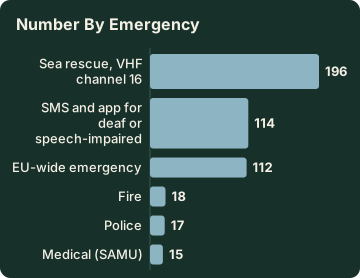
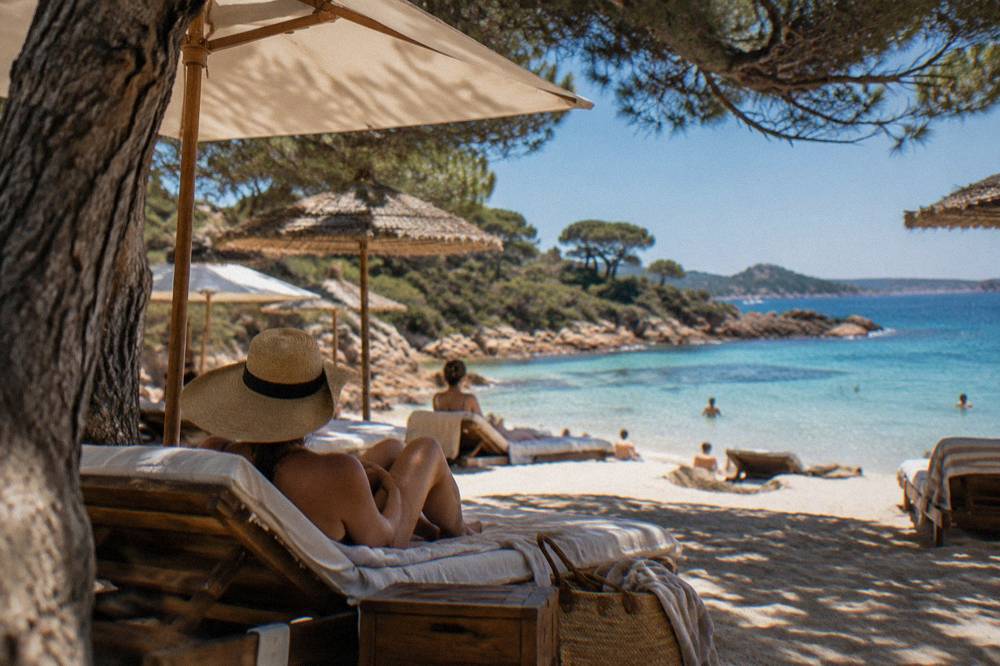
Swimming safety in Corsica is supervised in summer: Ajaccio ran 7 lifeguard posts on its main beaches from 1 July to the end of August 2026, and Haute-Corse's supervised beaches are staffed by volunteer firefighters over roughly the same window, 1 July to 31 August. Emergency numbers are 112, 15 for medical, 17 for police, 18 for fire, 114 by SMS and 196 for sea rescue via VHF channel 16.
The lifeguard figures describe the standing summer pattern rather than any single beach: municipalities publish their own surveillance pages each season, and the local pattern for the Porto-Vecchio area follows the same July-to-August core. Outside that window, swimmers rely on flags and their own judgment, and the prefecture issues wave and drowning alerts when conditions demand them. Beach flags mark supervised zones in the standard French red-and-yellow system.
The other standing summer safety fact is fire. From 15 June to 30 September it is forbidden to light a fire or smoke in forests, maquis and massifs across Corsica, and the fire-risk map for massif access is updated at 18:00 each day for the next day. Some massifs can close entirely on high-risk days by prefectural order, which matters for the inland day trips from the coast. The UK FCDO notes a high risk of wildfires in France from April to October, and the US State Department lists France at Level 2, Exercise Increased Caution, as reported on its own advisory page.
| Emergency | Number |
|---|---|
| EU-wide emergency | 112 |
| Medical (SAMU) | 15 |
| Police | 17 |
| Fire | 18 |
| SMS and app for deaf or speech-impaired users | 114 |
| Sea rescue, VHF channel 16 | 196 |
| Mountain rescue PGHM Ajaccio | 04 95 24 24 00 |
How Does Palombaggia Compare With Other Beaches In Corsica?
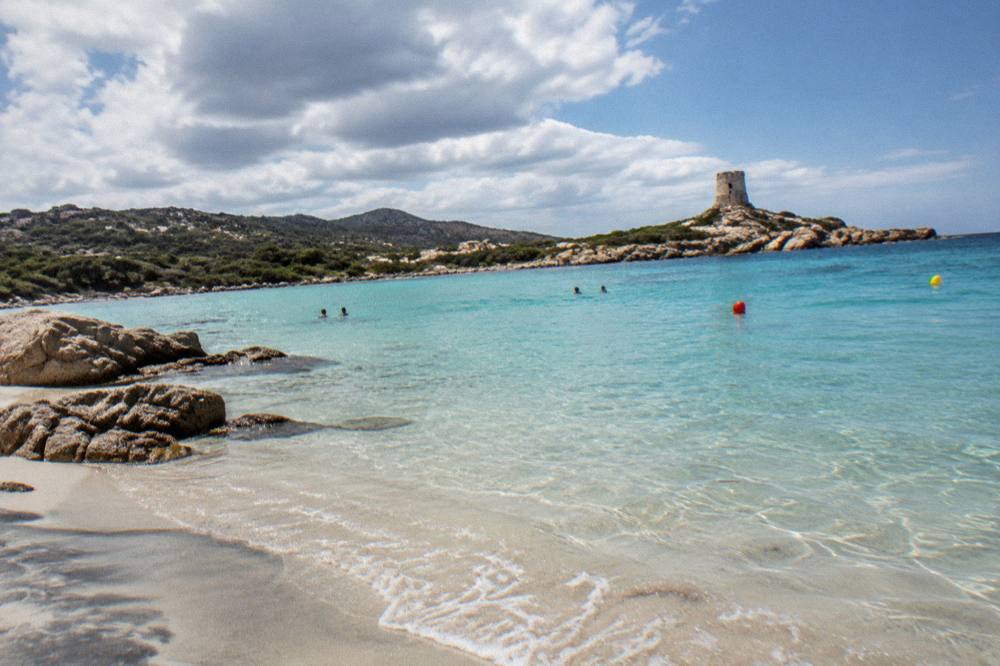
Palombaggia belongs to the southeast cluster of named Corsican beaches around Porto-Vecchio, alongside Santa Giulia and Rondinara, while the island's other headline shores include Saleccia and Lotu in the Désert des Agriates in the north and Plage de l'Ostriconi on the northwest coast.
Access is where the differences are real and documented. The Agriates beaches of Saleccia and Lotu, covered in the site's Saleccia Beach and Lotu Beach guides, are reached by boat shuttle from Saint-Florent roughly April to October, by 4x4 track from Casta, or on foot, a pattern reported by the island's official tourism site. Palombaggia, by contrast, sits on the southeast coast road network close to Porto-Vecchio, a ferry port and full town. That difference in access shapes the kind of day each beach offers.
The island-wide picture is collected in the site's Corsica beaches guide, and the neighbouring shores each have their own page: Santa Giulia, Rondinara, Plage de Roccapina to the south and Plage de l'Ostriconi far to the northwest. For combining beaches with the island's other sights, the itineraries that start from this coast include the Corsica south itinerary and the longer Corsica in one week plan.
What Should You Know Before Visiting Palombaggia Beach In Corsica?
Four practical points carry the weight of a Palombaggia trip: the euro is the currency, tipping is optional because French menus must state that service is included, summer access to the inland massifs is fire-regulated from 15 June to 30 September, and bookable products such as dives, cruises and 4x4 tours print their own prices, ratings and durations on their pick cards rather than in any prose on this site.
Money first. Local costs are in euros: Filitosa at EUR 9 adult entry, the Musée de la Corse at EUR 5.50, refuge bunks on the GR20 at EUR 20 per person. Restaurant tipping follows French law, which requires menus to state "prix service compris" with the service percentage included, so an extra tip is a choice rather than an obligation.
Second, the fire rules shape summer plans. The 15 June to 30 September ban on fires and smoking in forests, maquis and massifs, the daily 18:00 update of the massif access map, and the possibility of full massif closures on high-risk days all apply to the inland trips behind the coast. Finally, if the whole island is on the table, the Corsica travel tips and Corsica cost and budget guides round out the planning picture.
Common Questions About Palombaggia Beach In Corsica
Where Is Palombaggia Beach?
Palombaggia Beach is on the southeast coast of Corsica, near Porto-Vecchio in the Corse-du-Sud department, on the same stretch of shoreline as Santa Giulia and Rondinara.
Can You Swim At Palombaggia Beach?
Yes. Corsica's supervised beaches are lifeguarded over the core summer window, with Ajaccio running 7 posts from 1 July to the end of August 2026 and Haute-Corse beaches staffed about 1 July to 31 August. Outside that window, follow the beach flags and local alerts, and dial 196 for sea rescue in an emergency.
Can You Dive Near Palombaggia Beach?
Yes. A beginner scuba dive with an experienced instructor runs from Porto-Vecchio into the Cerbicale Islands reserve, the protected island group offshore from the southeast coast.
The Météo-France 1991-2020 normals show July averaging 8.6 mm of rain at Ajaccio and August a mean daily high of 29.2 °C, while September still averages 26.1 °C highs before the autumn rain builds.
Which Beaches Are Near Palombaggia Beach?
Santa Giulia and Rondinara are the nearest named beaches in the same southeast corner of Corsica, with Plage de Roccapina further south toward Bonifacio.
Do You Need To Book Tours Near Palombaggia In Advance?
The dive, catamaran and 4x4 products that run from Porto-Vecchio print their live availability and prices on their own pick cards and booking buttons, so check availability there for the dates of your trip.