Corsica Beaches
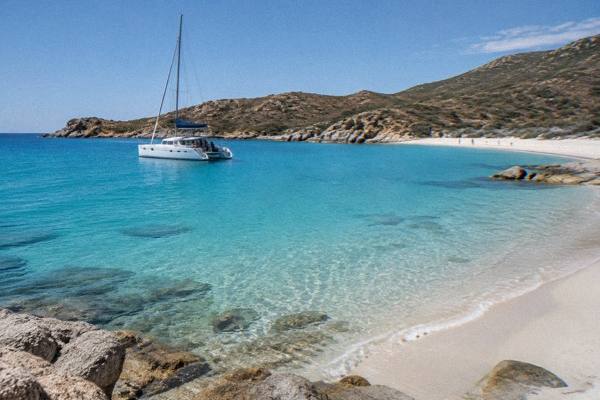
Corsica carries more than 1,000 km of coastline around a mountainous island, and its beaches range from town sands in Ajaccio to boat-access coves in the Désert des Agriates.
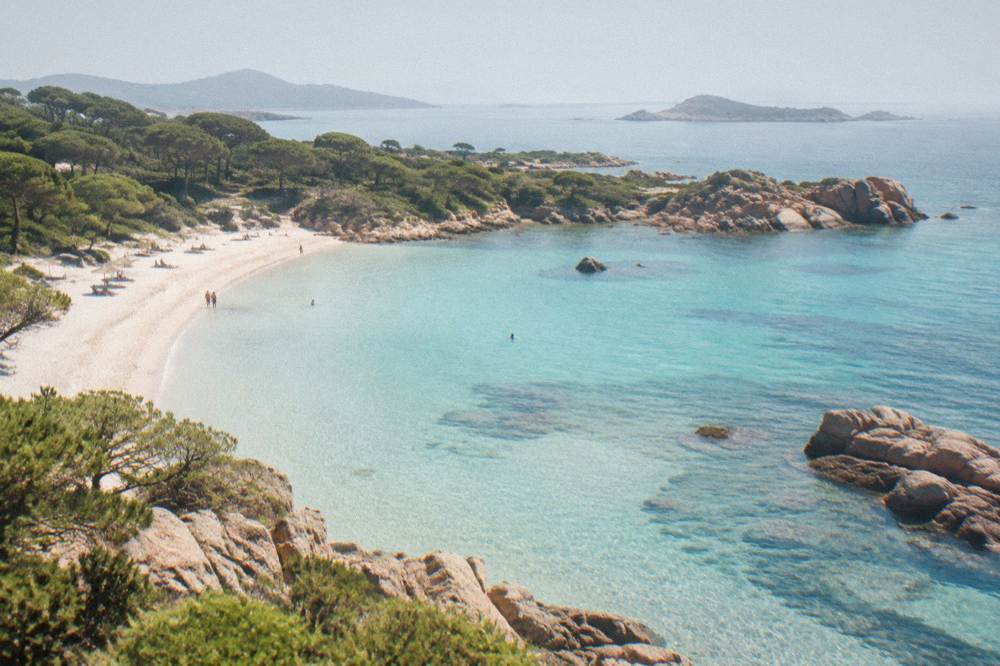
Corsica's best known beaches cluster around Porto-Vecchio in the southeast, Bonifacio and the Îles Lavezzi in the far south, the Désert des Agriates in the north, and the Balagne coast around Calvi and L'Île-Rousse, with Ajaccio's supervised town beaches on the west coast.
Corsica is a French island in the Mediterranean with more than 1,000 km of coastline wrapped around a mountainous interior, and the beach map of the island follows that shape closely. The southeast around Porto-Vecchio holds the big names, Palombaggia, Santa Giulia and Rondinara. The far south around Bonifacio adds cliff-backed coves and the Îles Lavezzi offshore. The north answers with the Désert des Agriates and the beaches of the Balagne coast between Calvi and L'Île-Rousse, while Ajaccio on the west coast keeps supervised town beaches within the city itself. This guide sets out where each stretch of coast sits, how the access works, and what to know about swimming seasons, supervision and the boat-only shores.
The facts on this page come from published sources: Météo-France station normals for the climate, the Parc naturel régional de Corse for the Agriates and hiking coast, the town of Ajaccio for its lifeguard posts, and the reserve authorities for the protected islands. Where a figure exists, it is stated. The page states a figure wherever one is available, and otherwise leaves the point unquantified.
What Are The Best Beaches In Corsica?
The best known beaches of Corsica sit in four groups: Palombaggia, Santa Giulia and Rondinara near Porto-Vecchio in the southeast, the coves and Îles Lavezzi around Bonifacio in the far south, Saleccia and Lotu inside the Désert des Agriates in the north, and the Balagne shoreline between Calvi and L'Île-Rousse on the northwest coast, with Ajaccio's town beaches on the west.
Each group suits a different kind of trip. The Porto-Vecchio beaches sit close to one of the island's main resort towns, so they pair with the restaurant and accommodation base described in the Porto-Vecchio stay guide. Bonifacio's coast runs under high cliffs, and the Îles Lavezzi, an island group inside the Bouches de Bonifacio Nature Reserve, sit a short boat ride away. The Agriates beaches are the wild ones: Saleccia and Lotu are reached by boat shuttle from Saint-Florent, by 4x4 track from Casta, or on foot, per the visit-corsica listing. The Balagne coast is the train-and-village coast, served by the coastal line between Calvi and L'Île-Rousse.
Ajaccio, the island's capital with 76,320 residents, keeps its main beaches in town, and the city ran seven lifeguard posts on them from 1 July to the end of August 2026. Bastia, the second town with 46,867 residents, anchors the northeast, and Cap Corse's rocky finger reaches north from it toward Centuri and Erbalunga.
| Beach area | Region of Corsica | Base town | Access character |
|---|---|---|---|
| Palombaggia | Southeast, Corse-du-Sud | Porto-Vecchio | Road access from a resort base |
| Santa Giulia | Southeast, Corse-du-Sud | Porto-Vecchio | Road access from a resort base |
| Rondinara | Far south, Corse-du-Sud | Bonifacio and Porto-Vecchio | Coast road between the two towns |
| Îles Lavezzi | Far south offshore | Bonifacio | Boat trip, inside a nature reserve |
| Saleccia | Désert des Agriates, Haute-Corse | Saint-Florent | Boat shuttle, 4x4 track from Casta, or on foot |
| Lotu | Désert des Agriates, Haute-Corse | Saint-Florent | Boat shuttle, 4x4 track from Casta, or on foot |
| Plage de Ostriconi | Northwest, Haute-Corse | L'Île-Rousse and Saint-Florent | Coast road between the two |
| Ajaccio town beaches | West, Corse-du-Sud | Ajaccio | Urban beaches, supervised in summer |
Which Corsica Beaches Are Easiest To Reach Without A Boat?
The easiest Corsica beaches to reach without a boat are the town beaches of Ajaccio, the Porto-Vecchio group of Palombaggia, Santa Giulia and Rondinara, and the Balagne coast between Calvi and L'Île-Rousse, because all three sit on or near the island's main roads and the coastal rail line, while Saleccia and Lotu in the Désert des Agriates require a boat shuttle, a 4x4 track or a walk.
Ajaccio is the simplest case: the beaches sit in the city, and the museum pages for Maison Bonaparte note that the site on Rue Saint-Charles lies 200 m from the bus station and ferry terminal, with bus 8 from the airport, which gives a sense of how compact the coastal access is there. In the southeast, Palombaggia and Santa Giulia sit on the Porto-Vecchio side and Rondinara on the road toward Bonifacio. The Balagne shoreline between Calvi and L'Île-Rousse is also the one stretch where the Chemins de fer de la Corse coastal line runs directly along the beach coast, reported by the operator's timetable pages.
Driving remains the standard way to move between coasts. Inforoutes Corse publishes live road conditions and accessibility levels for the main mountain passes, which matters on the island's narrow interior roads. The driving in Corsica guide and the Corsica car rental guide cover the details, and getting around Corsica compares car, train and ferry links.
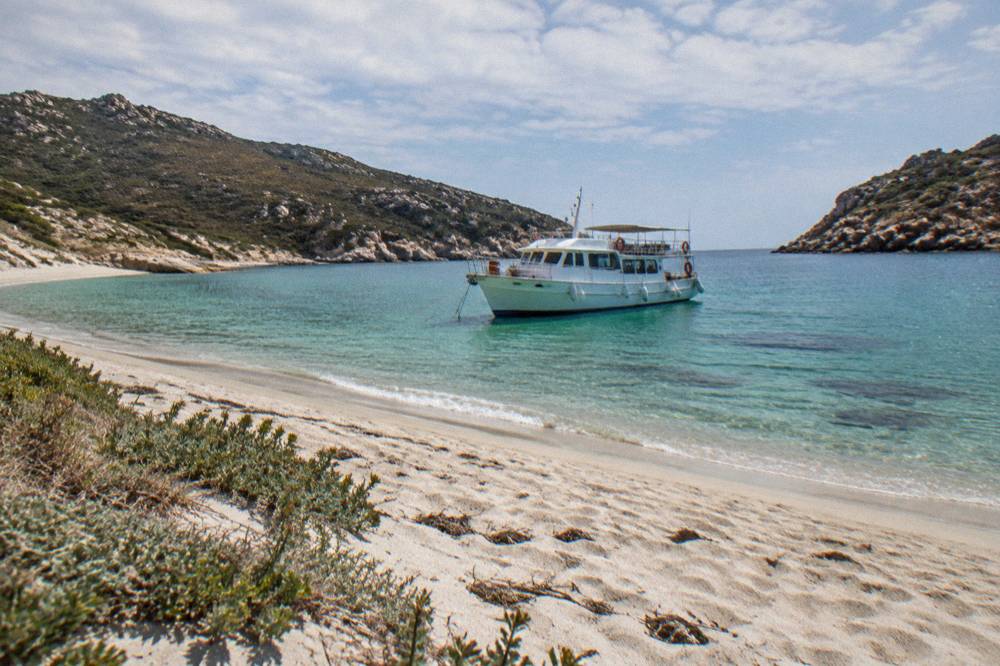
For beaches that need a boat or a guide rather than a road, a day trip does the work. These three picks cover a guided swim in a protected reserve, the Scandola coastline from Porto, and the Agriates shores from the north:
What Can You Do On Corsica Beaches Besides Swimming?
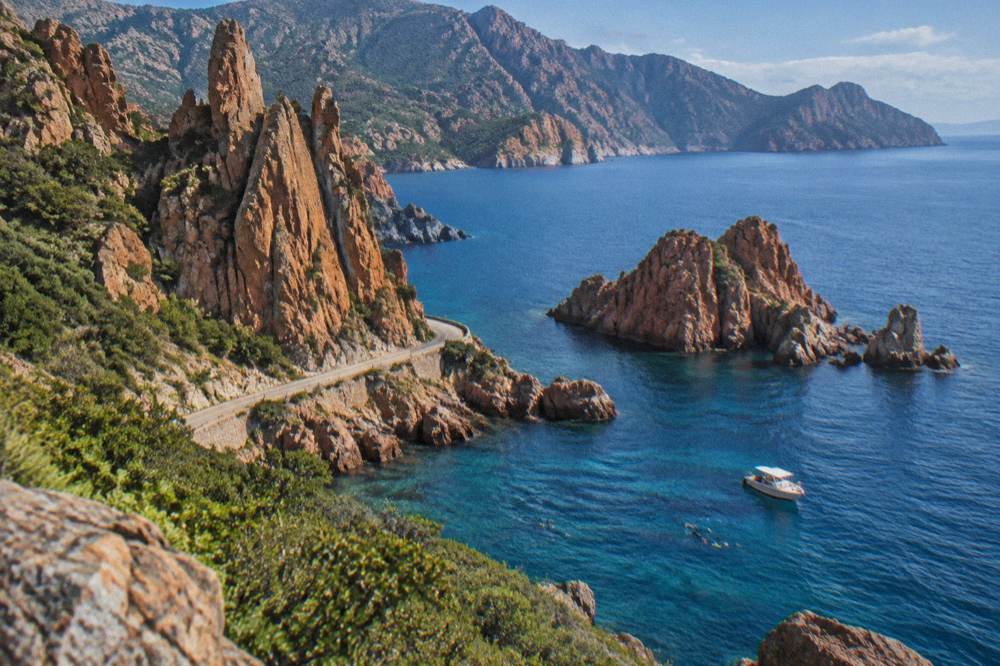
Beyond swimming, activities on and around Corsica's beaches include snorkelling and beginner scuba diving in the Cerbicale Islands Reserve off Porto-Vecchio, boat cruises to the Scandola Nature Reserve and the Calanques de Piana on the west coast, catamaran and boat trips to the Îles Lavezzi from Bonifacio, and coastal walks, with the UNESCO-listed Gulf of Porto reachable only by sea.
The underwater option is real even for first-timers. A beginner scuba diving session in the Cerbicale Islands Reserve, Check availability for the operator's dates, runs from Porto-Vecchio into a protected island group, instructor-led by the listing's description. On the surface, the west coast holds the Gulf of Porto: Calanche of Piana, Gulf of Girolata, Scandola Reserve, inscribed by UNESCO in 1983 as natural property number 258. The Scandola reserve, created by ministerial order on 9 December 1975 as the first nature reserve in Corsica, covers 1,000 ha of sea and 919 ha of land, and its land area is closed to the public: visits are by boat only, with daytime anchoring allowed outside the integral reserve and no recreational line or spear fishing.
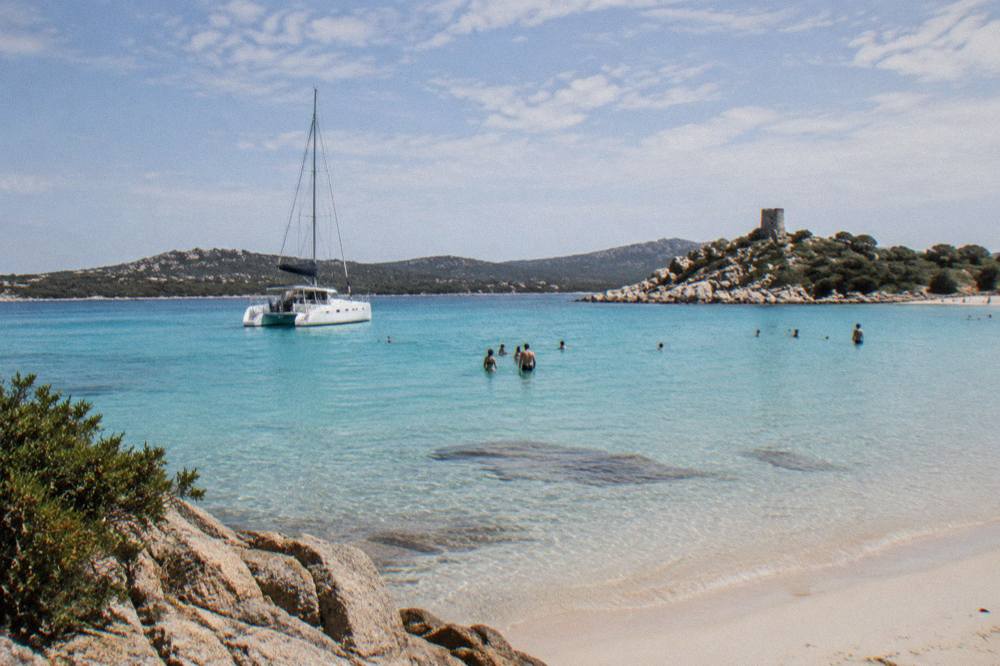
From Bonifacio, boat trips run to the Îles Lavezzi inside the Bouches de Bonifacio Nature Reserve, managed by the OEC. From the north, catamaran excursions from L'Île-Rousse work the Agriates coast. The reserve rules matter for swimmers and snorkellers alike: no landing is permitted in Scandola's integral reserve, and the State and OEC confirmed a shared roadmap on 28 April 2026 that adds voluntary operator labelling, a QR-code tracking trial for pleasure boats and renewed quiet zones for the osprey, a bird the reserve is credited with helping save in Corsica.
When Is The Beach Season In Corsica?
The beach season in Corsica runs with a hot, dry summer: Météo-France station normals for 1991-2020 show July averaging 8.6 mm of rain at Ajaccio and August averaging a 29.2 °C daily high, while supervision on Ajaccio's main beaches runs from 1 July to the end of August and Haute-Corse's supervised beaches are staffed about 1 July to 31 August, with October and November carrying the most rain.
The summer months are dry by any measure in the station table. July at Ajaccio averages 8.6 mm of rain and 12 h 6 min of sunshine per day; July at Bastia averages 13.8 mm. August holds the highest mean daily high at both stations, 29.2 °C at Ajaccio and 29.8 °C at Bastia. The rain returns hard in autumn: November averages 111.8 mm at Ajaccio and 134.3 mm at Bastia. For month-by-month planning, see the Corsica weather by month guide and the best time to visit Corsica guide.
| Month | Ajaccio daily high | Ajaccio rain mm | Ajaccio sunshine h/day | Bastia daily high | Bastia rain mm |
|---|---|---|---|---|---|
| May | 22.1 | 49.8 | 9.3 | 22.4 | 53.7 |
| Jun | 25.9 | 25.9 | 11.1 | 26.4 | 38.8 |
| Jul | 28.6 | 8.6 | 12.1 | 29.4 | 13.8 |
| Aug | 29.2 | 15.8 | 11.1 | 29.8 | 21.1 |
| Sep | 26.1 | 57.8 | 8.7 | 26.0 | 74.5 |
| Oct | 22.8 | 85.7 | 6.7 | 22.0 | 126.5 |
Météo-France station normals, 1991-2020, for Ajaccio (Campo dell'Oro) and Bastia. Spring moves quickly toward swimming weather: May already averages a 22.1 °C daily high at Ajaccio with 9 h 18 min of sunshine per day, and June lifts that to 25.9 C. September keeps a 26.1 °C average high at Ajaccio, which is why the shoulder months still carry real beach weight even once the lifeguard posts have closed for the year.
One safety rule binds the whole season: from 15 June to 30 September it is forbidden to light a fire or smoke in forests, maquis and massifs, and the fire-risk map is updated at 18:00 for the next day, with some massif access restricted from mid-June to mid-September. The UK FCDO notes a high risk of wildfires in France from April to October.
How Do You Reach Saleccia And Lotu In The Désert Des Agriates?
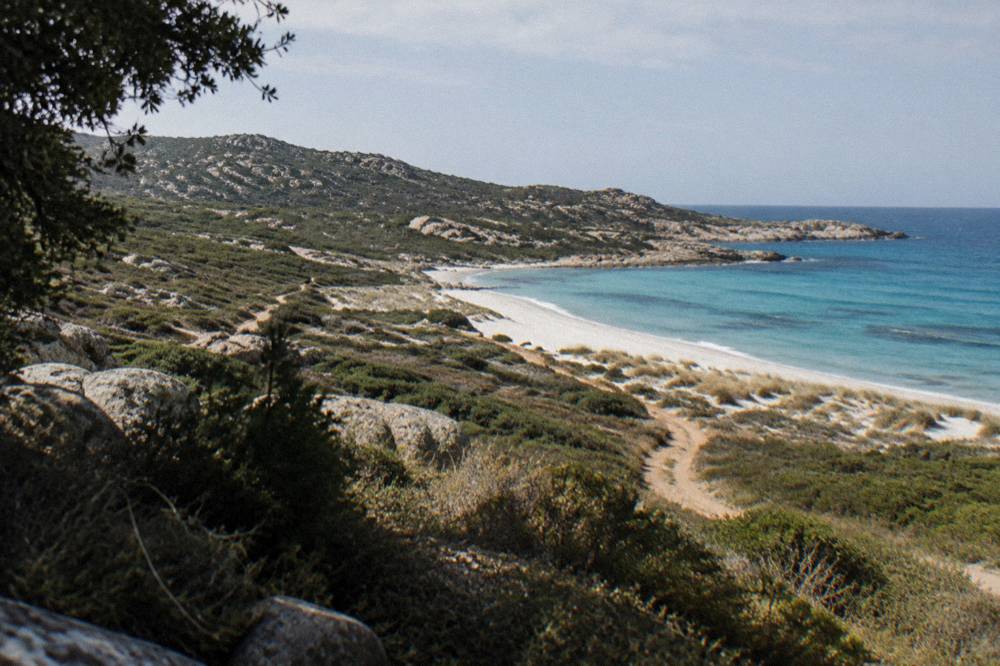
Saleccia and Lotu, the two beaches inside the Désert des Agriates, are reached by boat shuttle or taxi-boat from Saint-Florent port, typically April to October and weather permitting, by 4x4 shuttle or own 4x4 from Casta, or on foot, per the visit-corsica listing, and no new 2026 access restrictions have been announced beyond seasonal fire-risk closures of the massifs.
The Agriates is the coastal desert between Saint-Florent and the Balagne, a protected landscape rather than a road-served resort coast. Fire-risk prefectural orders can close forest massifs, including Agriate approaches, when the danger level reaches the top grades, so the daily map check applies to the land route in high summer. The full index of guides sits on Corsica Travel Guide.
A guided day trip covers the same ground without the logistics. The Cap Corse and Agriates half-day trip from the Saint-Florent area, is the land-based option, and the catamaran excursions from L'Île-Rousse work the same coast from the water.
| Access option to Saleccia and Lotu | Start point | Season or condition |
|---|---|---|
| Boat shuttle or taxi-boat | Saint-Florent port | Typically April to October, weather permitting |
| 4x4 shuttle or own 4x4 | Casta | Subject to fire-risk massif closures in summer |
| On foot | Saint-Florent or the Agriate tracks | Subject to fire-risk massif closures in summer |
Which Beaches Sit Closest To Ajaccio, Bonifacio And Porto-Vecchio?
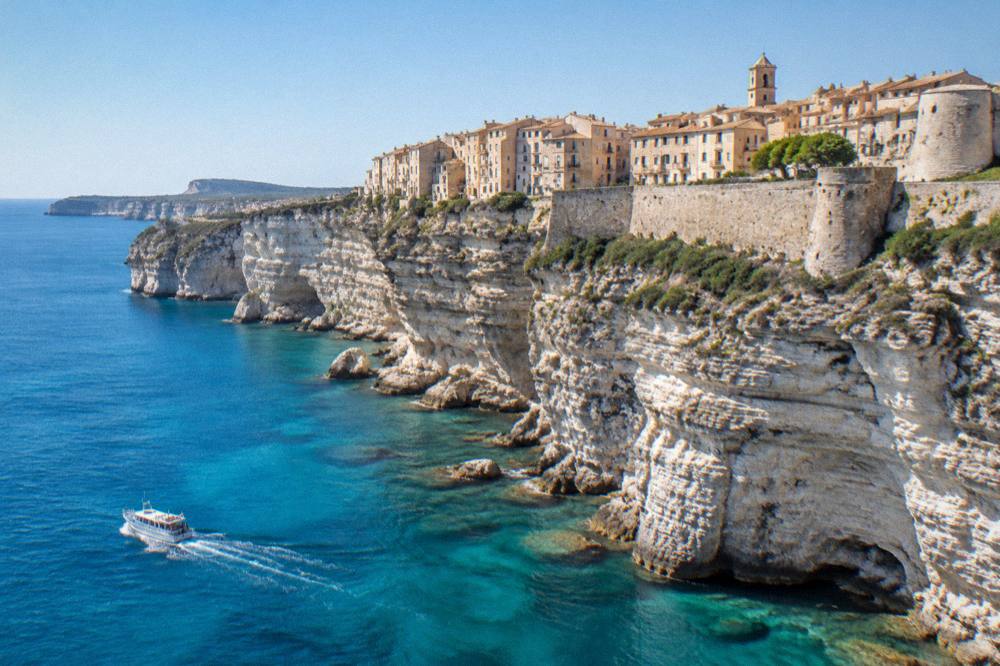
Ajaccio's beaches sit inside the city and are supervised in summer, Bonifacio's coast runs beneath the town's cliffs with the Îles Lavezzi offshore inside the Bouches de Bonifacio Nature Reserve, and Porto-Vecchio's beaches, Palombaggia, Santa Giulia and Rondinara, form the southeast's main beach group, all three towns also serving as ferry or airport gateways to their coasts.
Ajaccio pairs its town beaches with the gulf's boat trips: cruises run to the Îles Sanguinaires off the point, and the sunset and aperitif versions are among the most booked products. Bonifacio, perched on its cliffs, sends boats to the Lavezzi archipelago and along the cliff line toward Sardinia, and the Escalier du Roi d'Aragon cuts 189 steps down the cliff itself for a swim-and-climb outing, with closed-toe flat shoes required by the reservation site. Porto-Vecchio, whose old town is covered in its own guide, is the base for Palombaggia and Santa Giulia and for boat trips toward the Cerbicale Islands.
Getting to these coasts is covered elsewhere on this site: the ferry to Corsica guide explains the mainland routes from Marseille, Toulon, Nice and Italy, and the airport guides list the four fields at Ajaccio, Bastia, Figari and Calvi. Figari is the airport that serves the southeast beach belt.
Is Swimming Safe On Corsica Beaches?
Swimming on Corsica's beaches is supervised in summer: Ajaccio ran seven lifeguard posts on its main beaches from 1 July to the end of August 2026, Haute-Corse's supervised beaches are staffed by volunteer firefighters about 1 July to 31 August, and the emergency numbers are 112, 15 for medical, 17 for police, 18 for fire, 114 by SMS and 196 for sea rescue, with PGHM Ajaccio on 04 95 24 24 00 for mountain rescue.
Outside the supervised window and the supervised zones, standard sea caution applies, and the prefecture issues wave and drowning alerts when conditions demand. Drowning prevention campaigns run each season in Corse-du-Sud, and beach flags mark the supervised swimming areas in the usual French red-and-yellow system.
| Safety item | Detail |
|---|---|
| Ajaccio supervision | 7 lifeguard posts, 1 July to end of August 2026 |
| Haute-Corse supervision | Volunteer firefighters, about 1 July to 31 August |
| Sea rescue | 196, VHF channel 16 at sea |
| General emergency | 112, 15, 17, 18, 114 |
| Mountain rescue | PGHM Ajaccio 04 95 24 24 00 |
On the water rather than in it, the reserve rules carry their own safety edge: Scandola's land area is closed, anchoring is daytime only outside the integral reserve, and anchors must be lifted at sunset. For the wider picture, including wildfire and road advice, see the Corsica safety guide.
Where Should You Stay For The Corsica Beaches?
For the Corsica beaches, the stay logic is simple: Porto-Vecchio and Bonifacio base the southeast and far south coasts, Calvi and L'Île-Rousse base the Balagne shoreline and the Agriates by boat from Saint-Florent, and Ajaccio bases the west coast gulf, and the dedicated stay guide ranks the beach-first options in detail.
The fuller comparison of resorts, villages and self-catering sits in where to stay in Corsica, with the beach-specific shortlist in the answers page on staying for beaches. Budget planning is covered in the Corsica cost and budget guide, and camping options, which cluster near several coasts, in the camping guide's own page. Tipping is rarely a beach question, but the rule is worth knowing anywhere on the island: menus must state "prix service compris", and any extra tip is optional.
A final planning note on timing: the shoulder weeks either side of the July and August supervision window still sit inside warm station normals, and the ferry and airport network keeps running year-round on the core routes, so a June or September beach trip trades the lifeguard posts for milder figures in the climate table. Checking the daily fire-risk map in high summer, and the operator pages for boat-dependent beaches, closes the loop.
Before the closing questions, here are the three products this site rates for a beach-centred trip: a first dive in the Cerbicale Islands Reserve, the Scandola and Calanche de Piana cruise from Porto, and the Cap Corse and Agriates half-day trip.
Common Questions About Corsica Beaches
What Are The Best Beaches In Corsica?
The best known groups are Palombaggia, Santa Giulia and Rondinara near Porto-Vecchio, the coves and Îles Lavezzi around Bonifacio, Saleccia and Lotu in the Désert des Agriates, and the Balagne coast between Calvi and L'Île-Rousse, plus Ajaccio's town beaches on the west coast.
Can You Reach Saleccia And Lotu By Car?
The visit-corsica listing gives three accesses: boat shuttle from Saint-Florent, typically April to October and weather permitting, a 4x4 track from Casta, or arriving on foot. A standard road approach is not among them.
When Are Corsica's Beaches Supervised?
Ajaccio ran seven lifeguard posts on its main beaches from 1 July to the end of August 2026, and Haute-Corse's supervised beaches are staffed by volunteer firefighters about 1 July to 31 August.
Can You Swim From The Beaches To The Îles Lavezzi?
The Îles Lavezzi sit offshore inside the Bouches de Bonifacio Nature Reserve and are reached by boat from Bonifacio. Swim and snorkel trips run there; the islands are a boat destination, not a swim from the mainland shore.
What Is The Rain Like On The Corsican Coast?
Météo-France normals for 1991-2020 show July averaging 8.6 mm of rain at Ajaccio and 13.8 mm at Bastia, while November averages 111.8 mm at Ajaccio and 134.3 mm at Bastia. Summer is hot and dry, and autumn carries the most rain.
Do You Need A Boat To See Scandola?
Yes. The Scandola reserve's land area is closed to the public, so visits are by boat only, with anchoring permitted in daytime outside the integral reserve and anchors lifted at sunset.
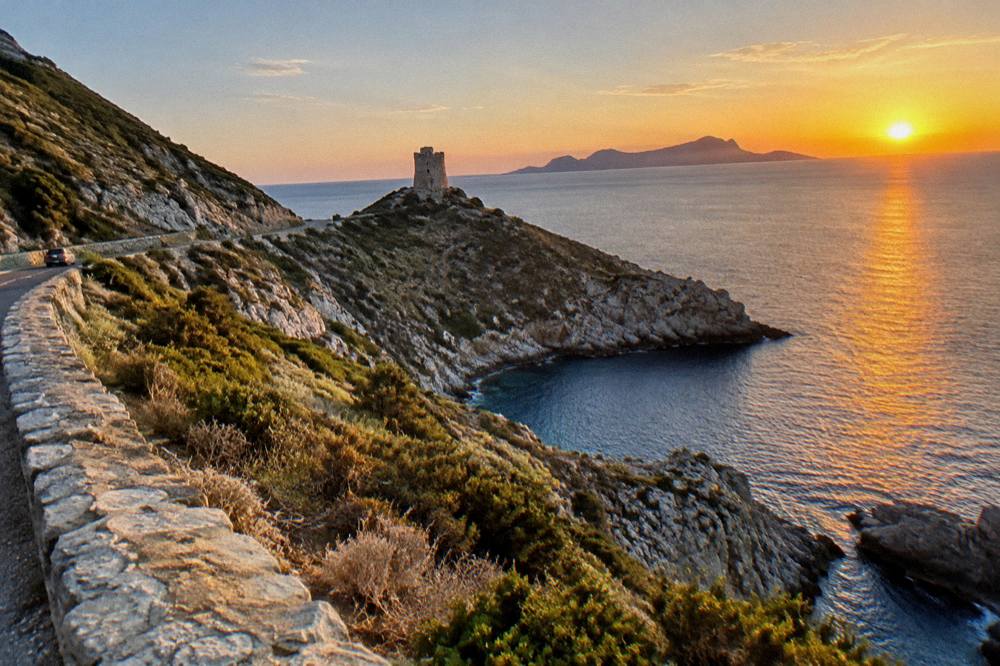
The short version: pick the coast that matches the base, Porto-Vecchio for the southeast sands, Bonifacio for cliffs and islands, Saint-Florent or L'Île-Rousse for the Agriates, Calvi and the Balagne for the train-served shoreline, and Ajaccio for supervised beaches in town, then let the boat trips carry you to the shores no road reaches. That is the whole logic of the Corsica beach map, and it holds from the first swim of July to the last shuttle of October.