What Is The Capital Of Corsica?
Ajaccio is the capital of Corsica, the French Mediterranean island. This page explains why, what to see there and how it compares with Bastia.
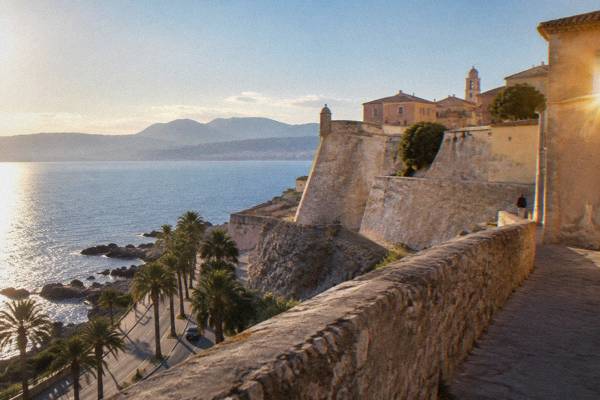
Ajaccio is the capital of Corsica, the French Mediterranean island of 8,722 km2 with more than 1,000 km of coastline and a mountainous interior that rises to Monte Cinto at 2,706 m. The town sits on the west coast, at the head of a Gulf, and INSEE counts 76,320 residents there in its 2023 census population, the reference figure in force from 1 January 2026. It is the island's administrative centre and the birthplace of Napoleon, and its name opens almost every practical question a visitor asks: which airport to fly into, which ferry port to aim for, where the island's institutions sit. This page sets out what "capital" means on this island, what the town holds, and how its northern rival Bastia compares.
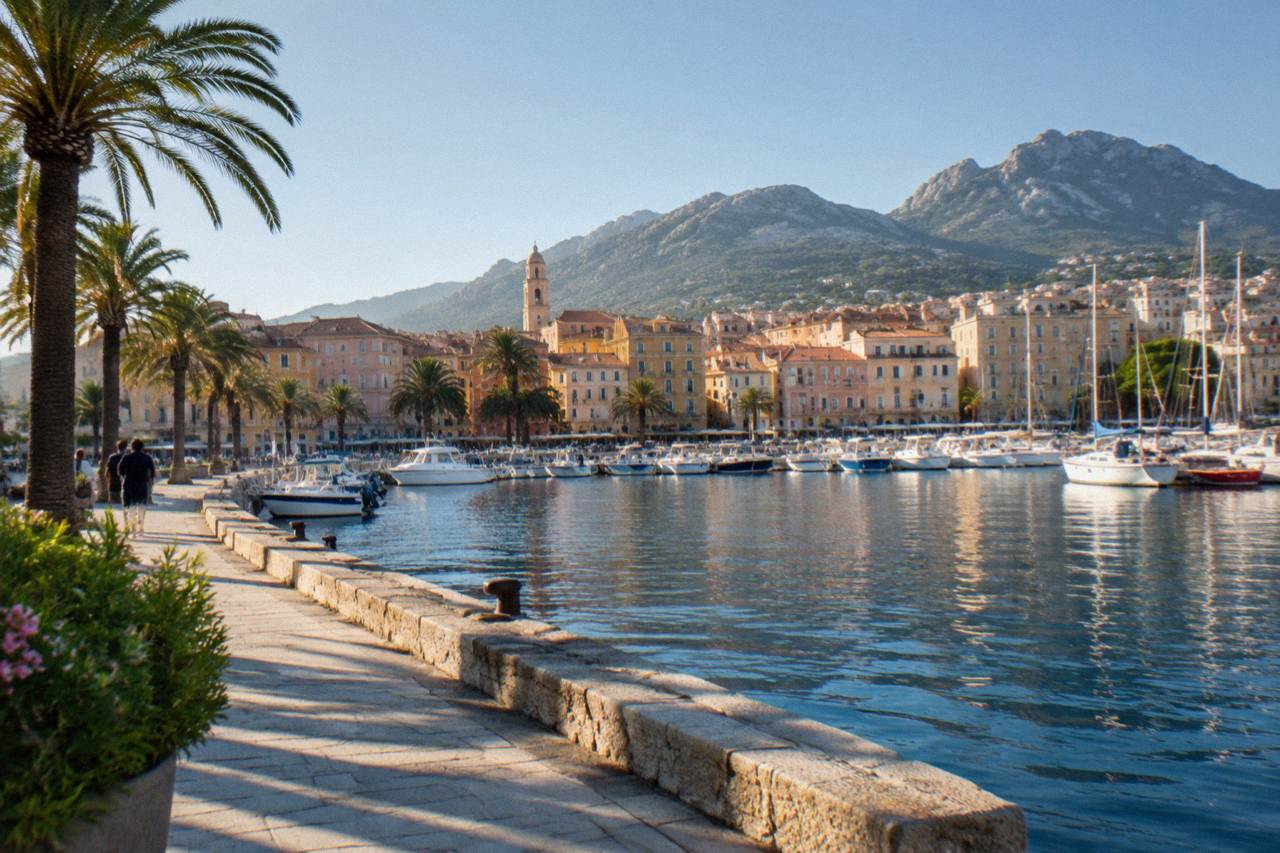
The capital of Corsica is Ajaccio, a town of 76,320 residents on the island's west coast, according to the INSEE census population used as the official reference from 1 January 2026. It is the seat of the Collectivité de Corse, the island's single territorial authority, and it is also the birthplace of Napoleon, whose family home is now a national museum in the town centre.
Corsica is a French island organised as the Collectivité de Corse, covering the two departments Corse-du-Sud, where Ajaccio lies, and Haute-Corse in the north. The Collectivité is reported to be a single territorial authority with special status, in place since 1 January 2018, which replaced the former territorial collectivity and the two departmental councils. Its institutions sit in Ajaccio, which is what makes the town the island's capital in administrative terms rather than merely its largest town.
That last point matters, because the answer carries a nuance many visitors miss. Bastia, in Haute-Corse, is the second town of the island with 46,867 residents, and it is the busier ferry port for arrivals from Italy. Corte, in the interior, is described in the island's own materials as the old capital, and it houses the Musée de la Corse inside its citadel. Ajaccio holds the present-day role. For more on the island's position and status, see where Corsica is located and whether Corsica is part of France or Italy.
Why Is Ajaccio The Capital Of Corsica?
Ajaccio is the capital because the institutions of the Collectivité de Corse, the single territorial authority that has governed the island since 1 January 2018 as reported, are seated there. The town is also the island's most populous, with 76,320 residents in the INSEE 2023 census figure, and the capital of the Corse-du-Sud department, one of the island's two departments.
The island's population context explains the balance. INSEE's provisional estimate puts Corsica at 365,636 residents on 1 January 2026, with Corse-du-Sud at about 175,100 and Haute-Corse at about 190,500. So the north actually holds slightly more people, spread around Bastia and the Cap Corse peninsula, while the capital sits in the south-west. That division is one reason the island runs two ferry-facing towns and four airports: Ajaccio Napoléon Bonaparte (AJA), Bastia Poretta (BIA), Figari Sud Corse (FSC) and Calvi Sainte-Catherine (CLY). Other pages covering the same trip are gathered on Corsica Travel Guide.
Ajaccio's role also shows in its cultural institutions. The Collectivité de Corse runs Corsican-language programmes, including the Cartula di a lingua corsa and immersion schools, from its base on the island. The town's own sights carry the island's history: Maison Bonaparte on Rue Saint-Charles, 200 m from the bus station and ferry terminal and served by bus 8 from the airport, and the Palais Fesch, whose museum the Ajaccio tourist office lists at EUR 10 full price, EUR 6 for over-65s, free up to 18, open daily 09:00 to 17:00 for the 16 January to 31 December 2026 period. For a sense of what else the island is known for, read what Corsica is famous for.
What To See In Ajaccio, The Capital Of Corsica?
The essentials of Ajaccio are Maison Bonaparte, the national museum on Rue Saint-Charles where Napoleon was born, at EUR 10 full price and free for EU residents under 26, open every day except Monday, and the Palais Fesch art museum, EUR 10 full price and daily 09:00 to 17:00, plus the Gulf of Ajaccio and the Îles Sanguinaires, which boat tours reach from the town's port.
The two museums anchor a day in the town. Maison Bonaparte, per its own practical-information page, runs hours by season: from 1 October to 31 March, 10:30 to 12:30 and 13:15 to 16:30; from 1 April to 30 June, 10:00 to 12:30 and 13:15 to 17:30; and from 1 July to 30 September, 10:00 to 17:30, with last entry 30 minutes before closing. Non-EU residents aged 18 to 25 and large families pay EUR 8. Full sight-by-sight details sit in the Ajaccio city guide, and the museum itself has its own page.
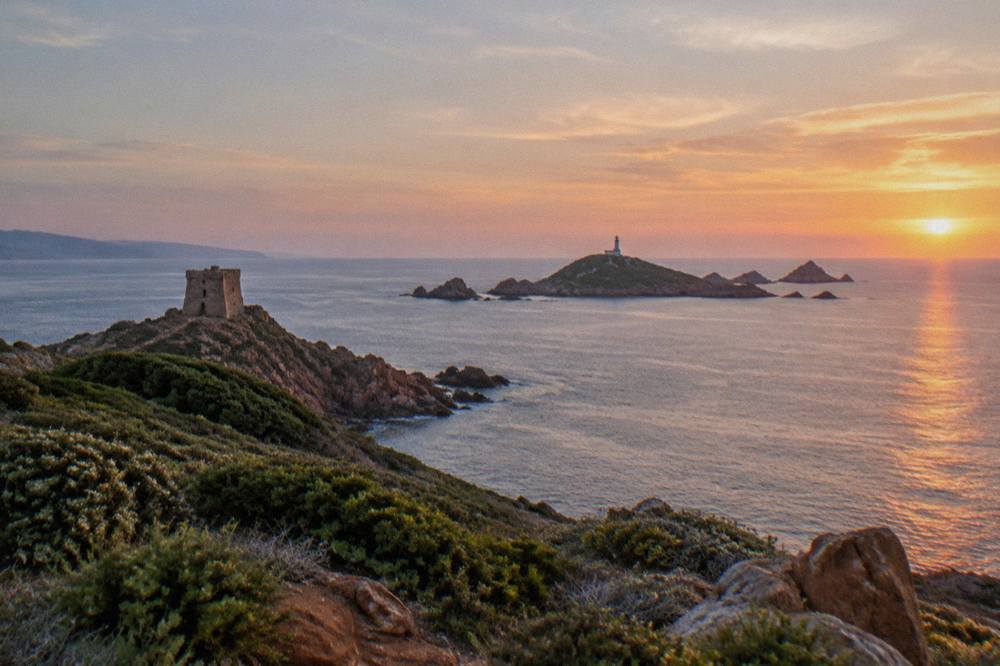
The sea is the other half of the capital. Boat trips run from Ajaccio and Porticcio to the Îles Sanguinaires, the small archipelago at the mouth of the Gulf, at sunset with an aperitif on board or as a plain Gulf circuit, and longer day cruises reach Scandola and Bonifacio. The island is sea on every side, and its capital is no exception. If the weather turns, the rain and climate answers explain what the Météo-France normals show month by month.
| Sight in Ajaccio | Entry | Hours | Closed |
|---|---|---|---|
| Maison Bonaparte | EUR 10 full, EUR 8 non-EU 18-25 and large families, free EU under 26 | 1 Jul to 30 Sep 10:00-17:30 | Monday |
| Palais Fesch | EUR 10 full, EUR 6 over 65, free up to 18 | Daily 09:00-17:00 (16 Jan to 31 Dec 2026) | 25 Dec, 1 Jan, 1 Nov |
| Îles Sanguinaires boat tours | From the operator's live listing | Departures from Ajaccio and Porticcio | Weather-dependent |
Is Bastia The Capital Of Corsica?
Bastia is not the capital of Corsica; it is the island's second town, with 46,867 residents in the INSEE 2023 census figure, and the main ferry gateway on the Haute-Corse side. Ajaccio, with 76,320 residents, holds the capital's institutions, while Bastia holds the island's busiest position for arrivals from Livorno, Genoa, Savona and the Italian mainland ports.
The distinction trips up visitors because Bastia feels like a capital in everyday traffic. Moby sails Livorno to Bastia, Genoa to Bastia and Santa Teresa Gallura to Bonifacio; Corsica Linea runs Marseille to Bastia among its Corsican ports; and Corsica Ferries is reported to serve Bastia from Toulon, Nice, Livorno and Savona. More than 8.5 million passengers, excluding cruise passengers, passed through Corsica's ports and airports in 2025, per the ORTC and DREAL annual report published 30 May 2026.
Bastia rewards a stop in its own right. The town's museum in the Palais des Gouverneurs is reported to keep high-season hours of 10:00 to 18:30 and low-season hours of 09:00 to 12:00 and 14:00 to 17:00, closed Sundays and Mondays in the low season. The old harbour and the citadel are covered in the Bastia guide, and the question of how many days in Corsica is enough usually comes down to whether a trip splits time between the two towns.
How Do You Get To Ajaccio, The Capital Of Corsica?
Ajaccio is reached by air through Ajaccio Napoléon Bonaparte airport (AJA), one of the island's four airports, or by sea through its ferry port, which Corsica Linea serves from Marseille and La Méridionale serves from Marseille, with Corsica Ferries reported to run Toulon and Nice crossings to the town. From the airport, bus 8 runs to the town centre, stopping near Maison Bonaparte on Rue Saint-Charles, 200 m from the bus station and ferry terminal.
Ferry times vary by route and are quoted as ranges from aggregator data: about 12 to 13 hours from Marseille, mostly overnight, about 10 to 13 hours from Toulon and about 7.5 to 10 hours from Nice. The short Sardinia link, Santa Teresa Gallura to Bonifacio, takes about 50 to 60 minutes and connects to a different Corsican port in the far south.
Once in the capital, the question of whether a car helps is real: the car question and the getting to Corsica overview cover the trade-offs. Boats are a genuine alternative for coastal sightseeing, and the L'Île-Rousse catamaran excursion along the Désert des Agriates with an aperitif at sunset is one such day out from the north coast; Check availability.
The capital's climate is the last practical piece. The Météo-France station normals for Ajaccio, 1991-2020, show a mean daily high of 29.2 °C in August and 8.6 mm of rain in July, against 111.8 mm in November: a hot dry summer and a mild wet winter, with snow on the high mountains only. The month-by-month detail sits in the best month to visit page.
| Corsica fact | Figure |
|---|---|
| Capital | Ajaccio |
| Ajaccio residents | 76,320 |
| Bastia residents | 46,867 |
| Island population | 365,636 |
| Island area | 8,722 km2 |
Common Questions About The Capital Of Corsica
What Is The Capital Of Corsica?
Ajaccio is the capital of Corsica, on the west coast of the French Mediterranean island. INSEE counts 76,320 residents there in its 2023 census figure, the reference from 1 January 2026.
Is Bastia Bigger Than Ajaccio?
No. Ajaccio has 76,320 residents and Bastia 46,867 in the INSEE 2023 census figures. Bastia is the island's second town and a main ferry gateway.
Was Corte Ever The Capital Of Corsica?
Corte, in the island's inland interior, is described as the old capital and houses the Musée de la Corse inside its citadel; a single EUR 5.50 ticket covers both museum and citadel. The present capital is Ajaccio.
Which Airport Serves The Capital Of Corsica?
Ajaccio Napoléon Bonaparte (AJA) serves the capital. Bus 8 links the airport to the town centre, stopping near Maison Bonaparte.
Can You Reach The Îles Sanguinaires From Ajaccio?
Yes. Boat tours run from Ajaccio and Porticcio to the Îles Sanguinaires at the mouth of the Gulf, including sunset trips with an aperitif on board.
The capital's name is the first word in most Corsica itineraries, and the town repays the stop: two priced, scheduled museums, a working port, and a Gulf that puts the sea at the end of every street.