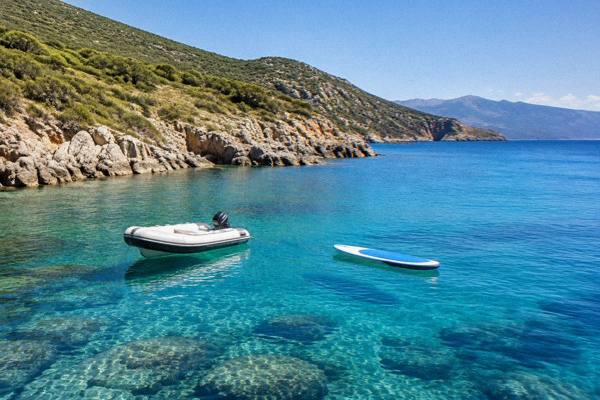
Cap Corse
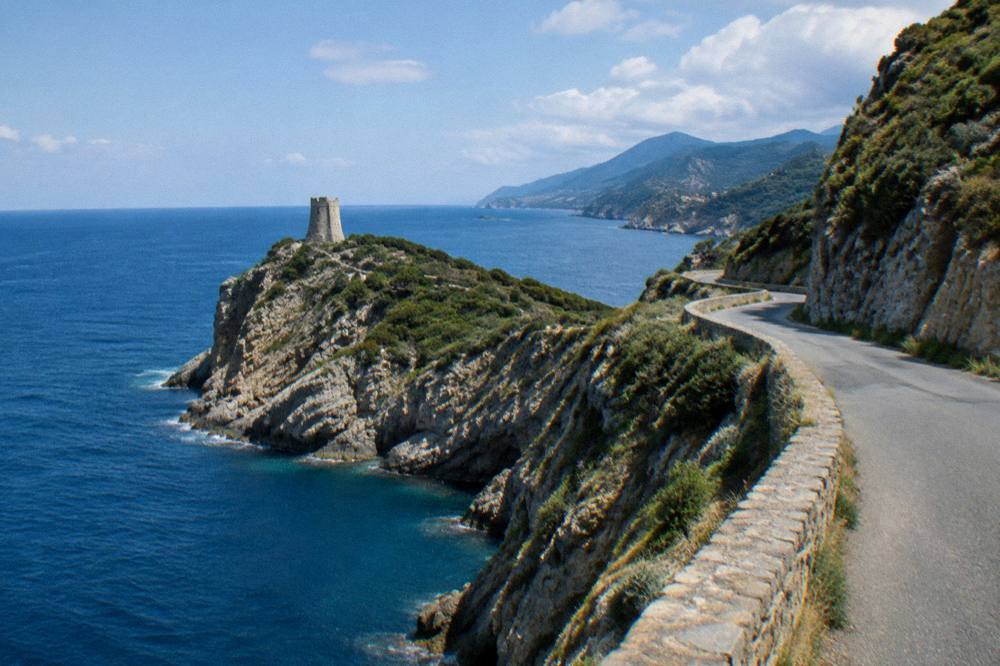
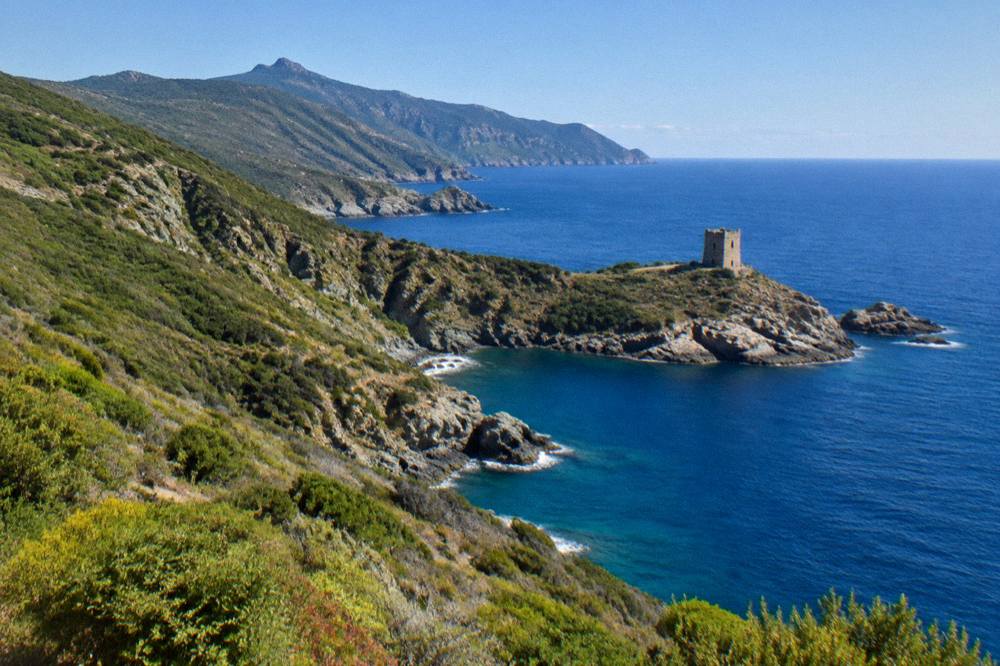
Cap Corse is the long peninsula at the northern tip of Corsica, running out into the Ligurian Sea between Bastia and Saint-Florent, with Genoese-tower villages, a wine appellation at its base and the Désert des Agriates on its western flank.
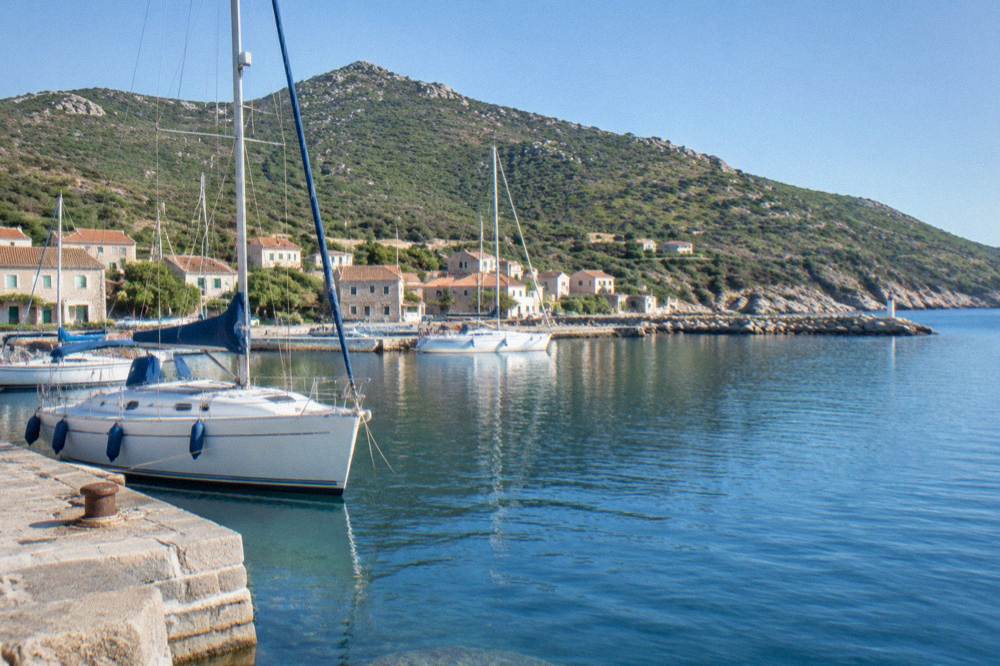
Cap Corse is the northern peninsula of Corsica, reached through Bastia or Saint-Florent. Highlights include the villages of Nonza, Erbalunga and Centuri, the Patrimonio wine appellation at the base of the cape, and boat shuttles into the Désert des Agriates beaches of Saleccia and Lotu.
Cap Corse is the peninsula that forms the northern tip of Corsica, the French Mediterranean island of 8,722 km2 with more than 1,000 km of coastline. The cape runs north from the Bastia and Saint-Florent lowlands towards the Ligurian Sea, and its western shore borders the Désert des Agriates, the stretch of protected coast where the beaches of Saleccia and Lotu sit. Bastia, the second town of Corsica with 46,867 residents, is the working gateway at the base of the cape, and the wine village of Patrimonio lies at its foot. This guide covers how to get there, the villages, the boat trips, the weather by month and the practical rules that shape a visit.
Where Is Cap Corse In Corsica?
Cap Corse is the northern peninsula of Corsica, the fourth-largest island in the Mediterranean, stretching out from the Bastia and Saint-Florent plain towards Genoa and the Ligurian Sea. Its base holds Bastia, Corsica's second town with 46,867 residents, and the Patrimonio wine appellation, while its western flank runs along the Désert des Agriates toward Saint-Florent, the small port that serves the beaches of Saleccia and Lotu.
Corsica itself is a single territorial collectivity, the Collectivité de Corse, covering Corse-du-Sud and Haute-Corse, and Cap Corse sits entirely in Haute-du-Sud's neighbour, Haute-Corse, the department with about 190,500 residents in the 2026 INSEE estimates. The whole island is mountainous, topped by Monte Cinto at 2,706 m, but the cape is a distinct world of low ridges, coastal villages and sea views on both sides, which is why the drive along it feels like an island within the island. The Parc naturel régional de Corse, created in 1972 and now 4,484 km2, covers large parts of the interior but not the cape itself.
For orientation, the useful frame is threefold. Bastia anchors the eastern base with its old harbour, covered in the Bastia area guide. Saint-Florent anchors the western base, with Patrimonio just inland from it, described in the Saint-Florent and Patrimonio guide. Between and beyond them lies the cape road and its villages. A wider regional overview sits in the Corsica regions overview.
How Do You Get To Cap Corse?
Cap Corse is reached through Bastia, the northern terminus of its main train line. Ferries arrive from Livorno, Savona and Genoa in Italy and from Marseille, Nice and Toulon in France, and Bastia Poretta airport (BIA) is one of Corsica's four airports alongside Ajaccio, Figari and Calvi, with rail links running south from Bastia via Ponte-Leccia toward Ajaccio, Calvi and L'Île-Rousse.
The Chemins de fer de la Corse network runs the Ajaccio to Bastia line via Corte, the Ponte-Leccia to Calvi line, and the Balagne coastal line between Calvi and L'Île-Rousse. No Cap Corse road time is a settled published figure, so plan on the map rather than a quoted duration, and check Inforoutes Corse, which as reported publishes live road conditions and accessibility levels for the main mountain passes. Corsica Linea sails Marseille to L'Île-Rousse, Bastia, Propriano and Ajaccio, La Méridionale sails Marseille to Ajaccio and Porto-Vecchio, Moby sails Livorno to Bastia, Genoa to Bastia and Santa Teresa Gallura to Bonifacio, and Corsica Ferries serves Bastia from Toulon, Nice, Livorno and Savona. More than 8.5 million passengers, excluding cruise passengers, passed through Corsica's ports and airports in 2025, according to the ORTC and DREAL annual report published 30 May 2026.
Reported crossing ranges, which vary by schedule and vessel and should be confirmed with the operator, look like this:
| Route To Bastia | Operator | Crossing Time |
|---|---|---|
| Livorno to Bastia | Corsica Ferries, Moby | about 4 to 5 hours |
| Savona to Bastia | Corsica Ferries | about 6.5 hours |
| Nice to Bastia | Corsica Ferries | about 7.5 to 10 hours |
| Toulon to Bastia | Corsica Ferries | about 10 to 13 hours |
| Marseille to Bastia | Corsica Linea | about 12 to 13 hours, mostly overnight |
| Genoa to Bastia | Moby | about 5 to 5.5 hours, seasonal |
Which Boat Trips Work Best From Cap Corse And Its Coast?
The strongest sea options around Cap Corse are the Agriates and Cap Corse half-day trip from Saint-Florent, the full-day catamaran trips into the Désert des Agriates from L'Île-Rousse, and, for a longer day out on the west coast, the half-day Scandola and Calanche de Piana cruise from Porto.
Those west-coast cruises from Porto are covered in depth on this site in the Scandola boat tour guide and the Calanques de Piana tour guide. The Agriates boat shuttle story matters here because the cape's western flank is the Désert des Agriates: the beaches of Saleccia and Lotu are reached, as reported by visit-corsica.com, by boat shuttle from Saint-Florent (about April to October, weather permitting), by 4x4 track from Casta, or on foot. A guided half-day trip such as the Cap Corse and Agriates Desert trip bundles the cape and the desert coast, and it can be reserved with Check availability. From the L'Île-Rousse side, catamaran day trips run the Agriates coast in the other direction, and the details of that stretch of coast are covered in the L'Île-Rousse area guide.
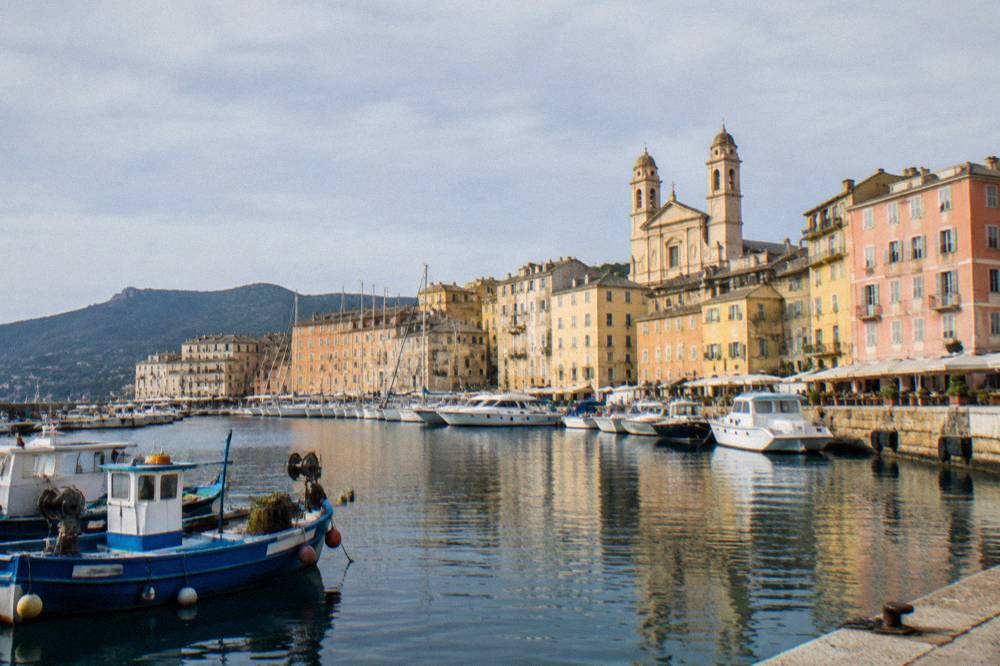
For travellers based in Bastia itself, a guided cruise such as Le Grand Tour departing from the Bastia old harbour covers the northern coast by sea.
Which Villages Should You Visit In Cap Corse?
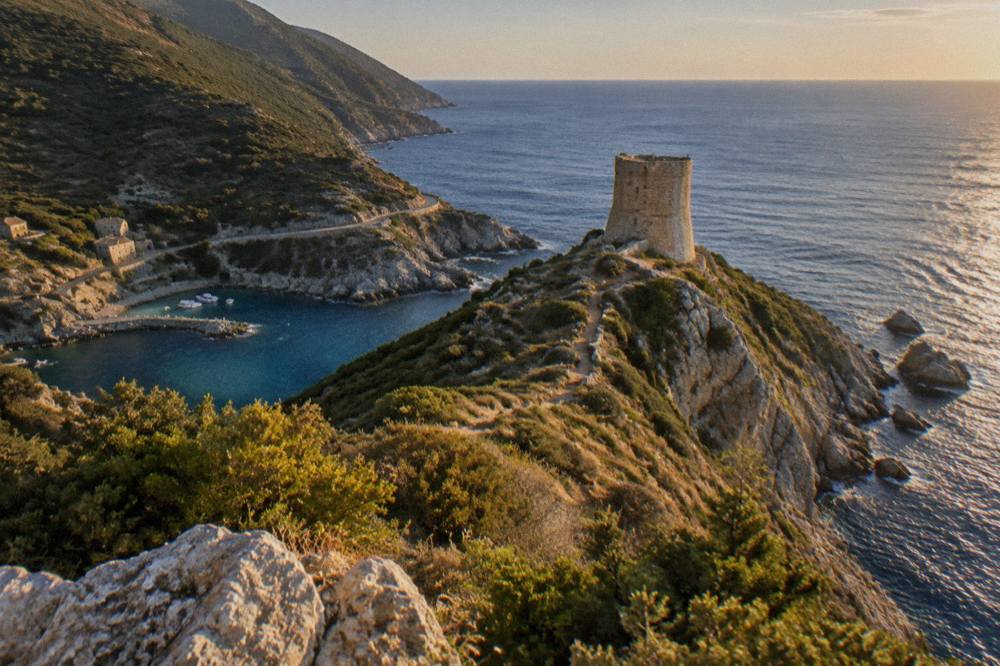
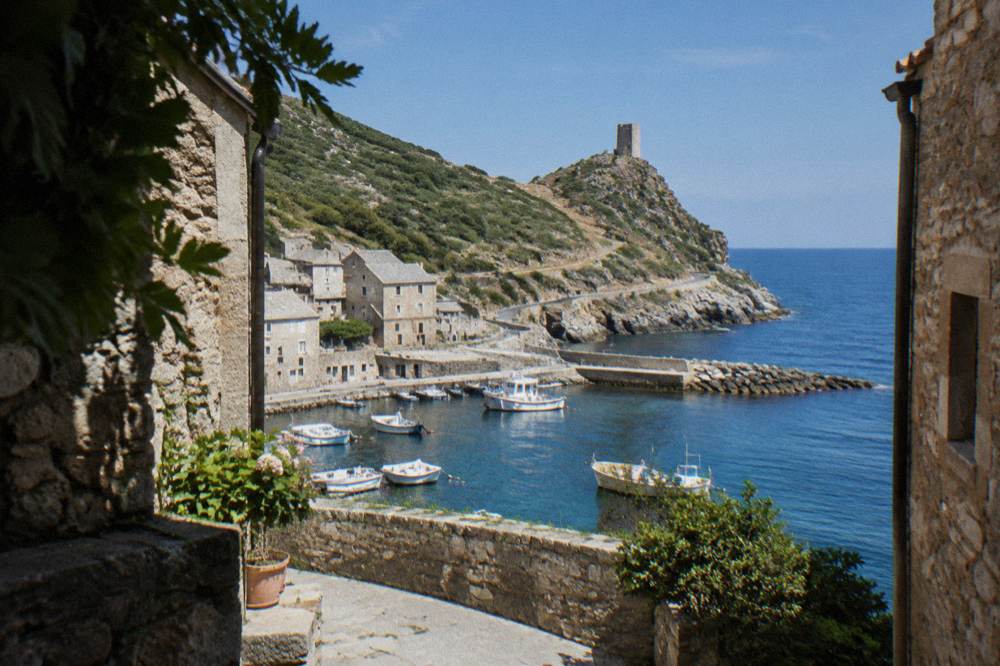
The villages most often named on a Cap Corse route are Nonza on the west coast, Erbalunga on the east coast and Centuri at the northwestern tip, three of the cape's tower-and-harbour settlements that each hold their own attraction page on this site, with Patrimonio, the wine village at the base of the cape, as the natural first or last stop between Bastia and Saint-Florent.
Each village page carries its own detail: Nonza, the west-coast settlement set above the sea, Erbalunga, the old fishing harbour on the Bastia side, and Centuri, the small northern port. The Patrimonio appellation sits at the base of Cap Corse, and the island's appellations also include Ajaccio, Vin de Corse with its named crus and Muscat du Cap Corse, with Nielluccio and Sciaccarellu as the reported main red grapes and Vermentinu the white.
A reasonable day shape, given the published road facts this site can stand behind, is one base, one coast and one village cluster rather than the whole cape: road times along the cape road itself are not published figures here, but the Musée de la Corse's own practical page does publish road times to Corte, with Bastia one hour away, which shows how compact the island's north is once you are on it.
For museum time in the region, the Musée de Bastia in the Palais des Gouverneurs is the cultural anchor at the cape's base. Its hours, as reported by the museum's information page and worth confirming before you go, run in two seasons:
| Season | Hours | Closed |
|---|---|---|
| High season | 10:00 to 18:30 | Monday in May, June and September |
| Low season | 09:00 to 12:00 and 14:00 to 17:00 | Sundays and Mondays |
What Is The Weather Like In Cap Corse Through The Year?
Cap Corse shares Corsica's hot dry summer and mild wet winter, and the nearest published station normals, the Météo-France 1991-2020 data for Bastia (station 20148001), show August averaging 29.8 °C as a daily high, July carrying only 13.8 mm of rain, and November carrying 134.3 mm, the highest monthly total on the table, with snow in Corsica confined to the high mountains rather than the coast.
Those Bastia figures are the closest measured normals to the cape, and they describe a classic Mediterranean regime: rain concentrated from October through January, a dry June-to-August stretch, and daily sunshine means peaking in July at 11.2 hours. The Ajaccio station on the other side of the island shows the same shape with slightly different figures, including 8.6 mm of rain in July and 111.8 mm in November. The month-by-month picture for Bastia:
| Month | Mean High °C | Mean Low °C | Rain mm | Sunshine h/day |
|---|---|---|---|---|
| Jan | 13.8 | 5.4 | 67.3 | 4.5 |
| Feb | 13.9 | 5.1 | 63.5 | 5.5 |
| Mar | 15.8 | 6.8 | 63.7 | 6.3 |
| Apr | 18.3 | 9.1 | 71.6 | 7.3 |
| May | 22.4 | 12.6 | 53.7 | 8.7 |
| Jun | 26.4 | 16.5 | 38.8 | 10.2 |
| Jul | 29.4 | 19.4 | 13.8 | 11.2 |
| Aug | 29.8 | 19.8 | 21.1 | 10.1 |
| Sep | 26.0 | 16.7 | 74.5 | 7.9 |
| Oct | 22.0 | 13.4 | 126.5 | 5.9 |
| Nov | 17.7 | 9.5 | 134.3 | 4.5 |
| Dec | 14.8 | 6.4 | 88.1 | 4.5 |
The seasonal rules that matter more than the averages: from 15 June to 30 September it is forbidden to light a fire or smoke in forests, maquis and massifs, a rule that covers the Agriates scrub, and the daily fire-risk map is published at 18:00 for the next day, with access to some massifs restricted from mid-June to mid-September on high-risk days. The UK FCDO notes a high wildfire risk in France from April to October, and the US State Department lists France at Level 2, Exercise Increased Caution.
How Does The Désert Des Agriates Fit Into A Cap Corse Trip?
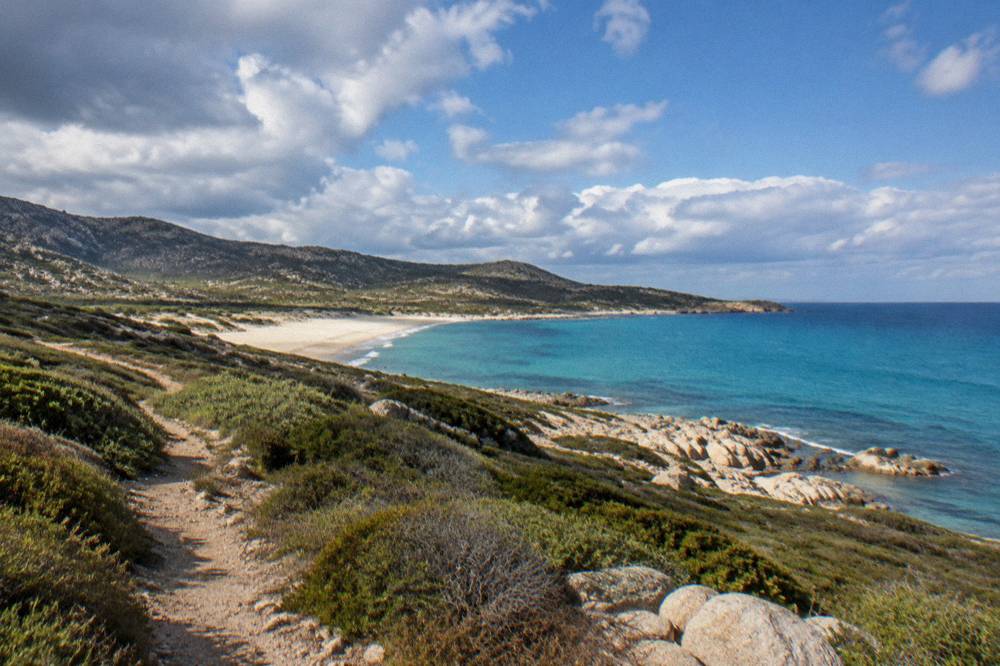
The Désert des Agriates is the protected coastal strip on the western side of Cap Corse between Saint-Florent and the Balagne, and its two famous beaches, Saleccia and Lotu, are reached, as reported by visit-corsica.com, by boat shuttle from Saint-Florent roughly April to October weather permitting, by 4x4 track from Casta, or on foot, which makes Saint-Florent the natural base for an Agriates beach day.
The full detail of that coast is laid out in this site's guide to the Désert des Agriates and in the Cap Corse day trip itinerary, which sequences the cape and the desert coast into one plan. The sea option is the one this page can price and book: catamaran and shuttle trips run from both Saint-Florent and L'Île-Rousse. For the beaches themselves, Saleccia and Lotu each have a dedicated page.
Is Cap Corse Worth Visiting?
Cap Corse rewards travellers who want a quieter northern Corsica within reach of Bastia: tower-crowned villages, a wine appellation at its base, a protected desert coast with boat-only beaches, and sea on both sides of a single peninsula, a combination the island's busier bases such as Porto-Vecchio and Bonifacio do not offer in the same compact form, as the site's dedicated answer page sets out.
The full argument, including what the cape gives up compared with the south, sits in is Cap Corse worth visiting?. For contrast, the island's other main bases each carry their own guide: Ajaccio, Bonifacio, Porto-Vecchio, Calvi and the Balagne, Corte and the interior and the Golfe de Porto and Piana. The cape's selling point against all of them is simple geography: nowhere else on the island puts a wine appellation, a desert coast and two separate seas inside one day's driving radius of a major ferry port.
What Should You Know About Food And Drink In Cap Corse?
The table stakes for eating in Cap Corse are the island's protected products: brocciu, which obtained its appellation d'origine in 1983, the three charcuterie cuts prisuttu, lonzu and coppa, which took AOC in 2012 and AOP in 2014, Corsican honey and olive oil under their own AOC and AOP designations, chestnut flour recognised as an AOP, and the Patrimonio wine appellation reported at the base of the cape itself.
The grape varieties behind those Patrimonio-adjacent wines are Nielluccio and Sciaccarellu for reds and Vermentinu for whites, and the island's appellations extend to Vin de Corse with named crus such as Calvi, Coteaux du Cap Corse, Figari, Porto-Vecchio and Sartène, plus Muscat du Cap Corse. Restaurant service in France is "prix service compris" by law, with the service percentage stated on the menu, so an extra tip is optional rather than expected. For the island's specific drinks culture, including its chestnut beer and its namesake aperitif, the site's guide to Corsican drinks covers the ground, and the wider eating picture is in the Corsican food pages of Corsica Travel Guide.
| Product | Source | Year |
|---|---|---|
| Brocciu | Appellation d'origine | 1983 |
| Brocciu | AOC/AOP | 1998 |
| Prisuttu, lonzu, coppa | AOC, then AOP | 2012, 2014 |
| Corsican honey (Miel de Corse) | AOC | 1998 |
| Corsican olive oil (Oliu di Corsica) | AOC | 2004 |
| Chestnut flour (Farina castagnina corsa) | AOP | 2010 |
| Clémentine de Corse | IGP | 2007 |
Is It Safe To Travel Around Cap Corse?
Cap Corse carries the standard Corsican safety picture: emergency numbers are 112 for the EU-wide line, 15 for medical, 17 for police, 18 for fire, 114 by SMS or app, and 196 for sea rescue, with mountain rescue through the PGHM Ajaccio on 04 95 24 24 00, while the seasonal fire rules from 15 June to 30 September ban fires and smoking in forests, maquis and massifs, and Bastia's supervised beaches are staffed about 1 July to 31 August.
Ajaccio, on the reference point this site can quote, ran seven lifeguard posts from 1 July to the end of August 2026 on its main beaches, and Haute-Corse's supervised beaches are reported to be staffed by volunteer firefighters over about the same window. The UK FCDO notes a high wildfire risk in France from April to October, which is the standing pattern behind the summer access restrictions, and the US State Department lists France at Level 2, Exercise Increased Caution. On the water, the 196 sea-rescue number pairs with VHF channel 16 at sea.
| Situation | Number Or Rule |
|---|---|
| EU-wide emergency | 112 |
| Medical (SAMU) | 15 |
| Police | 17 |
| Fire | 18 |
| SMS or app, deaf or speech-impaired | 114 |
| Sea rescue | 196 (VHF channel 16 at sea) |
| Mountain rescue, PGHM Ajaccio | 04 95 24 24 00 |
| Fire and smoking ban, forests and massifs | 15 June to 30 September |
How Many Days Should You Give Cap Corse?
One full day covers a village route plus either a Saint-Florent beach shuttle or a Bastia harbour cruise, and two days let you add the Agriates by catamaran and the Patrimonio stops without rushing, which matches the pacing on the site's Cap Corse day trip itinerary and the island-level plans in the wider regional overview pages.
The trade-off is simple: the cape's paid experiences are boat-based and tide themselves to fixed departures, so a two-day stay converts directly into two sea days, one on the Agriates side and one from Bastia, with the villages threaded between them. Travellers combining the cape with the rest of the north can pair it with the Balagne, using the rail line from Bastia toward Calvi and L'Île-Rousse, while those heading south connect via Corte, one hour's drive from Bastia per the Musée de la Corse's published road times. The Cap Corse day trip itinerary sequences the options in full.
Common Questions About Cap Corse
Where Is Cap Corse?
Cap Corse is the northern peninsula of Corsica, the French Mediterranean island, running out from the Bastia and Saint-Florent plain toward the Ligurian Sea, with the Désert des Agriates along its western flank.
How Do You Get To Cap Corse?
Through Bastia: ferries arrive from Livorno, Savona, Genoa, Marseille, Nice and Toulon, Bastia Poretta airport (BIA) is one of Corsica's four airports, and the Chemins de fer de la Corse lines connect Bastia south toward Corte, Calvi and L'Île-Rousse.
What Are The Main Villages Of Cap Corse?
Nonza on the west coast, Erbalunga on the east coast and Centuri at the northwestern tip, with Patrimonio, the wine village, at the base of the cape near Saint-Florent.
Can You Get To Saleccia And Lotu From Cap Corse?
Reported by visit-corsica.com: the Agriates beaches of Saleccia and Lotu are reached by boat shuttle from Saint-Florent about April to October weather permitting, by 4x4 track from Casta, or on foot.
What Is The Weather Like In Cap Corse?
The Météo-France 1991-2020 normals for Bastia show a hot dry summer, with July averaging 13.8 mm of rain and 11 h 12 min of sunshine a day, and a mild wet winter, with November carrying 134.3 mm of rain.
Is The Musée De Bastia Open Every Day?
As reported, the Musée de Bastia in the Palais des Gouverneurs keeps high-season hours of 10:00 to 18:30 and low-season hours of 09:00 to 12:00 and 14:00 to 17:00, closed Sundays and Mondays in the low season; confirm before you go.
Cap Corse packs a wine appellation, tower villages, two coastlines and a boat-only desert beach shore into the island's northernmost corner, and a day or two built around a Saint-Florent shuttle and a Bastia harbour cruise is the shape that fits it.