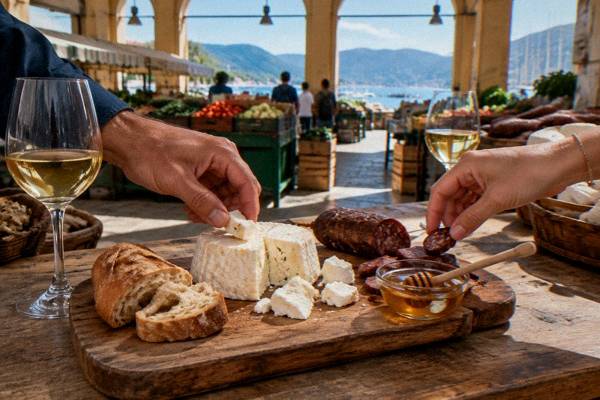
Cap Corse Drink
Two names carry Corsican drinking culture far off the island: Cap Corse, the quinine-based apéritif of the peninsula that shares its name, and Pietra, the island's chestnut beer. This guide covers both, the wines and honeys around them, and where a trip through north Corsica fits them in.
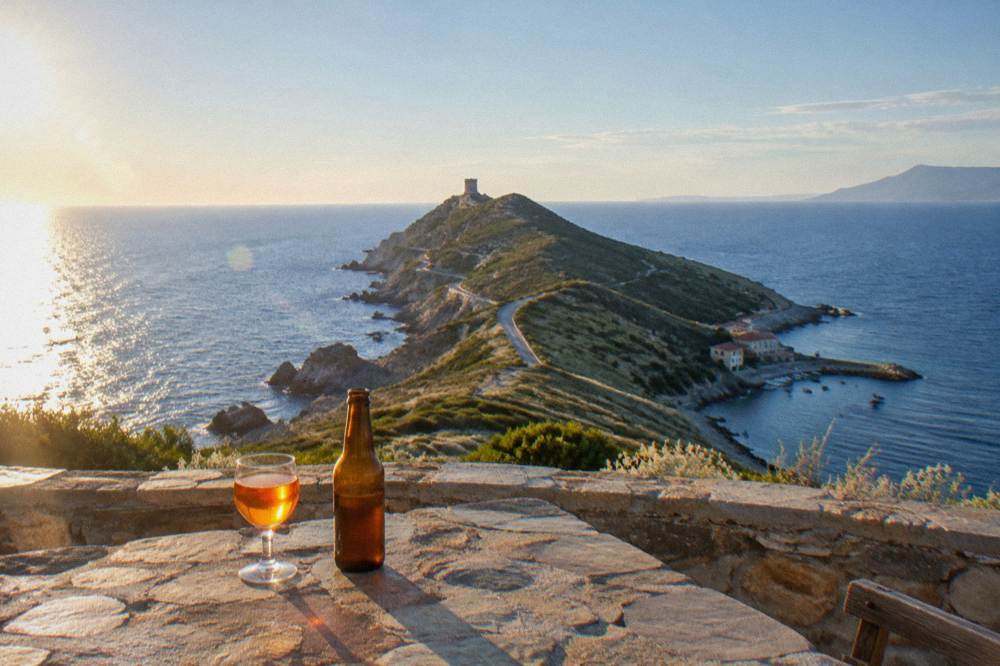
Cap Corse is the Corsican apéritif named after the island's northern peninsula, and Pietra is the island's chestnut-flavoured beer. Both anchor a wider Corsican drinks scene built on wine appellations such as Patrimonio and Muscat du Cap Corse, AOP honey and brocciu, best explored between Bastia, Cap Corse and Saint-Florent.
Corsica drinks with its own accent. The island, a French territory in the Mediterranean with more than 1,000 km of coastline and an interior that climbs to Monte Cinto at 2,706 m, produces wines under its own appellations, honey under its own AOP and a pair of names that outsiders meet first: the Cap Corse apéritif and Pietra, the chestnut beer. The first borrows its name from the narrow peninsula that runs north from Bastia toward Genoa and the Ligurian Sea. The second turns one of the island's protected farm products, chestnut flour, into something poured cold. Around both sits a broader table: Patrimonio wine at the base of the peninsula, brocciu cheese, prisuttu, lonzu and coppa charcuterie, and the seaside towns where a glass arrives with a view.
The drinks of the island, the scope of its own appellations, and the building of a trip around them through Cap Corse and the Désert des Agriates are set out below. The facts on labels and dates below come from the Collectivité de Corse's own economic and cultural documents and from the island's tourism board, reported as such.
What Is The Cap Corse Drink Of Corsica?
The Cap Corse drink is a Corsican apéritif that takes its name from Cap Corse, the finger of land that stretches north from Bastia at the top of the island. It belongs to the same bitter, aromatised wine family as the classic French quinquina aperitifs, and it is the bottle most closely tied to Corsican drinking identity, served as an aperitif, in mixes, or alongside the island's charcuterie. The name it carries is also a place: a peninsula of fishing villages and stone towers.
The apéritif and the peninsula share a name, which trips up plenty of first-time visitors: a "Cap Corse drink" is the bottle, while Cap Corse itself is the 40-kilometre stretch of northern Corsica that runs up from Bastia past Erbalunga, Nonza and Centuri toward the Genoese and Ligurian seas. Searching for one usually surfaces the other, and a trip that chases both works well, since the Cap Corse area is compact enough to tour in a single long day from Bastia.
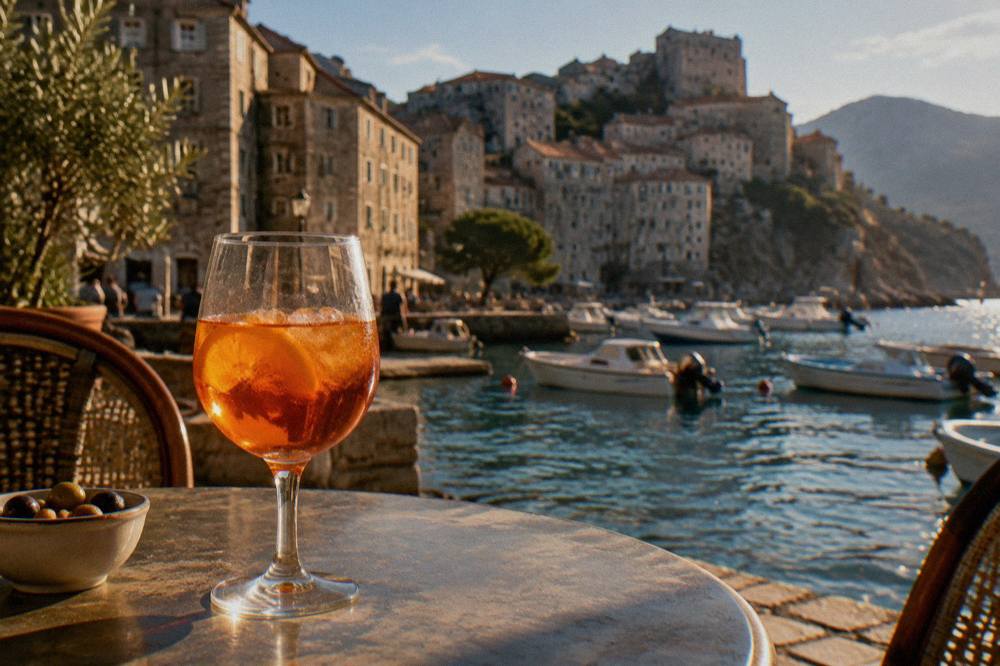
What surrounds the glass matters as much as the glass itself. A Corsican aperitif hour traditionally carries plates of prisuttu, lonzu and coppa, the three charcuterie cuts that took AOC status in 2012 and AOP status in 2014, made from the Nustrale pig breed recognised in 2006, according to the Collectivité de Corse's CESEC documents. Brocciu, the whey cheese that obtained its appellation d'origine in 1983, appears year-round in kitchens rather than on the aperitif table, but the two rituals belong to the same table culture.
The bitter apéritif style the bottle belongs to was built around quinine, the same foundation that produced the famous quinquina drinks of mainland France, and Corsica's version carries the island's own name onto the label. That naming habit runs through Corsican produce generally: the honey, the olive oil and the chestnut flour of the island all carry Corsican names on their protected labels, which is unusual for a territory of this size and reflects how much of the island's economy leans on protected food and drink names. For a visitor, it means a shop shelf in Bastia or Ajaccio reads like a map of the island itself.
What Is Pietra, The Chestnut Beer Of Corsica?
Pietra is Corsica's best-known beer, brewed on the island with chestnut flour as its defining ingredient, which links it directly to the AOP "Farine de châtaigne corse, Farina castagnina corsa" that protects the island's chestnut flour. It is the beer visitors most often meet on Corsican terraces, and its chestnut base ties a drink to the island's chestnut-growing interior more firmly than any imported lager could.
The regulatory side is what makes the beer genuinely Corsican rather than merely brewed in Corsica. The chestnut flour used on the island is protected under the AOP "Farine de châtaigne corse, Farina castagnina corsa", whose defence body was created in 2001, with the AOP itself reported as recognised in 2010 in the Collectivité de Corse's CESEC attachment. That protection covers the flour that defines the beer's character, and it is the same flour family that appears in Corsican cakes and in the annual chestnut fair held each year at Bocognano in the island's interior, whose 2026 dates have not been announced by the organisers.
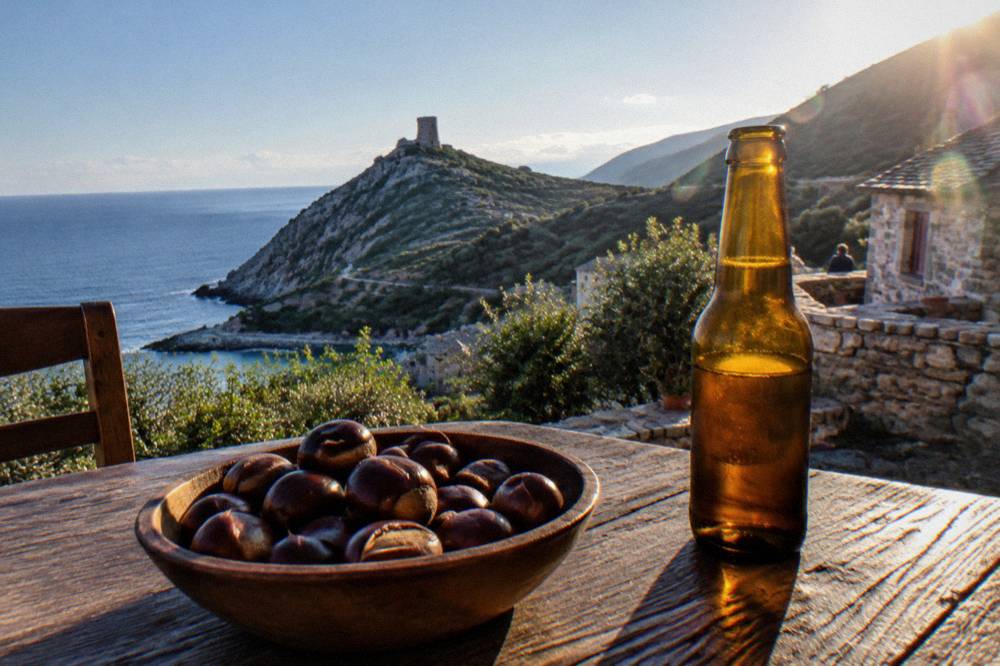
Pietra sits in a small family of local drinks that the island's bars pour alongside it. The tourism board of Corsica groups the island's signature bottles under its gourmet inspirations pages, and the question readers ask most often, which one to order first, is covered in the site's own answer on what the famous drink of Corsica is. The short version for planning: the apéritif before a meal, the chestnut beer with one, and a Muscat or a clémentine-based pour after it.
The chestnut itself is an inland story. The trees that produce the flour grow in the island's mountainous interior, in the Castagniccia and around Bocognano, well away from the beaches and boat trips of the coast, so a drink of Pietra on a seafront terrace carries a mountain product down to the shore. That split between a coastal holiday and an agricultural interior runs through everything on this island, and it is worth remembering when a bar menu mixes local beer, local wine and local charcuterie on the same page: the three come from three different landscapes.
Which Wines And Sweet Appellations Is Corsica Known For?
Corsica's wine list is built on appellations reported by the island's tourism board: Patrimonio, Ajaccio, Muscat du Cap Corse and the umbrella Vin de Corse, which carries named crus such as Calvi, Coteaux du Cap Corse, Figari, Porto-Vecchio and Sartène. The main grape varieties behind them are reported as Nielluccio and Sciaccarellu for reds and Vermentinu for whites, grapes that give Corsican wine a profile distinct from mainland France.
Patrimonio matters most for this page because it sits at the base of Cap Corse, near Saint-Florent, which places one of the island's named appellations within a short drive of the peninsula the apéritif is named for. Muscat du Cap Corse, the sweet Muscat of the peninsula, carries the peninsula's name on the bottle the way the apéritif does, and both are reported by the tourism board among the island's appellations.
| Appellation or label | Type |
|---|---|
| Patrimonio | Wine AOC |
| Ajaccio | Wine AOC |
| Vin de Corse (Calvi, Coteaux du Cap Corse, Figari, Porto-Vecchio, Sartène) | Wine AOC with named crus |
| Muscat du Cap Corse | Sweet wine AOC |
| Miel de Corse, Mele di Corsica | Honey |
| Clémentine de Corse | Citrus fruit |
The drinks table extends past the cellar. Corsican honey holds an AOP of its own, "Miel de Corse, Mele di Corsica", confirmed in the CESEC documents, with the 1998 AOC date reported by the tourism board. The clémentine de Corse took its IGP in 2007, with a Label Rouge following in 2014, both reported. Old CESEC data credited Corsica with about 98 percent of metropolitan France's citrus area, a 2014-era figure that should not be read as current.
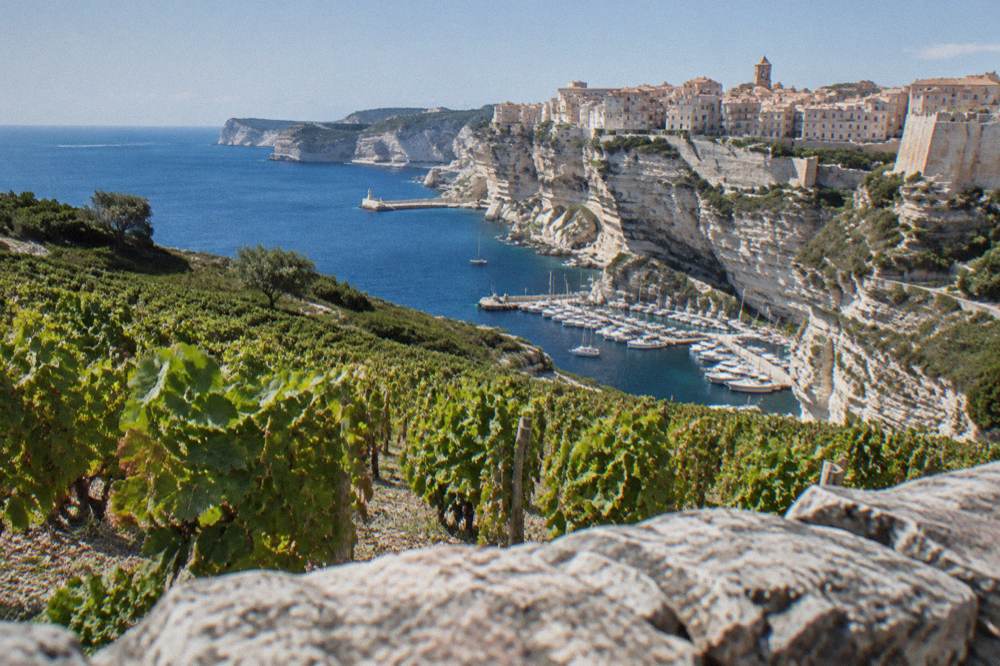
Pairing the peninsula with its bottles is the natural day plan. The Cap Corse day trip route links Bastia's old harbour, the cliffside village of Nonza, the fishing port of Centuri and the wine country back near Saint-Florent, and the question of whether the detour rewards the drive is answered in detail under is Cap Corse worth visiting.
Where In Corsica Do You Taste Cap Corse And Pietra?
The densest tasting ground for the island's drinks runs from Bastia north and west: Bastia's old harbour and its Palais des Gouverneurs museum, the villages of Cap Corse, the Patrimonio wine country at the peninsula's base, and Saint-Florent, the small resort town that doubles as the gateway to the Désert des Agriates and its boat-shuttle beaches. Ajaccio offers its own version, with food tours that include tastings and a museum quarter tied to Napoleon.
In Bastia, the practical anchor is the Musée de Bastia in the Palais des Gouverneurs, reported open 10:00 to 18:30 in high season and 09:00 to 12:00 and 14:00 to 17:00 in low season, closed Sundays and Mondays, hours to confirm before you go. In Ajaccio, the tasting is guided: the Corsica food and wine tour covers the walks that pair island produce with stops across the town, and the Ajaccio city guide sets the wider scene around Maison Bonaparte, which the museum's own page prices at EUR 10 full, EUR 8 for non-EU residents aged 18 to 25 and large families, and free for EU residents under 26.
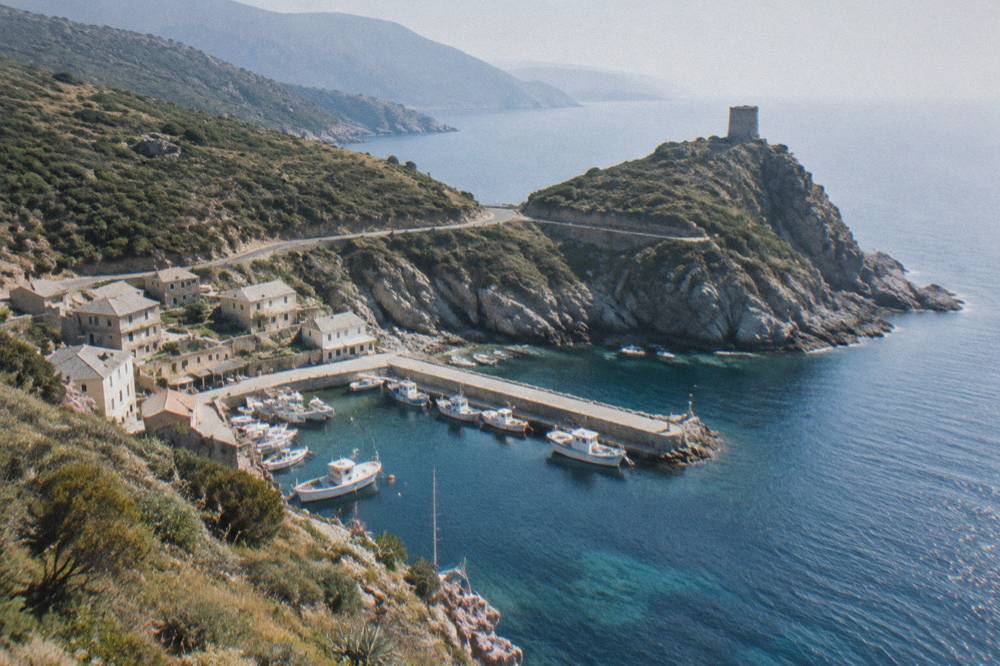
For a day built around the peninsula itself, the Cap Corse and Désert des Agriates half-day trip covers the peninsula and the desert coast; Check availability if that shape of day suits your dates.
Can You Drink The Tap Water In Corsica?
Yes, the tap water in Corsica is part of the standard French public supply and is treated to the same national standards that apply across mainland France, so it is drinkable in town and village networks alike. The island has no separate water warning attached to it, and visitors who prefer filtered or bottled water are making a taste choice rather than a safety one, as the site's own answer on tap water sets out.
The fuller reasoning, including what to watch for in older buildings and in remote mountain hamlets, sits in the dedicated answer on drinking the tap water in Corsica. For a drinks-focused trip the practical point is simple: order the local bottle when you want the local pour, and drink from the tap the rest of the day.
Emergency and health numbers worth carrying anywhere on the island, per the French public-service page: 112 for the EU-wide emergency line, 15 for medical, 17 for police, 18 for fire, 114 by SMS or app, and 196 for sea rescue on VHF channel 16. Mountain rescue reaches the PGHM Ajaccio base on 04 95 24 24 00. The rest of the planning pages sit on Corsica Travel Guide.
When Is The Best Time To Drink And Tour Your Way Around Corsica?
The Météo-France 1991-2020 normals for Ajaccio show the pattern to plan around: July averages 8.6 mm of rain and August averages a 29.2 °C daily high, while November averages 111.8 mm of rain and the winter months sit far milder, with January averaging a 14.0 °C daily high. No single month is a fact, but the numbers say summer is hot and dry and autumn carries the rain, so terrace season is long and waterproofs earn their place from October onward.
| Month | Ajaccio daily high °C | Ajaccio daily low °C | Rain mm | Sunshine h/day |
|---|---|---|---|---|
| Jan | 14.0 | 4.7 | 54.1 | 4.4 |
| Feb | 14.2 | 4.3 | 48.1 | 5.5 |
| Mar | 16.0 | 5.9 | 50.4 | 6.8 |
| Apr | 18.5 | 8.3 | 53.1 | 7.7 |
| May | 22.1 | 11.8 | 49.8 | 9.3 |
| Jun | 25.9 | 15.4 | 25.9 | 11.1 |
| Jul | 28.6 | 17.7 | 8.6 | 12.1 |
| Aug | 29.2 | 18.1 | 15.8 | 11.1 |
| Sep | 26.1 | 15.4 | 57.8 | 8.7 |
| Oct | 22.8 | 12.6 | 85.7 | 6.7 |
| Nov | 18.3 | 9.0 | 111.8 | 4.7 |
| Dec | 15.1 | 5.8 | 73.9 | 4.0 |
Fire season shapes the calendar as much as rain does. From 15 June to 30 September it is forbidden to light a fire or smoke in forests, maquis and massifs across Corsica, and the UK Foreign Office notes a high wildfire risk in France from April to October. A daily colour map of massif access is published each evening at 18:00 for the next day, and from mid-June to mid-September access to some massifs can be restricted outright. Aperitif hour on a terrace is unaffected; a post-lunch hillside walk in high summer needs a check of that map first. The month-by-month detail, including the Bastia station normals, is in the Corsica weather by month guide.
How Do Cap Corse Drinks And The Désert Des Agriates Fit Into One Trip?
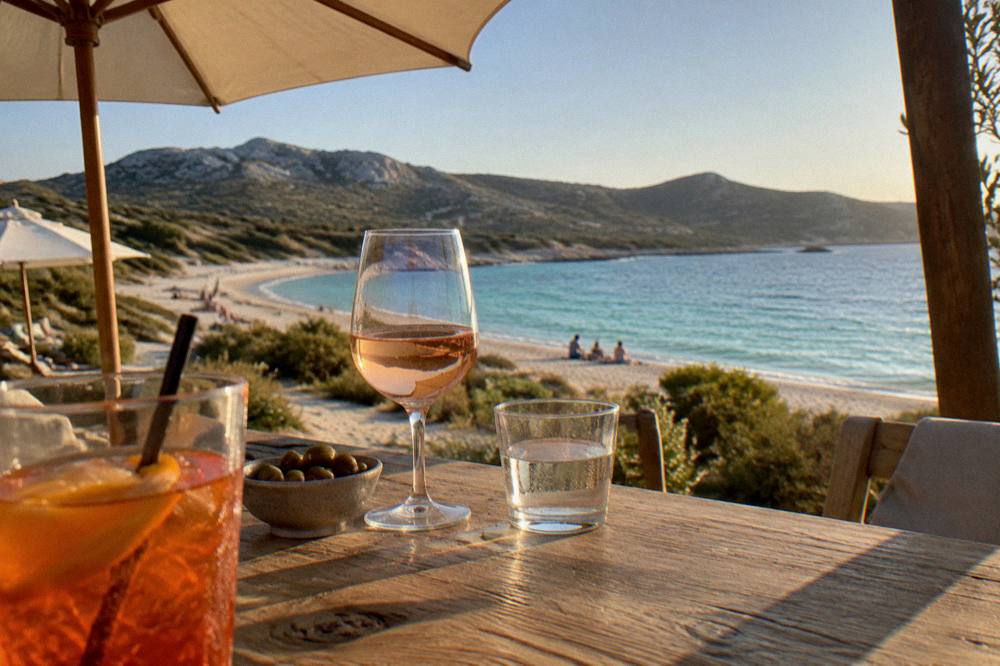
The pairing works because Saint-Florent sits at the base of Cap Corse and doubles as the departure point for the Désert des Agriates, the protected coastal stretch whose beaches, Saleccia and Lotu among them, are reached by boat shuttle from Saint-Florent from about April to October, weather permitting, by 4x4 track from Casta, or on foot, as the island's tourism board reports. One base therefore covers wine country, the peninsula and two of the island's best-known beaches.
| Way to reach Saleccia and Lotu | Route | Season as reported |
|---|---|---|
| Boat shuttle from Saint-Florent | Sea crossing from the port | About April to October, weather permitting |
| 4x4 track from Casta | Authorised track inland from the coast road | Dry conditions needed |
| On foot | Marked trails through the Désert des Agriates | Check the daily fire-risk map in summer |
The fuller beach-by-beach detail, including what each stretch of sand involves, is in the Corsica beaches guide, and the coastline north of the desert, from Centuri's lobster port to Erbalunga's seafront, is covered in the Cap Corse guide. For trip length planning, the site's overview of things to do in Corsica ranks the options across the whole island.
What Should You Know Before Ordering In Corsica?
Ordering in Corsica runs on French restaurant law: menus must state "prix service compris" with the service percentage built in, so an extra tip is optional rather than expected, as the French economy ministry's consumer page sets out. The currency is the euro, the emergency number is 112, and the pace of service follows the French aperitif-to-cheese arc, which means the bottle ordered before the meal is the one to linger over.
A few practicalities round out the picture. The island counts 365,636 residents as of 1 January 2026 in INSEE's provisional estimate, with Ajaccio at 76,320 and Bastia at 46,867 in the 2023 census figures, so the drinking scene concentrates in a handful of towns rather than spreading thin. More than 8.5 million passengers, cruise passengers excluded, passed through the island's ports and airports in 2025 per the ORTC and DREAL annual report, which is why summer terraces book ahead. The four airports, Ajaccio Napoléon Bonaparte, Bastia Poretta, Figari Sud Corse and Calvi Sainte-Catherine, are covered in the Corsica airports guide, and the ferry routes in the ferry to Corsica guide.
Safety advisories are ordinary for France. The US State Department lists France at Level 2, Exercise Increased Caution and the UK Foreign Office carries standard France advice with its wildfire note. None of it touches a glass on a square in Bastia or Patrimonio.
Common Questions About Corsican Drinks
What Is The Famous Drink Of Corsica?
Cap Corse, the apéritif named after the northern peninsula, and Pietra, the island's chestnut beer, are the two bottles most closely tied to Corsican drinking identity. The island's wine appellations, Patrimonio and Muscat du Cap Corse among them, complete the picture.
Is Pietra Made With Chestnuts?
Pietra is brewed with chestnut flour as its defining ingredient, and Corsican chestnut flour is protected under the AOP "Farine de châtaigne corse, Farina castagnina corsa", whose defence body was created in 2001.
Where Does Cap Corse, The Drink's Name, Come From?
The name comes from Cap Corse, the peninsula that runs north from Bastia at the top of Corsica. The drink and the peninsula share the name, which is why searches for one surface the other.
Which Corsican Wine Should You Try Near Cap Corse?
Patrimonio, whose appellation sits at the base of the peninsula near Saint-Florent, and Muscat du Cap Corse from the peninsula itself. The main varieties reported across the island are Nielluccio and Sciaccarellu for reds and Vermentinu for whites.
Do You Tip On Drinks And Meals In Corsica?
Service is included by law, with menus stating "prix service compris", so an additional tip is optional rather than expected, per the French economy ministry's consumer guidance.
Can You Drink The Tap Water In Corsica?
Yes, tap water in Corsica is part of the standard French public supply and is treated to national standards. The site's dedicated answer covers the details, including older buildings and remote hamlets.
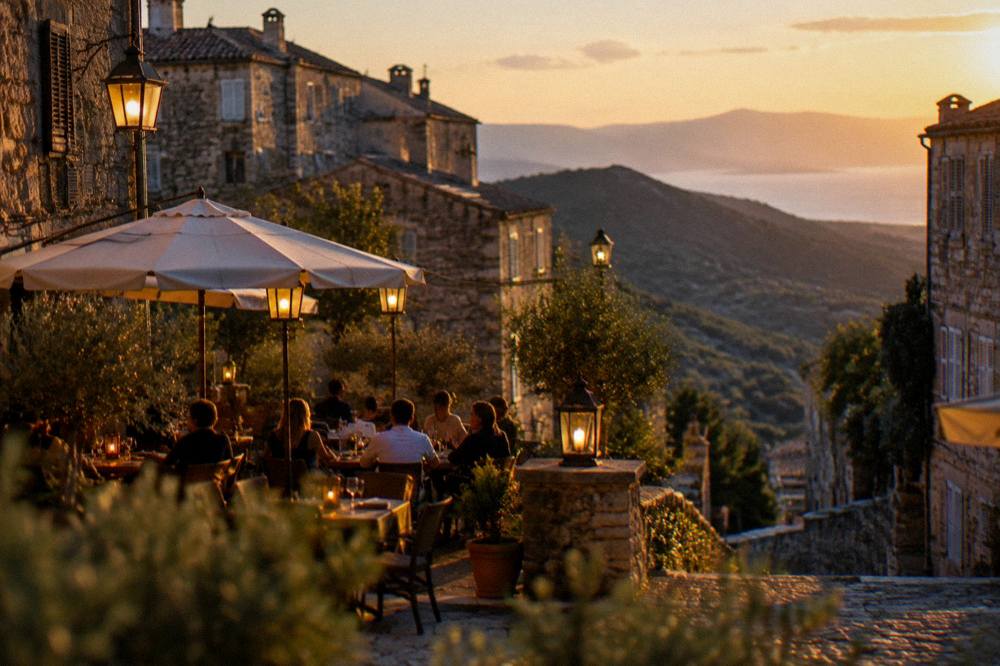
A glass of Cap Corse on a terrace above the sea, a Pietra after a walk to Nonza, and a Muscat from the peninsula's own vineyards are three pours that tell the same story: an island that protects what it produces, from honey and chestnut flour to wine, and names its drinks after its own geography.