Where Should I Stay In Corsica For Beaches?
The best Corsican bases for a beach holiday, from Porto-Vecchio and Palombaggia in the southeast to the Balagne, Saint-Florent and the Agriates, with what each town gives you.
Corsica is a French Mediterranean island with more than 1,000 km of coastline and a mountainous interior that tops out at Monte Cinto (2,706 m), and that shape decides everything about a beach holiday here. The sand sits on the rim, the mountains sit in the middle, and a base on the wrong rim can mean hours of driving on narrow mountain roads each day. Inforoutes Corse publishes live road conditions and accessibility levels for the main passes, which tells you how seriously locals treat those roads. This page from the Corsica Travel Guide walks through the main beach bases around the island, what each one puts within reach, and how to match the base to the holiday. For a full list of sandy stops, see Corsica's beaches, island-wide, and for hotels and districts generally, where to stay in Corsica.
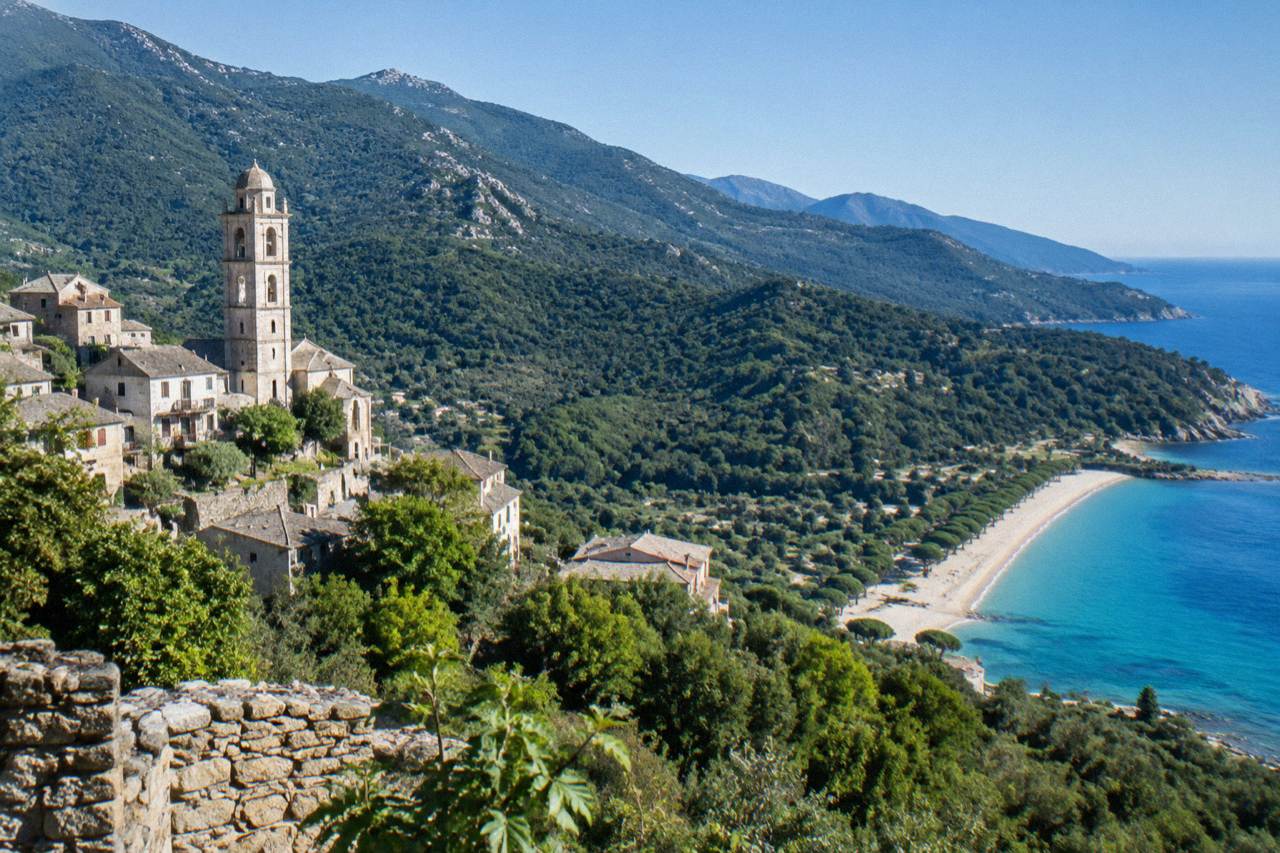
For a pure beach holiday in Corsica, stay in Porto-Vecchio in the southeast, which puts Palombaggia, Santa Giulia and Rondinara within a short drive, or base yourself in Calvi or L'Île-Rousse in the Balagne on the northwest coast, where the town beaches and the Agriates strand sit close together. Bonifacio suits cliff-and-cove swimming in the deep south, and Saint-Florent is the gateway to Saleccia and Lotu. Ajaccio works for a town stay with the Îles Sanguinaires gulf on the doorstep.
Each of those bases trades something off. Porto-Vecchio gives the densest cluster of named beaches; the Balagne gives beaches plus hilltop villages and the island's coastal railway; Saint-Florent gives access to the Désert des Agriates strand but the beaches themselves are reached by boat shuttle, by 4x4 track or on foot. The right answer also depends on how you arrive: Corsica has four airports, Ajaccio Napoléon Bonaparte (AJA), Bastia Poretta (BIA), Figari Sud Corse (FSC) and Calvi Sainte-Catherine (CLY), and Figari serves the southeast bases while Calvi serves the Balagne directly. If you are still weighing the island against its neighbour, the comparison in Corsica or Sardinia covers the differences.
Porto-Vecchio: Palombaggia, Santa Giulia And The Southeast Sands
Porto-Vecchio is the southeast's beach capital: Palombaggia, Santa Giulia and Rondinara all lie on the town's coastal flank, and the old town itself sits inland of a salt-water lagoon with Figari Sud Corse airport (FSC) serving the region. The town is also the departure point for full-day catamaran cruises to the Îles Lavezzi and for 4x4 tours into the Ospedale forest and the Aiguilles de Bavella, so a week here can mix sand with mountain days without changing base.
The beaches on this coast are the reason the area is written about so widely, and they are covered name by name in the Palombaggia beach guide, the Santa Giulia guide and the Rondinara guide. On supervision, Ajaccio's main beaches have seven lifeguard posts from 1 July to the end of August, and in Haute-Corse supervised beaches are staffed by volunteer firefighters from about 1 July to 31 August, a pattern that frames the whole island's July and August beach season.
From a Porto-Vecchio base the sea day options include a catamaran cruise tour to the Lavezzi Islands and a beginner scuba dive in the Cerbicale Islands Reserve, both listed from Porto-Vecchio operators, plus 4x4 day tours of the Ospedale forest and the Bavella needles and of the Cuscionu plateau in the Alta Rocca. Boat-wise the southeast also connects eastward: Bonifacio is a short run south, and the Santa Teresa Gallura to Bonifacio ferry links Corsica to Sardinia in about 50 to 60 minutes, which makes a two-island trip feasible from this corner.
Bonifacio: Cliffs, Coves And The Îles Lavezzi
Bonifacio sits on limestone cliffs at the very south of Corsica, and a stay here trades long sandy expanses for a cliff-lined coast, the Îles Lavezzi a short boat run away inside the Bouches de Bonifacio Nature Reserve, and the Escalier du Roi d'Aragon's 189 steps cut down the cliff face. The town is compact, so most beach days involve a boat trip or a short drive, and the reserve setting means the sea days are the point.
The Lavezzi islands sit inside the Bouches de Bonifacio Nature Reserve, managed by the OEC, which is the fact that matters for planning: it is a protected marine area, not a free-for-all anchorage. The question of whether the town itself rewards the stay is covered separately in is Bonifacio worth visiting.
On dry land, the Escalier du Roi d'Aragon counts 189 steps and gives a 180-degree view over the cliffs toward Sardinia, with closed-toe flat shoes required. Beyond the town, Plage de Roccapina lies on the coast northwest of Bonifacio toward Sartène. On the practical side, remember the island-wide fire rule: from 15 June to 30 September it is forbidden to light a fire or smoke in forests, maquis and massifs, which applies to beach barbecues as much as to hiking trails.
Calvi, L'Île-Rousse And The Balagne Coast
The Balagne, on Corsica's northwest coast, pairs two proper beach towns, Calvi and L'Île-Rousse, with a strand of sandy beaches between them and the Désert des Agriates beginning just east of L'Île-Rousse. Calvi Sainte-Catherine airport (CLY) serves the town, the Balagne coastal railway runs Calvi to L'Île-Rousse, and boat trips from Calvi head out to the Revellata peninsula and the Scandola reserve, which makes this the coast where a car-free beach week is most realistic.
Alongside the Revellata snorkelling trip above, operators run a boat tour from Calvi to Scandola, a sunset cruise to the Revellata peninsula, an introduction-to-diving dive with an instructor, and a general boat trip with snorkelling in the Gulf of Calvi. Inland of the coast, wine tastings around Calvi and Île-Rousse and a Corsican wine tour with picnic round out the food side. Our related pick for this page, a snorkelling trip at the edge of the Revellata marine reserve, is a Calvi product and you can Check availability on the operator's live listing.
L'Île-Rousse is the quieter of the two towns and the jumping-off point for the Agriates by sea: catamaran excursions run a full-day trip into the Désert des Agriates, a shorter aperitif-and-sunset run, and a longer catamaran excursion and a swim stop. The Chemins de fer de la Corse network includes the Balagne coastal line between Calvi and L'Île-Rousse alongside the main Ajaccio to Bastia line via Corte and the Ponte-Leccia to Calvi branch, and current timetables are published by the operator.
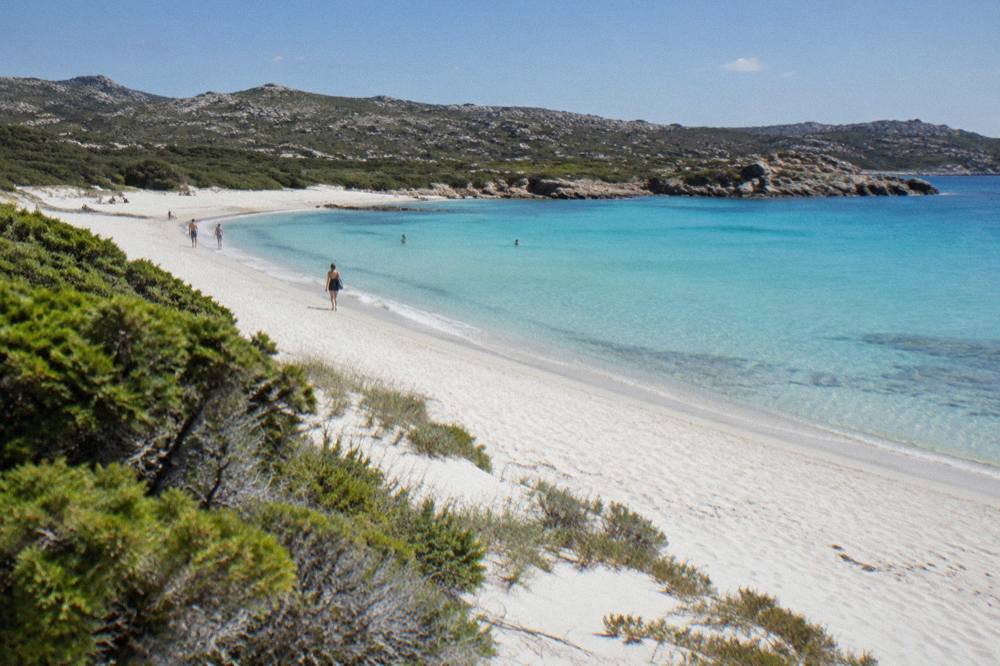
Saint-Florent And The Désert Des Agriates
Saint-Florent is the gateway to the Désert des Agriates, the protected coastal strip whose flagship beaches, Saleccia and Lotu, are reached by boat shuttle from Saint-Florent's port roughly April to October weather permitting, by 4x4 track from Casta, or on foot. Stay here if those two beaches are the goal, or in the surrounding Cap Corse for a quieter base, and treat the Agriates as a boat-and-track destination rather than a drive-up one.
The Agriates details come from the visit-corsica page on the area: boat shuttles and taxi-boats run from Saint-Florent port, the 4x4 option runs from Casta, and walking in is the third route. That access pattern is the single most decision-relevant fact on this page, because it means an Agriates beach day is a planned day, not a spontaneous one. The Saleccia and Lotu guides carry the fuller picture, and a half-day Cap Corse and Agriates trip is listed from Saint-Florent operators. Patrimonio, just south of Saint-Florent, is one of Corsica's named wine appellations, which the Corsican wine guide covers.
No sea-temperature figure is carried, and the fuller discussion sits in can you swim in Corsica in October.
| Corsica base | Flagship beaches nearby | Sea access from the base | Suits |
|---|---|---|---|
| Porto-Vecchio | Palombaggia, Santa Giulia, Rondinara | Lavezzi catamaran cruises, Cerbicale dives | Beach-first weeks, mixed sand and mountain days |
| Bonifacio | Cliff coves, Îles Lavezzi | Cliffs and Lavezzi cruises, La Maddalena trip | Boat days and scenery over long sand |
| Calvi and L'Île-Rousse | Balagne strand, Revellata coast | Revellata snorkel trips, Scandola boat tour, Agriates catamarans | Car-free weeks, railway coast |
| Saint-Florent | Saleccia, Lotu (Agriates) | Boat shuttle from the port, 4x4 from Casta, or on foot | Agriates-focused stays, quieter Cap Corse |
| Ajaccio | Town beaches, Îles Sanguinaires gulf | Sanguinaires gulf and sunset cruises, Scandola day trips | Town stay with gulf boat trips |
Ajaccio: A Town Base With The Sanguinaires Gulf
Ajaccio, the island's capital with 76,320 residents, works as a beach base for travellers who want a real town around the sand: the town's main beaches carry seven lifeguard posts from 1 July to the end of August, the Îles Sanguinaires sit in the gulf offshore, and boat trips run from gulf tours to full-day cruises to Scandola and Bonifacio. Maison Bonaparte and the Palais Fesch give the rainy-day half of the stay.
The Sanguinaires options alone fill a week: a gulf boat tour from Ajaccio or Porticcio, a small-group trip with an aperitif on board, a sunset cruise, and a private sunset cruise with aperitif, drinks and a tray of local products and a swim stop. From Ajaccio and Porticcio, operators also run a full-day guided boat tour to the Scandola Nature Reserve and a full-day Bonifacio sea trip, which is worth knowing because it lets you sample the far south without relocating. The rules around Scandola matter here: the reserve, created by ministerial order in December 1975, is part of the UNESCO property "Gulf of Porto: Calanche of Piana, Gulf of Girolata, Scandola Reserve" inscribed in 1983, its land area is closed to the public, and visits are by boat only. Quotas and licences for boat traffic are being consolidated in a regulatory framework still being finalised, with no year printed.
On the museum side, Maison Bonaparte on Rue Saint-Charles is open every day except Monday, EUR 10 full price, free for EU residents under 26, and the Palais Fesch is EUR 10 full, EUR 6 over 65s, free up to 18, open daily 09:00 to 17:00. Both sit 200 m or so from the bus station and ferry terminal, and bus 8 runs from the airport, which is the kind of practical fact that makes an Ajaccio stay easy to run without a car for the town days at least.
Which Corsican Beach Base Should You Pick For Your Trip?
Pick Porto-Vecchio for the densest beach cluster and short drives, the Balagne for a car-light beach week with a coastal railway, Saint-Florent if Saleccia and Lotu are the goal, Bonifacio for boat days and cliffs, and Ajaccio for a town-and-gulf combination. Length of stay matters as much as geography: our guidance on trip length says a focused few days per region beats a whole-island dash, so for a week or less, one base plus boat trips usually beats two bases.
Two practical rules shape any Corsican beach itinerary. First, driving: the roads between regions are narrow mountain roads, Inforoutes Corse publishes live conditions and pass accessibility levels, and our do you need a car in Corsica page works through the alternatives, including the Chemins de fer de la Corse lines. Second, fire season: from 15 June to 30 September no fires and no smoking in forests, maquis and massifs, and the fire-risk map updates at 18:00 for the next day, with some massif access restricted from mid-June to mid-September. UK FCDO advice notes a high wildfire risk in France from April to October.
The month question has no single factual answer, and the climate table below shows why the shoulder months appeal for a beach-and-hiking split. For the fuller discussion, see the best month to visit Corsica and does it rain a lot in Corsica.
| Month | Ajaccio high °C | Ajaccio rain mm | Bastia high °C | Bastia rain mm |
|---|---|---|---|---|
| May | 22.1 | 49.8 | 22.4 | 53.7 |
| June | 25.9 | 25.9 | 26.4 | 38.8 |
| July | 28.6 | 8.6 | 29.4 | 13.8 |
| August | 29.2 | 15.8 | 29.8 | 21.1 |
| September | 26.1 | 57.8 | 26.0 | 74.5 |
| October | 22.8 | 85.7 | 22.0 | 126.5 |
The figures are Météo-France 1991-2020 station normals for Ajaccio (Campo dell'Oro) and Bastia. July carries 8.6 mm of rain at Ajaccio, the lowest figure on the table, and November carries 111.8 mm, the pattern behind the island's hot dry summer and mild wet winter, with snow only on the high mountains.
Common Questions About Staying In Corsica For Beaches
Where Should I Stay In Corsica For Beaches?
Porto-Vecchio for Palombaggia, Santa Giulia and Rondinara; Calvi or L'Île-Rousse in the Balagne for town beaches plus the Agriates and Revellata coast; Saint-Florent for Saleccia and Lotu by boat shuttle; Bonifacio for cliffs, coves and Îles Lavezzi boat trips; Ajaccio for a town stay on the Îles Sanguinaires gulf.
Can You Reach Saleccia And Lotu Without A Boat?
Yes, but only by the 4x4 track from Casta or on foot, per the visit-corsica page on the Désert des Agriates; the boat shuttle from Saint-Florent port runs roughly April to October, weather permitting.
Do You Need A Car For A Corsican Beach Holiday?
Not in the Balagne, where Calvi and L'Île-Rousse sit on the Chemins de fer de la Corse coastal line and boat trips leave from both towns. Elsewhere a car helps, because the bases and their beaches are linked by narrow mountain roads.
Is Corsica Good For Snorkelling From A Beach Base?
Yes. Listed products include snorkelling at the edge of the Revellata marine reserve from Calvi, a boat trip with snorkelling in the Gulf of Calvi, catamaran snorkel trips to the Îles Lavezzi from Bonifacio, and a guided Lavezzi snorkelling cruise.
Which Corsican Beaches Are Supervised In Summer?
Ajaccio's main beaches have seven lifeguard posts from 1 July to the end of August, and Haute-Corse's supervised beaches are staffed by volunteer firefighters from about 1 July to 31 August. Outside that window, swim where and when conditions are safe and follow flag guidance.
The short version: match the base to the coast you actually want, because on an island this mountainous the sea is easy and the crossings between regions are not.