Where To Stay In Corsica
This guide compares the island's main towns, with travel times, admissions and climate figures.
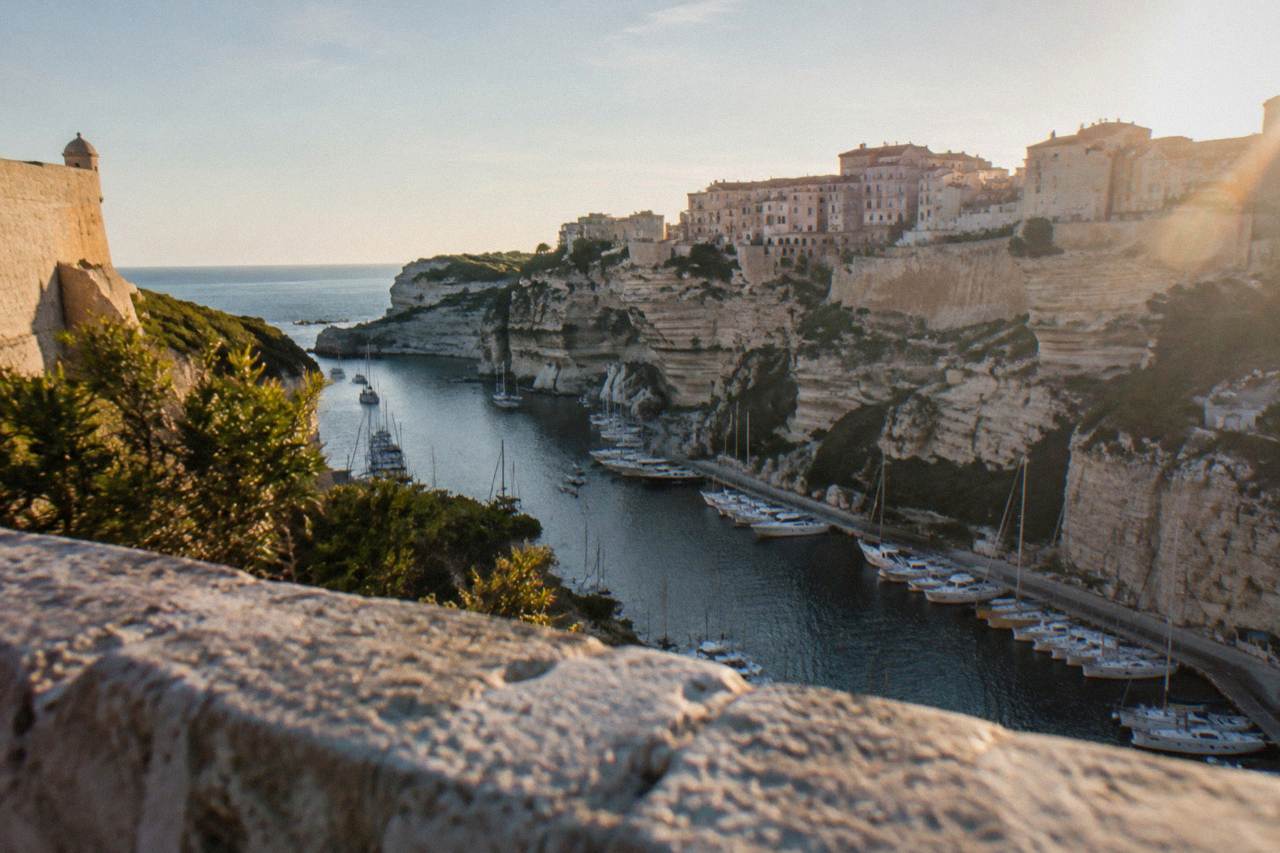
Stay in Ajaccio or Bastia for transport and city life, Bonifacio or Porto-Vecchio for southern beaches and boat trips, Calvi or L'Île-Rousse for the Balagne coast, and Corte for the mountains and the GR20.
Corsica squeezes 8,722 km2 of granite mountains, more than 1,000 km of coastline and a population of 365,636 (INSEE provisional estimate, 1 January 2026) into the fourth-largest island in the Mediterranean. That density of relief is the single fact that should drive any decision about where to stay: a town on the west coast can be two hours of mountain road from a beach on the east coast, and the ferry ports and the four airports sit on opposite sides of the island. The numbers, road times, admissions and climate normals are gathered here so the choice of base can be made on figures rather than guesswork.
Where Should You Base Yourself In Corsica?
The practical split is west against east and coast against interior: Ajaccio and Bastia for arrival convenience and city amenities, Bonifacio and Porto-Vecchio for the southern beaches and the Îles Lavezzi, Calvi and L'Île-Rousse for the Balagne shoreline, and Corte, the old capital, for the mountains, the GR20 and the interior. Saint-Florent and Propriano are smaller middle options, each with its own ferry or marina role. Seven towns are ferry ports (Ajaccio, Bastia, Bonifacio, L'Île-Rousse, Propriano and Porto-Vecchio), which matters if you arrive by sea, and four airports (Ajaccio Napoléon Bonaparte, Bastia Poretta, Figari Sud Corse and Calvi Sainte-Catherine) cover the island's corners.
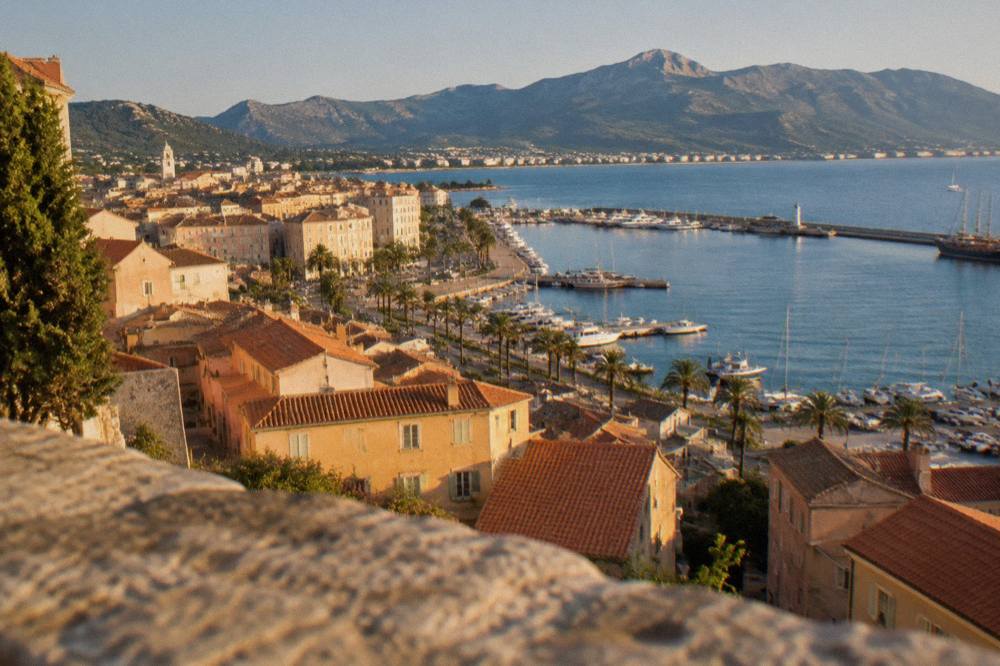
The island's two departments, Corse-du-Sud (about 175,100 residents) and Haute-Corse (about 190,500), map onto this split neatly: the south holds Ajaccio, Bonifacio, Porto-Vecchio and Propriano, while the north holds Bastia, Calvi, L'Île-Rousse, Saint-Florent and Corte. Figari Sud Corse airport sits in the far south, which shortens the last leg if Bonifacio or Porto-Vecchio is the base.
| Base | Ferry port | Nearest listed airport | Character from the verified facts |
|---|---|---|---|
| Ajaccio | Yes | Ajaccio Napoléon Bonaparte (AJA) | Capital, 76,320 residents, Napoleon's birthplace, Maison Bonaparte and Palais Fesch |
| Bastia | Yes | Bastia Poretta (BIA) | Second town, 46,867 residents, old harbour, Musée de Bastia |
| Bonifacio | Yes | Figari Sud Corse (FSC) | Citadel and cliffs, Escalier du Roi d'Aragon, gateway to the Îles Lavezzi |
| Porto-Vecchio | Yes | Figari Sud Corse (FSC) | Marinas and beaches such as Palombaggia and Santa Giulia nearby |
| Calvi | Yes | Calvi Sainte-Catherine (CLY) | Citadelle de Calvi, Balagne coast, revellata boat trips |
| L'Île-Rousse | Yes | Calvi Sainte-Catherine (CLY) | Balagne coastal train to Calvi, Agriates catamaran trips |
| Corte | No | None in town | Inland old capital, citadel and Musée de la Corse, GR20 country |
| Saint-Florent | No | Bastia Poretta (BIA) | Boat shuttles to Saleccia and Lotu in the Désert des Agriates |
| Propriano | Yes | Figari Sud Corse (FSC) | Valinco gulf, sunset cruises, Mare a Mare Sud trail ends here |
For a first trip built around the sea, a southern base paired with a northern one avoids repeating the long crossing of the island. The internal overview at plan what to do across the island pairs well with this page when the base is chosen.
Is Ajaccio Or Bastia The Better First Base In Corsica?
Ajaccio suits a first base if ferries from Marseille, Toulon or Nice or a flight into AJA set the arrival, and if museums and gulf boat trips matter: the city of 76,320 residents holds Maison Bonaparte (EUR 10 full price) and the Palais Fesch (EUR 10 full price) and launches trips to the Îles Sanguinaires. Bastia, with 46,867 residents, is the stronger base for the Italian ferries from Livorno, Genoa and Savona and for reaching Cap Corse and the Balagne.
Ajaccio's two flagship museums are cheap, verifiable anchors for a city stay. Maison Bonaparte, on Rue Saint-Charles 200 m from the bus station and ferry terminal, is open every day except Monday; from 1 July to 30 September the hours are 10:00 to 17:30, with last entry 30 minutes before closing. Admission is EUR 10 full price, EUR 8 for non-EU residents aged 18 to 25 and large families, and free for EU residents under 26. The Palais Fesch, per the Ajaccio tourist office listing for 16 January to 31 December 2026, is open daily 09:00 to 17:00, charges EUR 10 full price, EUR 6 for over-65s and is free up to 18.
| Ajaccio sight | Full price | Reduced or free tiers | Closed |
|---|---|---|---|
| Maison Bonaparte | EUR 10 | EUR 8 non-EU 18-25 and large families, free EU under 26 | Monday |
| Palais Fesch | EUR 10 | EUR 6 over 65, free up to 18 | Christmas, New Year, 1 Nov |
| Îles Sanguinaires boat tours | from USD figures on the operator listings | Varies by trip | Seasonal sailing conditions |
Bastia's case is positional rather than museological: Corsica Linea and La Méridionale run Marseille sailings, Moby runs Livorno, Genoa and Santa Teresa Gallura, and Corsica Ferries runs Livorno, Savona, Toulon and Nice routes, so a northern arrival often lands here first. The Musée de Bastia in the Palais des Gouverneurs keeps high-season hours of 10:00 to 18:30 and low-season hours of 09:00 to 12:00 and 14:00 to 17:00, closed Sundays and Mondays off-season, per the museum's information page. More on the ports themselves is in the guide to getting around Corsica.
The question of arrival logistics is covered in depth in the flights and airports guide and the Ajaccio airport page.
Where To Stay In Bonifacio And Porto-Vecchio In South Corsica?
Bonifacio and Porto-Vecchio are the southern pair: Bonifacio for the citadel, the cliffs, the Escalier du Roi d'Aragon's 189 steps and the Îles Lavezzi boat trips, and Porto-Vecchio for marina town comfort beside beaches such as Palombaggia and Santa Giulia, with Figari Sud Corse airport serving both. Bonifacio is also the Corsican port for the roughly 50 to 60 minute Santa Teresa Gallura crossing to Sardinia.
The two towns sit close enough to share a stay. From Bonifacio, the cliff-and-Lavezzi cruises run about two hours, and catamaran trips with snorkelling in the Îles Lavezzi run about four; the Îles Lavezzi sit inside the Bouches de Bonifacio Nature Reserve, managed by the OEC. The Escalier du Roi d'Aragon cuts 189 steps down the cliff face, charges about EUR 5 for adults, per the Bonifacio reservation site, and requires closed-toe flat shoes.
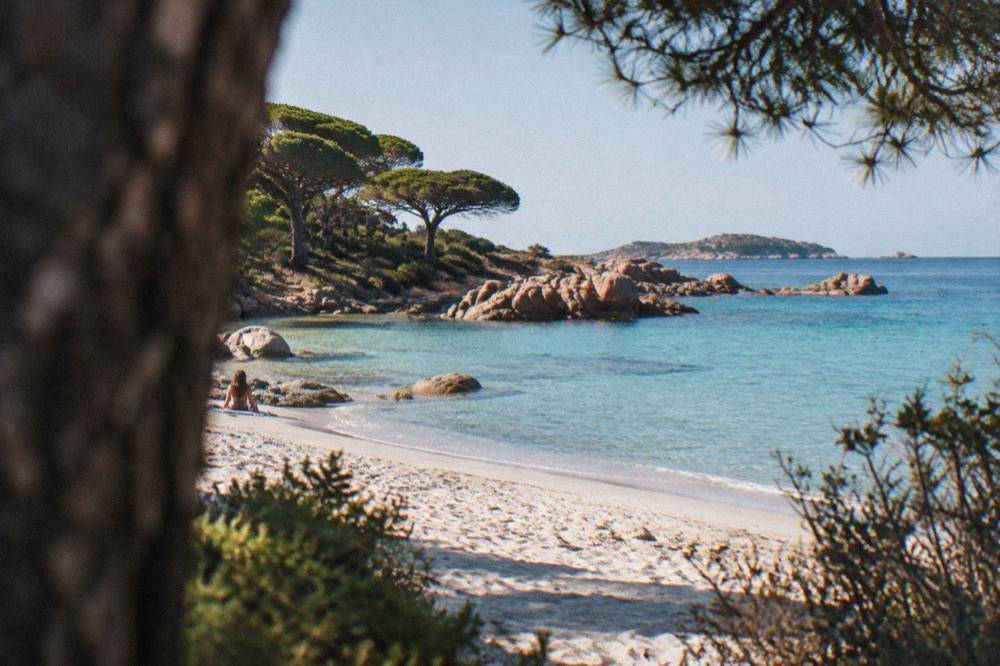
Porto-Vecchio's own draw is the beach belt. The Palombaggia beach guide, the Santa Giulia beach guide and the Rondinara beach guide cover the individual strands, and the shorter question of where to stay in Corsica for beaches has its own answer page. Inland from Porto-Vecchio, 4x4 tours reach the Ospedale forest and the Aiguilles de Bavella, which keeps a stay here useful on days when the beach is not the plan.
A southern base also makes the Sardinia crossing realistic: the Corsica to Sardinia ferry guide covers the Bonifacio to Santa Teresa Gallura link, which Moby and Ichnusa Lines continue to operate after Sardinia found no rival operator, per an October 2026 report.
Where To Stay In Calvi, L'Île-Rousse And The Balagne?
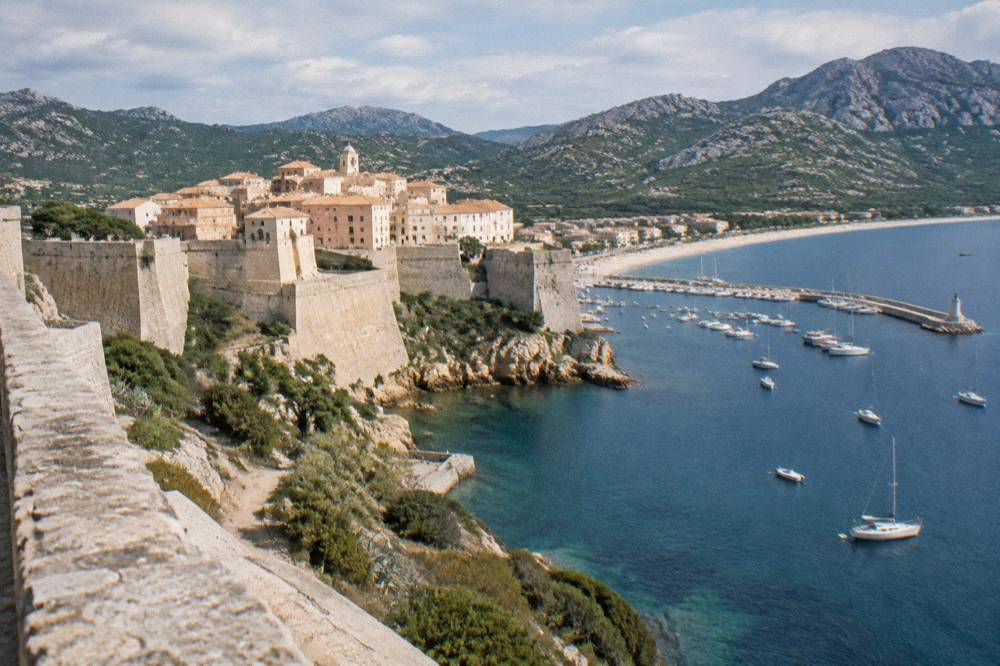
Calvi and L'Île-Rousse anchor the Balagne, the northwest coast with the Calvi citadel, the coastal Chemins de fer de la Corse line linking the two towns, wine-tasting trips inland and catamaran excursions into the Désert des Agriates. Calvi Sainte-Catherine airport (CLY) serves the area, Calvi is a ferry port, and the region's boat trips include routes toward Scandola and the Revellata peninsula.
Calvi is the louder of the two: a citadel town with a full-day boat tour toward Scandola, sunset cruises to the Revellata peninsula, snorkelling at the edge of the Revellata marine reserve and introduction-to-diving trips with an instructor. L'Île-Rousse is the quieter rail terminus, with catamaran excursions along the Agriates coast, full-day catamaran trips into the Désert des Agriates and aperitif-sunset sailings. The Calvi and the Balagne guide and the L'Île-Rousse guide expand on both.
The inland Balagne villages are reachable as an organised small-group day trip from Calvi, which is worth knowing if a hire car is not on the plan; the driving in Corsica guide explains the road conditions, including that Inforoutes Corse publishes live status for the main mountain passes. The citadelle de Calvi page covers the fortress itself, including its admission arrangements.
Where To Stay In Corsica For Beaches And Boat Trips?
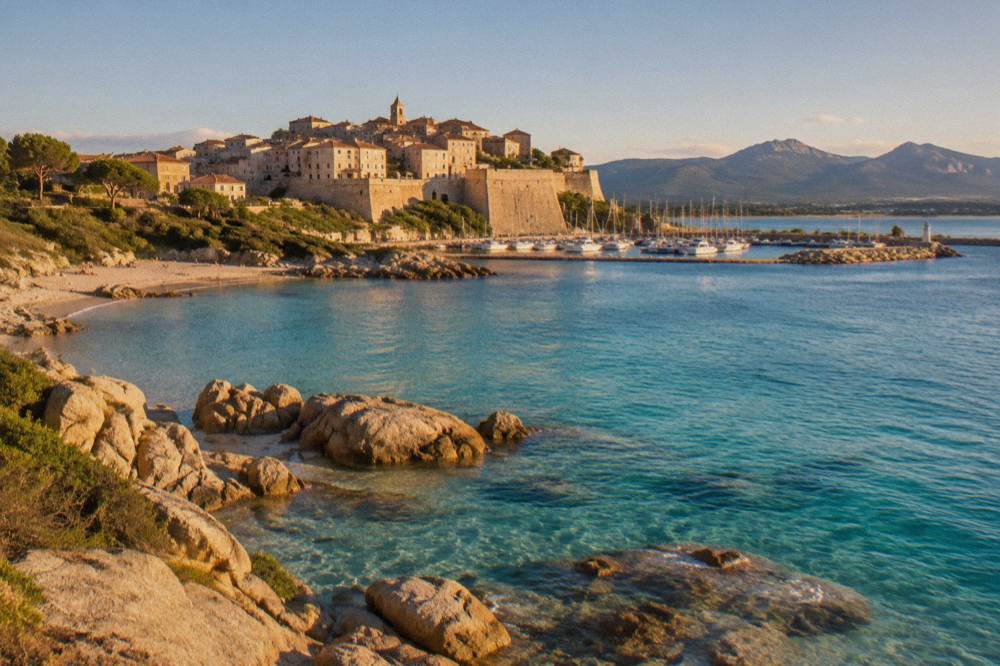
For a beach-first stay, Porto-Vecchio and Bonifacio serve the south with Palombaggia, Santa Giulia and Rondinara, Saint-Florent serves the Désert des Agriates by boat shuttle to Saleccia and Lotu, and the Balagne serves the northwest strand around Calvi and L'Île-Rousse. Each of these bases also launches the island's signature boat trips, from Îles Lavezzi catamarans in the south to Scandola cruises on the west coast. The Agriates beaches are reached by boat shuttle from Saint-Florent (about April to October, weather permitting, roughly 15 to 20 minutes, per the visit-corsica.com page), by 4x4 track from Casta, or on foot, which makes Saint-Florent the practical base for them even though the beaches themselves feel remote.
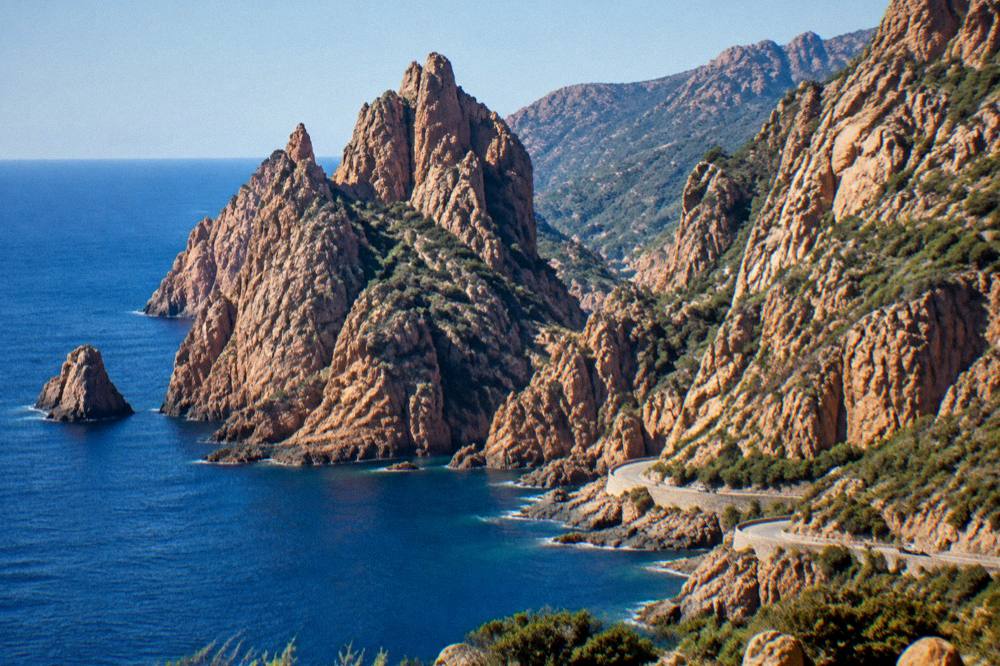
Corsica's sea options go well beyond sunbathing. From Porto, the half-day cruises into the Scandola Reserve and the Calanques de Piana are among the most-booked products on the island's west coast, and the standout option is the Scandola and Calanches of Piana boat trip, Check availability if the dates are already fixed. Scandola itself is boat-only: the reserve's land area is closed to the public, per the OEC rules, with daytime anchoring allowed outside the integral reserve and the Gargalu channel.
The individual strand guides carry the detail: Corsica's beaches overview, plus the pages on Saleccia, Lotu, Roccapina and Ostriconi. The UNESCO property "Gulf of Porto: Calanche of Piana, Gulf of Girolata, Scandola Reserve", inscribed in 1983, gives the west coast a protected status no other stretch has, and the Scandola nature reserve guide explains the visiting rules.
Is Corte A Good Place To Stay For The Corsican Mountains?
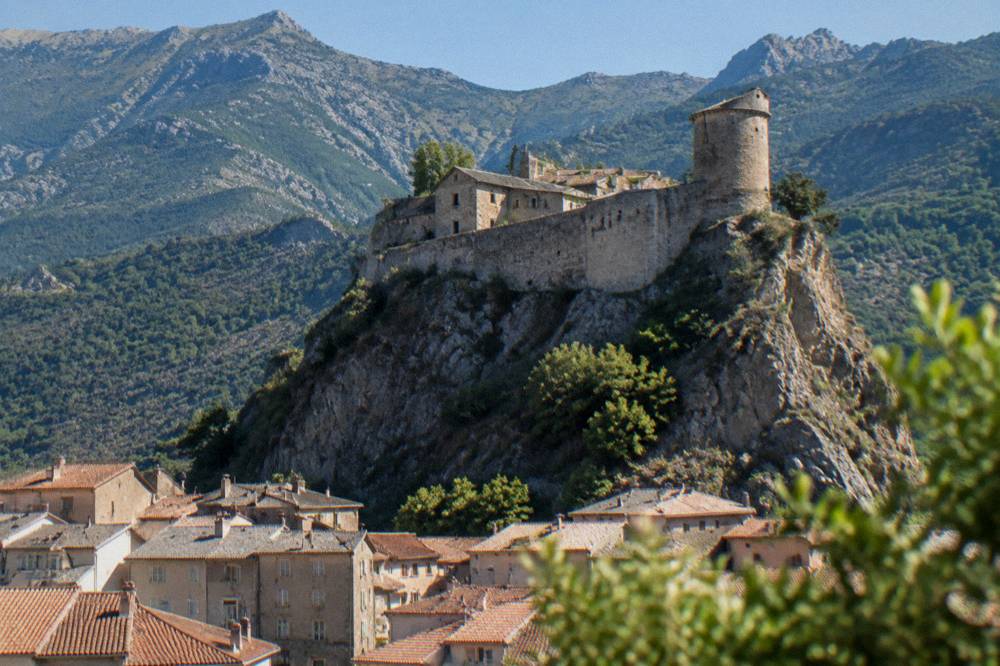
Corte, the old capital in the island's interior, is the base for the mountains: its citadel and Musée de la Corse charge EUR 5.50 with one ticket covering both, the Gorges de la Restonica and the Aiguilles de Bavella are within reach, and the GR20's trail network sits on the same high ground. Road times from Corte are 1 hour to Bastia, 1 h 30 to Ajaccio and Calvi, 2 hours to Porto-Vecchio and 2 h 45 to Bonifacio and Propriano.
The Musée de la Corse is open 1 May to 31 October daily 10:00 to 19:00 (closed 1 May), and 1 November to 30 April daily 10:00 to 17:00 except Sundays, Mondays, public holidays and 24 December, with an annual closure from 31 December to 14 January. Those road times make Corte a genuine middle base: no other inland town puts the whole island within a similar radius, though the times themselves come from the museum's own practical page and assume normal conditions on mountain roads. The wider set of guides lives on Corsica Travel Guide.
| Route to Corte | Road time |
|---|---|
| From Bastia | 1 h 00 |
| From Ajaccio | 1 h 30 |
| From Calvi | 1 h 30 |
| From Porto-Vecchio | 2 h 00 |
| From Bonifacio | 2 h 45 |
| From Propriano | 2 h 45 |
For walkers, the long trails radiate across the island from this interior spine, and the PNRC brochure gives exact figures:
| Trail | Length | Days | Total climb |
|---|---|---|---|
| GR20 (Fra li Monti) | 180 km, about 15 stages | 4 to 8.5 h per stage | Not published in the sources |
| Mare e Monti Nord | 121 km | 10 | 6,100 m |
| Mare a Mare Nord | 139 km (161 km with variant) | 8 to 12 | 5,900 m |
| Mare a Mare Centre | 84 km | 6 to 7 | 3,900 m |
| Mare a Mare Sud | 73 km | 5 | 3,200 m |
| Mare e Monti Sud | 66 km | 5 | 2,700 m |
Refuge accommodation on the GR20 is reserved online only, for both bunks and bivouac pitches, and the PNRC's 2026 rates are:
| GR20 option (PNRC 2026) | Price per person |
|---|---|
| Bunk in a guarded refuge | EUR 20 |
| Bivouac pitch, own tent | EUR 12 |
| Rented tent for 1 | EUR 27 |
| Rented tent for 2 | EUR 39 (two bivouacs plus tent) |
Refuges are guarded from 16 May to 4 October, dogs are not allowed inside refuges or rented tents, and no GR20 departures are allowed from Calenzana after 11:00 under the municipal fire-risk order. The full detail is in the GR20 guide and the wider hiking in Corsica page.
How Does The Season Affect Where You Stay In Corsica?
The Météo-France climate normals for 1991-2020 show why summer dominates the island's calendar: Ajaccio averages a July high of 28.6 °C with just 8.6 mm of rain, while November carries 111.8 mm, and Bastia records 29.4 °C in July against 134.3 mm of rain in November. Summer is hot and dry, winter is mild and wet, and snow sits only on the high mountains, so the coastal bases work from spring to autumn and the mountain season is narrower.
| Month | Ajaccio high | Ajaccio low | Ajaccio rain | Bastia high | Bastia rain |
|---|---|---|---|---|---|
| Jan | 14.0 °C | 4.7 °C | 54.1 mm | 13.8 °C | 67.3 mm |
| Feb | 14.2 °C | 4.3 °C | 48.1 mm | 13.9 °C | 63.5 mm |
| Mar | 16.0 °C | 5.9 °C | 50.4 mm | 15.8 °C | 63.7 mm |
| Apr | 18.5 °C | 8.3 °C | 53.1 mm | 18.3 °C | 71.6 mm |
| May | 22.1 °C | 11.8 °C | 49.8 mm | 22.4 °C | 53.7 mm |
| Jun | 25.9 °C | 15.4 °C | 25.9 mm | 26.4 °C | 38.8 mm |
| Jul | 28.6 °C | 17.7 °C | 8.6 mm | 29.4 °C | 13.8 mm |
| Aug | 29.2 °C | 18.1 °C | 15.8 mm | 29.8 °C | 21.1 mm |
| Sep | 26.1 °C | 15.4 °C | 57.8 mm | 26.0 °C | 74.5 mm |
| Oct | 22.8 °C | 12.6 °C | 85.7 mm | 22.0 °C | 126.5 mm |
| Nov | 18.3 °C | 9.0 °C | 111.8 mm | 17.7 °C | 134.3 mm |
| Dec | 15.1 °C | 5.8 °C | 73.9 mm | 14.8 °C | 88.1 mm |
Two seasonal rules matter more than the temperature table. From 15 June to 30 September it is forbidden to light a fire or smoke in forests, maquis and massifs, and the fire-risk map is updated at 18:00 daily for the next day, with access to some massifs restricted from mid-June to mid-September. And on the coast, Ajaccio staffed seven lifeguard posts on its main beaches from 1 July to the end of August 2026, while Haute-Corse beaches are supervised by volunteer firefighters over roughly the same window. The month-by-month detail, including the sunshine figures, is in the Corsica weather by month guide and the best time to visit Corsica page.
Do You Need A Car Where You Stay In Corsica?
A car is not strictly necessary if the base is a ferry port with a boat-trip economy (Ajaccio, Bastia, Bonifacio, L'Île-Rousse, Propriano or Porto-Vecchio), but it is close to essential for the interior, the Désert des Agriates beyond the shuttle beaches and the village loops of the Balagne and the Alta Rocca. The Chemins de fer de la Corse network links Ajaccio to Bastia via Corte, Ponte-Leccia to Calvi, and Calvi to L'Île-Rousse along the Balagne coast, which covers a real slice of the island, and the four airports all sit within reach of at least one rail or port hub.
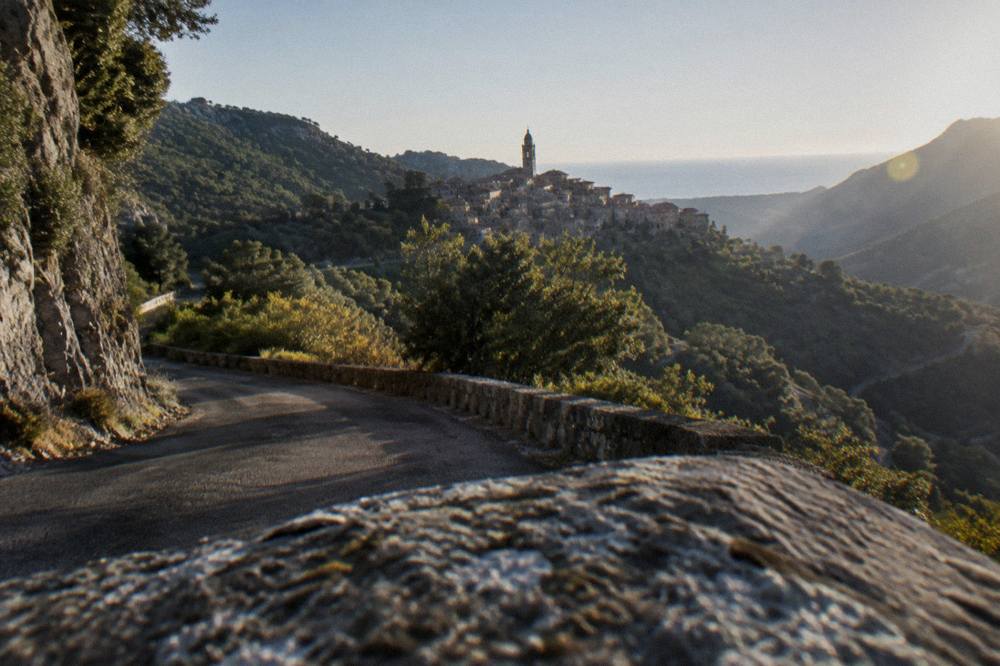
The trade-off is written into the roads. Corsica's mountain routes are monitored through Inforoutes Corse, which publishes live conditions and accessibility levels for the main cols, and storm closures do occur, so any plan that chains the island's far corners together should leave slack. The practical pages cover the decisions in order: Corsica car rental, driving in Corsica and getting around Corsica.
Which Day Trips Can You Reach From Each Corsican Base?
Each base owns a distinct day-trip radius: Ajaccio reaches the Îles Sanguinaires and full-day Scandola and Bonifacio cruises, Porto reaches Scandola and the Calanques de Piana in about three hours on the water, Calvi reaches Scandola by a 4-hour boat tour and the Agriates by jeep, and Saint-Florent reaches Saleccia and Lotu by shuttle boat. Corte's radius is inland and measured in road time, with every major town between 1 and 2 h 45 away on the table above.
The west coast deserves its own note, because the UNESCO property concentrates three sights in one stretch of sea. Porto, Piana and Girolata are linked by cruise loops of roughly 3 hours, several with a stop at Girolata, which is reached by sea or on foot. The day-trip pages spell out each one: Scandola and Girolata boat trip, Calanques de Piana day trip, Bonifacio and Lavezzi day trip, Restonica and Corte day trip and the Désert des Agriates day trip.
From the south, the Bavella day trip page covers the Aiguilles de Bavella, and from Bonifacio the Sardinia day trip works because the crossing to Santa Teresa Gallura is a quick hop. Booking policy across these products generally allows free cancellation, so a base can be chosen before every day at sea is locked in.
Common Questions About Where To Stay In Corsica
Where Should You Base Yourself In Corsica?
Ajaccio or Bastia for arrival by ferry or plane and for city sights, Bonifacio or Porto-Vecchio for southern beaches and the Îles Lavezzi, Calvi or L'Île-Rousse for the Balagne coast, Saint-Florent for the Désert des Agriates shuttles, and Corte for the mountains and the GR20.
Is Ajaccio Or Bastia Better As A First Base In Corsica?
Ajaccio is the stronger first base for Marseille, Toulon and Nice arrivals and for Maison Bonaparte and the Palais Fesch; Bastia is stronger for the Italian ferries from Livorno, Genoa and Savona and for reaching Cap Corse and the Balagne.
Where Should You Stay In Corsica For Beaches?
Porto-Vecchio and Bonifacio for Palombaggia, Santa Giulia and Rondinara, Saint-Florent for the boat shuttles to Saleccia and Lotu in the Désert des Agriates, and the Balagne pair of Calvi and L'Île-Rousse for the northwest strand.
Is Corte A Good Place To Stay In Corsica?
Yes, for a mountain stay: the Musée de la Corse and citadel cost EUR 5.50 on one ticket, and road times from Corte are 1 hour to Bastia, 1 h 30 to Ajaccio and Calvi, 2 hours to Porto-Vecchio and 2 h 45 to Bonifacio and Propriano.
Do You Need A Car To Stay In Corsica?
Not on the port towns with boat-trip economies, and the Chemins de fer de la Corse lines link Ajaccio, Bastia, Corte, Ponte-Leccia, Calvi and L'Île-Rousse. A car is close to essential for the interior, the Agriates tracks and the village loops.
When Is The Summer Fire Season In Corsica?
From 15 June to 30 September it is forbidden to light a fire or smoke in forests, maquis and massifs, and massif access can be restricted from mid-June to mid-September, with the risk map updated at 18:00 each day for the next day.