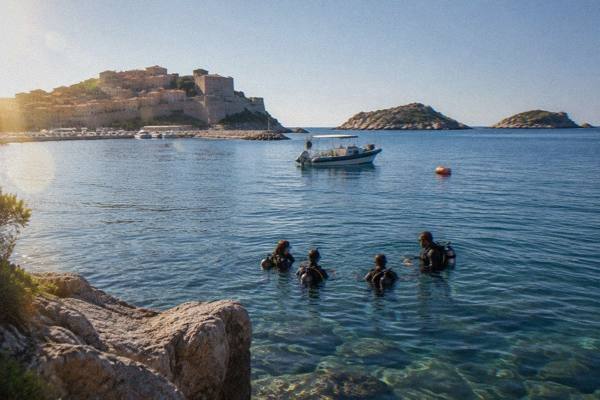
Santa Giulia Beach
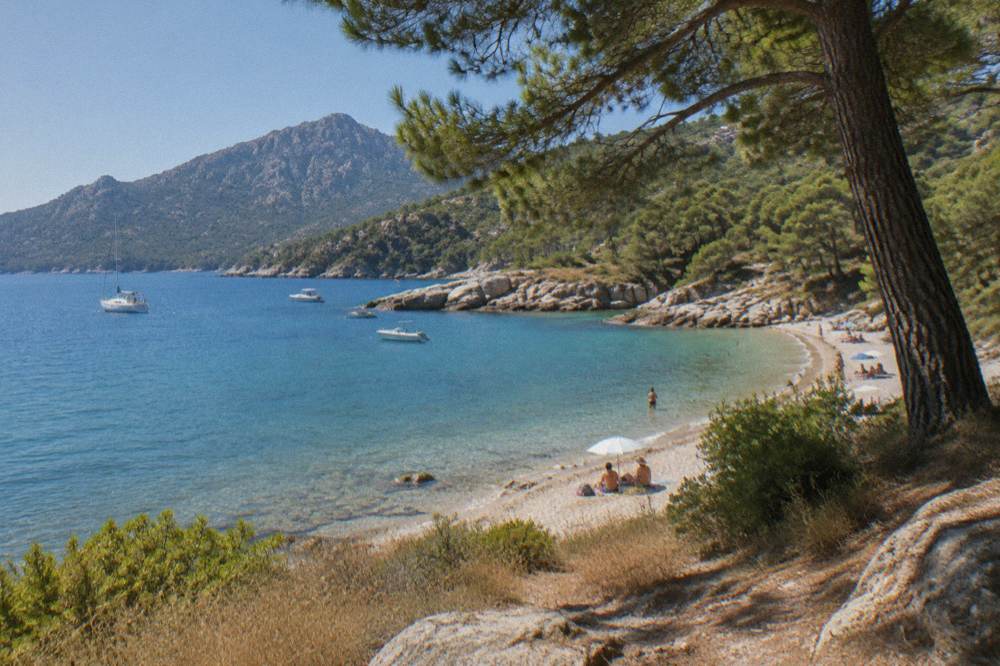
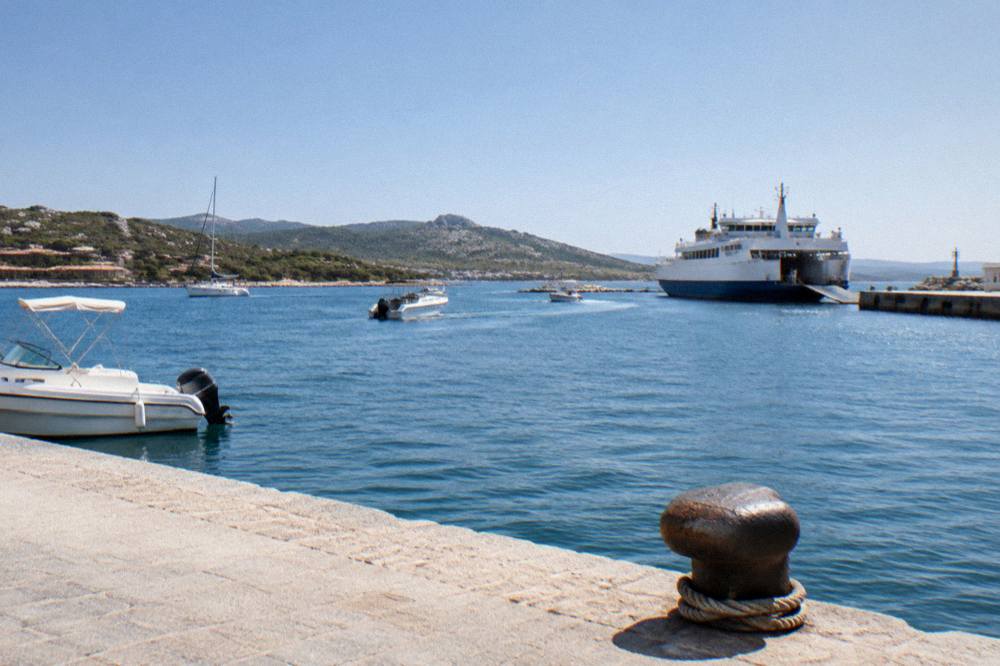
Santa Giulia Beach sits on Corsica's south-east coast, a short way south of Porto-Vecchio, facing a shallow gulf of the Tyrrhenian Sea. This guide covers what the sources say about the beach, the water activities that leave nearby, the weather by month, the costs of the area's sights, and the day trips that pair well with it.
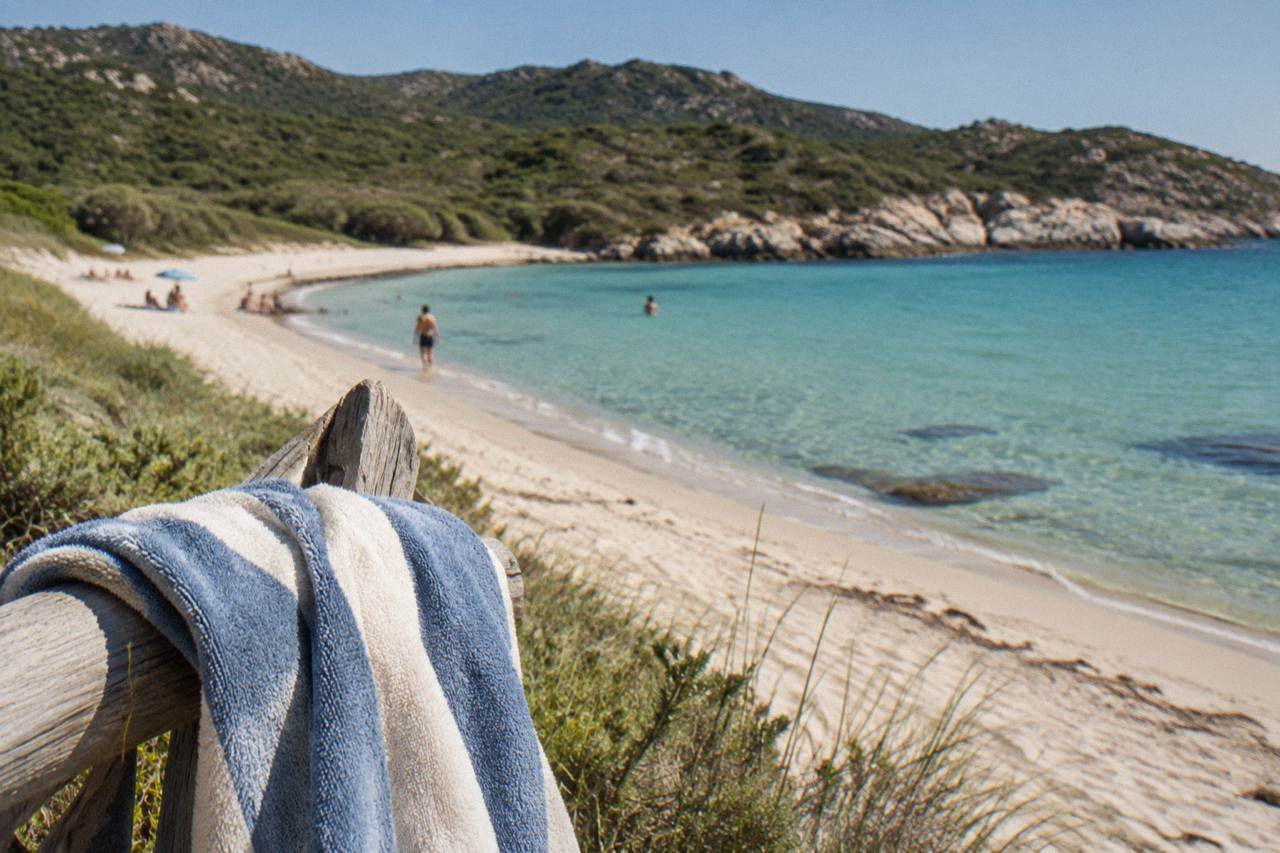
Santa Giulia Beach is a coastal spot near Porto-Vecchio in Corse-du-Sud, southern Corsica. It is one of several named beaches around the gulf, and the area's paid activities include boat trips, catamaran cruises and beginner scuba diving out of Porto-Vecchio.
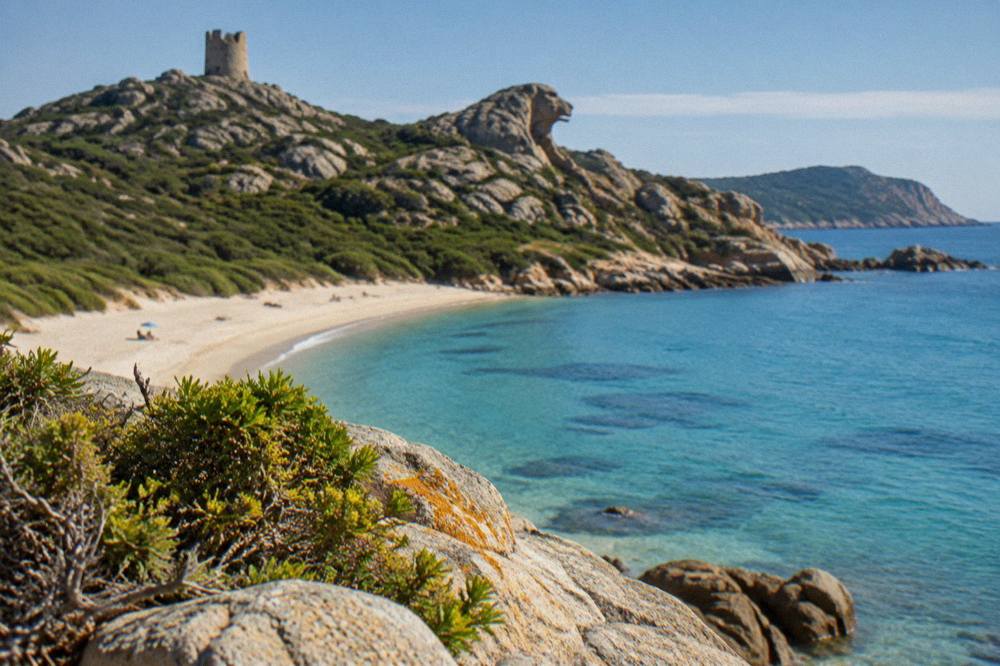
Santa Giulia Beach lies on the south-east coast of Corsica, the French Mediterranean island of 8,722 km2 with more than 1,000 km of coastline, close to Porto-Vecchio in Corse-du-Sud. The beach is one of the named strands of the island's southern shore, and this page reports what is known about it, the water activities that run from the surrounding area, and how to fold it into a wider southern Corsica trip. Corsica is a sea-surrounded island: beaches, coves, boat trips and ports are the core of any visit here, and Santa Giulia sits in the middle of the island's busiest stretch of sand-and-boat coastline.
The island's tourism is built around that coastline. More than 8.5 million passengers, excluding cruise passengers, passed through Corsica's ports and airports in 2025 according to the ORTC and DREAL annual report, and the southern beaches around Porto-Vecchio and Bonifacio are a large part of the draw. Santa Giulia belongs to that southern cluster, alongside Palombaggia and Rondinara, and the area's paid activities, from catamaran cruises to 4x4 tours into the Alta Rocca, all leave within a short drive.
Where Is Santa Giulia Beach In Corsica?
Santa Giulia Beach is on the south-east coast of Corsica, in Corse-du-Sud, near the town of Porto-Vecchio, one of the island's main southern resorts. Corsica itself covers 8,722 km2, is the fourth-largest island in the Mediterranean, and has a mountainous interior that rises to Monte Cinto at 2,706 m; Santa Giulia sits on the coastal fringe, well away from that interior.
Porto-Vecchio is the working base for this stretch of coast. Inforoutes Corse publishes live road conditions and accessibility levels for the main mountain passes, and it is the standing reference for road status anywhere on the island before a long drive.
The southern coast around Santa Giulia is also where several of Corsica's protected marine areas sit. The Bouches de Bonifacio Nature Reserve, managed by the OEC, lies to the south and includes the Îles Lavezzi, and the Piscines Naturelles de Cavu, a sibling attraction on this site, sit in the same southern hill country inland of the coast road. A trip based on Santa Giulia can therefore mix beach days with reserve visits, cliff towns and mountain day trips without ever crossing the whole island.
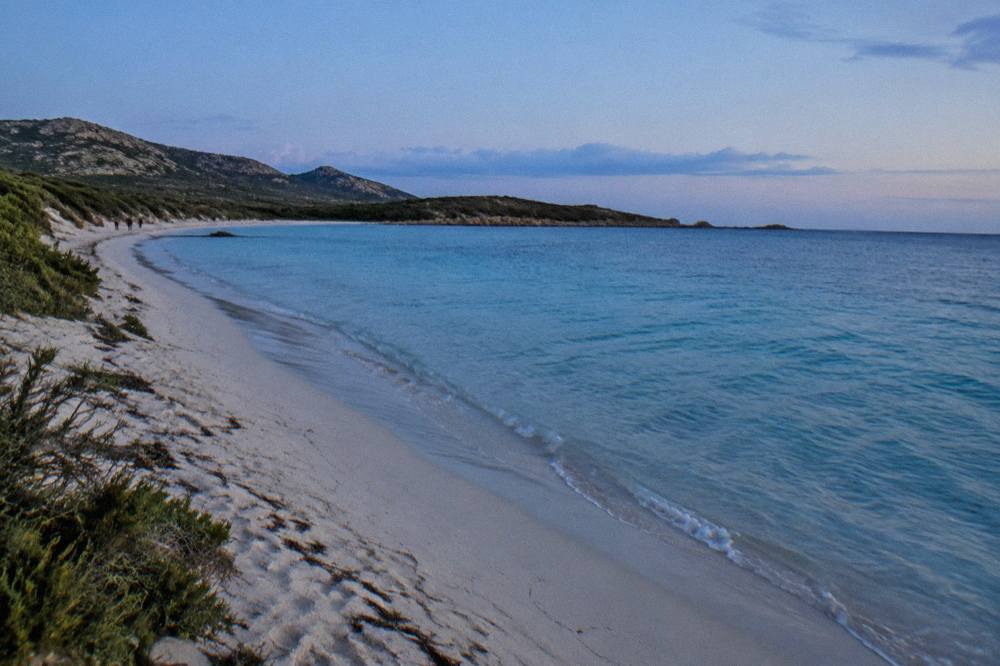
What Can You Do At Santa Giulia Beach And Around Porto-Vecchio?
Around Santa Giulia and Porto-Vecchio the activities are water-based: a catamaran cruise to the Îles Lavezzi, beginner scuba diving in the Cerbicale Islands reserve, a sunset boat tour with Corsican rosé from the Valinco gulf nearby, and 4x4 tours into the Ospedale forest, the Bavella needes and the Cuscionu plateau.
The water activities matter most. A full-day catamaran cruise to the Îles Lavezzi runs from Porto-Vecchio, and a guided snorkelling cruise in the same islands runs from Bonifacio, while beginner scuba diving in the Cerbicale Islands reserve, the small archipelago off the south-east coast, is a Porto-Vecchio product. The island's east and south coasts lend themselves to this kind of day: shallow gulf water near the beaches, and reserve islands within boat range.
Land-based days run into the hills. Two 4x4 tours from Porto-Vecchio cover the Ospedale forest and the Aiguilles de Bavella, and the Cuscionu plateau and the Alta Rocca respectively, and a guided electric mountain-bike ride on the Plateau du Coscione also departs from the Porto-Vecchio area. These are the inland counterpart to a beach holiday at Santa Giulia: the mountains that make Corsica's interior famous are within day-trip range of the south-east coast.
For planning a whole island stay around a southern beach base, the site's overview of things to do in Corsica collects the main categories, and the Restonica Valley and Aiguilles de Bavella pages cover the two most accessible mountain areas from the south-east coast.
Can You Learn To Dive Near Santa Giulia Beach In Corsica?
Yes, diving is one of the activities of the south-east coast: beginner scuba diving in the Cerbicale Islands reserve runs from Porto-Vecchio, a short distance from Santa Giulia, and a first dive with an instructor also runs from Ajaccio on the west coast, while Calvi offers an instructor-led introduction to diving on the north-west coast.
The Porto-Vecchio beginner dive takes place in the Cerbicale Islands, a protected island group off the south-east coast, and the Calvi introduction is a small-group, instructor-led product in the Balagne. For a traveller based at Santa Giulia, the Porto-Vecchio product is the one within practical range. If the trip also takes in the north-west, the Calvi dive pairs naturally with a stay in the Balagne, where the site's Citadelle de Calvi page covers the town's principal monument.
Diving and snorkelling sit inside a wider marine context. Corsica's waters include the Scandola Nature Reserve on the west coast, where visits are by boat only, and the Bouches de Bonifacio reserve in the south. The rules matter to divers and snorkellers: in Scandola, recreational line fishing and spearfishing are prohibited, and no landing is permitted in the integral reserve, so marine activities there run under tighter rules than on the open beaches.
How Does Santa Giulia Compare With Corsica's Other Famous Beaches?
Santa Giulia is one of several named strands on Corsica's south-east and southern coast: Palombaggia and Rondinara sit on the same stretch near Porto-Vecchio and Bonifacio, while Saleccia and Lotu in the Désert des Agriates, Roccapina and Ostriconi in the north-west each belong to a different coastal region.
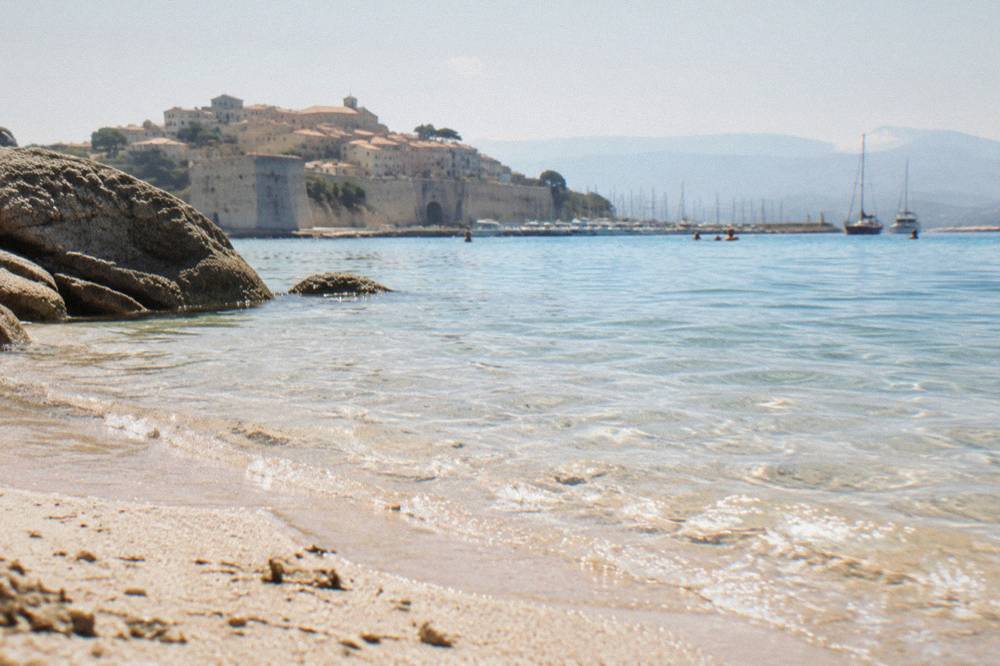
The southern cluster is the easiest beach group to combine. Palombaggia, Santa Giulia and Rondinara all lie on the coastal fringe between Porto-Vecchio and Bonifacio, and the site carries a dedicated answer page on what is the best beach in Corsica for the island-wide question. Bonifacio itself, with its citadel and cliffs, and the Îles Lavezzi offshore, give the far south a mix of beach and cliff scenery no other part of the island matches.
The northern beaches are wilder to reach. Saleccia and Lotu, in the Désert des Agriates, are reached by boat shuttle from Saint-Florent, by 4x4 track from Casta, or on foot, per the visit-corsica listing, and the site's pages on Saleccia Beach and Lotu Beach cover them in detail. Roccapina, south-west of Bonifacio, and Ostriconi, on the Balagne coast, complete the set of named strands this site covers.
| Beach | Region of Corsica | Nearest base |
|---|---|---|
| Santa Giulia | South-east coast, Corse-du-Sud | Porto-Vecchio |
| Palombaggia | South-east coast, Corse-du-Sud | Porto-Vecchio |
| Rondinara | South coast, Corse-du-Sud | Between Porto-Vecchio and Bonifacio |
| Saleccia | Désert des Agriates, Haute-Corse | Saint-Florent |
| Lotu | Désert des Agriates, Haute-Corse | Saint-Florent |
| Roccapina | South-west coast, Corse-du-Sud | West of Bonifacio |
| Ostriconi | Balagne coast, Haute-Corse | Between Calvi and L'Île-Rousse |
Access tells the real story of the difference. The Agriates pair needs a shuttle, a 4x4 track or a walk, while the southern beaches sit on the regular road network of the Porto-Vecchio area, which is why the south-east coast carries the island's densest concentration of named strands and of boat, dive and 4x4 products.
When Is The Weather Right For A Santa Giulia Beach Holiday In Corsica?
Corsica has a hot dry summer and a mild wet winter, with snow only on the high mountains, and the Météo-France station normals for 1991-2020 show July averaging 8.6 mm of rain at Ajaccio and August carrying the highest mean daily high at 29.2 °C, while November carries the most rain at 111.8 mm. No month is named here as the best month: the figures are stated and the choice is the traveller's.
Two tables follow, one for Ajaccio on the west coast and one for Bastia on the north-east coast, the nearest long-record station to the east-coast lowlands. Everything else covered here is indexed on Corsica Travel Guide.
| Month | High °C | Low °C | Rain mm | Sunshine h/day |
|---|---|---|---|---|
| Jan | 14.0 | 4.7 | 54.1 | 4.4 |
| Feb | 14.2 | 4.3 | 48.1 | 5.5 |
| Mar | 16.0 | 5.9 | 50.4 | 6.8 |
| Apr | 18.5 | 8.3 | 53.1 | 7.7 |
| May | 22.1 | 11.8 | 49.8 | 9.3 |
| Jun | 25.9 | 15.4 | 25.9 | 11.1 |
| Month | High °C | Low °C | Rain mm | Sunshine h/day |
|---|---|---|---|---|
| Jul | 28.6 | 17.7 | 8.6 | 12.1 |
| Aug | 29.2 | 18.1 | 15.8 | 11.1 |
| Sep | 26.1 | 15.4 | 57.8 | 8.7 |
| Oct | 22.8 | 12.6 | 85.7 | 6.7 |
| Nov | 18.3 | 9.0 | 111.8 | 4.7 |
| Dec | 15.1 | 5.8 | 73.9 | 4.0 |
The summer figures come with a standing safety rule rather than a warning label: from 15 June to 30 September it is forbidden to light a fire or smoke in forests, maquis and massifs across Corsica, and the UK FCDO notes a high wildfire risk in France from April to October. The fire-risk map for massif access is updated at 18:00 for the next day, and from mid-June to mid-September access to some massifs can be restricted, which matters less on a beach at Santa Giulia than on a planned mountain day trip from it.
Beach supervision follows the same seasonal pattern. Ajaccio's main beaches have seven lifeguard posts from 1 July to the end of August, and Haute-Corse's supervised beaches are staffed by volunteer firefighters from about 1 July to 31 August, per the reported listings.
What Does A Santa Giulia Area Trip Cost?
Local sightseeing costs in southern Corsica run in euros, with Filitosa at EUR 9 for adults and EUR 28 for a family ticket, the Musée de la Corse and citadel at Corte at EUR 5.50 with one ticket covering both, and Palais Fesch in Ajaccio at EUR 10 full price; bookable tours and dives on this page print their own prices from their cards, and no product figure is typed into prose.
The sight prices below come from each venue's own published practical information, and they attach to those venues only. Filitosa, the prehistoric site in the Taravo valley, is reachable from the south-east coast and opens 1 April to 2 November; the Corte museum sits inland on the Ajaccio to Bastia road, and the Ajaccio museums pair with a day in the island's capital.
| Sight | Full price | Reduced or free | Opening pattern |
|---|---|---|---|
| Filitosa prehistoric site | EUR 9 adults | EUR 7 ages 6-17 and disabled, family EUR 28, free under 6 | 1 April to 2 November, 09:00 to sunset |
| Musée de la Corse and Citadelle de Corte | EUR 5.50 | EUR 4 and EUR 3 categories, free under 10 | Daily 10:00-19:00 May to Oct; 10:00-17:00 Nov to Apr, closed Sun and Mon |
| Palais Fesch, Ajaccio | EUR 10 | EUR 6 over 65s, free up to 18 | Daily 09:00-17:00, closed Christmas, New Year and 1 November |
| Maison Bonaparte, Ajaccio | EUR 10 | EUR 8 for non-EU residents 18-25 and large families, free for EU residents under 26 | Closed Mondays |
| Escalier du Roi d'Aragon, Bonifacio | About EUR 5 | EUR 2 for ages 6-11 | Monthly hours vary; closed-toe flat shoes required |
Food costs follow French law rather than local custom: menus must state "prix service compris" with the service percentage included, so an extra tip is optional, as the DGCCRF consumer fiche sets out. The euro is the currency throughout the island.
What Day Trips Pair With Santa Giulia Beach In Corsica?
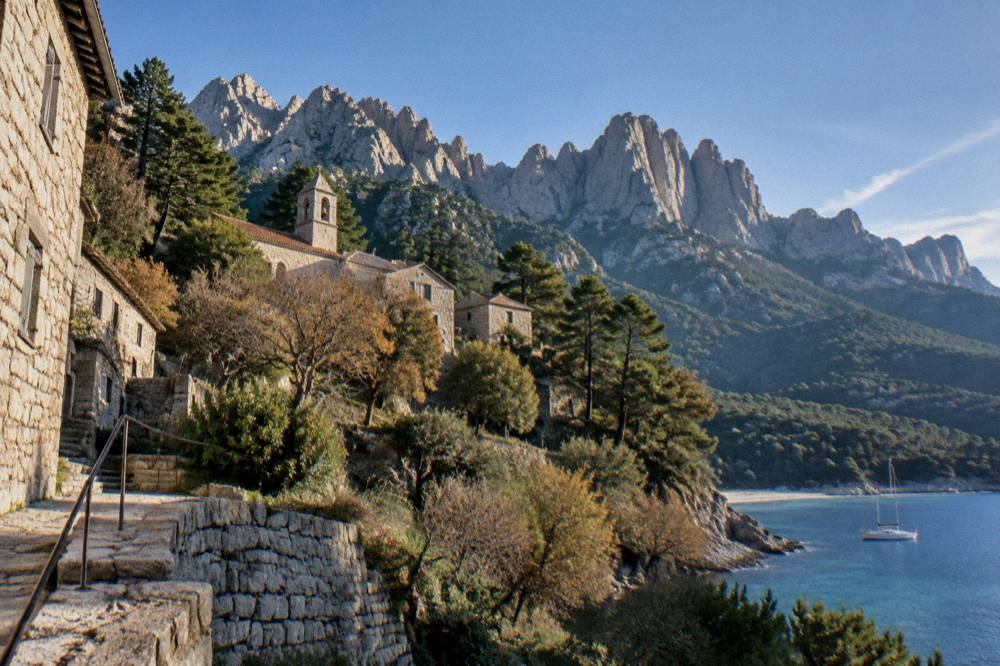
The strongest day trips from the Santa Giulia and Porto-Vecchio area are Bonifacio's citadel, cliffs and the 189-step Escalier du Roi d'Aragon to the south, the Îles Lavezzi by catamaran or boat, the prehistoric site of Filitosa to the west, and the Ospedale forest and Aiguilles de Bavella in the mountains behind the coast.
Bonifacio is the anchor. The town's citadel and cliffs are the subject of the site's Bonifacio citadel and cliffs page, and the Escalier du Roi d'Aragon cuts 189 steps down the cliff with a 180-degree view toward Sardinia, with a diploma given to children at the top, per the Bonifacio reservation listing. From Bonifacio, boats run to the Lavezzi islands inside the Bouches de Bonifacio reserve, and the crossing from Santa Teresa Gallura in Sardinia takes about 50 to 60 minutes, which makes a Sardinia side-trip a realistic part of a far-south stay.
The mountains behind the coast are the counterweight. The 4x4 tours from Porto-Vecchio reach the Ospedale forest and the Bavella needles, and the site's Girolata and Golfe de Porto pages cover the west-coast reserve country for anyone willing to drive across the island. The west-coast trio, Scandola, Girolata and the Calanques de Piana, is a UNESCO World Heritage property inscribed in 1983, and visits to the Scandola reserve are by boat only.
Is Santa Giulia A Good Base For Exploring Southern Corsica?
A base near Santa Giulia puts the whole of Corse-du-Sud's coast within range: Palombaggia and Rondinara on the same shore, Bonifacio and the Îles Lavezzi to the south, Filitosa and Sartène to the west, and the Bavella massif inland, while Corte, the old capital in the interior, is two hours away by road. No occupancy, crowd or popularity figure is at hand, so the case rests on geography alone.
Porto-Vecchio itself is one of the island's principal towns, and the road network of the south-east makes it the natural hub. Everything in the south is closer than everything in the north, and the far south packs beaches, cliffs, reserve islands and a prehistoric site into a compact area.
For travellers who want the same coast with less driving, the alternatives are bases at Palombaggia Beach or Rondinara Beach on the same shore, or Bonifacio itself at the southern tip. The site's pages on Plage de Roccapina and Plage d'Ostriconi cover the wilder strands for readers weighing a quieter coast.
What Safety And Practical Rules Apply Around Santa Giulia Beach?
The standing rules that matter on Corsica's south-east coast are the fire ban from 15 June to 30 September on fires and smoking in forests, maquis and massifs, the emergency numbers 112, 15, 17, 18, 114 and 196 for sea rescue, and mountain rescue via the PGHM at Ajaccio on 04 95 24 24 00; wild camping is banned across the island, including on the GR20, with bivouac only in marked refuge areas.
The fire rule shapes summer days inland from the beach. The UK FCDO notes a high wildfire risk in France from April to October, and the US State Department lists France at Level 2, Exercise Increased Caution, reported on its own advisory page. On the coast, the supervision pattern described above applies in July and August, and at sea the emergency number 196 works with VHF channel 16.
At the water activities level, the reserves carry their own rules. In Scandola, anchoring is authorised in daytime outside the integral reserve and the Gargalu channel, with anchors lifted at sunset, and no landing is permitted in the integral reserve. State and OEC measures from 2026 include voluntary labelling of boat operators and a QR-code tracking trial for pleasure boats, with quotas and licences to be consolidated in a regulatory framework being finalised, for which no year is stated.
| Emergency or rule | Detail |
|---|---|
| General emergency | 112 |
| Medical (SAMU) | 15 |
| Police | 17 |
| Fire | 18 |
| SMS or app for deaf or speech-impaired users | 114 |
| Sea rescue | 196, VHF channel 16 at sea |
| Mountain rescue (PGHM Ajaccio) | 04 95 24 24 00 |
| Fire and smoking ban | 15 June to 30 September, forests, maquis and massifs |
How Do You Get To Santa Giulia Beach And Southern Corsica?
Southern Corsica is reached by air through Figari Sud Corse (FSC), the island's southern airport, or by sea through the ferry ports of Porto-Vecchio, Bonifacio, Propriano and Ajaccio, with operators including Corsica Linea and La Méridionale from Marseille, Corsica Ferries from Toulon and Nice, and Moby from Livorno, Genoa and Santa Teresa Gallura; the crossing from Santa Teresa Gallura to Bonifacio takes about 50 to 60 minutes.
The ferry network defines how a southern beach trip is built. Corsica Linea sails Marseille to Ajaccio, Bastia, Propriano and L'Île-Rousse; La Méridionale sails Marseille to Ajaccio and Marseille to Porto-Vecchio; Moby sails Livorno to Bastia, Genoa to Bastia and Santa Teresa Gallura to Bonifacio, a route Moby and Ichnusa Lines keep for the 2026 to 2027 season after Sardinia found no rival operator; and Corsica Ferries, per its own listing, sails from Toulon and Nice to the main Corsican ports and from Livorno and Savona to Bastia.
The four airports are Ajaccio Napoléon Bonaparte (AJA), Bastia Poretta (BIA), Figari Sud Corse (FSC) and Calvi Sainte-Catherine (CLY). For Santa Giulia, Figari serves the far south directly, and the island's rail network, the Chemins de fer de la Corse, runs Ajaccio to Bastia via Corte, Ponte-Leccia to Calvi, and the Balagne coastal line between Calvi and L'Île-Rousse: useful in the north and centre, but the south-east coast around Santa Giulia is a road and ferry region.
| Route | Operator | Typical crossing |
|---|---|---|
| Marseille to Ajaccio or Bastia | Corsica Linea | About 12-13 hours, mostly overnight |
| Marseille to Porto-Vecchio | La Méridionale | Long overnight sailing |
| Toulon to Ajaccio or Bastia | Corsica Ferries | About 10-13 hours |
| Nice to Bastia | Corsica Ferries | About 7.5-10 hours |
| Livorno to Bastia | Corsica Ferries, Moby | About 4-5 hours |
| Savona to Bastia | Corsica Ferries | About 6.5 hours |
| Santa Teresa Gallura to Bonifacio | Moby, Ichnusa Lines | About 50-60 minutes |
Common Questions About Santa Giulia Beach In Corsica
Where Is Santa Giulia Beach In Corsica?
Santa Giulia Beach is on the south-east coast of Corsica, in Corse-du-Sud, near Porto-Vecchio, one of the island's main southern resort towns.
Can You Dive Near Santa Giulia Beach?
Beginner scuba diving in the Cerbicale Islands reserve runs from Porto-Vecchio, and instructor-led introduction dives also run from Ajaccio and Calvi on other coasts.
Which Beaches Are Near Santa Giulia Beach?
Palombaggia and Rondinara sit on the same south-east and southern coast, while Saleccia and Lotu lie in the Désert des Agriates near Saint-Florent, reached by boat shuttle, 4x4 track from Casta or on foot.
When Is The Fire-Risk Season In Corsica?
From 15 June to 30 September it is forbidden to light a fire or smoke in forests, maquis and massifs, and the massif access map is updated at 18:00 daily for the next day.
What Is The Sea Emergency Number In Corsica?
Sea rescue is 196, used with VHF channel 16 at sea; the general emergency number is 112, and mountain rescue reaches the PGHM at Ajaccio on 04 95 24 24 00.
Can You Camp Near Santa Giulia Beach?
Wild camping is banned across Corsica, and on the GR20 bivouac is allowed only in the marked areas at PNRC refuges with a mandatory online booking. No campsite figure for the Santa Giulia area appears in the facts on hand.
Santa Giulia Beach earns its place in a southern Corsica itinerary by geography: a strand on the island's most beach-dense coast, within reach of Bonifacio's cliffs, the Lavezzi islands, Filitosa's standing stones and the Bavella massif, all reported here from the sources that publish them. Pair it with the site's Porto-Vecchio and Bonifacio pages to build the rest of the trip.