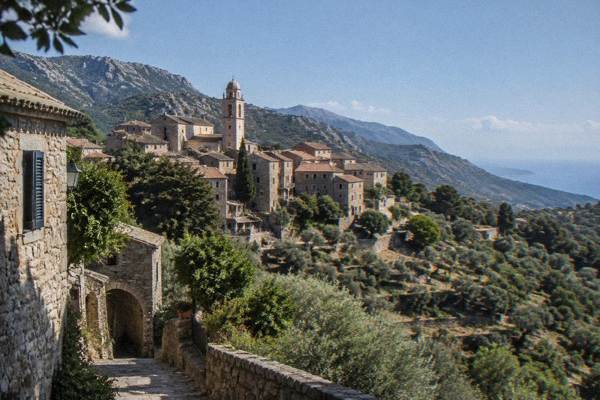
Balagne Day Trip
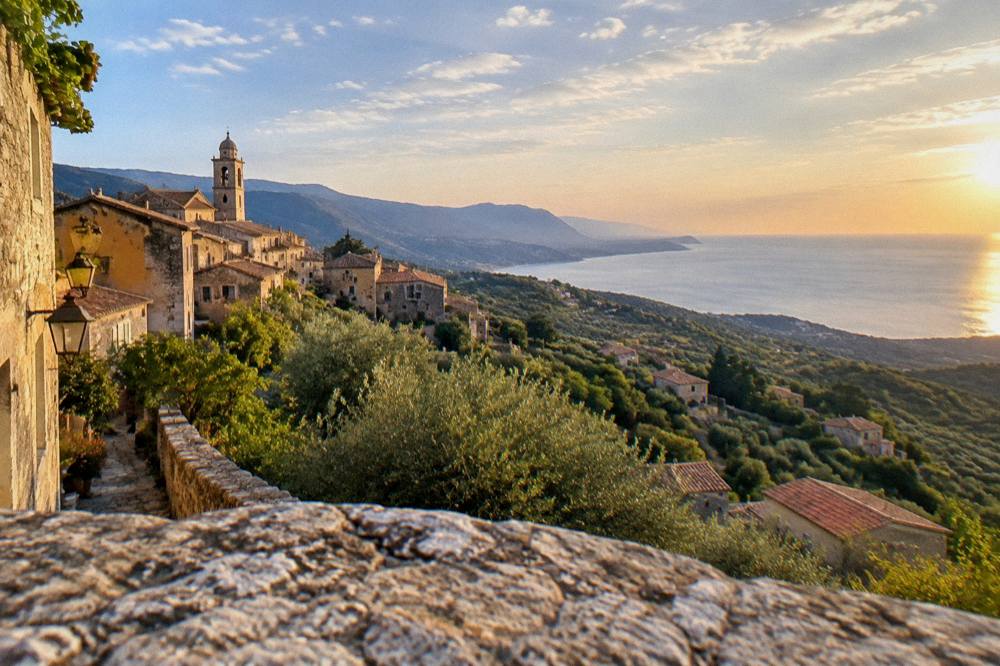
The Balagne is the northwest corner of Corsica, a stretch of coast between Calvi and L'Île-Rousse with a small coastal train, hilltop villages and boat trips out to the Scandola reserve.
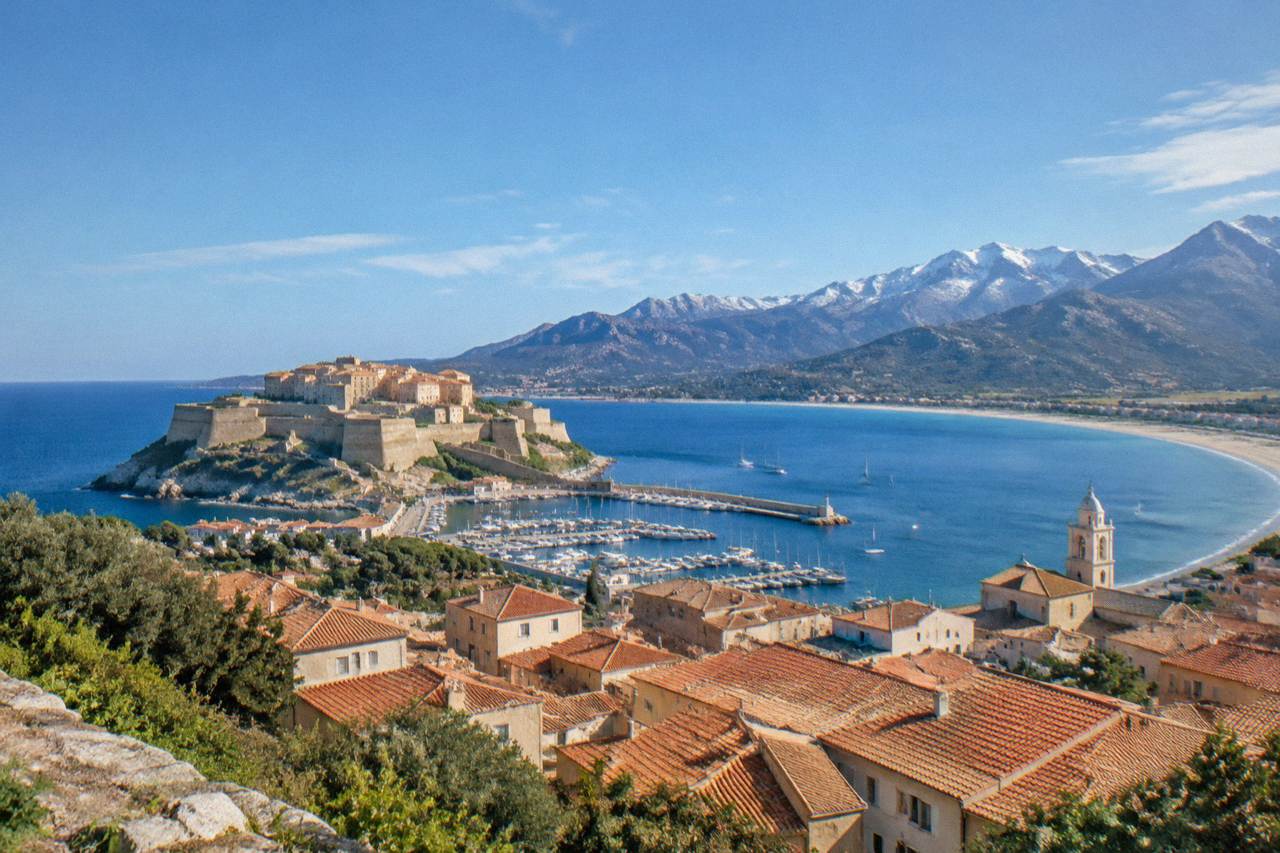
A Balagne day trip in Corsica usually bases itself in Calvi or L'Île-Rousse, rides the coastal train between the two, visits hilltop villages inland and adds a boat trip towards Girolata and Scandola.
The Balagne fills the northwest corner of Corsica, the French Mediterranean island of 8,722 km2 where the mountains drop towards a coastline of more than 1,000 km. Calvi sits at the western end of the region and L'Île-Rousse at the eastern end, about 71 km and about 80 km from Ajaccio respectively as the crow flies, and between them run a small coastal railway, hill roads climbing to stone villages, and boat departures towards the Golfe de Porto and the Scandola Nature Reserve. A single day cannot cover all of it, so this guide sets out what fits in one day, what the trains and roads actually do, and where the guided options go.
What Is A Balagne Day Trip In Corsica?
A Balagne day trip is a one-day loop of the northwest coast of Corsica, the region that runs from Calvi in the west to L'Île-Rousse in the east, with an inland detour to the hilltop villages that sit above the coast. The Chemins de fer de la Corse operate a coastal line between Calvi and L'Île-Rousse, and boats leave Calvi for Girolata and Scandola, which makes the region one of the few parts of Corsica where a day trip works without a car.
What the figures do give is the scale: Calvi is about 71 km from Ajaccio and L'Île-Rousse about 80 km as the crow flies, Bastia about 104 km, and Saint-Florent about 96 km, all straight-line distances that should never be read as driving times. The practical shape of a day is therefore a base, either Calvi or L'Île-Rousse, plus two or three moves: the train along the coast, a village road inland, or a boat out of Calvi.
Two of the three long-distance walking trails of the Parc naturel régional de Corse touch the wider northwest. Mare e Monti Nord runs 121 km over about 10 days to Cargèse with 6,100 m of climbing, and Mare a Mare Nord runs 139 km, or 161 km with its variant, over 8 to 12 days. Neither is a day trip, but their paths cross the same hills that the village roads reach by car, and short sections of them are within range of a day based in Calvi.
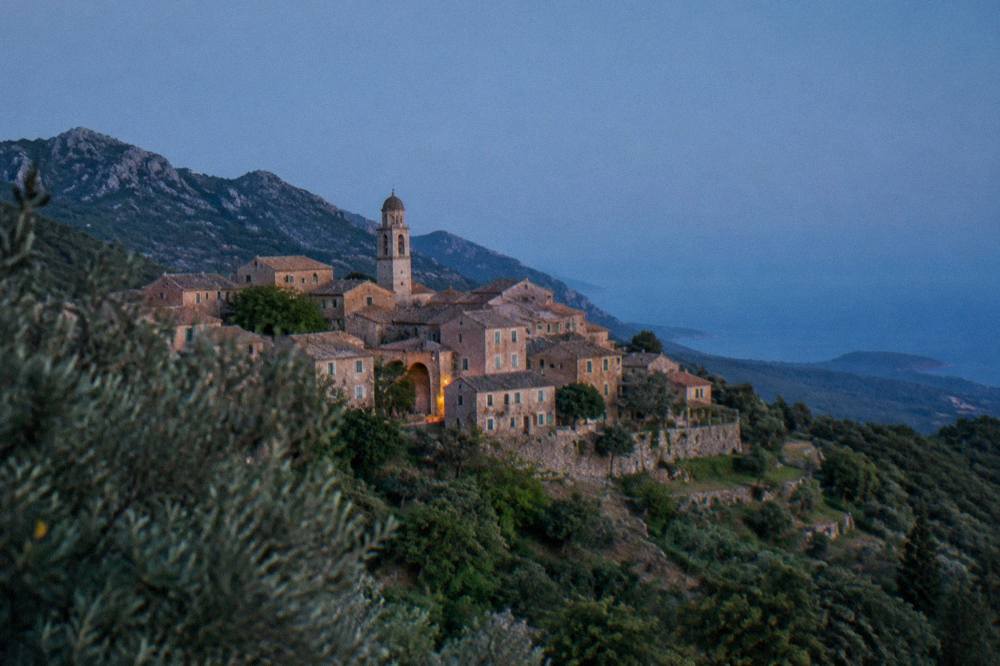
Which Towns Anchor The Balagne In Corsica?
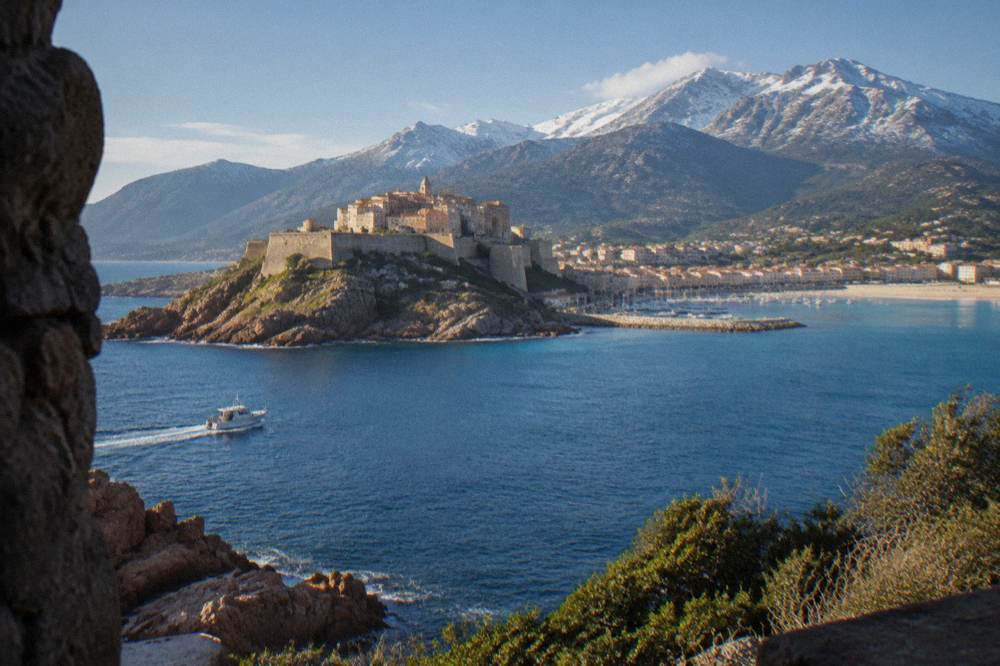
Calvi and L'Île-Rousse anchor the Balagne: Calvi, with its citadel and its boat harbour at the western end, and L'Île-Rousse at the eastern end, the town where the coastal tramway line of the Chemins de fer de la Corse terminates. Both are also ferry ports, and both sit on the Ajaccio ferry-port list, which means the region can be reached by sea as well as by road and rail from the rest of Corsica.
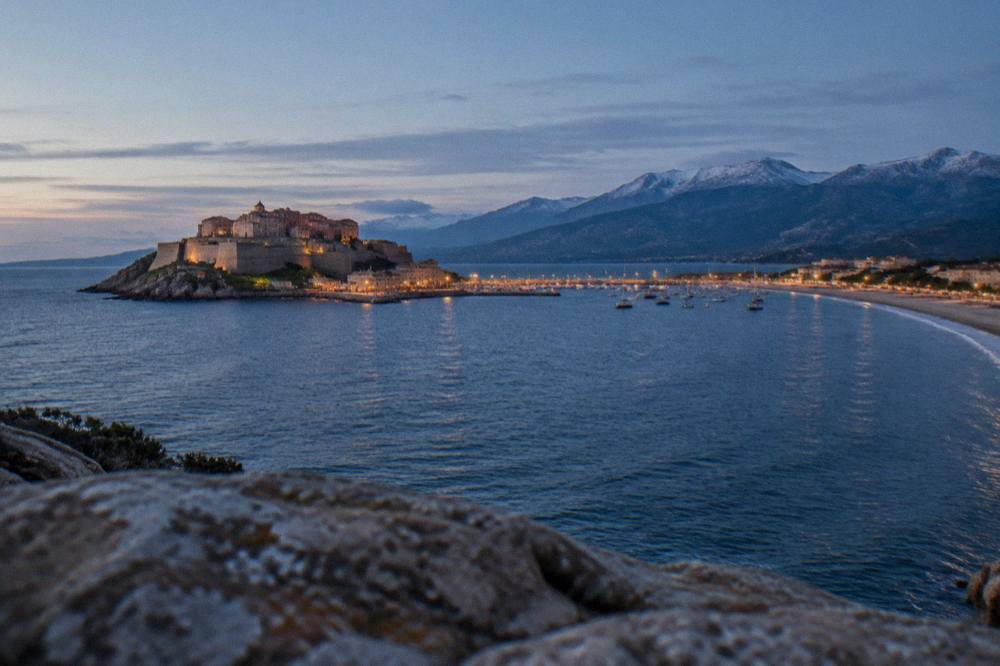
Calvi is the bigger draw for day-trip planning because it is the departure point for the region's best-known boat routes: a four-hour boat tour runs from Calvi to Scandola, and shorter cruises head for the Revellata peninsula at sunset. The citadel above the town publishes no fee or hours, so treat any climb of the ramparts as something to check on arrival. Calvi also has an airport, Calvi Sainte-Catherine (CLY), one of the island's four alongside Ajaccio Napoléon Bonaparte (AJA), Bastia Poretta (BIA) and Figari Sud Corse (FSC).
L'Île-Rousse gives the day its second anchor and its eastern ferry link. The coastal line between the two towns, described in the Chemins de fer de la Corse materials as the Balagne tramway, hugs the shore between Calvi and L'Île-Rousse, and it is the one railway in Corsica built as a seaside connection rather than a cross-island route.
| Balagne anchor | Role on a day trip | Connections |
|---|---|---|
| Calvi | Boat departures to Scandola and Revellata, citadel town | Airport (CLY), ferry port, train to L'Île-Rousse |
| L'Île-Rousse | Eastern anchor, Agriates catamaran departures | Ferry port, train to Calvi |
| Hill villages inland | Half-day or full-day guided village tours from Calvi | Road access, walking trail crossings |
How Do You Get To The Balagne In Corsica?
You reach the Balagne by road, by rail or by sea: the Acula Morta line of the Chemins de fer de la Corse links Calvi with Ponte-Leccia and on to Bastia and Ajaccio via Corte, the coastal tramway connects Calvi and L'Île-Rousse, and ferries serve both Calvi and L'Île-Rousse from mainland France. Calvi also has its own airport, Calvi Sainte-Catherine, for direct arrivals.
By rail, the island network is small but it does reach the Balagne. The Chemins de fer de la Corse run three lines: Ajaccio to Bastia via Corte, Ponte-Leccia to Calvi, and the Balagne coastal line from Calvi to L'Île-Rousse. No journey times between these stations are given, so plan the schedule from the operator's own timetable rather than from any rule of thumb. The tour of the Corsican train is itself a recognised day trip, and a rail-based Balagne day is a realistic variant of it.
By road, Corsica's live conditions matter in the mountains: Inforoutes Corse publishes live road status and accessibility levels for the main passes, and the standing advice for any cross-island drive is to check the map the day before. Those figures do not add up to a Calvi arrival time, so leave the estimate open.
By sea, Corsica Linea sails Marseille to L'Île-Rousse, and Corsica Ferries serves Calvi from Toulon and Nice seasonally.
| Straight-line distance from Ajaccio | About |
|---|---|
| Calvi | 71 km |
| L'Île-Rousse | 80 km |
| Bastia | 104 km |
| Saint-Florent | 96 km |
| Corte | 54 km |
Distances are as the crow flies and are never a driving time on Corsican roads.
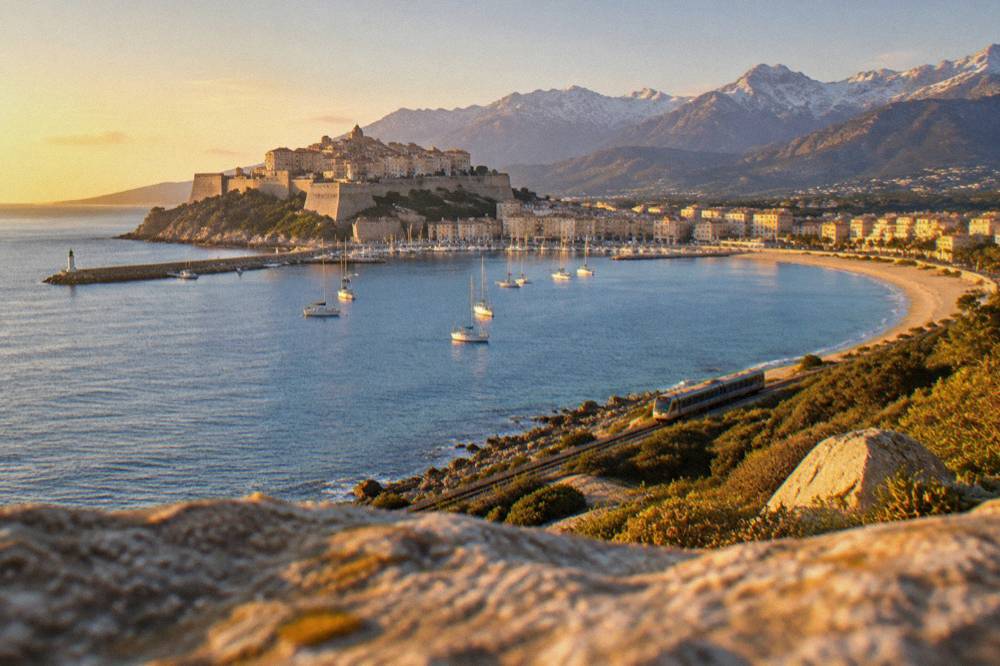
What Can You Do On A Balagne Day Trip From Calvi?
Each one fills a day on its own, so pick one anchor and save the others. The three realistic anchors from Calvi are a four-hour boat tour to the UNESCO-listed Scandola reserve, a small-group tour of authentic old hilltop villages inland, or wine tasting around Calvi and Île-Rousse under the Vin de Corse AOC family.
The boat option is the best documented. A four-hour boat tour runs from Calvi to Scandola, the UNESCO-listed reserve that forms part of the property "Gulf of Porto: Calanche of Piana, Gulf of Girolata, Scandola Reserve", inscribed in 1983 as dossier 258. Scandola was the first nature reserve created in Corsica, by ministerial order of 9 December 1975, and covers 1,000 ha of sea and 919 ha of land with a 70 ha integral reserve. Its land area is closed to the public and, as reported by the reserve's manager, visits are by boat only. A dedicated guide to the Calvi to Girolata and Scandola day trip covers that route in detail.
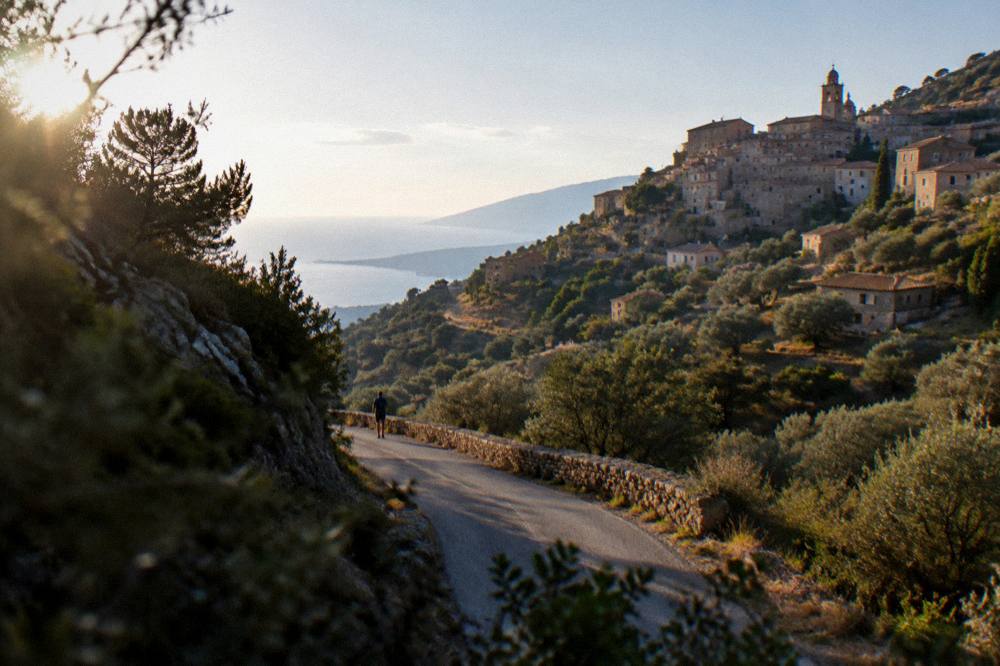
The village option takes the day inland. The tour of authentic old hilltop villages runs from Calvi as a small-group day trip, and a guided option means the mountain roads are handled by a driver who knows them. For independent travellers, the same villages sit on the roads inland from the coast between Calvi and L'Île-Rousse, and the walking trails that cross the hills, including sections of Mare e Monti Nord, give a car-free alternative on foot.
The tasting option links the two anchor towns. Wine tasting products run around Calvi and Île-Rousse, including a small-group circuit and a private tour with picnic, and the island's appellations include the Calvi names listed under the Vin de Corse AOC family. The full food-and-wine picture for the island, including the brocciu AOC of 1983 and the charcuterie AOPs of 2014, sits in the guide to Corsican food and wine tours.
Guided products render their own prices, ratings and durations, so the figures below come itself rather than from estimates.
What Boat Trips Leave The Balagne In Corsica?
Boat trips from the Balagne leave Calvi and L'Île-Rousse: Calvi sends a four-hour tour to Scandola, sunset cruises to the Revellata peninsula and snorkelling trips at the edge of the Revellata marine reserve, while L'Île-Rousse sends catamarans into the Désert des Agriates, including a full-day trip and an aperitif sunset excursion.
The Scandola run is the serious commitment of the group. It leaves Calvi heading west along the coast towards the Golfe de Porto, and the reserve it reaches is managed by the Parc naturel régional de Corse, the park created in 1972 that now covers 4,484 km2 including the Castagniccia and the big valleys running to the sea. Its western sea front runs 80 km from Capu Rossu to Capu Cavallu. Because Scandola's rules include a ban on landing in the integral reserve and daytime-only anchoring outside it, the boat is not just the easiest way in, it is the only way in. More of these guides are collected on Corsica Travel Guide.
The shorter Calvi products stay close to home. Sunset cruises to the Revellata peninsula run about two hours, and snorkelling trips at the edge of the Revellata marine reserve run about two and a half, both small enough to pair with a morning in town. From L'Île-Rousse the catamarans head east instead, into the Désert des Agriates, whose beaches Saleccia and Lotu are reached by boat shuttle from Saint-Florent, by 4x4 track from Casta, or on foot. A dedicated guide covers the Désert des Agriates day trip in full.
| Boat product | Departure point | Direction |
|---|---|---|
| Scandola boat tour | Calvi | West to the Golfe de Porto |
| Sunset cruise to Revellata | Calvi | Revellata peninsula |
| Snorkelling at Revellata marine reserve | Calvi | Revellata peninsula |
| Full-day Agriates catamaran | L'Île-Rousse | East into the Agriates |
| Catamaran excursion with aperitif and sunset | L'Île-Rousse | Agriates coast |
Where Does The Coastal Train Run In The Balagne?
The Balagne coastal train, the tramway line of the Chemins de fer de la Corse, runs between Calvi and L'Île-Rousse along the shore, and it connects at Calvi with the island network's Ponte-Leccia to Calvi line, which in turn links towards Bastia and, via Corte, Ajaccio. The sources give no journey times on any of these lines, so timetables come from the operator.
The three-line network is the whole of Corsica's railway: Ajaccio to Bastia via Corte, Ponte-Leccia to Calvi, and the Balagne coastal line. For a day trip, the coastal line is the piece that matters, because it stitches the two anchor towns together without a car and because its stations sit within reach of the beaches between them. Timetables change by season, and the standing pattern on this site's tour of the Corsican train is to check the operator's published hours for the travel date rather than any fixed schedule.
Rail-based days have a second use: they remove the mountain-road question entirely. If a Balagne day starts from Bastia or Ajaccio, the cross-island line via Corte reaches Ponte-Leccia, where the Calvi branch begins. The Corte leg itself has road times from six towns, from 1 hour from Bastia to 2 hours 45 from Bonifacio and Propriano, which helps size the day before the rail leg even starts.
When Should You Plan A Balagne Day Trip In Corsica?
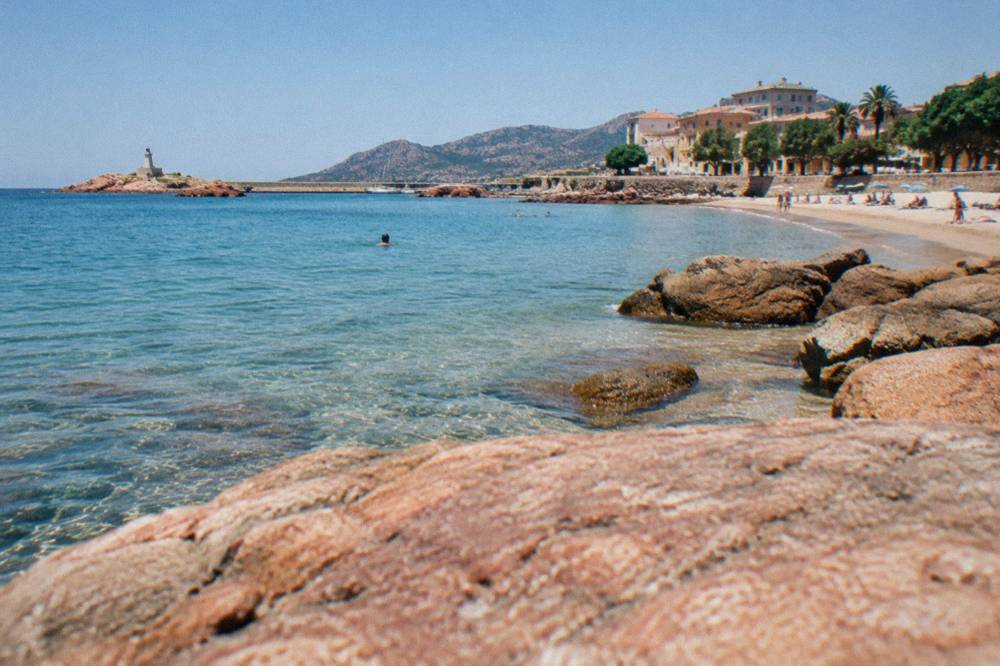
The Météo-France climate normals for Ajaccio, station data from 1991 to 2020, show the pattern the whole island follows: a hot dry summer, with July averaging 8.6 mm of rain and 28.6 °C average daily highs, and a mild wet winter, with November averaging 111.8 mm of rain. The high mountains take the snow, and the sea-facing Balagne sits on the warm, dry side of that split.
The planning numbers matter for a coast-and-villages day more than they might first appear. Summer boat trips run in the season when rain is at its lowest in the table, July at 8.6 mm and August at 15.8 mm at Ajaccio, but summer is also the fire season: from 15 June to 30 September it is forbidden to light a fire or smoke in forests, maquis and massifs, and the fire-risk map is updated at 18:00 for the next day, with some massifs closed from mid-June to mid-September on high-risk days. A village day inland should check that map the evening before.
| Month | Avg high °C | Avg low °C | Rain mm | Sunshine h/day |
|---|---|---|---|---|
| Jan | 14.0 | 4.7 | 54.1 | 4.4 |
| Mar | 16.0 | 5.9 | 50.4 | 6.8 |
| May | 22.1 | 11.8 | 49.8 | 9.3 |
| Jul | 28.6 | 17.7 | 8.6 | 12.1 |
| Sep | 26.1 | 15.4 | 57.8 | 8.7 |
| Nov | 18.3 | 9.0 | 111.8 | 4.7 |
Figures are Météo-France station normals, 1991-2020, for Ajaccio. No month is named here as best: the choice depends on whether the day is built around a boat, a beach or a village road.
How Much Does A Balagne Day Trip Cost?
A Balagne day trip costs the price of any boat tour from Calvi or L'Île-Rousse, plus optional extras such as sight entry fees of EUR 5.50 at the Musée de la Corse or EUR 10 at Maison Bonaparte and Palais Fesch, while restaurant service is included by law, the coastal train fare is not published, and Calvi citadel charges no published fee.
For the day itself, the cost structure is simple. A boat day costs the tour price, which the token blocks on this page print.
Two standing Corsica-wide rules shape the rest of the budget. Tipping is optional by law: menus must state "prix service compris" with the service percentage included, so an extra tip is a choice, not an expectation. And the currency is the euro everywhere, with product prices on this site always rendered rather than converted.
| Cost item on a Balagne day | What the verified sources give |
|---|---|
| Coastal train fare | Not published; check the operator |
| Boat tours from Calvi and L'Île-Rousse | Rendered by the tour blocks on this page |
| Calvi citadel entry | No fee or hours published |
| Island sight prices for comparison | Musée de la Corse EUR 5.50; Maison Bonaparte and Palais Fesch EUR 10 full |
| Restaurant service | Included by law, "prix service compris"; extra tips optional |
Which Walking Trails Cross The Balagne Region Of Corsica?
Two of the Parc naturel régional de Corse's long trails cross the wider northwest: Mare e Monti Nord, 121 km over about 10 days to Cargèse with 6,100 m of climbing, and Mare a Mare Nord, 139 km, or 161 km with its variant, over 8 to 12 days with 5,900 m of climbing. Neither is a day trip, but day walks on their lower sections fit a Balagne base.
The trail table for the whole island is worth knowing even on a coast-focused day, because it explains why the hills behind the villages carry marked paths at all. The PNRC's own brochure gives the figures: Mare e Monti Nord 121 km, Mare a Mare Nord 139 km or 161 km with variant, Mare a Mare Centre 84 km from Ghisonaccia to Porticcio, Mare a Mare Sud 73 km ending in Propriano, and Mare e Monti Sud 66 km, also ending in Propriano. The GR20 itself, 180 km north to south in about 15 stages of 4 to 8.5 hours, crosses the high spine well east of the Balagne, with refuges guarded from 16 May to 4 October and mandatory online booking at EUR 20 for a bunk and EUR 12 for a bivouac pitch in 2026.
For a one-day walk out of the Balagne, the standing rule that matters is the bivouac and camping law: wild camping is banned across Corsica with bivouac only in the marked areas at refuges on the GR20. A day walk needs no overnight, but the same rule closes the tempting idea of a sunset camp above the coast.
| PNRC long trail | Length | Days | Climb |
|---|---|---|---|
| Mare e Monti Nord | 121 km | 10 | 6,100 m |
| Mare a Mare Nord | 139 km (161 km with variant) | 8 to 12 | 5,900 m |
| Mare a Mare Centre | 84 km | 6 to 7 | 3,900 m |
| Mare a Mare Sud | 73 km | 5 | 3,200 m |
| Mare e Monti Sud | 66 km | 5 | 2,700 m |
Can You Combine The Balagne With Other Parts Of Corsica?
Yes, the Balagne combines naturally with the Désert des Agriates to its east, with Cap Corse and Saint-Florent further around the north coast, and with the Girolata and Scandola boat routes to its west, but each of those is a separate day trip: the straight-line distances, 96 km to Saint-Florent and 116 km to Cap Corse from Ajaccio, and the slow mountain roads between them, rule out serious same-day pairing.
The honest version of a two-region plan is a base move. Stay in Calvi for the Balagne days, then move to Saint-Florent or Bastia for the Cap Corse day trip or the Agriates beaches, reached by boat shuttle from Saint-Florent, 4x4 track from Casta, or on foot. A wider plan across the whole island is laid out in the Corsica road trip itinerary, and rainy-day alternatives are covered in the guide to Corsica in the rain.
For travellers already committed to the south, the guided day trips from Ajaccio and Porto-Vecchio cover Bonifacio, the Lavezzi islands, Bavella and the Restonica valley, and a full-day Bonifacio sea trip runs out of Ajaccio and Porticcio: Check availability. The Bonifacio and Lavezzi day trip guide and the Bavella day trip guide detail those southern alternatives.
Common Questions About A Balagne Day Trip In Corsica
Can You Do A Balagne Day Trip Without A Car?
Yes. The Chemins de fer de la Corse coastal line runs between Calvi and L'Île-Rousse, the cross-island network reaches Calvi via Ponte-Leccia, and guided village and wine tours depart from Calvi, so a car-free day is realistic with one of those anchors.
How Far Is The Balagne From Ajaccio?
Calvi is about 71 km from Ajaccio and L'Île-Rousse about 80 km as the crow flies. Those are straight-line distances, not driving times, and Corsican mountain roads are slow.
Can You Visit Scandola From The Balagne?
Yes. A boat tour runs from Calvi to Scandola. The reserve's land area is closed to the public and visits are by boat only, with no landing in the integral reserve.
What Is The Balagne Tramway?
It is the coastal railway line of the Chemins de fer de la Corse between Calvi and L'Île-Rousse, one of the island network's three lines alongside Ajaccio to Bastia via Corte and Ponte-Leccia to Calvi.
When Is The Best Month For A Balagne Day Trip?
No month is named as best. The Météo-France normals for Ajaccio show July averaging 8.6 mm of rain and November 111.8 mm, so the choice depends on the day's anchor: a boat, a beach or a village walk under the fire-season rules that run 15 June to 30 September.
Are The Balagne Villages Hard To Reach?
The village roads climb inland from the coast, and no drive times are given for them. A small-group guided village tour from Calvi, listed, removes the driving question entirely.
A Balagne day trip rewards a single clear anchor: the train for the coast, a guided village tour for the hills, or a Scandola boat for the sea, with the other two saved for the next visit to this northwest corner of Corsica.