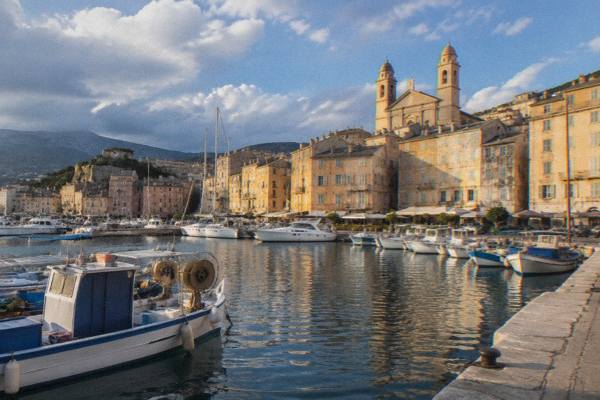
Corsica Train Scenic: Riding The Chemins De Fer De La Corse
The Chemins de fer de la Corse run three reported lines across the island, and the Balagne coastal stretch between Calvi and L'Île-Rousse is the one the scenic reputation rests on.
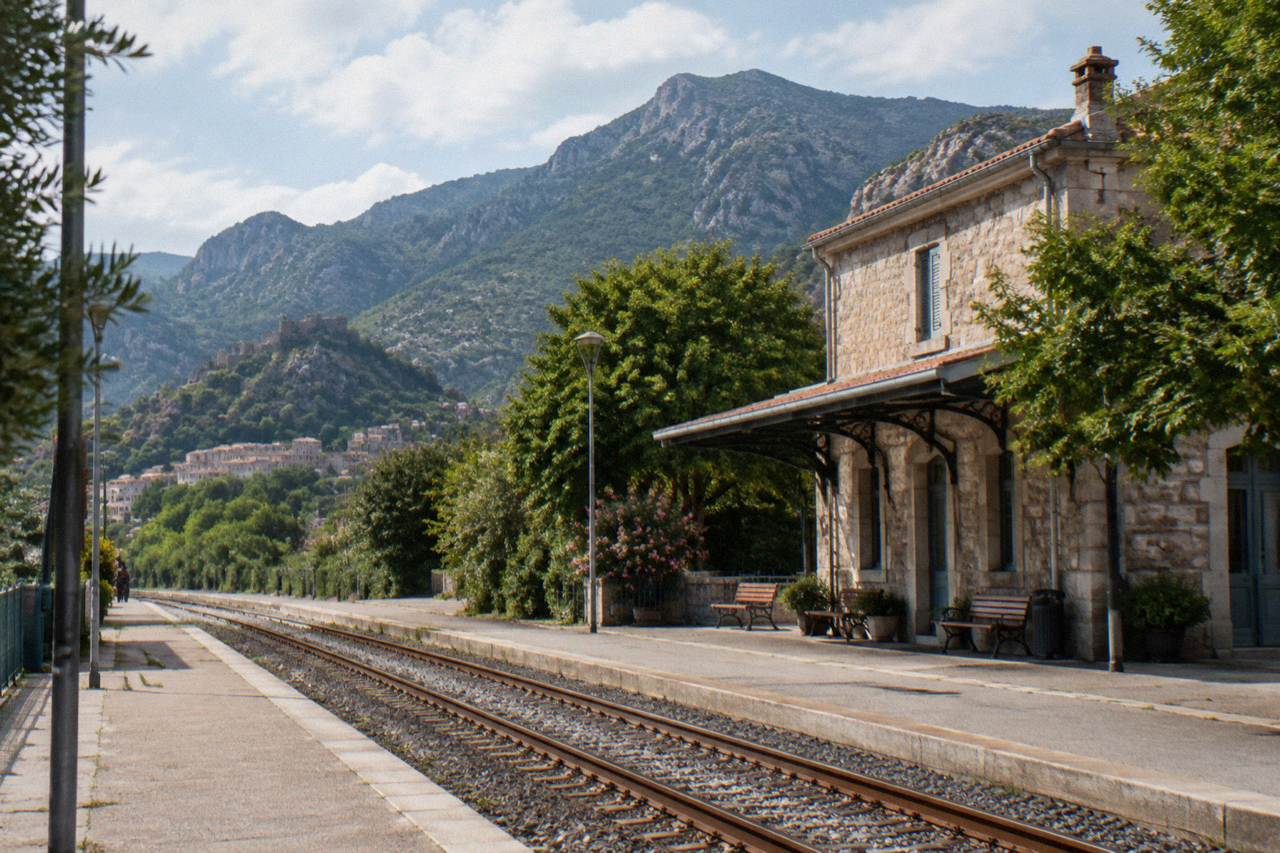
The Corsican train, the Chemins de fer de la Corse, is reported to run an Ajaccio to Bastia line via Corte, a Ponte-Leccia to Calvi line, and the Balagne coastal line between Calvi and L'Île-Rousse, with timetables published on the operator's site.
The island of Corsica, a French Mediterranean island of 8,722 km2 with more than 1,000 km of coastline and a mountainous interior that rises to Monte Cinto at 2,706 m, carries a small railway that threads through exactly that contrast. The Chemins de fer de la Corse are reported to run three lines: Ajaccio to Bastia via Corte, Ponte-Leccia to Calvi, and the Balagne coastal line from Calvi to L'Île-Rousse. This guide lays out what the network covers, which stretch earns the scenic reputation, and how to fold a train day into a wider Corsica trip. For the basic question of whether a railway exists on the island at all, see Is There A Train In Corsica, and for the full island picture start with Corsica Travel Guide.
What Is The Corsica Train Scenic Route?
The scenic heart of the Corsican railway is the Balagne coastal line between Calvi and L'Île-Rousse, reported as one of three lines run by the Chemins de fer de la Corse, alongside the main Ajaccio to Bastia route via Corte and the Ponte-Leccia to Calvi line. The network is narrow-gauge, small and slow by mainland French standards, and it exists to connect the island's towns through country no road follows quite the same way.
That combination of scale and setting is the whole appeal. Corsica is the fourth-largest island in the Mediterranean, with a population of 365,636 as of 1 January 2026 in the provisional INSEE estimate, and its rail network is proportionally tiny. The train is not a way to cover the island quickly. It is a way to watch the interior's mountains and the Balagne's coast roll past a window, at a pace the terrain dictates.
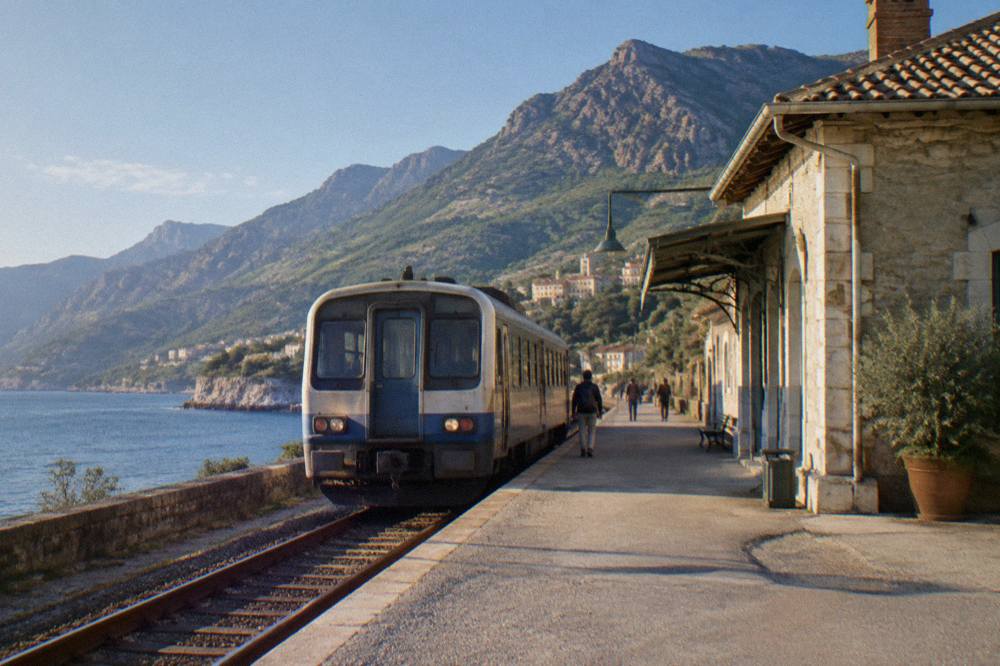
The Balagne stretch is the stretch people ride for the view alone. The region, covered in detail in Calvi And The Balagne, pairs the old port town of Calvi with the laid-back promenade of L'Île-Rousse, and the rail line is reported to hug the coast between them. Riders use it as a scenic transfer, a beach-hopping link, and a sight in its own right.
Where Does The Corsican Railway Network Run?
The Chemins de fer de la Corse are reported to operate three lines: the Ajaccio to Bastia line via Corte, the Ponte-Leccia to Calvi line, and the Balagne coastal line from Calvi to L'Île-Rousse. Together they connect the capital to the second town through the island's old capital at Corte, and they reach into the Balagne on the northwest coast, one of the island's main holiday regions.
The reported network in table form:
| Line | Route reported | Region crossed |
|---|---|---|
| Main line | Ajaccio to Bastia via Corte | West coast capital, interior mountains, east coast port |
| Balagne branch | Ponte-Leccia to Calvi | Interior to the northwest coast |
| Balagne coastal line | Calvi to L'Île-Rousse | The Balagne seaboard |
Corte sits inland at the geographic centre of the island and is the junction where the mountain interior meets the rail network. The Musée de la Corse's own practical page gives road times to Corte of 1 hour from Bastia, 1 hour 30 from Ajaccio and Calvi, 2 hours from Porto-Vecchio and 2 hours 45 from Bonifacio and Propriano, which underlines how central the town is. A train-and-Corte day is covered in Restonica And Corte Day Trip.
The island also has four airports: Ajaccio Napoléon Bonaparte (AJA), Bastia Poretta (BIA), Figari Sud Corse (FSC) and Calvi Sainte-Catherine (CLY). Arriving at Calvi or Bastia puts a rail journey within easy reach on the same day.
| Airport | Code | Nearest reported rail access |
|---|---|---|
| Ajaccio Napoléon Bonaparte | AJA | Ajaccio station, main line terminus |
| Bastia Poretta | BIA | Bastia station, main line terminus |
| Figari Sud Corse | FSC | No rail line in the far south |
| Calvi Sainte-Catherine | CLY | Calvi, the Balagne lines' endpoint |
A train day works especially well as one leg of a wider itinerary. The three picks below are guided day trips that pair naturally with a rail base in the Balagne or Corte.
What Can You See From The Train Across Corsica?
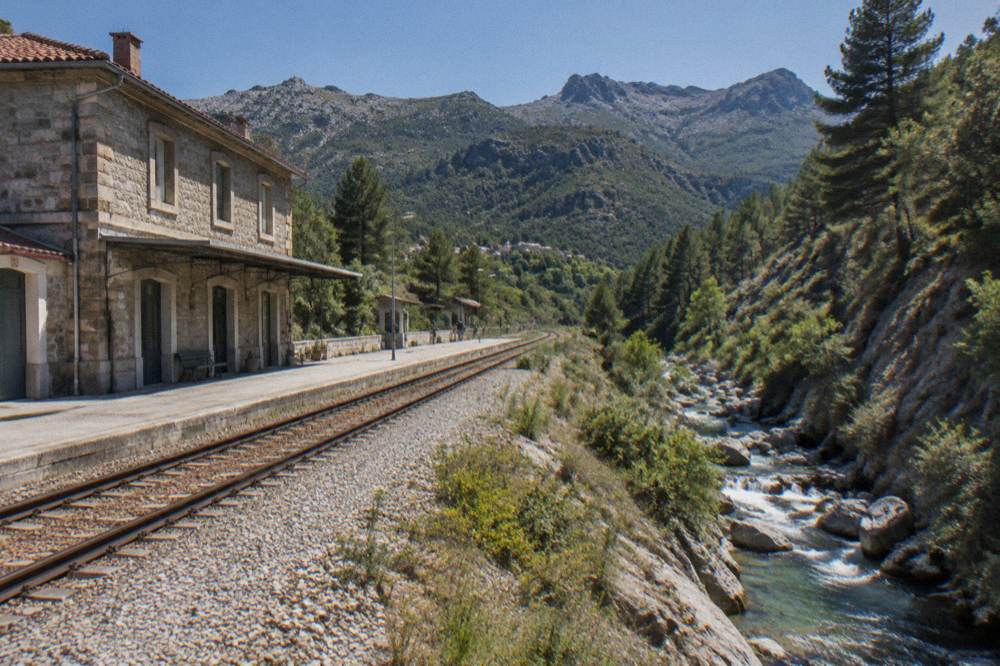
From the window of the Ajaccio to Bastia line the reported scenery moves from the gulf around the capital into the island's mountainous interior around Corte, while the Balagne coastal line between Calvi and L'Île-Rousse is reported to run along the shoreline itself, giving sea views between two of the island's holiday towns. The interior stretch and the coastal stretch are two very different rides.
The interior leg passes through the Parc naturel régional de Corse, created in 1972 and now covering 4,484 km2 including the Castagniccia and the big valleys that run to the sea, according to the territorial authority's environment documents. The park's western sea front runs 80 km from Capu Rossu to Capu Cavallu. The railway's mountain sections sit inside this terrain of gorges and chestnut country.
The coastal leg is the advertised pleasure ride. The line between Calvi and L'Île-Rousse is reported to trace the Balagne shore, and the region's beaches, including Plage de l'Ostriconi further along the coast, are among the island's draws.
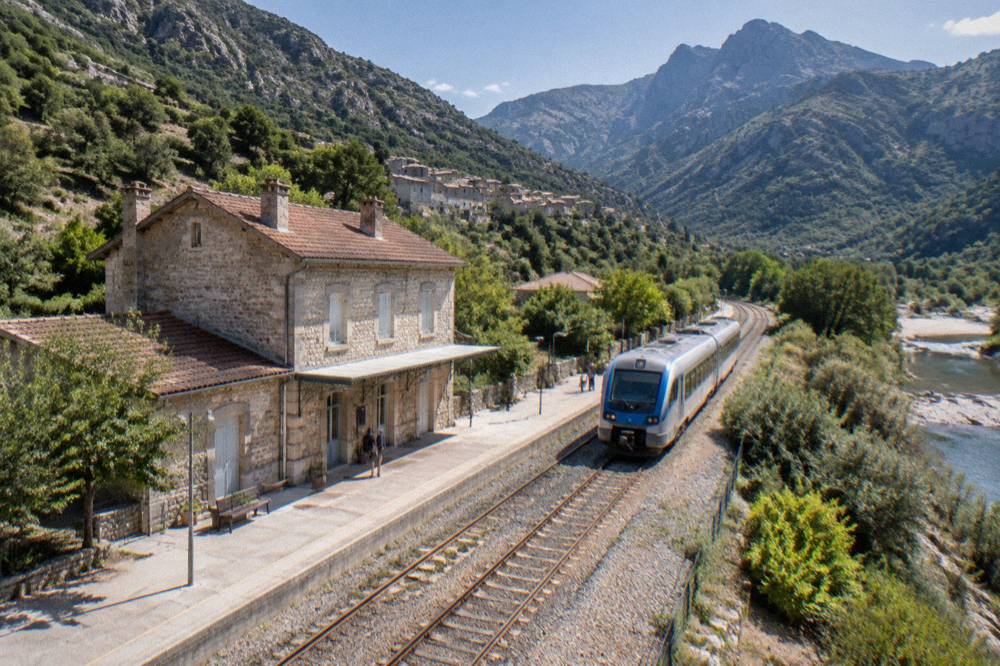
Do not plan the railway as an island-wide sightseeing tool. There is no rail line to Bonifacio, Porto-Vecchio, the Scandola Reserve or the Calanques de Piana; those are boat and road country, covered in Scandola And Girolata Boat Trip and Calanques De Piana Day Trip.
How Do You Plan A Scenic Train Day In The Balagne?
A Balagne train day means basing in Calvi or L'Île-Rousse and riding the reported coastal line between them, with stops in either town; the branch line from Ponte-Leccia to Calvi is the reported connection from the main line. Buy nothing in advance beyond what the operator's own timetable page sells, and check that page for the day's service before you set out, because the network is small and timetables change by season.
A workable shape for one day:
| Time of day | Plan | Notes |
|---|---|---|
| Morning | Ride the coastal line Calvi to L'Île-Rousse | Reported coastal line, short ride |
| Midday | Lunch and the square at L'Île-Rousse | Seafront town, see the L'Île-Rousse guide |
| Afternoon | Return by train, afternoon in Calvi | Citadel views from the port |
| Evening | Sunset from the Calvi waterfront | Pair with a port dinner |
The Balagne is also hillside-village country inland from the shore, and a day combining the train with the villages is covered in Balagne Villages Day Trip. For travellers who want the region's remoter sands, the Désert des Agriates beaches of Saleccia and Lotu are reached by boat shuttle from Saint-Florent, by 4x4 track from Casta or on foot, as reported by the island's tourism site, which is a different geography altogether from the rail line: see Désert Des Agriates Day Trip.
A guided alternative that covers the Agriates from Calvi exists as a product. The Cap Corse and Désert des Agriates half-day trip leaves the driving and the tracks to a guide: Check availability.
Can You Ride The Corsican Train From Ajaccio To Bastia?
Yes, the main reported line of the Chemins de fer de la Corse runs from Ajaccio to Bastia via Corte, linking the island's capital and Napoleon's birthplace, the old capital of Corte in the interior, and Bastia, the island's second town, on one reported route.
What each end of the line offers,:
| Line terminus | Facts |
|---|---|
| Ajaccio | Capital, 76,320 residents (2023 census, published 27 Aug 2026); Napoleon's birthplace |
| Bastia | Second town, 46,867 residents (2023 census), density 2,418 per km2 |
| Corte (via) | Old capital, inland; Musée de la Corse EUR 5.50 full, one ticket covers museum and citadel |
Corte is the natural break point on the ride. The Musée de la Corse in the citadel is open daily 10:00 to 19:00 from 1 May to 31 October, and 10:00 to 17:00 the rest of the year except Sundays, Mondays, holidays and 24 December, closing annually from 31 December to 14 January, with citadel last access one hour before the museum shuts. Full admission is EUR 5.50, EUR 4 reduced and EUR 3 for over-65s and young people, and one ticket covers both the museum and the citadel.
In Ajaccio itself, the line's birthplace-town sights include Maison Bonaparte on Rue Saint-Charles, 200 m from the bus station and ferry terminal and reached by bus 8 from the airport, open every day except Monday at EUR 10 full price, free for EU residents under 26. Palais Fesch charges EUR 10 full and EUR 6 for over-65s, free up to 18, and is listed daily 09:00 to 17:00 for the 16 January to 31 December 2026 period, closed Christmas, New Year and 1 November. A guided walk covering the town's history from Genoa to Napoleon runs as a bookable product.
When Is A Good Season For A Corsica Train Scenic Day?
The Météo-France 1991-2020 station normals for Ajaccio show a hot, dry summer and a mild, wet winter, with August averaging a 29.2 °C daily high and July just 8.6 mm of rain, while November averages 111.8 mm of rain at Ajaccio and 134.3 mm at Bastia; any month outside the rainy stretch can serve a scenic ride, and no single month is named here as the one to pick.
The station figures, averaged over 1991-2020:
| Month | Ajaccio high °C | Ajaccio rain mm | Bastia high °C | Bastia rain mm |
|---|---|---|---|---|
| Jan | 14.0 | 54.1 | 13.8 | 67.3 |
| Mar | 16.0 | 50.4 | 15.8 | 63.7 |
| May | 22.1 | 49.8 | 22.4 | 53.7 |
| Jul | 28.6 | 8.6 | 29.4 | 13.8 |
| Aug | 29.2 | 15.8 | 29.8 | 21.1 |
| Oct | 22.8 | 85.7 | 22.0 | 126.5 |
| Nov | 18.3 | 111.8 | 17.7 | 134.3 |
One seasonal rule matters more than the thermometer for anything involving the interior: from 15 June to 30 September it is forbidden to light a fire or smoke in forests, maquis and massifs, and the fire-risk map is updated at 18:00 each day for the next day, with access to some massifs restricted from mid-June to mid-September. The UK FCDO notes a high wildfire risk in France from April to October. A train ride along the coast sidesteps the massif-access question entirely, which is one of its practical virtues in high summer.
Snow sits only on the high mountains, and the interior line's altitude means the window views change character sharply between seasons.
How Does The Train Compare To Driving In Corsica?
Driving reaches every corner of Corsica, while the reported railway covers only its three lines, so the train trades coverage for relaxation; Inforoutes Corse is reported to publish live road conditions and accessibility levels for the main mountain passes, which matters because Corsican mountain roads are narrow and a storm or landslide can close a pass. The train wins where a line happens to run, and the car wins everywhere else.
The honest split:
| Factor | Corsican train | Car in Corsica |
|---|---|---|
| Network reach | Three reported lines only | Whole island |
| Balagne coast | Reported coastal line, no driving | Coastal road, parking needed |
| Interior mountains | Main line via Corte | Every pass and gorge |
| Live conditions | Operator timetables | Inforoutes Corse road status |
| Day trips to reserves | No rail access to Scandola or Piana | Road to Porto and the gorges |
For the sights the railway cannot touch, boats and roads take over. Scandola's land area is closed to the public and visits are by boat only, as the reserve's rules state, with daytime anchoring allowed outside the integral reserve and anchors up at sunset. The reserve, created by ministerial order on 9 December 1975 with 919 ha of land, 1,000 ha of sea and a 70 ha integral reserve, sits inside the UNESCO property "Gulf of Porto: Calanche of Piana, Gulf of Girolata, Scandola Reserve", inscribed in 1983. A small-group cruise is the guided way to see it.
What Day Trips Pair Well With A Corsican Train Base?
A Balagne or Corte rail base pairs with guided day trips to Cap Corse and the Désert des Agriates from Calvi or Saint-Florent, boat trips to Scandola, Girolata and the Calanques de Piana from Porto, and history walks in Ajaccio, each reachable from a town the reported railway serves or from a port within a short drive of one.
| Base town | Rail access | Pairing day trip |
|---|---|---|
| Calvi | Balagne lines' endpoint | Calvi To Girolata And Scandola Day Trip |
| Saint-Florent | None; road from the Balagne | Cap Corse Day Trip |
| Corte | Main line via town | Restonica And Corte Day Trip |
| Ajaccio | Main line terminus | Sanguinaires Boat Trip From Ajaccio |
The far north works as a pairing too. Cap Corse, the peninsula above Bastia, has its own day-trip guide, and the turtle park at A Cupulatta near Sagone exists as a skip-the-line product for a gentler family day.
What Should You Know Before Riding The Corsican Train?
Before riding the Corsican train, know that the network covers three reported lines: Ajaccio to Bastia via Corte, Ponte-Leccia to Calvi, and Calvi to L'Île-Rousse. In an emergency call 112, or 15 for medical, 17 for police, 18 for fire, and 114 by SMS or app. Because more than 8.5 million passengers passed through the island's ports and airports in 2025, book anything guided early in summer.
A short pre-ride checklist:
- The three reported lines: Ajaccio to Bastia via Corte, Ponte-Leccia to Calvi, and Calvi to L'Île-Rousse.
- In an emergency anywhere on the island call 112, with 15 for medical, 17 for police, 18 for fire, 114 by SMS or app, and 196 for sea rescue; mountain rescue is PGHM Ajaccio on 04 95 24 24 00.
- Menus in restaurants state "prix service compris", so a tip beyond the included service is optional, per the French consumer authority.
- More than 8.5 million passengers, excluding cruise passengers, passed through Corsica's ports and airports in 2025 according to the ORTC and DREAL annual report, so book anything guided early in summer.
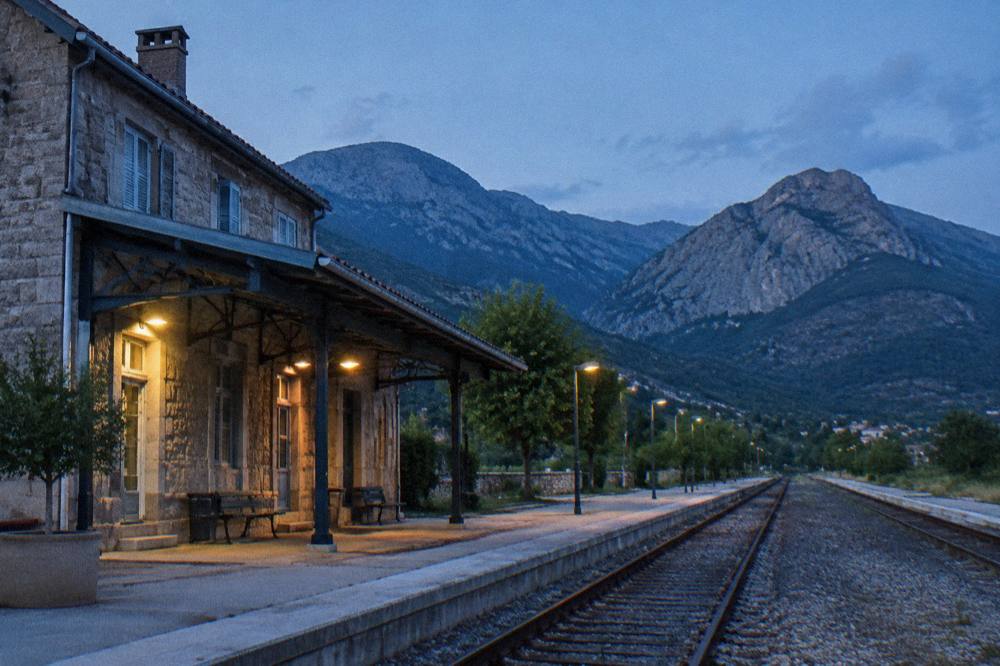
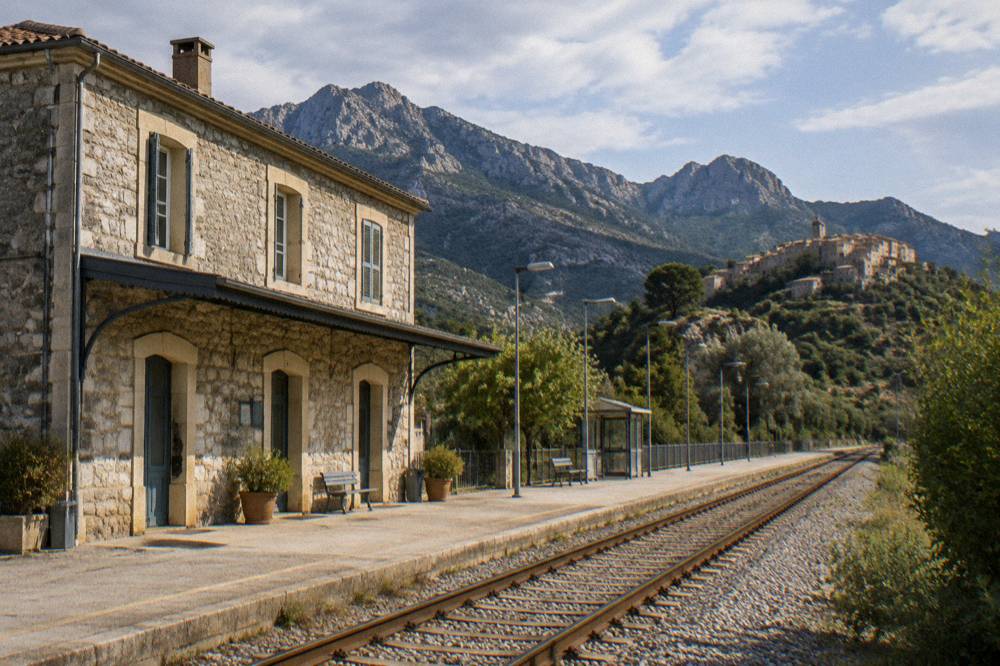
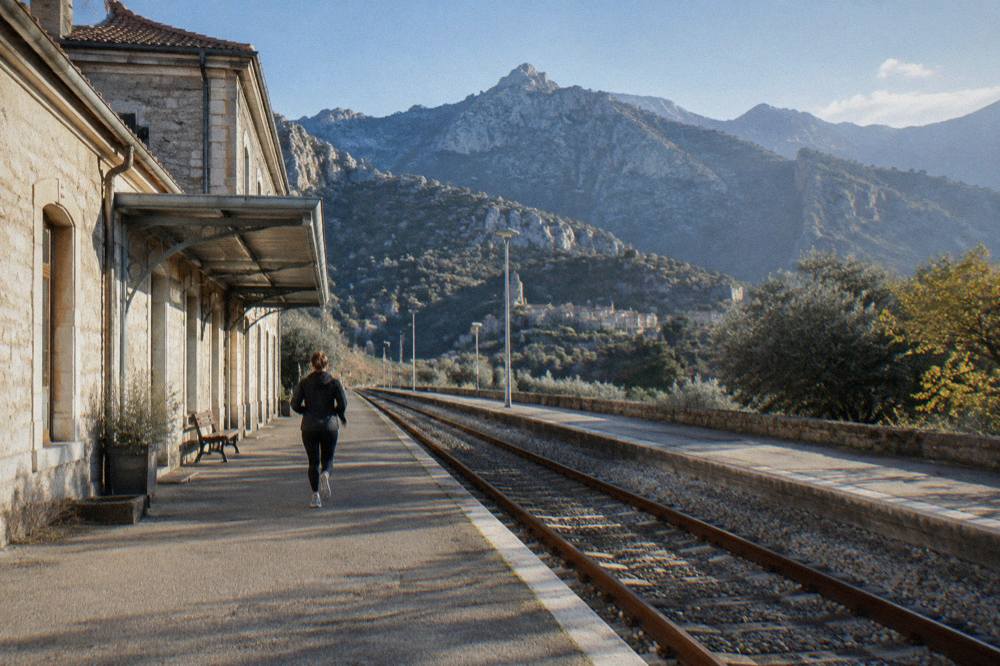
The train also earns its place in a photography itinerary. Coastal frames between Calvi and L'Île-Rousse, mountain cuts above Corte and station scenes in the Balagne all sit on the reported network, and the island's wider photo spots are covered in the Corsica Photography guide.
Common Questions About The Corsican Train
Is There A Train In Corsica?
Yes. The Chemins de fer de la Corse are reported to run three lines: Ajaccio to Bastia via Corte, Ponte-Leccia to Calvi, and the Balagne coastal line from Calvi to L'Île-Rousse.
Which Is The Scenic Corsica Train Route?
The Balagne coastal line between Calvi and L'Île-Rousse is the reported coastal ride, while the main line's interior section around Corte crosses the island's mountainous centre inside the Parc naturel régional de Corse.
How Much Does The Corsican Train Cost?
Buy from the operator's own timetable and ticketing page.
Can You Get From Ajaccio Airport To The Train?
Ajaccio Napoléon Bonaparte (AJA) is one of the island's airports; bus 8 links the airport with the town, where Maison Bonaparte on Rue Saint-Charles sits 200 m from the bus station and ferry terminal, near the main line's terminus.
Does The Train Reach Bonifacio Or Scandola?
No reported rail line serves the far south or the Gulf of Porto. Bonifacio is reached by road, and Scandola's land area is closed to the public with visits by boat only.
When Does It Rain Too Much For A Scenic Train Day?
The Météo-France 1991-2020 normals show November averaging 111.8 mm of rain at Ajaccio and 134.3 mm at Bastia, with October also carrying heavy totals, while July averages just 8.6 mm at Ajaccio.
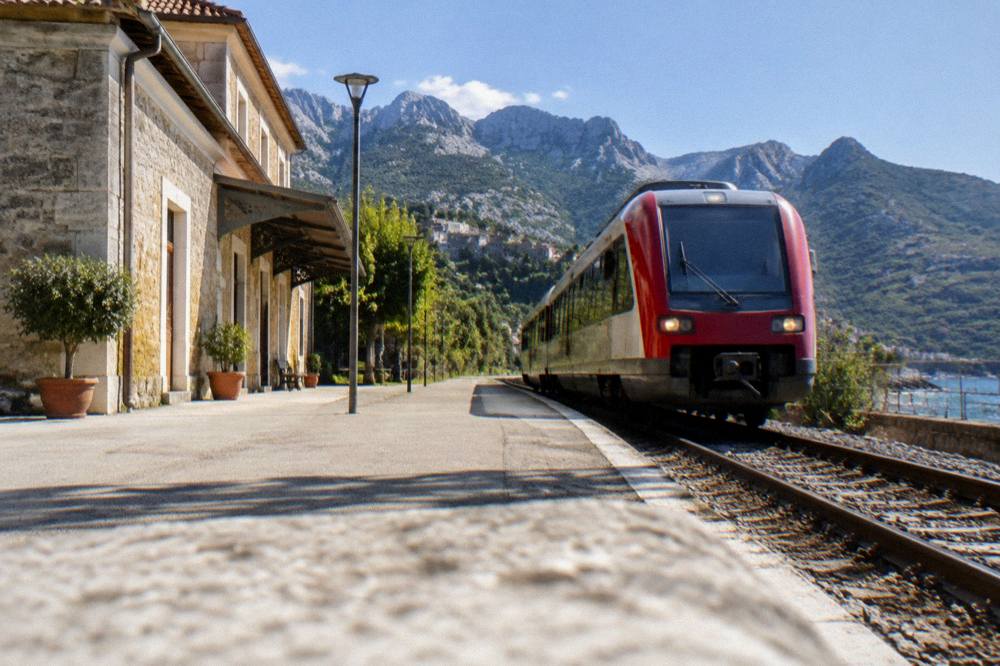
A day on the Corsican train is a day spent letting the island set the pace: sea on one side of the Balagne line, mountains on the other of the main line through Corte, and timetables that reward a traveller who checks them the night before and leaves room for the view. Pair the ride with a boat trip to Scandola or a guided loop through the Agriates and the railway becomes one thread of a much wider island trip.