Corsica Rainy Day
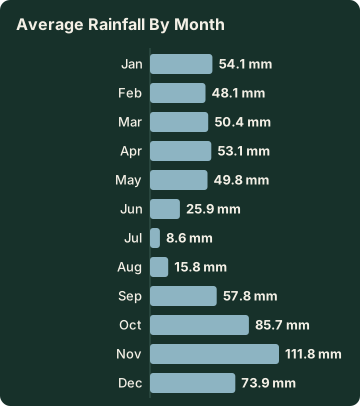
Rain reaches Corsica mostly from October to November, when Ajaccio averages 85.7 mm and 111.8 mm of rain per month and Bastia 126.5 mm and 134.3 mm, and the island still has museums, tastings, train rides and sheltered towns that fill a wet day well.
On a rainy day in Corsica, head indoors: Maison Bonaparte and Palais Fesch in Ajaccio, the Musée de la Corse in Corte's citadel and the Musée de Bastia all keep regular hours, while wine tastings, food tours and the Chemins de fer de la Corse trains keep running when the beaches empty.
Rain in Corsica is mostly a shoulder-season event: the Météo-France 1991-2020 station normals for Ajaccio show November averaging 111.8 mm of rain and October 85.7 mm, while July averages just 8.6 mm. A wet day on the island rarely means a lost day. The towns hold four real museums, the Chemins de fer de la Corse trains link Ajaccio to Bastia via Corte, wine and charcuterie tastings sit under roofs, and a grey sea can still be the setting for a boat trip along cliffs that look heavier and closer in low cloud. This guide sets out what stays open, what costs what, and how to read the rain month by month, with every figure drawn from primary sources. Coverage runs the length of the island, from Ajaccio to Bastia and the interior around Corte.
What Can You Actually Do In Corsica On A Rainy Day?
A rainy day in Corsica still leaves museums, tastings, train journeys and sheltered old towns on the table: Maison Bonaparte and Palais Fesch in Ajaccio, the Musée de la Corse inside Corte's citadel, the Musée de Bastia, plus wine-cellars, food tours and the Chemins de fer de la Corse lines between Ajaccio, Corte, Bastia, Calvi and L'Île-Rousse. The rain in Corsica concentrates in October and November, so summer visitors meet it rarely.
The pattern matters as much as the plan. Météo-France station data for 1991-2020 puts the Ajaccio November mean at 111.8 mm of rain against 8.6 mm in July, and the Bastia station records 134.3 mm in November. Between those poles the island shifts quickly: a morning of rain on the coast can sit under clear sky one massif over, and the mountainous interior makes its own weather. Snow falls on the high mountains in winter, not on the coast, so a wet January day in Ajaccio at a mean maximum of 14.0 °C is a different proposition from the same week at altitude.
Practical consequence: a rainy day rewards the towns. Corte is inland and sits at the junction of the island's main road and rail lines, with a citadel museum covered by one ticket. Ajaccio holds two national collections within a short walk of each other on Rue Saint-Charles and the old town. Bastia keeps its museum in the Palais des Gouverneurs beside the old port. Each of these works without a car for at least part of the visit.
For trip framing, the pages on Corsica in 3 days and Corsica in one week show where a buffer day fits, and a wet-weather fallback belongs in any family plan, as covered in Corsica with kids.
Which Corsican Museums Can You Visit When It Rains?
Corsica has four reliable rainy-day museums: Maison Bonaparte in Ajaccio at EUR 10 full price, closed Mondays; Palais Fesch in Ajaccio at EUR 10 full, open daily 09:00 to 17:00; the Musée de la Corse in Corte's citadel at EUR 5.50 full, with one ticket covering museum and citadel; and the Musée de Bastia in the Palais des Gouverneurs, open 10:00 to 18:30 in high season.
Maison Bonaparte, the national museum on Rue Saint-Charles in Ajaccio, is open every day except Monday. From 1 October to 31 March it runs 10:30 to 12:30 and 13:15 to 16:30; from 1 April to 30 June, 10:00 to 12:30 and 13:15 to 17:30; and from 1 July to 30 September, 10:00 to 17:30 with last entry 30 minutes before closing. Admission is EUR 10 full price, EUR 8 for non-EU residents aged 18 to 25 and large families, and free for EU residents under 26. The museum's own practical-information page notes it sits 200 m from the bus station and ferry terminal, with bus 8 from the airport.
Palais Fesch, also in Ajaccio, is listed by the Ajaccio tourist office at EUR 10 full price, EUR 6 for over-65s and free up to 18, open daily 09:00 to 17:00 for the 16 January to 31 December 2026 period and closed on Christmas, New Year and 1 November. In Corte, the Musée de la Corse and the citadel share a ticket: EUR 5.50 full, EUR 4 reduced without a temporary show, EUR 3 for over-65s and young people, free for under-10s and Corsica residents under 25. High-season hours run daily 10:00 to 19:00 from 1 May to 31 October, and the low season opens 10:00 to 17:00 except Sundays, Mondays, holidays and 24 December, with an annual closure from 31 December to 14 January.
| Museum | Town | Full price | Hours (main season) | Closed |
|---|---|---|---|---|
| Maison Bonaparte | Ajaccio | EUR 10 | 1 Jul to 30 Sep, 10:00 to 17:30 | Mondays |
| Palais Fesch | Ajaccio | EUR 10 | Daily 09:00 to 17:00 (2026 period) | Christmas, New Year, 1 Nov |
| Musée de la Corse and citadel | Corte | EUR 5.50 | 1 May to 31 Oct, daily 10:00 to 19:00 | 1 May; 31 Dec to 14 Jan |
| Musée de Bastia | Bastia | On site | High season 10:00 to 18:30 | Sun/Mon in low season |
The Bastia museum, in the Palais des Gouverneurs, keeps high-season hours of 10:00 to 18:30 and low-season hours of 09:00 to 12:00 and 14:00 to 17:00, closed Sundays and Mondays. Filitosa, the prehistoric site at Sollacaro, is partly outdoor, so it suits a showery day more than a downpour: it opens 1 April to 2 November, 09:00 to sunset, with the museum 09:00 to 19:00, and charges EUR 9 for adults, EUR 7 reduced and EUR 28 for a family of two adults and two children aged 6 to 17.
Can You Still Take A Boat Tour On A Rainy Day In Corsica?
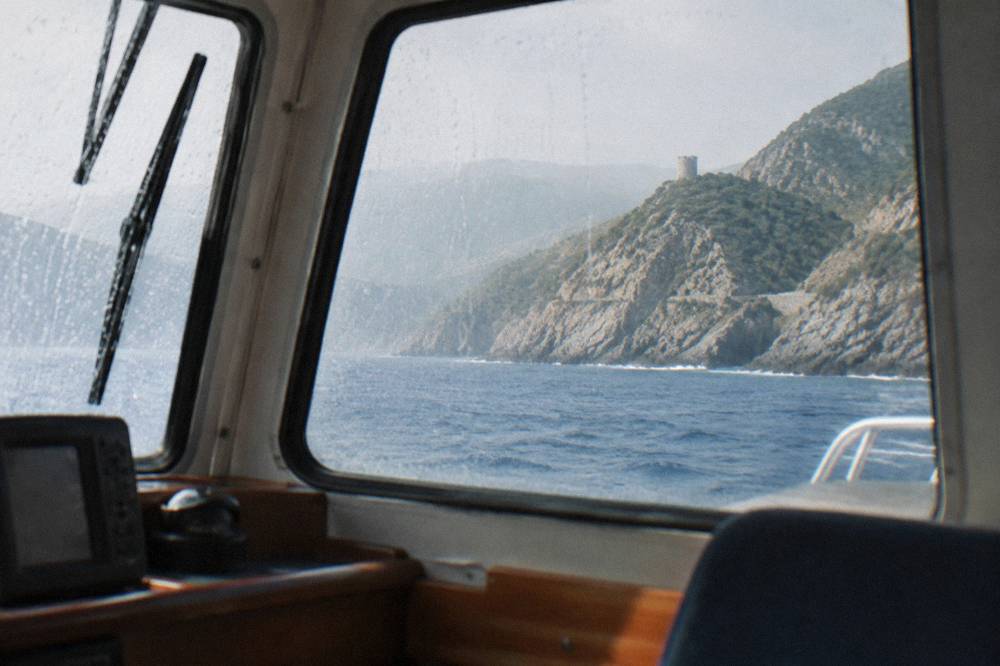
Boat tours in Corsica run rain or shine unless the operator cancels for sea state, and rain often changes the scenery rather than stopping the trip: the Calanques de Piana and the Scandola Reserve are visited by boat only, so a grey, calm day can still carry a full cruise, while wind and swell, not rain, decide cancellations. Bookings on the big routes stay available year-round through the operators' live listings.
The Scandola Nature Reserve, part of the UNESCO property "Gulf of Porto: Calanche of Piana, Gulf of Girolata, Scandola Reserve" inscribed in 1983, is closed to walkers: the land area is off-limits and visits are by boat only, as the reserve's rules state. That makes a boat the only way in, whatever the sky is doing. The reserve spans 1,000 ha of sea and 919 ha of land with a 70 ha integral reserve, and it was the first nature reserve created in Corsica, by ministerial order of 9 December 1975.
Rain affects the deck, the light and the swell, so the practical checks are wind and sea forecast, not the rain gauge. Operators decide on conditions, and a sailing that leaves in drizzle can still cover the full loop past Girolata and the Calanche of Piana.
For wet-week planning, the full Scandola boat tour and Bonifacio boat tour pages cover the routes, departure points and what each cruise takes in.
Where Do You Eat And Taste Indoors In Corsica?
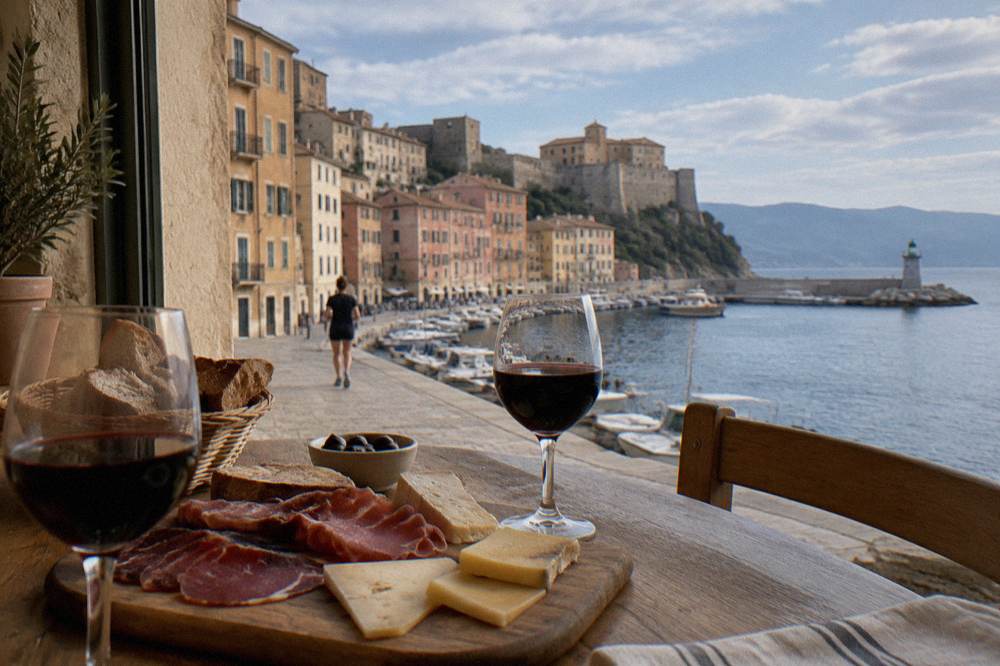
Corsican food and wine tasting works entirely under cover: the island's protected products include brocciu cheese with an appellation d'origine from 1983, prisuttu, lonzu and coppa with AOC from 2012 and AOP from 2014, chestnut flour AOP and Corsican honey AOP, and wine appellations that include Patrimonio, Ajaccio and Vin de Corse with its named crus, so a tasting cellar or a restaurant table fills a rainy afternoon with the island's own label system as the menu.
The appellations give a wet day its structure. Corsican charcuterie's three named cuts earned AOC status in April 2012 and AOP in 2014, with the Nustrale pig breed recognised in 2006. Chestnut flour, farina castagnina corsa, gained its AOP in 2010, Corsican honey carries an AOC and AOP dating to 1998, and olive oil, oliu di Corsica, took its AOC effective in 2004. The clémentine de Corse holds an IGP from 2007. Wine appellations include Patrimonio, Ajaccio, Muscat du Cap Corse and Vin de Corse with crus such as Calvi, Coteaux du Cap Corse, Figari, Porto-Vecchio and Sartène, as reported by the island's tourism board; the main grapes are Nielluccio and Sciaccarellu for reds and Vermentinu for whites.
Tasting rooms, cellars and restaurant tables carry all of this without depending on the weather. Around Calvi and Île-Rousse, guided wine tastings run as bookable products, and Ajaccio holds small-group food tours with tastings, all reachable from the Corsica food and wine tour coverage elsewhere on this site. What aCorsican table adds up to, dish by dish, sits on the Corsican food and what to eat page.
| Product | Source | Year |
|---|---|---|
| Brocciu | Appellation d'origine | 1983 |
| Corsican honey (mele di Corsica) | AOC / AOP | 1998 |
| Olive oil (oliu di Corsica) | AOC | 2004 |
| Clémentine de Corse | IGP | 2007 |
| Prisuttu, lonzu, coppa | AOC, then AOP | 2012, 2014 |
| Chestnut flour (farina castagnina corsa) | AOP | 2010 |
One practical note on the bill: French menus must state "prix service compris" with the service percentage included, per the DGCCRF, so an extra tip is optional rather than expected. A long rainy lunch is therefore a fixed-cost pleasure, and the local products listed above are the ones to ask for by name, since each carries a protected designation that the producer can tell you about.
Can You Hike In Corsica When It Rains?
Hiking in Corsican rain is a matter of trail and season: the GR20's refuges are guarded only from 16 May to 4 October, the long Mare a Mare and Mare e Monti routes run 66 km to 139 km and suit dry windows, and from 15 June to 30 September fires and smoking are banned in forests, maquis and massifs, so a rainy day in summer often means walking is still possible where a fire-risk closure would have stopped it.
The GR20, Fra li Monti, runs 180 km north to south in about 15 stages of 4 to 8.5 hours each, per the Corsican Assembly's own text. The northern start is Calenzana, and the first stage to Ortu di u Piobbu takes about 6 h 30 out, with no departures allowed after 11:00 under a municipal order linked to fire risk. Refuge nights must be booked online for both bunks and bivouac pitches: 2026 PNRC rates are EUR 20 per person for a refuge bunk, EUR 12 for a bivouac pitch with your own tent, EUR 27 for a one-person rented tent and EUR 39 for a two-person rented tent. Rental tents sleep two and come with a 3 cm mat per person; bring a sleeping bag. Dogs are not allowed in refuges or rented tents. Other pages covering the same trip are gathered on Corsica Travel Guide.
Rain changes the calculation less than the fire map does in summer. The prefecture-linked risk map updates at 18:00 for the next day, and from mid-June to mid-September some massifs can close entirely on red-level days. Wild camping is banned across the island, including the GR20; bivouac is allowed only in the marked areas at refuges. The old Cirque de la Solitude section has been off the route since a fatal rockfall in 2015, replaced by a variant.
| Trail | Length | Days | Climb |
|---|---|---|---|
| GR20 (Fra li Monti) | 180 km | About 15 stages | Not published |
| Mare a Mare Nord | 139 km (161 km with variant) | 8 to 12 | 5,900 m |
| Mare a Mare Centre | 84 km | 6 to 7 | 3,900 m |
| Mare a Mare Sud | 73 km | 5 | 3,200 m |
| Mare e Monti Nord | 121 km | 10 | 6,100 m |
| Mare e Monti Sud | 66 km | 5 | 2,700 m |
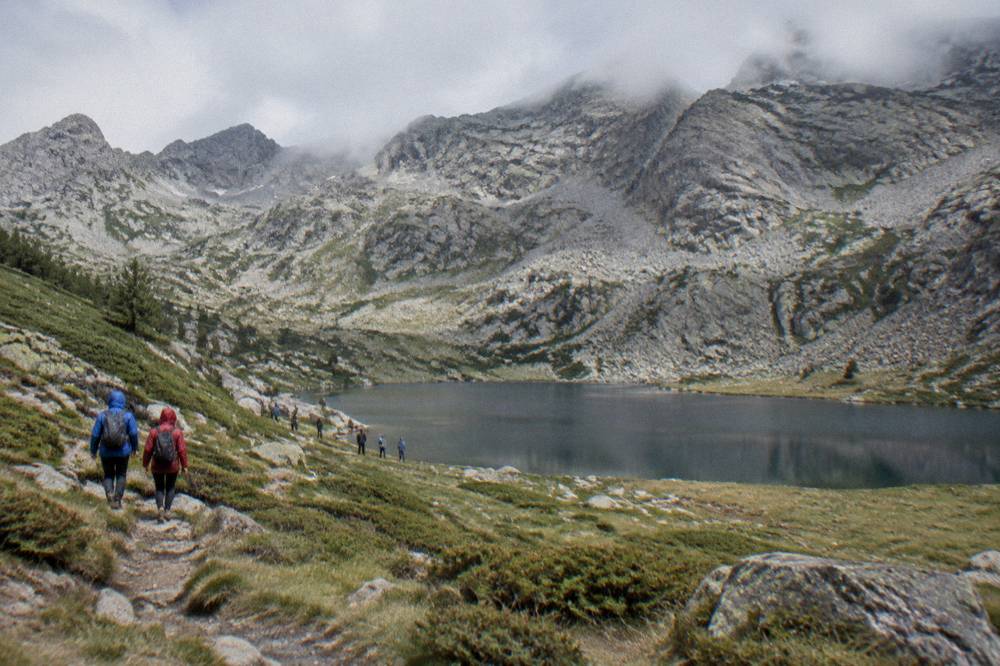
For gentler wet-weather walking, forest valleys hold up better than ridges: the Restonica valley above Corte and the Forêt d'Aïtone in the interior sit under trees, and the Restonica and Corte day trip page covers the road access. Road times to Corte run at 1 h from Bastia, 1 h 30 from Ajaccio and Calvi, 2 h from Porto-Vecchio and 2 h 45 from Bonifacio and Propriano, which makes a Corte museum-and-valley day reachable from most bases even in rain. Inforoutes Corse publishes live road conditions and pass accessibility levels, worth a check before any mountain drive in bad weather.
How Much Rain Does Each Month Bring To Corsica?
Corsica's rain falls mostly from October to December: the Météo-France 1991-2020 normals show Ajaccio averaging 111.8 mm in November, 85.7 mm in October and 73.9 mm in December, against 8.6 mm in July and 15.8 mm in August, while Bastia records 134.3 mm in November, 126.5 mm in October and 88.1 mm in December, with an annual total of 816.9 mm against Ajaccio's 635.0 mm.
The two stations tell one story with different volumes. Bastia, on the east-facing coast, collects more rain in every month of the wet season than Ajaccio does, and its November figure of 134.3 mm heads the island's table. Ajaccio's November mean maximum sits at 18.3 °C, so the rainy season is mild rather than cold at sea level, and the February mean minimum of 4.3 °C marks the low end of the coast's winter range. Snow belongs to the high mountains, with Monte Cinto at 2,706 m holding it longest.
| Month | Ajaccio rain mm | Ajaccio mean max C | Bastia rain mm | Bastia mean max C |
|---|---|---|---|---|
| Jan | 54.1 | 14.0 | 67.3 | 13.8 |
| Feb | 48.1 | 14.2 | 63.5 | 13.9 |
| Mar | 50.4 | 16.0 | 63.7 | 15.8 |
| Apr | 53.1 | 18.5 | 71.6 | 18.3 |
| May | 49.8 | 22.1 | 53.7 | 22.4 |
| Jun | 25.9 | 25.9 | 38.8 | 26.4 |
| Jul | 8.6 | 28.6 | 13.8 | 29.4 |
| Aug | 15.8 | 29.2 | 21.1 | 29.8 |
| Sep | 57.8 | 26.1 | 74.5 | 26.0 |
| Oct | 85.7 | 22.8 | 126.5 | 22.0 |
| Nov | 111.8 | 18.3 | 134.3 | 17.7 |
| Dec | 73.9 | 15.1 | 88.1 | 14.8 |
Daylight shrinks with the rain: Ajaccio averages 15 h 11 min of daylight in June but 9.19 in December and 9.52 in January. A rainy December day therefore plans itself around a shorter window, with museums closing mid-afternoon in low season and dinner starting early. Sunshine hours per day run from about 12.05 in July down to 4.0 in December at Ajaccio, which is the honest arithmetic behind any winter visit: the rainy-day toolkit on this page is simply the winter toolkit.
Which Corsican Towns Suit A Slow Wet Day?
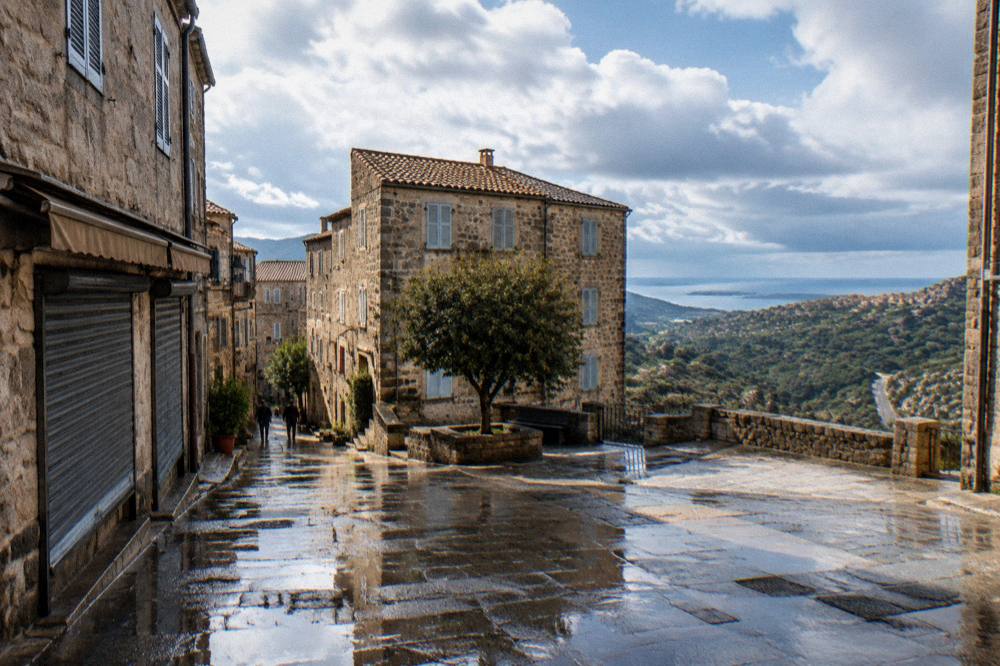
Ajaccio, Bastia and Corte are the three towns built for rain: Ajaccio pairs two museums with a compact old town on Rue Saint-Charles, Bastia wraps its museum, its old port and its covered-market quarter into walkable streets, and Corte stacks a citadel museum above the island's rail junction, reachable by road in 1 h 30 from Ajaccio or 1 h from Bastia, all three inland of nothing but their own history and all three walkable without a car once you arrive.
Ajaccio, the capital and Napoleon's birthplace, is the densest option: Maison Bonaparte and Palais Fesch sit within the same town, and the practical-information page for the former puts it 200 m from the bus station and ferry terminal. A rainy morning can carry both museums with lunch between. Bastia, the second town at 46,867 residents, keeps the Musée de Bastia in the Palais des Gouverneurs and holds its old port, covered by the Vieux Port de Bastia guide on this site. Corte, the old capital, sits inland at the meeting of the island's routes, and its museum-and-citadel ticket at EUR 5.50 is the cheapest full indoor programme on the island.
Smaller towns work as half-day rainy stops. Sartène and the Valinco, the Balagne villages around Île-Rousse and Calvi, and the Cap Corse string of villages covered in the Cap Corse day trip page all have cafés, churches and short covered streets, though their museums are thinner. The Cap Corse and Agriates half-day trip from Saint-Florent is also a bookable product that keeps most of its route in a vehicle, which matters when the rain is horizontal; Check availability if that shape of day suits your dates.
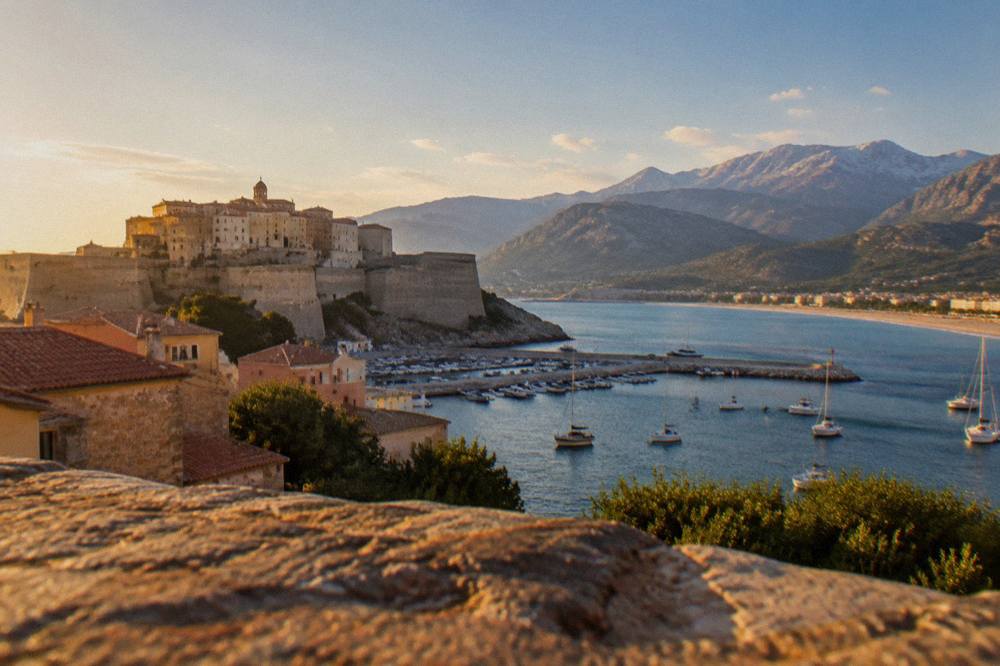
The Chemins de fer de la Corse add a wet-weather option of their own: the lines run Ajaccio to Bastia via Corte, Ponte-Leccia to Calvi, and the Balagne coastal line between Calvi and L'Île-Rousse. A rail day out of the rain works as a round trip, and the tour of the Corsican train page covers the routes in detail.
What Should You Pack For A Corsican Rainy Day?
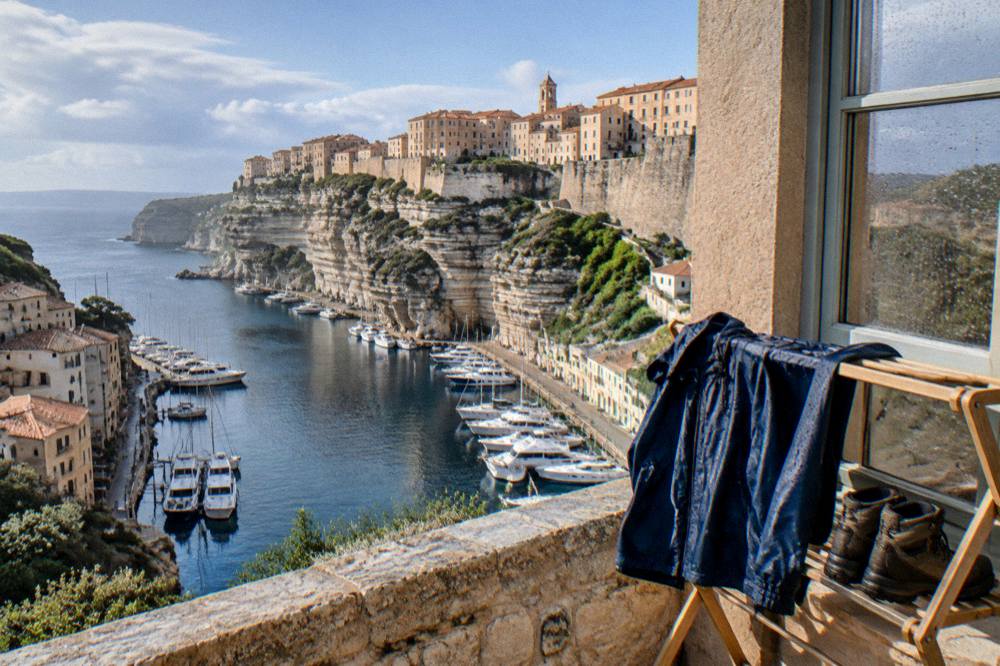
A Corsican rainy-day kit needs a proper rain layer, closed shoes with grip for wet stone streets and citadel steps, and a warm layer for mountain towns, because the wet-season coast still averages mean maxima of 15.1 °C to 18.3 °C from October to December while Corte and the interior run colder, and rain in the massifs can arrive with wind even in a month whose coast figure looks mild, so pack for two climates in one day.
The numbers behind the packing list: Ajaccio's October mean maximum is 22.8 °C with 85.7 mm of rain, November drops to 18.3 °C with 111.8 mm, and the mean minimum in November is 9.0 C. Bastia in November averages a mean minimum of 9.5 °C with 134.3 mm of rain. The Escalier du Roi d'Aragon in Bonifacio, 189 steps cut down the cliff, requires closed-toe flat shoes in any weather, and the same rule serves every wet citadel stair in Corsica.
| Item | Why | Season it matters most |
|---|---|---|
| Waterproof jacket | November rain, 111.8 mm at Ajaccio | Oct to Dec |
| Shoes with grip | Wet stone streets, citadel steps, 189 at Bonifacio | All wet months |
| Warm mid-layer | November mean minimum 9.0 °C at Ajaccio, colder inland | Oct to Mar |
| Day pack cover | Refuge-to-refuge walks if rain reaches the GR20 | May to Oct |
| Power bank | Short December daylight, 9 h 11 min at Ajaccio | Nov to Jan |
One safety item belongs in the kit even in dry weather: the emergency numbers are 112 for all EU emergencies, 15 for medical, 17 for police, 18 for fire, 114 by SMS or app, and 196 for sea rescue on VHF channel 16 at sea, with mountain rescue at the PGHM Ajaccio number 04 95 24 24 00. The UK FCDO notes a high risk of wildfires in France from April to October, and from 15 June to 30 September fires and smoking are banned outright in forests, maquis and massifs, rules that hold whatever the weather on the day.
How Do You Build A Full Rainy-Day Plan For Corsica?
A workable rainy-day plan in Corsica pairs one indoor anchor with one sheltered journey: museums in Ajaccio, Bastia or Corte as the anchor, a train ride or a short ferry-linked town as the journey, and a tasting or a long lunch as the buffer, with Inforoutes Corse checked before any mountain road and the fire-risk map checked in summer, because the island's rain rarely lasts a full day outside the October-to-December peak.
For a base in Ajaccio, the plan writes itself: Maison Bonaparte in the morning when the queues for timed entry are shortest, Palais Fesch after lunch at EUR 10, and a food tour with tastings if the rain holds into the evening. From Bastia, the Musée de Bastia plus the old port, or the train south toward Corte, fill a full day with a single ticket purchase. From Corte or the interior, the citadel museum at EUR 5.50 and the Restonica valley road, conditions permitting, combine indoor and covered-outdoor halves.
| Base | Indoor anchor | Sheltered addition | Link |
|---|---|---|---|
| Ajaccio | Maison Bonaparte, EUR 10 | Palais Fesch, EUR 10 | Bus 8 from airport |
| Bastia | Musée de Bastia | Old port quarter | Train to Corte |
| Corte | Musée de la Corse, EUR 5.50 | Citadel, same ticket | 1 h 30 by road from Ajaccio |
| Calvi or Île-Rousse | Wine tastings | Balagne coastal train | Calvi to L'Île-Rousse line |
| Bonifacio | Covered old-town streets | Escalier du Roi d'Aragon, 189 steps | About EUR 5, as reported |
The longer itineraries on this site already build in slack for days like this: Corsica in 5 days, Corsica in 10 days and Corsica in 14 days each leave room to swap a beach day for a museum day without unravelling the route. The first time in Corsica primer covers the same logic for a first visit, and the free things to do in Corsica page lists what costs nothing when the paid options close.
Common Questions About Rainy Days In Corsica
Does It Rain A Lot In Corsica?
Rain concentrates in autumn and early winter. Météo-France 1991-2020 normals show Ajaccio averaging 111.8 mm of rain in November and Bastia 134.3 mm, against 8.6 mm in July at Ajaccio. Annual totals are 635.0 mm at Ajaccio and 816.9 mm at Bastia.
What Is The Rainiest Month In Corsica?
November carries the largest rain totals at both stations: 111.8 mm at Ajaccio and 134.3 mm at Bastia, per the Météo-France 1991-2020 normals. October follows at 85.7 mm and 126.5 mm respectively.
Can You Swim In Corsica In October?
October rain at Ajaccio averages 85.7 mm with a mean maximum of 22.8 °C, and Bastia records 126.5 mm with 22.0 C. There is no licensed sea-temperature source on this site, so check conditions locally before swimming.
Are Corsican Museums Open In Winter?
Mostly yes. Palais Fesch runs daily 09:00 to 17:00 for the 2026 period, and the Musée de la Corse opens 10:00 to 17:00 in low season except Sundays, Mondays, holidays and 24 December, closing fully from 31 December to 14 January. Maison Bonaparte is closed Mondays and runs 10:30 to 12:30 and 13:15 to 16:30 from 1 October to 31 March.
Is The GR20 Open In The Rain?
The PNRC guards the GR20 refuges from 16 May to 4 October only, and refuge or bivouac nights must be booked online. Rain alone does not close the trail, but the daily fire-risk map can restrict massif access from mid-June to mid-September, and no departures from Calenzana are allowed after 11:00.
Do Boat Tours In Corsica Get Cancelled When It Rains?
Operators decide on sea state rather than rain, and the Scandola Reserve is visited by boat only, so cruises continue in wet but calm conditions. Cancellation terms sit on the operator's live listing, and the button on this page reads Check availability for current sailings.
A rainy day in Corsica is a planning problem with an answer key: four museums with published hours and prices, trains on three lines, protected food and wine under every roof, and rain figures that concentrate between October and November before the island dries into its 8.6 mm July.