Corsica Weather
Corsica's weather follows a Mediterranean rhythm: a hot, dry summer, a mild, wet winter and snow confined to the high mountains. Here is what the Météo-France station data says, month by month.
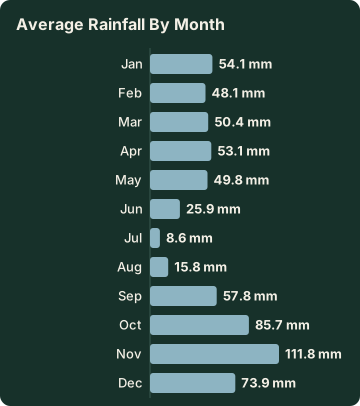
Corsica has a Mediterranean climate: at Ajaccio, July averages 8.6 mm of rain and August a mean daily high of 29.2 °C, while November carries 111.8 mm and a 18.3 °C mean high. All figures below are Météo-France station normals, 1991-2020, for Ajaccio Campo dell'Oro and Bastia.
Corsica sits in the western Mediterranean, a French island of 8,722 km2 with more than 1,000 km of coastline and an interior that climbs to Monte Cinto at 2,706 m, and that geography drives everything about its weather. The coast and the high mountains belong to different climates: the shore bakes in summer, while snow stays on the peaks well outside the summer months. Every figure in this guide comes from the Météo-France station normals for the 1991-2020 period, measured at Ajaccio Campo dell'Oro (station 20004002) and Bastia (station 20148001), so the numbers describe long-run averages rather than any single year.
This page runs the year from spring to winter, compares the two climate stations, and translates the figures into planning decisions: when the GR20 refuges are guarded, when the fire rules bite, and what to pack. For the wider question of timing a whole trip, the best time to visit Corsica guide carries the itinerary side, and Corsica Travel Guide holds the full site.
What Is The Overall Corsica Weather Pattern?
Corsica has a Mediterranean climate with a hot, dry summer and a mild, wet winter, and the transition months sit between the two. July at Ajaccio averages just 8.6 mm of rain, November carries 111.8 mm, and the mean daily high runs from 14.0 °C in January to 29.2 °C in August. Snow falls on the high mountains, not on the coast, and the island records about 635 mm of rain a year at Ajaccio and 816.9 mm at Bastia.
The shape of the year is consistent across both stations. Summer is dry everywhere on the coast: June, July and August each record less than 40 mm of rain at both Ajaccio and Bastia, and July has the lowest rainfall figure on both tables, 8.6 mm at Ajaccio and 13.8 mm at Bastia. Autumn is when the rain returns. October and November carry the highest monthly totals on both records, 85.7 and 111.8 mm at Ajaccio, 126.5 and 134.3 mm at Bastia.
| Month | Ajaccio mean high °C | Ajaccio mean low °C | Ajaccio rain mm | Ajaccio sunshine h/day |
|---|---|---|---|---|
| Jan | 14.0 | 4.7 | 54.1 | 4.4 |
| Feb | 14.2 | 4.3 | 48.1 | 5.5 |
| Mar | 16.0 | 5.9 | 50.4 | 6.8 |
| Apr | 18.5 | 8.3 | 53.1 | 7.7 |
| May | 22.1 | 11.8 | 49.8 | 9.3 |
| Jun | 25.9 | 15.4 | 25.9 | 11.1 |
| Jul | 28.6 | 17.7 | 8.6 | 12.1 |
| Aug | 29.2 | 18.1 | 15.8 | 11.1 |
| Sep | 26.1 | 15.4 | 57.8 | 8.7 |
| Oct | 22.8 | 12.6 | 85.7 | 6.7 |
| Nov | 18.3 | 9.0 | 111.8 | 4.7 |
| Dec | 15.1 | 5.8 | 73.9 | 4.0 |
The interior plays by different rules. Corte and the high valleys sit inland, and the mountains take snow while the coast stays mild, which is why the same island can host beach weather at Palombaggia and winter conditions around Monte Cinto in the same week of April. The GR20 refuge season, 16 May to 4 October, is set around that split. Sunshine follows the same arc: Ajaccio averages 12.1 hours a day in July against 4.0 in December.
What Is Corsica Weather Like In Spring (March To May)?
Spring in Corsica warms steadily from a 16.0 °C mean daily high in March to 22.1 °C in May at Ajaccio, with mean lows climbing from 5.9 °C to 11.8 °C, while rainfall barely moves, 50.4 mm in March, 53.1 mm in April and 49.8 mm in May. Sunshine rises from 6.8 to 9.3 hours a day, and the season stays dry enough for walking well before the summer heat arrives.
March is a shoulder month on the coast: bright middays, cool nights, and a sea that has spent the winter at its annual low. By May the mean high at Ajaccio reaches 22.1 °C and sunshine runs 9.3 hours a day, the same figure as August, but May still carries 49.8 mm of rain, so a wet day remains possible. Bastia tracks the same arc with slightly milder nights, 12.6 °C mean low in May against Ajaccio's 11.8 °C, and slightly more rain, 53.7 mm in May.
| Month | Ajaccio high / low °C | Bastia high / low °C | Ajaccio rain mm | Bastia rain mm | Ajaccio sunshine h/day |
|---|---|---|---|---|---|
| Mar | 16.0 / 5.9 | 15.8 / 6.8 | 50.4 | 63.7 | 6.8 |
| Apr | 18.5 / 8.3 | 18.3 / 9.1 | 53.1 | 71.6 | 7.7 |
| May | 22.1 / 11.8 | 22.4 / 12.6 | 49.8 | 53.7 | 9.3 |
Spring is the walking season before the fire rules start. The GR20 refuges are guarded from 16 May, which marks the practical opening of the high routes; the hiking in Corsica guide covers the trails themselves.
Daylight grows fast. Ajaccio records 11 h 57 min of daylight in March, 13.36 in April and 14.56 in May, against 9.83 in November, so spring gives long afternoons for a day walk or a coastal drive without the July heat.
What Is Corsica Weather Like In Summer (June To August)?
Summer is the dry core of the Corsican year: at Ajaccio the mean daily high runs 25.9 °C in June, 28.6 °C in July and 29.2 °C in August, with mean lows of 15.4 to 18.1 °C, and rainfall of 25.9, 8.6 and 15.8 mm across the three months. Sunshine averages 11.1 to 12.1 hours a day, and Bastia runs about a degree warmer by day, 29.8 °C in August.
July and August are the months the tables describe as the settled season: July has the lowest rainfall figure on both records, 8.6 mm at Ajaccio and 13.8 mm at Bastia, and August has the highest mean daily high at both stations, 29.2 °C and 29.8 C. Nights stay warm, with mean lows of 17.7 and 18.1 °C at Ajaccio in July and August, and 19.4 and 19.8 °C at Bastia.
| Month | Ajaccio high / low °C | Bastia high / low °C | Ajaccio rain mm | Bastia rain mm | Ajaccio sunshine h/day |
|---|---|---|---|---|---|
| Jun | 25.9 / 15.4 | 26.4 / 16.5 | 25.9 | 38.8 | 11.1 |
| Jul | 28.6 / 17.7 | 29.4 / 19.4 | 8.6 | 13.8 | 12.1 |
| Aug | 29.2 / 18.1 | 29.8 / 19.8 | 15.8 | 21.1 | 11.1 |
Summer is also fire season. The rule runs 15 June to 30 September: no fires and no smoking in forests, maquis and massifs, and a daily colour map of massif access is updated at 18:00 for the next day, with some massifs closed entirely on high-risk days. On the GR20, no departures from Calenzana are allowed after 11:00 under the municipal order. The UK FCDO notes a high wildfire risk in France from April to October. If a hike is on the plan, check the prefecture map the evening before.
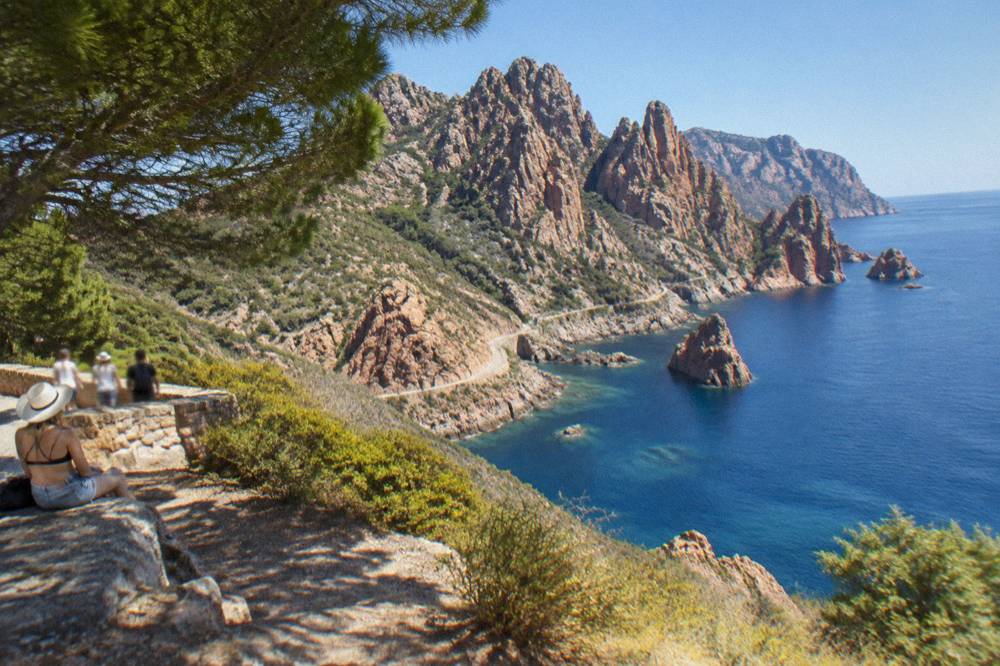
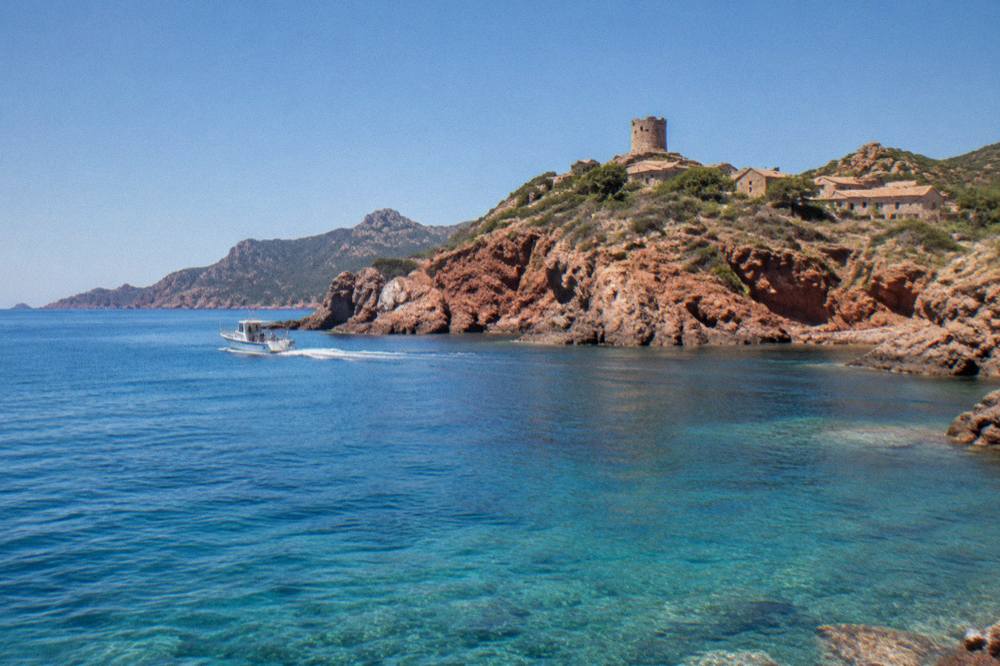
The sea defines the season, and boat trips are the main draw: the Corsica beaches guide maps the swimming coast. The Scandola reserve is visited by boat only, and the Eco-Friendly Scandola Boat tour runs from Ota into the UNESCO Gulf of Porto property in summer conditions: Check availability. Calm July and August mornings are what the crossing operators work around.
What Is Corsica Weather Like In Autumn (September To November)?
Autumn in Corsica starts warm and ends wet: September keeps a 26.1 °C mean daily high at Ajaccio with 57.8 mm of rain, October cools to 22.8 °C with 85.7 mm, and November drops to 18.3 °C with 111.8 mm, the highest monthly total on the Ajaccio record. Bastia follows the same line and runs wetter, 74.5, 126.5 and 134.3 mm across the three months.
September is the month the tables show as a summer extension with a rainier edge: warm days, 26.1 °C mean high, sea-friendly afternoons, and 8.7 sunshine hours a day, but nearly 58 mm of rain against August's 15.8 mm. October is the pivot. The mean high at Ajaccio is still 22.8 °C, yet the month carries 85.7 mm of rain and sunshine falls to 6.7 hours a day.
| Month | Ajaccio high / low °C | Bastia high / low °C | Ajaccio rain mm | Bastia rain mm | Ajaccio sunshine h/day |
|---|---|---|---|---|---|
| Sep | 26.1 / 15.4 | 26.0 / 16.7 | 57.8 | 74.5 | 8.7 |
| Oct | 22.8 / 12.6 | 22.0 / 13.4 | 85.7 | 126.5 | 6.7 |
| Nov | 18.3 / 9.0 | 17.7 / 9.5 | 111.8 | 134.3 | 4.7 |
November is when the walking year effectively closes. The GR20 refuges are guarded only to 4 October, and November combines 111.8 mm of rain at Ajaccio with the year's shortest sunshine figure, 4.7 hours a day, and 9 h 50 min of daylight. The question of swimming into autumn is answered in can you swim in Corsica in October, and the monthly rainfall detail sits in does it rain a lot in Corsica.
What Is Corsica Weather Like In Winter (December To February)?
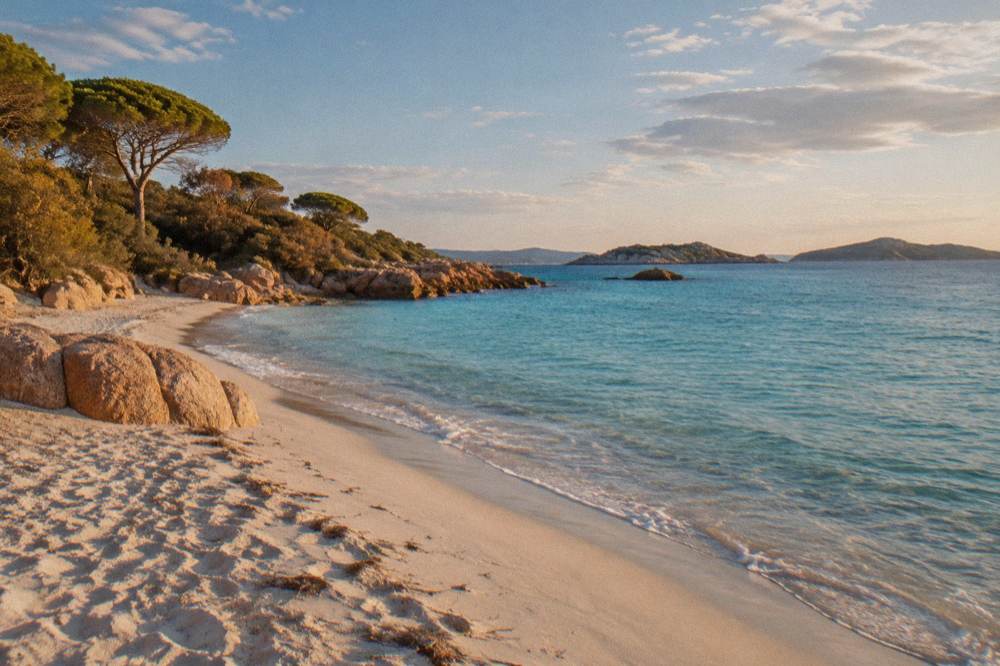
Winter on the Corsican coast is mild rather than cold: Ajaccio averages mean highs of 15.1 °C in December, 14.0 °C in January and 14.2 °C in February, with mean lows of 5.8, 4.7 and 4.3 °C, and monthly rain of 73.9, 54.1 and 48.1 mm. Snow falls on the high mountains, not on the shore, and sunshine runs 4.0 to 5.5 hours a day.
February has the lowest mean daily low on the Ajaccio record, 4.3 °C, and January the lowest mean daily high, 14.0 °C, yet frost on the coast is a night event, not a day-long one. The rain totals ease from December's 73.9 mm to February's 48.1 mm at Ajaccio, while Bastia records 88.1, 67.3 and 63.5 mm across the same months. Daylight is short: 9 h 31 min in January, the annual low, against 15.18 in June.
| Month | Ajaccio high / low °C | Bastia high / low °C | Ajaccio rain mm | Bastia rain mm | Ajaccio daylight h |
|---|---|---|---|---|---|
| Dec | 15.1 / 5.8 | 14.8 / 6.4 | 73.9 | 88.1 | 9.19 |
| Jan | 14.0 / 4.7 | 13.8 / 5.4 | 54.1 | 67.3 | 9.52 |
| Feb | 14.2 / 4.3 | 13.9 / 5.1 | 48.1 | 63.5 | 10.59 |
Winter is the season of the interior's other climate. The high mountains take snow, and the refuges are unguarded outside the 16 May to 4 October window, so the GR20 is a summer and early-autumn route. On the coast, towns keep working: Ajaccio has 76,320 residents and Bastia 46,867, and the winter months are when the museums run their low-season hours, such as Maison Bonaparte's 10:30 to 12:30 and 13:15 to 16:30 slot from October to March. Ideas for wet days are gathered in Corsica in the rain.
How Do Ajaccio And Bastia Weather Records Differ?
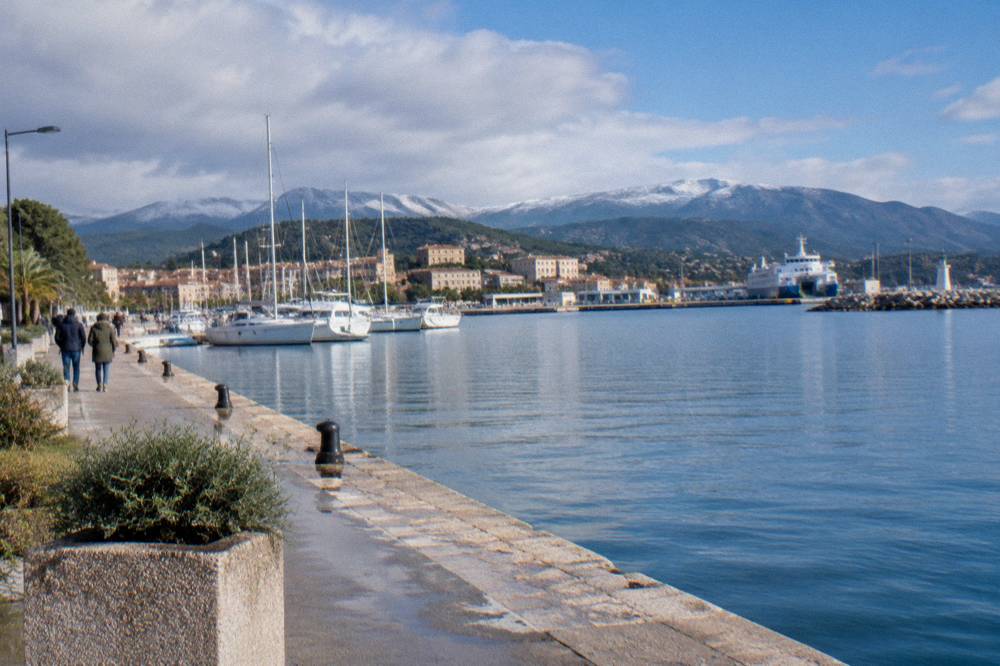
Bastia runs slightly warmer than Ajaccio in summer and clearly wetter across the year: its August mean high is 29.8 °C against Ajaccio's 29.2 °C, and its annual rainfall is 816.9 mm against Ajaccio's 635.0 mm, with the autumn gap the widest, 134.3 mm against 111.8 mm in November. Winter differences are small, about 0.2 °C between the mean highs in January.
The two stations sit on different shores, Ajaccio Campo dell'Oro on the west coast and Bastia at the top of the east side, and the records show the east taking more of the autumn rain. Every month from September to December records more rain at Bastia than at Ajaccio, while the summer months are close: July differs by 5.2 mm and August by 5.3 mm.
| Measure | Ajaccio | Bastia |
|---|---|---|
| Mean high, Jan | 14.0 °C | 13.8 °C |
| Mean high, Aug | 29.2 °C | 29.8 °C |
| Rain, Jul | 8.6 mm | 13.8 mm |
| Rain, Nov | 111.8 mm | 134.3 mm |
| Annual rainfall | 635.0 mm | 816.9 mm |
| Mean low, Feb | 4.3 °C | 5.1 °C |
Neither station describes the mountains. The figures are station normals, measured at the airports of the two towns, and the interior runs colder at every season, which is the whole logic behind snow on Monte Cinto in a month when Ajaccio's mean high is 16.0 C. Treat the tables as coastal planning data and add a margin for altitude.
When Can You Hike The GR20 In Corsica Weather?
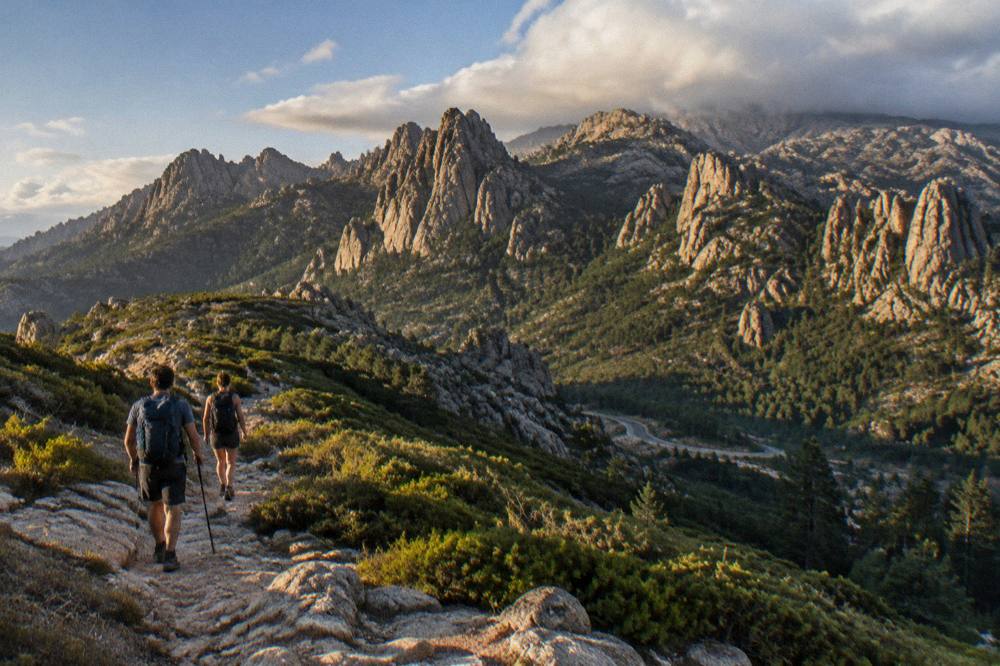
The GR20 hiking window runs with the guarded refuge season, 16 May to 4 October, because the route covers about 15 stages of 4 to 8.5 hours over 180 km and the high sections hold snow outside that period. Refuge nights must be booked online, at EUR 20 for a bunk or EUR 12 for a bivouac pitch per person, and no departures from Calenzana are allowed after 11:00.
The 15 June to 30 September fire rule covers the massifs the trail crosses, the daily access map can close sections on high-risk days, and summer storms matter on the ridges. The PNRC page lists the 2026 rates in full: a rented tent for one person is EUR 27, for two EUR 39, all rental tents sleep two and come with a 3 cm mat, and dogs are not allowed in refuges or rented tents. The full route detail sits in the GR20 guide.
For walkers weighing months against figures, June and September frame the season. June at Ajaccio averages a 25.9 °C mean high with 25.9 mm of rain, September 26.1 °C with 57.8 mm, and both sit inside the refuge season.
What Should You Pack For Corsica Weather?
Pack for two climates: summer coastal days with a 29.2 °C August mean high at Ajaccio, cool evenings even then at an 18.1 °C mean low, and mountain layers for any interior route, where snow sits on the high peaks well outside winter. A rain layer earns its place from September to November, when Ajaccio records 57.8, 85.7 and 111.8 mm of rain a month.
The packing logic follows the tables. From June to August, sun protection and swimwear cover the coast, but the GR20 needs a sleeping bag even in July, since rental tents provide only a mat. From October to April, a warm layer for evenings, when mean lows run 4.3 to 13.4 °C, and a waterproof for the autumn totals. Closed-toe flat shoes are required on the Escalier du Roi d'Aragon at Bonifacio, a 189-step cliff staircase, whatever the month.
| Season | Mean high / low at Ajaccio | Rain to expect | What it means for the bag |
|---|---|---|---|
| Spring | 16.0 to 22.1 °C / 5.9 to 11.8 °C | about 50 mm a month | layers, light rain shell |
| Summer | 25.9 to 29.2 °C / 15.4 to 18.1 °C | 8.6 to 25.9 mm | sun kit, swimwear, sleeping bag for huts |
| Autumn | 18.3 to 26.1 °C / 9.0 to 15.4 °C | 57.8 to 111.8 mm | waterproof, warm evenings layer |
| Winter | 14.0 to 15.1 °C / 4.3 to 5.8 °C | 48.1 to 73.9 mm | warm layers, rain shell |
How Does Corsica Weather Shape Boat Trips And Sea Days?
Summer's calm, dry pattern, 8.6 mm of rain in July and 12.1 sunshine hours a day at Ajaccio, is what the island's sea economy runs on, from the Sanguinaires gulf trips out of Ajaccio to the Scandola reserve crossings out of Porto and Cargèse. Outside June to September the sea is still reachable, but the tables show rain rising from 57.8 mm in September to 111.8 mm in November at Ajaccio.
The UNESCO property "Gulf of Porto: Calanche of Piana, Gulf of Girolata, Scandola Reserve", inscribed in 1983, is visited by boat only, with no landing in the integral reserve, and operators run from several west-coast ports. Weather governs which sailings go: autumn and winter systems can stop crossings, and shuttles to the Désert des Agriates beaches at Saleccia and Lotu run from Saint-Florent about April to October, weather permitting. The boat trip guide for Porto-Vecchio and the Sanguinaires trip guide cover the main routes.
Does Corsica Weather Vary Between The Coast And The Mountains?
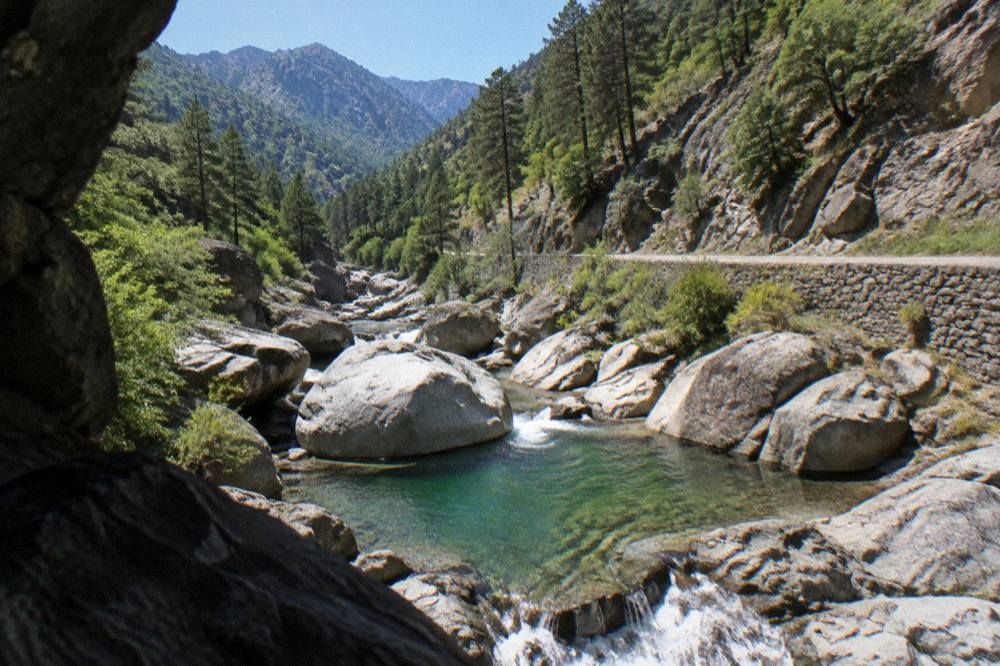
Yes, and sharply: the coast records mean highs of 28.6 °C in July while the high mountains hold snow, and the same April day can pair a 18.5 °C mean high at Ajaccio with winter conditions above 2,000 m. The station tables measure the shore towns, and the interior, Corte, the Niolu and the massifs around Monte Cinto, runs colder at every point of the year.
This split is the single most useful thing to know about Corsican weather. The island's 2,706 m summit and its neighbors form a mountain barrier inside a Mediterranean island, so a beach plan and a summit plan belong to different seasons even though they share a coastline. The fire-access map, the refuge season and the snow line all follow the altitude, not the coastal calendar. Practical notes on mountain safety, including the PGHM rescue number 04 95 24 24 00, sit in the Corsica safety guide.
Common Questions About Corsica Weather
What Is The Weather Like In Corsica In July?
July is the settled, dry month: Ajaccio averages a 28.6 °C mean daily high, a 17.7 °C mean low, 8.6 mm of rain and 12.1 sunshine hours a day, and Bastia records 29.4 °C and 13.8 mm. Fire rules are in force across the massifs from 15 June to 30 September.
What Is The Rainiest Month In Corsica?
November carries the highest monthly rainfall on both station records, 111.8 mm at Ajaccio and 134.3 mm at Bastia, followed by October at 85.7 mm and 126.5 mm. The rain totals fall steeply from June onwards.
Is Corsica Warm In Winter?
The coast is mild: mean daily highs run 14.0 °C in January, 14.2 °C in February and 15.1 °C in December at Ajaccio, with mean lows between 4.3 and 5.8 C. Snow falls on the high mountains, not on the shore.
When Can You Swim In Corsica?
The tables show June to September as the warm coastal months, with mean highs of 25.9 °C in June, 29.2 °C in August and 26.1 °C in September at Ajaccio.
Does It Snow In Corsica?
Yes, on the high mountains. Monte Cinto stands at 2,706 m, and the interior massifs hold snow well outside the winter months while coastal towns like Ajaccio and Bastia record mild winter mean highs above 13 C.
What Is The Sunniest Month In Corsica?
By the station normals, Ajaccio averages 12.1 sunshine hours a day in July and 11.1 in both June and August, against 4.0 hours in December. Bastia records 11.2 hours a day in July.
The month-by-month tables above are the full coastal record; whatever the season you choose, the pairing of a sea-surrounded coastline with a 2,706 m mountain interior is what makes Corsican weather worth planning around.