How Long Is The Ferry From Nice To Corsica?
Crossing times from Nice to Corsica's ports, the operators on the route, and how the sailing compares with ferries from Marseille, Toulon and Italy.
The ferry from Nice to Corsica is a long overnight-style crossing compared with the shorter Italian sailings, and it lands you directly on an island with more than 1,000 km of coastline and a mountainous interior that rises to Monte Cinto at 2,706 m. This page sets out the reported crossing times, the ports the route serves, and how the Nice sailing compares with the ferries from Marseille, Toulon and the Italian mainland, using only the figures the operators and route listings publish. Corsica is a French Mediterranean island, the fourth-largest in the Mediterranean at 8,722 km2, and its ferry ports are the gateway to towns from Bastia in the north to Bonifacio in the south.
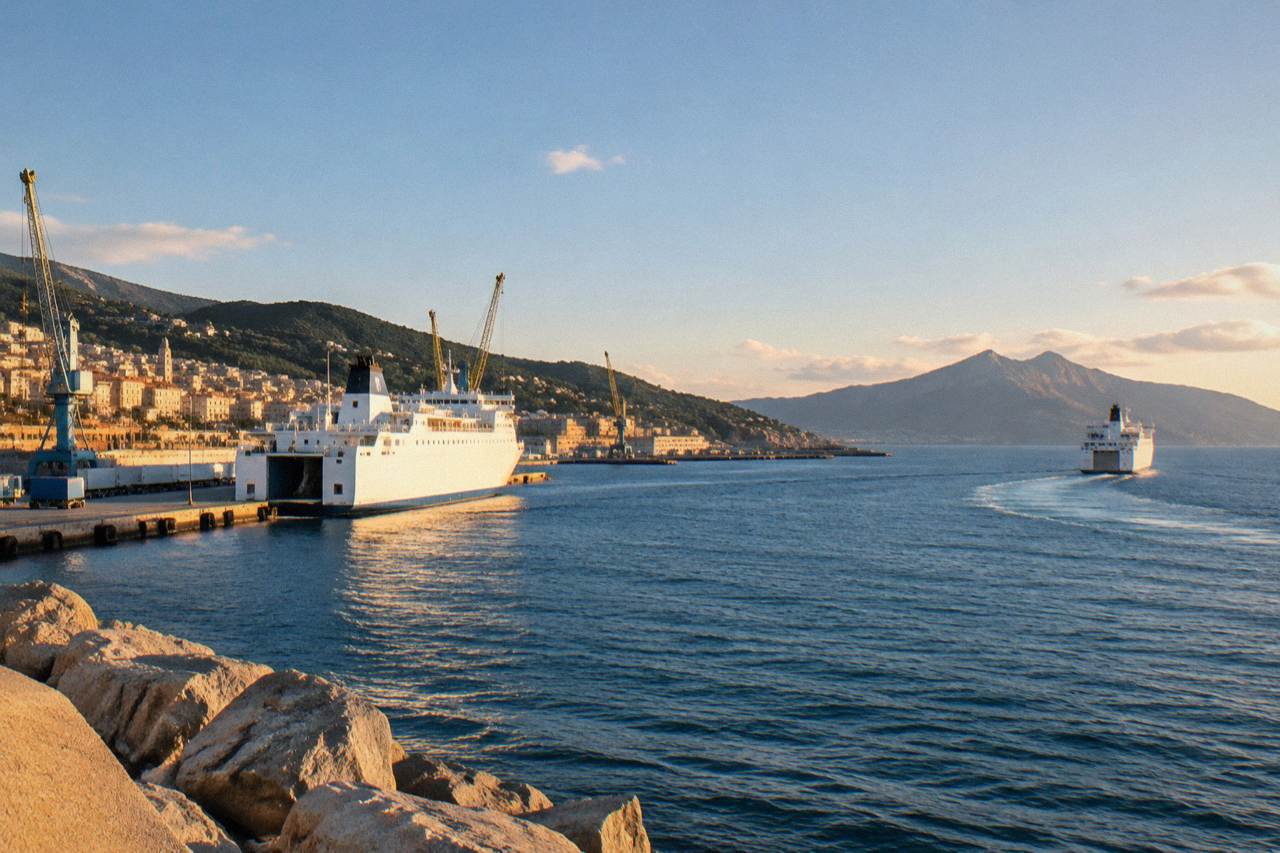
The ferry from Nice to Corsica is reported to take about 7.5 to 10 hours to reach Bastia, with the exact time depending on the schedule and the vessel on a given sailing. The route is operated by Corsica Ferries, which serves Corsican ports including Bastia, Ajaccio, L'Île-Rousse, Porto-Vecchio and Propriano from Nice, with some sailings seasonal rather than year-round.
Those figures are reported route data rather than a single fixed timetable, and they are quoted as ranges. Day and night departures exist on the longer crossings to the island, and the sailing time varies with the ship assigned to the rotation. The practical consequence is simple: a Nice departure is an evening-and-morning affair on many rotations, closer in feel to the Marseille crossings than to the quick Italian hops from Livorno, which are reported at 4 to 5 hours to Bastia. Before booking, check the operator's own timetable for the specific date, because seasonal rotations differ. For a broader look at the island's position, the where Corsica is located answer sets out the geography, and the dedicated Nice to Corsica ferry guide covers the route in depth.
| Route | Crossing time | Operator on the route |
|---|---|---|
| Nice to Bastia | about 7.5 to 10 h | Corsica Ferries |
| Livorno to Bastia | about 4 to 5 h | Corsica Ferries, Moby |
| Savona to Bastia | about 6.5 h | Corsica Ferries |
| Toulon to Corsica ports | about 10 to 13 h | Corsica Ferries |
| Marseille to Corsica ports | about 12 to 13 h, mostly overnight | Corsica Linea, La Méridionale |
| Santa Teresa Gallura to Bonifacio | about 50 to 60 min | Moby, Ichnusa Lines |
Which Corsican Ports Does The Nice Ferry Serve?
Corsica Ferries is reported to sail from Nice to four Corsican ports, Bastia, Ajaccio, Porto-Vecchio and L'Île-Rousse, with parts of the pattern running seasonally rather than all year. Bastia is the principal arrival port for the Nice route, and it sits at 46,867 residents, the second town of Corsica after the capital Ajaccio, which counts 76,320.
The port you arrive at shapes the first day of the trip. Bastia places you at the top of the island, close to Cap Corse and the Balagne, with the train of the Chemins de fer de la Corse running from Bastia towards Corte and Ajaccio, and the Balagne coastal line connecting Calvi and L'Île-Rousse. An arrival at L'Île-Rousse puts you straight into the Balagne, the northwest stretch of coast that runs to Calvi. Ajaccio, the capital and the birthplace of Napoleon, opens the west coast and the road towards the Golfe de Porto, while Porto-Vecchio sits in the southeast, between the beaches of the south and the cliffs of Bonifacio. The general ferry to Corsica guide maps every mainland port against every island port, and the getting to Corsica answer compares the ferry against the island's four airports.
Once you are off the ship, the sea stays central to the island. A boat trip is one of the defining days out here, whether that is the cliffs of Bonifacio, the Îles Sanguinaires off Ajaccio, or the protected waters of the Scandola reserve. The options below cover three very different ways onto the water, from a half-day cruise on the Golfe de Porto to snorkelling in the Gulf of Calvi.
Should You Take A Day Or A Night Sailing From Nice?
The reported 7.5 to 10 hour crossing time from Nice to Bastia means the route is long enough that departures split between daytime and overnight rotations, as on the other long French mainland crossings to the island. The Marseille sailings, reported at about 12 to 13 hours, are described as mostly overnight, and the Nice route works on the same logic, with the specific departure type fixed by the timetable for each date.
Neither form of sailing is universally better; the choice follows what the schedule offers and how you want to spend the first hours ashore. A night crossing turns the ferry into transport plus a night's rest, and you step onto the quay in the morning with a full day in front of you, which matters on an island where the drive from Bastia to the far south is measured in hours on mountain roads. A day sailing trades that for daylight on the open Mediterranean, at the cost of arriving into the evening. What the published route data supports is the timing itself: at 7.5 to 10 hours to Bastia, this is not a quick channel hop, it is a genuine sea passage on one of the Mediterranean's busier ferry networks. Anyone weighing the sea route against the plane can compare the two in the how far is Corsica from Nice answer.
Sea conditions aside, the crossing is a practical question of ports and connections. The table below sets the Nice route against its neighbours so the timing differences are visible at a glance. Everything else covered here is indexed on Corsica Travel Guide.
| Departure port | Arrival ports in Corsica | Crossing time | Character of the sailing |
|---|---|---|---|
| Nice | Bastia, Ajaccio, Porto-Vecchio, L'Île-Rousse | about 7.5 to 10 h | long French crossing, day and night rotations |
| Toulon | Ajaccio, Bastia, L'Île-Rousse, Porto-Vecchio, Propriano | about 10 to 13 h | long crossing, day and night options |
| Marseille | Ajaccio, Bastia, Propriano, L'Île-Rousse, Porto-Vecchio | about 12 to 13 h | mostly overnight |
| Livorno | Bastia | about 4 to 5 h | short day crossings |
| Savona | Bastia | about 6.5 h | medium crossing |
| Santa Teresa Gallura | Bonifacio | about 50 to 60 min | short Sardinia link |
That said, once the ferry has delivered you to Corsica, the water is where several of the island's headline sights live, and a boat day in the Golfe de Porto is the natural follow-on from a west-coast arrival. The half-day Scandola and Calanche de Piana cruise from Porto runs through the UNESCO inscribed Gulf of Porto, and you can Check availability for your dates. A fuller treatment of the reserve itself is in the Scandola nature reserve guide.
How Does The Nice Ferry Compare With Flying To Corsica?
Corsica has four airports, Ajaccio Napoléon Bonaparte (AJA), Bastia Poretta (BIA), Figari Sud Corse (FSC) and Calvi Sainte-Catherine (CLY), so the flight alternative to the Nice ferry exists on the same island the ferry serves. The ferry's advantages are the cabin, the luggage and the car deck; the flight's advantage is time, on an island whose ports and airports together handled more than 8.5 million passengers in 2025, cruise passengers excluded.
The car point deserves emphasis. A ferry booking can carry a vehicle, and on an island where the interior is mountainous and public transport is thin outside the main railway lines, a car is how the majority of the island's territory becomes reachable. The do you need a car in Corsica answer works through that trade-off in detail, and the driving across Corsica answer covers the times involved once you are ashore. Flying from Nice instead means one of the four Corsican airports, and then ground transport from the airport to the base town, a step the Corsica airports guide explains airport by airport.
Neither answer is wrong. The ferry from Nice suits a slow arrival with a car and no luggage ceiling; the flight suits a short trip built around one region. What the reported figures rule out is the idea that the Nice ferry is a quick dash across the water: at 7.5 to 10 hours to Bastia it is a substantial passage, and packing should follow that fact.
What Should You Know Before Booking The Nice Crossing?
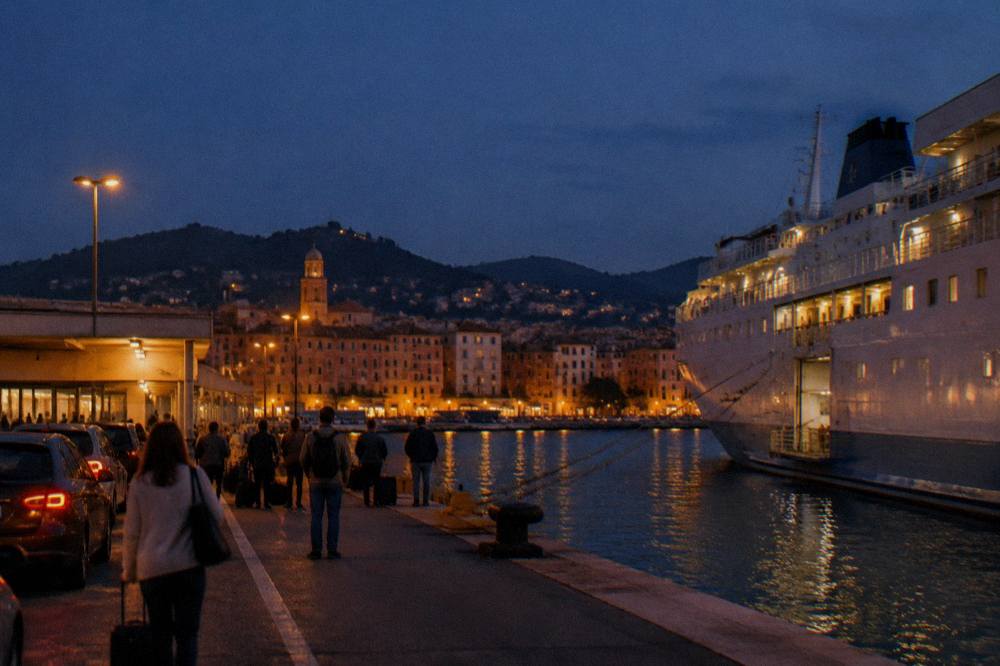
The essentials from the published route data are these: Corsica Ferries is the reported operator from Nice, the crossing to Bastia runs about 7.5 to 10 hours, sailings reach Ajaccio, Porto-Vecchio and L'Île-Rousse as well, and some of that pattern is seasonal, so the summer timetable is wider than the winter one.
A few planning points follow from the geography. Arriving at Bastia puts the old port of Bastia within easy reach of the quay, an arrival that needs no car for a first day. Arriving at L'Île-Rousse or Ajaccio, the onward journey is best planned against the island's road network, for which Inforoutes Corse publishes live conditions and accessibility levels for the main mountain passes, useful in any season and doubly so in winter when the high passes can carry restrictions. Winter crossings are also simply fewer: the seasonal elements of the Nice pattern mean the summer weeks carry the bulk of the rotations.
For anyone combining islands, the Corsica and Sardinia ferry guide covers the short Santa Teresa Gallura to Bonifacio link, reported at 50 to 60 minutes, which is the fastest international crossing touching Corsica. And for the wider question of whether the island repays the journey at all, the is Corsica worth visiting answer is blunt.
Whichever port the ship docks at, the pattern repeats: sea first, mountains behind. These three picks spread across the island's coasts and interior, from Porto's protected waters to a family day at the turtle park near Sagone.
Common Questions About The Ferry From Nice To Corsica
How Long Is The Ferry From Nice To Corsica?
The crossing from Nice to Bastia is reported to take about 7.5 to 10 hours, with the exact time set by the schedule and vessel on a given sailing. Corsica Ferries is the reported operator, serving Bastia, Ajaccio, Porto-Vecchio and L'Île-Rousse from Nice, with parts of the pattern seasonal.
Which Company Sails From Nice To Corsica?
Corsica Ferries is the reported operator from Nice, with sailings to Bastia, Ajaccio, L'Île-Rousse, Porto-Vecchio and Propriano from the French mainland ports of Nice and Toulon. Confirm the specific rotation on the operator's own timetable before booking.
Is There An Overnight Ferry From Nice To Corsica?
The reported 7.5 to 10 hour crossing time supports both daytime and overnight rotations, as on the other long French mainland crossings to the island. The Marseille sailings, at about 12 to 13 hours, are described as mostly overnight, and the departure type for Nice is fixed by each date's timetable.
Is The Ferry From Nice Faster Than From Marseille?
Yes, on the reported figures. Nice to Bastia is about 7.5 to 10 hours, while the Marseille crossings run about 12 to 13 hours and are mostly overnight. The shortest sailings to Corsica are from Italy: Livorno to Bastia is reported at 4 to 5 hours.
Can You Take A Car On The Ferry From Nice To Corsica?
The ferry operators serving Corsica carry vehicles, and a car is the practical way to reach much of the island's mountainous interior and scattered beaches, given that the railway network covers only the main lines. The trade-offs between bringing a car and relying on local transport are covered in the do you need a car in Corsica answer.
What Is The Fastest Ferry Crossing To Corsica?
On the reported figures, the Santa Teresa Gallura to Bonifacio link from Sardinia is the fastest, at about 50 to 60 minutes, operated by Moby and Ichnusa Lines. From the French mainland, Nice to Bastia at about 7.5 to 10 hours is the quickest of the reported options.
The crossing from Nice is a real sea passage, long enough to plan around rather than brush off, and it lands on an island whose ports, beaches and mountain roads repay every hour of it. Check the operator's timetable for your date, pick the port that matches your base, and let the rest of the island follow from there.