Nice To Corsica Ferry
Corsica Ferries reports sailings from Nice to Ajaccio, Bastia, L'Île-Rousse, Porto-Vecchio and Propriano, with crossings of roughly 7.5 to 10 hours to Bastia. Here is what the routes, the ports and the first day on the island look like.
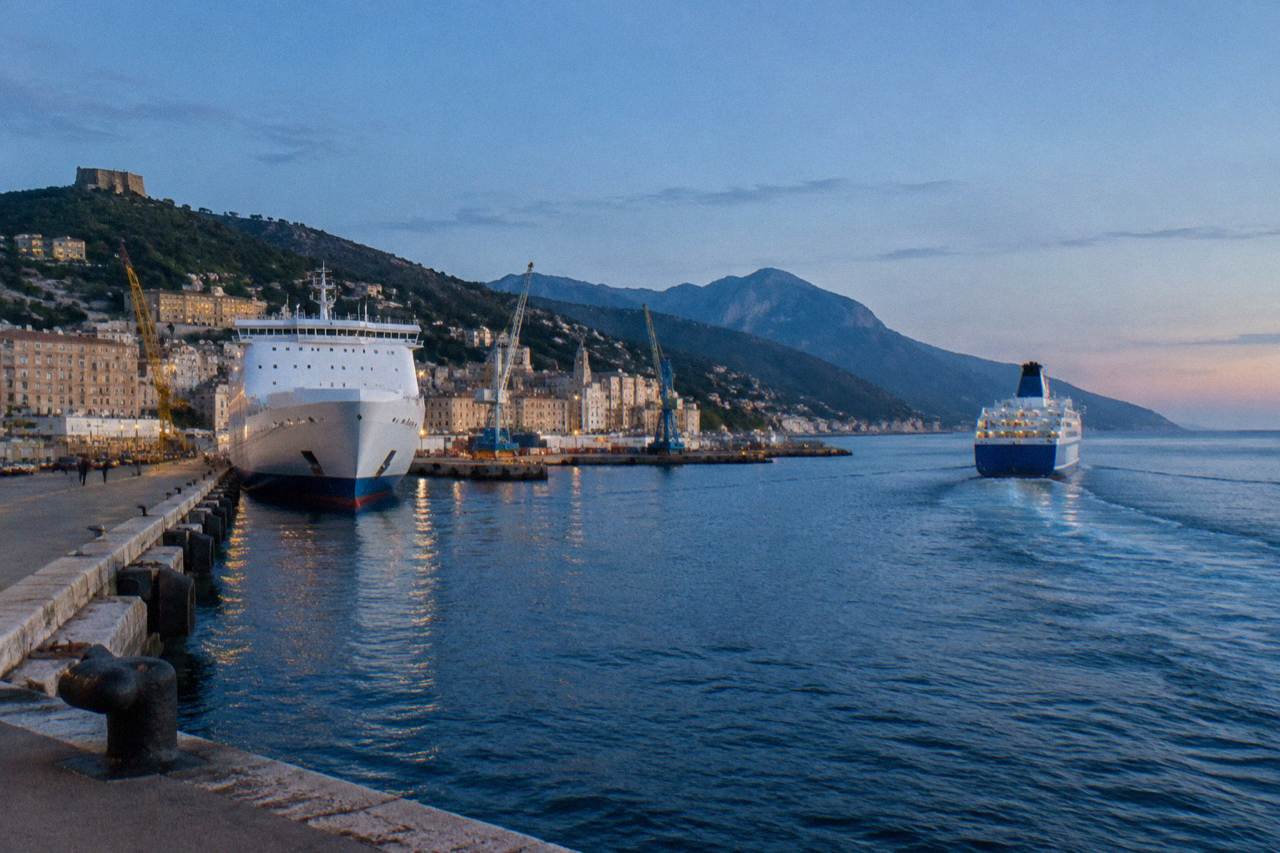
Corsica Ferries is the operator reported on the Nice routes, serving Ajaccio, Bastia, L'Île-Rousse, Porto-Vecchio and Propriano. The crossing to Bastia runs about 7.5 to 10 hours, and many sailings are overnight. Confirm timetables and fares on the operator's own site before booking.
Corsica is a French Mediterranean island with more than 1,000 km of coastline, and the crossing from Nice is one of the classic ways to reach it. Corsica Ferries is reported to sail from Nice to Ajaccio, Bastia, L'Île-Rousse, Porto-Vecchio and Propriano, with the run to Bastia taking about 7.5 to 10 hours and many departures running overnight so that passengers wake up already in Corsican waters. Readers will find here the operators, the crossing times as they are reported, the arrival ports and what to plan for the day after docking. The broader picture of every mainland route, including Marseille and the Italian ports, sits on the Corsica ferry routes overview, and the Corsica Travel Guide homepage collects the island's sights, beaches and walks in one place.
Which Ferry Operator Runs From Nice To Corsica?
Corsica Ferries is the operator reported on the Nice to Corsica routes, with sailings listed to Ajaccio, Bastia, L'Île-Rousse, Porto-Vecchio and Propriano. The other operators serving Corsica, Corsica Linea, La Méridionale and Moby, base their French sailings at Marseille, while Moby also links the Italian ports and Sardinia. Check the operator's own timetable before booking.
That division of labour matters when you are choosing where to start. Marseille is the year-round hub, and Ajaccio is the island's capital and the largest of the ferry ports, with 76,320 residents recorded by INSEE. The other ports are smaller but sit closer to particular stretches of coast: Bastia for the Cap Corse and the Balagne, Porto-Vecchio for the beaches of the far south-east, Propriano for the Valinco and the Mare a Mare Sud trail, which runs 73 km over five days to finish at Propriano itself.
One short link deserves its own mention because it is a different kind of crossing entirely. Moby sails Santa Teresa Gallura in Sardinia to Bonifacio in about 50 to 60 minutes, which is how the two islands get stitched into a single trip. The details of that route, and of the Italian mainland crossings from Livorno, Savona and Genoa, are covered on the Corsica to Sardinia ferry guide.
How Long Is The Ferry From Nice To Corsica?
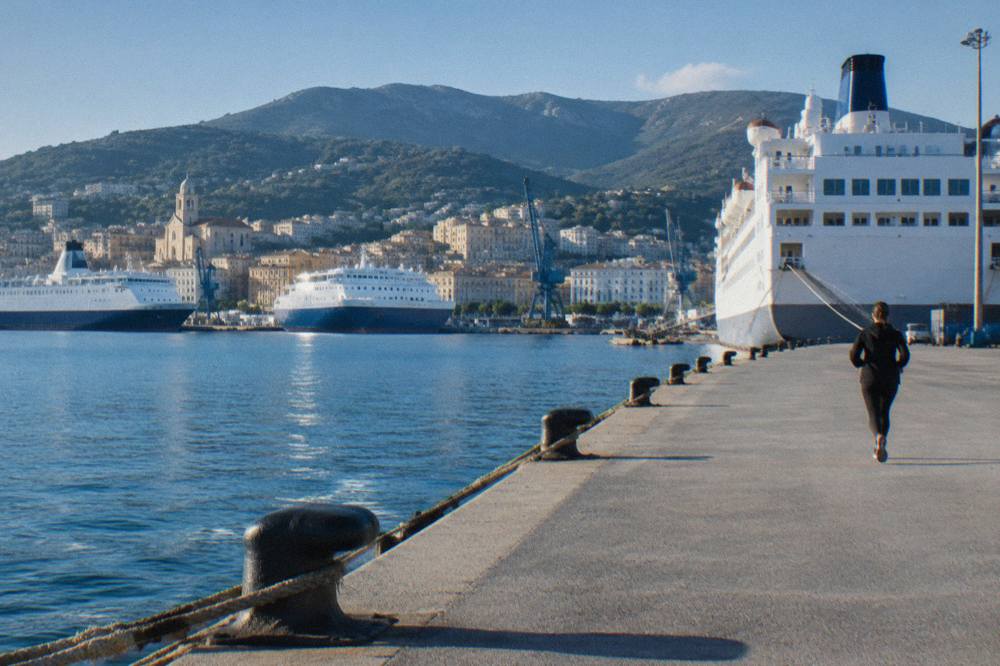
The crossing from Nice to Bastia is reported at about 7.5 to 10 hours, and the sailing often runs overnight, so the practical answer for most travellers is one night at sea. Nice is one of the longer mainland departures: Livorno to Bastia takes about 4 to 5 hours and Santa Teresa Gallura to Bonifacio about 50 to 60 minutes, by comparison. Confirm the exact schedule for your date on the operator's site.
The crossing-time figures below are reported ranges from an aggregator rather than operator commitments, and day or night sailing changes the experience completely. Treat them as planning numbers and check the timetable when you pick a date.
| Route | Crossing time |
|---|---|
| Nice to Bastia | about 7.5 to 10 h |
| Livorno to Bastia | about 4 to 5 h |
| Savona to Bastia | about 6.5 h |
| Santa Teresa Gallura to Bonifacio | about 50 to 60 min |
| Toulon to Corsican ports | about 10 to 13 h |
| Marseille to Corsican ports | about 12 to 13 h, mostly overnight |
A night sailing from Nice has a practical rhythm of its own: you board in the evening, sleep aboard, and step onto the quay in Corsica with a full day ahead. The shorter question of distance, as distinct from sailing time, is answered on the how far is Corsica from Nice page, and the sailing-time question in its literal search form is treated on how long is the ferry from Nice to Corsica.
The sea is the reason many travellers take the ferry at all rather than fly. Once you are on the island, the same water that carried you over becomes the medium for the island's signature days out: the boat trips along the Calanques de Piana, into the Scandola reserve, and around the Îles Lavezzi. The three picks below are a starting sample of what that looks like.
Which Corsican Port Should You Arrive At From Nice?
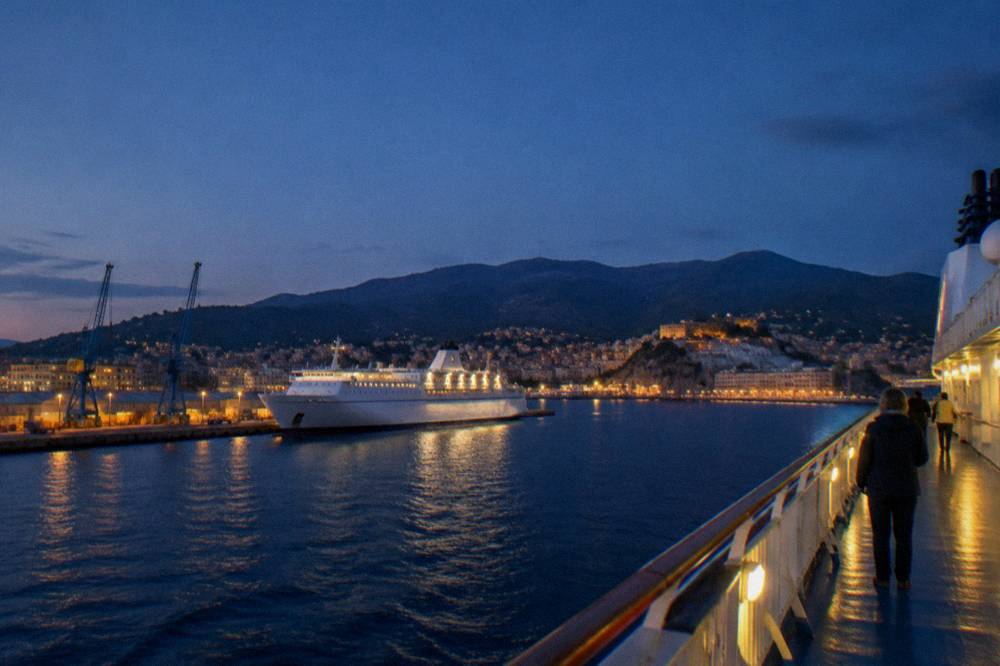
Choose Bastia if your plans centre on the Cap Corse, the Balagne or Corte, which is 1 hour by road from Bastia; choose Ajaccio for the capital and the Scandola day trips; choose L'Île-Rousse for the Balagne beaches; and choose Porto-Vecchio or Propriano for the southern beaches and the Alta Rocca.
The port choice is really an itinerary choice, because Corsica is 8,722 km2 with a mountainous interior and roads that take time. The road times below are the published figures for reaching Corte, the historic capital in the centre of the island, from each of the main gateways.
| Arrival port | Road time to Corte | Natural territory |
|---|---|---|
| Bastia | 1 h | Cap Corse, Castagniccia, the east coast |
| Ajaccio | 1 h 30 | Capital, Îles Sanguinaires, Golfe de Porto |
| Calvi | 1 h 30 | Balagne beaches and villages |
| Porto-Vecchio | 2 h | Palombaggia, Santa Giulia, Alta Rocca |
| Bonifacio | 2 h 45 | Cliffs, Escalier du Roi d'Aragon, Îles Lavezzi |
| Propriano | 2 h 45 | Valinco, Sartène, Filitosa |
Bastia, with 46,867 residents, is the second town of the island and the busiest ferry gateway on the east side. Ajaccio is larger and gives the fastest access to the UNESCO stretch of coast: the Gulf of Porto, the Calanche of Piana, the Gulf of Girolata and the Scandola Reserve were inscribed together in 1983 as World Heritage property 258, covering 11,800 ha. Scandola itself is a nature reserve created by ministerial order on 9 December 1975, with 1,000 ha of sea and 919 ha of land, and its terrestrial part is closed to the public, so visits are by boat only.
Do You Need To Book The Nice To Corsica Ferry In Advance?
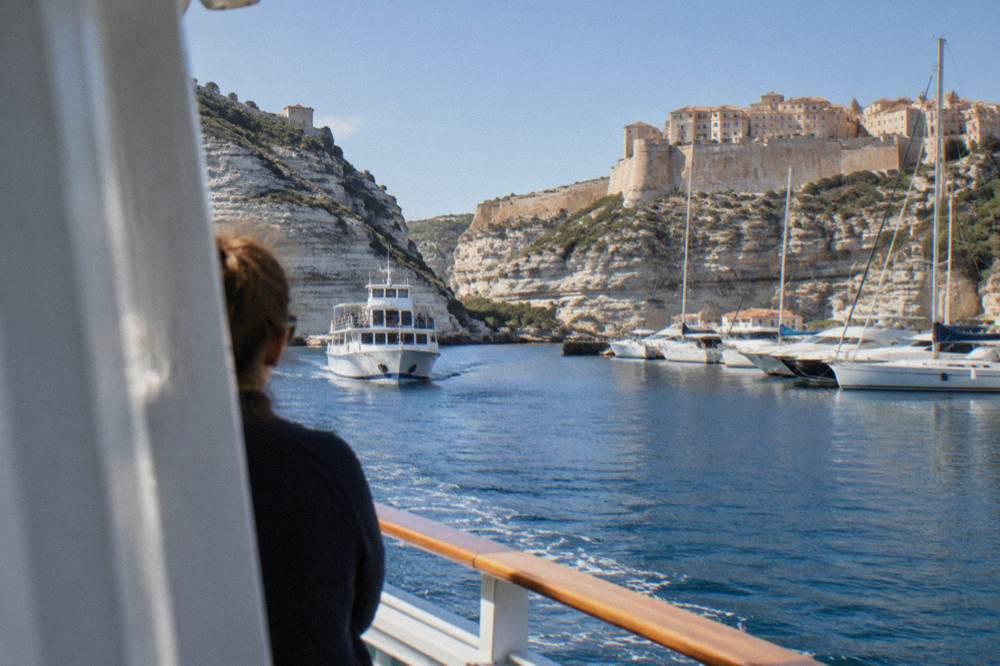
Treat advance booking as a planning decision rather than a regulation: summer sailings fill first, vehicles take fixed deck space that cannot be expanded, and the guarded GR20 refuges that anchor many island itineraries must themselves be reserved online in advance. Book the ferry when your dates are fixed.
The comparison that surprises arriving walkers is that the ferry is the flexible part of the trip and the mountain huts are not. The GR20 runs 180 km north to south in about 15 stages of 4 to 8.5 hours, and the Parc naturel régional de Corse requires every refuge night, whether a bunk or a bivouac pitch, to be booked online in advance. The 2026 refuge rates are fixed and published.
| GR20 refuge option | 2026 PNRC rate per person |
|---|---|
| Bunk in a guarded refuge | EUR 20 |
| Bivouac pitch, own tent | EUR 12 |
| Rented tent for one | EUR 27 |
| Rented tent for two | EUR 39 |
Guarding runs from 16 May to 4 October inclusive, and no departures are allowed from Calenzana after 11:00 under a municipal fire-risk order. Dogs are not allowed inside refuges or rented tents, wild camping is banned across the island, and from 15 June to 30 September fires and smoking are forbidden in forests, maquis and massifs. The full trail picture, including the Mare a Mare and Mare e Monti routes, is on the GR20 guide and the wider hiking in Corsica page.
Should You Fly To Nice-Corsica Instead Of Taking The Ferry?
Flying is the faster option and the island has four airports, Ajaccio Napoléon Bonaparte (AJA), Bastia Poretta (BIA), Figari Sud Corse (FSC) and Calvi Sainte-Catherine (CLY), served by Air Corsica, Air France, easyJet and Volotea among others. More than 8.5 million passengers, cruise traffic excluded, passed through Corsica's ports and airports in 2025. The ferry wins on bringing a car.
The trade-off is simple. A flight from the Nice Côte d'Azur side to one of the four Corsican airports takes a fraction of the sailing time, but the ferry delivers the car with you, and a car reshapes what the island can be. The D81 along the Calanques de Piana, the road up the Restonica valley above Corte and the track country of the Désert des Agriates all reward having wheels, and public transport on the island is thin outside the railway lines. The flights to Corsica page covers the airports in detail, and each has its own guide, including Ajaccio airport and Bastia airport.
| Corsican airport | Code | Common use |
|---|---|---|
| Ajaccio Napoléon Bonaparte | AJA | Capital, west coast, Golfe de Porto |
| Bastia Poretta | BIA | Cap Corse, east coast, Castagniccia |
| Figari Sud Corse | FSC | Bonifacio, Porto-Vecchio, far south |
| Calvi Sainte-Catherine | CLY | Balagne, L'Île-Rousse area |
What Can You Do On Your First Day After The Ferry To Corsica?
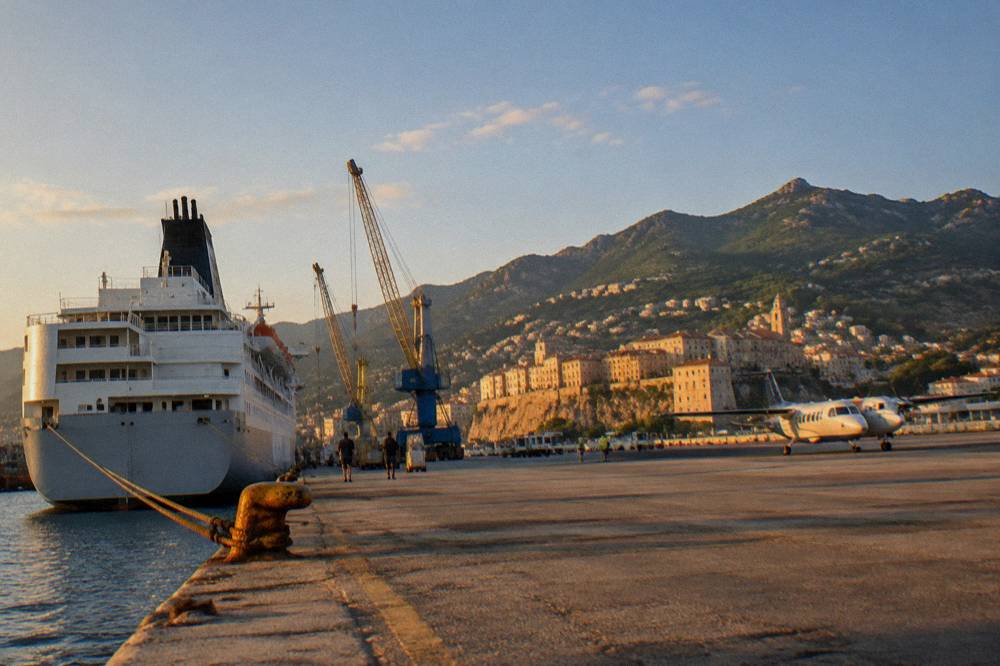
Plan the first day around your port: from Ajaccio the sea trips to the Îles Sanguinaires leave directly from the town, from Bastia the old harbour and the citadel are walkable from the quay, and from Porto the half-day Scandola cruises depart along the coast. A boat day fits the rhythm of an arrival, since boarding times sit in the morning and the afternoon gives a soft landing.
The stretch of coast most first-time visitors aim for is the Golfe de Porto. Scandola is reachable only by sea, and the cruise loops typically pair the reserve with the red rock of the Calanques de Piana and a stop at Girolata, the hamlet with no road access. The wider menu of options is described on the Scandola boat tour page and the things to do in Corsica collection.
The south works differently. From Bonifacio the cruises run along the limestone cliffs and out to the Îles Lavezzi, which sit inside the Bouches de Bonifacio Nature Reserve, and the Escalier du Roi d'Aragon cuts 189 steps down the cliff face with a 180-degree view over the strait towards Sardinia. Children are given a diploma at the top, and closed-toe flat shoes are required. The Bonifacio boat tour page covers the southern sea trips in detail.
| Port you dock at | Half-day option | Full-day option |
|---|---|---|
| Ajaccio | Îles Sanguinaires gulf trip | Scandola cruise with transfer |
| Bastia | Old harbour and citadel walk | Cap Corse loop |
| L'Île-Rousse | Balagne tramway coast | Agriates catamaran day |
| Porto-Vecchio | Palombaggia and Santa Giulia | Lavezzi catamaran day |
| Propriano | Valinco sunset cruise | Filitosa and Sartène inland day |
Do You Need A Car In Corsica Once The Ferry Docks?
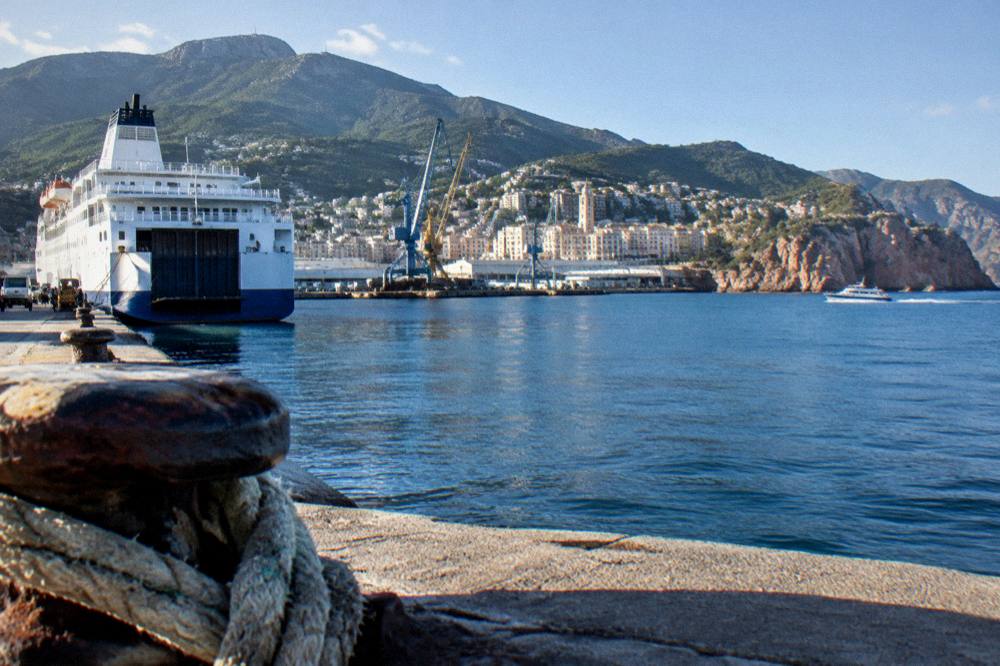
A car is the practical default for most of the island outside the main towns, because the mountainous interior and the beach tracks are served thinly by public transport, and the railway network covers only three lines: Ajaccio to Bastia via Corte, Ponte-Leccia to Calvi, and the Balagne coastal line between Calvi and L'Île-Rousse. Arriving by ferry with a vehicle is therefore the common pattern.
The train is worth a day of any itinerary even if you never use it as transport, because the Balagne coastal stretch runs along the shoreline, and the Ajaccio to Bastia line climbs through the interior to Corte, the old capital, where one ticket at the Musée de la Corse covers both the museum and the citadel for EUR 5.50. The practical planning pages are Corsica car rental, driving in Corsica and getting around Corsica, and the standing advice on mountain roads is that Inforoutes Corse publishes live conditions and access levels for the main passes, which is worth checking before any long drive in unsettled weather.
Two beach realities argue for the car as well. Saleccia and Lotu, the famous strands of the Désert des Agriates, are reached by boat shuttle from Saint-Florent roughly from April to October, weather permitting, by 4x4 track from Casta, or on foot, and there is no scheduled bus. Palombaggia, Santa Giulia and Rondinara in the south-east all sit away from rail and require wheels or a transfer; each has its own guide on this site, collected under Corsica beaches.
What Is The Weather Like When You Cross From Nice To Corsica?
Corsica has a hot dry summer and a mild wet winter, and the Météo-France 1991-2020 station normals show Ajaccio averaging a July high of 28.6 °C with 8.6 mm of rain that month, while November carries 111.8 mm and Bastia 134.3 mm. October and November carry the most rain at both stations, and snow falls only on the high mountains.
The ferry itself is the most weather-exposed leg of any Corsica trip, since a night at sea in October or November crosses the same waters that deliver those rain totals. The monthly figures below are the station normals, and the Corsica weather by month page expands them, with timing advice on the best time to visit Corsica.
| Month | Ajaccio high °C | Ajaccio rain mm | Bastia high °C | Bastia rain mm |
|---|---|---|---|---|
| Jan | 14.0 | 54.1 | 13.8 | 67.3 |
| Feb | 14.2 | 48.1 | 13.9 | 63.5 |
| Mar | 16.0 | 50.4 | 15.8 | 63.7 |
| Apr | 18.5 | 53.1 | 18.3 | 71.6 |
| May | 22.1 | 49.8 | 22.4 | 53.7 |
| Jun | 25.9 | 25.9 | 26.4 | 38.8 |
| Jul | 28.6 | 8.6 | 29.4 | 13.8 |
| Aug | 29.2 | 15.8 | 29.8 | 21.1 |
| Sep | 26.1 | 57.8 | 26.0 | 74.5 |
| Oct | 22.8 | 85.7 | 22.0 | 126.5 |
| Nov | 18.3 | 111.8 | 17.7 | 134.3 |
| Dec | 15.1 | 73.9 | 14.8 | 88.1 |
One safety note attaches to the summer figures. The UK FCDO records a high wildfire risk in France from April to October, and the fixed Corsican rule runs from 15 June to 30 September, when lighting fires or smoking is forbidden in forests, maquis and massifs. The daily massif access map is updated at 18:00 for the next day. Emergency numbers are 112, 15 for medical, 17 for police, 18 for fire, 114 by SMS, and 196 for sea rescue, and the mountain rescue PGHM base at Ajaccio answers on 04 95 24 24 00. The Corsica safety page collects this in full.
How Much Does A Trip Built Around The Nice Ferry Cost?
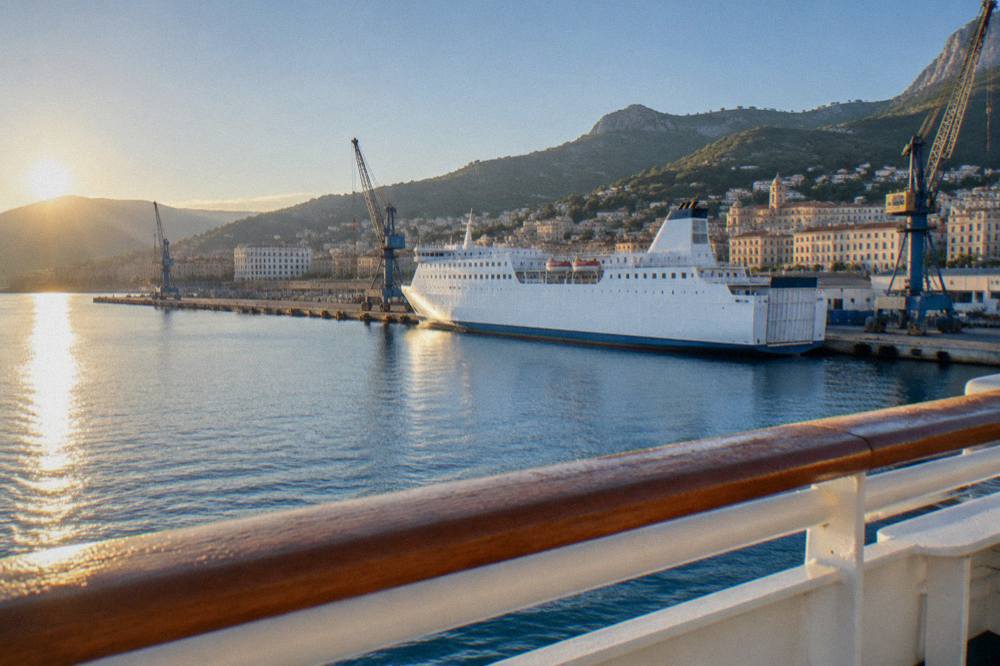
The crossing fares themselves are not fixed figures this site can quote, so budget instead from the local costs on land: refuge bunks on the GR20 at EUR 20 per person, bivouac pitches at EUR 12, Maison Bonaparte in Ajaccio at EUR 10 full price, the Palais Fesch at EUR 10 with free entry up to 18, and the Filitosa prehistoric site at EUR 9 for adults. Tipping is optional, since service is included by law.
The museum and site figures below are the published 2026 admissions, and each is attached to its own sight: never assume one price transfers to another. The Corsica cost and budget page builds the fuller picture, and Corsica travel tips carries the small practical rules, including the service compris tipping rule from the DGCCRF.
| Sight or service | 2026 rate |
|---|---|
| GR20 refuge bunk | EUR 20 per person |
| GR20 bivouac pitch | EUR 12 per person |
| Maison Bonaparte, full price | EUR 10 |
| Palais Fesch, full price | EUR 10 |
| Musée de la Corse and citadel, Corte | EUR 5.50 |
| Filitosa, adult | EUR 9 |
Reductions sit alongside each of those: Maison Bonaparte charges EUR 8 for non-EU residents aged 18 to 25 and large families and admits EU residents under 26 free, the Palais Fesch charges EUR 6 for over-65s, and Filitosa has a EUR 7 reduced rate and a EUR 28 family ticket with free entry under 6. Maison Bonaparte is closed on Mondays and sits on Rue Saint-Charles, 200 m from the Ajaccio bus station and ferry terminal, which makes it a genuinely walkable first stop if your crossing ends in the capital.
What Should You Eat On The Island After The Ferry From Nice?
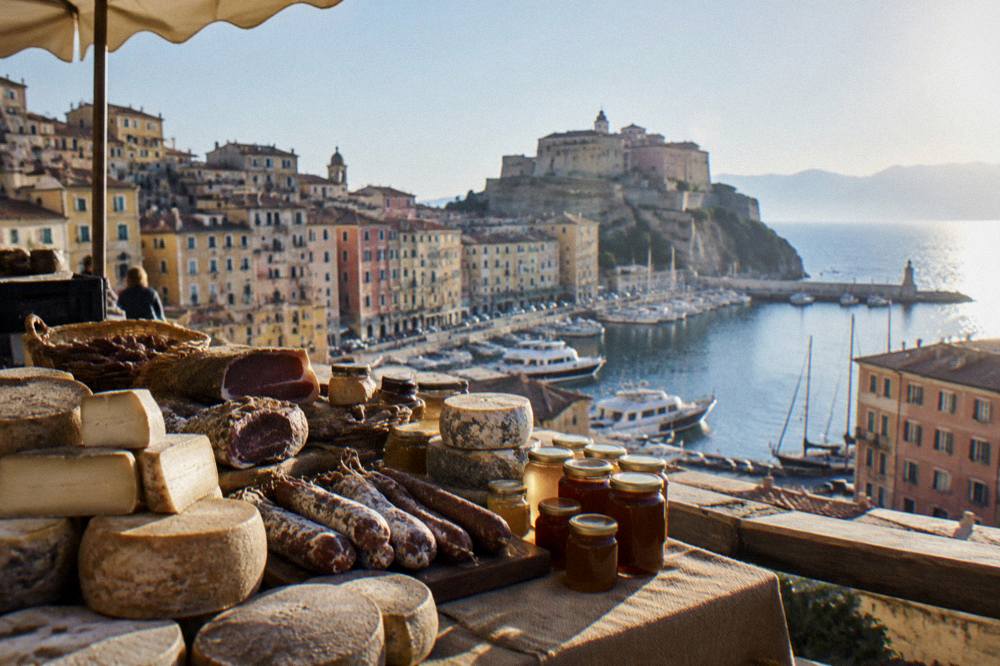
The certified island products to look for are brocciu, which took its appellation d'origine in 1983 and its AOC in 1998, the charcuterie trio of prisuttu, lonzu and coppa, which hold AOP status since 2014, chestnut flour under the Farina castagnina corsa AOP, Corsican honey, olive oil, and the Clémentine de Corse with its 2007 IGP. The main grape varieties are Nielluccio and Sciaccarellu for red, Vermentinu for white.
Those labels are the shopper's shortcut, because each one is tied to a date and a defence body rather than to marketing. Wine appellations reported for the island include Patrimonio, Ajaccio, the Vin de Corse with its named crus such as Calvi, Coteaux du Cap Corse, Figari, Porto-Vecchio and Sartène, and the Muscat du Cap Corse. The pages on Corsican food and what to eat, Corsican wine and Corsican drinks take each of these further, and there is a dedicated food-and-wine tour angle on the Corsica food and wine tour guide.
A second boat day rounds out almost any ferry-first itinerary, and the three options below span the west coast reserve, the far south and a first dive, so you can match the sea trip to the port your crossing delivered you to.
Common Questions About The Nice To Corsica Ferry
How Long Is The Ferry From Nice To Corsica?
The crossing from Nice to Bastia is reported at about 7.5 to 10 hours, and many sailings run overnight. Check the operator's timetable for your specific date.
Which Ferry Company Sails From Nice To Corsica?
Corsica Ferries is the operator reported on the Nice routes, with sailings to Ajaccio, Bastia, L'Île-Rousse, Porto-Vecchio and Propriano. Corsica Linea and La Méridionale base their French sailings at Marseille.
Can You Take A Car On The Nice To Corsica Ferry?
Vehicle carriage is the standard pattern of the mainland ferry routes, and arriving with a car is the common way to cover the island, whose mountain roads and beach tracks are served thinly by public transport.
Is The Ferry From Nice Better Than Flying?
Flying is faster and the island has four airports, AJA, BIA, FSC and CLY, but the ferry delivers your car and the crossing is part of the trip. More than 8.5 million passengers, cruise traffic excluded, passed through Corsica's ports and airports in 2025.
Which Corsican Port Should I Arrive At?
Match the port to your itinerary: Bastia for the Cap Corse and Corte, Ajaccio for the capital and the Golfe de Porto, L'Île-Rousse for the Balagne, and Porto-Vecchio or Propriano for the south. Road time from Bastia to Corte is 1 hour, from Ajaccio 1 h 30.
Do You Need A Passport For The Nice To Corsica Ferry?
Corsica is part of France and the crossing is domestic from Nice, so the standard French domestic travel documents apply. International sailings from Italy or Sardinia are crossings into France.
The ferry from Nice turns the journey itself into a night on the Mediterranean, and the port you choose decides whether your first morning smells of Cap Corse maquis, Balagne beaches or the red dust of the Calanques de Piana: pick the port to match the coast you came for, book the crossing and any refuge nights before you leave, and let the island's boats, trails and vineyards fill the days after you dock.