Ferry To Corsica
Corsica is a sea-surrounded French island with more than 1,000 km of coastline, and four ferry operators link it to mainland France and Italy year round.
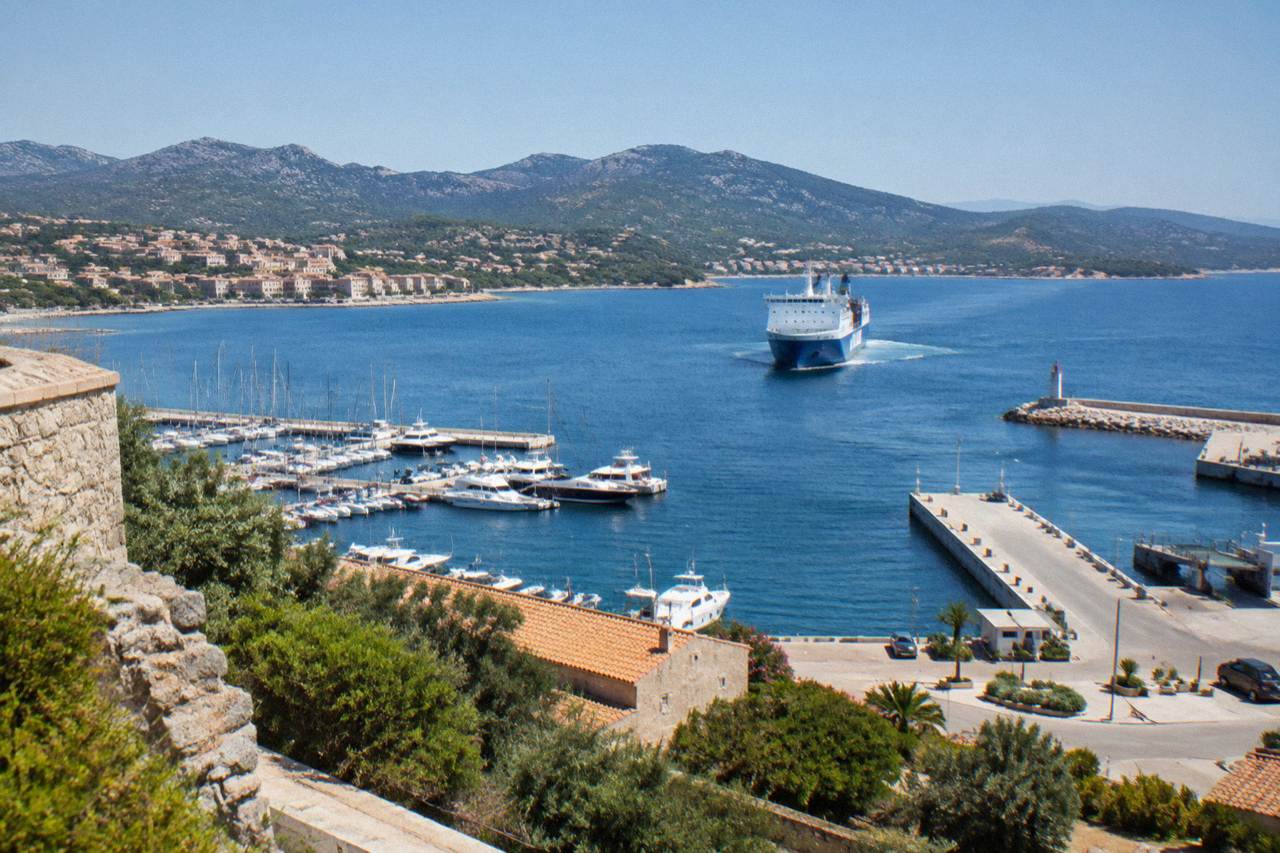
Corsica Linea, La Méridionale, Moby and Corsica Ferries sail to Ajaccio, Bastia, Bonifacio, L'Île-Rousse, Propriano and Porto-Vecchio from Marseille, Toulon, Nice, Livorno, Genoa, Savona and Santa Teresa Gallura.
Corsica is a French Mediterranean island of 8,722 km2 with more than 1,000 km of coastline, and the ferry is the way to arrive with a car, a bike or simply a deck chair. Four operators, Corsica Linea, La Méridionale, Moby and Corsica Ferries, serve seven Corsican ports from mainland France and Italy, and together the island's ports and airports moved more than 8.5 million passengers in 2025 excluding cruise callers, according to the ORTC and DREAL annual report published on 30 May 2026. This Corsica Travel Guide page lays out the routes, the crossing times and what waits at each arrival port.
Which Ferries Sail To Corsica, And From Where?
Four operators serve Corsica: Corsica Linea and La Méridionale from Marseille, Moby from Livorno, Genoa and Santa Teresa Gallura, and Corsica Ferries, which is reported to sail from Toulon and Nice as well as Livorno and Savona. Between them they reach Ajaccio, Bastia, Bonifacio, L'Île-Rousse, Propriano and Porto-Vecchio, and Calvi in season. Corsica Linea sails Marseille to L'Île-Rousse, Bastia, Propriano and Ajaccio. La Méridionale runs Marseille to Ajaccio and Marseille to Porto-Vecchio. Moby links Livorno to Bastia, Genoa to Bastia and Santa Teresa Gallura in Sardinia to Bonifacio, and Moby and Ichnusa Lines kept that short Sardinia route after Sardinia found no rival operator, per an October 2026 report. Corsica Ferries is reported to sail from Toulon and Nice to Ajaccio, Bastia, L'Île-Rousse, Porto-Vecchio and Propriano, and from Livorno and Savona to Bastia; confirm routings on the operator's own site before booking.
What this page can do is map which crossing suits which trip.
| Operator | Or verified routes |
|---|---|
| Corsica Linea | Marseille to L'Île-Rousse, Bastia, Propriano, Ajaccio |
| La Méridionale | Marseille to Ajaccio, Marseille to Porto-Vecchio |
| Moby | Livorno to Bastia, Genoa to Bastia, Santa Teresa Gallura to Bonifacio |
| Corsica Ferries | Toulon and Nice to Ajaccio, Bastia, L'Île-Rousse, Porto-Vecchio, Propriano; Livorno and Savona to Bastia |
For the shorter Italian crossings, see Corsica ferries from Italy and Sardinia, and for the French Riviera route in detail, the Nice to Corsica ferry guide.
How Long Is The Ferry Crossing To Corsica?
Crossing times reported by the aggregator ferrygogo.fr range from about 50 to 60 minutes on the Santa Teresa Gallura to Bonifacio hop up to about 12 to 13 hours, mostly overnight, from Marseille. Livorno to Bastia is reported at about 4 to 5 hours, Savona to Bastia about 6.5 hours, Nice to Bastia about 7.5 to 10 hours and Toulon crossings about 10 to 13 hours. Confirm the exact sailing on the operator's timetable. These are ranges, not promises: day and night departures differ, vessels differ, and schedules shift with the season. The practical split is simple. The Italian crossings are short enough to treat as a shuttle, the Marseille crossings are effectively a floating hotel night, and the Toulon and Nice routes sit between the two.
| Route | Crossing time |
|---|---|
| Santa Teresa Gallura to Bonifacio | about 50 to 60 min |
| Livorno to Bastia | about 4 to 5 h |
| Savona to Bastia | about 6.5 h |
| Nice to Bastia | about 7.5 to 10 h |
| Toulon to Corsica | about 10 to 13 h |
| Marseille to Corsica | about 12 to 13 h, mostly overnight |
The exact ferry length from Nice to Corsica gets its own treatment elsewhere on this site, with the same reported ranges.
Once ashore, the sea stays central to any Corsica trip. Check availability
Which Corsican Port Should You Sail Into?
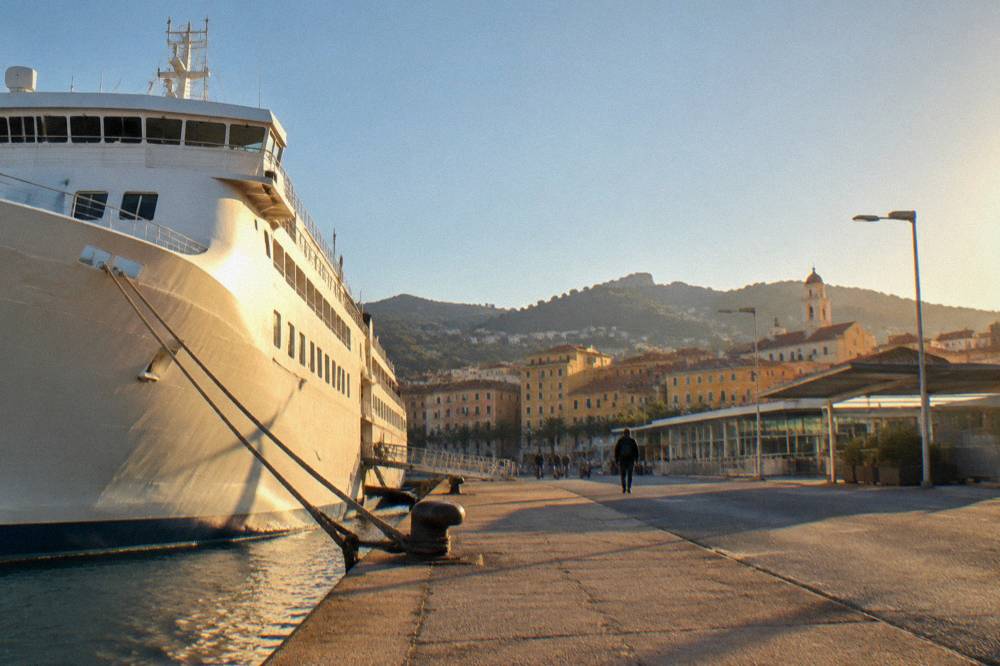
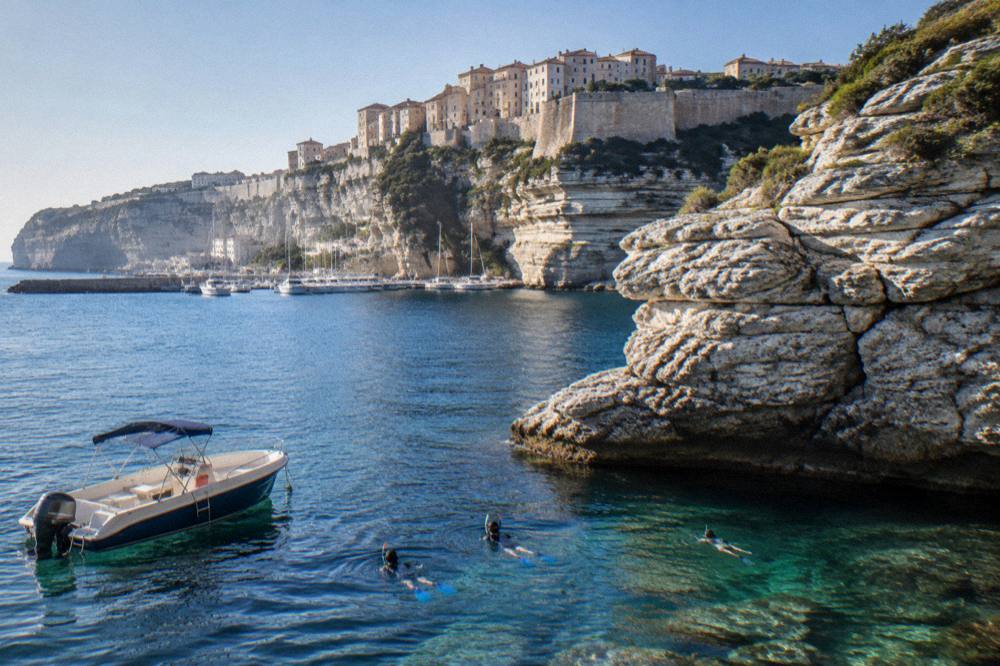
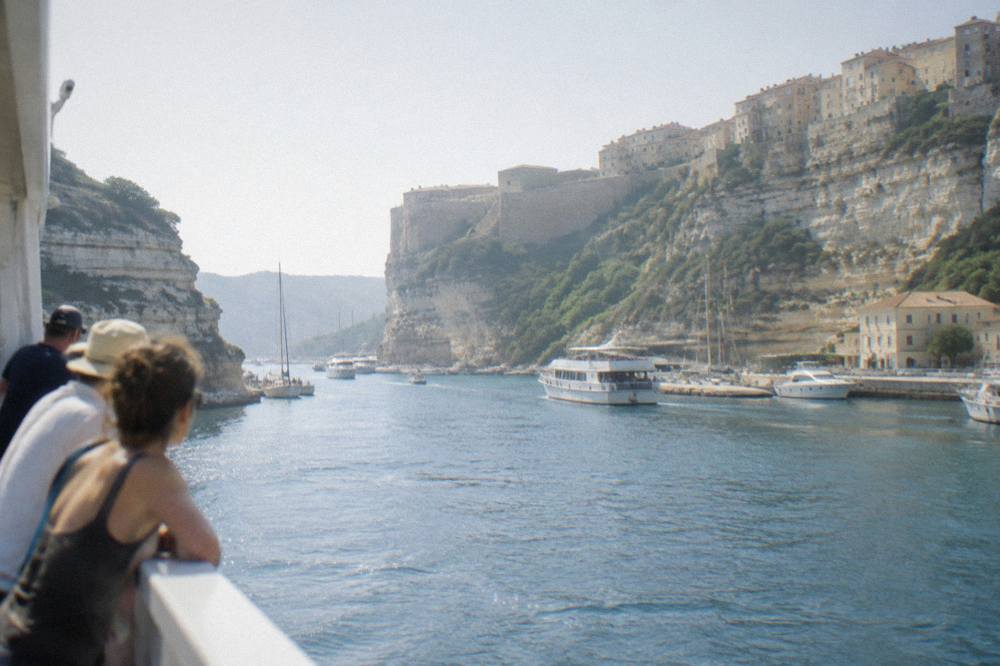
Ajaccio and Bastia are the two big ports, with Ajaccio the island's capital and Napoleon's birthplace and Bastia the second town and the natural gateway for Italian crossings. Bonifacio serves the Sardinia link, Propriano and Porto-Vecchio open the south, and L'Île-Rousse and Calvi serve the Balagne coast in the northwest. Ajaccio, with 76,320 residents per the INSEE census figure published in August 2026, sits on the west coast and puts you within reach of the Îles Sanguinaires and the roads toward Porto. Bastia, 46,867 residents, is the working hub of Haute-Corse with the old harbour at its heart. Bonifacio, perched on its cliffs above the strait, is the port for anyone combining Corsica with Sardinia.
| Corsican port | Served from (reported or verified) | Good base for |
|---|---|---|
| Ajaccio | Marseille, Toulon, Nice | The capital, Îles Sanguinaires, routes to Porto |
| Bastia | Marseille, Livorno, Savona, Genoa, Toulon, Nice | Cap Corse, Saint-Florent, Castagniccia |
| Bonifacio | Santa Teresa Gallura | Bonifacio citadel, Îles Lavezzi, the far south |
| Porto-Vecchio | Marseille, Toulon, Nice | Palombaggia, Santa Giulia, the south coast |
| Propriano | Marseille, Toulon, Nice | Sartène, Rondinara approaches, Valinco |
| L'Île-Rousse | Marseille, Toulon, Nice | The Balagne, Calvi, Désert des Agriates |
| Calvi | Seasonal sailings, confirm with operators | Calvi citadel, the Balagne coast |
Port choice should follow itinerary, not the timetable alone. The island's mountainous interior, topped by Monte Cinto at 2,706 m, means road distances are longer than the map suggests, and arriving at the wrong end can cost a day.
Is The Ferry Better Than Flying To Corsica?
The ferry's advantage is the car: Corsica's beaches, gorges and hilltop villages reward wheels, and no ferry fare figure is published here but the crossings run year round on the core DSP lines from Marseille. Flying into Ajaccio, Bastia, Figari or Calvi is faster, and the four airports are covered in depth on this site. More than 8.5 million passengers passed through Corsica's ports and airports in 2025, cruise callers excluded. The four airports are Ajaccio Napoléon Bonaparte (AJA), Bastia Poretta (BIA), Figari Sud Corse (FSC) and Calvi Sainte-Catherine (CLY). Flyers should start with flights to Corsica and the individual Ajaccio airport and Bastia airport guides, or the overview of Corsica's airports.
| Arrival mode | Entry points | Best for |
|---|---|---|
| Ferry | Ajaccio, Bastia, Bonifacio, L'Île-Rousse, Propriano, Porto-Vecchio | Bringing a car, bikes or luggage-heavy trips |
| Flight | AJA, BIA, FSC, CLY | Speed, short stays, no-car trips based in one town |
A no-car trip is workable from a single base, and getting around Corsica explains the train lines and alternatives. Most itineraries, though, pair a ferry crossing with a hire car, and Corsica car rental and driving in Corsica cover that half of the plan.
What Should You Do In The First Days After Arriving By Ferry?
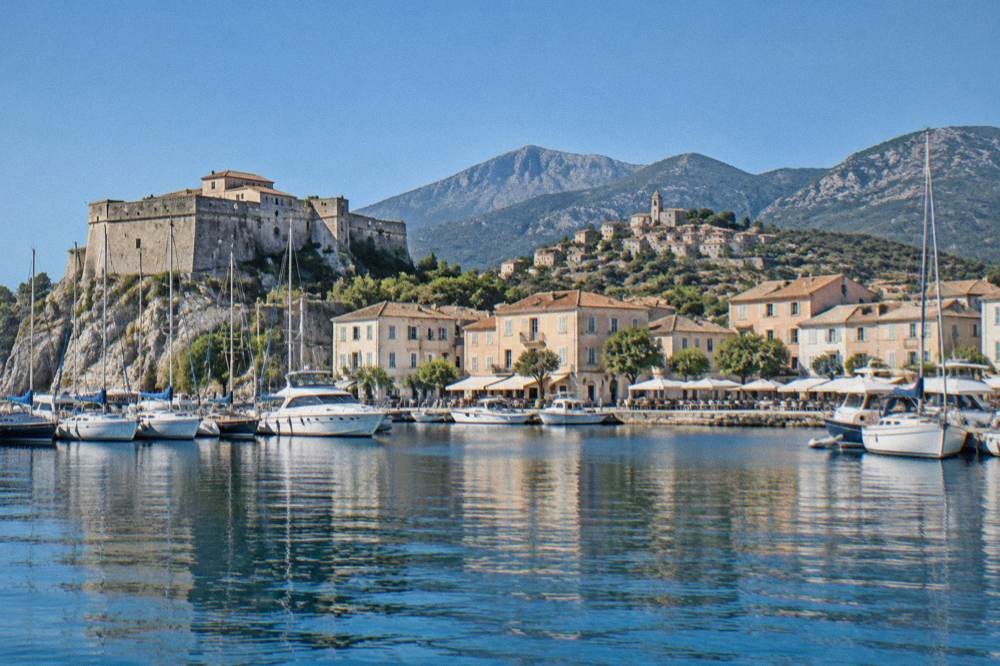
Plan the first two days around your arrival port rather than the whole island: from Bastia, Corte is about one hour's drive, from Ajaccio about one hour and a half, from Calvi about one hour and a half, from Porto-Vecchio about two hours and from Bonifacio about two hours and forty five minutes, per the Musée de la Corse's own access notes. The sea comes first for most coasts: the islands, reserves and gorges are all reachable on organised day trips. Corte, the old capital inland, makes a logical first stop from either big port, and the citadel and Musée de la Corse there cost EUR 5.50 full on a single ticket covering both. From Ajaccio, the museums of Napoleon's birthplace fill a day: Maison Bonaparte is EUR 10 full price, closed Mondays, and the Palais Fesch is EUR 10 full, EUR 6 over 65, free up to 18, daily 09:00 to 17:00.
| From | Drive time to Corte | In |
|---|---|---|
| Bastia | 1 h | Musée de la Corse practical page |
| Ajaccio | 1 h 30 | Musée de la Corse practical page |
| Calvi | 1 h 30 | Musée de la Corse practical page |
| Porto-Vecchio | 2 h | Musée de la Corse practical page |
| Bonifacio | 2 h 45 | Musée de la Corse practical page |
| Propriano | 2 h 45 | Musée de la Corse practical page |
These are the standing road times the museum prints for visitors; live conditions on the mountain passes are published by Inforoutes Corse, and any driver should check the pass accessibility levels before setting out, especially outside summer.
Can You Combine The Ferry With A Boat Trip On The Same Trip?
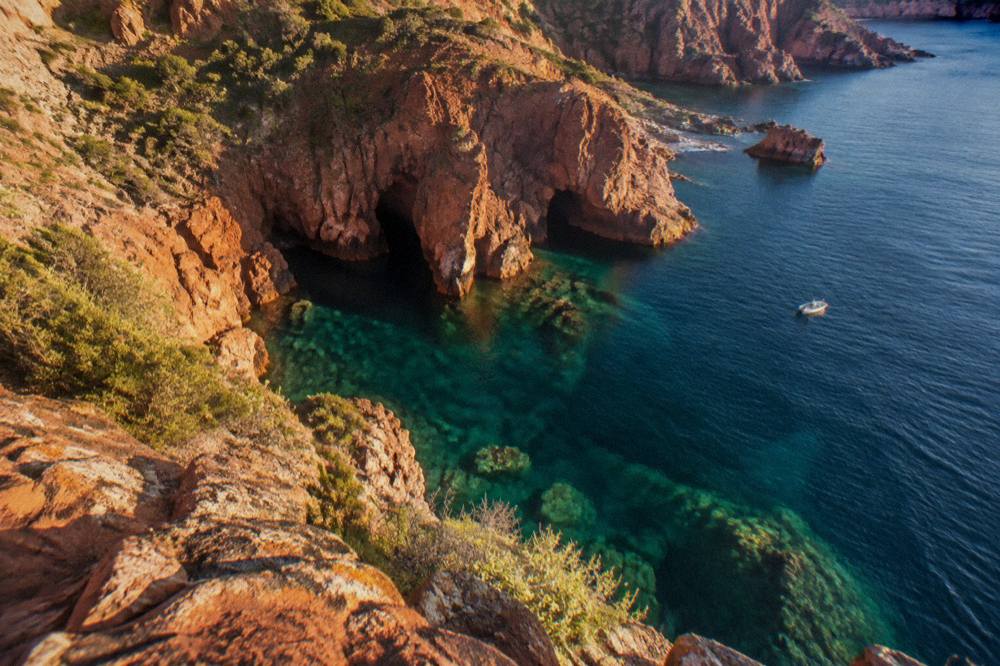
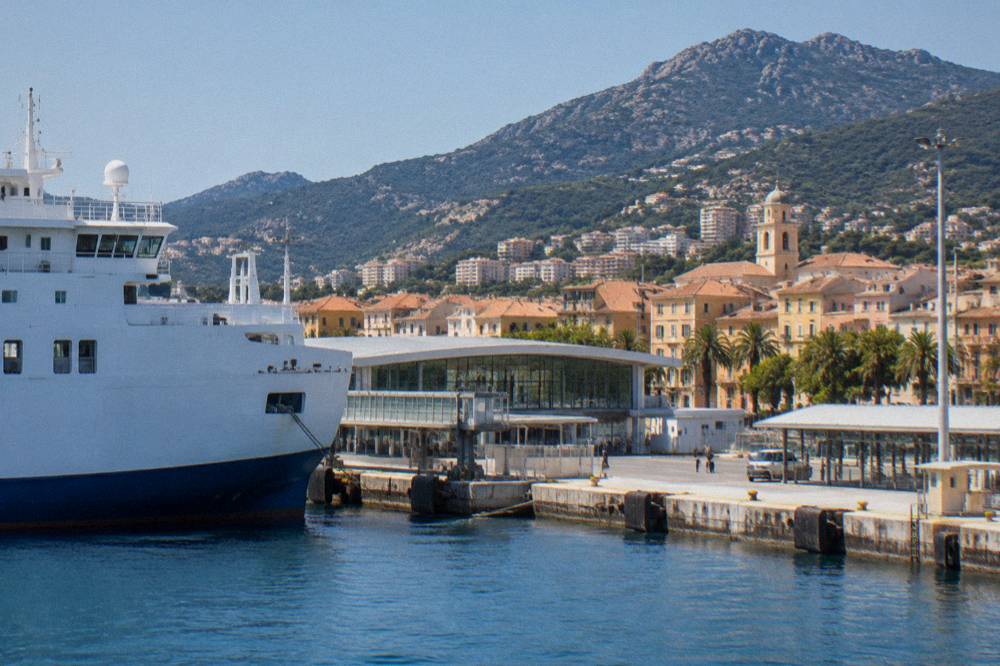
Yes, and the two pair naturally: every major ferry port is also a departure point for boat tours, from the Îles Sanguinaires off Ajaccio to the Îles Lavezzi off Bonifacio, the Scandola reserve from Porto and Calvi, and catamaran trips along the Désert des Agriates coast from L'Île-Rousse. The reserve at Scandola is inscribed UNESCO World Heritage as part of the Gulf of Porto property, and visits are by boat only. The UNESCO property, listed in 1983, is "Gulf of Porto: Calanche of Piana, Gulf of Girolata, Scandola Reserve", 11,800 ha in total. The Scandola reserve itself, created by ministerial order on 9 December 1975 as the first nature reserve in Corsica, covers 1,000 ha of sea and 919 ha of land, managed by the Parc naturel régional de Corse. Its land area is closed to the public, so the boat is the only way in, with no landing in the integral reserve.
For the detailed planning pages, see the Scandola boat tour guide, a Bonifacio boat tour, and the Calanques de Piana tour guide. The food and wine side of the island has its own page at Corsica food and wine tours.
When Is The Best Time To Cross To Corsica?
July averages a mean daily high of 28.6 °C at Ajaccio with 8.6 mm of rain, and August 29.2 °C with 15.8 mm, on the Météo-France station normals for 1991 to 2020, while November carries 111.8 mm of rain at Ajaccio and 134.3 mm at Bastia. Summer is hot and dry and winter mild and wet, with snow only on the high mountains, so the crossing season and the island season overlap from late spring to early autumn. No month is named as the single best one here: the figures are station averages and the choice depends on whether the plan is beaches, hiking or museums. The full month-by-month breakdown is on Corsica weather by month, and the planning trade-offs are weighed in the best time to visit Corsica.
| Month | Ajaccio high °C | Ajaccio rain mm | Bastia high °C | Bastia rain mm |
|---|---|---|---|---|
| May | 22.1 | 49.8 | 22.4 | 53.7 |
| Jun | 25.9 | 25.9 | 26.4 | 38.8 |
| Jul | 28.6 | 8.6 | 29.4 | 13.8 |
| Aug | 29.2 | 15.8 | 29.8 | 21.1 |
| Sep | 26.1 | 57.8 | 26.0 | 74.5 |
| Oct | 22.8 | 85.7 | 22.0 | 126.5 |
One summer rule matters ashore whatever the month: from 15 June to 30 September it is forbidden to light a fire or smoke in forests, maquis and massifs, and on high-risk days access to some massifs can be restricted, with the risk map updated at 18:00 for the next day.
What Should Hikers Know Before Booking The Ferry?
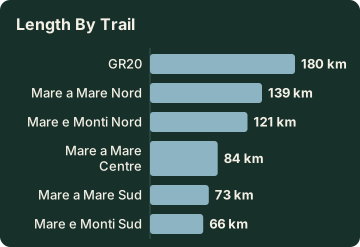
The GR20 runs 180 km north to south in about fifteen stages of 4 to 8.5 hours, with PNRC refuges guarded from 16 May to 4 October in the 2026 season, and refuge nights must be booked online: a bunk is EUR 20 per person, a bivouac pitch EUR 12, a rented tent for one EUR 27 and for two EUR 39. Wild camping is banned across the island, and no GR20 departures are allowed from Calenzana after 11:00. The shorter long trails are also packable around a ferry crossing: Mare a Mare Nord is 139 km, Mare a Mare Centre 84 km, Mare a Mare Sud 73 km, Mare e Monti Nord 121 km and Mare e Monti Sud 66 km, all per the PNRC's own brochure. The full detail sits in the Corsica GR20 guide and the wider hiking in Corsica page.
| Trail | Length | Stages or days | Total climbing |
|---|---|---|---|
| GR20 | 180 km | about 15 stages | not stated |
| Mare a Mare Nord | 139 km | 8 to 12 days | 5,900 m |
| Mare a Mare Centre | 84 km | 7 days | 3,900 m |
| Mare a Mare Sud | 73 km | 5 days | 3,200 m |
| Mare e Monti Nord | 121 km | 10 days | 6,100 m |
| Mare e Monti Sud | 66 km | 5 days | 2,700 m |
Hikers arriving with a car should also read the driving guidance: narrow mountain roads are the norm, and Inforoutes Corse publishes live conditions and pass accessibility levels.
How Do You Plan Around The Ferry If You Have No Car?
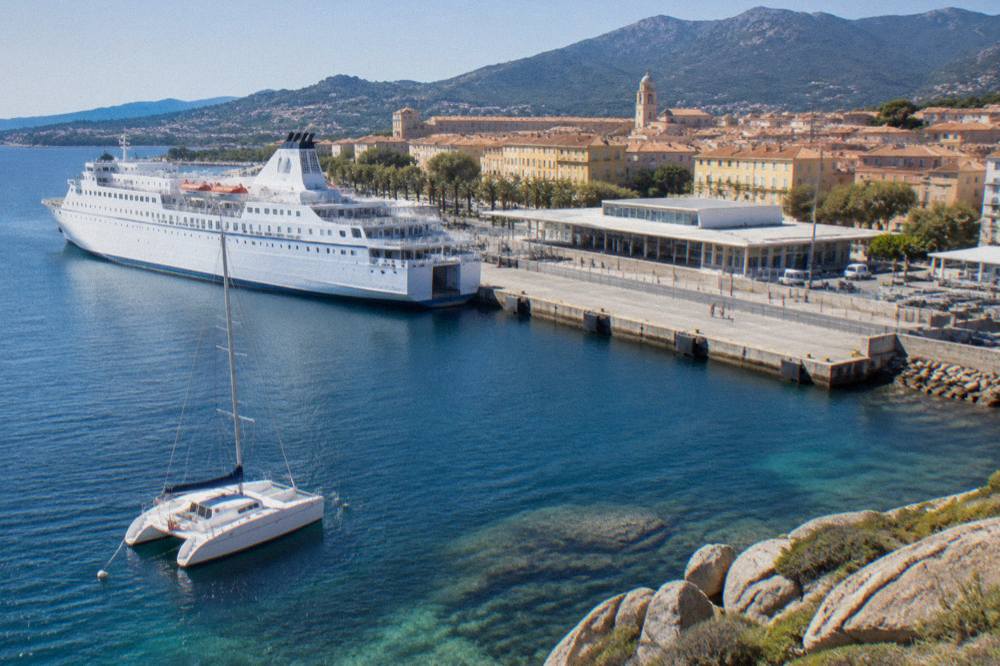
Stay in one port town and use the sea: Ajaccio, Bastia, Bonifacio and Porto-Vecchio all support a car-free week built on boat trips, town museums and walkable old quarters, and Ajaccio's Maison Bonaparte is 200 m from the bus station and ferry terminal on Rue Saint-Charles, with bus 8 from the airport. The Chemins de fer de la Corse are reported to run Ajaccio to Bastia via Corte, Ponte-Leccia to Calvi, and the Balagne coastal line Calvi to L'Île-Rousse. For a single-base plan, the destination overviews help: Ajaccio, Bastia, Bonifacio, Porto-Vecchio and Calvi and the Balagne each have their own page. The itinerary pages then stitch towns together, from Corsica in 3 days to Corsica in 14 days.
Where to sleep follows the same logic: where to stay in Corsica, luxury hotels in Corsica and Corsica villas and vacation rentals cover the bases, and Corsica camping covers the budget end, with the wild-camping ban noted above.
What About Safety, Costs And Practicalities Ashore?
Emergency numbers in Corsica are 112, 15 for medical, 17 for police, 18 for fire, 114 by SMS or app and 196 for sea rescue, with mountain rescue via the PGHM in Ajaccio on 04 95 24 24 00. The currency is the euro, service is included in restaurant prices by law so tips are optional, and the UK FCDO notes a high wildfire risk in France from April to October. Ajaccio ran seven lifeguard posts on its main beaches from 1 July to the end of August 2026, and Haute-Corse beaches are reported to be supervised by volunteer firefighters from about 1 July to 31 August. The US State Department lists France at Level 2, Exercise Increased Caution, as reported on its own advisory page. Budgeting help lives on Corsica cost and budget, and the safety detail, including the sea and mountain specifics, on Corsica safety, with general advice on Corsica travel tips.
Common Questions About The Ferry To Corsica
How Long Is The Ferry To Corsica?
Reported crossing times range from about 50 to 60 minutes on the Santa Teresa Gallura to Bonifacio hop, about 4 to 5 hours from Livorno to Bastia, about 7.5 to 10 hours from Nice to Bastia, about 10 to 13 hours from Toulon, and about 12 to 13 hours, mostly overnight, from Marseille. Confirm exact sailings with the operator.
Which Ports In Corsica Can You Arrive At By Ferry?
Ajaccio, Bastia, Bonifacio, L'Île-Rousse, Propriano and Porto-Vecchio. Corsica Linea and La Méridionale serve the Marseille routes, Moby serves Livorno, Genoa and Santa Teresa Gallura, and Corsica Ferries is reported to sail from Toulon, Nice, Livorno and Savona.
Can You Take A Car On The Ferry To Corsica?
Yes, the ferries carry cars, and bringing one is the common way to reach the beaches, gorges and hilltop villages. Corsica's narrow mountain roads are the trade-off, and Inforoutes Corse publishes live road conditions and pass accessibility levels.
Is There A Ferry From Sardinia To Corsica?
Yes, Moby and Ichnusa Lines sail Santa Teresa Gallura to Bonifacio, a crossing of about 50 to 60 minutes, and the route was retained after Sardinia found no rival operator, per an October 2026 report. The detail is on the Corsica Sardinia ferry guide.
The planning comparison between ferries and the four airports is set out above.
Do You Need A Passport For The Ferry To Corsica?
Corsica is part of France, so entry rules are France's rules, and the requirements depend on your nationality rather than the crossing. Check current French entry requirements with your own foreign ministry before travelling.
Arriving by sea sets the tone for the whole island: the coastline unrolls for more than 1,000 km, the mountains close behind the ports, and every arrival town, from Bastia's old harbour to Bonifacio's cliffs, is itself one of the sights. Start with things to do in Corsica or the Corsica map to place the ports against the beaches and gorges, and plan the crossing around the itinerary rather than the other way round.