Is Corsica In The Schengen Area?
Yes, Corsica is in the Schengen Area. The island is part of France, and France is a Schengen member. What that means for passports, ferries, flights and day trips to Sardinia.
Corsica, the French Mediterranean island with more than 1,000 km of coastline and an interior that climbs to Monte Cinto at 2,706 m, is administered as part of France. The Collectivité de Corse, a single territorial authority with special status in place since 1 January 2018, runs island affairs under French law. That single fact settles the border question: France is a member of the Schengen Agreement, and French territory in the Mediterranean, Corsica included, sits inside the Schengen Area. There are no internal border controls on flights from Nice or Paris, no Schengen checkpoint on the ferry from Marseille, and no separate visa regime for the island. Passport rules, arrival formalities, day trips to Sardinia and the paperwork quirks that do exist, all reported from primary sources, fill this guide.
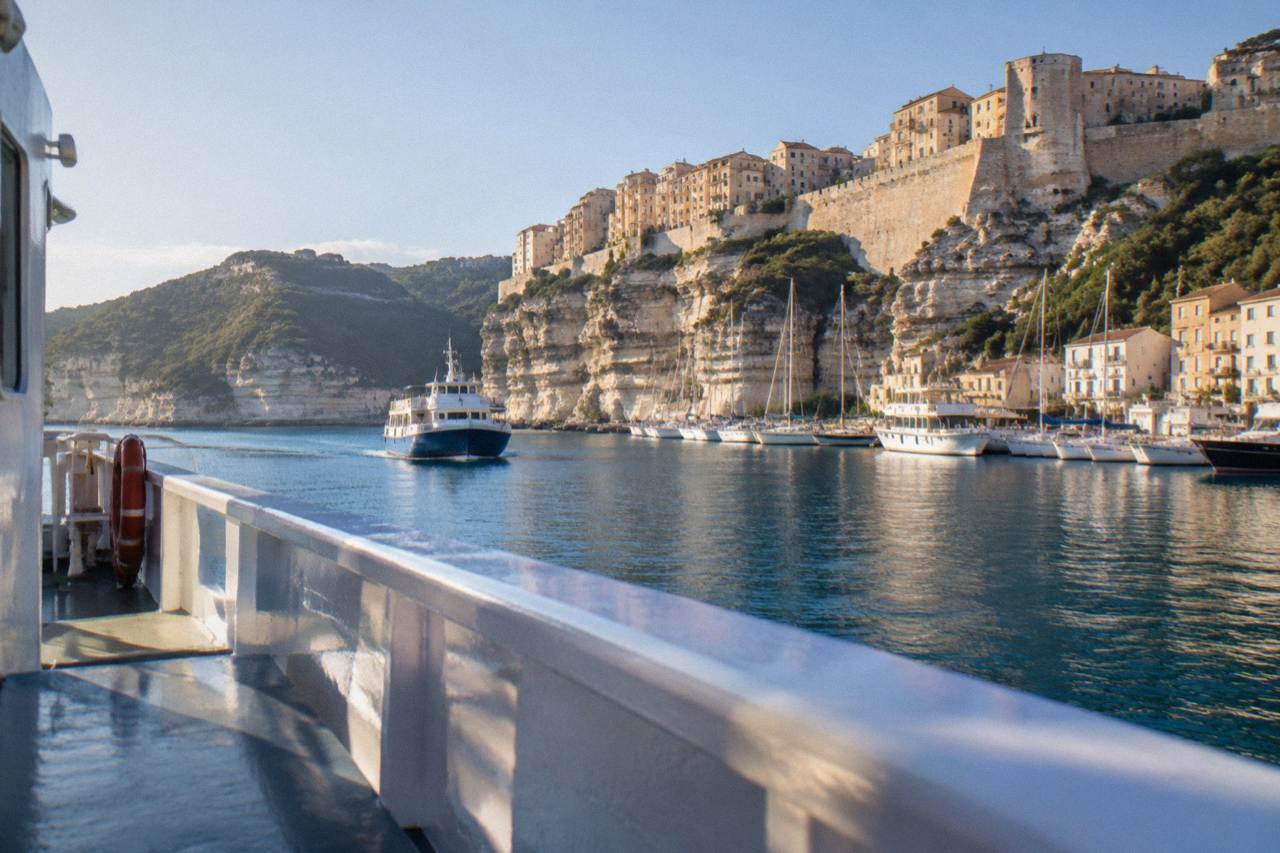
Yes, Corsica is inside the Schengen Area. The island is an integral part of France, France is a Schengen member state, and the free-movement zone applies to the whole of French territory including its Mediterranean islands. A traveller admitted to Schengen through Paris, Milan or Barcelona needs no further authorisation to board a flight or ferry to Corsica, and no border post stands between the island and the French mainland.
The practical effect is straightforward. A flight from Nice or a crossing from Marseille is treated as domestic-style movement within the Schengen zone, so there is no systematic passport control on arrival at Ajaccio Napoléon Bonaparte (AJA), Bastia Poretta (BIA), Figari Sud Corse (FSC) or Calvi Sainte-Catherine (CLY), the island's four airports, nor at the ferry ports of Ajaccio, Bastia, Bonifacio, L'Île-Rousse, Propriano and Porto-Vecchio. Random or targeted police checks can happen anywhere in France, and carriers still verify identity documents at check-in, so a valid passport or national ID card should always travel with you.
One distinction worth separating from the border question: Corsica's position inside the European Union's customs and VAT territory differs from metropolitan France in specific tax respects, but that has nothing to do with Schengen. The border-free zone governs people, not goods or tax treatment. If you have read that Corsica is "outside" something European, the reference is almost certainly to fiscal rules rather than to passport checks. For the island's political status more broadly, the companion page is Corsica part of France or Italy covers the history, and where Corsica is located fixes the geography.
| Travel situation | Border check | Document to carry |
|---|---|---|
| Flight from mainland France (Paris, Nice, Marseille) | None on arrival | Passport or EU national ID card |
| Flight from another Schengen country (Italy, Germany, Spain) | None on arrival | Passport or accepted ID |
| Flight or ferry from a non-Schengen country | Yes, Schengen external border | Passport, plus visa if required |
| Ferry from Marseille, Toulon or Nice | None on arrival | Passport or EU national ID card |
| Ferry from Livorno, Savona or Genoa (Italy, Schengen) | None on arrival | Passport or accepted ID |
| Ferry from Santa Teresa Gallura (Sardinia, Schengen) | None on arrival | Passport or EU national ID card |
Do You Need A Passport To Enter Corsica?
For citizens of the European Union, a national identity card is enough to enter Corsica, because France accepts ID cards for travel within the Schengen zone and the island imposes no separate requirement. Citizens of the United Kingdom, the United States, Canada and other visa-exempt countries need a valid passport, since their entry into Schengen is passport-based. Everyone should carry the document they entered France or Italy with, since carriers check identity at embarkation and police checks are legal anywhere in the zone.
The Schengen rules that matter here are the ones about the external border. Your "entry" into the free-movement zone happens once, at the first airport or port where you arrive from outside: Paris, Marseille, Rome or wherever your journey starts. Once stamped or admitted there, a hop to Corsica is an internal movement. Visa-exempt visitors should also remember that the 90-days-in-any-180 limit applies to the whole Schengen zone combined, and days spent in Corsica count against the same allowance as days spent in Paris or Rome.
Third-country nationals who need a visa for France need the same Schengen visa for Corsica, nothing more and nothing less. The island has no special permit, no island visa and no additional form. The rules call for uniform application of French entry law across the territory.
Can You Cross To Sardinia Or Italy Without A Border Check?
Yes. Sardinia is part of Italy, Italy is a Schengen member, and the short crossing between Bonifacio and Santa Teresa Gallura is an internal Schengen movement with no passport control on either side. The route is served by Moby and Ichnusa Lines, and a report of 9 October 2026 confirmed the two operators keep the route after Sardinia found no rival operator, with authorisation running from November 2026 to October 2027. The crossing takes about 50 to 60 minutes, so it works as a day trip.
That makes the Strait of Bonifacio one of the easier international hops in Europe. You board in one country and land in another roughly an hour later, with no border formalities, because both shores sit inside the same free-movement zone. Carry your passport or ID card anyway; operators verify identity documents at check-in as a matter of course, and an unscheduled document check is always possible inside Schengen.
The Italy side is the same. Livorno to Bastia takes about 4 to 5 hours, Savona to Bastia about 6.5 hours, and Genoa to Bastia is served seasonally by Moby. None of these crossings involves a Schengen border post, since both ends are inside the zone. The companion guide to the Corsica Sardinia ferry route collects the practical details, and the question of how many days in Corsica is enough matters if you are weighing a day away from the island against time on its own beaches.
Is Corsica Outside The European Union For Customs Or Taxes?
Corsica is part of the European Union and part of France's customs territory, so the Schengen answer and the customs answer are both yes. Where the island differs from the mainland is in specific indirect-tax treatment: certain excise and VAT arrangements apply differently in Corsica under French and EU law. Those fiscal carve-outs affect prices on the island, not borders, and they change nothing about passport controls, freedom of movement or the documents a visitor carries.
Travellers sometimes notice that alcohol, tobacco or fuel prices on the island do not match mainland French prices and wonder whether they have crossed into a different customs zone. The explanation is tax treatment, not a border. For a visitor the practical point is simpler: nothing you declare or carry changes because you flew from Paris to Ajaccio, and goods bought in Corsica move within France and the EU as they would from any French region. More of these guides are collected on Corsica Travel Guide.
The currency follows the same logic. Corsica uses the euro, like the rest of France, a fact confirmed across official French sources. Prices for sights are quoted in euros: Maison Bonaparte in Ajaccio charges EUR 10 full price, the Palais Fesch EUR 10 full and EUR 6 for over-65s, and the Musée de la Corse in Corte EUR 5.50, with one ticket covering both the museum and the citadel. The page on what currency is used in Corsica expands on money matters.
| Question | Answer | Why |
|---|---|---|
| Is Corsica in the Schengen Area? | Yes | French territory, France is a Schengen member |
| Is Corsica in the European Union? | Yes | Integral part of France |
| Is a passport needed for EU citizens? | No, a national ID card suffices | French domestic travel rules |
| Are there border checks from mainland France? | No systematic checks | Internal Schengen movement |
| Are there border checks from Italy or Sardinia? | No systematic checks | Both countries in Schengen |
| Does the 90/180 Schengen rule apply? | Yes | Island time counts against the shared allowance |
| Currency on the island | Euro | Part of France and the euro area |
What Should Non-EU Visitors Know Before Flying To Corsica?
Non-EU visitors enter Schengen once, at their first point of arrival in the zone, and Corsica adds no second step. A traveller flying from New York via Paris clears the external border in Paris, then boards the Ajaccio flight as an internal passenger. The US State Department lists France at Level 2, Exercise Increased Caution, which applies nationwide including Corsica, and the UK Foreign Office notes a high risk of wildfires in France during the summer season, April to October. Neither advisory concerns borders.
Visa-exempt travellers should count days across the whole zone. Two weeks in Corsica followed by a week in Tuscany draws on the same 90-day pool, because both are inside Schengen. Keep the passport stamp from your first entry point legible, since it is the reference for any later check, and carry the passport itself rather than a photocopy when moving between the mainland and the island.
After arrival, the island's own rules matter more than border ones. From 15 June to 30 September it is forbidden to light a fire or smoke in forests, maquis and massifs, a standing rule reported on the PNRC's GR20 page, and the fire-risk access map for the massifs is updated each evening at 18:00 for the next day. Emergency numbers are the standard French ones: 112 as the EU-wide number, 15 for medical, 17 for police, 18 for fire, 196 for sea rescue. The page on whether Corsica is safe for tourists collects the safety picture in one place.
Does Schengen Status Change How You Travel Inside Corsica?
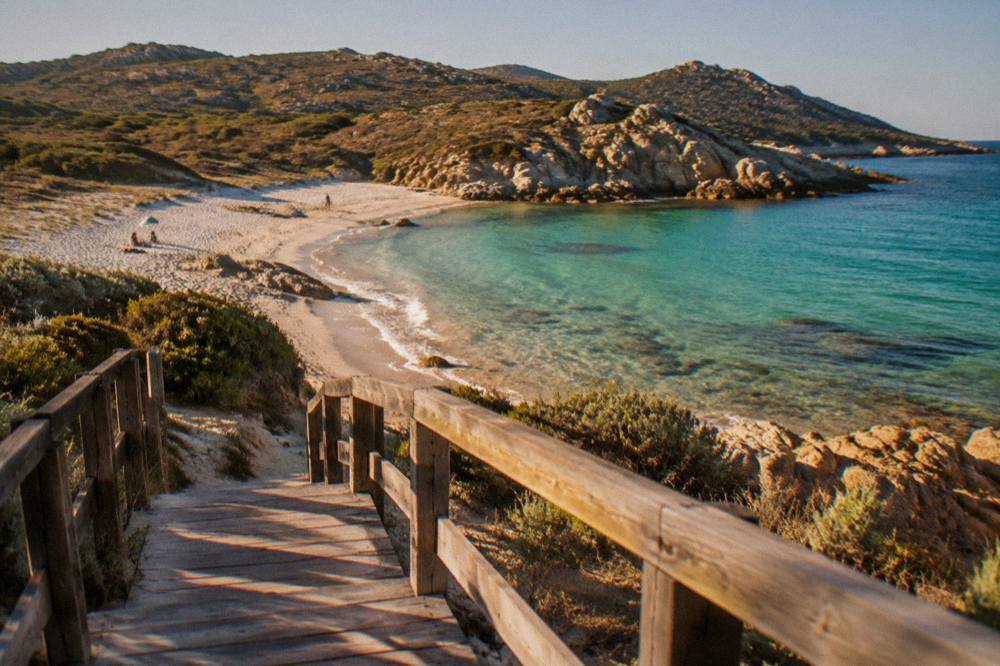
No. Once you are on the island, Schengen plays no further role in daily travel. Movement between Ajaccio, Bastia, Bonifacio, Porto-Vecchio, Calvi and Corte is entirely domestic French travel. The same goes for the trains run by the Chemins de fer de la Corse, boat trips to the Scandola Reserve, and checking Inforoutes Corse before mountain drives: no visa, no border form, just a ticket or a live road map.
The Chemins de fer de la Corse run Ajaccio to Bastia via Corte, Ponte-Leccia to Calvi, and the Balagne coastal line between Calvi and L'Île-Rousse, reported by the operator's timetable pages. Road conditions on the island's passes are published live by Inforoutes Corse, which is the standing pattern to check before any mountain drive; transient closures come and go with storms and works, so the live map, not a guide page, is the authority. Whether you need a car at all is a separate question, covered at do you need a car in Corsica.
Boat trips are the other half of island transport, and the biggest names in Corsican waters need no border thinking at all. The Scandola Reserve, part of the UNESCO property "Gulf of Porto: Calanche of Piana, Gulf of Girolata, Scandola Reserve" inscribed in 1983, is closed to walkers and can be visited by boat only, per the reserve's official access rules. The Check availability link beside this paragraph leads to the operator's live listing for an eco-friendly Scandola boat tour from Ota, a small-group option that fits the reserve's boat-only rule. Bookings like these are domestic French products: no visa, no border form, just a ticket and a departure point on the Golfe de Porto.
Why Does The Question Come Up At All?
The confusion has three roots: Corsica's island position, its special territorial status, and its proximity to Italy. The Collectivité de Corse, a single territorial authority with special status since 1 January 2018, replaced the earlier arrangements and gives the island a distinctive political identity, which can read as separateness to an outside reader. Geographically the island sits closer to the Italian coast than to Paris in travel terms, the local language is Corsican, and the short Sardinia crossing makes international movement feel routine. None of that touches the border map.
The special status is real but administrative. It concerns how competences are organised between the island authority and the French state, not sovereignty or borders. The Corsican language question is covered in depth on this site's language page; the Collectivité de Corse runs Corsican-language programmes including immersion schools, a fact stated on its own site. Culture, language and internal autonomy coexist with the plain legal reality: French law, French borders, Schengen membership.
For trip planning, the answer to the Schengen question should recede into the background, and the decisions that actually shape a visit should come forward: how many days to give the island, which coast to base on, and whether the GR20, with its 2026 refuge season running 16 May to 4 October under PNRC management, forms part of the plan. The 180-km trail runs north to south in about fifteen stages of 4 to 8.5 hours, and refuge nights, bunks at EUR 20 per person and bivouac pitches at EUR 12, must be booked online in advance. None of that involves a border.
Common Questions About Corsica And Schengen
Is Corsica In The Schengen Area?
Yes. Corsica is part of France, France is a Schengen member state, and the border-free zone applies to the whole of French territory, the island included. There are no internal border controls on flights or ferries from mainland France or from Italy.
Do I Need A Passport To Travel From Mainland France To Corsica?
EU citizens can travel with a national identity card, since the journey is internal French travel inside Schengen. Non-EU visitors need the passport they used to enter the Schengen zone, and everyone should carry a valid document because carriers verify identity at check-in.
Can I Visit Sardinia From Corsica Without Border Formalities?
Yes. The Bonifacio to Santa Teresa Gallura crossing takes about 50 to 60 minutes and is an internal Schengen movement, with no passport control on either side. Moby and Ichnusa Lines operate the route under an authorisation running from November 2026 to October 2027.
Does The 90-Day Schengen Limit Include Days Spent In Corsica?
Yes. The 90-days-in-any-180 rule for visa-exempt travellers applies to the entire Schengen zone, and time spent in Corsica counts against the same shared allowance as time spent anywhere in France, Italy or the other member states.
Is Corsica In The European Union If It Is Not Part Of Mainland France?
Yes. Corsica is an integral part of France and of the European Union. The island's special territorial status concerns how competences are organised internally, not membership of the EU or of the Schengen Area.
Are There Any Customs Limits Between Corsica And Mainland France?
Goods bought in Corsica move within France and the EU. The island's indirect-tax treatment differs from the mainland in specific respects under French law, which can affect local prices, but that is a tax matter with no bearing on border checks or the documents visitors carry.
The short version: the island of Corsica sits inside the Schengen Area, inside the European Union and inside France, and every crossing to it from Nice, Marseille, Livorno or Sardinia is an internal movement with no border post. Plan the trip around the sea, the mountains and the calendar instead, and let the border question stay answered on this page.