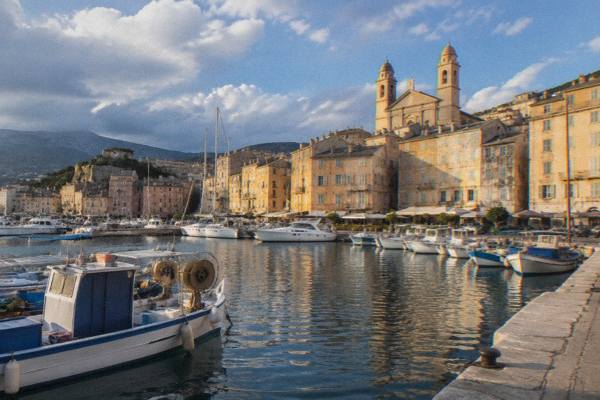
Is There A Train In Corsica?
Yes, Corsica has a train: the Chemins de fer de la Corse runs Ajaccio to Bastia via Corte, Ponte-Leccia to Calvi, and the Balagne coastal line to L'Île-Rousse. Here is what it covers.
Corsica, the French Mediterranean island of 8,722 km2 and more than 1,000 km of coastline, does have a railway, and it is a small one. The Chemins de fer de la Corse is reported to run three lines: the main axis from Ajaccio to Bastia via Corte, a branch from Ponte-Leccia to Calvi, and the Balagne coastal line between Calvi and L'Île-Rousse. That network serves a real but narrow slice of the island, and everything south of Ajaccio, Bonifacio, Porto-Vecchio and the Golfe de Porto depends on roads, boats and the island's four airports. This page on Corsica Travel Guide sets out what the train covers, where it stops being useful, and how the rest of the island's transport fits around it.
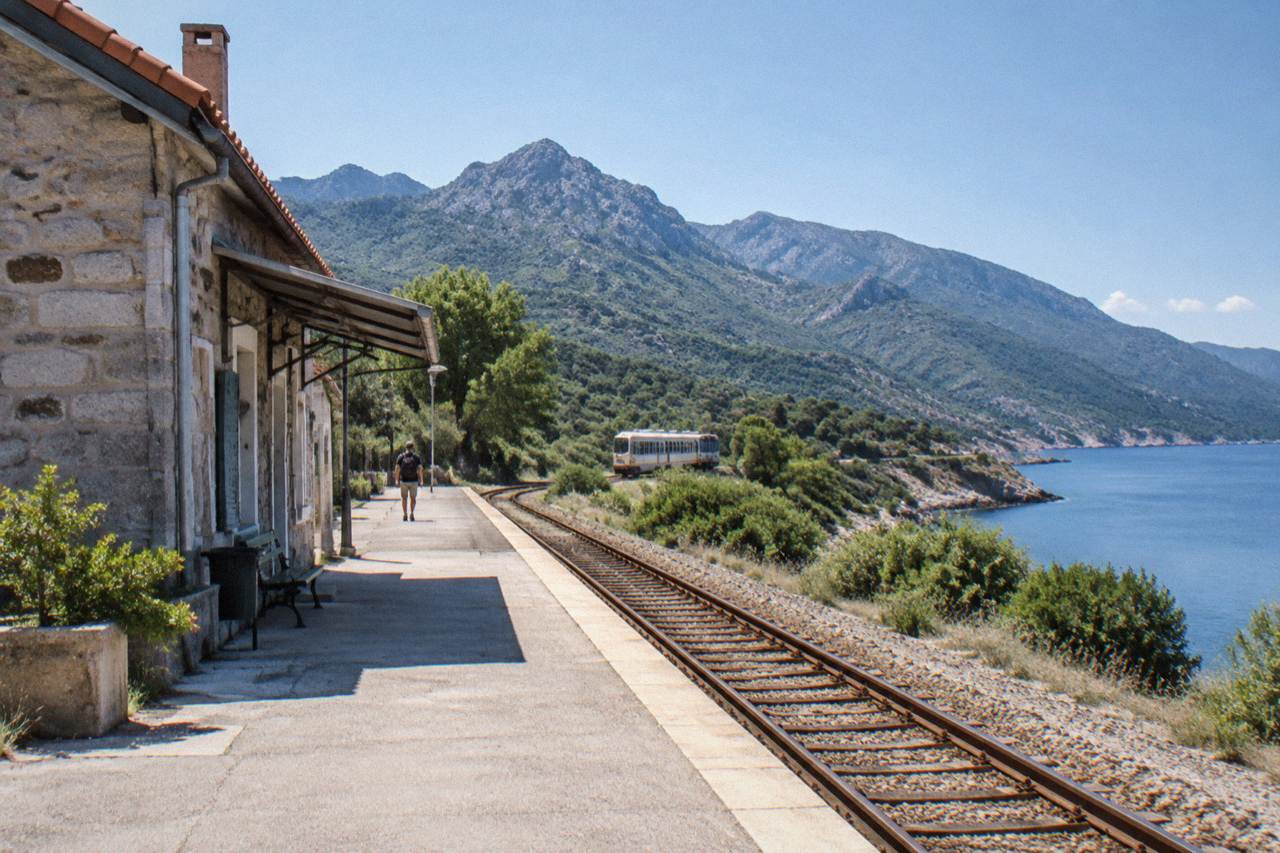
Yes, Corsica has a train network, the Chemins de fer de la Corse, and it is reported to operate three lines: Ajaccio to Bastia via Corte in the island's interior, Ponte-Leccia to Calvi in the Balagne, and a coastal line between Calvi and L'Île-Rousse on the northwest coast. The railway connects some of the island's main towns, but it covers only part of Corsica, and whole regions, including Bonifacio, Porto-Vecchio and the Golfe de Porto, have no rail service at all.
The network matters because Corsica's geography fights easy travel. The interior is mountainous, Monte Cinto reaches 2,706 m, and the main towns sit on the coast at points quite far apart as the crow flies. A rail spine through Corte, the old capital, which sits inland, links the two largest towns, Ajaccio with 76,320 residents and Bastia with 46,867, through the middle of the island rather than around it. From Bastia, the road time to Corte is about 1 hour, from Ajaccio about 1 hour 30, figures published by the Musée de la Corse for visitors to the citadel, and the train follows a broadly similar corridor.
What the railway does not do is ring the island. There is no line down the east coast to Porto-Vecchio, no line to Bonifacio at the southern tip, and no rail access to the Calanques de Piana or Scandola on the west coast, where travel is by boat, as the reserve's rules require. Planning a Corsica trip means combining the train with road transport and, for the seaside highlights, with boat trips. The tour of the Corsican train on this site covers how travellers build a day around the railway.
Which Lines Do The Chemins De Fer De La Corse Operate?
The Chemins de fer de la Corse is reported to operate three lines: the Ajaccio to Bastia line via Corte, the branch from Ponte-Leccia to Calvi, and the Balagne coastal line running between Calvi and L'Île-Rousse. Together they link Ajaccio, Corte, Ponte-Leccia, Calvi and L'Île-Rousse, with Bastia at the northern end of the main axis, and they leave the island's south and far west without rail service.
| Line | Route | What it connects |
|---|---|---|
| Main line | Ajaccio to Bastia via Corte | The capital, the interior town of Corte, and the island's second town |
| Balagne branch | Ponte-Leccia to Calvi | The main-line junction town with the Balagne coast |
| Balagne coastal line | Calvi to L'Île-Rousse | The two principal Balagne coastal towns |
The three lines interlock at two points. Ponte-Leccia is where the Calvi branch leaves the Ajaccio to Bastia axis, and Calvi is where the coastal line begins its run up the coast to L'Île-Rousse. That makes the Balagne, the northwest region around Calvi and L'Île-Rousse, the part of Corsica where the train is most woven into local travel, with a coastal line serving towns that also appear in the Calvi and the Balagne guide. Ajaccio itself is the island capital and Napoléon's birthplace, covered in detail on Ajaccio city guide.
Timetables change with the seasons and are published by the operator, so check them when planning a specific journey.
For travellers pairing the railway with other days out, these options sit in the same regions the train reaches or borders:
Where Does The Corsica Train Actually Take You?
The train takes you between Ajaccio, Corte and Bastia on the main line, and between Ponte-Leccia, Calvi and L'Île-Rousse on the western branches. It reaches the island's two biggest towns, the interior capital of Corte and the Balagne coast, but it does not reach Bonifacio, Porto-Vecchio, Propriano, Sartène, Saint-Florent or the Golfe de Porto, so a rail-only trip sees only part of Corsica.
Corte is the highlight many travellers attach to the railway. The town holds the Citadelle de Corte and the Musée de la Corse, where one ticket at EUR 5.50 covers both museum and citadel, open daily 10:00 to 19:00 from 1 May to 31 October. The museum's own practical page lists road times to Corte from six directions, from 1 hour from Bastia to 2 hours 45 from Bonifacio or Propriano, which gives a sense of how the interior sits between the coasts. The Restonica valley, a short way from town, is covered on the Restonica valley guide.
At the Ajaccio end, the station sits in the island's capital, where Maison Bonaparte on Rue Saint-Charles is open every day except Monday, EUR 10 full price, free for EU residents under 26, and 200 m from the bus station and ferry terminal. The Palais Fesch, EUR 10 full, EUR 6 over 65, free up to 18, is open daily 09:00 to 17:00. Both make an easy half-day either side of a train departure.
Beyond the railheads, boat and road take over. From Saint-Florent, the beaches of the Désert des Agriates, Saleccia and Lotu, are reached by boat shuttle, by 4x4 track from Casta, or on foot, as the regional tourism body describes. A guided Cap Corse and Agriates half-day trip covers that country in one outing, and Check availability for the dates of your stay.
Do You Still Need A Car In Corsica?
A car remains useful in Corsica even with the train, because the railway serves only the Ajaccio, Corte, Bastia and Balagne corridor, while the beaches and sights of the south and west, Palombaggia, Santa Giulia, Rondinara, Bonifacio, the Calanques de Piana and Scandola, have no rail access and limited alternatives. Many travellers combine the two: train for the main axis, car or boats for everything else.
The fuller reasoning sits on do you need a car in Corsica, and the transport picture on how do you get to Corsica. What is safe to say here is that the railway reduces, but does not remove, the case for driving. Mountain roads are a noted characteristic of the island's terrain, and Inforoutes Corse publishes live road conditions and accessibility levels for the main mountain passes, so road travel benefits from a check before setting out on high routes.
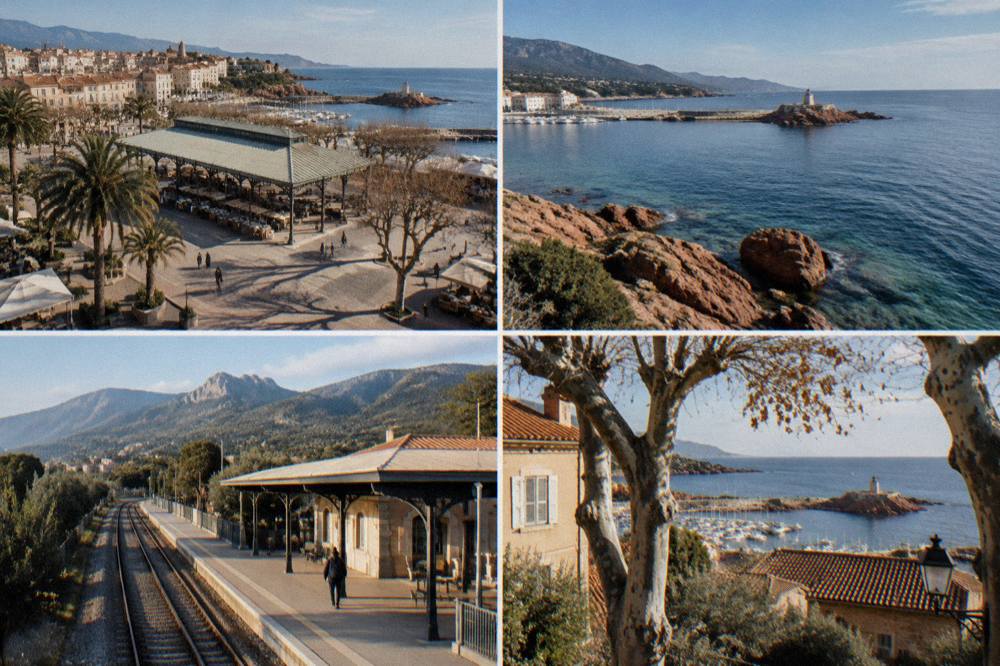
For the coast, boats fill many of the gaps the rails leave. Scandola is the clearest case: the reserve's terrestrial area is closed to the public and visits are by boat only, so no road or rail option exists. The same applies to Girolata, reached by sea or on foot. These realities shape the day trips collected on things to do in Corsica, where sea-based outings dominate the west and south coasts.
How Does The Train Fit Corsica's Ferries And Airports?
The Corsica train fits into an island transport system built around ferries and four airports: Ajaccio Napoléon Bonaparte (AJA), Bastia Poretta (BIA), Figari Sud Corse (FSC) and Calvi Sainte-Catherine (CLY), with ferry ports at Ajaccio, Bastia, Bonifacio, L'Île-Rousse, Propriano and Porto-Vecchio. The railway links the two largest ferry and airport cities, Ajaccio and Bastia, but the ports and airports of the south and northwest connect onward only by road.
| Gateway | Location | Rail connection |
|---|---|---|
| Ajaccio Napoléon Bonaparte (AJA) | Ajaccio, west coast | Train to Corte and Bastia from the city |
| Bastia Poretta (BIA) | Near Bastia, northeast | Train from Bastia toward Corte and Ajaccio |
| Figari Sud Corse (FSC) | South, near Figari | No rail link; road to Bonifacio and Porto-Vecchio |
| Calvi Sainte-Catherine (CLY) | Calvi, Balagne | Coastal train to L'Île-Rousse |
The ferry map tells a similar story. Corsica Linea sails Marseille to L'Île-Rousse, Bastia, Propriano and Ajaccio, La Méridionale sails Marseille to Ajaccio and Porto-Vecchio, and Moby sails Livorno to Bastia, Genoa to Bastia and Santa Teresa Gallura in Sardinia to Bonifacio, with Corsica Ferries also reported serving Toulon, Nice, Livorno and Savona. Crossing times are reported as ranges only: Santa Teresa to Bonifacio about 50 to 60 minutes, Livorno to Bastia about 4 to 5 hours, and Marseille routes about 12 to 13 hours, often overnight.
| Crossing | Typical time (range) |
|---|---|
| Santa Teresa Gallura to Bonifacio | About 50 to 60 minutes |
| Livorno to Bastia | About 4 to 5 hours |
| Savona to Bastia | About 6.5 hours |
| Nice to Bastia | About 7.5 to 10 hours |
| Toulon routes | About 10 to 13 hours |
| Marseille routes | About 12 to 13 hours, often overnight |
In practical terms, a fly-and-train trip works well for Ajaccio or Bastia arrivals, since both cities sit on the main line. A Figari arrival, serving the south, or a port arrival at Propriano or Porto-Vecchio, lands well away from any station. More than 8.5 million passengers, excluding cruise passengers, passed through Corsica's ports and airports in 2025 according to the ORTC and DREAL annual report, a scale that explains why the island maintains such a spread of gateways rather than concentrating on one.
Common Questions About Trains In Corsica
Is There A Train In Corsica?
Yes. The Chemins de fer de la Corse is reported to operate three lines: Ajaccio to Bastia via Corte, Ponte-Leccia to Calvi, and the Balagne coastal line between Calvi and L'Île-Rousse.
Does The Corsica Train Reach Bonifacio Or Porto-Vecchio?
No. The railway covers the Ajaccio, Corte, Bastia corridor and the Balagne. Bonifacio, Porto-Vecchio, Propriano and the Golfe de Porto have no rail service and are reached by road or by boat.
Can You Travel Between Ajaccio And Bastia By Train?
Yes, the main line of the Chemins de fer de la Corse is reported to run between Ajaccio and Bastia via Corte.
Is The Train Enough To See Corsica Without A Car?
Only partly. The train links Ajaccio, Corte, Bastia, Calvi and L'Île-Rousse, but the island's best-known beaches and coastal reserves, from Palombaggia to Scandola, lie outside the rail network, so travelers typically combine the train with road transport, boats, or both.
Which Airports Connect To The Corsica Train?
Ajaccio Napoléon Bonaparte (AJA) and Bastia Poretta (BIA) sit closest to the main line's two termini, and Calvi Sainte-Catherine (CLY) sits by the coastal line. Figari Sud Corse (FSC) in the south has no rail connection.
Do Ferries To Corsica Carry The Train?
No. Ferries carry passengers and vehicles to the island's ports, including Ajaccio, Bastia, Bonifacio, L'Île-Rousse, Propriano and Porto-Vecchio, and onward travel from the port is by road or, from Ajaccio and Bastia, by train.
The railway is a genuine part of how Corsica moves, and for the corridor it serves it is the most direct link between the capital, the old interior capital and the second town. Treat it as one strand of a bigger transport picture, with roads for the mountains, boats for the protected coasts, and ferries and four airports tying the island to the mainland and Sardinia.